With more than 210 million people, a near-continental territory, vast natural resources and an economy worth more than $2 trillion, Brazil possesses many of the material attributes of power. But its importance may lie even more in what it refuses to become: a simple satellite of one of the major blocs shaping the world.
Brazil is difficult to classify. It belongs politically and geographically to the Western Hemisphere, maintains historical ties with the United States and Europe, yet counts China as its largest trading partner. It participates in both the G20 and BRICS. It negotiates with advanced economies while demanding greater representation for the Global South. It is an agricultural exporter, an oil power, a mining giant, an industrial economy and the custodian of a major share of the planet’s ecological assets.
This position is not merely the product of President Luiz Inácio Lula da Silva’s diplomacy. It reflects a deeper tradition in Brazilian foreign policy: preserving enough autonomy to engage with several centers of power without fully aligning with any of them.
In a more fragmented international system, that ambiguity can become an advantage.
A Country the Size of a Continent
Brazil’s first source of power is geography.
With roughly 8.5 million square kilometers, it covers almost half of South America and shares a border with every South American country except Chile and Ecuador. Its Atlantic coastline stretches for thousands of kilometers and provides direct access to maritime routes linking the Americas, Europe and Africa.
The World Bank estimates Brazil’s population at around 213 million in 2025 and its nominal GDP at approximately $2.28 trillion. It is by far the largest economy in Latin America and one of the world’s major economies.
But those figures alone do not explain its singularity.
Few major powers possess such a combination of arable land, freshwater, mineral resources, hydrocarbons, hydropower capacity, a vast domestic market and comparable territorial depth.
Brazil is therefore less dependent on external suppliers for several strategic resources than many large industrialized economies.
In a world where energy, food, minerals and resource security are once again becoming instruments of power, that matters increasingly.
An Agricultural Superpower
Brazil has become one of the pillars of the global food system.
Soybeans, corn, sugar, coffee, beef, poultry and orange juice are among the sectors in which it ranks among the world’s largest producers or exporters.
This position rests on a remarkable agricultural transformation since the second half of the twentieth century. Regions once considered poorly suited to intensive agriculture, particularly the Cerrado, became vast production zones through agronomic research, mechanization, infrastructure and integration into global commodity markets.
Brazilian agriculture has therefore become simultaneously a source of foreign currency, a tool of commercial influence and an element of food security for numerous partners.
China occupies a central role.
Beijing has been Brazil’s largest trading partner since 2009. Agricultural and mineral commodities make up a large share of Brazilian exports to the Chinese market. More than a quarter of Brazil’s exports are now absorbed by China.
This relationship creates a notable interdependence: Brazil depends heavily on Chinese demand for some of its products, but China also depends on Brazil to secure part of its food and mineral supply.
Brasília is therefore not merely a peripheral supplier to Beijing. It controls assets China needs.
From Soybeans to Oil
Brazil’s agricultural strength is now complemented by growing energy power.
The discovery and large-scale development of the offshore pre-salt fields profoundly changed the country’s energy position. The Santos and Campos basins contain some of the most significant offshore resources discovered in recent decades.
Brazil has become a net oil exporter, and rising production is giving it greater weight in global energy markets.
Its energy profile is unusually diverse.
Brazil is simultaneously an oil producer and one of the largest economies with an electricity system heavily based on renewables. Hydropower remains structurally important, while wind and solar capacity have expanded rapidly. The country also has decades of experience with biofuels, particularly sugarcane ethanol.
This combination of oil, renewable electricity and biofuels gives Brazil an unusual strategic position: it can benefit economically from hydrocarbons while also holding major comparative advantages in a global economy gradually seeking to reduce carbon intensity.
The IMF noted again in July 2026 that Brazil’s status as a net oil exporter and its high share of renewable electricity partly protected the economy from international energy shocks.
The Strategic Value Beneath the Ground
Another reserve of power lies underground.
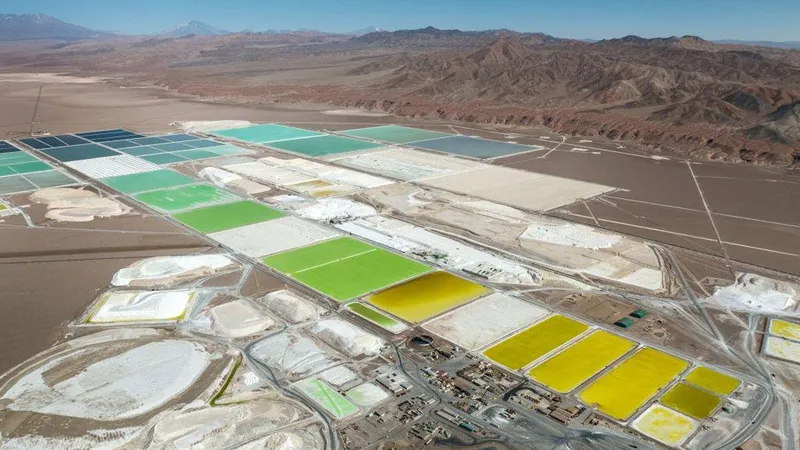
Iron ore, bauxite, manganese, nickel, graphite, lithium, rare earths and especially niobium give Brazil potentially significant leverage in the critical-minerals supply chains of the twenty-first century.
This mineral wealth is not new. Vale has long been one of the world’s major iron-ore producers. What is changing is the strategic value of these resources as competition intensifies around battery materials, electrical grids, vehicles, wind turbines, electronics and defense technologies.
For Washington, Brussels and Beijing alike, diversifying critical-mineral supply chains has become a strategic priority.
Brazil therefore possesses another bargaining chip: it can seek foreign investment without necessarily placing control of its resources in the hands of a single partner.
The real question, however, is one of value creation.
Exporting more raw materials would strengthen external revenues. Developing domestic refining, processing, advanced materials and downstream industries could transform geological wealth into industrial power.
China: Indispensable Partner, Not an Ally
No analysis of contemporary Brazil can ignore China.
The two economies have become deeply complementary. Brazil exports mostly agricultural, mineral and energy commodities, while China supplies machinery, manufactured goods, electronics, equipment and capital.
Yet Brasília has never translated this commercial relationship into an exclusive strategic alliance.
That is one of the defining features of Brazilian diplomacy.
The country seeks close relations simultaneously with Beijing, Washington, Brussels, Latin American neighbors, Africa, the Middle East and other major emerging economies.
BRICS is one instrument of that strategy.
During its 2025 presidency of the group, Brazil emphasized cooperation among Global South countries, reform of global governance, trade and investment, climate finance, artificial intelligence governance and reform of the multilateral peace and security architecture.
This was not simply participation in an “anti-Western” coalition.
Brasília sees BRICS more as a mechanism for increasing the influence of emerging powers in an international system whose major institutions were created when those countries accounted for a much smaller share of the world economy.
Neither Washington nor Beijing
The deeper principle behind this strategy is often described in Brazilian diplomacy as autonomy.
That does not mean absolute neutrality. Brazil takes positions on international issues, and successive governments have naturally differed in tone and ideology.
But the structural objective remains broadly consistent: avoid allowing any privileged external relationship to limit Brazil’s freedom to defend its own interests.
That explains how Brazil can deepen trade with China while maintaining important economic and institutional ties with the United States.
It also explains Europe’s continued importance.
The agreement between the European Union and Mercosur illustrates this logic. After more than two decades of negotiations, a political agreement was reached in December 2024. The European Union and the four founding Mercosur members — Argentina, Brazil, Paraguay and Uruguay — signed the partnership agreement and an interim trade agreement in January 2026.
For Brazil, multiplying partnerships is precisely a way to reduce dependence on any single one.
In a world increasingly structured by US-China rivalry, Brasília is therefore trying to preserve a third position: cooperate with both without accepting a permanent choice between them.
A Diplomatic Giant of the Global South
Brazil does not seek only more trade. It seeks more institutional power.
For decades, Brasília has advocated reform of the United Nations Security Council and has aspired to permanent-member status in an enlarged body.
This ambition reveals how the country sees itself.
Brazil argues that the international architecture created after 1945 no longer reflects the current distribution of population, economic weight and power. Together with India, Germany and Japan in the G4, it has long supported reform of permanent representation on the Security Council.
Brazil also uses the G20, BRICS, Mercosur and other multilateral forums to expand its influence.
Its ambition, however, is not to become a military superpower.
That is a fundamental distinction from the United States, China or Russia.
Brazilian strategy relies more on economic scale, resources, diplomacy, coalition-building and its status as a major Global South power than on worldwide military projection.
The Amazon: Wealth, Responsibility and Power
No Brazilian asset embodies the country’s contradictions more clearly than the Amazon.
The world’s largest tropical forest is simultaneously a biodiversity reserve, a vast carbon stock, an economic frontier, an inhabited territory, a scientific asset and a geopolitical issue.
A large share of the Amazon lies within Brazilian territory.
That fact gives the country environmental importance on a global scale that diplomacy alone could never manufacture.
Brazilian deforestation policy therefore has direct international consequences. Data from the INPE PRODES system estimated deforestation in the Brazilian Amazon at 5,796 square kilometers in 2025, around 11% below 2024 and the lowest level in eleven years.
But the issue goes beyond conservation.
Brasília regularly rejects the idea that the Amazon should be managed according to preferences defined outside the country. Sovereignty over the territory remains a central principle of Brazilian policy.
The challenge, then, is to turn preservation into an economic and diplomatic advantage: climate finance, bioeconomy, pharmaceutical research, sustainable forestry, carbon markets, sustainable agriculture and biodiversity-based industries.
If successful, the Amazon could become not only an environmental responsibility but one of Brazil’s principal geoeconomic assets.
An Industrial Power Often Overlooked
Reducing Brazil to soybeans, iron ore and oil would be a mistake.
The country still possesses one of the most diversified industrial bases in the emerging world.
Automotive manufacturing, steel, chemicals, agribusiness, machinery, defense, energy, financial services and aerospace remain important sectors.
Embraer is perhaps the most visible international symbol of that capability.
The Brazilian company has become one of the world’s major aircraft manufacturers and holds a strong position in regional aviation. Its success demonstrates that a country associated mainly with commodities can also create and sustain highly complex industrial capabilities.
Petrobras illustrates another form of technological competence through deepwater and ultra-deepwater offshore production.
The challenge for the coming decades is to multiply such successes.
Brazil has long suffered from the opposite pattern: exceptional competitiveness in agriculture and extraction alongside much weaker productivity growth in large parts of the rest of the economy.
The Brazilian Economic Paradox
This is where the principal limitation of Brazilian power becomes visible.
The country possesses exceptional assets but converts them imperfectly into prosperity.
The World Bank estimates that real GDP growth reached 3.4% in 2024 and 2.3% in 2025. In July 2026, the IMF projected growth of 2.4% for 2026 and around 2.5% over the medium term.
These figures show a resilient economy. They are nevertheless insufficient to produce rapid convergence in living standards with advanced economies.
Productivity remains a structural problem.
Regulatory complexity, uneven education outcomes, infrastructure gaps, low investment, high capital costs, fiscal fragmentation and a difficult business environment have long constrained growth potential.
The indirect-tax reform adopted in 2023 is therefore an important change. It aims gradually to replace one of the world’s most complex consumption-tax systems with a more coherent VAT-style framework. The IMF considers successful implementation one of the reforms capable of improving medium-term productivity.
But fiscal constraints remain significant.
The IMF continues to warn about the high and rising level of public debt and the burden of interest payments. Brazil therefore illustrates a broader paradox: a country can possess substantial geopolitical room for maneuver while retaining limited fiscal room at home.
A Transformed Labor Market, Persistent Divides
Social indicators also reveal a Brazil more complex than the traditional image of a country condemned to chronic unemployment.
According to the IBGE, the annual unemployment rate fell to 5.6% in 2025, the lowest level since the current series began in 2012. The employed population reached 103 million, also a record.
Employment growth and social transfers have helped reduce poverty in recent years.
But deep divides remain.
Income, educational quality, access to public services and economic opportunity still vary sharply across regions and social groups. The World Bank continues to highlight the persistent gap between the North and Northeast and the more prosperous South and Southeast.
Brazil therefore contains two realities at once: that of a sophisticated continental economy with large corporations, developed financial markets and advanced technological clusters, and that of a country where a significant share of human potential remains underused.
That duality remains one of the main obstacles to its rise.
Power Without Hegemony
Brazil has another geopolitical peculiarity: it materially dominates its regional environment without attempting to build the kind of hegemony seen elsewhere.
No other South American state has a comparable combination of population, territory, economy and natural resources.
Yet Brasília has not built around itself a political system comparable to that of the United States in North America, Russia in parts of the post-Soviet space or China in East Asia.
Its regional influence is real but uneven.
Mercosur gives Brazil economic and diplomatic depth, but South American integration remains limited by political divergence, changes of government and different economic models.
The paradox is striking: Brazil is unquestionably South America’s central power, but South America rarely acts as a bloc organized around Brazil.
That limits Brasília’s capacity to project influence globally.
A Country That Could Become More Important Without Becoming More Powerful
Brazil’s trajectory may nevertheless follow a different logic from that of historical great powers.
It does not need to match the military capabilities of the United States or China for its importance to increase.
It is enough for the resources it controls to become more strategic.
Global population growth increases the value of food production. The energy transition raises the value of critical minerals. Energy insecurity strengthens the importance of offshore oil. Climate change increases the political value of the Amazon. Trade fragmentation gives more weight to large markets capable of engaging with several blocs. And the rise of the Global South increases demand for powers able to represent its interests without being fully dependent on Beijing or Washington.
Brazil sits precisely at the intersection of all these transformations.
Its problem, therefore, may no longer be acquiring the attributes of power.
It already possesses many of them.
Its real challenge is converting them into durable influence.
The Brazilian Test
Brazil has long been described as “the country of the future.”
The phrase has become almost ironic, because periods of optimism have repeatedly been followed by economic, political or institutional crises.
But the cliché obscures a more important development.
Brazil does not need to become a new superpower to alter the international balance. In a less unipolar world, states capable of controlling strategic resources, maintaining several partnerships at once and refusing automatic alignment gain value.
India has understood this. The Gulf monarchies are experimenting with it. Turkey is also attempting to exploit the same room for maneuver.
Brazil possesses an additional advantage: an exceptional combination of territory, population, food, energy, minerals, industry and environmental capital.
But resources do not automatically produce power.
The next stage will depend on Brazil’s ability to raise productivity, invest in infrastructure and human capital, stabilize public finances, preserve its environmental assets and process more of its raw materials domestically.
If it succeeds, Brazil may finally stop being described as an emerging power.
It would simply become what its geography has long allowed it to be: one of the pivotal states of the international system.
Main Sources
- World Bank, Brazil Overview and World Development Indicators, economic, demographic and social data, 2025–2026.
- International Monetary Fund, Brazil: 2026 Article IV Consultation, July 2026.
- Instituto Brasileiro de Geografia e Estatística (IBGE), PNAD Contínua, annual labor-market data, January 2026.
- Ministério do Desenvolvimento, Indústria, Comércio e Serviços (MDIC), foreign-trade data and publications on Brazil-China relations.
- Brazilian BRICS Presidency, official 2025 priorities and documents.
- Instituto Nacional de Pesquisas Espaciais (INPE) / PRODES and Brazil’s Ministry of Science, Technology and Innovation, 2025 deforestation data.
- U.S. Energy Information Administration, data and analysis on Brazil’s pre-salt oil resources.
- European Commission, official documentation on the EU-Mercosur agreement and its January 2026 signature.
Atlas Limits Research Desk
Atlas Limits’ editorial and analytical desk.