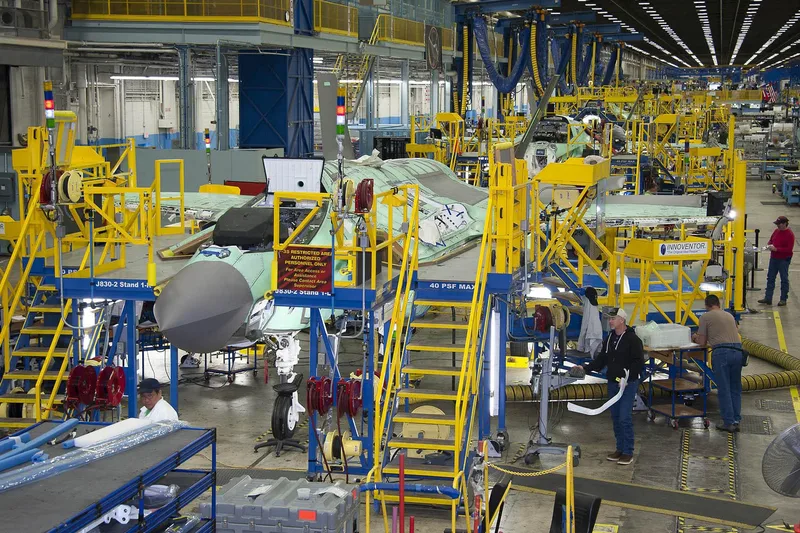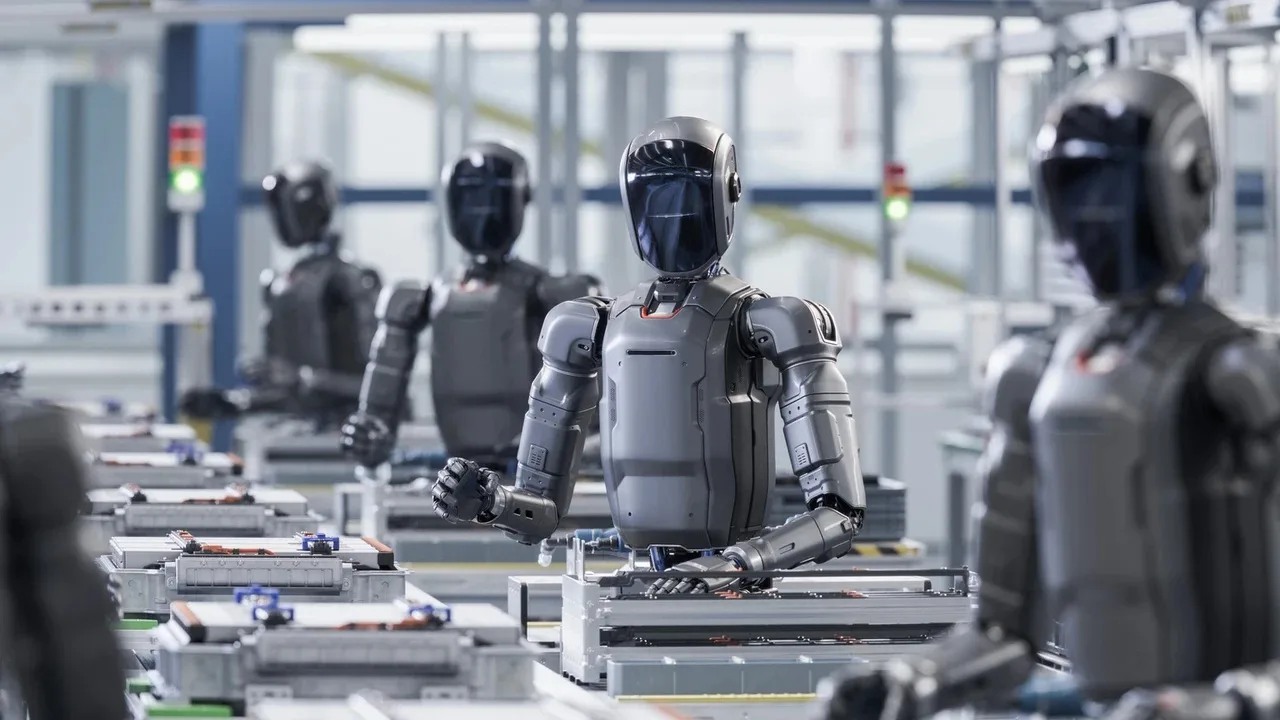
For a long time, the humanoid robot belonged more to the realm of imagination than to the economy. It walked awkwardly through laboratories, appeared at technology fairs and occasionally fell over to the amusement of spectators. Factories, meanwhile, had chosen far less spectacular machines: articulated arms, automated systems, conveyors and specialized robots, usually operating behind safety barriers and designed to repeat the same movement thousands of times.
That separation is beginning to disappear.
On August 19, 2026, Chinese robotics manufacturer Unitree made its debut on Shanghai’s STAR Market. Priced at 150.8 yuan per share, the company entered the market with a valuation of roughly 61 billion yuan, or around $9 billion. Within hours, its shares had traded at more than six times their IPO price before closing 460% higher. Unitree raised approximately 6.1 billion yuan, close to $900 million.
The extraordinary market reaction probably says as much about the peculiar dynamics of Chinese IPOs as it does about Unitree’s underlying value. At its intraday peak, the company reached a valuation difficult to reconcile with its current earnings. Yet the event revealed something more significant: investors are beginning to treat humanoid robotics not merely as a technological curiosity, but as a potential major industry.
After teaching machines to calculate, see, speak and reason, the technology industry is now trying to give them a body.
From automation to autonomy
Industrial robotics is obviously not new. It already forms part of the invisible infrastructure of the global economy. Across automotive plants, electronics factories, metalworking facilities and logistics centers, millions of robots operate every day.
According to the International Federation of Robotics, 542,000 new industrial robots were installed worldwide in 2024. The global operational stock reached approximately 4.66 million units, more than twice the level recorded a decade earlier.
Industrial automation is therefore already a mass phenomenon.
But these machines share an essential characteristic: they are generally built around a task.
A robotic arm can weld a vehicle body with extraordinary precision. Another moves electronic components. An autonomous logistics robot transports goods through a warehouse. Their efficiency comes precisely from their specialization.
The ambition behind humanoid robotics is different.
Instead of transforming the environment to accommodate the machine, engineers are attempting to build a machine capable of operating within an environment designed for humans.
Stairs, doors, tools, shelves, assembly lines and warehouses all reflect human morphology. Two arms, two legs, hands capable of manipulating objects and a height comparable to that of an adult may therefore represent, paradoxically, a highly rational industrial architecture.
If a machine can learn different tasks without requiring an entire factory to be redesigned around it, robotics changes fundamentally.
It becomes general-purpose.
Artificial intelligence finds a body
The current development of humanoids cannot be separated from the development of artificial intelligence.
For decades, the fundamental difficulty in robotics was not purely mechanical. Building motors, joints and sensors was possible. The harder problem was enabling a machine to understand an unpredictable environment and act appropriately within it.
Software can repeat a failed operation a million times without physical consequences. A robot that misunderstands its surroundings can fall, damage equipment or injure someone.
Simultaneous advances in computer vision, multimodal models, reinforcement learning, simulation and computing power are beginning to alter that equation. Robots can increasingly combine cameras, force sensors and other perception systems to interpret their surroundings and adapt their movements.
Generative AI demonstrated that a single model could perform a wide range of intellectual tasks. Robotics is now pursuing a comparable ambition in the physical world: developing systems capable of learning multiple behaviors rather than being explicitly programmed for one operation.
The industry increasingly describes this as embodied AI.
The next major computing platform may therefore not be another screen.
It may walk.
Unitree and the Chinese laboratory
Founded in Hangzhou in 2016, Unitree first became known for its quadruped robots before accelerating its development of humanoid machines. Its rise has since become one of the most visible symbols of China’s growing robotics industry.
In 2025, the company generated approximately 1.7 billion yuan in revenue, more than four times the previous year’s level. Humanoid robots already accounted for around 868 million yuan, overtaking revenue from quadruped robots. More than 40% of Unitree’s sales came from overseas markets.
These figures remain tiny compared with the revenues generated by the automotive, electronics or even major software industries. But the speed of growth helps explain part of the enthusiasm surrounding the company.
More importantly, Unitree is not alone.
A genuine Chinese humanoid robotics ecosystem is emerging around companies such as UBTech, AgiBot and Fourier Intelligence, alongside a dense network of manufacturers producing motors, sensors, actuators, control systems and other critical components.
China’s advantage here extends far beyond the quality of any individual prototype.
It possesses the industrial ecosystem required to manufacture them.
China’s factory advantage
The competition over humanoid robots could reproduce a pattern already seen in electric vehicles, batteries, drones and solar panels.
Initial innovation is not enough.
Eventually, technology has to be industrialized.
And when technology becomes physical, supply chains regain their importance.
China possesses an enormous industrial base spanning electronics, electric motors, batteries, precision gearboxes, sensors, mechanical components and assembly. It also has a domestic market large enough to absorb the first generations of machines at considerable scale.
Industrial robotics illustrates the depth of that infrastructure. Of the 542,000 industrial robots installed worldwide in 2024, approximately 295,000 were installed in China. The country therefore represented 54% of all new global installations. More than two million industrial robots were already operating in Chinese factories.
Even more significantly, Chinese manufacturers surpassed foreign competitors in their domestic market for the first time in 2024, accounting for 57% of sales, compared with an average of roughly 28% over the previous decade.
China is therefore no longer merely the country using the largest number of robots.
It is increasingly becoming the country that manufactures them.
For humanoids, this industrial depth could prove decisive. The competition will probably not be determined solely by which company produces the most impressive prototype. It will depend on the ability to manufacture tens of thousands, and perhaps eventually millions, of machines at sufficiently low cost.
That is precisely the terrain on which Chinese industry has demonstrated formidable capabilities over the past two decades.
The United States bets on intelligence
The other major center of gravity lies in the United States.
Tesla is developing Optimus with explicitly industrial ambitions. Figure is working on general-purpose robots intended, among other applications, for manufacturing environments. Apptronik is developing Apollo. Agility Robotics is commercializing Digit for logistics applications. Boston Dynamics, after decades of spectacular research into robotic mobility, is developing an entirely electric generation of Atlas.
The American wager rests on a different concentration of power: artificial intelligence, software, advanced semiconductors and capital.
The United States is home to many of the companies leading the development of advanced AI models and possesses a venture-capital ecosystem capable of financing extremely expensive projects long before they become profitable.
Two industrial models are therefore beginning to confront one another.
China possesses exceptional manufacturing depth and a remarkable capacity to reduce costs through mass production. The United States retains considerable advantages across several critical layers of software, advanced computing and artificial intelligence.
Humanoid robotics lies precisely at the intersection of these two forms of power.
A modern robot is simultaneously a machine, a computer and an artificial intelligence system.
The real question: the cost of labor
To understand the potential importance of this industry, however, it is necessary to move beyond technological demonstrations and return to a far more mundane question: how much does an hour of work performed by a robot cost?
The future of the industry will probably be decided there.
A humanoid does not need to become as versatile as a human being to become economically useful. It only needs to become reliable enough to perform certain tasks at a cost equal to or lower than existing alternatives.
The first large-scale applications are therefore likely to emerge in relatively controlled environments: factories, warehouses, logistics centers and assembly lines.
The economic logic is powerful. A machine can theoretically operate across multiple shifts, does not experience physical fatigue or biological ageing, and can receive software updates. More importantly, a skill learned by one system could eventually be transferred to thousands of other machines.
This last characteristic fundamentally distinguishes intelligent robotics from previous generations of automation.
Training a worker trains one person.
Training a model could, in theory, train an entire fleet.
If that logic works at scale, the productivity of physical capital could undergo a profound transformation.
The demographic challenge
This potential revolution is also arriving at a particular moment in demographic history.
China, Japan, South Korea and much of Europe are ageing rapidly. In several developed economies, companies already struggle to recruit workers for certain industrial, logistics, agricultural and service occupations.
Robotics is therefore increasingly presented as a response to future labor shortages rather than simply as a technology designed to replace workers.
The paradox is particularly striking in China.
The country that built part of its economic power on the abundance of its workforce is gradually becoming one of the countries most determined to automate its economy.
Robotization could theoretically allow China to maintain high levels of industrial production with a smaller working-age population. Automation then becomes not merely a technological policy, but a demographic response.
Humanoid robots could consequently become one of the technologies allowing ageing societies to preserve their productive capacity.
The humanoid remains a promise
Yet the current enthusiasm should not obscure a fundamental reality: we still do not know whether humanoid robots will become mass-market machines.
The videos are impressive. Demonstrations are improving rapidly. Investment is pouring into the sector. But moving from a spectacular prototype to a machine capable of working thousands of hours inside a factory represents an enormous change of scale.
Mechanical reliability remains challenging. Battery autonomy is limited. Human hands are extraordinarily difficult to reproduce. Real environments contain countless unpredictable situations. Safety introduces additional constraints whenever powerful machines operate alongside people.
Above all, humanoids are not competing only against other humanoids.
They are competing against specialized robots.
Why build a machine with two legs if a wheeled robot can accomplish the same task faster, more cheaply and with greater autonomy? Why reproduce the extraordinary complexity of the human body when a robotic arm is sufficient?
Humanoid morphology will therefore not prevail because it is fascinating.
It will prevail only where its versatility compensates for its cost and complexity.
Even current shipment volumes should be interpreted carefully. Unitree and AgiBot reportedly each shipped more than 5,000 humanoid robots in 2025, but a significant portion of the market still consists of research, demonstrations and experimental deployments rather than genuine large-scale industrial operations.
The experiment is still in its early stages.
A new global value chain
If humanoids nevertheless cross the economic threshold required for mass adoption, an entirely new industry could emerge around them.
It will extend far beyond robot manufacturers.
Motors, actuators, precision gearboxes, sensors, batteries, cameras, processors, communication systems and high-precision mechanical components will all be required. Artificial intelligence models will have to control the machines, simulation software will train them, and digital infrastructure will manage entire fleets.
A new value chain is therefore taking shape between artificial intelligence and mechanical industry.
Its geography will be strategic.
Advanced semiconductors will remain essential. Rare earth elements and other critical minerals will be required for motors and electronic components. Batteries will connect robotics to the industrial ecosystem already created by electric vehicles. Factories capable of manufacturing precision components will become increasingly valuable assets.
The competition over humanoid robots could therefore merge with the other major technological rivalries of the twenty-first century: semiconductors, electric vehicles, batteries, drones, artificial intelligence and digital infrastructure.
The first trade restrictions are already appearing. In 2026, the United States strengthened constraints affecting certain foreign humanoid and quadruped robots, potentially complicating the future expansion of companies such as Unitree in the American market.
A technology that has barely begun to industrialize is already entering the realm of national security.
When capital progressively replaces labor
The deepest question, however, extends beyond the rivalry between China and the United States.
If general-purpose robots become economically viable, they could alter the boundary between capital and labor.
Since the Industrial Revolution, machines have replaced certain human tasks while simultaneously creating new professions. But automation generally remained confined to precisely defined processes.
Generative artificial intelligence has begun extending that logic into intellectual work.
Robotics could extend it into physical work.
It would be excessive to conclude that human labor is about to disappear. Economic history suggests that technological transformations produce far more complicated outcomes. But the widespread deployment of general-purpose robots could alter cost structures, industrial geography and the distribution of economic value.
A company operating thousands of robots no longer manages only a workforce. It owns productive capital capable of performing some of the labor that was previously purchased through the employment market.
Ownership then becomes central.
Who will own the machines? Who will own the models controlling them? Who will collect the data generated through their activity? And where will the resulting productivity gains accumulate?
Behind the technological fascination therefore lies a much older economic question: the distribution of capital.
The battle is only beginning
Unitree’s spectacular stock-market debut does not prove that humanoid robots will conquer the world’s factories.
It demonstrates something else: enough investors, industrial companies and governments now believe that the possibility is worth billions.
The distinction matters.
An enormous distance still separates a robot capable of running, dancing or manipulating a few objects during a demonstration from a machine reliable, autonomous and inexpensive enough to work every day inside a factory.
But the conditions that could allow the industry to cross that distance are beginning to converge: more capable artificial intelligence, cheaper components, increasingly sophisticated simulation, mature manufacturing supply chains and genuine economic demand driven by productivity pressures and demographic ageing.
China has the factory. The United States controls a critical share of the intelligence. Other powers — notably Japan, South Korea and Europe — retain major capabilities in robotics, automation and industrial components.
No one yet knows which architecture will dominate, or even whether the humanoid form itself will ultimately prove to be the winning design.
But behind the still imperfect silhouettes walking through laboratories today, something much larger may be taking shape.
The digital revolution placed machines inside almost every human activity without giving them a physical presence.
The next industrial frontier may be precisely about bringing them out of the screen.
Main sources
International Federation of Robotics, World Robotics 2025 – Industrial Robots and global data on industrial robot installations and operational stock.
Reuters, financial and industrial reporting on Unitree’s IPO and the company’s 2025–2026 activity.
Associated Press, reporting on Unitree’s stock-market debut and the development of China’s humanoid robotics industry.
Atlas Limits Research Desk
Atlas Limits’ editorial and analytical desk.