Part I — Steel, the Invisible Foundation of Modern Power
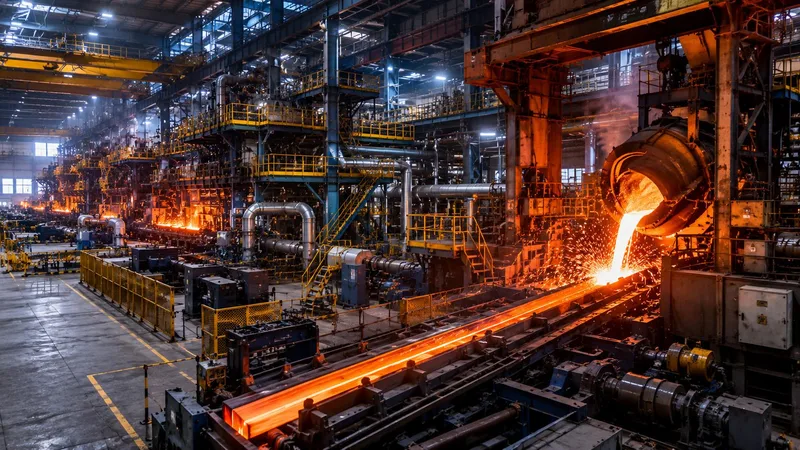
It is everywhere, yet rarely attracts attention. Behind the skyscrapers that shape urban skylines, the bridges that connect territories, the railways that structure trade, the power plants that supply economies, and the ships that carry nearly 90 percent of world trade lies a material whose production has conditioned the development of industrial societies for more than two centuries: steel.
At first glance, the steel industry may appear to belong to another age, one defined by blast furnaces, smoke-filled industrial basins, and the vast working-class concentrations that accompanied the Industrial Revolution. Yet this perception conceals a very different reality. Steel remains one of the most widely used materials in the world and continues to occupy a strategic position in the global economy. Each year, close to two billion tonnes of crude steel are produced, supplying sectors as diverse as construction, automotive manufacturing, energy, infrastructure, aerospace, industrial equipment, and defence.
This enduring importance is explained by a set of properties that remain difficult to match. Steel combines high mechanical strength, considerable versatility, ease of processing, long service life, and, above all, near-infinite recyclability without significant loss of quality. Few materials possess all these characteristics at once. Although composite materials, lightweight alloys, and certain polymers are expanding in specific applications, none has yet succeeded in replacing steel on a large scale in structural uses.
Beyond its technical qualities, the steel industry is also a leading indicator of a country’s economic health. Steel consumption generally moves in parallel with industrial investment, real-estate construction, infrastructure development, and manufacturing output. A sustained rise in demand often signals a phase of economic expansion, while a slowdown in steel consumption frequently accompanies periods of recession. For this reason, economists have long monitored steel production figures as a barometer of global industrial activity.
History also shows that mastery of steel production extends far beyond purely economic considerations. Since the nineteenth century, the ability to produce large quantities of steel quickly has become a decisive factor of power. Major railway networks, merchant fleets, warships, armoured vehicles, electricity grids, pipelines, and industrial complexes all depend on a solid steel base. The states that dominated their eras—from the United Kingdom during the Industrial Revolution to the United States in the twentieth century, before the rise of contemporary China—all benefited from a steel industry capable of supporting their economic development, commercial influence, and military capabilities.
This strategic dimension remains fully relevant today. Recent geopolitical tensions, the Covid-19 pandemic, disruptions to global supply chains, and the war in Ukraine have all demonstrated that certain so-called traditional industries remain essential to the functioning of modern economies. Breakdowns in raw-material supplies, surging energy costs, and trade restrictions have exposed the dependence of many economies on production capacities that had gradually been relocated abroad over previous decades.
The steel industry now stands at the centre of a paradox. On the one hand, it is indispensable to the major transformations of the twenty-first century. The energy transition requires vast quantities of steel to build wind turbines, dams, electricity grids, nuclear power plants, and transport infrastructure. Urban development in emerging economies continues to sustain strong demand for construction materials. Renewed defence spending in many parts of the world also depends on a robust steel-producing base.
On the other hand, the industry is among those most directly confronted with environmental constraints. Primary steel production still relies predominantly on blast furnaces fuelled by metallurgical coal, a process that generates large quantities of carbon dioxide. According to estimates by the International Energy Agency, the iron and steel sector accounts for approximately 7 to 9 percent of global energy-related CO₂ emissions. Decarbonising this industry is therefore one of the central challenges in meeting international climate objectives.
This transition is not limited to a simple technological evolution. It requires a profound transformation of supply chains, industrial investment, energy infrastructure, and public policy. Projects involving hydrogen-based direct reduction, electric furnaces powered by low-carbon electricity, carbon capture, and increased recycling are gradually reshaping the geography of the industry. Countries capable of mastering these technologies may secure a lasting competitive advantage in the decades ahead.
At the same time, the global geography of steel production has changed profoundly. During the twentieth century, Western Europe, the United States, and Japan accounted for the majority of global output. Today, China alone produces more than half of the world’s crude steel, while India is gradually emerging as the next major centre of growth. This redistribution of industrial capacity reflects the shift of the global economy’s centre of gravity towards Asia, but it also raises questions about overcapacity, international competition, trade policy, and security of supply.
Meanwhile, several developed economies are seeking to rebuild industrial capacity in sectors considered strategic. Industrial sovereignty policies introduced in the United States, the European Union, and Japan reflect a growing awareness that excessive dependence on foreign suppliers can weaken economic autonomy and national resilience. Steel is therefore returning to the centre of debates on economic security, alongside semiconductors, rare earths, and advanced technologies.
Understanding the steel industry therefore means understanding far more than a single industrial sector. Its evolution sheds light on the major forces shaping the world economy: industrialisation, globalisation, the energy transition, geopolitical rivalry, economic sovereignty, and technological innovation. Few industries bring together so directly the interaction between natural resources, infrastructure, energy, international trade, and state strategy.
This article therefore retraces the evolution of the steel industry, from the earliest furnaces of antiquity to the contemporary challenges of decarbonisation and reindustrialisation. It examines the technological breakthroughs that transformed steel production, the gradual shift of the industry’s centre of gravity towards Asia, the geopolitical importance of raw materials, and the future of a sector that is likely to remain one of the material foundations of the global economy despite the profound changes it is undergoing.
Part II — From the First Forges to the Industrial Revolution
Long before it became the emblematic material of modern economies, iron was difficult to extract, transform, and control. Its history did not begin with the vast factories of the nineteenth century, but in rudimentary workshops where the earliest metallurgical societies gradually learned to overcome the limitations of copper and bronze.
The first known iron objects were not necessarily made from terrestrial ores. Some were produced from meteoritic iron, naturally alloyed with nickel and sufficiently malleable to be worked without a complex reduction process. These objects remained exceptional, rare, and often invested with considerable symbolic value. The true turning point came when ancient societies discovered how to extract iron from ore by heating it in furnaces fuelled with charcoal.
This innovation developed slowly. Unlike copper, iron does not melt at the temperatures reached in ancient metallurgical installations. Early metalworkers therefore did not produce liquid metal, but a spongy mass composed of iron, slag, and impurities. This bloom had to be hammered while hot in order to expel the residues and obtain a usable material.
The first bloomery furnaces relied on a relatively simple principle. Iron ore was introduced together with charcoal into a vertical structure made of clay or stone. Air, manually supplied by bellows, sustained combustion. The carbon contained in the fuel removed the oxygen from the iron oxides. The resulting metal nevertheless remained heterogeneous and required extensive forging.
The development of iron metallurgy gradually altered economic and military balances. Iron ore was far more widespread than the raw materials required for bronze production, which depended on the combined supply of copper and tin. The diffusion of iron therefore reduced certain commercial constraints and enabled a larger number of societies to gain access to metal tools and weapons.
The term “Iron Age,” however, does not describe a sudden and uniform rupture. The transition occurred at different rates in Anatolia, the Levant, Egypt, the Indian subcontinent, China, sub-Saharan Africa, and Europe. In many regions, bronze continued to be used alongside iron for a long time. Iron’s superiority was not based solely on its initial quality, which was often mediocre, but on the abundance of the ore and on the gradual improvement of processing techniques.
Ancient wrought iron generally contained little carbon. It was relatively malleable, but less hard than properly produced steel. Craftsmen nevertheless discovered that prolonged contact with charcoal could enrich the surface of the metal with carbon. This operation, known as carburisation, produced harder surfaces, particularly valuable for the cutting edges of tools and weapons.
Quenching, which consists of rapidly cooling heated metal, and tempering, which reduces brittleness, were also progressively mastered. These processes gave rise to ancient steels of varying quality, whose production depended heavily on the skill of the smith. For centuries, making good steel was more a matter of practical experience than of precisely codified science.
Some regions nevertheless developed particularly advanced techniques. In the Indian subcontinent, crucible steel, often associated with wootz steel, was produced from antiquity onwards. The metal was heated in sealed vessels together with carbon-rich materials, enabling the production of a more homogeneous steel with a better-controlled carbon content. Exported to the Middle East, it contributed to the manufacture of blades renowned for their hardness and distinctive patterns.
In China, the early mastery of high temperatures encouraged the development of cast iron centuries before its widespread use in Europe. Chinese craftsmen were able to cast metal into moulds, paving the way for the serial production of tools, containers, agricultural implements, and military equipment. They also developed techniques for converting carbon-rich, brittle cast iron into a more malleable material.
In Africa, several ancient ironmaking traditions reveal a high degree of technological diversity. In some regions, metallurgists designed furnaces capable of reaching high temperatures through optimised air circulation. Iron production was closely connected to agriculture, community organisation, and regional trade. The history of early ironmaking cannot therefore be reduced to a single trajectory spreading from the Near East into Europe. It was the product of multiple developments, sometimes independent, and adapted to local resources and needs.
During classical antiquity, iron became indispensable to Mediterranean economies. Roman armies relied heavily on iron for weapons, armour, siege equipment, and logistical tools. The Roman Empire developed extraction, processing, and transport networks capable of supplying vast territories. Agricultural implements, nails, chains, fittings, structural components, and craft tools already demonstrated the deep penetration of iron into economic life.
The fall of the Western Roman Empire did not bring these skills to an end, but fragmented them. During the European Middle Ages, production remained largely local and dispersed. Forges were located near forests, which supplied charcoal, and near watercourses, which were increasingly used to power bellows and hammers.
The use of hydraulic energy represented a decisive step. Waterwheels increased the power and regularity of air supply. They also facilitated the hammering of larger masses of metal. This partial mechanisation improved yields and contributed to the gradual expansion of production sites.
From the late Middle Ages onwards, blast furnaces began to spread across Europe. Taller and better ventilated than bloomery furnaces, they could reach temperatures high enough to melt iron and produce liquid pig iron. This metal could be cast directly or later refined into a more malleable form.
This development profoundly changed the organisation of production. Ironmaking no longer rested solely on small artisanal workshops. It now required more ore, more fuel, more capital, more labour, and more substantial hydraulic infrastructure. Installations grew larger and became increasingly dependent on structured supply networks.
The manufacture of cannon accelerated this transformation. From the late Middle Ages onwards, artillery became a decisive instrument of European warfare. Producing heavy metal pieces capable of withstanding extreme pressure demanded increasing control over casting, moulding, and alloy quality. Iron metallurgy thus became more directly integrated into the military and political centralisation of states.
This expansion nevertheless encountered a major constraint: charcoal. Iron production consumed immense quantities of wood. The growth of blast furnaces placed increasing pressure on forests, raised transport costs, and limited the size of installations. The industry therefore remained dependent on dispersed resources that could only be renewed over long periods.
The shift from charcoal to coke began to remove part of this constraint. Coke is produced by heating coal in the absence of air, removing many of its volatile compounds and creating a stronger, more concentrated fuel better suited to blast furnaces.
At the beginning of the eighteenth century, the English ironmaster Abraham Darby demonstrated that coke could be used to produce pig iron on a large scale. This innovation did not immediately transform the entire British industry, but it opened the way to a fundamental rupture. Mineral coal, abundant in several regions of the United Kingdom, made it possible to reduce dependence on wood.
The geography of production began to change. Installations moved closer to coalfields, ore deposits, and navigable waterways. Industrial regions emerged around the concentration of these resources. Ironmaking gradually lost its dispersed character and became an activity organised on a much larger scale.
This transformation was reinforced by improvements in blowing machinery. The steam engine gradually replaced hydraulic systems, which remained too dependent on the presence and flow of rivers. Blast furnaces could now be built in areas better suited to coal and ore supply, independently of hydrological constraints.
Steam power also transformed mining. The earliest engines were used to pump water from deep mines. They made previously inaccessible coal reserves exploitable. The resulting increase in energy supply, in turn, fuelled the expansion of iron production, creating a close relationship between coal, iron, and the steam engine.
This interaction was one of the foundations of the British Industrial Revolution. Coal supplied energy. Iron made it possible to manufacture machines, rails, bridges, boilers, and mining equipment. Machines, in turn, improved coal extraction and iron production. A self-reinforcing industrial system gradually emerged.
Refining processes also underwent major improvements. Pig iron produced in blast furnaces contained too much carbon and too many impurities to be used directly in many applications. It had to be converted into wrought iron. At the end of the eighteenth century, puddling made it possible to perform this operation in a furnace where the metal did not come into direct contact with the fuel.
The metalworker stirred the molten pig iron with long bars in order to encourage the oxidation of carbon. As the carbon content fell, the metal became pasty and could be gathered into compact masses. These were then hammered and rolled.
Rolling represented another decisive advance. Instead of shaping metal exclusively with hammers, industrial producers passed it between rotating cylinders. This method made it possible to manufacture bars, plates, and profiles more rapidly and with relatively regular dimensions. It lowered costs and increased available volumes.
Industrial iron quickly found new markets. Textile machinery, tools, boilers, pumps, frames, ships, and mining equipment absorbed a growing share of output. The development of canals and later railways increased demand still further.
The construction of the Iron Bridge at Coalbrookdale, completed in 1779 over the River Severn, symbolised this new age. The first major bridge built in cast iron, it demonstrated that metal could become an important structural material, capable in some applications of replacing stone or wood.
Cast iron and wrought iron nevertheless retained distinct limitations. Cast iron was easy to mould and resisted compression well, but remained brittle. Wrought iron was more ductile and resistant to impact, but its production was labour-intensive and its quality irregular. Steel offered better performance, but remained expensive and difficult to manufacture on a large scale.
By the beginning of the nineteenth century, ironmaking had therefore already changed scale without yet reaching its modern form. Coke-fired blast furnaces, steam power, puddling, and rolling had multiplied output and reduced costs. The United Kingdom had gained a considerable lead, supported by its coal reserves, capital, commercial infrastructure, and maritime expansion.
This industrial advantage did not rest solely on a succession of inventions. It resulted from the combination of several factors: resource availability, the development of credit, market expansion, improved transport, investment protection, urbanisation, and military demand. Ironmaking gradually became the meeting point of energy, finance, technology, and state power.
The Industrial Revolution thus transformed iron from an artisanal product into a mass-produced raw material. It also prepared the ground for the next major rupture: industrial steel. By the middle of the nineteenth century, new processes would make it possible to produce a more homogeneous, stronger, and less expensive metal on an unprecedented scale.
That development would transform the shape of cities, the speed of transport, the size of ships, the power of armies, and the organisation of the global economy. Steelmaking would no longer merely accompany industrialisation. It would become one of its principal driving forces.
Part III — The Birth of Modern Steel and Nineteenth-Century Industrial Expansion
At the beginning of the nineteenth century, iron had already transformed European economies. It equipped mines, workshops, steam engines, bridges, ships, and the first railway networks. Yet the dominant material of this first phase of industrialisation remained imperfect. Cast iron was abundant and relatively inexpensive, but too brittle for many structural applications. Wrought iron was more ductile, but its production remained slow, labour-intensive, and difficult to standardise.
Steel offered an intermediate solution. Stronger than wrought iron and less brittle than cast iron, it could withstand high mechanical stresses while retaining a degree of flexibility. Its main obstacle was therefore not technical, but economic. For centuries, steel had been produced in small quantities through costly processes that restricted its use to weapons, specialised tools, springs, precision instruments, and certain mechanical components.
The great breakthrough of the nineteenth century was to transform this rare material into a mass-produced industrial commodity.
This transformation did not result from a single invention. It depended on a succession of innovations in production, refining, chemical composition control, rolling, and factory organisation. Together, these advances increased output, lowered costs, and improved the consistency of the metal produced.
The crucible process, refined in England during the eighteenth century, had already made it possible to manufacture higher-quality steel. Iron was melted in small refractory containers together with carbon-rich materials. The resulting metal was more homogeneous than traditional cementation steel. Yet output remained limited, energy requirements were high, and operations remained largely artisanal.
Industrialisation required a process capable of treating several tonnes of metal within a short period.
It was in this context that the Bessemer converter emerged.
In 1856, the British engineer Henry Bessemer introduced a process based on blowing air through molten pig iron. The oxygen contained in the air reacted with the carbon and certain impurities present in the metal. These reactions released enough heat to keep the mass molten without a continuous external supply of fuel.
The principle was striking in its apparent simplicity. Molten pig iron was poured into a large tilting metal vessel lined with refractory material. Compressed air was injected through the bottom. Under the effect of oxidation, the molten bath entered a phase of intense agitation. Flames burst from the mouth of the converter as the carbon content fell rapidly.
Within a few tens of minutes, a quantity of metal that would previously have required lengthy refining operations could be transformed into steel.
This reduction in production time transformed the economics of the industry. Steel prices fell sharply. Available volumes increased. Industrial users could consider applications that had previously been reserved for wrought iron or cast iron.
However, the earliest uses of the Bessemer process quickly revealed major difficulties. Not all pig irons reacted in the same way. The presence of phosphorus, in particular, made the resulting steel brittle. The acidic lining of the Bessemer converter could not remove this impurity effectively.
The process therefore worked mainly with high-quality ores containing little phosphorus. This constraint favoured regions with suitable resources, notably parts of the United Kingdom, Sweden, and the United States. Other mining basins remained less competitive until a technical solution was found.
Controlling the carbon content was another challenge. If oxidation continued for too long, the metal lost too much carbon and became difficult to adjust. The addition of ferromanganese, particularly in the form of spiegeleisen, made it possible to control the final composition more accurately and to neutralise some of the undesirable effects of dissolved oxygen.
The Bessemer process therefore marked the beginning of a new relationship between metallurgy and chemistry. Steel quality could no longer depend solely on the empirical knowledge of workers. It required a more precise understanding of the elements present in the metal, their interactions, and their effects on mechanical properties.
This development encouraged the growth of industrial laboratories. Large steelworks began to employ chemists, engineers, and specialists responsible for analysing ores, pig iron, fuels, and finished products. Steelmaking gradually became a scientific industry founded on measurement, standardisation, and process control.
A second major innovation reinforced this transformation: the Siemens-Martin process.
Developed during the 1860s, the Siemens-Martin furnace, also known as the open-hearth furnace, produced steel by heating a mixture of pig iron, scrap, and ore. It relied on a heat-recovery system developed by the Siemens brothers. Waste gases alternately heated chambers filled with refractory bricks, which then transferred that energy to the incoming air and fuel.
This regenerative system made it possible to reach the high temperatures required for melting and refining metal.
The Siemens-Martin process was slower than the Bessemer process. A single heat could take several hours. Yet this slowness offered a decisive advantage: it allowed operators to monitor the composition of the molten bath and adjust the steel progressively.
Metallurgists could take samples, observe changes in the metal, and intervene in its composition. The process also accepted a larger proportion of scrap, facilitating the recycling of metal waste generated by industrialisation.
This flexibility made the open-hearth furnace one of the dominant technologies of global steelmaking for nearly a century. It was particularly suited to producing consistent steels for rails, plates, structures, machinery, and military equipment.
The phosphorus problem was partly resolved in the late 1870s through the Thomas-Gilchrist process. This method used a converter similar to the Bessemer vessel, but with a basic lining capable of binding the phosphorus contained in the pig iron.
The innovation made it possible to exploit ores previously considered unsuitable for steel production. It transformed the industrial geography of Europe, particularly in regions rich in phosphoric ores, such as Lorraine.
The by-product created through phosphorus removal, known as Thomas slag, could be used as fertiliser. Steelmaking thus unexpectedly produced a material valuable to agriculture. This interaction illustrated the growing complexity of industrial systems, in which the waste of one activity could become the resource of another.
The expansion of steel was also enabled by advances in rolling technology. Rolling mills became more powerful, more precise, and increasingly specialised. They could produce rails, sheets, beams, bars, wire, and sections in growing quantities.
The organisation of steelworks changed accordingly. The different stages of production were progressively integrated on a single site: coke ovens, blast furnaces, steel plants, rolling mills, mechanical workshops, internal railway networks, and port facilities.
This vertical integration reduced transport costs and facilitated the continuous movement of materials. Ore arrived by rail or ship. It was transformed into pig iron, then into steel, before being rolled and shipped as a finished product. Blast-furnace gases could be recovered to supply energy to other installations. By-products from coke production found uses in the chemical industry.
The steelworks became one of the most complex industrial systems of its age.
This transformation was accompanied by a radical increase in scale. The dispersed forges of earlier periods gave way to vast complexes employing thousands of workers. Entire cities developed around mines, blast furnaces, and rolling mills.
Sheffield, Manchester, Birmingham, Liège, Charleroi, the Ruhr, Lorraine, Silesia, Pennsylvania, and the Great Lakes region became major centres of production. Each combined, in different proportions, mineral resources, coal, waterways, railways, capital, and labour.
Steel then played a central role in the acceleration of transport.
The railway was probably the principal driver of steel demand during the nineteenth century. Early cast-iron rails broke easily under the growing weight of locomotives. Wrought-iron rails were more resistant, but wore out quickly. Steel made it possible to produce stronger and more durable rails capable of carrying heavier loads.
The fall in steel prices enabled railway networks to expand rapidly. In return, those networks stimulated steelmaking by facilitating the transport of coal, ore, and finished products.
The railway therefore created a cycle of industrial growth. Steel made it possible to build more lines. Railways opened new markets for steel. They connected mines to factories, factories to ports, and industrial regions to major cities.
This dynamic did not transform Europe alone. In the United States, railway expansion supported westward settlement, the integration of the domestic market, and the growth of major industrial cities. In Russia, it helped connect vast territories. In colonial empires, railways were used to transport raw materials from extraction zones to ports.
Steelmaking and the railway thus contributed to the first large-scale material integration of the global economy.
Steel also transformed shipbuilding. During much of the nineteenth century, wooden hulls were gradually replaced by metal ones. Iron was used first, but steel eventually prevailed because of its greater strength and comparatively lower weight.
Ships could become larger, carry more cargo, and accommodate more powerful machinery. Advances in steam propulsion, combined with progress in steelmaking, shortened transport times and increased the regularity of trade.
Naval power followed the same trajectory. Armoured hulls, heavy guns, protective plating, and marine engines required increasing volumes of high-quality steel. Steelmaking capacity became an essential component of maritime power.
States capable of producing their own rails, artillery pieces, armour plate, and ships possessed a major strategic advantage. Those dependent on imports remained vulnerable to supply disruptions and trade restrictions.
Steel also transformed architecture and urban development.
Metal structures made it possible to span greater distances, support heavier loads, and construct buildings more quickly. Railway stations, covered markets, industrial halls, bridges, and world exhibitions became showcases for this new architecture.
The Eiffel Tower, completed in 1889, was built from puddled iron rather than steel, but it nevertheless symbolised the beginning of an age in which metal structures could reach dimensions previously unimaginable.
In the United States, the development of steel skeleton construction paved the way for the first skyscrapers. Exterior walls no longer had to bear the full weight of a building. An internal metal frame could carry the load and permit far greater vertical expansion.
This development transformed urban centres, particularly Chicago and New York. It was made possible by the combination of steel, elevators, deep foundations, and the growing concentration of economic activity in major cities.
Steel also became indispensable to industrial machinery. Gears, drive shafts, boilers, cutting tools, presses, locomotives, and agricultural equipment required stronger and more reliable materials.
Consistency of quality became a central concern. A defective component could stop a factory, derail a train, explode a boiler, or bring down a bridge. Industrial producers therefore developed standards, testing methods, and control procedures.
Tensile, hardness, bending, and impact tests became more widespread. Engineers began to calculate permissible loads with greater precision. Metallurgy was progressively integrated into engineering science.
This standardisation facilitated mass production. Components became interchangeable. Rails, bolts, beams, and sheets could be produced according to standard dimensions. Major infrastructure projects became faster to design and complete.
The rise of steelmaking also transformed the structure of companies.
The investment required to construct an integrated steelworks far exceeded that of the old forges. Mines, blast furnaces, converters, rolling mills, railways, docks, and energy networks all had to be financed.
This capital intensity favoured the emergence of large corporations capable of mobilising enormous sums. Banks, financial markets, and governments played an increasingly important role in funding heavy industry.
In Germany, the Krupp family built an industrial empire based on steel, rails, machinery, and armaments. In the United States, Andrew Carnegie created one of the largest steel groups of his era by integrating the different stages of production and investing in the most efficient technologies.
In 1901, the merger of Carnegie Steel with several other companies created United States Steel, one of the first corporations with a market capitalisation exceeding one billion dollars. Its creation illustrated the degree of concentration reached by the American steel industry.
The scale of these groups allowed them to exert considerable influence over prices, employment, infrastructure, and public policy. Some controlled their own mines, transport fleets, railways, and port facilities.
Steelmaking thus became one of the laboratories of modern industrial capitalism.
This economic concentration was accompanied by a major concentration of labour. Steel complexes employed thousands of workers under often difficult conditions. Heat, noise, dust, gases, heavy loads, and the risk of explosions made the work particularly dangerous.
Production operated continuously. A blast furnace could not easily be shut down without major cost. Teams therefore worked in shifts around the clock.
Steelworkers played an important role in the growth of organised labour. Strikes over wages, shorter working hours, safety, and union recognition were frequent in industrial regions.
Confrontations could be violent. Companies sometimes relied on private guards or the intervention of public authorities. Labour disputes in steelmaking exposed the deep tensions of industrialisation: rising output, capital accumulation, and the persistent insecurity of large sections of the workforce.
Steel cities also underwent profound social change. They attracted rural populations, foreign migrants, and workers from distant regions. Working-class districts developed around the factories, often under poor sanitary conditions.
Pollution became one of the defining features of these territories. Smoke from coke ovens, dust from blast furnaces, discharges into rivers, and the accumulation of slag permanently altered the landscape.
At the time, these effects were generally regarded as the unavoidable price of industrial progress. A smoking chimney was seen less as an environmental threat than as a sign of economic activity, employment, and productive power.
Steel competition also reshaped the international hierarchy.
The United Kingdom retained its lead for a long time because of its early industrialisation, coal mines, commercial networks, and empire. From the second half of the nineteenth century, however, Germany and the United States advanced rapidly.
Germany benefited from the industrial strength of the Ruhr, access to Lorraine ores, the quality of its technical education, and cooperation between banks, companies, and public authorities. Political unification in 1871 created a vast domestic market and strengthened national infrastructure.
The United States possessed immense mineral resources, particularly coal and iron ore. Its domestic market expanded rapidly, supported by urbanisation, railway construction, immigration, and population growth.
By the end of the century, the United States had overtaken the United Kingdom in steel production. Germany had become the leading industrial power of continental Europe.
This shift showed that dominance in steelmaking did not rest solely on technological precedence. It depended on market size, access to resources, transport costs, investment capacity, engineering education, and corporate efficiency.
France, Belgium, Russia, Austria-Hungary, and Japan also developed their capacities, although at different speeds. In several countries, the state intervened directly to support infrastructure, protect domestic producers, or develop military industries.
Meiji Japan offered a particularly striking example of this strategy. From the late nineteenth century, the country sought to build an industrial base capable of supporting rapid modernisation and military autonomy. Steelmaking formed part of a broader programme of technology transfer, training, and the creation of modern enterprises.
In colonised territories, the situation was different. Imperial powers often prioritised the extraction of raw materials and the construction of export-oriented infrastructure without encouraging the emergence of a complete domestic steel industry.
Ore, coal, and other resources could be shipped to the imperial centre and then return in the form of manufactured products. This system reinforced the industrial dependence of colonial territories and concentrated added value in already industrialised economies.
Steel thus became one of the material instruments of imperialism. It made possible the railways, ports, ships, weapons, and communication networks required to control territories.
But it also revealed the asymmetries of the world economy: some countries produced resources, while others controlled processing, technology, finance, and markets.
By the end of the nineteenth century, steelmaking had changed in nature.
It was no longer merely one sector among others. It had become the industrial infrastructure of the modern economy as a whole. It supplied the rails of trade, the machinery of factories, the structures of cities, the hulls of ships, and the weapons of states.
The ability to produce steel on a large scale had become synonymous with the ability to industrialise, trade, urbanise, and wage modern war.
This convergence of industry, finance, science, and military power would assume even greater importance at the beginning of the twentieth century.
Rivalries among European powers, naval expansion, the arms race, and industrial mobilisation would place steel at the centre of both world wars.
The steel industry would no longer be only the engine of industrial prosperity. It would become one of the principal determinants of a state’s capacity to sustain total war.
Part IV — Steel at the Heart of the First World War: Industrial Mobilisation and the Economics of Total Conflict
At the beginning of the twentieth century, steelmaking was no longer merely one industrial sector among others. It had become the material infrastructure of state power. Behind every kilometre of railway track, every battleship, factory, power plant, and arsenal stood a national capacity to produce steel in large quantities, to consistent standards, and at a competitive cost.
This reality profoundly changed the way governments perceived heavy industry. Steel production gradually ceased to be treated as a purely economic activity and became a matter of national security. The major powers understood that a modern war would no longer be won solely through the quality of armies or the skill of commanders, but through the ability of national economies to sustain a prolonged industrial effort.
The Second Industrial Revolution, extending approximately from the late nineteenth century to the beginning of the First World War, reinforced this development. Electricity, industrial chemistry, the internal combustion engine, and new production methods increased demand for steel. Factories became more mechanised, cities continued to expand, and transport networks grew at an unprecedented pace.
At the same time, rivalry among the European powers intensified. German unification in 1871 disrupted the continental balance. Within a few decades, the German Empire built one of the most efficient steel industries in the world. The Ruhr and Saar basins, combined with access to Lorraine iron ore, supplied an industrial system capable of competing with that of the United Kingdom.
France continued to develop its heavy industry, while Imperial Russia pursued accelerated industrialisation in order to modernise its infrastructure and armed forces. Across the Atlantic, the United States experienced spectacular industrial growth, supported by the scale of its domestic market and the abundance of its natural resources.
Economic competition was rapidly translated into an arms race.
Battleships offered one of the clearest examples of this transformation. From the 1890s onwards, the major naval powers entered a technological competition in which each new generation of warships required greater quantities of high-quality steel. The launch of HMS Dreadnought by the United Kingdom in 1906 fundamentally altered the naval balance. Faster, more heavily armoured, and more powerfully armed than its predecessors, it established a new international standard.
Building such a ship required far more than a productive steelworks. It demanded an industrial system capable of manufacturing thick armour plate, large-calibre guns, turbines, propellers, boilers, and thousands of precision mechanical components. A battleship was, in effect, the concentrated expression of a country’s entire industrial capacity.
Railways were another strategic component of military power. European mobilisation plans relied heavily on the rapid movement of armies by rail. Transporting hundreds of thousands of soldiers, together with horses, artillery, ammunition, and supplies, required dense and reliable railway networks, themselves dependent on millions of tonnes of steel.
The military value of railways extended beyond mobilisation. Once war began, they became indispensable to the continuous movement of reinforcements, weapons, food, fuel, and medical supplies. They also enabled governments to concentrate industrial production in particular regions while distributing its output across distant fronts.
When the First World War began in August 1914, this industrial infrastructure immediately became a decisive factor.
Unlike many conflicts of the previous century, the war rapidly developed into a prolonged struggle of attrition. The initial offensives gave way to the stabilisation of the Western Front, where armies entrenched themselves in defensive systems extending across hundreds of kilometres.
This new form of warfare radically transformed industrial requirements.
Material losses reached an unprecedented scale. Artillery pieces fired millions of shells. Machine guns operated continuously. Railway lines had to be repaired or extended. Locomotives, bridges, vehicles, weapons, and communication systems required constant replacement.
Armies began to consume steel at a rate that few governments or military planners had anticipated.
Artillery was among the most steel-intensive elements of the conflict. Modern guns required high-quality barrels capable of withstanding repeated explosions and extreme internal pressure. Their carriages, recoil systems, shells, and transport equipment also depended on extensive metalworking capacity.
The volume of ammunition required was even more significant. Industrial economies had to produce artillery shells by the millions, together with fuses, casings, cartridges, and the machinery needed to manufacture them. The so-called shell crises experienced by several belligerents demonstrated that battlefield operations could be paralysed by weaknesses in industrial supply.
Steel was also essential to the construction of defensive systems. Barbed wire, reinforced shelters, rails, steel plates, tools, field equipment, and engineering structures became ubiquitous across the front.
The trench system itself was not merely an earthen landscape. It depended on a continuous flow of industrial materials.
The first tanks appeared in 1916. Their development represented an attempt to restore mobility to a battlefield dominated by trenches, artillery, and machine guns. Their design combined engines, armour plate, metal tracks, transmissions, and heavy weapons.
Although their operational role remained limited during much of the war, tanks already announced the mechanisation of future conflicts. Their production required close cooperation between steelmakers, vehicle manufacturers, engine producers, and armaments firms.
Military aviation followed a comparable trajectory. Early aircraft were still constructed largely from wood and fabric, but their engines, weapons, structural fittings, and numerous mechanical components depended on advanced metallurgy.
As aircraft became faster, heavier, and more specialised, the demand for reliable metals increased. Aviation also stimulated the development of alloy steels capable of combining strength, resistance to fatigue, and reduced weight.
Naval warfare remained heavily dependent on steel. Battleships, cruisers, destroyers, submarines, and merchant vessels required enormous quantities of metal. The protection of maritime trade and the maintenance of supply routes became essential to the survival of the belligerent economies.
Submarine warfare gave this industrial contest a new dimension. Germany’s U-boats were complex steel machines whose production required precision engineering, pressure-resistant hulls, engines, torpedoes, and specialised shipyard capacity.
The Allied response also relied on industrial production. Escort vessels, mines, depth charges, anti-submarine nets, and replacement merchant ships all consumed large quantities of steel.
The war at sea therefore became a struggle between competing production systems as much as between naval forces.
The demands of the conflict forced governments to reorganise their economies.
The initial assumption that the war would be short quickly collapsed. Existing stocks proved insufficient. Private production mechanisms were unable to respond automatically to the scale and urgency of military demand.
Governments introduced systems of planning, requisitioning, price control, and production allocation. Steel companies were integrated into the war effort. Civilian priorities were progressively subordinated to military needs.
Raw materials were redirected. Factories were converted. Investment decisions were increasingly determined by strategic priorities rather than by ordinary market demand.
The boundary between the state and private industry became less distinct.
Governments negotiated directly with industrial groups, guaranteed orders, allocated labour, controlled transport, and intervened in the distribution of coal, iron ore, and steel. In some cases, they created new administrative institutions specifically responsible for armaments and industrial coordination.
The war demonstrated that total mobilisation required not only soldiers, but also engineers, miners, railway workers, dockworkers, metallurgists, chemists, and factory managers.
Industrial labour became a strategic resource.
The mobilisation of millions of men created severe labour shortages. Governments and companies therefore recruited workers previously excluded from many industrial occupations.
Women entered steel-related factories, armaments plants, engineering workshops, and transport services in large numbers. They manufactured shells, operated machinery, inspected components, and performed tasks that had previously been reserved largely for men.
This transformation of the industrial workforce had consequences extending far beyond the conflict. It challenged established assumptions about gender and industrial labour, while strengthening demands for political and social rights.
Colonial subjects and foreign workers were also mobilised to support the industrial economies of the European powers. Labour, raw materials, and food were drawn from empires whose economic resources became integral to the war effort.
The First World War was therefore industrially global even when much of the fighting was concentrated in Europe.
The scale of production required new methods of organisation.
Factories adopted more standardised processes. Product designs were simplified in order to accelerate output. Interchangeable components became increasingly important. Quality-control systems were strengthened because defective equipment could have immediate military consequences.
Steelmaking itself had to operate at sustained intensity.
Blast furnaces, converters, and rolling mills ran continuously. Maintenance was delayed or compressed. Workers faced long hours, dangerous conditions, and strict production targets.
Industrial accidents remained frequent. The combination of fatigue, haste, explosive materials, molten metal, and ageing equipment created severe risks.
Labour relations became increasingly tense.
Workers understood that their role was essential to national survival, yet they often faced inflation, food shortages, dangerous conditions, and restrictions on industrial action. Governments attempted to prevent strikes while simultaneously demanding ever-higher production.
In several countries, labour disputes forced authorities to negotiate wage adjustments, food provisions, working conditions, and mechanisms of representation.
The war thus strengthened both state control and organised labour.
Steel production also depended on the security of raw-material supplies.
Coal was indispensable, not only as an energy source but also for the production of coke. Iron ore had to reach the industrial centres without interruption. Alloying elements, including manganese, chromium, nickel, and tungsten, became increasingly important for specialised military steels.
Access to these resources influenced diplomatic relations, military planning, and trade policy.
The belligerents attempted to protect their own supplies while denying resources to their enemies. Blockades, submarine campaigns, territorial occupation, and control of transport routes all affected the operation of steel industries.
Industrial geography acquired direct military significance.
The occupation or loss of a mining region could weaken an entire war economy. Rail junctions, ports, coalfields, steelworks, and power facilities became strategic assets.
In France and Belgium, the German occupation of major industrial zones deprived the Allied war effort of important productive resources. The destruction or seizure of factories complicated reconstruction even before the fighting ended.
Germany possessed a powerful industrial base, but faced growing pressure from the Allied naval blockade. Restrictions on imported materials affected both civilian consumption and military production.
Substitution, recycling, and tighter allocation became essential.
The Central Powers attempted to compensate through the exploitation of occupied territories and the intensive use of domestic resources, but the imbalance became increasingly severe as the war continued.
The Allied powers benefited from broader access to global trade and imperial resources. The United Kingdom could draw on maritime networks, colonial supplies, and financial connections extending across the world, although German submarine warfare threatened these flows.
France retained significant industrial capabilities outside the occupied regions and received increasing support from its allies.
The entry of the United States into the war in 1917 fundamentally strengthened the industrial position of the Allies.
Even before formally joining the conflict, the American economy had supplied weapons, steel, machinery, food, and credit to the Allied powers. After entry, this productive capacity was increasingly mobilised on a national scale.
The United States possessed large reserves of coal and iron ore, modern steelworks, extensive railway networks, and a powerful manufacturing sector. Its companies could produce not only steel, but also locomotives, ships, vehicles, machine tools, ammunition, and industrial equipment.
American output did not immediately solve every logistical problem. Troops, equipment, and materials still had to cross the Atlantic. Shipbuilding capacity and port organisation had to be expanded. Production required federal coordination.
Nevertheless, the scale of American resources altered the long-term balance.
The Central Powers now faced a coalition whose combined industrial, financial, and demographic capacity was overwhelmingly superior.
The war revealed that industrial endurance mattered as much as tactical performance.
An army could win battles yet still lose the conflict if it could not replace weapons, supply ammunition, repair transport systems, and sustain the civilian economy supporting the front.
By 1918, the Central Powers were exhausted. Military defeats were compounded by shortages, social unrest, declining production, and the weakening of transport and food systems.
The First World War demonstrated that modern conflict was a competition between entire economic systems.
Steel stood at the centre of this competition.
It was present in guns, shells, ships, rails, vehicles, tools, fortifications, factories, and logistical networks. Its production connected mining, energy, finance, labour, engineering, and state administration.
The war also accelerated the concentration of industry. Large firms capable of fulfilling government contracts gained strategic importance. Production facilities expanded, and relationships between industrialists and public authorities became more institutionalised.
In several countries, the war strengthened the long-term role of the state in economic planning.
The experience of allocating raw materials, directing labour, controlling prices, and coordinating production demonstrated that governments could intervene in industrial systems on a scale previously considered exceptional.
These mechanisms would influence later responses to economic crisis, rearmament, and reconstruction.
The end of the war did not immediately restore normal economic conditions.
Europe emerged profoundly weakened. Industrial regions had been damaged, transport networks disrupted, public finances exhausted, and international trade destabilised.
The peace settlement further complicated the industrial map.
Territories containing coalfields, iron ore deposits, and steel installations changed sovereignty. The status of the Saar, Lorraine, Upper Silesia, and other industrial regions became a central element of post-war negotiations.
Reparations were also linked to industrial capacity.
Germany was required to provide coal, equipment, and financial payments to the victorious powers. These obligations contributed to political and economic tensions during the interwar period.
At the same time, governments had to convert wartime production back to civilian uses.
Armaments orders collapsed. Millions of soldiers returned to the labour market. Factories that had expanded for military demand had to find new outlets.
This adjustment created instability.
Some steel producers benefited from immediate reconstruction needs. Railways, bridges, factories, housing, and infrastructure required large quantities of metal.
Yet the transition was uneven. Wartime capacity was not always suited to civilian demand, and many governments faced severe debt, inflation, and currency instability.
The war had therefore created both productive strength and structural imbalance.
It had accelerated technology, standardisation, industrial organisation, and state coordination. But it had also distorted markets, exhausted equipment, disrupted trade, and embedded steelmaking more deeply within national strategy.
The political meaning of steel had changed permanently.
Before 1914, industrial output was already associated with power. After 1918, no major government could ignore the direct relationship between steel capacity, military autonomy, and national survival.
The lesson appeared unambiguous: in a prolonged conflict, access to steel was as essential as access to soldiers.
This conclusion would shape the policies of the interwar period.
Some states sought economic recovery and international stabilisation. Others pursued rearmament, industrial self-sufficiency, and territorial expansion.
The steel industry would consequently remain at the centre of the economic crises and geopolitical confrontations that followed.
The First World War had transformed steel into the material of total mobilisation.
The Second would push this logic even further, integrating steelmaking into production systems capable of manufacturing tanks, aircraft, submarines, aircraft carriers, trucks, pipelines, and merchant ships on a previously unimaginable scale.
The 1920s opened with a vast need for reconstruction. Cities, railway networks, bridges, factories, ports, and public infrastructure had been damaged or destroyed across large parts of Europe. Steel was therefore indispensable to economic recovery.
Demand initially benefited producers. Governments and private companies needed rails, beams, machinery, pipes, vehicles, and industrial equipment. In several countries, reconstruction created the impression that the steel industry might quickly return to a stable peacetime trajectory.
This recovery nevertheless remained fragile.
The war had left deep structural imbalances. Public debt was high. Currencies were unstable. Trade patterns had been disrupted. Productive capacity had expanded during the conflict, but civilian demand did not always absorb it smoothly.
The international steel market also became more competitive. The United States had emerged from the war with an expanded industrial base and stronger financial influence. European producers, by contrast, had to modernise damaged installations while operating within weakened economies.
Germany faced particularly severe difficulties.
The loss of territory, reparations, political instability, and the disruption of traditional industrial relationships affected coal and steel production. The occupation of the Ruhr by French and Belgian forces in 1923 further destabilised the economy.
Industrial output became entangled with the political disputes of the post-war settlement.
The Dawes Plan and later international agreements temporarily eased some of these tensions. Foreign capital helped finance German industrial recovery, and steel production increased again during the second half of the decade.
Yet the underlying stability of the system remained limited.
The Wall Street crash of 1929 and the global depression that followed produced a brutal contraction in industrial activity. Investment collapsed, construction slowed, railway orders declined, and demand for machinery weakened.
Steel production fell sharply.
The crisis demonstrated once again the vulnerability of a capital-intensive industry dependent on high utilisation rates. Blast furnaces, coke ovens, and rolling mills carried heavy fixed costs. When demand declined, losses accumulated rapidly.
Many plants reduced output or temporarily closed. Workers were dismissed or placed on shortened schedules. Entire industrial regions experienced mass unemployment.
The depression transformed the political meaning of steel.
In liberal economies, governments increasingly intervened to support demand, restructure industries, and protect domestic producers. In authoritarian states, steel became central to programmes of rearmament, autarky, and territorial expansion.
The United States responded through the New Deal.
Public works programmes supported the construction of roads, bridges, dams, schools, and public buildings. These projects generated demand for steel and other industrial materials.
The recovery was gradual and incomplete, but public investment helped stabilise part of the sector.
Federal intervention also strengthened labour regulation, infrastructure planning, and the role of the state in economic management. The experience would later facilitate the far larger mobilisation required during the Second World War.
In Germany, the trajectory was radically different.
After coming to power in 1933, the Nazi regime launched a programme combining rearmament, public works, strategic planning, and the preparation of the economy for war.
Steel was at the centre of this programme.
The construction of armaments, aircraft, warships, vehicles, railways, and fortifications required rapidly increasing volumes. Military orders supported industrial recovery and reduced unemployment, but they also redirected the economy towards expansion and conflict.
The regime sought to reduce dependence on imported raw materials.
Germany possessed a powerful industrial base, but lacked sufficient domestic supplies of several strategic resources. It therefore invested in substitutes, recycling, synthetic materials, and the exploitation of lower-grade ores.
The Four Year Plan launched in 1936 aimed to make the economy more capable of sustaining war.
The creation of the Reichswerke Hermann Göring symbolised this strategy. The group was intended to develop domestic ore resources, expand heavy industry, and reduce dependence on established private producers.
The project was economically inefficient in many respects, but strategic self-sufficiency took precedence over ordinary commercial logic.
Italy and Japan also placed steel at the centre of militarisation.
Fascist Italy pursued industrial expansion and military autonomy, although its resource base remained limited. Japan, already a major industrial power in East Asia, developed shipbuilding, armaments, and heavy industry to support its imperial ambitions.
Its dependence on imported raw materials, however, created a persistent vulnerability.
Access to iron ore, coal, oil, and shipping routes became inseparable from military strategy.
The Soviet Union followed a distinct but equally steel-intensive path.
Under the Five-Year Plans, the Soviet leadership prioritised heavy industry, machinery, energy, mining, and steel. New industrial centres were constructed far from the western frontier, including in the Urals and Siberia.
Magnitogorsk became one of the most prominent symbols of this effort.
Built around a major iron ore deposit and designed as a vast integrated complex, it represented the Soviet ambition to compress decades of industrialisation into a few years.
The human and economic cost was enormous. Labour conditions were harsh, consumption was restricted, and production targets often took precedence over efficiency or quality.
Yet the result was a dramatic expansion of industrial capacity.
By the late 1930s, the Soviet Union possessed a heavy-industrial base capable of supporting large-scale military production. This capacity would prove essential after the German invasion.
Across the major powers, rearmament progressively replaced ordinary market demand as the principal driver of steel output.
Naval construction resumed. Armoured forces expanded. Aircraft production accelerated. Ammunition factories, arsenals, and transport infrastructure were enlarged.
The distinction between civilian and military industry became increasingly blurred.
Automobile plants could manufacture trucks or tanks. Shipyards could build merchant vessels or warships. Steel mills could shift between rail, construction plate, armour, and weapon components.
The industrial systems of the 1930s were therefore being prepared for mobilisation even before war began.
When the Second World War broke out in September 1939, steel once again became one of the central measures of national power.
The scale of the conflict soon exceeded that of 1914–1918.
Mechanisation transformed military demand. Armies now required tanks, trucks, self-propelled artillery, armoured vehicles, aircraft, landing craft, pipelines, locomotives, ships, and vast quantities of ammunition.
Every major weapon system depended on a complex chain of steel production and metalworking.
A tank required armour plate, an engine, a transmission, tracks, weapons, bearings, and electrical equipment. An aircraft required alloy steels for engines, landing gear, tools, and structural components. A warship required thousands of tonnes of plate, machinery, piping, guns, and fittings.
The quantity of steel mattered, but so did its quality.
Armour had to combine hardness and toughness. Gun barrels had to resist extreme pressure and repeated firing. Aircraft engines required alloys capable of operating under high temperature and fatigue.
The war therefore accelerated the development of specialised steels and stricter quality control.
Metallurgy, chemistry, mechanical engineering, and mass production became increasingly integrated.
Germany entered the war with one of the most sophisticated industrial systems in Europe. Its steel industry was powerful, technologically advanced, and closely linked to the armaments sector.
Yet the German economy faced structural constraints.
It depended on imported iron ore, alloying metals, and energy resources. It also had to divide its industrial effort among several competing military priorities.
The expansion of occupied territory initially increased access to resources and factories. The conquest of France, Belgium, Czechoslovakia, Poland, and other regions brought industrial assets under German control.
The Ruhr, Saar, Lorraine, Silesia, and the Czech armaments industry formed part of a wider continental production network.
However, occupation did not automatically translate into efficient output.
Transport bottlenecks, sabotage, labour shortages, resistance, administrative fragmentation, and Allied bombing limited the effective use of these resources.
The German war economy also relied increasingly on forced labour.
Millions of prisoners of war, deportees, and workers from occupied territories were employed in mines, factories, railways, and armaments plants under brutal conditions.
This coercive system temporarily expanded the labour supply but created severe inefficiencies, high mortality, and widespread resistance.
The war economy became both industrially advanced and profoundly exploitative.
The control of raw materials remained a central strategic concern.
Swedish iron ore was especially important. During part of the year, it was exported through Narvik in northern Norway because the Baltic routes were less accessible.
The security of these supplies influenced German interest in Scandinavia and contributed to the strategic importance of Norway.
Coal was equally vital.
Without coke, blast furnaces could not operate at full capacity. Coal also powered railways, factories, electricity generation, and synthetic fuel production.
The industrial regions of Europe were therefore not merely economic assets. They were military objectives.
The Soviet Union faced its greatest industrial crisis after Operation Barbarossa began in June 1941.
The German advance threatened some of the most important industrial regions in the western USSR, including Ukraine and the Donbas. Factories, mines, railways, and cities were at risk of capture or destruction.
The Soviet response was extraordinary.
Thousands of industrial installations were dismantled and moved eastward by rail. Machinery, workers, engineers, and entire production lines were relocated beyond the Urals, to Siberia, Kazakhstan, and Central Asia.
The operation took place under extreme pressure.
Equipment was transported in incomplete condition. New plants were assembled in temporary buildings or in the open air. Workers operated in harsh climates with limited housing and supplies.
Despite these conditions, production resumed with remarkable speed.
The relocation preserved a core of Soviet industrial capacity and placed it beyond the immediate reach of German ground forces.
The Soviet Union then simplified designs, standardised equipment, and concentrated on mass production.
The T-34 tank became one of the clearest examples.
Its design combined effective armour, mobility, firepower, and relative manufacturing simplicity. Soviet factories produced it in very large numbers, often with less finishing and precision than German vehicles but with greater speed and easier maintenance.
This reflected a broader principle of wartime industry: the best weapon was not necessarily the most sophisticated, but the one that could be produced, repaired, and replaced at scale.
Soviet artillery and small-arms production followed a similar logic.
The state concentrated resources on a limited number of models, reduced unnecessary variation, and organised factories around high-volume output.
Steel quality remained important, but production engineering increasingly focused on acceptable performance under conditions of extreme scarcity.
The United States represented the opposite case: a continental industrial power largely protected from direct attack and endowed with immense resources.
Before entering the war in December 1941, the United States already supplied Britain, the Soviet Union, and other Allies through the Lend-Lease programme.
American factories produced aircraft, trucks, machine tools, locomotives, ships, steel, aluminium, and food for allied use.
After Pearl Harbor, the entire economy was mobilised.
Civilian production was redirected on a vast scale. Automobile plants converted to tanks, aircraft engines, trucks, and military components. Consumer-goods factories produced equipment and munitions. Steel mills operated at high utilisation rates.
The federal government coordinated investment, raw-material allocation, prices, contracts, and transport.
The War Production Board and other agencies established priorities across the economy.
Industrial mobilisation did not eliminate the private sector. Instead, it created a system in which private companies operated under public coordination, guaranteed orders, and strategic direction.
This partnership generated an extraordinary expansion of output.
The United States produced hundreds of thousands of aircraft, tens of thousands of tanks, millions of vehicles, enormous quantities of ammunition, and thousands of ships.
Steel was embedded in nearly all of them.
Shipbuilding became one of the most visible demonstrations of American industrial power.
The Liberty ships were designed for rapid, standardised construction. Instead of relying entirely on traditional riveting and craft-based methods, shipyards increasingly used welding, prefabricated sections, and assembly-line principles.
Construction times fell dramatically.
The objective was not to create elegant or long-lasting vessels, but to replace merchant tonnage faster than German submarines could destroy it.
This logic captured the essence of industrial warfare.
The Allies did not need every ship to survive indefinitely. They needed the aggregate flow of supplies to exceed the losses imposed by the enemy.
Aircraft production followed a similar pattern.
Large plants assembled bombers, fighters, engines, and components using standardised designs and extensive subcontracting networks.
Steel remained critical even though aluminium became increasingly important in airframes. Engines, tools, weapons, landing gear, factory equipment, and transport systems all depended on high-quality steel.
American industry also supplied the Soviet Union with vast quantities of trucks, locomotives, rails, communication equipment, food, and raw materials.
These deliveries did not replace Soviet production, but they significantly improved logistics and mobility.
The Red Army relied heavily on American trucks for operational movement and supply. Rail equipment and industrial materials helped sustain the broader Soviet war effort.
The British economy, though smaller and more exposed, also achieved an intense degree of mobilisation.
Britain depended on maritime imports for food, ore, fuel, and industrial materials. Protecting shipping routes was therefore essential.
Its steel industry supported aircraft, warships, vehicles, radar equipment, munitions, and civil defence.
The Battle of the Atlantic became a direct contest between German submarine production and Allied shipbuilding, escort construction, detection technology, and logistical coordination.
Steel linked all these dimensions.
The strategic bombing campaign placed the German industrial system under increasing pressure.
Allied aircraft targeted synthetic fuel plants, ball-bearing factories, railways, shipyards, armaments facilities, and steel-producing regions.
The results were uneven.
Steelworks were difficult to destroy permanently because of their size, redundancy, and capacity for repair. Bombing could damage coke ovens, transport connections, power supplies, and rolling mills, but full production sometimes resumed.
The most effective attacks often targeted the networks connecting the industrial system rather than the furnaces alone.
Railways were especially vulnerable.
Even when factories remained intact, production could decline if coal, ore, workers, or finished goods could not move efficiently.
The bombing of transport infrastructure therefore amplified shortages across the economy.
By 1944, German industry faced severe disruption.
The loss of territory reduced access to resources. Allied air attacks damaged transport and energy supplies. Labour productivity declined. Fuel shortages limited military operations and industrial distribution.
Armaments output remained surprisingly high in some categories until late in the war, partly because of rationalisation under Albert Speer and the dispersal of production.
But these gains could not compensate for the overwhelming material superiority of the Allies.
The central industrial fact of the Second World War was the imbalance in productive capacity.
The United States, the Soviet Union, and the British Empire together possessed far greater access to raw materials, labour, finance, and industrial output than Germany, Italy, and Japan.
The Axis powers achieved important operational victories, but they could not replace losses at the same rate as their opponents over a prolonged conflict.
Japan’s position was especially vulnerable.
Its industrial base was advanced, but heavily dependent on imported raw materials transported across long maritime routes. American submarine warfare gradually severed these connections.
Oil shortages crippled naval and air operations. Merchant shipping losses reduced access to ore, coal, food, and industrial inputs.
Japanese steel production declined as the war progressed.
The bombing of cities and industrial centres further weakened output, but the decisive constraint was the collapse of the transport system that connected the empire’s resources to the home islands.
Industrial power depended not only on factories, but also on secure logistics.
The Second World War therefore confirmed and intensified the central lesson of the First.
Modern war was a competition among production systems.
Tactical skill, technological innovation, and operational surprise remained important, but they could not indefinitely overcome a massive disadvantage in steel, fuel, machinery, transport, and replacement capacity.
The Allies won not simply because they possessed more resources, but because they organised those resources into highly productive systems.
Standardisation, state coordination, scientific research, logistics, and mass production converted economic potential into military power.
Steel stood at the centre of that conversion.
By 1945, however, the industrial geography of the world had been transformed.
Much of Europe lay in ruins. Germany’s industrial infrastructure had been heavily damaged. France, Belgium, the Netherlands, Italy, and the Soviet Union had suffered enormous destruction.
Japan’s cities, ports, and factories were devastated.
The United Kingdom had preserved much of its industry but emerged financially exhausted.
The United States, by contrast, possessed an expanded industrial base, enormous steel capacity, advanced technology, and unmatched financial strength.
It had become the dominant economic power of the post-war world.
The Soviet Union also emerged as a major industrial and military power, despite catastrophic human and material losses.
Its relocated factories, reconstructed steelworks, and heavy-industrial base supported both post-war recovery and the emerging Cold War.
The immediate challenge after 1945 was demobilisation.
Armaments orders fell. Millions of soldiers returned home. Factories had to shift back towards civilian production.
Yet the scale of destruction created immense demand.
Europe and Asia needed housing, railways, bridges, power plants, factories, ports, vehicles, and machinery. Steel would again become the basic material of reconstruction.
The transition from war to peace was therefore not a return to the pre-war economy.
The institutions, technologies, and industrial capacities developed during the conflict reshaped the post-war order.
Governments had learned how to plan production, allocate raw materials, finance large projects, and coordinate private industry.
These methods influenced national reconstruction programmes, industrial policy, and the creation of welfare states.
The war also accelerated technological change.
Basic oxygen steelmaking, continuous casting, advanced welding, alloy development, automation, and large-scale logistics would transform the industry during the following decades.
Scientific research had become deeply integrated into production.
The strategic meaning of steel also remained intact.
The emerging confrontation between the United States and the Soviet Union required tanks, aircraft, ships, nuclear facilities, missiles, pipelines, and industrial infrastructure.
Steel would remain central to military power even as atomic weapons and electronics gained importance.
In Europe, however, a new political idea began to emerge.
Coal and steel had repeatedly served as the material foundations of rivalry between France and Germany. Control over the Ruhr, Saar, and Lorraine had contributed to decades of strategic tension.
After two catastrophic wars, some European leaders concluded that these industries should no longer be managed solely through national competition.
Placing coal and steel under a common authority offered a way to bind former adversaries together.
This idea would lead to the creation of the European Coal and Steel Community in 1951.
The initiative was economic, strategic, and political at once.
It aimed to restore production, secure access to resources, modernise industry, and make renewed war materially more difficult.
Steel, which had been one of the principal instruments of total war, became one of the first foundations of European integration.
The Second World War therefore closed one chapter and opened another.
It demonstrated the decisive importance of industrial supremacy, destroyed much of the old productive order, and concentrated unprecedented power in the United States and the Soviet Union.
At the same time, it created the conditions for reconstruction, state-led modernisation, and new forms of international cooperation.
The steel industry emerged from the conflict both devastated and indispensable.
It had supplied the weapons of war.
It would now provide the bridges, factories, railways, homes, automobiles, and power stations of the post-war world.
Part V — The Post-war Era: Reconstruction, the ECSC and the Golden Age of Steel
At the end of the Second World War, the European steel industry faced a paradoxical situation. A significant share of its industrial capacity had been destroyed, disorganised, or deprived of raw materials. Railway networks were damaged, many cities lay in ruins, and governments lacked capital. Yet the need for steel had never been greater.
Bridges, housing, factories, ports, power stations, railways, and public infrastructure all had to be rebuilt. Steel therefore became one of the principal materials of reconstruction. Its production was no longer merely an indicator of military power, but a material precondition for economic recovery.
During the first post-war years, European governments intervened directly in the organisation of the sector. National priorities were established, investment was directed towards industries considered strategic, and in several countries major companies were brought under public control.
This intervention pursued several objectives. Governments had to restore output rapidly, secure supplies of coal and iron ore, modernise ageing equipment, and prevent shortages of steel from slowing the recovery of the economy as a whole.
In France, planning played a central role in the reconstruction of heavy industry. The first national modernisation and equipment plan gave priority to coal, electricity, cement, transport, and steel. The underlying logic was straightforward: without sufficient capacity in these basic sectors, no durable industrial recovery would be possible.
In the United Kingdom, the steel industry was nationalised at the end of the 1940s, before undergoing several changes of ownership during the following decades. The initial objective was to rationalise a fragmented sector, support investment, and preserve a national capacity considered essential.
In Italy, the state supported the development of major steel complexes through public industrial groups in order to accompany the country’s rapid industrialisation. In West Germany, the reconstruction of the Ruhr was closely monitored by the Allied powers, which sought to revive the economy without allowing the uncontrolled re-emergence of military power.
Germany occupied a distinctive place in the new industrial architecture. Its coal and steel industries had been central to its economic strength and armaments capacity. After two world wars, the question was therefore not merely economic. German production had to be integrated into a European framework capable of reducing national rivalry.
It was in this context that the idea emerged of placing strategic resources under a common authority.
On 9 May 1950, French Foreign Minister Robert Schuman proposed pooling French and German coal and steel production within an organisation open to other European countries. The initiative, largely conceived by Jean Monnet, aimed to create such deep interdependence that another war between France and Germany would become not only politically undesirable, but materially difficult.
The Treaty of Paris, signed in 1951, created the European Coal and Steel Community. France, the Federal Republic of Germany, Italy, Belgium, the Netherlands, and Luxembourg became its founding members.
The ECSC marked one of the major turning points in European industrial history.
It did not merely reduce trade barriers. It introduced supranational governance in two sectors at the core of economic and military power. Coal supplied the energy required by heavy industry. Steel made it possible to produce infrastructure, machinery, and weapons.
Placing both under a common authority meant transferring part of national industrial sovereignty to a European institution.
The ECSC encouraged the circulation of raw materials, the gradual integration of markets, and the modernisation of companies. It also supported the restructuring of industrial regions and helped reduce tensions among national producers.
Its historical importance extended far beyond steelmaking. It established the first institutional foundations of what would later become the European Economic Community and, eventually, the European Union.
European integration therefore originated in an industry often regarded today as traditional. Before becoming a monetary, regulatory, or political project, European integration was first built around coal and steel.
This period coincided with exceptional economic growth.
From the early 1950s to the first oil shock of 1973, Western Europe experienced rapid expansion. Incomes rose, cities expanded, consumption increased, and governments invested heavily in infrastructure.
Steel demand was supported by several simultaneous transformations.
Urban reconstruction required large volumes of beams, reinforcing bars, sheets, and pipes. The expansion of the automobile industry stimulated the production of flat steel. Electrification and the growth of household appliances increased demand for specialised grades. Ports, refineries, power stations, and transport networks also absorbed substantial quantities.
Steelmaking became one of the symbols of the post-war boom.
Large industrial complexes operated at high capacity. Companies invested in new blast furnaces, more efficient converters, and rolling mills capable of producing higher volumes with greater consistency.
Technological innovation played a decisive role.
The basic oxygen converter, also known as the LD process, spread rapidly from the 1950s onwards. Unlike the Bessemer process, which used air, it injected almost pure oxygen into molten pig iron.
The absence of nitrogen improved steel quality and accelerated refining. The process could handle large quantities of metal in a short period while allowing tighter control over chemical composition.
It gradually became the dominant technology of integrated steelmaking.
At the same time, continuous casting began to replace the traditional casting of steel into separate ingots. Instead, molten steel was solidified continuously into slabs, billets, or blooms.
This innovation reduced material losses, improved quality, and eliminated several intermediate stages before rolling.
Productivity increased sharply.
Steelworks became more integrated, more automated, and more capital-intensive. On a single site, they combined coke ovens, blast furnaces, steel shops, rolling mills, internal power plants, port facilities, and railway networks.
This organisation required vast investment, but generated major economies of scale.
Industrial location also evolved.
Older plants had often been built near coalfields or iron ore deposits. With the growth of maritime trade, however, new complexes increasingly moved towards coastal sites.
This coastal model made it possible to import iron ore and metallurgical coal from other continents at relatively low cost. Large bulk carriers reduced transport costs and made deposits in Australia, Brazil, India, and Africa increasingly competitive.
Steelmaking thus entered a new phase of globalised supply.
This development profoundly altered Europe’s industrial geography. Traditional inland basins retained significant importance, but new coastal complexes increasingly enjoyed a logistical advantage.
Sites such as Dunkirk in France, IJmuiden in the Netherlands, and Taranto in Italy represented this new generation of integrated steelworks.
Growth was not limited to Europe.
In the immediate post-war period, the United States remained the world’s leading steel power. Its industrial system had emerged strengthened from the war, while European and Japanese capacities had been extensively damaged.
American steel supplied suburban construction, highways, skyscrapers, automobiles, pipelines, and military equipment. Major groups such as U.S. Steel, Bethlehem Steel, and Republic Steel dominated an industry concentrated in Pennsylvania, Ohio, Indiana, and the Great Lakes region.
The sector benefited from an immense domestic market and strong economic expansion.
Yet this dominant position already concealed several weaknesses.
American installations were often ageing. Labour costs were rising. Major groups tended to exploit their existing position rather than undertake radical modernisation.
Meanwhile, competitors were rebuilding with newer technologies.
Japan embodied this transformation in particularly spectacular form.
Devastated in 1945, the country rebuilt its economy by making heavy industry one of the pillars of national development. Steelmaking was modernised with the support of the state, banks, and major industrial groups.
Japan possessed few domestic mineral resources. It had to import most of its iron ore and metallurgical coal. This constraint encouraged the construction of large coastal complexes directly connected to ports.
Raw materials arrived by ship. Steel was produced in modern plants and supplied to automobile manufacturers, shipyards, engineering companies, and electronics producers.
Efficient logistics, the rapid adoption of the basic oxygen process, the development of continuous casting, and close attention to quality allowed Japan to become one of the most competitive steel producers in the world.
During the 1960s and 1970s, Japanese steel gained market share rapidly, including in the United States and Europe.
Japanese competitiveness did not rest solely on low costs. It was based on rigorous industrial organisation, advanced maintenance, strong integration between producers and customers, and the ability to supply steel tailored to the needs of export-oriented industries.
The automobile sector, shipbuilding, and mechanical engineering benefited directly from this efficient steel base.
The Soviet Union followed a different trajectory.
After the destruction of the war, it launched a massive reconstruction of heavy industry. Steel occupied a central place in the planned economy because it conditioned the production of machinery, weapons, infrastructure, and capital equipment.
The complexes of Magnitogorsk, Cherepovets, the Donbas, and the Urals were developed or modernised. The Soviet Union prioritised volume and productive capacity, often at the expense of quality, flexibility, and energy efficiency.
Steel output was presented as a major indicator of the success of the socialist system. Targets were set through Five-Year Plans, and industrial performance was measured largely in tonnes produced.
This priority enabled the Soviet Union to become one of the world’s leading producers. It also encouraged a heavy, energy-intensive industry that was poorly adapted to differentiated user requirements.
Steelmaking occupied a comparable role in the development strategies of newly independent countries.
After decolonisation, many governments regarded steel as the indispensable foundation of autonomous industrialisation. Building a steel plant meant reducing dependence on imports, creating skilled employment, producing equipment, and asserting economic sovereignty.
India launched several major projects with foreign assistance. The plants at Bhilai, Rourkela, and Durgapur were developed with Soviet, German, and British support.
These projects represented far more than industrial investments. They symbolised the ability of a newly independent state to master heavy-industry technologies and organise its own development.
Comparable initiatives appeared in Latin America, the Middle East, North Africa, and Asia.
Their success, however, varied widely.
An integrated steelworks required a sufficiently large domestic market, reliable access to energy and raw materials, transport infrastructure, skilled labour, financial resources, and complex industrial management.
Where these conditions were absent, projects could become costly, underused, and dependent on public subsidies.
Despite these difficulties, the belief that steel formed the basis of industrialisation remained dominant for several decades.
This conviction reflected the structure of the economy at the time. Growth relied heavily on physical infrastructure, machinery, automobiles, ships, housing, and industrial equipment.
All these sectors consumed large quantities of steel.
Steelmaking was also closely connected to employment and territorial development. Each major complex supported thousands of direct workers and a much wider network of subcontractors, suppliers, transport operators, and services.
Steel towns developed strong social identities.
Companies sometimes built housing, schools, clinics, sports facilities, and other forms of collective infrastructure. Steelwork was difficult and dangerous, but was also associated with relatively high wages and a degree of job security.
This organisation contributed to the formation of a powerful and unionised industrial working class.
In many European countries, steel unions played a major role in wage negotiations, social protection, and relations between the state, employers, and workers.
Continued growth seemed to guarantee the sector’s future.
Capacity expanded, productivity increased, and demand absorbed new output. Few actors anticipated that this balance could be profoundly disrupted within a few years.
By the end of the 1960s, however, several warning signs had appeared.
International competition was intensifying. Japanese producers were gaining ground. New capacity was being built in emerging economies. Industrial users were seeking to reduce the amount of steel required in each product.
Automobile manufacturers adopted lighter designs. Construction experimented with new materials. Industrial equipment became more efficient.
Above all, economic growth in the developed world began to slow.
The first oil shock of 1973 would expose the vulnerabilities of the post-war steel model.
Energy costs rose. Demand fell. Excess capacity became visible. Older installations rapidly lost competitiveness.
The golden age of Western steelmaking was coming to an end.
The sector was about to enter a period of crisis, closures, restructuring, and social conflict. In both Europe and the United States, entire regions would face the decline of an industry that had shaped their economies for generations.
At the same time, the global centre of steel production would begin to shift towards Asia.
Post-war reconstruction had made steel the material of prosperity. The following decades would turn it into a symbol of Western deindustrialisation and of the emergence of new industrial powers.
Part VI — Crisis, Restructuring and the Decline of Western Steelmaking
The first oil shock of 1973 was not, by itself, responsible for the crisis that struck the Western steel industry. It acted more as a catalyst, exposing structural weaknesses that had already been developing for several years. Demand growth was slowing, productivity gains were reducing labour requirements, and new production capacity was emerging outside the traditional industrial centres. The sudden rise in energy prices transformed these diffuse tensions into an open crisis.
European and North American steelmaking still relied largely on vast integrated complexes designed to operate on a very large scale. Their competitiveness depended on maintaining high rates of capacity utilisation. As long as demand continued to grow, this model reduced unit costs and made it possible to recover the enormous capital invested in the facilities. Once orders began to decline, however, the logic was reversed.
A blast furnace, coke plant, or heavy rolling mill cannot be shut down and restarted as easily as an assembly line. Fixed costs remain high even when output falls. Companies therefore faced a difficult choice: continue producing and risk worsening oversupply, or reduce output at the cost of substantial financial and social losses.
The crisis rapidly became one of structural overcapacity.
The plants had been built to meet the demands of post-war reconstruction, rapid urbanisation, mass automobile ownership, and major infrastructure programmes. In the developed economies, however, these markets were progressively reaching maturity. Cities continued to expand, but at a slower pace. Railway and electricity networks were already largely in place. Households were widely equipped with automobiles and durable goods. Steel consumption did not disappear, but it began to grow much more slowly.
At the same time, industrial users were seeking to reduce the quantity of material required in each product. Automobile manufacturers improved vehicle design and adopted thinner yet stronger steel sheets. Equipment producers optimised structures. Advances in engineering made it possible to generate more value with less metal.
The concept of “steel intensity” therefore became increasingly important. It refers to the quantity of steel required to produce a unit of economic output or a particular good. In industrialised economies, steel intensity was declining under the combined effects of technical efficiency, the growing importance of services, and the gradual saturation of major equipment needs.
Western steelmakers also faced new international competition.
Japan had rebuilt its industrial system with modern facilities located on the coast and directly connected to maritime flows of raw materials. Its steelworks rapidly adopted continuous casting, automation, and advanced quality-control methods. Producers maintained close relationships with automobile manufacturers, shipyards, and electronics companies.
This organisation enabled them to supply more consistent steels, adapted to precise applications and often at lower cost than those produced by older Western plants.
Japanese competition generated considerable trade tension, particularly in the United States. American producers denounced low-priced imports, Japanese industrial policy, and differences in production costs. The authorities responded with negotiations, voluntary export restraints, and antidumping measures.
Yet the problem was not solely foreign competition. Part of the American industry had suffered from prolonged underinvestment. The large complexes of the Rust Belt were ageing. Maintenance costs were rising, labour relations were often confrontational, and the structure of the major groups made modernisation decisions slow and expensive.
The contrast became particularly visible with the rise of mini-mills.
Unlike integrated complexes based on iron ore, coke, and blast furnaces, mini-mills relied primarily on electric arc furnaces supplied with scrap steel. They were smaller, less costly to build, and more flexible in operation.
They could be located closer to consumer markets, adjust production more rapidly, and interrupt operations with fewer constraints. Initially concentrated on simple products such as reinforcing bars, they gradually improved their technology and moved into more demanding segments.
In the United States, companies such as Nucor embodied this new model. Their advantage did not rest solely on electric furnaces. It also came from a more decentralised organisation, smaller workforces, a strong productivity culture, and the ability to invest rapidly.
The rise of mini-mills challenged the assumption that steel competitiveness necessarily required gigantic integrated complexes. It opened the way to a more fragmented, more specialised industry increasingly based on recycling.
In Europe, the crisis acquired a strongly political dimension.
The steel industry directly and indirectly employed hundreds of thousands of people. It structured entire regions in Lorraine, the Ruhr, Wallonia, northern England, Luxembourg, northern Italy, and several industrial areas of Spain.
Closing a steelworks did not merely mean eliminating jobs. It weakened a city, reduced local tax revenues, affected suppliers, retailers, transport operators, and sometimes the collective identity of an entire territory.
Governments initially attempted to delay adjustment.
Publicly owned or state-supported companies received subsidies, loans, orders, and guarantees. Employment-preservation measures were introduced. Authorities hoped that a recovery in demand would eventually absorb the excess capacity.
That recovery did not materialise on the expected scale.
Losses accumulated. National aid created distortions within the European market, as each government sought to protect its own facilities. The European Economic Community was forced to intervene in order to coordinate capacity reductions, limit competing subsidies, and regulate restructuring.
The crisis therefore exposed one of the fundamental contradictions of European integration. Coal and steel had been placed at the heart of a common project, yet the social consequences of plant closures remained largely national and local.
Restructuring plans led to the shutdown of numerous blast furnaces, the closure of mines, company mergers, and the elimination of tens of thousands of jobs. The oldest or least favourably located facilities were condemned. The remaining sites were modernised and specialised.
Productivity increased sharply, but employment collapsed.
In several industrial regions, social conflict was intense. Workers occupied plants, organised demonstrations, and denounced what they saw as the abandonment of a strategic industry. Trade unions defended not only wages, but also the economic survival of entire territories.
Steelmaking became one of the symbols of deindustrialisation.
Industrial landscapes that had long been associated with productive power increasingly came to be seen as the remains of a declining model. Idle blast furnaces, dismantled coke plants, and abandoned railway yards materialised the rupture between the age of mass industry and the emerging service economy.
This decline was particularly visible in the United States.
For much of the twentieth century, the industrial regions surrounding the Great Lakes, Pennsylvania, Ohio, and western New York had formed one of the most powerful manufacturing systems in the world. Steel mills supported automotive production, railways, machinery, construction, and defence.
The crisis of the 1970s and early 1980s destabilised this entire system.
High interest rates, recessions, rising energy costs, foreign competition, and the strength of the dollar placed additional pressure on producers. Several major companies closed plants, reduced capacity, or entered prolonged decline.
The term “Rust Belt” came to describe regions where the industrial infrastructure remained physically present while economic activity and employment contracted.
Cities such as Pittsburgh, Youngstown, Gary, Buffalo, Cleveland, and Bethlehem experienced population loss, fiscal pressure, and social deterioration. The effects extended far beyond steelworkers themselves.
Suppliers lost contracts. Railway traffic declined. Local businesses suffered. Municipalities struggled to maintain public services as their tax base eroded.
The decline of a single integrated plant could affect an entire metropolitan economy.
The social consequences were profound because steel employment had often provided relatively high wages, union protection, health coverage, and a pathway into the middle class for workers without advanced formal education.
When these jobs disappeared, they were rarely replaced by positions offering equivalent stability and income.
The transition towards services and lighter manufacturing created new employment, but often in different locations and with different skill requirements. The benefits of structural transformation were therefore unevenly distributed.
In many industrial communities, deindustrialisation became associated with insecurity, declining social mobility, and a sense of political abandonment.
These developments reshaped national debates over trade, industrial policy, and globalisation.
Supporters of liberalisation argued that competition encouraged efficiency, lowered prices, and enabled resources to shift towards more productive activities. Critics emphasised that this adjustment imposed concentrated costs on particular workers and territories while its benefits were more widely dispersed.
The steel crisis therefore became a central example in the debate over whether market forces alone could manage industrial decline.
In Europe, the adjustment was often more directly managed by the state.
National governments, public companies, and European institutions negotiated capacity reductions, early-retirement programmes, regional aid, and worker retraining. These measures sometimes softened the immediate social impact, but they could not fully replace the economic role of the steelworks.
The closure of a plant remained a territorial rupture.
Some regions succeeded in diversifying through services, technology, logistics, culture, or advanced manufacturing. Others experienced persistent unemployment and population decline.
The outcome depended on infrastructure, education, proximity to major markets, public investment, and the ability to attract new activities.
Industrial heritage also became part of the debate.
In some locations, former steel sites were demolished entirely. In others, blast furnaces, warehouses, and railway infrastructure were preserved and transformed into museums, cultural centres, offices, or public spaces.
This conversion reflected a broader shift in how societies regarded industrial landscapes.
Structures once associated with pollution and dangerous labour began to acquire historical and architectural value. They became symbols of collective memory, technical achievement, and the social history of industrialisation.
Yet the preservation of heritage could not conceal the loss of productive capacity.
Western governments increasingly faced a strategic dilemma.
On the one hand, restructuring appeared economically necessary. Maintaining obsolete facilities through permanent subsidy imposed high costs and delayed modernisation.
On the other hand, excessive contraction risked creating dependence on imports and eroding capabilities that might prove essential in a crisis.
At the time, however, the dominant economic logic generally favoured specialisation and international trade.
Steel was increasingly treated as a globally available commodity. If another country could produce it more cheaply, importing it appeared rational.
This approach was reinforced by the broader shift towards market liberalisation during the 1980s.
Privatisation, deregulation, financial discipline, and greater exposure to competition became central components of economic policy in the United Kingdom, the United States, and several other countries.
Steel companies were expected to become profitable, reduce employment, sell non-core assets, and close uncompetitive plants.
In the United Kingdom, the restructuring of British Steel involved major workforce reductions and the concentration of production on a smaller number of sites. The company was eventually privatised.
In continental Europe, state ownership and support remained more significant, but the pressure for consolidation and financial discipline increased.
The European steel industry gradually moved away from a nationally fragmented structure towards larger cross-border groups.
This consolidation would later contribute to the emergence of multinational producers capable of operating plants, mines, distribution networks, and research facilities across several countries.
Restructuring did not mean technological stagnation.
The plants that survived were often modernised extensively.
Continuous casting became more widespread, reducing energy use and material losses. Computerised control systems improved process stability. Larger and more efficient blast furnaces replaced smaller units. Rolling mills became faster and more precise.
Workforce productivity increased dramatically.
A smaller number of workers could produce more steel than earlier generations operating much larger numbers of facilities.
This development strengthened competitiveness but also confirmed that even a modernised steel industry would no longer provide employment on the scale seen during the post-war period.
The relationship between output and employment had been permanently altered.
Environmental regulation also began to reshape the sector.
Steel plants had historically produced heavy emissions of dust, sulphur compounds, wastewater, slag, and other pollutants. Public concern increased as the environmental and health costs of industrial production became more visible.
Governments introduced stricter standards for air quality, water discharges, waste management, and worker exposure.
Compliance required substantial investment.
Older plants, already struggling economically, often found these additional costs difficult to absorb. Environmental regulation could therefore accelerate closure or modernisation.
At the same time, cleaner technologies improved conditions in the facilities that remained.
Filters, gas-recovery systems, water treatment, and better process control reduced local pollution. Industrial sites became less visibly contaminated, even though their carbon emissions remained considerable.
The crisis therefore transformed the Western steel industry along several dimensions simultaneously.
Capacity declined. Ownership structures changed. Plants became larger or more specialised. Employment fell. Productivity increased. Environmental performance improved. The role of public policy became more contested.
The sector did not disappear.
Western economies retained substantial steelmaking capabilities, advanced engineering expertise, major customer industries, and important research institutions.
But the industry became smaller relative to the economy as a whole and less dominant in the global market.
The United States remained a major producer, increasingly supported by electric arc furnaces and mini-mills. Europe preserved integrated coastal complexes and specialised plants. Japan maintained a highly efficient, export-oriented industry.
The centre of gravity, however, was shifting.
The crisis of Western steelmaking coincided with the industrial rise of new regions. South Korea, Brazil, India, Turkey, and later China expanded production as older centres contracted.
This was not simply a transfer of existing capacity from one country to another.
It reflected a broader transformation of the world economy.
New industrial powers were urbanising, building infrastructure, developing manufacturing sectors, and integrating into international trade. Their steel demand was rising at the same time that consumption in mature economies was stabilising.
The decline of Western steelmaking was therefore the counterpart of industrial expansion elsewhere.
By the end of the twentieth century, the old hierarchy had been profoundly altered.
The United States and Europe still possessed influential companies and advanced technologies, but no longer controlled the trajectory of global production.
Japan had demonstrated that a resource-poor country could become a leading steel exporter through logistics, technology, and industrial organisation.
South Korea was preparing to repeat and extend that model.
China was only beginning the expansion that would later transform the entire global industry.
The crisis of the 1970s and 1980s thus represented more than a cyclical downturn.
It marked the end of the period in which Western steelmaking stood at the uncontested centre of industrial modernity.
Steel remained essential, but its production was becoming global, more competitive, more flexible, and increasingly disconnected from the regions that had first industrialised around it.
The next phase would be defined by the rise of new producers, the globalisation of raw-material supply, the collapse of the Soviet industrial system, and the growing importance of recycling, maritime logistics, and specialised steels.
The decline of the old centres had opened the way for a new geography of steel.
The decline of Western steelmaking did not mean that the steel industry itself was disappearing. On the contrary, production continued to expand in other regions of the world, driven by urbanisation, infrastructure development, industrialisation, and the rise of new manufacturing powers.
South Korea offers one of the most remarkable examples of planned steel development.
From the 1970s onwards, the country built large integrated complexes, notably around Pohang. POSCO gradually became one of the most efficient steel producers in the world.
This strategy formed part of a broader programme of export-oriented industrialisation. Steel supplied shipyards, automobile manufacturers, engineering companies, and the construction sector. The industry was not conceived as an isolated activity, but as the material foundation of a coherent industrial system.
The South Korean state played a central role in this development. It directed credit, supported infrastructure, protected strategic investment, and coordinated the expansion of sectors capable of reinforcing one another.
Steelmaking, shipbuilding, automotive production, machinery, and international trade developed in parallel.
This integration allowed the country to move rapidly from dependence on imported manufactured goods to a position as one of the world’s leading industrial exporters.
The location of the major plants was also decisive.
Coastal complexes could import iron ore and metallurgical coal efficiently, process them in modern integrated facilities, and ship finished products directly to domestic or foreign customers.
The absence of major domestic raw-material reserves did not prevent the emergence of a competitive steel industry. Logistics, technology, capital allocation, and industrial coordination compensated for the country’s geological constraints.
South Korea therefore confirmed the lesson already demonstrated by Japan: control of mineral resources was not the only route to steel power.
A country could import raw materials and still dominate higher-value stages of the chain through efficient ports, modern plants, skilled labour, and close integration with advanced manufacturing.
Brazil followed a different path.
The country possessed large reserves of high-quality iron ore, a substantial domestic market, and a political ambition to develop heavy industry. Public and private groups invested in new steel complexes, while Brazil strengthened its position as one of the world’s major exporters of iron ore.
Its mineral resources created an important comparative advantage.
Brazilian ore could be extracted at competitive cost and exported through specialised railway and port infrastructure. This encouraged the development of a powerful mining sector whose influence extended far beyond the national steel industry.
Steel production supplied construction, automotive manufacturing, energy, machinery, and infrastructure. It also formed part of a wider strategy of industrial autonomy pursued during several phases of Brazilian economic development.
However, the country faced recurring constraints.
Economic instability, inflation, public debt, uneven investment cycles, and fluctuations in domestic demand affected the sector. The relationship between mining and steelmaking also remained complex.
Brazil could export large quantities of ore without necessarily transforming all of it domestically. As in many resource-rich economies, control of raw materials did not automatically guarantee dominance over the entire industrial value chain.
India continued to expand its steel industry, but at a more uneven pace.
The large public-sector complexes established after independence remained important. At the same time, private groups gradually increased their influence and investment capacity.
The country possessed several structural advantages: a vast domestic market, significant iron ore reserves, a long metallurgical tradition, and considerable future infrastructure needs.
Yet development was constrained by transport bottlenecks, energy shortages, administrative complexity, fragmented regulation, and uneven access to capital.
India’s steel trajectory therefore differed from the more coordinated expansion seen in Japan or South Korea.
Growth was significant, but less linear.
Public enterprises, private conglomerates, regional producers, and smaller mills coexisted within a highly diverse industrial system.
This diversity would later become a source of both strength and difficulty.
It allowed the country to serve a wide range of markets, from basic construction products to more specialised steels. But it also complicated modernisation, environmental control, and the coordination of investment.
Turkey developed another distinctive model.
The country expanded rapidly through electric arc furnaces and extensive use of imported scrap. This configuration reduced dependence on integrated blast-furnace complexes and allowed producers to operate with greater flexibility.
Turkish mills became particularly competitive in long products used in construction, including reinforcing bars and sections.
Their location near European, Middle Eastern, North African, and Black Sea markets created a significant commercial advantage.
Turkey became both a major importer of scrap and an important exporter of finished steel.
This model demonstrated the growing strategic importance of secondary raw materials.
A country did not necessarily need large domestic ore reserves to become a major steel producer. Access to scrap, electricity, ports, and regional markets could support a powerful electric-furnace industry.
In the Middle East and North Africa, several states also invested in steelmaking.
Their objectives included supporting construction, reducing imports, creating industrial employment, and using access to energy as a competitive advantage.
Some plants relied on direct reduction of iron ore using natural gas rather than on traditional coke-fired blast furnaces.
This route was particularly suited to regions with abundant gas supplies.
Direct-reduced iron could then be melted in electric furnaces, creating a production chain different from that of the traditional integrated steelworks.
This model would later acquire renewed importance because of its potential compatibility with hydrogen-based decarbonisation.
The emergence of these producers gradually altered the global map.
Steelmaking was no longer concentrated primarily in the old industrial basins of Europe, North America, Japan, and the Soviet Union. New coastal plants, electric furnaces, and direct-reduction facilities appeared across emerging economies.
Industrial expansion became increasingly linked to maritime trade.
Iron ore, metallurgical coal, scrap, semi-finished products, and finished steel moved across oceans in growing quantities.
The collapse of the Soviet Union transformed another major centre of production.
The planned Soviet economy had built immense steelmaking capacity, often organised around vast industrial combines. These complexes integrated mines, coke plants, blast furnaces, steel shops, rolling mills, power systems, railways, and entire urban communities.
After 1991, this system entered a severe crisis.
Domestic demand collapsed. Military orders declined. Construction and machinery production contracted. Trade relationships between the former Soviet republics were disrupted.
Many steel companies accumulated debt and failed to pay wages regularly. Equipment deteriorated, investment stopped, and production fell sharply.
The rapid privatisation of industrial assets transferred major steelworks into private hands under often opaque conditions.
A small number of business groups gained control over mines, plants, transport networks, and export channels.
The social consequences were severe.
Steel towns depended heavily on a single employer. When production declined, local economies weakened immediately. Workers faced wage arrears, unemployment, and the deterioration of housing and public services previously supported by industrial enterprises.
During the following years, however, parts of the Russian and Ukrainian steel industries recovered.
Low domestic costs, access to iron ore, coal, and energy, and the depreciation of local currencies made exports highly competitive.
Companies consolidated operations, reduced employment, modernised selected installations, and redirected output towards international markets.
The post-Soviet steel industry entered the world economy with a combination of major advantages and serious weaknesses.
It possessed large plants, substantial raw-material resources, skilled workers, and relatively low energy costs.
But many installations were ageing, energy-intensive, environmentally damaging, and dependent on infrastructure inherited from the planned system.
The transition also changed corporate strategy.
Under central planning, steel had been produced primarily to meet national industrial targets. Under private ownership, companies increasingly focused on profitability, exports, vertical integration, and access to global capital.
Several groups sought control over mines and logistics in order to secure their margins.
This vertical integration reflected a broader trend in the global industry.
As steel markets became more international and volatile, control of raw materials became increasingly valuable.
Trade liberalisation accelerated these changes.
Lower tariffs, improved maritime transport, containerisation for some products, and the expansion of global value chains facilitated the movement of steel across borders.
Products could be manufactured in one country, processed in another, and incorporated into a final good exported to a third market.
Steel became deeply embedded in international production systems.
An automobile assembled in Europe might contain steel made from Brazilian ore, Australian coal, and slabs produced elsewhere. Machinery exported from Asia could incorporate components manufactured from steel sourced through multiple countries.
The origin of the final product therefore revealed only part of the industrial chain.
Competitiveness no longer depended solely on the proximity of mines to steelworks.
It increasingly reflected a more complex combination of energy prices, labour productivity, exchange rates, port access, infrastructure quality, environmental regulation, financing costs, technology, and government policy.
This globalisation intensified competition.
Producers could no longer rely exclusively on protected domestic markets. Even large economies were increasingly exposed to imports.
Price differences in one region could redirect trade flows across several continents.
When demand weakened in a major producing country, surplus output could be exported elsewhere, placing pressure on prices and margins.
Steel became an increasingly cyclical industry.
During periods of strong demand, prices rose rapidly and encouraged investment. Companies announced new plants, expanded furnaces, and increased mining capacity.
Yet steel projects require years to design, finance, authorise, and construct.
By the time new capacity entered operation, the economic cycle could already have turned.
The result was a recurring pattern of expansion followed by oversupply.
This mismatch between the long time horizon of industrial investment and the short-term volatility of prices became one of the defining vulnerabilities of the sector.
A steelworks is designed to operate for decades.
The price of its products can change dramatically within months.
Raw materials added another layer of instability.
Iron ore, metallurgical coal, scrap, electricity, natural gas, and alloying elements accounted for a large share of production costs.
A sharp increase in the price of any of these inputs could compress margins, particularly when steelmakers were unable to pass the increase on to customers immediately.
The relationship between steel producers and mining companies therefore became increasingly important.
Iron ore exports were gradually concentrated among a small number of major suppliers, particularly in Australia and Brazil.
Large mining groups possessed high-quality reserves, efficient extraction systems, dedicated railways, and specialised ports. Their scale gave them significant influence over global supply.
Steelmakers, by contrast, remained relatively fragmented despite the presence of several large groups.
This imbalance strengthened the bargaining position of miners during periods of strong demand.
The traditional system of annual benchmark negotiations for iron ore prices gradually gave way to market-based indices and shorter-term pricing mechanisms.
This change increased transparency in some respects, but also exposed steelmakers more directly to fluctuations in spot markets.
The rapid industrial expansion of Asia reinforced this volatility.
When Chinese demand increased, ore prices, coal prices, and freight rates could rise sharply. When construction or industrial activity slowed, the same markets could decline rapidly.
Steel producers therefore became more dependent on developments far beyond their domestic economies.
Maritime transport became a strategic component of competitiveness.
The largest integrated plants were increasingly located near deep-water ports capable of receiving very large bulk carriers.
These vessels transported ore and coal over immense distances at relatively low cost per tonne.
As a result, a coastal steelworks supplied from Australia or Brazil could be more competitive than an inland plant located closer to lower-quality domestic resources.
This shift weakened some historic industrial regions.
Their proximity to coalfields or local ore had once provided a decisive advantage. In the age of global shipping, that advantage could disappear if inland transport costs were high or domestic deposits were depleted.
Ports, railways, terminals, and shipping contracts became as important as the furnaces themselves.
Companies sought to secure raw materials through long-term agreements, ownership stakes in mines, dedicated transport infrastructure, or direct investment abroad.
The steel industry was becoming not only global, but vertically and logistically interconnected.
Recycling also gained importance.
Steel has a major industrial advantage: it can be melted and reused repeatedly without fundamentally losing its properties.
As developed economies accumulated buildings, vehicles, machinery, railways, and consumer goods, the volume of steel reaching the end of its useful life increased.
This created a growing stock of scrap.
Electric arc furnaces could use this material to produce new steel, reducing the need for virgin ore and coke.
The expansion of scrap-based production altered the economics of the industry.
It supported the growth of mini-mills, lowered capital requirements, and allowed plants to be located closer to urban and industrial markets where scrap was generated.
It also contributed to a more circular steel economy.
However, scrap was not a uniform resource.
Its quality varied according to origin, contamination, alloy content, and collection method. Copper, tin, and other residual elements could accumulate during repeated recycling and affect the properties of the finished steel.
High-grade applications therefore required effective sorting, careful blending, refining, and sometimes the addition of primary iron.
This limitation prevented scrap from replacing virgin production entirely.
The availability of scrap also depended on historical steel consumption.
Mature industrial economies possessed large stocks of metal embedded in buildings and infrastructure. Rapidly industrialising countries often required more steel than their domestic scrap supply could provide.
Primary production therefore remained essential to global growth.
The industry entered a more differentiated technological phase.
Large integrated plants continued to produce huge volumes of primary steel from ore and coke.
Electric furnaces expanded through scrap-based production.
Direct-reduction facilities developed in regions with suitable energy conditions.
Some producers combined several routes.
This diversity reflected differences in raw materials, electricity prices, market demand, environmental regulation, and industrial history.
The concept of steel itself also became more fragmented.
Construction steel, automotive sheet, stainless steel, electrical steel, rails, pipes, ship plate, tool steel, and advanced alloys served very different markets.
Their value depended less and less on tonnage alone.
Chemical composition, surface quality, dimensional precision, strength, corrosion resistance, weldability, and certification became increasingly important.
For Western producers, this shift offered a route to survival.
Unable to compete indefinitely in every low-value product, many companies concentrated on segments where technology, customer relationships, quality, and regulatory approval created barriers to entry.
Automotive steel became one of the principal areas of competition.
Manufacturers demanded lighter, stronger, and more formable sheets. Safety standards, fuel efficiency, and new vehicle designs required continuous metallurgical innovation.
Advanced high-strength steels demonstrated that steel could adapt to competition from aluminium and composite materials.
By improving performance, producers could reduce vehicle weight without abandoning steel entirely.
This development illustrated a broader transformation.
Steelmaking was no longer solely an industry of volume. It was also becoming an industry of formulation, research, precision, and engineering.
Specialised producers worked increasingly closely with customers.
Rather than selling only standard products, they participated in material selection, component design, manufacturing tests, and long-term development programmes.
This integration strengthened the position of companies capable of combining metallurgy with technical services.
It also increased the importance of intellectual property and research laboratories.
The global industry therefore became divided between several forms of competitive advantage.
Some producers relied on low-cost raw materials.
Others benefited from cheap energy, large domestic markets, efficient ports, modern equipment, advanced technology, or proximity to demanding customers.
No single model dominated every segment.
This diversity prevented the complete disappearance of steelmaking from mature economies.
Europe, the United States, and Japan retained important producers despite higher costs.
Their survival depended increasingly on productivity, specialisation, recycling, automation, and the manufacture of advanced grades.
Nevertheless, the global shift continued.
By the end of the twentieth century, Asia represented a growing share of world steel output.
Japan remained a major producer. South Korea had established itself as an industrial power. India was expanding. Taiwan and several Southeast Asian economies developed additional capacity.
Above all, China was accelerating.
For much of the twentieth century, Chinese steel production had remained far behind that of the United States, Europe, Japan, and the Soviet Union.
After 1949, however, the Chinese government regarded steel as one of the foundations of socialist industrialisation.
The Great Leap Forward, launched in the late 1950s, revealed the dangers of pursuing volume without technical discipline.
Millions of people were mobilised to produce metal in small backyard furnaces. Agricultural tools, household objects, and other metal goods were melted in an attempt to meet production targets.
Much of the resulting material was unusable.
The campaign disrupted agriculture, diverted labour and fuel, and demonstrated that steelmaking could not be improvised through political mobilisation alone.
Industrial steel required suitable ore, controlled chemistry, reliable furnaces, energy, transport, skilled labour, and quality assurance.
After this failure, China continued to develop large state-owned plants, but progress remained constrained by political turmoil, technological gaps, and limited capital.
The situation began to change after the reforms initiated under Deng Xiaoping at the end of the 1970s.
The economy gradually opened to foreign investment, imported technology, and market mechanisms.
Special economic zones expanded. Manufacturing grew. Coastal cities attracted labour and capital. Infrastructure investment accelerated.
Demand for steel rose rapidly.
At first, China remained dependent on imports for certain products, equipment, and technologies.
But it simultaneously invested heavily in domestic capacity.
State-owned companies modernised their plants. New complexes were constructed. Provincial and private producers appeared across the country.
The authorities viewed steel as a sector capable of supporting urbanisation, employment, infrastructure, defence, and manufacturing exports at the same time.
During the 1980s and 1990s, this strategy began to reshape the global industry.
China’s production increased steadily. Its consumption expanded even faster. New cities, factories, power plants, roads, railways, ports, and residential developments absorbed enormous quantities of metal.
The country was preparing for an industrial expansion of unprecedented scale.
The decline of the old Western centres had therefore coincided with the rise of a new global geography.
South Korea demonstrated the power of coordinated export industrialisation.
Brazil linked mineral wealth to heavy industry.
India developed a large but complex domestic system.
Turkey built a flexible scrap-based model.
The post-Soviet states entered world markets through privatisation and exports.
Maritime logistics globalised raw-material supply.
Electric furnaces increased the role of recycling.
Specialised steels shifted competition towards technology and quality.
All these developments prepared the ground for the next transformation.
At the beginning of the twenty-first century, Chinese urbanisation, infrastructure investment, property construction, and manufacturing expansion would generate the largest increase in steel demand ever recorded.
Within a few years, China would become not only the world’s leading steel producer, but the principal force shaping iron ore prices, shipping markets, mining investment, global trade flows, and the viability of steelworks thousands of kilometres away.
The Western crisis of the 1970s had marked the end of one industrial age.
The rise of Asia would open another, defined by immense production volumes, intensified competition, globalised supply chains, and growing dependence on the trajectory of the Chinese economy.
Part VII — The Rise of China and the Reconfiguration of Global Steelmaking
At the beginning of the twenty-first century, the global steel industry entered a phase of transformation without precedent. Never before had a single country expanded its production capacity at a pace comparable to that of China. Within two decades, the country moved from the position of a major producer still dependent on certain imports to that of the undisputed centre of the global steel industry.
This rise cannot be explained simply by lower production costs. It was the result of a development strategy based on massive investment, urbanisation, infrastructure construction, manufacturing expansion, and the mobilisation of the national financial system.
Chinese steelmaking did not merely respond to existing demand. It became one of the instruments used to create that demand, sustain economic growth, and transform the structure of the country’s economy.
From the late 1970s onwards, the reforms introduced under Deng Xiaoping gradually changed the organisation of the Chinese economy. State-owned enterprises retained a central role in strategic sectors, while market mechanisms, foreign investment, and international trade were progressively introduced.
Special economic zones attracted capital, technology, and manufacturing capacity. Exports increased. Coastal cities expanded rapidly. Millions of workers left rural areas to join new industrial centres.
This transformation generated immense demand for steel.
Housing, factories, ports, roads, bridges, power stations, railway networks, and urban facilities all had to be built. Every stage of industrialisation required large quantities of long products, sheet steel, rails, pipes, and specialised grades.
During the early years, domestic capacity remained insufficient to meet all these needs. China therefore imported growing volumes of steel products and technology. At the same time, however, it invested heavily in modernising its own plants.
Large state-owned groups played a leading role.
Companies such as Baosteel, Wuhan Iron and Steel, Ansteel, Shougang, and Maanshan Iron and Steel developed new complexes, modernised their blast furnaces, and integrated foreign technology. Some installations were built with the assistance of Japanese, European, or German engineers.
The initial priority was to increase output. The strategy soon evolved towards higher quality, greater integration of production chains, and reduced dependence on imports of high-value steel products.
China’s accession to the World Trade Organization in 2001 accelerated this trajectory.
The country’s integration into global value chains supported a spectacular expansion of manufacturing exports. China gradually became the workshop of the world, producing electronics, machinery, ships, vehicles, consumer goods, and industrial components.
This manufacturing rise reinforced domestic steel demand. Chinese producers no longer supplied only construction and infrastructure. They also supported an increasingly diversified export-oriented industrial base.
Property development constituted another major engine of growth.
Rapid urbanisation led to the construction of millions of homes, entire districts, and new cities. Local governments financed development projects, industrial zones, roads, and public infrastructure.
Steel became one of the principal materials of this urban transformation.
Reinforcing bars supported concrete structures. Beams were used in commercial and industrial projects. Steel sheets were incorporated into equipment, elevators, façades, pipes, and urban installations.
Investment in transport also reached exceptional levels.
China built thousands of kilometres of motorways, modernised its ports, and developed the largest high-speed rail network in the world. Each line required rails, bridges, tunnels, stations, electrical systems, and maintenance infrastructure.
Energy projects also contributed to demand. Coal-fired power stations, hydroelectric dams, electricity transmission networks, pipelines, and nuclear facilities all required significant quantities of steel.
This growth rested largely on an investment model supported by credit.
State-owned banks financed industrial companies, local governments, and infrastructure projects. Access to capital made it possible to build new capacity quickly, even when its immediate profitability was uncertain.
In many regions, the creation of a steel plant became an instrument of local development.
It generated employment, increased tax revenues, attracted suppliers, and enabled provincial authorities to report high growth rates. This logic encouraged a multiplication of projects.
Chinese steelmaking capacity therefore expanded more rapidly than demand during certain periods.
The sector combined large state-owned groups, provincial enterprises, private producers, and a multitude of plants of varying sizes. This fragmentation complicated coordination and encouraged overinvestment.
When prices were high, producers increased output. When prices fell, many continued operating in order to preserve employment, service debt, or maintain market share.
This structure contributed to persistent overcapacity.
The issue became global after the financial crisis of 2008.
Faced with an international slowdown, the Chinese authorities launched a vast stimulus programme based on infrastructure, property, and credit. This policy supported steel demand and prevented an immediate collapse in production.
However, it also intensified existing imbalances.
New plants were built. Local governments increased investment. Debt rose. Output grew faster than sustainably supported consumption.
When the domestic market weakened, producers increasingly sought export outlets.
Volumes of Chinese steel offered on international markets increased, often at highly competitive prices. This triggered a growing number of trade disputes.
Producers in Europe, the United States, India, Turkey, Brazil, and elsewhere denounced dumping, implicit subsidies, administered energy prices, and privileged access to financing.
Chinese authorities generally rejected these accusations or emphasised the competitiveness of domestic plants, their economies of scale, and changes in their cost structures.
The dispute was not only about prices.
It concerned the nature of the Chinese economic system itself, in which the boundaries among the state, banks, public enterprises, and local governments were difficult to compare with those of Western market economies.
Antidumping measures multiplied.
The United States imposed duties on several categories of Chinese steel. The European Union adopted similar trade-defence instruments. Other countries followed in order to protect domestic producers.
These policies slowed certain flows, but did not eliminate the problem of excess capacity.
Steel could be processed in a third country, exported under another classification, or redirected towards new markets. Trade measures sometimes displaced volumes rather than reducing them.
China’s rise also transformed raw-material markets.
To supply its blast furnaces, the country had to import immense quantities of iron ore. Domestic reserves were substantial, but often lower in quality or more expensive to exploit than deposits available in Australia and Brazil.
Chinese demand therefore triggered a major expansion in ore exports.
Mining groups invested in new mines, railways, ports, and bulk-carrier fleets. Australia strengthened its role as the principal supplier. Brazil expanded its extraction and transport capacity.
Companies such as Rio Tinto, BHP, and Vale became decisive actors in the global steel value chain.
The concentration of iron ore supply among a small number of producers created a complex balance of power.
Chinese steelmakers collectively represented the world’s largest buyer, yet they faced a limited number of mining groups controlling high-quality, low-cost deposits.
Annual benchmark negotiations over iron ore prices were gradually replaced by market mechanisms more closely linked to spot indices.
This transition increased volatility.
Steel producers now had to manage rapid fluctuations in the prices of iron ore, metallurgical coal, and maritime freight. Margins could contract abruptly when input costs rose faster than finished-steel prices.
China sought to reduce this vulnerability.
Its companies invested in overseas mining projects, concluded long-term contracts, and developed partnerships in Africa, Latin America, Australia, and Asia.
Securing access to raw materials became a major component of the country’s industrial and foreign policy.
Chinese steelmaking therefore contributed to the international expansion of the national economy.
Chinese firms built or financed ports, railways, power stations, and mining infrastructure. These projects improved access to resources while strengthening commercial relationships with supplier countries.
This logic was later incorporated into the broader framework of the Belt and Road Initiative.
Foreign infrastructure also created outlets for Chinese construction companies, equipment manufacturers, and steel producers.
The relationship between domestic industrial capacity and foreign policy became increasingly close.
China did not merely seek to produce more. It also attempted to improve steel quality.
For many years, Chinese producers were associated mainly with standard products intended for construction or relatively simple industrial applications. The most demanding sectors still relied on imports from Japan, South Korea, or Europe.
This situation changed rapidly.
Chinese groups invested in research, quality control, advanced rolling mills, and alloy metallurgy. They developed automotive, electrical, stainless, railway, naval, and energy steels.
The construction of the high-speed rail network required rails and components meeting strict standards. Automotive growth required lighter and stronger sheets. The nuclear, aerospace, and defence industries stimulated the development of specialised alloys.
Upgrading reduced the country’s technological dependence.
It also enabled Chinese producers to compete with established groups in higher-value markets.
In shipbuilding, China became one of the world’s principal production centres. Its shipyards consumed large volumes of heavy plate, sections, and specialised steel.
In automotive manufacturing, the growth of the domestic market encouraged closer partnerships between steelmakers and vehicle producers.
In energy, wind, solar, nuclear, and hydroelectric projects further broadened the range of products required.
Steel therefore supported a complete industrial strategy.
It supplied infrastructure, but also sectors capable of generating exports, innovation, and technological power.
This integration is one of the principal differences between China’s trajectory and that of many countries that attempted to develop heavy industry in isolation.
In China, steel was connected to an immense manufacturing base, a vast domestic market, a financial system that could be mobilised, and a large-scale investment policy.
This productive strength, however, imposed a considerable environmental cost.
Chinese steelworks relied predominantly on the blast furnace–basic oxygen furnace route, heavily dependent on metallurgical coal. Their expansion contributed significantly to the increase in carbon dioxide emissions.
In several industrial regions, air pollution reached critical levels. Emissions of particulates, sulphur dioxide, and nitrogen oxides directly affected public health.
The authorities gradually tightened environmental standards.
Older installations were closed. Filtration systems were modernised. Steelworks located near major cities were relocated towards coastal or industrial zones better suited to heavy production.
The case of Shougang in Beijing illustrated this shift.
The old complex, long associated with the industrial development of the capital, was gradually shut down and relocated in order to reduce urban pollution, particularly in the period preceding the 2008 Olympic Games.
This operation symbolised the transition from a purely quantitative approach towards one that placed greater emphasis on air quality, energy efficiency, and urban planning.
Yet the official closure of capacity did not always mean its actual disappearance.
Some plants were replaced by larger and more productive units. Others resumed operations after administrative changes or improvements in market conditions.
The reduction of overcapacity therefore remained difficult to measure.
The authorities also launched several rounds of consolidation.
The objective was to create large groups capable of competing with global leaders, improving efficiency, reducing internal competition, and controlling investment more effectively.
Successive mergers produced industrial giants.
The creation of China Baowu, notably through the merger of Baosteel and Wuhan Iron and Steel, represented a major step. The group became one of the largest steel producers in the world.
In theory, consolidation was intended to facilitate the closure of obsolete capacity and strengthen industrial discipline.
In practice, the sector remained influenced by the interests of local governments seeking to preserve employment and tax revenues.
This tension between national coordination and provincial priorities remains one of the central characteristics of China’s industrial economy.
The evolution of the property market introduced another vulnerability.
For many years, residential construction was one of the principal drivers of steel consumption. Rising property prices, urbanisation, and developer debt supported a continuous flow of new projects.
When the authorities began to restrict leverage and speculation, the sector slowed.
The financial difficulties of major developers revealed the steel industry’s dependence on an investment model that had become less sustainable.
A prolonged construction downturn could sharply reduce demand for long products such as reinforcing bars.
China therefore sought to redirect growth towards other engines: advanced infrastructure, automotive manufacturing, energy, industrial equipment, and manufactured exports.
This transition altered the composition of steel demand.
Volumes used in traditional construction could weaken, while demand for high-quality steel, electrical sheet, automotive products, and energy equipment continued to rise.
Chinese steelmaking was thus entering a phase of maturation.
The challenge was no longer only to produce more, but to produce better, with less energy, fewer emissions, and greater added value.
This development converged with broader changes across the global industry.
Decarbonisation was becoming an international imperative. Major customers increasingly incorporated the carbon footprint of steel into procurement strategies. European regulation was preparing to impose a carbon cost on emissions embedded in imports.
As the world’s largest producer and the largest source of sectoral emissions, China could not remain outside this transition.
It developed projects involving electric furnaces, recycling, direct reduction, and hydrogen. It also invested in energy efficiency and the replacement of older facilities.
The sheer scale of the existing industrial base, however, made transformation especially difficult.
Hundreds of millions of tonnes of integrated capacity had been built relatively recently. Premature closure would impose immense financial costs. Continued operation, by contrast, would prolong emissions.
The risk of stranded assets therefore became one of the major challenges facing both Chinese and global steelmaking.
China’s trajectory now influences the entire sector.
A change in Chinese construction activity can affect global steel prices. A new infrastructure stimulus can raise the prices of iron ore and metallurgical coal. An increase in exports can weaken producers in other regions.
Chinese industrial policy has therefore become a decisive variable for steelworks in Europe, the United States, Japan, India, Turkey, Brazil, and elsewhere.
This interdependence has transformed steelmaking into a truly global system.
Decisions made in a single Chinese province can affect Australian mines, Brazilian ports, maritime freight rates, and the margins of a European plant.
The concentration of production in China also creates strategic dependence.
Even where steel is not imported directly, a significant share of globally traded manufactured goods contains metal produced or processed in China.
This situation has intensified concerns over industrial sovereignty.
The United States, the European Union, India, Japan, and several other economies are seeking to preserve domestic capacity even where it appears more expensive.
The global pandemic and geopolitical tensions reinforced this reassessment.
Steel is once again regarded not only as an economic commodity, but as an element of resilience.
It supplies materials required for defence, energy, transport, critical infrastructure, and reconstruction during periods of crisis.
China’s rise has therefore produced a dual effect.
It has enabled a spectacular increase in global supply, supported the country’s industrialisation, and lowered the cost of many manufactured goods.
But it has also intensified overcapacity, trade tensions, raw-material dependence, and the difficulties faced by producers operating in higher-cost regions.
It has displaced the centre of gravity of the industry without eliminating the old powers.
Europe, the United States, Japan, and South Korea retain advanced technologies, demanding customers, and high-value production. India is expanding rapidly. Turkey, Russia, Brazil, and several Middle Eastern countries remain important regional actors.
The global steel industry has therefore not become exclusively Chinese.
It has become structured around China.
This distinction is essential.
China is not only the largest producer. It is the principal determinant of industrial cycles, raw-material flows, prices, and trade balances.
Every steel strategy must now account for China’s trajectory, whether in terms of competition, cooperation, supply security, or decarbonisation.
The twenty-first century has therefore opened a new era.
After periods dominated successively by the United Kingdom, the United States, Europe, the Soviet Union, and Japan, the global steel industry became organised around an Asian power whose industrialisation reached an unprecedented scale.
Yet this dominance does not guarantee lasting stability.
Demographic slowdown, property-sector imbalances, environmental constraints, and the energy transition are forcing China to transform its model.
At the same time, India is preparing to become the principal source of future growth in global steel demand.
Steelmaking is therefore entering a more complex phase: a dominant but maturing China, a rising India, a Western world engaged in reindustrialisation, and a global industry required to reduce its emissions radically.
The next chapter will no longer be defined by volumes alone.
It will be defined by technology, strategic raw materials, low-carbon energy, and the ability of states to finance industrial transformation without sacrificing competitiveness.
Part VIII — Steelmaking in the Twenty-First Century: Decarbonisation and Technological Transformation
At the beginning of the twenty-first century, the steel industry faces a transformation comparable in scale to the one triggered by the Bessemer converter in the nineteenth century. The current rupture, however, is no longer driven primarily by the search for faster or cheaper production. It results from the convergence of several forces: the climate emergency, the energy transition, technological competition, changing customer requirements, and the growing integration of carbon emissions into industrial decision-making.
For more than two centuries, the performance of a steelworks was assessed mainly through three criteria: production volume, manufacturing cost, and metallurgical quality. A fourth indicator is now becoming unavoidable: the carbon footprint of each tonne produced.
This change affects the entire value chain.
Steelmakers must reconsider their production routes. Mining companies must supply ores suited to new processes. Energy producers must provide much larger quantities of low-carbon electricity. Automobile manufacturers, construction groups, infrastructure operators, and public authorities are beginning to distinguish between steels that may be chemically identical but have very different emissions profiles.
Steel is therefore no longer evaluated only according to what it can do.
It is increasingly evaluated according to how it was made.
The scale of the challenge is considerable because global steel production still relies predominantly on the traditional integrated route. In this system, iron ore is first transformed into molten iron in a blast furnace using coke, before being refined into steel in a basic oxygen converter.
The underlying chemistry has remained remarkably stable.
Iron ore consists mainly of iron oxides. To obtain metallic iron, the oxygen bound to the ore must be removed. Since the Industrial Revolution, this reduction process has depended largely on carbon derived from metallurgical coal.
Carbon combines with the oxygen contained in the ore and forms carbon monoxide and carbon dioxide.
The resulting emissions are therefore not caused solely by the energy required to heat furnaces. They are directly embedded in the chemical reaction used to produce iron.
This characteristic distinguishes steelmaking from many other industrial activities.
In electricity generation, emissions can be reduced by replacing coal- or gas-fired plants with renewable or nuclear power. In conventional primary steelmaking, changing the energy source alone is insufficient. The reducing agent itself must also be replaced, modified, or its emissions captured.
This is what makes steel decarbonisation particularly difficult.
The iron and steel sector accounts for a significant share of global energy-related carbon dioxide emissions. Because steel is used throughout the economy, the problem cannot be solved simply by reducing production without affecting housing, infrastructure, transport, energy systems, machinery, and defence.
The challenge is therefore not to eliminate steel, but to transform the way it is produced.
Several technological pathways are being developed in parallel.
The first is to increase the use of recycled steel.
Steel possesses an exceptional industrial property: it can be melted and reused repeatedly without fundamentally losing its essential characteristics. A beam recovered from a demolished building can eventually become an automotive component, a rail, a pipe, or a new structural product.
This circularity gives steel a major advantage over materials that degrade more significantly during recycling.
Scrap is melted primarily in electric arc furnaces.
Unlike blast furnaces, electric arc furnaces do not rely mainly on coke and iron ore. They use high-power electrical arcs to melt scrap steel, which is then refined and adjusted to achieve the desired composition.
When the electricity supply is low-carbon, emissions can be far lower than those associated with conventional integrated production.
The advantages are substantial.
Electric arc furnaces generally require less capital than a fully integrated steelworks. They are more flexible, can adapt output more rapidly, and can be shut down and restarted more easily. They eliminate the need for coke ovens and reduce dependence on metallurgical coal.
They are also well suited to regions with large stocks of recoverable scrap.
The United States has developed a particularly strong electric-furnace industry. Europe also possesses a substantial stock of steel embedded in buildings, vehicles, machinery, and infrastructure that will progressively become available for recycling.
As mature economies accumulate more end-of-life material, the share of secondary steel can increase.
Yet recycling has clear limits.
The first is physical availability.
Steel can only be recycled after it has been produced, used, and recovered. In rapidly growing economies, demand for new infrastructure may exceed the amount of domestic scrap available.
India, many African economies, and other regions undergoing industrialisation will need large quantities of primary steel for decades. Their buildings, railways, energy systems, and industrial equipment do not yet contain a sufficiently large accumulated stock of recyclable metal.
Recycling alone therefore cannot meet future global demand.
A second limitation concerns quality.
Scrap may contain residual elements such as copper, tin, chromium, nickel, or other alloying materials. Some can be useful. Others become contaminants when they accumulate in products for which strict chemical control is required.
Copper is particularly difficult to remove once it enters the molten steel. Excessive concentrations can affect surface quality and the behaviour of certain products during hot forming.
High-value applications therefore require increasingly sophisticated collection, sorting, identification, and blending systems.
Scrap from automobiles, buildings, appliances, machinery, and industrial equipment cannot always be treated as a uniform material.
The future of recycling will depend partly on the ability to separate grades more effectively.
Digital identification systems, advanced sensors, automated sorting, machine vision, and artificial intelligence could improve the classification of scrap. Better product design could also make dismantling and material recovery easier at the end of an asset’s life.
In some cases, recycled material will still need to be mixed with primary iron in order to dilute contaminants and achieve the required purity.
The circular steel economy will therefore remain connected to primary production.
The second major technological pathway is direct reduction.
In direct-reduction processes, iron ore is converted into solid metallic iron without first being melted in a blast furnace. The resulting material, known as direct-reduced iron, can then be charged into an electric arc furnace.
This production route already exists at industrial scale.
Today, most direct-reduction plants use natural gas. The gas is transformed into a reducing mixture rich in hydrogen and carbon monoxide, which removes oxygen from the ore.
Compared with the traditional coal-based blast-furnace route, natural-gas direct reduction can reduce emissions, particularly when combined with efficient electric furnaces.
It is already widely used in regions with competitive gas supplies, including parts of the Middle East and North Africa.
However, the most ambitious decarbonisation pathway involves replacing natural gas with low-carbon hydrogen.
The principle is fundamentally different from conventional reduction.
Instead of using carbon to remove oxygen from iron ore, hydrogen performs the reduction reaction.
The principal by-product is then water vapour rather than carbon dioxide.
In theoretical terms, this approach could eliminate a large share of the process emissions associated with primary iron production.
Its industrial implementation, however, raises several major challenges.
The first is the production of hydrogen itself.
Hydrogen is not a primary energy source available in usable deposits. It must be manufactured. Most hydrogen currently produced worldwide comes from fossil fuels, particularly natural gas, and is associated with substantial carbon emissions.
For hydrogen-based steelmaking to deliver deep decarbonisation, the hydrogen must be produced through a low-carbon route.
The most frequently proposed solution is electrolysis.
An electrolyser uses electricity to separate water into hydrogen and oxygen. When the electricity comes from renewable, nuclear, or other low-carbon sources, the resulting hydrogen can have a much lower emissions footprint.
This so-called green hydrogen could then be supplied to a direct-reduction reactor.
The difficulty lies in scale.
Producing the hydrogen required by a large steelworks demands immense quantities of electricity. Additional power is also needed to operate electric furnaces, auxiliary systems, oxygen plants, compressors, and rolling facilities.
Decarbonising a major integrated site could therefore require an electrical supply comparable to that of a large urban area.
The steel transition is thus inseparable from the transformation of national energy systems.
A country cannot build a competitive hydrogen-based steel industry merely by constructing a new furnace. It must also develop power generation, transmission grids, electrolysers, storage systems, water supply, and hydrogen transport infrastructure.
The cost and reliability of electricity will become decisive.
Regions with abundant hydropower, nuclear energy, wind, or solar resources may gain a structural advantage. Those facing high electricity prices, constrained grids, or carbon-intensive power generation may struggle to make hydrogen-based steel commercially viable.
This could create a new geography of steel production.
Historically, steelworks were located near coalfields, ore deposits, rivers, or major ports. In the future, access to low-cost low-carbon electricity may become one of the primary determinants of industrial location.
Northern Europe has emerged as one of the leading testing grounds for this model.
Swedish projects have sought to combine high-quality iron ore, low-carbon electricity, hydrogen production, direct reduction, and electric steelmaking within an integrated industrial chain.
The HYBRIT initiative, developed by industrial partners in mining, energy, and steel, aims to replace coke-based reduction with hydrogen.
Other projects have proposed new greenfield plants designed from the outset around hydrogen-based direct reduction and electric furnaces.
These initiatives are important not only because of the technology involved.
They also attempt to create a market for low-emission steel.
Automobile manufacturers, appliance producers, construction companies, energy developers, and infrastructure groups are beginning to seek materials that can reduce the embedded emissions of their own products.
An electric vehicle may produce no exhaust emissions during operation, but its construction still requires steel, aluminium, batteries, plastics, glass, and energy.
The carbon footprint of the materials therefore becomes part of the environmental performance of the final product.
The same is true of wind turbines, solar farms, nuclear plants, railways, and electricity grids.
The energy transition is highly material-intensive.
Reducing emissions in the use phase of these assets while ignoring those generated during their construction would provide only a partial assessment.
Low-carbon steel could therefore acquire a commercial premium.
A customer may be willing to pay more for steel with a verified lower carbon footprint, particularly when the additional cost represents only a small share of the final product’s value.
In an automobile, for example, steel is crucial but does not account for the entire sale price. A limited premium at the material stage may translate into a relatively modest increase in the cost of the vehicle.
In infrastructure and low-margin construction products, however, the willingness to absorb higher costs may be weaker.
The emergence of green-steel markets will therefore vary by sector.
Automotive producers, premium consumer brands, renewable-energy developers, and public procurement programmes may create early demand. Commoditised construction markets may remain more price-sensitive.
Long-term contracts will be important.
New low-carbon steel plants require billions in investment and face uncertainty regarding future electricity prices, hydrogen costs, carbon pricing, and customer demand.
Producers may therefore seek advance purchase commitments from major industrial clients.
These agreements can reduce financing risk by demonstrating that a market exists for the future output.
The relationship between steelmaker and customer could become more strategic.
Instead of purchasing steel only through short-term transactions, manufacturers may reserve low-carbon volumes years before production begins.
The third major decarbonisation pathway is carbon capture, utilisation, and storage.
Rather than immediately replacing existing blast furnaces, this approach seeks to capture a portion of their carbon dioxide emissions before those emissions enter the atmosphere.
The captured gas may then be transported and stored in deep geological formations, including depleted hydrocarbon reservoirs or saline aquifers.
In some cases, carbon dioxide can also be used as an industrial input.
Carbon capture is particularly relevant to regions with large and relatively modern integrated steel plants.
Many blast furnaces have decades of potential operating life remaining. Closing them prematurely would destroy significant capital and could create supply shortages or industrial dependence.
Retrofitting them with carbon-management technologies could reduce emissions while preserving part of the existing production base.
The approach nevertheless faces substantial technical and economic constraints.
Steelworks produce emissions from multiple sources: blast furnaces, coke ovens, reheating furnaces, power plants, lime production, and auxiliary processes.
Capturing carbon from a concentrated stream is easier than capturing it from numerous dispersed sources.
The chemical composition and pressure of the gases also vary across the site.
Capture equipment requires additional energy. Compressing, transporting, and injecting carbon dioxide requires infrastructure that may not yet exist.
A steel plant cannot implement large-scale carbon storage in isolation if there is no regional pipeline network or suitable geological storage site.
This creates a coordination problem.
Industrial decarbonisation may require shared infrastructure connecting steel, cement, chemicals, refining, and power generation to common transport and storage systems.
Governments may need to support the initial investment because no individual company can efficiently develop the entire network alone.
Public acceptance and long-term liability also matter.
Captured carbon must remain securely stored over very long periods. Regulation must determine who is responsible for monitoring sites, managing leakage risks, and maintaining infrastructure after industrial operations end.
Carbon capture is therefore not a simple addition to an existing steelworks.
It is the foundation of a new industrial service chain.
Its role will likely vary by region.
Countries with suitable storage geology, concentrated industrial clusters, and established energy infrastructure may deploy it more extensively.
Other regions may prefer to replace blast furnaces with direct-reduction and electric routes.
Carbon capture may also be used as a transitional solution rather than as the final model.
It can reduce emissions from existing assets while low-carbon electricity, hydrogen supply, and new plants are developed.
Critics argue that it risks prolonging dependence on coal-based production.
Supporters respond that immediate closure of the global blast-furnace fleet is economically and materially unrealistic.
The future will probably involve both approaches.
Some facilities will be replaced. Some will be retrofitted. Others will close without substitution if they become uncompetitive.
Alongside these major pathways, incremental improvements will remain important.
Steel plants can reduce emissions through greater energy efficiency, heat recovery, better insulation, process optimisation, improved burden preparation, reduced material losses, and the reuse of gases.
Blast-furnace gases can be recovered and used elsewhere on the site. Waste heat can supply steam or electricity. Slag can be used in cement and construction applications. Water can be treated and recirculated.
None of these measures eliminates the fundamental carbon intensity of coal-based reduction.
Together, however, they can lower energy use and emissions while more radical technologies are being deployed.
The use of alternative carbon sources is also being explored.
Biomass-derived charcoal or biocarbon may replace a limited share of fossil carbon in some processes. The climate benefit depends on the sustainability of the feedstock, land use, transport, and the scale at which biomass can be supplied.
Because steel production operates at enormous volume, biological resources are unlikely to replace metallurgical coal globally.
They may nevertheless contribute in specific regions.
Hydrogen can also be injected into existing blast furnaces to reduce coke consumption.
This does not create a zero-carbon process, but it may lower emissions and allow steelmakers to gain experience with hydrogen handling before undertaking a full technological conversion.
Transition pathways will therefore be gradual.
Digitalisation will support all of them.
Modern steelworks already operate through extensive networks of sensors, control systems, laboratory data, and production software.
Artificial intelligence and advanced analytics can improve the prediction of furnace behaviour, energy use, product quality, equipment failure, and emissions.
A blast furnace is a highly complex system.
The distribution of ore and coke, gas flow, temperature, pressure, chemical reactions, and material descent must remain within controlled ranges. Small deviations can reduce efficiency or cause operational problems.
Machine-learning systems can analyse large volumes of historical and real-time data to identify patterns that may be difficult for human operators to detect.
Electric arc furnaces can also benefit from more precise control.
Algorithms can optimise the composition of the scrap charge, electrical input, oxygen injection, refining time, and alloy additions.
Better control reduces electricity consumption, electrode wear, processing time, and quality deviations.
Predictive maintenance can reduce unplanned shutdowns.
Steel plants contain heavy rotating equipment, pumps, motors, cranes, conveyors, rolling stands, cooling systems, and refractory linings. Failure of a critical component can interrupt production and create major costs.
Monitoring vibration, temperature, pressure, sound, and electrical behaviour allows maintenance teams to intervene before breakdown occurs.
Digital twins may further improve plant design and operation.
A digital twin is a virtual representation of a physical system, continuously updated with operational data. Engineers can use it to simulate changes in process conditions, test maintenance scenarios, estimate energy needs, or evaluate the integration of hydrogen and carbon-capture systems.
The steelworks of the future will therefore remain physically massive while becoming increasingly dependent on data.
Digitalisation will not eliminate the need for metallurgy, mechanical engineering, chemistry, and operational experience.
It will combine them more closely.
Human operators will work with decision-support systems capable of processing information at a scale beyond individual observation.
This transformation will also change employment.
Traditional production roles will decline as automation increases. Demand will rise for specialists in electrical engineering, industrial software, data analysis, robotics, hydrogen systems, carbon accounting, and advanced materials.
Existing workers will require retraining.
A blast-furnace operator cannot automatically move into the operation of an electrolyser, a hydrogen-based reduction plant, or an automated scrap-sorting system without new skills.
The transition is therefore both technological and social.
Its success will depend partly on whether industrial regions can preserve and update their expertise.
Steelmaking knowledge is cumulative.
It is embedded in experienced workers, maintenance teams, laboratories, equipment suppliers, universities, and local subcontractors.
Closing a site can destroy not only physical capacity, but also an ecosystem of skills that may be difficult to rebuild later.
This is why the timing of decarbonisation matters.
A disorderly transition could lead to plant closures before replacement capacity is available. Production would then shift towards regions with lower costs but potentially higher emissions.
Global emissions might not decline even if local emissions did.
This phenomenon is commonly described as carbon leakage.
A successful transition must therefore reduce emissions while preserving sufficient industrial capacity and avoiding the simple relocation of carbon-intensive production.
The challenge is especially acute in Europe.
European steelmakers face high energy costs, carbon-pricing obligations, ageing facilities, intense import competition, and the need to finance new technology.
At the same time, Europe possesses significant advantages: advanced engineering, demanding industrial customers, a large scrap base, environmental regulation, and experience in high-value steels.
Whether these assets can compensate for energy and investment costs will be one of the central questions of the coming decade.
The United States begins from a different position.
Its steel industry already relies more heavily on electric arc furnaces and scrap. It also benefits from natural-gas resources, large domestic demand, and major industrial-policy incentives.
Its transition may therefore involve further electrification, direct-reduced iron, renewable power, and selective carbon capture rather than the wholesale replacement of a blast-furnace system as extensive as those of Europe or Asia.
China faces the largest absolute challenge.
It possesses by far the world’s largest steel industry, and much of its capacity relies on relatively modern coal-based integrated plants.
Replacing these assets prematurely would impose enormous financial costs.
Allowing them to operate for their full technical lives would make global climate objectives much harder to achieve.
China must therefore balance industrial stability, employment, regional development, raw-material security, and emissions reduction on an unprecedented scale.
India faces a different dilemma.
Its future demand is expected to rise as urbanisation, infrastructure, and manufacturing expand. It needs more primary steel, not merely cleaner existing capacity.
The country must therefore build new plants while avoiding the full carbon-intensive pathway followed by earlier industrial powers.
Its decisions will have global consequences.
A large wave of new coal-based capacity could lock in emissions for decades. A greater role for direct reduction, renewable power, and electric furnaces could create a different development model.
The Middle East may emerge as another important centre.
Several countries combine access to natural gas, exceptional solar resources, capital, ports, and proximity to major trade routes.
They could produce direct-reduced iron or hot-briquetted iron for export to electric furnaces elsewhere.
Over time, natural gas could be partially or fully replaced by low-carbon hydrogen.
This would create a more geographically fragmented production chain.
Iron ore might be reduced in regions with cheap low-carbon energy, transported in metallic form, and melted into steel near final markets.
Such a model could reduce the need to transport hydrogen over very long distances.
It could also allow countries without sufficient renewable-energy resources to import low-carbon iron rather than produce it domestically.
The distinction between ironmaking and steelmaking may therefore become more important.
Some countries may specialise in ore extraction. Others in low-carbon reduction. Others in electric melting, alloying, rolling, and finishing.
The future steel value chain could be more internationally segmented than the traditional integrated model.
This segmentation would create new dependencies.
Hot-briquetted iron, high-grade ore, low-carbon electricity, electrolysers, and hydrogen infrastructure could become strategic industrial inputs.
The transition away from metallurgical coal would not eliminate resource geopolitics.
It would redefine it.
The quality of iron ore will become especially important.
Hydrogen-based direct-reduction processes generally require ore with high iron content and low impurities. Not all deposits are equally suited to this use.
Demand for premium ore and pellets may therefore rise.
Mining companies will need to invest in beneficiation, pelletising, and new supply chains.
Countries controlling high-grade resources could gain influence.
At the same time, low-grade ore may require additional processing, increasing energy use and cost.
The decarbonisation of steel therefore begins at the mine, not only at the furnace.
Mining emissions, transport, pellet production, and material preparation all contribute to the final footprint.
A credible low-carbon steel market will require comprehensive measurement.
Producers and customers will need agreed methods for calculating emissions across the chain.
Without common standards, claims of “green,” “clean,” or “low-carbon” steel may be difficult to compare.
One producer may report only direct emissions from the steelworks. Another may include electricity. A third may incorporate mining and transport.
The boundaries of carbon accounting will affect commercial value.
Certification systems, traceability platforms, product declarations, and independent verification will therefore become increasingly important.
The transition is not only a matter of engineering.
It is also a matter of measurement, trust, and industrial governance.
By the middle of the twenty-first century, steelmaking is likely to involve a combination of technologies rather than a single universal solution.
Scrap-based electric furnaces will expand wherever sufficient material and low-carbon power are available.
Hydrogen-based direct reduction may become a major route for new primary steel capacity.
Natural-gas direct reduction could serve as a transitional pathway in certain regions.
Carbon capture may reduce emissions from selected integrated sites.
Efficiency improvements, digitalisation, biomass, and partial hydrogen injection will lower emissions from existing assets.
The relative importance of each route will depend on geography, energy prices, raw materials, regulation, capital, and customer demand.
The central industrial challenge will be to coordinate these elements at scale.
A pilot plant can demonstrate that hydrogen can reduce iron ore.
A commercial transformation requires millions of tonnes of ore, continuous electricity supply, large electrolysers, storage capacity, transport infrastructure, trained workers, reliable customers, and long-term financing.
The gap between technical feasibility and economic deployment is therefore substantial.
The steel industry has repeatedly demonstrated its ability to transform.
It moved from charcoal to coke, from wrought iron to mass steel, from ingot casting to continuous casting, and from open-hearth furnaces to basic oxygen and electric processes.
The current transition is different because it must occur under simultaneous pressure from climate targets, global competition, and energy constraints.
Steelmakers must reduce emissions while continuing to supply a material on which the transition itself depends.
Wind turbines, railways, nuclear plants, electricity grids, electric vehicles, hydrogen pipelines, and industrial facilities all require steel.
The world will therefore need cleaner steel at the same time that it needs large quantities of steel.
This is the central paradox of the sector.
The decarbonisation of steelmaking is not a secondary environmental adjustment.
It is one of the principal tests of whether the global economy can reconcile industrial development with climate constraints.
The technologies are emerging.
The decisive questions now concern their cost, their speed of deployment, the availability of energy and raw materials, and the willingness of governments and customers to support the transition.
The next stage of the transformation will therefore be political and geopolitical as much as technological.
It will determine which countries preserve their production base, which regions attract low-carbon investment, and how the costs of industrial decarbonisation are distributed across producers, consumers, workers, and states.
Part VIII — Industrial Sovereignty, Geopolitics and the New Global Competition
Beyond technological change, steelmaking has returned to the centre of industrial-sovereignty policies.
The Covid-19 pandemic exposed the vulnerability of global supply chains. Factory shutdowns, shortages of intermediate goods, port congestion, transport disruptions, and sudden changes in demand demonstrated how quickly highly optimised production systems could become destabilised.
Governments and companies discovered that access to critical materials could no longer be treated as automatic.
The war in Ukraine reinforced this reassessment. Sanctions, disruptions to trade, the sharp rise in energy prices, and uncertainty surrounding the supply of raw materials showed that industrial dependence could become a strategic weakness.
Steel was directly affected.
European producers faced rising electricity and gas prices. Some facilities reduced output or temporarily suspended operations. Supply chains involving iron ore, coal, ferroalloys, semi-finished products, and energy were reorganised under pressure.
The crisis demonstrated that steel cannot be treated as an ordinary commodity whose availability is guaranteed by international markets under all circumstances.
It is embedded in defence systems, electricity networks, transport infrastructure, industrial equipment, energy facilities, telecommunications, and construction.
A state that loses too much of its steelmaking capacity may retain access to imported products during stable periods while becoming vulnerable during crises, trade conflicts, sanctions, or military mobilisation.
Industrial sovereignty does not necessarily mean producing every steel grade domestically.
It means preserving sufficient capacity, skills, infrastructure, and technological control to meet essential needs, diversify supply, and respond to disruption.
This distinction is important.
Complete self-sufficiency would be unrealistic for most economies. Steelmaking depends on internationally traded ore, coal, scrap, alloys, equipment, and energy. Even the largest producers remain integrated into global supply chains.
The objective is therefore not autarky, but resilience.
A resilient steel system combines domestic production, diversified imports, strategic inventories, long-term supply contracts, technological expertise, and the ability to substitute one source or production route for another.
This approach marks a significant departure from the dominant industrial logic of the late twentieth century.
During the era of globalisation, production was increasingly concentrated where costs appeared lowest. Companies reduced inventories, outsourced intermediate stages, and relied on highly efficient transport networks.
This model lowered prices and improved capital efficiency.
It also created dependencies that were often underestimated.
Steel supply chains are particularly exposed because investments are large, production assets are long-lived, and capacity cannot be recreated quickly once it has disappeared.
Closing a steel plant may be economically rational in the short term. Rebuilding an equivalent industrial ecosystem years later can be far more difficult.
The physical facility is only one element.
A steelworks depends on experienced workers, maintenance contractors, laboratories, rail and port infrastructure, energy connections, specialised equipment suppliers, certification systems, and long-standing relationships with customers.
When the plant closes, this network can fragment.
Industrial capability may therefore erode more rapidly than it can be reconstructed.
This concern has influenced policy in the European Union.
Europe possesses a significant steel industry, but it faces several simultaneous pressures: high energy costs, ageing integrated facilities, strict environmental regulation, competition from imports, and the immense capital requirements of decarbonisation.
The sector remains strategically important.
European steel supplies automotive manufacturing, machinery, construction, railways, defence, energy, aerospace, electrical equipment, and advanced engineering.
It also supports a large network of downstream industries whose competitiveness depends on the quality, reliability, and proximity of material supply.
The European challenge is therefore to decarbonise without accelerating deindustrialisation.
If environmental regulation raises the cost of European steel while imported products remain subject to weaker constraints, production may relocate rather than become cleaner.
European emissions would fall statistically, but global emissions might remain unchanged or even increase.
This is the problem of carbon leakage.
The European Union’s Carbon Border Adjustment Mechanism is designed to address part of this risk.
The mechanism seeks to apply a carbon-related cost to certain imported goods, including iron and steel, based on the emissions generated during their production.
Its purpose is to reduce the competitive gap between European producers subject to the EU Emissions Trading System and foreign producers operating under different climate regimes.
In principle, the mechanism serves several objectives.
It protects the environmental integrity of European climate policy. It discourages companies from relocating production solely to avoid carbon costs. It encourages foreign producers to measure and reduce their emissions. It also creates a more level competitive environment for investment in lower-carbon European capacity.
The concept is economically logical.
Its implementation is highly complex.
Calculating the embedded emissions of steel requires reliable data on ore preparation, coke production, reduction, electricity, fuel, alloying, casting, rolling, and sometimes transport.
Steel products can pass through several countries and production stages before entering the European market.
A slab may be produced in one country, rolled in another, coated in a third, and exported from a fourth.
Determining the correct carbon content therefore requires detailed traceability.
Default emissions values may be used when verified plant-level data are unavailable, but these values can become politically contentious.
Exporters may argue that they do not reflect the actual performance of their facilities. European producers may contend that weak verification allows under-reporting.
The mechanism must also recognise carbon prices already paid in the country of origin.
This raises another challenge.
Climate policies differ widely. Some countries use explicit carbon taxes or emissions-trading systems. Others rely on regulation, subsidies, renewable-energy mandates, efficiency standards, or industrial agreements.
Comparing these approaches is difficult.
A formal carbon price may be easy to measure, while the economic value of regulatory obligations is less transparent.
The mechanism could therefore become a source of diplomatic and trade disputes.
Emerging economies may view it as a form of green protectionism. They may argue that developed economies industrialised through carbon-intensive production and are now imposing new barriers on countries still building infrastructure.
European policymakers respond that climate objectives cannot be achieved if imports are exempt from constraints applied to domestic production.
Both arguments reflect a broader conflict over the distribution of decarbonisation costs.
Who should finance cleaner steelmaking?
Producers may attempt to pass the cost to customers. Governments may subsidise investment. Consumers may pay higher prices. Taxpayers may support energy infrastructure. Shareholders may accept lower returns. Workers may bear the consequences if plants close.
In practice, the burden will be distributed across all these groups.
The political durability of the transition will depend on whether this distribution is perceived as legitimate.
European industrial policy is therefore increasingly combining regulation with public support.
Governments have announced grants, preferential financing, state aid, infrastructure investment, and contracts intended to reduce the risk of low-carbon steel projects.
Several proposed mechanisms resemble contracts for difference.
Under such arrangements, public authorities may guarantee a minimum carbon price or compensate part of the gap between conventional steel and lower-emission production.
The purpose is to provide revenue visibility during the early years, when new technologies remain expensive and customer demand uncertain.
Public procurement can also create markets.
Governments are major buyers of steel through railways, bridges, buildings, defence systems, energy infrastructure, and public transport.
By incorporating carbon criteria into tenders, they can support early demand for lower-emission materials.
However, public support creates its own risks.
Governments may subsidise projects that never become competitive. Political pressure may preserve obsolete plants without achieving meaningful emissions reductions. Different member states may offer unequal levels of assistance, distorting competition within the European market.
A successful policy must therefore distinguish between temporary support for transformation and permanent protection of inefficiency.
The European steel industry will probably become smaller in employment terms even if production capacity is partly preserved.
New direct-reduction plants, electric furnaces, digital systems, and automated rolling mills require fewer workers than older integrated complexes.
The policy debate must therefore include regional transition, training, and social protection.
Maintaining steel production does not necessarily mean maintaining the historical structure of steel employment.
The transition may preserve industrial value while still transforming local labour markets.
The United States has adopted a different but related approach.
American steel policy combines trade protection, infrastructure spending, domestic-content requirements, tax incentives, energy policy, and support for industrial decarbonisation.
The sector already benefits from a structural advantage: a large share of American production comes from electric arc furnaces using scrap.
This gives the United States a lower average emissions intensity than steel systems more heavily dependent on blast furnaces.
The country also possesses abundant natural gas, significant renewable potential, a large domestic market, extensive scrap availability, and established mini-mill expertise.
These characteristics could support the development of direct-reduced iron, electric steelmaking, and lower-carbon production.
Federal procurement rules and infrastructure programmes can reinforce domestic demand.
Requirements favouring American-produced iron and steel in publicly funded projects provide market visibility to domestic producers.
Supporters argue that such measures strengthen industrial capacity, national security, and employment.
Critics contend that they raise infrastructure costs, reduce competition, and may provoke retaliation.
The United States has also relied heavily on tariffs and other trade instruments.
Steel protection has been justified not only by concerns over dumping and overcapacity, but also through national-security arguments.
The underlying claim is that a country must preserve sufficient domestic capacity to supply defence and critical infrastructure.
This approach reflects a broader change in trade policy.
Economic efficiency is no longer treated as the sole criterion. Resilience, strategic competition, employment, and technological control receive greater weight.
American industrial policy has also become increasingly connected to competition with China.
Steel is only one part of a wider effort involving semiconductors, batteries, critical minerals, clean energy, infrastructure, and advanced manufacturing.
The objective is not merely to replace imports.
It is to rebuild interconnected industrial ecosystems.
A domestic steel industry supports machinery, transport equipment, construction, energy, and defence. These sectors, in turn, create demand for higher-value steels.
Industrial capacity becomes mutually reinforcing.
The American model nevertheless faces limitations.
Scrap-based electric production cannot automatically satisfy every application. Certain advanced flat products, exposed automotive grades, electrical steels, energy products, and defence applications may require specific primary-metal inputs and highly controlled processes.
The United States therefore still needs investment in advanced ironmaking, refining, rolling, and alloy development.
Electricity infrastructure will also matter.
As steelmaking, transport, hydrogen production, data centres, and other industries electrify, demand on the grid will rise.
The availability of low-cost reliable power may become a more important constraint than the furnace technology itself.
China’s strategy is shaped by the scale of its existing industry.
The country cannot simply replicate the European or American transition.
It produces steel on an entirely different order of magnitude. Its facilities support employment, provincial revenues, construction, manufacturing, exports, and the financial obligations of industrial groups.
A rapid reduction in capacity could destabilise local economies and increase unemployment.
At the same time, continued reliance on coal-based steelmaking would make national and global climate objectives much more difficult to reach.
China must therefore manage several transitions simultaneously.
It must reduce excess capacity without causing a severe industrial contraction. It must consolidate producers while limiting the influence of local protectionism. It must improve air quality, reduce energy consumption, increase recycling, develop electric furnaces, and experiment with hydrogen and carbon capture.
It must also maintain international competitiveness.
Chinese producers operate across the full spectrum of the market, from basic construction products to advanced steels for vehicles, energy, railways, shipbuilding, and defence.
The government is likely to prioritise upgrading rather than simple contraction.
Older, smaller, and more polluting facilities may close, while larger coastal plants, advanced mills, and strategically important groups continue to receive support.
This pattern can reduce emissions per tonne without necessarily producing an immediate fall in total output.
The distinction between capacity reduction and capacity replacement is therefore crucial.
A country may officially close obsolete furnaces while commissioning larger and more efficient units.
The nominal elimination of old capacity does not always translate into a lower production ceiling.
China is also increasing the role of scrap and electric furnaces.
Historically, the country had less scrap available relative to demand because much of its infrastructure stock was newly built.
As buildings, machinery, vehicles, and appliances age, domestic scrap supply will increase.
This should make recycling more important.
However, China’s immense volume requirements mean that primary production will remain necessary.
The country is therefore developing multiple pathways rather than relying on a single solution.
Hydrogen projects, biomass trials, carbon capture, energy-efficiency programmes, and advanced digital control all form part of the transition.
China’s scale could eventually lower technology costs.
If domestic manufacturers mass-produce electrolysers, electric-furnace equipment, hydrogen systems, and low-carbon industrial components, the global cost of these technologies may decline.
The country could become not only the largest steel producer, but also a major supplier of the equipment required for steel decarbonisation.
This would create a new dimension of strategic competition.
Western economies may reduce dependence on Chinese steel while becoming dependent on Chinese clean-industrial technology.
The geopolitics of the transition may therefore reproduce some of the dependencies it seeks to eliminate.
India represents the most important future growth challenge.
Unlike Europe, Japan, or China, India has not yet reached a mature level of steel consumption. Its infrastructure, housing, transport, energy systems, and manufacturing base are still expanding.
Demand is therefore expected to rise substantially.
The central question is not how to reduce an oversized existing industry, but how to build new capacity without locking the country into high emissions for several decades.
India possesses important iron ore resources, a large domestic market, engineering expertise, and major industrial groups.
It also faces constraints: uneven infrastructure, coal dependence, high capital requirements, electricity-system challenges, and the need to provide affordable materials for development.
Low-carbon steel technologies may initially be more expensive.
This creates a conflict between climate ambition and development cost.
A country building roads, railways, housing, and power systems needs large quantities of competitively priced steel. Requiring all new capacity to use the most expensive emerging technology could slow investment or increase public expenditure.
Allowing unrestricted expansion of conventional coal-based production, however, would create long-lived emissions.
India will probably pursue a mixed strategy.
Efficient blast furnaces may continue to expand. Gas- and hydrogen-ready direct-reduction plants may develop where conditions permit. Electric furnaces may increase their share. Renewable energy and green-hydrogen projects may supply selected industrial clusters.
The speed of transition will depend heavily on international finance and technology transfer.
This raises questions of climate equity.
Developed economies possess greater financial capacity and contributed a large share of historical industrial emissions. Emerging economies argue that they should not be required to bear the full cost of adopting more expensive technologies.
Concessional finance, guarantees, shared research, carbon markets, and international partnerships may therefore be necessary.
Without them, the global steel transition could divide into two systems.
Wealthier regions may produce certified low-carbon steel for premium markets, while developing economies continue to rely on cheaper high-emission routes.
Such a division would slow global decarbonisation and reinforce industrial inequality.
The Middle East could occupy a distinctive position in the new competition.
Several countries possess abundant solar resources, access to natural gas, investment capital, modern ports, and a strategic location between Europe and Asia.
They are already familiar with direct-reduction technology.
This provides a potential pathway from natural-gas-based ironmaking towards hydrogen-based production.
The region could become a major exporter of low-carbon direct-reduced or hot-briquetted iron.
Rather than shipping hydrogen itself, producers could use it locally to convert ore into a more energy-dense metallic product.
That material could then be transported to electric steelworks in Europe or Asia.
This model may be more practical than long-distance transport of pure hydrogen.
It would also shift part of the steel value chain towards energy-exporting economies.
Countries that historically exported oil and gas could export low-carbon industrial materials.
This strategy fits broader economic-diversification objectives.
However, success is not guaranteed.
Large-scale green hydrogen requires renewable generation, desalination or water management, electrolysers, storage, and export infrastructure.
Projects must also secure suitable iron ore and long-term buyers.
The competition among proposed hydrogen hubs may exceed actual demand during the early stages.
Only projects with credible integration across energy, raw materials, financing, and offtake are likely to succeed.
Other regions may also gain importance.
Australia possesses major iron ore resources and exceptional renewable-energy potential. It could move beyond exporting ore towards producing green iron or semi-finished steel.
Brazil combines high-quality ore, renewable electricity, biomass potential, and an established mining and steel industry.
Sweden and other Nordic economies benefit from low-carbon power and advanced industrial capabilities.
Canada possesses hydroelectric resources, minerals, and access to North American markets.
North Africa could connect renewable-energy potential, proximity to Europe, ports, and direct-reduction technology.
The future geography of steel may therefore become more dispersed.
Traditional industrial centres will remain important, but new production clusters may emerge where ore, low-carbon energy, infrastructure, and political support intersect.
This competition will be shaped by subsidies.
Governments increasingly view low-carbon industrial projects as strategic investments. They offer grants, tax incentives, infrastructure, preferential energy arrangements, and financing guarantees.
These policies can accelerate deployment.
They can also generate a global subsidy race.
Large economies possess more fiscal capacity than smaller ones. Companies may locate projects where public support is greatest rather than where the underlying economics are strongest.
This can distort investment and create tension among allies.
European producers may threaten to invest in the United States if American incentives are more attractive. Regions within the same economic bloc may compete for the same projects.
Governments must therefore balance national industrial objectives with the risk of inefficient subsidy escalation.
The concept of green steel will itself become contested.
There is no universally accepted threshold separating conventional, low-carbon, near-zero-emission, recycled, or green steel.
A scrap-based electric furnace using coal-intensive electricity may have lower emissions than a blast furnace, but still produce a significant carbon footprint.
A hydrogen-based plant may use renewable electricity but rely on high-emission mining or transport.
A producer may purchase renewable-energy certificates while continuing to draw electricity from a carbon-intensive grid.
Definitions matter because they determine access to subsidies, public procurement, customer premiums, and regulatory advantages.
Industry groups, governments, standards organisations, and environmental bodies are therefore developing classification systems.
The challenge is to create standards strict enough to produce genuine emissions reductions, yet flexible enough to recognise different transition pathways.
An overly permissive system would encourage greenwashing.
An excessively rigid one might exclude practical intermediate improvements and slow investment.
The treatment of scrap is especially important.
Recycled steel generally has lower emissions, but the available scrap stock is limited and unevenly distributed. If every producer claims the environmental benefit of the same constrained resource, accounting can become misleading.
Some customers may purchase low-carbon certificates while the physical material continues to circulate through ordinary markets.
This raises the question of whether claims should be tied to specific products, production sites, or book-and-claim systems.
The aviation and electricity sectors have faced similar debates.
Steel will need credible chain-of-custody rules.
Traceability technology may help.
Digital product passports could record the origin, composition, recycled content, emissions, and processing history of steel products.
Blockchain or other distributed systems are sometimes proposed, though the value lies less in a specific technology than in the reliability of the underlying data.
A transparent digital record can support recycling, certification, regulatory compliance, and customer reporting.
It could also make industrial supply chains more visible to governments.
This transparency has strategic implications.
States may seek detailed information on the origin of materials used in defence, energy, or critical infrastructure.
Companies may be required to demonstrate that their steel is not linked to sanctioned entities, forced labour, or unacceptable environmental practices.
Trade policy, human-rights regulation, climate policy, and supply-chain security are increasingly converging.
Steel producers will therefore face a more demanding compliance environment.
Competitiveness will depend not only on manufacturing cost and product quality, but also on the ability to document origin, emissions, and regulatory conformity.
Large companies may absorb these requirements more easily than smaller producers.
This could accelerate consolidation.
The global steel industry is already characterised by a tension between scale and fragmentation.
Large groups can finance research, secure raw materials, serve multinational customers, and manage complex compliance systems.
Yet many markets remain regional, and state ownership or local political interests often prevent full consolidation.
Decarbonisation may favour larger producers because the required investments are immense.
A new direct-reduction plant, electric furnace, hydrogen system, and associated infrastructure can cost several billion dollars.
Small producers may struggle to finance such projects without partnerships, public support, or acquisition by larger groups.
This could reshape corporate ownership.
Mining companies, energy producers, steelmakers, technology suppliers, and major customers may form joint ventures.
An automotive company may invest directly in low-carbon steel supply. A renewable-energy developer may partner with a mining group and a steel producer. A state investment fund may finance the entire chain.
The boundaries among sectors will become less distinct.
Steel decarbonisation is not merely an internal transformation of steel companies.
It requires the coordination of mining, electricity, hydrogen, transport, finance, manufacturing, and public policy.
This integration creates both resilience and risk.
A highly coordinated project can optimise the entire chain. But failure in one component can undermine the whole system.
An electrolyser project without sufficient renewable power is not viable. A direct-reduction plant without suitable ore cannot operate efficiently. A green-steel facility without committed buyers may fail to secure financing.
Execution risk is therefore high.
Some announced projects will not reach completion.
The number of public announcements is likely to exceed the amount of commercially operational capacity for many years.
This does not mean the transition is illusory.
It means that industrial transformation occurs through selection, delay, redesign, and consolidation.
The projects that succeed will provide lessons for those that follow.
Costs may fall through standardisation, scale, and operational experience.
The first plants will therefore carry higher risk and require stronger support.
This creates a strategic first-mover dilemma.
Early investors may gain technological expertise, customer relationships, and regulatory advantages.
They may also bear high costs while later competitors benefit from cheaper technology.
Governments may need to compensate pioneers for creating knowledge that benefits the broader industry.
Intellectual property will become another field of competition.
Direct-reduction processes, electrolysers, furnace design, refractory materials, gas handling, control software, carbon capture, and advanced metallurgy all involve specialised technologies.
Companies and countries will seek to control critical patents, equipment supply, and engineering capability.
Dependence on imported industrial equipment can be as strategically significant as dependence on imported steel.
A country may announce a sovereign steel strategy while relying on foreign suppliers for the core technology.
True industrial autonomy therefore requires more than production capacity.
It requires equipment manufacturers, engineering companies, research institutions, and skilled personnel.
Universities and technical institutes will play an important role.
Steel metallurgy remains a highly specialised field. The transition will increase demand for expertise in electrochemistry, hydrogen, renewable-energy systems, carbon management, automation, and lifecycle assessment.
Attracting young engineers to an industry often perceived as old-fashioned may be difficult.
Yet the sector is becoming one of the most technologically demanding areas of industrial transformation.
Its modernisation could help redefine its image.
The steelworks of the future may be less visibly smoky, more automated, more electrically integrated, and more closely connected to digital control rooms and renewable-energy systems.
It will remain a heavy industrial environment.
Molten metal, high temperatures, massive equipment, and strict safety requirements will not disappear.
But the skills and occupational structure will change.
The social dimension remains critical.
Historic steel regions have already experienced waves of restructuring. Workers may view new transition plans with suspicion, particularly when companies promise green investment while simultaneously announcing closures.
Credibility depends on implementation.
A project that replaces a blast furnace with imported steel rather than a new domestic facility is not an industrial transition from the perspective of the local community.
Governments must distinguish between decarbonisation and deindustrialisation.
The two may coincide if policy is poorly designed, but they are not identical.
A just transition requires investment in new plants, retraining, income protection, regional infrastructure, and the creation of alternative employment where workforce reductions are unavoidable.
It must also involve workers in planning.
Industrial knowledge held by employees can improve project design and operational safety.
Ignoring this expertise risks creating both social resistance and technical failure.
The global competition for green steel will therefore be measured through more than production statistics.
It will involve several dimensions: access to low-carbon energy, financing costs, ore quality, scrap availability, technological capability, customer demand, public policy, social acceptance, and trade protection.
No country possesses every advantage.
China has scale, manufacturing depth, state coordination, and equipment capacity, but also an immense coal-based asset base.
Europe has regulation, advanced customers, engineering expertise, and climate ambition, but faces high energy costs and fragmented decision-making.
The United States has scrap, natural gas, capital, a large market, and strong incentives, but must modernise grids and preserve advanced product capability.
India has growth, resources, and demand, but must reconcile affordability with emissions reduction.
The Middle East has energy potential, capital, and direct-reduction experience, but must create new value chains and secure customers.
Australia and Brazil possess ore and renewable resources, but need to move beyond raw-material exports.
Japan and South Korea retain advanced technology and demanding industrial ecosystems, but depend heavily on imported energy and raw materials.
This diversity will prevent a single global model from emerging quickly.
Instead, several regional systems may develop.
Europe may combine carbon pricing, border adjustment, hydrogen, recycling, and public support.
North America may expand scrap-based production, natural-gas direct reduction, hydrogen-ready facilities, and domestic-content policies.
China may rely on consolidation, efficiency, recycling, selected hydrogen projects, and gradual transformation of integrated plants.
India may pursue parallel expansion of conventional and lower-carbon capacity.
The Middle East may specialise in direct-reduced iron and energy-intensive intermediate products.
These regional models will remain connected through trade.
Low-carbon iron may move from energy-rich regions to electric furnaces in industrial markets. Scrap may flow towards countries with available melting capacity. High-grade ore may command a premium. Conventional steel may continue to serve markets with weak climate regulation.
The risk is the emergence of a two-tier global system.
One market would value low emissions, traceability, and certification. Another would prioritise price and volume.
Steel might flow between the two depending on regulation and customer requirements.
This fragmentation could reduce the efficiency of the global market.
It could also create incentives for decarbonisation if access to premium markets depends on verified performance.
Trade diplomacy will become increasingly important.
Agreements may include common carbon-accounting standards, recognition of equivalent climate policies, sectoral arrangements, and cooperation on technology.
The United States and the European Union have already explored forms of steel cooperation linking overcapacity and emissions.
Such initiatives aim to distinguish between production considered market-oriented and lower-carbon, and production viewed as subsidised, carbon-intensive, or responsible for global overcapacity.
Designing these arrangements is difficult.
Different countries define fair competition differently. Historical emissions, energy systems, state ownership, and development levels complicate comparison.
A climate-based steel club could accelerate transition among members.
It could also exclude developing economies and intensify geopolitical blocs.
The steel industry may therefore become part of a broader fragmentation of the global economic order.
Supply chains are increasingly being organised around political trust, strategic alignment, and regulatory compatibility.
Concepts such as friend-shoring and near-shoring reflect this shift.
Steel is well suited to regionalisation because transport costs remain significant for many products and customers value reliability.
However, raw materials will continue to travel globally.
A fully regional steel chain is difficult when high-quality ore, metallurgical coal, scrap, alloys, or renewable-energy potential are geographically concentrated.
The future system will therefore combine regional production with global resource flows.
Security of maritime routes will remain essential.
Iron ore from Australia and Brazil, coal from major exporters, scrap from mature economies, and metallic iron from future hydrogen hubs will depend on ports and shipping.
Geopolitical tension in key sea lanes could affect steel supply and prices.
Climate change may also disrupt mining, waterways, ports, and energy systems.
Resilience planning must therefore include physical climate risk.
Flooding, drought, extreme heat, storms, and water scarcity can affect both mines and steelworks.
Hydrogen-based production may reduce carbon emissions while increasing dependence on electricity and water.
Water management will become especially important in arid regions.
Desalination can provide supply, but it requires energy and infrastructure.
Low-carbon industrial projects must therefore be assessed across multiple environmental dimensions.
Reducing carbon emissions does not automatically eliminate local environmental impact.
Mining disturbance, water consumption, land use, waste, noise, and biodiversity remain relevant.
Communities may oppose projects presented as green if local costs are poorly managed.
The legitimacy of low-carbon steel will depend on broader environmental and social performance.
By 2050, the steel industry is likely to remain one of the world’s largest industrial systems.
Its production geography may change, its processes may diversify, and its average carbon intensity may decline.
But the transition will not be complete or uniform.
Some regions may approach near-zero-emission production. Others may continue operating conventional blast furnaces. Carbon capture may play a large role in certain clusters and a marginal one elsewhere.
The speed of change will depend on asset age.
A newly built blast furnace has a different economic trajectory from one approaching the end of its operating life. The most efficient moment for replacement often coincides with a major refurbishment cycle.
Policy should therefore align decarbonisation with investment timing.
Forcing premature closure creates high costs. Allowing unrestricted refurbishment of coal-based assets can lock in emissions for decades.
The next wave of investment decisions is therefore critical.
Plants rebuilt or commissioned during the coming years may still be operating in the middle of the century.
Every decision involves a long-term commitment to a technology, energy source, and supply chain.
The steel transition is therefore governed by industrial time rather than political time.
Election cycles and annual budgets are short. Steel assets operate for decades. Energy infrastructure can require even longer planning horizons.
Stable policy is essential.
Companies will not invest billions in new facilities if carbon prices, subsidies, energy rules, or trade protections are expected to change unpredictably.
At the same time, excessive policy guarantees can protect poor decisions.
Governments must provide long-term direction while preserving commercial discipline.
The balance will be difficult.
The future of steelmaking will ultimately be determined by whether low-carbon production becomes economically self-sustaining.
Public support can launch the first projects. Regulation can create demand. Carbon pricing can improve competitiveness. Trade measures can reduce leakage.
Over time, however, the technology must achieve sufficient scale, reliability, and cost reduction to operate without exceptional assistance.
The price of low-carbon electricity will be central.
So will the cost of capital.
Steel projects are highly sensitive to financing because their initial investment is enormous. Regions with stable institutions and low borrowing costs may possess an advantage even when their energy costs are not the lowest.
Financial risk can offset a natural-resource advantage.
This is particularly relevant to emerging economies.
A country may possess excellent solar resources and suitable ore but face prohibitively high financing costs.
International financial institutions, development banks, export-credit agencies, and private investors will therefore play a decisive role.
Innovative financing structures may combine public guarantees, concessional loans, customer contracts, and equity from industrial partners.
Climate finance must move beyond small demonstration projects towards heavy industry.
Steel is one of the clearest tests of whether global financial systems can support large-scale transition in emerging markets.
Without access to affordable capital, decarbonisation will remain concentrated in wealthy regions.
That outcome would be environmentally insufficient because most future demand growth will occur elsewhere.
The steel transition must therefore be global in investment terms even if its technological pathways remain regional.
The industry’s future is inseparable from the wider reorganisation of global power.
Countries capable of producing low-carbon steel at competitive cost will gain influence over the construction of energy systems, infrastructure, vehicles, defence equipment, and advanced manufacturing.
They may export not only metal, but also technology, engineering, standards, and financing.
Steel power in the twenty-first century will therefore differ from that of the nineteenth or twentieth centuries.
It will not be measured only by crude output.
It will be measured by the ability to combine scale, metallurgical quality, low-carbon energy, resource security, technological control, and resilient supply chains.
A country producing fewer tonnes may retain strategic influence if it dominates advanced grades, equipment, intellectual property, or low-emission processes.
A country producing immense volumes may remain vulnerable if it depends excessively on imported ore, energy technology, or premium steel grades.
The hierarchy will become multidimensional.
The current transformation therefore returns steelmaking to its historic position at the intersection of economics, technology, energy, and state power.
The industry has never been merely about metal.
It reflects the way societies organise resources, capital, labour, infrastructure, and long-term strategy.
During the Industrial Revolution, coal and steel determined the location of power.
During the world wars, steel production determined military endurance.
During the post-war decades, it supported reconstruction and mass prosperity.
During globalisation, it revealed the rise of Asia and the decline of older industrial centres.
In the coming decades, it will show whether states can reconcile climate policy with productive capacity.
The competition for low-carbon steel will not eliminate earlier rivalries.
It will add new ones.
Countries will compete for electricity, hydrogen, high-grade ore, scrap, industrial equipment, investment, and skilled labour.
They will use tariffs, subsidies, standards, procurement, and diplomacy to defend their positions.
The transition will create opportunities, but also new dependencies.
Metallurgical coal may lose part of its strategic importance, while electricity systems, electrolysers, premium iron ore, and carbon-storage infrastructure gain importance.
The geography of advantage will change, but resource politics will remain.
The central objective should not be to preserve every existing facility unchanged.
Nor should it be to assume that global markets will always replace lost domestic capacity without strategic cost.
The challenge is to manage an orderly transformation.
This requires clarity about which capacities are essential, which technologies are credible, which regions can remain competitive, and how workers and communities will be supported.
It also requires realism.
Not every announced green-steel project will succeed. Hydrogen will not immediately replace all coal. Scrap cannot satisfy unlimited demand. Carbon capture will not be viable everywhere. Trade measures cannot eliminate all overcapacity.
The transition will be partial, contested, and uneven.
Yet the direction is increasingly clear.
Carbon intensity is becoming a competitive variable. Energy policy is becoming industrial policy. Steel supply is becoming a security issue. Technology is reshaping the map of production.
The industry is entering a new era in which environmental performance, strategic autonomy, and economic power are inseparable.
The states and companies that understand this convergence will be better positioned to shape the next industrial cycle.
Those that treat decarbonisation, trade, energy, and sovereignty as separate issues risk losing both competitiveness and control.
Steel will remain indispensable.
The question is no longer whether it will be produced, but under whose standards, with which technologies, from which resources, and within which geopolitical system.
The answer will help determine the industrial balance of the twenty-first century.
Part IX — Outlook: What Future for Global Steelmaking by 2050?
Projecting the future of the steel industry requires caution. Steelmaking has repeatedly demonstrated its capacity to reinvent itself in response to technological breakthroughs, geopolitical upheavals, economic crises, and changing patterns of demand. Yet every transformation has also revealed the inertia of heavy industry. Blast furnaces, rolling mills, ports, mines, and transport networks are built to operate for decades, not for electoral cycles or short-term market fluctuations.
By 2050, the global steel industry will almost certainly remain one of the largest industrial sectors in the world.
Despite advances in alternative materials, no substitute currently combines the same combination of mechanical strength, durability, versatility, recyclability, industrial maturity, and cost efficiency across such a broad range of applications.
Steel will continue to support the foundations of modern civilisation.
Cities will still require structural steel. Railways will continue to rely on specialised rails. Electricity grids will depend on transmission towers and transformers. Offshore wind farms, nuclear reactors, hydropower stations, pipelines, ports, ships, data centres, factories, and defence systems will all remain substantial consumers of steel.
The energy transition itself will reinforce this dependence.
Expanding renewable-energy capacity requires large quantities of steel for wind turbines, foundations, substations, transmission infrastructure, hydrogen facilities, and storage systems. Electrification of transport, industrial modernisation, and the reinforcement of electricity networks will sustain long-term demand.
Paradoxically, the decarbonisation of the global economy cannot succeed without continued steel production.
The industry therefore faces a dual obligation.
It must provide increasing quantities of material required for the transition while simultaneously reducing the emissions generated by its own production processes.
No previous industrial transformation has combined these two objectives on such a scale.
Demand, however, is likely to evolve differently across regions.
In mature economies, per-capita steel consumption has largely stabilised.
Europe, Japan, South Korea, and North America already possess extensive infrastructure, mature urban systems, and relatively slow population growth. Future demand will increasingly originate from replacement, maintenance, renovation, defence, and energy-transition projects rather than from entirely new industrialisation.
The composition of demand will therefore change.
Higher-value steels adapted to electric vehicles, renewable-energy equipment, advanced manufacturing, aerospace, defence, digital infrastructure, and specialised engineering will become increasingly important.
Volume growth may remain modest while value creation rises.
Emerging economies present a contrasting picture.
India is expected to become the principal driver of global steel demand during the coming decades.
Urbanisation, transport infrastructure, industrial development, housing construction, energy expansion, and manufacturing growth are likely to require hundreds of millions of tonnes of additional steel.
Unlike China, India still has significant room for expansion before reaching the consumption levels observed in advanced industrial economies.
Its development trajectory will therefore have global implications.
If India follows a predominantly coal-based model similar to that adopted by earlier industrial powers, global emissions could remain elevated for decades.
If it succeeds in integrating lower-carbon technologies during its industrial expansion, it may reshape the future economics of green steel.
Southeast Asia, parts of Africa, and selected Latin American economies are also expected to contribute to future demand growth.
Population increase, urbanisation, industrial diversification, and infrastructure deficits will continue to generate substantial requirements for steel-intensive investment.
Africa deserves particular attention.
The continent possesses abundant mineral resources, a rapidly growing population, and significant long-term infrastructure needs.
Railways, ports, electricity networks, industrial facilities, housing, and urban transport systems all require steel.
Yet much of Africa currently exports raw materials while importing finished industrial products.
Future industrial policy may seek to capture a larger share of the value chain domestically.
Whether this objective can be achieved will depend on access to energy, transport infrastructure, financing, governance, technology, and regional integration.
Resource wealth alone will not guarantee industrial success.
History repeatedly demonstrates that competitive steelmaking depends on the interaction of many factors rather than on geology alone.
China will remain the decisive actor throughout much of the coming period.
Even if domestic demand moderates, the country is likely to remain by far the world's largest producer.
Its decisions regarding capacity, environmental policy, infrastructure investment, property markets, exports, and industrial upgrading will continue to influence global prices and investment.
The question is no longer whether China dominates steel production.
The question is how that dominance will evolve.
Several scenarios remain possible.
A gradual reduction in construction activity could lower demand for conventional long products while increasing the relative importance of advanced manufacturing, electric vehicles, energy infrastructure, robotics, and aerospace.
This would shift production towards higher-value steels rather than necessarily reducing industrial influence.
Alternatively, prolonged weakness in the property sector could generate persistent excess capacity and increase export pressure on global markets.
The balance between domestic adjustment and international trade will therefore remain central.
Europe faces a different strategic challenge.
Its future competitiveness will depend less on production volume than on technological leadership.
Advanced metallurgy, premium flat products, electrical steels, stainless steels, engineering grades, recycling, hydrogen-based ironmaking, and low-carbon certification represent areas where European producers may retain comparative advantages.
Maintaining these strengths will require continued investment.
High electricity prices, fragmented energy markets, ageing industrial assets, and international competition remain significant constraints.
The success of European steelmaking will depend partly on the integration of energy policy, industrial strategy, research, trade defence, and infrastructure investment.
The United States is likely to continue benefiting from structural advantages.
Its large scrap base, widespread use of electric arc furnaces, significant natural-gas resources, abundant renewable-energy potential, and integrated domestic market provide favourable conditions for transition.
Future investment will probably concentrate on advanced flat products, direct-reduced iron, hydrogen-ready technologies, digital manufacturing, and strategic industrial supply chains.
Industrial policy is expected to remain closely linked to national-security objectives.
Steel will continue to occupy a central place in infrastructure renewal, defence production, and manufacturing resilience.
Japan and South Korea will likely preserve their position as technological leaders.
Although demographic trends limit domestic demand growth, both countries possess highly sophisticated industrial ecosystems, strong engineering capabilities, and globally competitive downstream industries.
Innovation rather than scale will remain their principal competitive advantage.
The Middle East may become one of the most dynamic regions for low-carbon iron production.
Abundant solar resources, competitive energy potential, access to international shipping routes, and experience with direct reduction position several countries to become major exporters of metallic iron produced with progressively lower emissions.
If hydrogen costs decline sufficiently, these economies could occupy an increasingly strategic position within global supply chains.
Australia and Brazil may also move beyond their traditional role as exporters of raw materials.
High-quality iron ore, renewable-energy potential, and established mining industries create opportunities to export partially processed metallic products rather than only unprocessed ore.
Such a transition would capture greater industrial value while supporting global decarbonisation.
Whether these opportunities materialise will depend on investment, industrial policy, infrastructure, and long-term customer demand.
Technology will continue to reshape production.
Artificial intelligence, digital twins, predictive maintenance, advanced robotics, autonomous logistics, process simulation, and real-time quality control will progressively become standard components of modern steel plants.
Future competitiveness will depend increasingly on software, data, automation, and systems integration as much as on traditional metallurgical expertise.
This transformation will not eliminate the importance of human skills.
On the contrary, it will increase demand for highly qualified engineers, data scientists, process specialists, automation experts, hydrogen engineers, energy managers, and advanced maintenance teams.
The workforce will become smaller but more specialised.
Education and vocational training will therefore become strategic industrial assets.
Countries unable to develop the necessary technical skills may struggle to exploit even favourable resource or energy conditions.
Research will also remain decisive.
The next generation of steel products may include stronger lightweight alloys, improved electrical steels for energy applications, advanced corrosion-resistant materials, steels designed for hydrogen transport infrastructure, and products optimised for additive manufacturing.
Materials science will increasingly intersect with digital engineering.
Steel will continue competing with aluminium, composites, titanium, engineered timber, and emerging materials.
Yet competition will not necessarily imply substitution.
Many future systems will combine several materials according to their respective advantages.
Automotive manufacturers already optimise structures by combining advanced steels with aluminium and composite components.
Construction increasingly integrates steel, concrete, timber, and engineered materials.
The future is therefore likely to favour intelligent material combinations rather than the complete replacement of steel.
Circularity will become increasingly important.
As more infrastructure reaches the end of its useful life, the volume of available scrap will expand.
Advanced sorting technologies, digital product passports, improved dismantling techniques, and more sophisticated recycling systems will increase recovery rates.
Electric arc furnaces are expected to represent a growing share of global production.
Nevertheless, primary ironmaking will remain indispensable.
Rapidly growing economies will continue requiring more steel than can be supplied through recycling alone.
The relationship between primary production and recycling will therefore remain complementary rather than competitive.
Climate policy will increasingly influence investment decisions.
Carbon pricing, emissions standards, green public procurement, sustainability reporting, environmental certification, and climate-related finance are expected to become permanent features of industrial strategy.
Companies that fail to adapt may face increasing regulatory costs, financing constraints, and reduced access to premium markets.
Financial institutions are already integrating climate considerations into lending and investment decisions.
Insurance, project finance, sovereign wealth funds, pension funds, and development banks increasingly evaluate industrial projects according to long-term environmental performance.
Access to capital may therefore become a competitive advantage in itself.
Companies capable of demonstrating credible decarbonisation strategies are likely to benefit from lower financing costs than those relying exclusively on conventional production.
Geopolitical competition will remain intense.
Critical minerals, electricity infrastructure, hydrogen technologies, industrial equipment, semiconductors, shipping routes, cybersecurity, and supply-chain resilience will all influence steel competitiveness.
The industry will become increasingly interconnected with broader questions of technological sovereignty.
Trade tensions are unlikely to disappear.
Carbon border adjustments, antidumping measures, subsidies, domestic-content requirements, strategic procurement, and industrial alliances will continue shaping international competition.
The global market may become more regionalised without returning to complete fragmentation.
Several interconnected industrial blocs could emerge, each combining domestic production with selected international partnerships.
This evolution does not necessarily imply deglobalisation.
Rather, it suggests a reconfiguration of globalisation around resilience, trusted partners, and strategic diversification.
Environmental performance will also become a commercial differentiator.
Customers increasingly seek verified information regarding embedded emissions, recycled content, responsible sourcing, and lifecycle performance.
Digital traceability systems may eventually accompany most industrial steel products.
Transparency will become part of competitiveness.
The concept of industrial quality will therefore evolve.
In the twentieth century, quality referred primarily to mechanical properties, dimensional precision, and reliability.
By the middle of the twenty-first century, quality will increasingly include carbon intensity, traceability, circularity, resource efficiency, and regulatory compliance.
This broader definition reflects changing societal expectations.
The steel industry will remain capital-intensive.
Large integrated projects will continue requiring substantial long-term investment.
Public policy will therefore retain an important role.
Governments will influence electricity systems, hydrogen infrastructure, research funding, transport networks, environmental regulation, workforce development, and industrial finance.
The relationship between markets and states is likely to become closer rather than weaker.
The transition cannot be achieved by either acting alone.
Private companies possess technological expertise, operational experience, and investment capacity.
Public institutions provide long-term policy stability, infrastructure, research support, and regulatory frameworks.
Their cooperation will shape the pace of industrial transformation.
No single technological pathway will dominate globally.
Blast furnaces equipped with carbon capture may coexist with hydrogen-based direct reduction, electric arc furnaces using recycled scrap, natural-gas direct reduction, and hybrid systems.
Regional circumstances will determine the optimal combination.
The future steel industry will therefore be characterised by technological diversity rather than uniformity.
Flexibility will become a competitive advantage.
Companies capable of adapting their production routes to changing energy prices, customer requirements, environmental regulations, and raw-material availability will prove more resilient than those dependent on a single model.
Industrial resilience will increasingly matter alongside industrial efficiency.
History suggests that resilience often becomes visible only during crises.
The disruptions of recent years have reminded governments that strategic industries cannot be evaluated exclusively through short-term financial indicators.
Steel exemplifies this lesson.
Its economic value cannot be measured solely by market price.
Its strategic importance lies in the essential functions it performs during periods of reconstruction, conflict, infrastructure renewal, and technological transformation.
Looking towards 2050, the industry appears neither obsolete nor destined for decline.
It is entering another period of profound reinvention.
Previous generations transformed steelmaking through coke, the Bessemer converter, basic oxygen furnaces, continuous casting, electric furnaces, and globalised supply chains.
The coming generation must transform it once again through decarbonisation, digitalisation, circularity, and new forms of international cooperation.
Whether this transition succeeds will depend less on the existence of technological solutions than on the ability of governments, industries, financial institutions, and consumers to coordinate long-term investment.
The steel industry has always reflected the priorities of its era.
In the nineteenth century, it embodied industrialisation.
In the twentieth century, it symbolised economic power, reconstruction, and global competition.
By the middle of the twenty-first century, it may become one of the clearest indicators of whether industrial civilisation has succeeded in reconciling prosperity, technological progress, and environmental sustainability.
The future of steelmaking will therefore extend far beyond metallurgy.
It will help define the future of industrial development itself.
Part X — General Conclusion: Steel as a Mirror of Global Transformation
The history of steelmaking is the history of a material that became a system. Behind steel stand mines, railway networks, ports, energy infrastructure, laboratories, capital, public policy, and millions of workers. Its production cannot be separated from the wider economy: it reveals a society’s priorities, dependencies, and balance of power.
From the earliest forges to contemporary integrated complexes, every major transformation in steelmaking has accompanied a broader change in human society. The mastery of iron strengthened the agricultural and military capabilities of ancient civilisations. Coke, steam power, and blast furnaces supported the Industrial Revolution. The Bessemer, Thomas, and Siemens-Martin processes turned steel into a mass-produced material. The world wars demonstrated that military power depended directly on industrial capacity. Post-war reconstruction then established steelmaking as a foundation of prosperity, European integration, and the industrialisation of emerging economies.
The crisis of the 1970s marked a major rupture. It demonstrated that productive capacity alone did not guarantee competitiveness. Energy costs, equipment modernisation, corporate organisation, product quality, and the evolution of demand became equally decisive. Plant closures in Europe and North America did not signal the disappearance of steel, but rather the geographical relocation of its production.
Japan, South Korea, and above all China successively transformed the hierarchy of global industry. China’s rise reached an unprecedented scale. It supported urbanisation, construction, infrastructure, and the country’s manufacturing expansion, while profoundly reshaping the markets for iron ore, metallurgical coal, maritime transport, and finished steel.
This dominance nevertheless created new imbalances. Excess capacity, debt, dependence on property development, trade tensions, and the sector’s environmental footprint reveal the limits of a model based on the continuous expansion of output. China remains the centre of gravity of global steelmaking, but it must now transform its industry as its economic growth becomes more moderate.
India, Southeast Asia, the Middle East, and parts of Africa may become the next centres of expansion. Their trajectories will not necessarily replicate China’s. Energy, financial, logistical, and environmental constraints are now more demanding. Access to ore and capital is no longer sufficient. Competitiveness also depends on the quality of electricity grids, recycling capacity, port infrastructure, regulatory stability, and the availability of low-carbon energy.
Steelmaking therefore faces a transformation more complex than those that preceded it. The objective is no longer simply to increase productivity or reduce cost. The chemistry of production itself must now be altered.
The traditional blast-furnace route relies on carbon to reduce iron ore. Carbon dioxide emissions are therefore not generated only by energy consumption: they are inherent to the industrial process. Decarbonising steel requires gradually replacing this principle, reducing its effects, or capturing the resulting emissions.
Several pathways will coexist.
Recycling and electric arc furnaces will occupy a growing role, particularly in economies with large scrap stocks and low-carbon electricity. Direct reduction will enable more primary iron to be produced with lower emissions. Hydrogen may progressively replace natural gas in selected installations. Carbon capture and storage may extend the life of some existing assets. Energy efficiency and digitalisation will reduce losses and improve product quality.
None of these solutions will be sufficient on its own.
Recycling depends on the quantity and quality of available scrap. Hydrogen requires abundant and competitive electricity. Carbon capture depends on complex infrastructure. Electric furnaces cannot independently produce every highly demanding grade of steel. The transition will therefore rely on different combinations according to regional resources and markets.
This technological diversity will create a new industrial geography.
The proximity of coalfields once determined the location of steelworks. In the future, access to low-carbon electricity, hydrogen, high-grade ore, and port infrastructure will become increasingly important. Countries with competitive hydroelectric, nuclear, solar, or wind resources may attract new investment. Regions facing persistently high energy costs may, by contrast, lose part of their industrial base.
The climate transition is therefore also an industrial competition.
States are not merely seeking to reduce emissions. They are attempting to retain or attract factories, employment, technology, and value chains. Subsidies, technical standards, public procurement, tariffs, and carbon border measures have become integral components of steel strategy.
This marks the return of the state to a sector that several economies had gradually left to market forces alone. Health crises, geopolitical tension, the war in Ukraine, and logistical disruption have demonstrated that steel is not an ordinary product. It underpins construction, transport, energy, digital infrastructure, industrial equipment, and defence capacity.
Excessive dependence can therefore become a vulnerability.
Preserving a national steel industry does not necessarily mean maintaining every facility or producing every grade domestically. It means retaining the skills, critical capacity, equipment, and industrial relationships required to meet essential needs.
Steel sovereignty should not be confused with autarky.
No major producer is fully autonomous. China depends on Australian and Brazilian ore. Europe imports part of its raw materials and energy. Japan and South Korea rely heavily on maritime trade. The United States has a major recycling base, but remains integrated into global commerce.
Resilience therefore lies less in absolute independence than in diversified supply, technological control, substitution capacity, and the preservation of a productive core.
This logic also applies to specialised steels.
Crude-steel output alone is no longer sufficient to measure industrial power. Electrical steels used in transformers and motors, steels designed for nuclear power, defence equipment, energy grids, automobiles, and high-temperature applications require complex processes, certification, and expertise.
A country capable of producing large volumes of standard products may remain dependent on imports for the most strategic grades.
Conversely, an economy with lower total output may preserve major influence through control of advanced alloys, steelmaking equipment, engineering, and process technologies.
The future of steelmaking will therefore be determined as much in laboratories as in furnaces.
Digitalisation will reinforce this evolution. Sensors, automation, digital twins, artificial intelligence, and predictive maintenance will allow tighter control of temperature, chemical composition, equipment wear, and energy consumption.
The steelworks of the future will remain part of heavy industry, but its operation will depend increasingly on data, software, and real-time optimisation.
This modernisation will also transform employment.
The number of workers required for production will probably continue to decline, while demand for engineers, specialised maintenance technicians, energy experts, industrial software specialists, and metallurgists will increase. The transition must therefore be supported through training and retraining policies.
Past restructuring demonstrates that industrial transformation cannot be evaluated only through productivity gains. Territorial and social consequences are equally important.
A steelworks often structures a region for generations. It creates a network of suppliers, transport providers, services, and skills. Its closure can produce a lasting economic rupture, even when justified by financial or environmental considerations.
Decarbonisation cannot therefore succeed without a social dimension.
Steelmaking will simultaneously remain essential to the energy transition itself. Wind turbines, power plants, electricity grids, dams, vehicles, railways, pipelines, and storage infrastructure all rely on substantial quantities of steel.
This creates a central paradox: reducing global emissions requires transforming one of the most carbon-intensive industries while increasing production of the materials required for low-carbon technologies.
The energy transition does not eliminate heavy industry. It makes it even more necessary while requiring it to change its production methods.
This contradiction explains why steelmaking represents one of the most demanding tests of global climate policy. Decarbonising a digital service or a financial activity does not involve the same physical constraints as transforming a blast furnace, securing millions of tonnes of ore, or constructing a national hydrogen network.
The transformation of steel will therefore force governments to confront climate objectives with industrial realities.
It will reveal whether public policy can coordinate financing, energy, innovation, infrastructure, and trade over several decades.
By 2050, the global steel industry will probably remain dominated by a small number of large industrial systems, but its organisation will be more fragmented.
China will retain a central position while gradually reducing the growth of its capacity. India will gain importance. The Middle East will attempt to convert its energy advantage into low-carbon steel capacity. The United States will continue developing its electric-furnace route. Europe will seek to preserve a more specialised industry protected by climate regulation and supported by public investment.
Competition will no longer concern only the price of a tonne of steel.
It will concern access to energy, ore quality, scrap availability, carbon intensity, technology, traceability, and financing capacity.
Steel will become an increasingly differentiated product, subject to growing environmental and strategic requirements.
Some regions will succeed in creating a premium for low-carbon steel. Others will continue prioritising immediate cost. Parallel markets may emerge, based on different environmental standards and trade flows increasingly shaped by regulation.
The risk of fragmentation within the global market cannot therefore be excluded.
Political alliances, sanctions, carbon standards, and local-content policies may encourage the formation of industrial blocs. Steel value chains would remain global, but their organisation would increasingly reflect geopolitical rivalry.
Steel would then recover a role it has already occupied throughout history: that of an indicator of the ability of states to mobilise resources, organise industry, and maintain strategic autonomy.
Steelmaking has passed through the age of empires, industrial revolutions, world wars, reconstruction, globalisation, and the rise of Asia. It now enters a period in which climate constraints combine with renewed competition for economic sovereignty.
Its future will be neither that of a condemned industry nor that of an unchanged activity.
Steel will remain indispensable, but its production must be profoundly reinvented.
The next major steel power will not necessarily be the country producing the greatest number of tonnes. It will be the one capable of combining competitive energy, advanced metallurgy, resilient supply chains, a low carbon footprint, and durable innovative capacity.
The next age of steel will be determined at this intersection.
As it has since the beginning of the Industrial Revolution, the evolution of steelmaking will continue to reveal a broader reality: no modern economy, however digital, can permanently detach itself from its material foundations.
Main Sources
Global Production and Consumption Data
- World Steel Association, annual statistics on crude-steel production, producer rankings, and apparent steel consumption.
- World Steel Association, reports on steel applications, recycling, and sectoral technology pathways.
- Organisation for Economic Co-operation and Development, Steel Committee, reports on global capacity, excess capacity, and industrial policy.
- United Nations industrial and trade databases covering iron and steel products.
Technology and Decarbonisation
- International Energy Agency, research on iron and steel, net-zero pathways, and direct-reduction technologies.
- International Renewable Energy Agency, analyses of low-carbon hydrogen, industrial electrification, and related energy requirements.
- Mission Possible Partnership, decarbonisation scenarios for heavy industry.
- International Renewable Energy Agency, studies on the future cost of hydrogen and its influence on energy-intensive industries.
- Intergovernmental Panel on Climate Change, assessment reports on industrial emissions and mitigation pathways consistent with international climate targets.
Raw Materials and Supply Chains
- United States Geological Survey, data on iron ore reserves, extraction, and trade.
- International Energy Agency, analyses of materials required for the energy transition.
- Annual reports and operating data from major international mining groups, including Vale, Rio Tinto, and BHP.
- Customs and trade statistics covering iron ore, metallurgical coal, scrap, semi-finished products, and finished steel.
Europe
- European Commission, industrial policies concerning steel, the European Green Deal, and the Carbon Border Adjustment Mechanism.
- European Parliament, studies on the competitiveness of the European steel industry.
- EUROFER, economic and industrial data on European production, demand, employment, and investment.
- European Investment Bank, research on financing the decarbonisation of heavy industry.
- Historical documents from European institutions relating to the European Coal and Steel Community.
United States
- United States Department of Energy, industrial-decarbonisation programmes and support for steel technologies.
- United States Geological Survey, national data on ore, scrap, and metals.
- American Iron and Steel Institute, statistics on production, capacity, and the use of electric arc furnaces.
- United States International Trade Commission, analyses of imports, antidumping measures, and sectoral competitiveness.
China and Asia
- National Bureau of Statistics of China, data on industrial production, property, infrastructure, and steelmaking.
- China Iron and Steel Association, sectoral information on capacity, restructuring, and production.
- World Bank and International Monetary Fund, analyses of industrialisation, investment, and structural imbalances in the Chinese economy.
- World Trade Organization, data relating to disputes and trade-defence measures concerning steel.
- Japan Iron and Steel Federation and Korea Iron and Steel Association, historical and industrial data on Japanese and South Korean steelmaking.
India, the Middle East, and Emerging Economies
- Ministry of Steel of India, national statistics, development policy, and capacity projections.
- International Energy Agency, analyses of Indian industrial and energy growth.
- World Bank, data on urbanisation, infrastructure, and material consumption in emerging economies.
- United Nations Industrial Development Organization, research on industrialisation, metallurgy, and value-chain development.
- Reports by regional producers and industrial authorities in the Middle East and North Africa concerning direct reduction and hydrogen projects.
Industrial and Economic History
- Historical research on the British Industrial Revolution, the Bessemer process, the development of blast furnaces, and the expansion of railways.
- Archives and studies relating to Krupp, Carnegie Steel, U.S. Steel, and the major European steelmaking regions.
- Historical research on industrial mobilisation during the two world wars.
- Studies of European reconstruction, the ECSC, and the development of steelmaking during the post-war economic boom.
- Economic and social research on European and North American industrial restructuring from the 1970s onwards.
Atlas Limits Research Desk
Atlas Limits’ editorial and analytical desk.