For nearly fifteen years, advanced economies learned to live in a world where money cost almost nothing. Inflation was low, sometimes too low, interest rates hovered near zero, and central banks worried more about deflation than rising prices. The inflationary crisis that followed the pandemic seemed to have interrupted that era. The disinflation that followed was then expected to allow a return to it, at least partially.
The year 2026 is beginning to suggest another interpretation: perhaps the inflationary surge was not the anomaly. Perhaps the world that preceded it was.
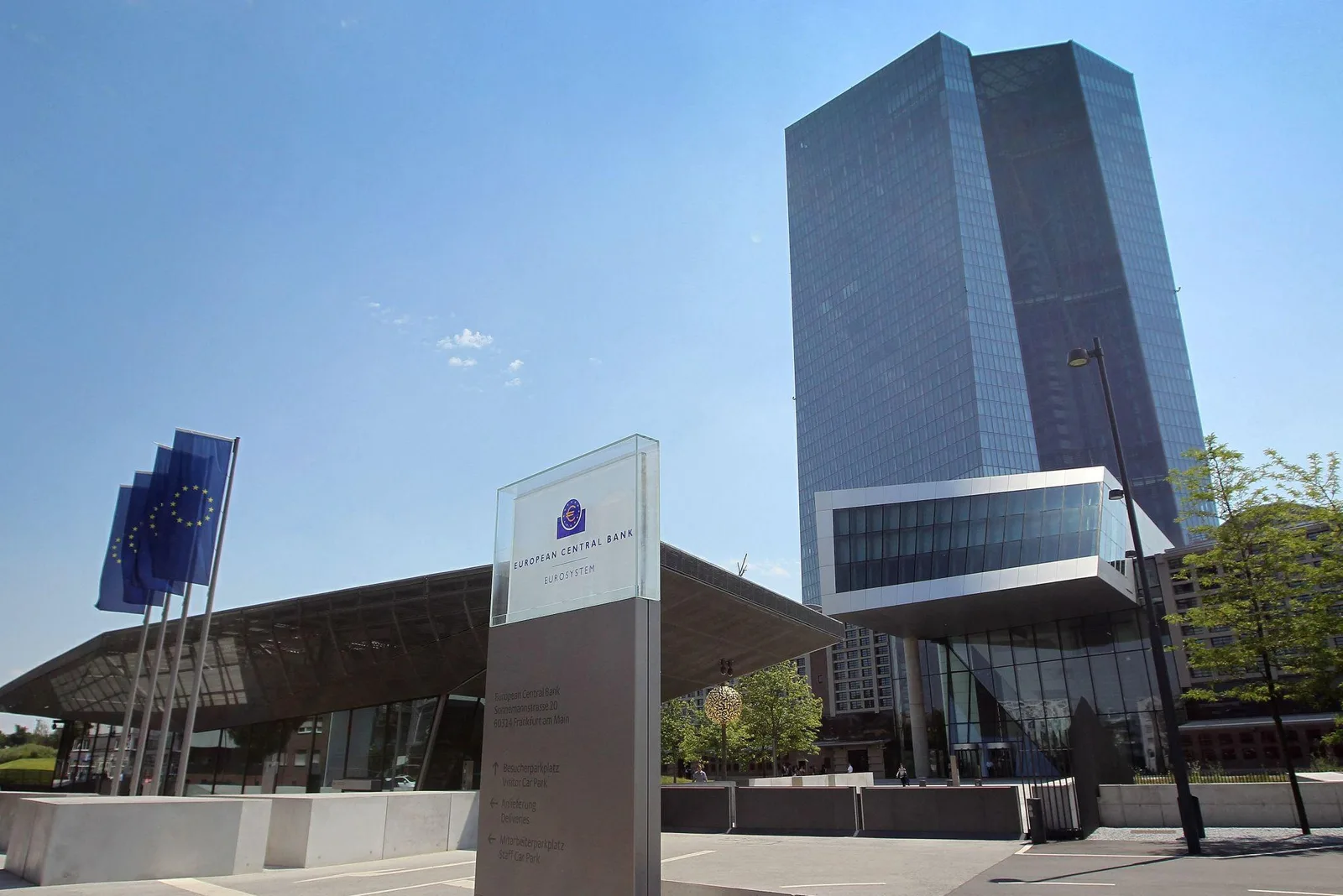
On June 11, the European Central Bank raised its three key interest rates by 25 basis points. It did so after a long period of disinflation. The reason was explicit: the war in the Middle East was generating renewed inflationary pressure, primarily through energy. Eurosystem projections now foresee average inflation of 3% in 2026, 2.3% in 2027, and a return to 2% only in 2028.
The Bank of England has not yet crossed the same threshold. At the end of July, it kept Bank Rate at 3.75%. But three of the nine members of its Monetary Policy Committee voted for an increase to 4%, compared with only two in June. More importantly, the Bank expects inflation, after declining, to rise again during the year as higher energy prices generate both direct and indirect effects.
Taken separately, these developments look like another turn in the monetary cycle. Taken together, they raise a much larger question: what if central banks are not confronting another inflationary episode, but a persistently more inflationary environment?
The world that pushed prices down
Low inflation before the pandemic was not merely the result of central-bank competence. It rested on an exceptionally favorable economic configuration.
Globalization had integrated hundreds of millions of additional workers into the world economy. China had become the world's factory. Supply chains systematically sought the lowest possible costs. Energy moved through broadly globalized markets. Companies offshored production, optimized inventories and reduced logistics costs. In advanced economies, ageing populations and moderate growth also helped contain demand.
Central banks were therefore operating in a world that helped them.
Whenever inflation threatened to become too low, they could cut interest rates. After the 2008 financial crisis, some pushed them to zero or even below. Massive asset purchases completed the architecture.
Gradually, an exceptional monetary regime came to be treated as economic normality.
Governments borrowed at extremely low cost. Companies discovered that mediocre business models could remain viable when financing was almost free. Property prices climbed. Investors accepted ever higher valuations. Governments built fiscal assumptions around historically low interest burdens.
A large part of the global economy was therefore organized around an implicit assumption: capital would remain abundant and cheap.
That assumption is becoming much harder to defend.
The return of constraints
The pandemic first exposed the fragility of global supply chains. The war in Ukraine then demonstrated that energy was not merely a commodity but a geopolitical instrument. Sino-American trade tensions turned economic security into a strategic objective. Then came reshoring policies, technology controls, industrial subsidies, rising military expenditure and proliferating trade barriers.
Each of these developments has an understandable rationale.
Together, they make the global economy less efficient.
A factory built for national-security reasons is not necessarily located where production costs are lowest. A duplicated supply chain designed to reduce geopolitical risk offers greater resilience, but resilience has a price. Strategic inventories tie up capital. Trade restrictions reduce opportunities for arbitrage. The energy transition requires immense investment before its productivity benefits are fully realized.
The system is gradually exchanging part of its efficiency for security.
Economic security is not free.
The Bank for International Settlements has emphasized precisely this problem: central banks increasingly operate in an environment characterized by less flexible supply, geoeconomic fragmentation, demographic ageing and successive shocks that can overlap before previous disruptions have fully disappeared.
That is a fundamental difference.
A temporary shock can be absorbed. A succession of shocks eventually changes the regime itself.
Fighting supply with demand
This transformation places central banks in a particularly uncomfortable contradiction.
Their principal instrument acts on demand.
Higher interest rates make credit more expensive. They slow investment, reduce debt-financed consumption, weigh on property markets, cool labor markets and, eventually, limit companies' ability to raise prices.
But higher interest rates do not produce oil, gas or copper. They do not reopen a closed strait. They do not rebuild a supply chain. They do not create additional workers or end a war.
The Bank of England acknowledges this explicitly: monetary policy cannot influence global energy prices. Its role is instead to prevent higher energy costs from spreading persistently through prices and wages.
That is the paradox.
When a supply shock raises prices, a central bank cannot eliminate the shock. It can only prevent the economy from adapting to it through a generalized rise in prices. To do so, it must maintain sufficient pressure on demand.
In other words, it responds to an economy that has become more expensive by making the financing of that economy more expensive as well.
In a world where shocks are rare, such a strategy can be temporary. In a world where they become recurrent, it risks becoming permanent.
The real danger: transmission
This is why central banks are less concerned with the initial price of oil than with what happens next.
Energy becomes transport. Transport becomes production cost. Production cost becomes retail price. Workers see their purchasing power decline and demand higher wages. Companies anticipate those wages in their pricing. An external shock eventually becomes a domestic dynamic.
The Bank of England explicitly distinguishes between these direct, indirect and second-round effects. It expects the indirect effects of the energy shock to increase during the second half of 2026 and projects UK inflation at around 3.2% in the fourth quarter.
The experience of 2021-2023 weighs heavily on this response. Monetary authorities initially regarded much of the inflation as transitory. It did not prove transitory enough. Supply disruptions and energy costs eventually spread into broader prices and wages, forcing central banks into one of the fastest monetary tightening cycles in decades.
They have little desire to make the same mistake again.
That means they may now prefer the risk of keeping rates too high to the risk of cutting them too quickly.
That change in behavior matters almost as much as inflation itself.
The price of capital is changing
If this hypothesis is correct, the consequences extend far beyond meetings of the ECB, the Federal Reserve or the Bank of England.
The interest rate is one of the fundamental prices in an economy. It determines the cost of moving resources from the present into the future. When it remains persistently higher, the entire economic hierarchy changes.
Property markets must function with more expensive mortgages. Companies must justify investments against higher financing costs. Heavily indebted businesses lose the advantage provided by perpetual refinancing at low rates. Equity valuations become harder to sustain when relatively safe assets themselves offer meaningful returns.
Governments may be the most exposed.
The era of low rates allowed many states to accumulate substantial debts without a proportional increase in their financing costs. As old bonds mature and must be refinanced, that protection gradually disappears.
And the timing is particularly unfavorable.
Governments must simultaneously finance ageing populations, defense, infrastructure, the energy transition, industrial policy and, in some countries, the technological transformation of their economies. Their need for capital is increasing precisely as capital becomes expensive again.
Monetary policy then converges with fiscal policy.
And the room for maneuver narrows on both sides.
The inflation of power
There is an even deeper dimension.
Some of the new inflationary pressures result from decisions that governments are making deliberately.
Reindustrialization is expensive. Securing supply chains is expensive. Building strategic reserves is expensive. Expanding military capabilities is expensive. Producing domestically what could previously be bought more cheaply abroad is often expensive.
Yet major powers increasingly appear to believe that this price is worth paying.
The global economy is therefore entering a period in which efficiency is no longer the overriding objective. Resilience, sovereignty, energy security, technological control and military capability are assuming greater importance.
This does not mean inflation will remain permanently high. Productivity gains from artificial intelligence, automation, new energy capacity or weaker demand could exert powerful disinflationary forces. Trade fragmentation itself is not mechanically inflationary: by reducing real incomes and demand, it can produce effects that partially offset the initial supply shock.
It would therefore be excessive to proclaim an era of permanent inflation.
But it is becoming equally imprudent to assume that the world will naturally return to the regime of the 2010s.
The end of the interlude
For years, the dominant question was how far central banks could cut interest rates.
Then it became: when will they finally be able to cut them?
A third question is now emerging: what if they can no longer cut them as far as they once did?
The difference is considerable.
A world in which interest rates fluctuate around levels persistently higher than those of the 2010s is not simply the same system with more expensive mortgage payments. It is a world in which debt costs more, capital becomes more selective, governments face harder spending choices and resilience to geopolitical shocks is paid for directly through the balance sheets of companies and households.
Central banks did not create this world. They are trying to prevent its contradictions from becoming permanent inflation.
The problem, then, may no longer be when they can return interest rates to normal.
It may be discovering that the normal they hoped to return to no longer exists.
Main Sources
- European Central Bank — “Monetary policy decisions”, June 11, 2026.
- European Central Bank — “Monetary policy statement”, June 11, 2026.
- Bank of England — “Monetary Policy Report”, July 2026.
- Bank of England — “Monetary Policy Summary and Minutes”, July 30, 2026.
- Bank for International Settlements — research and commentary on supply shocks, trade fragmentation and monetary policy.
Atlas Limits Research Desk
Atlas Limits’ editorial and analytical desk.