Some transformations arrive with a crash. Others derive their power precisely from their slowness. Demography belongs to the second category. It does not trigger a market collapse in a single day, bring down a government overnight or immediately set financial markets on edge. Yet decade after decade, it changes the size of economies, the composition of societies, the demands placed on states and, ultimately, the balance of power.
The world is now entering one of these great transitions. For much of the twentieth century, rapid global population growth was the dominant demographic phenomenon. That dynamic is now fragmenting. Some societies are ageing at unprecedented speed, while others continue to welcome exceptionally large generations. In many countries, fertility has fallen below replacement level. Elsewhere, hundreds of millions of young people will progressively enter the labour market.
What matters, therefore, is no longer simply the growth of the world's population. It is its redistribution.
According to the United Nations, the global population is expected to continue growing for several decades, rising from around 8.2 billion in 2024 to a peak of approximately 10.3 billion in the mid-2080s before declining slightly. But this global curve conceals radically different national trajectories. A growing part of the world is already approaching demographic stagnation or decline, while most future population growth will be concentrated in a relatively small number of countries.
This divergence could become one of the defining forces of the twenty-first century.
A world of children becomes a world of older people
Demographic transition generally accompanies development. As infant mortality falls, education expands, urbanisation accelerates and women participate more fully in economic life, families tend to have fewer children. This process first became visible in advanced economies. It is now spreading much more widely.
The global fertility rate has fallen from around five children per woman in the 1950s to roughly 2.25 today. In more than half of all countries and territories, fertility is already below the level required for long-term population replacement, generally estimated at around 2.1 children per woman.
Europe has been living with this reality for several decades. Italy, Spain, Germany and many Central European countries must now contend with ageing populations and, without immigration, often declining ones.
But the phenomenon is no longer confined to Western economies.
China, long associated with demographic scale, has begun to lose population. The one-child policy accelerated a transformation that economic development, urbanisation and the rising cost of living subsequently entrenched. Despite the gradual removal of birth restrictions, fertility remains very low.
Japan is even further along this path. Its population has been shrinking for more than a decade, and the proportion of elderly people is among the highest in the world. South Korea represents an even more striking case: its fertility rate remains far below replacement level despite substantial public policies designed to encourage births.
East Asia, one of the great demographic and then industrial engines of the second half of the twentieth century, is discovering the consequences of economic success accompanied by shrinking families.
When ageing becomes an economic issue
An ageing population does not necessarily condemn an economy to decline. But it profoundly changes the way that economy operates.
During decades of demographic expansion, many countries benefited from an especially favourable structure: a large working-age population supported a relatively small elderly population. This “demographic dividend” contributed to the economic rise of several Asian countries.
That mechanism is now beginning to reverse.
As large generations leave the labour market and are replaced by smaller cohorts, companies face greater difficulty recruiting workers. Tax revenues depend on a relatively narrower base while spending on pensions, long-term care and healthcare increases.
Pay-as-you-go pension systems are particularly exposed to this shift. Their sustainability implicitly depends on maintaining a sufficiently favourable ratio between workers and retirees. As that ratio deteriorates, governments are left with few painless options: increase contributions, reduce relative benefits, raise the retirement age, expand labour-force participation or accept more immigration.
Demography then turns a statistical trend into a political question.
European debates over pensions already illustrate this reality. Behind the fiscal choices lies a constraint that is difficult to escape: societies in which life expectancy rises while younger generations become smaller must redefine how they finance old age.
Africa takes the demographic lead
While Europe and East Asia grow older, Africa is following a different trajectory.
The continent had fewer than 300 million inhabitants in 1960. Today, it is home to roughly 1.5 billion people and is expected to account for a substantial share of global population growth over the coming decades.
This transformation is particularly pronounced in sub-Saharan Africa. Nigeria could become one of the world's most populous countries during this century. The Democratic Republic of the Congo, Ethiopia, Tanzania and several other states are also expected to experience major population increases.
The consequences extend far beyond Africa itself. Humanity's demographic centre of gravity is gradually moving southward.
In 1950, Europe accounted for more than one-fifth of the world's population. Its share is now below 10% and is expected to continue declining. Africa, by contrast, could account for close to a quarter of humanity by 2050 and an even greater proportion during the second half of the century.
Yet this shift does not automatically translate into power.
A young population can be an extraordinary asset if it has access to education, infrastructure, capital and employment. Under those conditions, it can generate a demographic dividend similar to the one enjoyed by several Asian economies. But when economies fail to create enough jobs, the same dynamic places enormous pressure on cities, education systems, public finances and social stability.
Africa's central challenge will therefore not simply be accommodating more people. It will be converting demographic growth into productive capacity.
Two shortages begin to meet
This divergence creates an almost paradoxical situation.
One part of the world will possess capital, infrastructure and strong institutions but progressively lack workers. Another will possess an enormous potential workforce but not necessarily the jobs or investment required to employ it.
Migration becomes one of the points at which these two realities meet.
Europe already provides an example. Labour shortages are increasing in sectors including healthcare, construction, agriculture, services and industry, even as migration remains politically sensitive. Germany, Italy and other European economies understand that a sustained decline in their working-age populations would complicate their economic models. At the same time, integrating newcomers raises questions of housing, identity, social cohesion and domestic politics.
The paradox is likely to intensify: the further ageing advances, the greater the structural demand for foreign workers may become in some economies, while political resistance to immigration may also increase.
Demography will therefore not erase borders. It is more likely to increase the pressure placed upon them.
Asia is not one demographic story
It would nevertheless be misleading to speak simply of an ageing Asia.
The continent contains some of the world's oldest societies and some of its youngest. China, Japan and South Korea are entering periods of demographic contraction, while India still has a relatively young population and has overtaken China as the world's most populous country.
This distinction could have major economic consequences.
China built part of its industrial rise on an enormous workforce created by the demographic transformations of previous decades. It must now continue its development with fewer new workers and a growing retired population.
India, by contrast, still has a favourable demographic window. But as in Africa, that opportunity is not automatic. It will depend on the country's ability to improve education and skills, increase women's participation in the labour market, develop infrastructure and create enough productive jobs to absorb millions of new workers.
Demography creates possibilities. It does not turn them into prosperity by itself.
Businesses will have to adapt too
The demographic shift does not concern governments alone.
An ageing society consumes differently. Healthcare, personal services, insurance, wealth management and age-adapted products become more important. Housing requirements evolve. Savings patterns change. Companies must manage older workforces while competing more intensely for certain skills.
Young societies generate a different set of demands: enormous needs for housing, transportation, telecommunications, education, consumer goods and financial services.
The geography of tomorrow's markets will therefore not necessarily resemble today's.
Multinational companies that have long regarded Europe, North America, China and Japan as their principal reservoirs of consumers will gradually have to look more closely at India, Africa and parts of Southeast Asia.
Purchasing power will, of course, remain decisive. But demography is already indicating where many of the world's future consumers, workers and taxpayers will be located.
Technology confronts the shortage of people
Ageing could also accelerate another transformation: automation.
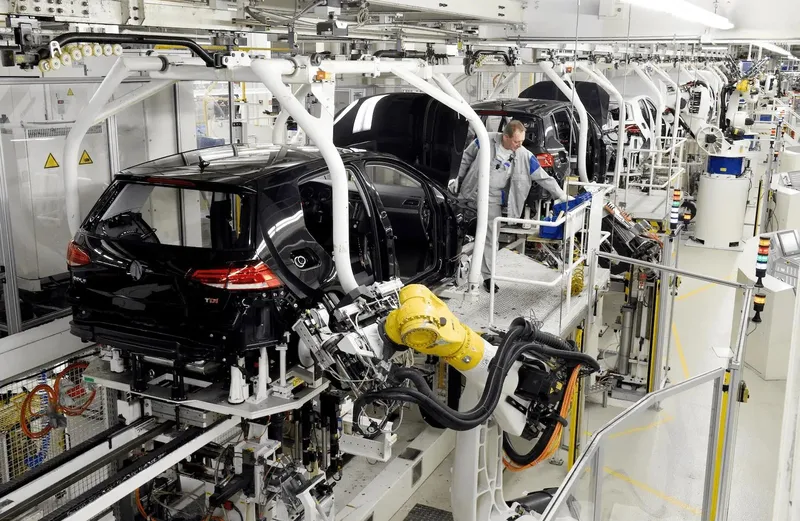
Japan has invested heavily in robotics for decades, partly because its demographic structure makes labour substitution particularly attractive. China is now rapidly expanding industrial automation as its working-age population begins to decline.
Artificial intelligence could amplify this process.
In ageing economies, automation will not be pursued merely to reduce costs. It could become a means of maintaining production despite shortages in certain categories of labour.
A new relationship between demography and technology may therefore emerge: societies with fewer workers will have a stronger incentive to increase the productivity of each one.
This will not solve every problem associated with ageing. A robot can manufacture an industrial component, but it does not automatically become a contributor to a pension system. Artificial intelligence can increase a company's productivity, but it does not mechanically replace the demand, tax revenues or social structures generated by a human population.
Technology may nevertheless allow ageing economies to push back some of the constraints imposed by demography.
A silent redistribution of power
The geopolitical consequences are more difficult to quantify, but they could be considerable.
A state's power never depends solely on the number of people living within its borders. Wealth, technology, institutions, military capabilities and political organisation matter more than population alone. Singapore can exercise far greater economic influence than countries many times its size.
But demography still imposes limits.
It shapes the potential size of the domestic market, the depth of the labour pool, the recruitment base available to armed forces and part of the tax capacity that finances the state.
Ageing powers will therefore have to maintain their influence while accounting for a declining share of the world's population. Europe will remain wealthy and technologically advanced, but its relative demographic weight will continue to fall. China will have to manage its ambitions as a major power while its population gradually contracts. Japan and South Korea will need to preserve economic dynamism despite particularly challenging age structures.
Meanwhile, India, Africa and other regions will inevitably gain demographic weight.
This does not mean that global power will automatically shift in their direction. It means that the demographic conditions under which power is exercised will be profoundly different.
The century of divergent trajectories
For a long time, the global demographic question appeared relatively straightforward: how could the world feed, house and employ an ever-growing population?
That question has not disappeared. In many countries, it remains central. But another question has now been added: how can an economy remain dynamic when its population grows older and begins to shrink?
The twenty-first century will have to answer both at once.
Africa will need to create hundreds of millions of opportunities for an immense young population. Europe will have to adapt its welfare states to older societies. China will need to learn how to produce more with fewer workers. India will have to convert its youth into human capital. Migration will increasingly connect these imbalances, while automation will attempt to compensate for some of them.
There is probably no international summit capable of stopping this transformation, no central bank capable of reversing it with an interest-rate decision and no election capable of rapidly changing its direction.
That is precisely what makes demography so powerful.
It moves slowly, almost silently. But by the time its consequences become visible, the generations producing them have often already been born — or have not been born at all.
And behind the crises, elections and wars that dominate the daily news cycle, the human centre of the world is already shifting.
Main sources
- United Nations — World Population Prospects 2024
- United Nations Department of Economic and Social Affairs, Population Division
- World Bank — demographic data and fertility indicators
- OECD — research on population ageing, employment and pension systems
- International Labour Organization — labour-force data and projections
Atlas Limits Research Desk
Atlas Limits’ editorial and analytical desk.