For thousands of years, the geography of water largely determined the geography of human societies. Cities developed near rivers, agriculture around fertile basins, and states according to the water resources they could capture, transport, or defend. Egypt depends on the Nile, Mesopotamia on the Tigris and Euphrates, and South Asia on vast river systems fed by the Himalayas. Even modern industrial powers have never truly escaped this elementary constraint: without sufficient accessible water, there can be no major cities, intensive agriculture, or sustainable industrial development.
But something is beginning to change.
For the first time on a large scale, some states are starting to decouple part of their water security from the amount of freshwater naturally available on their territory. They are not eliminating geography. They are investing heavily to work around it.
Seawater desalination lies at the heart of this transformation.
Long regarded as an expensive solution reserved for oil-rich monarchies, islands, or situations of extreme scarcity, desalination is gradually becoming strategic infrastructure. From the Gulf to Morocco, from Israel to Spain, from Australia to China, billions are being invested in facilities capable of transforming an almost limitless resource — seawater — into usable water.
Yet this revolution comes with a price. Producing water where nature does not provide enough requires energy, capital, technology, power grids, and coastal infrastructure. Desalination does not eliminate dependencies.
It shifts them.
Scarcity Is Changing Scale
The planet does not, strictly speaking, lack water. It lacks accessible freshwater, available in the right place, at the right time, and at an economically viable cost.
Population growth, urbanization, rising agricultural and industrial demand, overexploitation of groundwater, and the effects of climate change are all increasing pressure on this resource. More than two billion people already live in countries exposed to water stress. According to the latest joint WHO and UNICEF estimates cited by UN-Water, 2.1 billion people still lacked access to safely managed drinking water in 2024.
The issue is no longer merely humanitarian.
It is becoming economic and strategic.
Prolonged water shortages reduce agricultural yields, accelerate groundwater depletion, raise industrial costs, weaken power systems, and can eventually undermine the growth of cities themselves. In some arid regions, urban expansion increasingly depends on the ability of public authorities to create new water resources.
Traditional solutions are reaching their limits. Building dams does not create rainfall. Pumping more groundwater eventually depletes aquifers. Transferring water between basins redistributes the resource without creating more of it.
Desalination introduces a conceptual break: it turns the ocean into a potential reservoir.
From Heat to Membranes
The idea is not new. What is changing is its economics.
The first large modern desalination plants relied heavily on thermal processes: water was heated, evaporated, and then condensed to separate freshwater from salt. These technologies were particularly well suited to Gulf oil-producing states, where abundant and relatively cheap energy could absorb their enormous power requirements.
The rise of reverse osmosis gradually changed the equation.
The process forces seawater under high pressure through membranes that retain most salts and impurities. Advances in membranes, pumps, and energy-recovery systems have dramatically improved efficiency. The International Energy Agency now estimates that membrane-based technologies account for more than 80% of installed desalination capacity worldwide. Even in the Middle East and North Africa, where thermal technologies long dominated, membrane systems now account for more than 60%.
This shift matters because it brings desalination closer to the electricity system.
The desalination plant of the twenty-first century is no longer necessarily an extension of a thermal power station fueled by oil or gas. It can increasingly operate on electricity generated from solar, wind, nuclear power, or a diversified grid.
Water is therefore becoming an energy conversion.
And that conversion creates new possibilities for countries with extensive coastlines and strong renewable-energy potential.
The Gulf, Laboratory of a Post-Scarcity Model
Nowhere is this transformation more visible than on the Arabian Peninsula.
The states of the Gulf Cooperation Council account for roughly one-third of global desalination capacity. In several countries, including the United Arab Emirates, Kuwait, and Bahrain, municipal water supplies depend almost entirely on the technology. The Middle East and North Africa now produce around 12 billion cubic meters of desalinated water annually, of which nearly two-thirds is used for drinking water.
Cities of several million people have therefore been able to expand in environments that could hardly have supported such populations from natural water resources alone.
The result is a striking demonstration of technology’s ability to alter geographic constraints.
But this success also reveals a vulnerability.
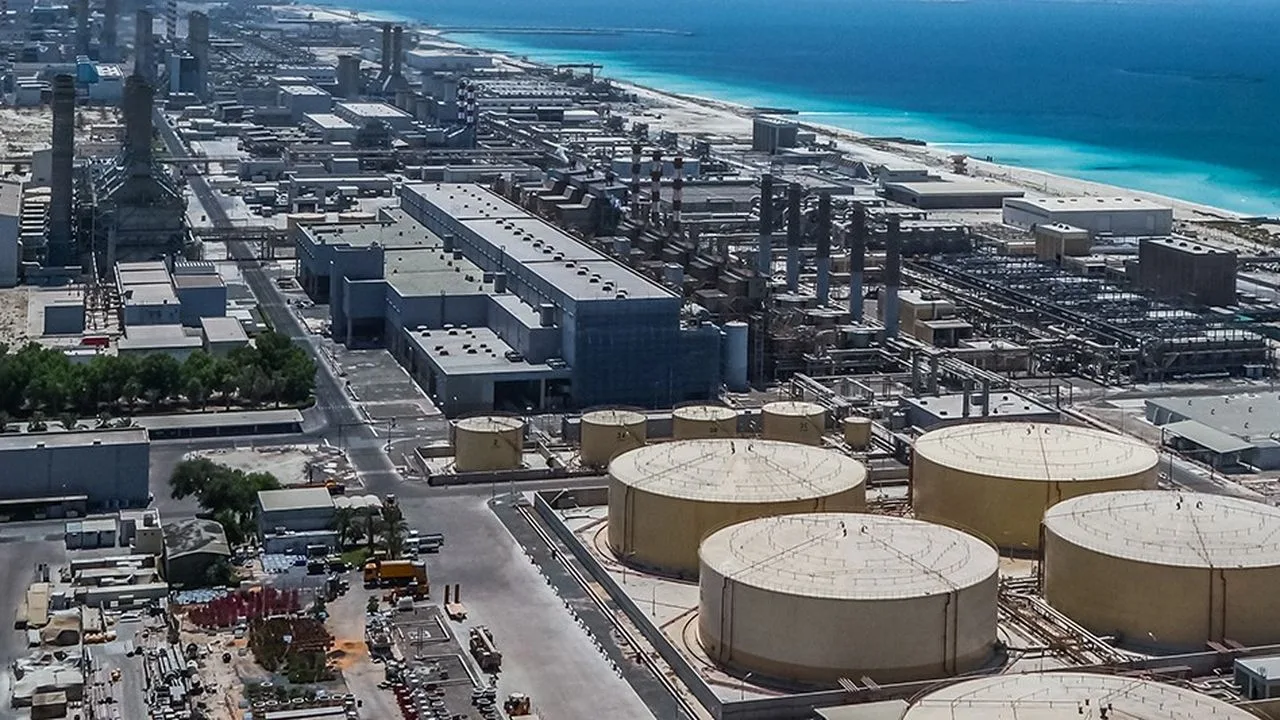
A modern large-scale plant can produce close to one million cubic meters of water per day. It can also consume as much electricity as a city of several hundred thousand households. The IEA has warned that major desalination complexes in the Middle East have become critical infrastructure whose disruption could directly threaten drinking-water supplies.
In these countries, a desalination plant is no longer simply an industrial facility.
It is part of the architecture of national security.
Oil terminals, power stations, gas infrastructure, and water facilities are increasingly part of the same network of strategic vulnerabilities.
Israel and the Construction of a Water System
Israel offers another example of this transformation.
The country has long faced a difficult water equation: population growth, significant agricultural demand, limited natural resources, and highly variable rainfall. Yet its response has never relied on desalination alone. Instead, Israel progressively built a system combining seawater desalination, wastewater reuse, transfer infrastructure, network management, and demand policies.
In 2023, Israel produced roughly 587 million cubic meters of desalinated seawater, while nearly 595 million cubic meters of treated wastewater were reused.
The Israeli case is instructive precisely because it shows the limits of a purely technological interpretation. Desalination only becomes transformative when it is integrated into a complete water system.
The water must be transported. Networks must be maintained. Wastewater must be recovered. Agriculture must use resources adapted to its needs. Natural reserves must continue to play their role.
Technology does not replace water policy.
It expands its possibilities.
Morocco Is Changing Its Water Paradigm
This evolution is now taking on particular importance in Morocco.
For decades, the Kingdom’s water strategy was largely built around dams. That policy helped secure urban supplies, support irrigated agriculture, and underpin several decades of economic development. But successive drought years, pressure on aquifers, and rising urban and agricultural demand have gradually exposed the limits of a system heavily dependent on rainfall.
The country is now engaged in a much deeper transformation of its water model.
By spring 2026, Morocco’s annual desalination capacity had reached approximately 420 million cubic meters. The stated objective is to raise it above 1.7 billion cubic meters per year. By 2030, Moroccan authorities aim to meet more than half of the country’s drinking-water needs through desalination, while dedicating part of the output to agriculture.
This change goes far beyond building a few additional plants.
It amounts to reshaping the country’s water geography.
Major cities and agricultural regions along the Atlantic coast can progressively receive water whose availability depends less directly on rainfall. Conventional resources that are freed up can then be redirected to inland regions or used to reduce pressure on aquifers.
The Casablanca project illustrates this new scale. Presented by Moroccan authorities as Africa’s largest desalination project, it is intended to be powered by renewable energy. This link between water and electricity is decisive: Morocco is seeking not simply to replace hydrological dependence with energy dependence, but to build new capacity in both sectors simultaneously.
Desalination is therefore becoming one of the points where water policy, energy policy, food security, and territorial planning intersect.
A Global Water Industry
The phenomenon now extends far beyond countries traditionally associated with water scarcity.
According to the International Energy Agency, around 21,000 desalination facilities now operate in nearly 150 countries. Half of global capacity remains concentrated in the Middle East and North Africa, but plants are multiplying in China, the United States, Europe, Asia, and many island economies.
This diffusion is creating a strategic industry.
Membranes, high-pressure pumps, energy-recovery systems, hydraulic engineering, chemical treatment, automation, infrastructure construction, maintenance, and electricity generation form a substantial value chain.
A country that relies on desalination therefore no longer depends only on its natural resources. It also depends on its ability to finance, build, operate, and renew a complex industrial infrastructure.
That shift could create a new hierarchy.
States with coastline access, capital, abundant energy, and strong engineering capabilities will be better positioned to secure their water supplies. Poor and landlocked countries will face a far more difficult equation.
The paradox is stark: the sea contains an almost unlimited quantity of water, but turning that water into an economic resource remains a matter of power.
Energy, the New Water Frontier
The main constraint remains energy.
Reverse osmosis has significantly reduced the amount of energy required for desalination, but it has not eliminated it. The IEA estimates that a modern seawater desalination plant generally consumes around 2.5 to 6 kilowatt-hours per cubic meter for the overall process, depending on technology and operating conditions. Thermal processes can require far more.
At a small scale, those figures appear modest. At the scale of a metropolis or a country, they become substantial.
Global energy demand for desalination has nearly doubled since 2010 and, under the IEA’s current trajectory, could double again by 2030.
This is likely where the next stage will unfold.
The simultaneous expansion of solar photovoltaics, wind power, electricity storage, and more flexible grids could reduce both the energy cost and the carbon footprint of desalination. Regions combining strong sunlight with access to the sea — North Africa, the Arabian Peninsula, Australia, and parts of Latin America — could enjoy a major structural advantage.
Sunlight could indirectly become a source of water.
Not because it would generate more rainfall, but because its energy could be used to transform the ocean.
The Problem Does Not Disappear Into the Sea
Desalination nevertheless has a major environmental limitation: producing freshwater requires separating out the salt.
What remains is a highly concentrated brine, often mixed with substances used during treatment. If discharged into the sea without sufficient dispersion, it can alter local salinity, temperature, and oxygen conditions in marine ecosystems.
The larger the desalination industry becomes, the more important this issue will be.
The challenge is therefore to improve discharge systems, reduce chemical use, increase plant efficiency, and potentially recover valuable minerals or other components from brine.
The idea of a completely limitless resource would be misleading.
The ocean can provide enormous volumes of water, but it is not a free infrastructure from which societies can extract and discharge indefinitely without consequences.
Desalination Will Not Save Global Agriculture
Another limitation comes from the economics of water itself.
Producing a few hundred liters of drinking water per person per day for a major city is one thing. Producing the thousands of cubic meters needed to irrigate large areas of farmland is another.
Agriculture remains by far the largest consumer of freshwater in many regions of the world. Using desalinated water on a massive scale to grow cereals or other low-value crops is generally far harder to justify economically than using it for households, industry, or certain high-value forms of intensive agriculture.
Desalination is therefore unlikely to turn every desert into farmland.
It can, however, change how existing water resources are allocated. If a large coastal city is supplied with desalinated water, the reservoirs and aquifers it previously relied on can be used more extensively inland or for selected agricultural purposes.
Its impact can therefore extend far beyond the volume of water it directly produces.
When Water Becomes Critical Infrastructure
This transformation also has a geopolitical dimension that remains insufficiently examined.
A country dependent on a transboundary river must watch what upstream states do with dams. A country dependent on rainfall must manage climatic variability. A country dependent on desalination must protect its coastlines, power plants, seawater intakes, pipelines, networks, and industrial facilities.
The vulnerability changes form.
Large desalination complexes are usually built along coastlines, close to major urban centers. Their concentration creates economies of scale, but also major points of failure. A prolonged power outage, maritime pollution event, natural disaster, cyberattack, or military conflict can rapidly disrupt operations.
As tens of millions of people become dependent on these installations every day, protecting them will increasingly resemble protecting power plants, ports, submarine cables, or energy terminals.
Water security then fully enters the realm of national security.
A New Geography of Power
Desalination will not end water scarcity.
It will not replace conservation, wastewater reuse, network modernization, groundwater protection, or agriculture better adapted to available resources. Nor will it solve the problems of landlocked regions located hundreds of kilometers from the coast.
But it is changing an equation that once seemed almost immutable.
For most of human history, access to water depended first and foremost on geography. A river had to cross the territory, an aquifer had to exist underground, or the sky had to provide enough rain.
In the twenty-first century, another variable is increasingly being added to that geography: industrial capacity.
A state with a coastline, energy, capital, and technology can now manufacture a growing share of its water.
That does not mean the end of scarcity. It means scarcity itself is becoming more political, more technological, and more economic.
The countries best prepared for the future will not necessarily be those to which nature has given the most water, but those that build the most resilient systems to capture it, produce it, recycle it, transport it, and use it efficiently.
Desalination is not abolishing the geopolitics of water.
It is opening a new era.
Main Sources
- UN-Water / WHO / UNICEF — global data on drinking-water access, sanitation, and water stress.
- International Energy Agency (IEA) — Wired for Water: How Electrification Is Transforming Desalination; data on global capacity, technologies, energy consumption, and the expansion of reverse osmosis.
- International Energy Agency (IEA) — research on the energy-water nexus and projections for desalination-related energy demand.
- Kingdom of Morocco / Ministry of Equipment and Water / MAP — Moroccan desalination capacity, 2030 objectives, and major water-infrastructure projects.
- Israel Central Bureau of Statistics / Israel Water Authority — desalinated-water production, wastewater reuse, and the structure of Israel’s water system.
Atlas Limits Research Desk
Atlas Limits’ editorial and analytical desk.