By extending its interdiction strategy to overland routes and the Caspian Sea, Washington is seeking to deprive Tehran of its remaining logistical channels. But this expansion also shifts the confrontation toward neighboring countries, commercial intermediaries, and international financial infrastructure.
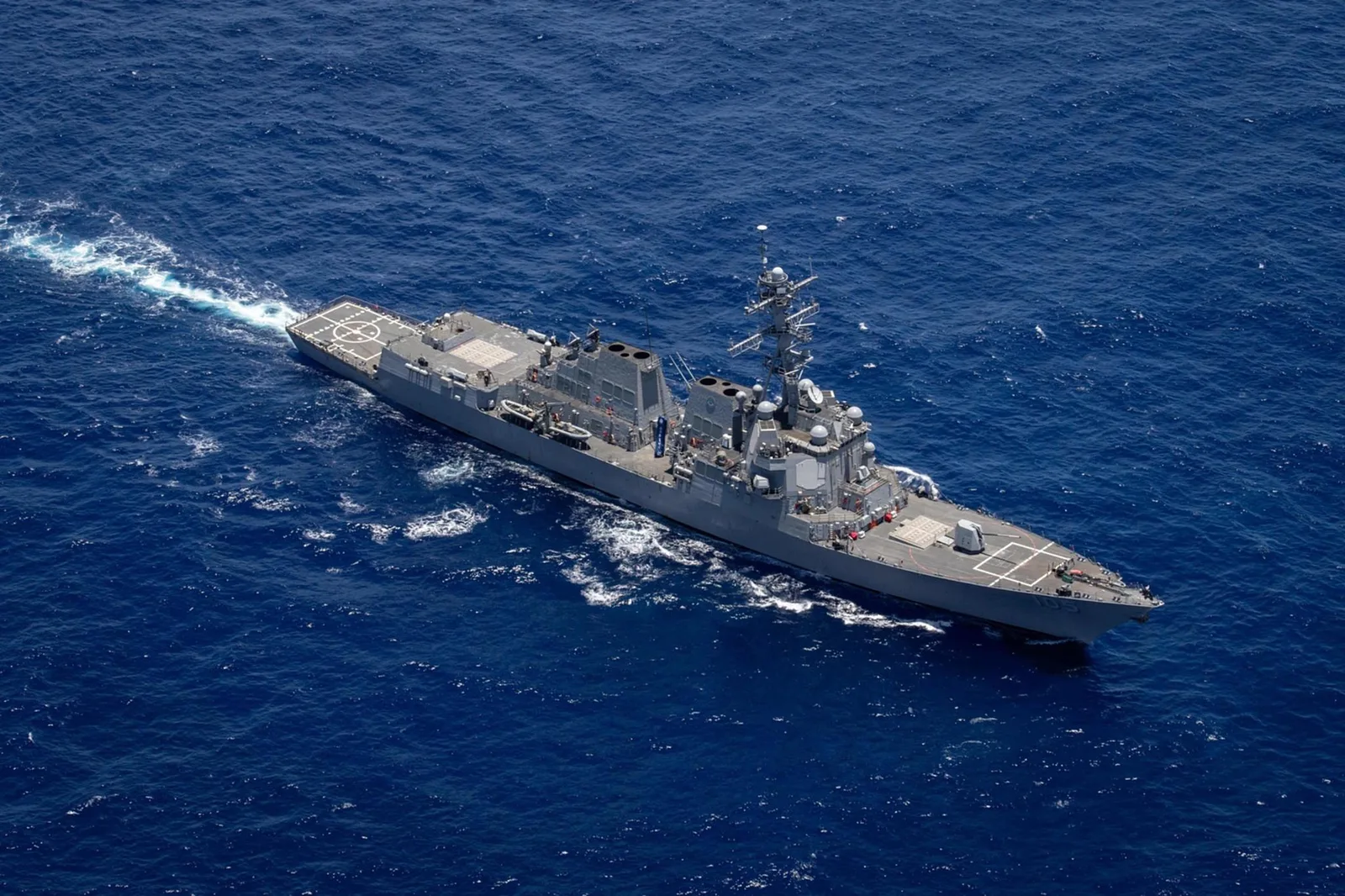
The geography of American pressure on Iran is changing. For several months, Washington's naval blockade has sought to restrict Iranian oil exports and control the country's maritime access. On November 7, 2026, the United States announced a further step: the creation of Task Force Iron Gate, a structure designed to disrupt the movement of weapons, dual-use technologies, sanctioned goods, and illicit revenues through Iran's land borders and the Caspian Sea.
The announcement does not mean that American forces can now physically close Iran's land borders. It reveals a more fundamental shift: Washington intends to extend the logic of the blockade to the networks that allow Iran's economy and military apparatus to maintain their supplies. Pressure is no longer directed exclusively at ports, oil tankers, or maritime chokepoints. It increasingly encompasses railway corridors, road transport operators, transshipment facilities, financial institutions, and companies operating in third countries.
This development is gradually transforming a maritime interdiction operation into a strategy of logistical and financial coercion. 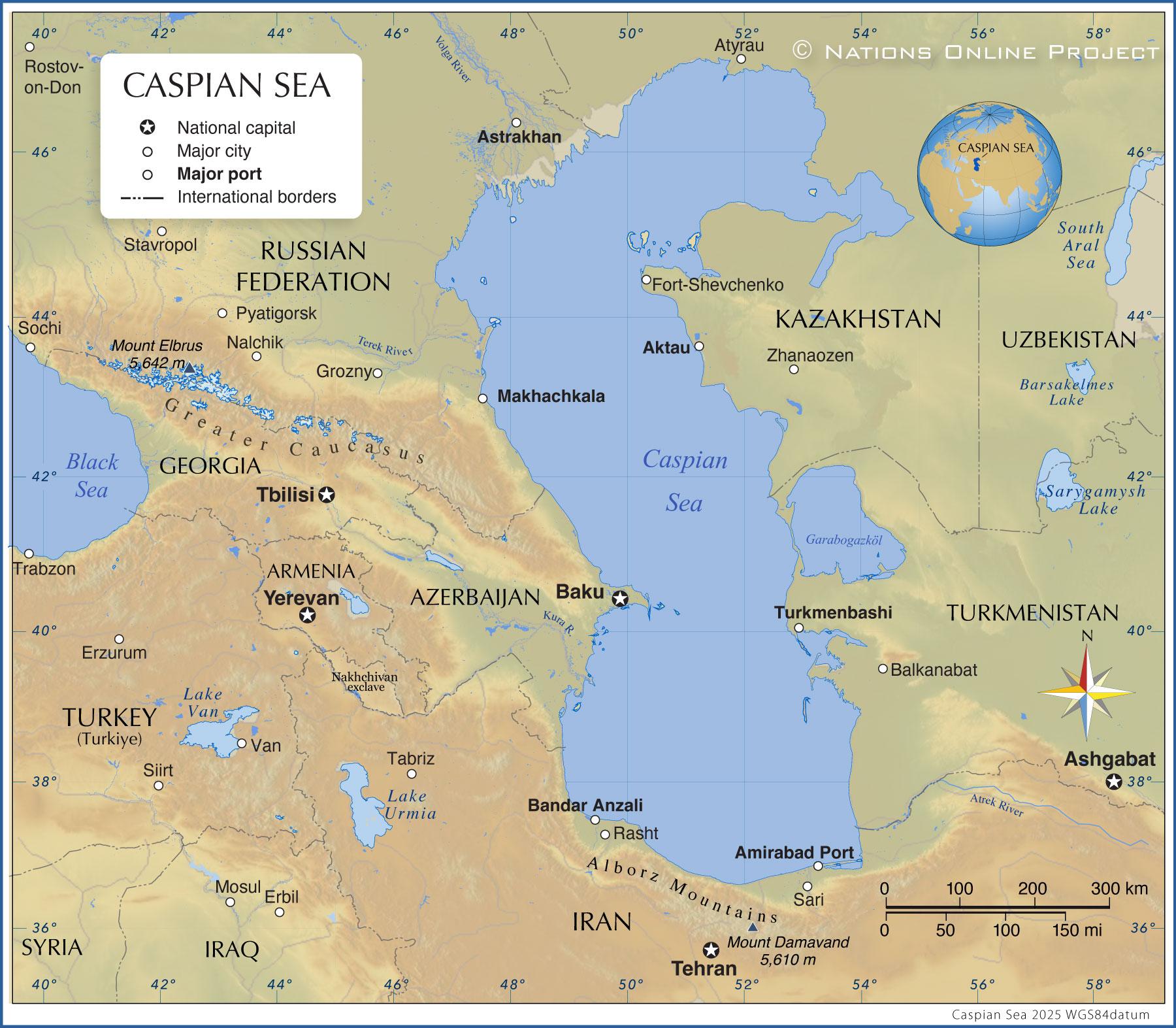
The Sea Was No Longer Enough
The American naval blockade has severely disrupted Iranian trade. According to statements by the US military command, it has prevented more than $25 billion in crude oil exports. This figure represents an American estimate of the blockade's impact, rather than an independently verified assessment of the losses actually sustained by the Iranian economy.
Maritime monitoring data nevertheless indicate a considerable contraction in Iran's export opportunities. In early November, United Against Nuclear Iran identified at least 54 tankers carrying Iranian oil or related products along the country's coastline. The organization also reported that it had not observed a tanker loaded with Iranian crude successfully leaving the Gulf of Oman and evading the American blockade since mid-July.
Yet even an effective maritime blockade cannot completely isolate a continental country with thousands of kilometers of land borders.
Iran shares borders with Turkey, Iraq, Armenia, Azerbaijan, Turkmenistan, Afghanistan, and Pakistan. It also has access to the Caspian Sea, an enclosed maritime basin connecting it to Russia, Kazakhstan, and other regional states.
These connections provide opportunities to reorganize trade. When a port becomes inaccessible, goods can be transported by truck, rail, or multimodal supply chains crossing several countries. Such movements become more expensive, slower, and harder to finance, but they do not necessarily disappear.
A Reuters investigation established that Iran had imported at least $2 billion worth of military-related equipment since January 2025 through networks involving ships arriving from Russia, road transport across Central Asia, and cargo aircraft from China.
The November 7 decision responds to this capacity for adaptation. Its purpose is not so much to invent a new blockade as to prevent alternative supply routes from offsetting the effects of the existing one.
The Caspian Sea: A New Strategic Frontier
The Caspian Sea occupies a distinctive position in this development. Unlike the Persian Gulf, it is not a maritime space that American naval forces can access directly from the world's oceans. Its five littoral states—Iran, Russia, Kazakhstan, Turkmenistan, and Azerbaijan—have their own economic and security interests, while the sea's legal framework restricts the military presence of external powers.
It would therefore be particularly difficult for Washington to reproduce in the Caspian the naval interception model applied off Iran's southern coastline.
Pressure must instead operate through other channels: cargo monitoring, identification of vessel ownership, scrutiny of financial intermediaries, customs cooperation, and sanctions against companies involved in prohibited transactions.
The Caspian is especially important because it contributes to economic connectivity between Russia and Iran. It forms part of the International North–South Transport Corridor, designed to connect Russian and Eurasian markets with Iran and, beyond it, the Indian Ocean.
This corridor is not a single piece of infrastructure. It combines roads, railway connections, ports, and maritime segments. Such diversity makes commercial networks more resilient, but it also creates numerous points at which American authorities can identify intermediaries exposed to sanctions.
The objective is therefore not necessarily to halt all Russian-Iranian trade. It is to make certain transactions sufficiently risky that banks, insurers, transport companies, and suppliers prefer to withdraw from them.
The distinction is essential. A route can remain physically open while becoming economically difficult to use.
A Blockade Through Intermediaries
Task Force Iron Gate, based in Tampa, Florida, and reportedly comprising approximately twenty civilian and military personnel, is not large enough to monitor all Iranian borders directly.
Its announced purpose is to coordinate the military command, intelligence services, and American government agencies, particularly the Treasury, State, and Justice Departments.
This structure reveals the likely nature of the operation. Intelligence services can identify a supply chain; financial authorities can examine its payments; diplomatic officials can request stronger controls from a transit country; and judicial authorities can pursue certain participants where a legal basis for prosecution exists.
The intended effect is cumulative. Every additional intermediary becomes a potential pressure point.
This approach extends Operation Economic Outcast, announced by the US Treasury on August 24, 2026. Washington had already expanded the risks of secondary sanctions across several sectors, including technology, aviation, maritime transport, gold, and digital assets.
The mechanism of secondary sanctions is central. Under certain conditions established by American law, it allows Washington to impose measures on foreign individuals or institutions engaging in specified activities with Iranian actors, even when a transaction has no direct American connection.
For a foreign bank, the consequences can be substantial: losing access to correspondent banking relationships in the United States, having certain transactions blocked, or becoming the target of American sanctions itself.
For a transport company, the problem is different but equally concrete. It must identify the actual shipper, the final recipient, the nature of the cargo, and any sanctioned parties involved in the transaction.
A shipment of electronic components, industrial machinery, or chemicals may be part of entirely legitimate civilian trade. Some of these products nevertheless have potential military applications, requiring an assessment of their classification, destination, and ultimate use.
The new American strategy therefore increases compliance costs, including for transactions that are not prohibited.
It does not automatically make all trade with Iran illegal under every jurisdiction. But it can encourage international operators to abandon otherwise authorized transactions when they consider the financial, regulatory, or reputational risks too high.
Third Countries at the Center of the Confrontation
The expansion of the American operation places several countries before particularly difficult choices.
Turkey provides an important commercial connection between Iran and European markets. It maintains economic relations with Tehran while belonging to NATO and preserving close financial ties with Western markets. Stronger American pressure could therefore lead to tighter inspections, financing difficulties, or restrictions targeting particular service providers, without necessarily causing a complete breakdown in bilateral trade.
Iraq faces an even more sensitive situation. Its economy, energy infrastructure, and commercial networks maintain extensive connections with Iran, while its financial system remains exposed to American oversight mechanisms. In October, the US Treasury had already announced measures against an Iraqi bank accused of facilitating Iranian financial networks. The Iraqi-Iranian border is consequently becoming an area where economic dependencies, national sovereignty, and strategic rivalries overlap.
Pakistan and Afghanistan present another configuration. Cross-border trade plays an important role in local economies, particularly in areas with limited logistical alternatives. Additional restrictions can affect transport operators, merchants, and border communities far beyond the military sectors being targeted.
To the north, Azerbaijan and Turkmenistan occupy strategic positions in the connections linking Iran, the Caspian Sea, and Central Asia. Kazakhstan, despite having no direct land border with Iran, participates in Caspian transport networks. These countries must reconcile their ambitions as transit hubs with the risk that certain operations could become associated with sanctioned networks.
Russia and China represent two distinct cases. Moscow has strategic interests in maintaining its connections with Iran and considerable experience operating commercial networks under Western restrictions. Beijing, Tehran's principal trading partner, possesses industrial, financial, and logistical capabilities that can sustain certain exchanges, although Chinese companies differ significantly in their exposure to international markets.
It would therefore be excessive to assume that the new American strategy will automatically lead either power to sever its relations with Iran.
It may nevertheless increase the cost of those relationships and deepen the distinction between operators capable of absorbing substantial sanctions risks and those more dependent on international financial channels.
Economic Pressure and Its Contradictions
The American objective is to reduce Iran's ability to finance its military apparatus, replenish weapons inventories, and acquire technologies required for strategic production.
But logistical coercion produces consequences extending beyond its original targets.
When a carrier refuses a shipment, a bank terminates a correspondent relationship, or a border crossing introduces stricter inspections, ordinary commercial goods may also be affected. Delays increase, storage costs rise, and companies must commit more working capital.
For an economy already weakened by war, sanctions, and monetary disruption, these constraints can contribute to declining industrial activity, higher prices for imported goods, and difficulties supplying certain civilian sectors.
Humanitarian exemptions and authorizations covering some essential goods do not necessarily eliminate practical obstacles involving payments, transportation, or insurance. A gap can therefore emerge between the theoretical legality of a transaction and its commercial feasibility.
The American strategy also contains a diplomatic contradiction. The more it depends on cooperation from third countries, the more it must account for their economic interests and their determination to preserve a degree of autonomy.
Excessive pressure may secure individual closures, but it can also encourage the development of alternative financial arrangements, specialized transport operators, and less transparent commercial mechanisms.
Success cannot therefore be measured solely by the number of intercepted shipments or sanctioned companies. It depends on Washington's ability to prevent targeted supply chains from being rebuilt over time without triggering uncontrolled regional economic disruption.
Escalation Alongside Negotiation
The creation of Task Force Iron Gate comes as the United States and Iran continue to engage simultaneously in military confrontation and indirect diplomatic exchanges.
On November 7, American forces also announced that they had disabled a commercial vessel flying the flag of Saint Kitts and Nevis, the Huda, following an alleged attempt to breach the blockade in the Gulf of Oman. The episode illustrates the coercive dimension of the maritime operation, while incidents around the Strait of Hormuz continue to sustain substantial risks for commercial shipping.
Meanwhile, Qatar is participating in mediation efforts concerning the conditions for reopening maritime routes, restoring international inspectors' access to Iranian nuclear facilities, and introducing economic measures that could accompany de-escalation.
These discussions do not yet constitute an agreement.
On November 8, Donald Trump nevertheless indicated that additional American strikes would become highly unlikely if negotiations progressed, while maintaining the threat of further military action should they fail.
The expansion of the blockade must therefore be understood through two parallel objectives. It can increase the cost of Iranian resistance and strengthen Washington's negotiating position. It can also become an instrument of sustained pressure if no compromise emerges.
In the short term, the most probable scenario is a selective intensification of inspections, financial designations, and diplomatic engagement with transit states. A comprehensive physical closure of Iran's land borders appears considerably less realistic.
Over the medium term, three developments remain possible: a partial agreement allowing certain restrictions to be relaxed; a prolonged confrontation characterized by increasingly fragmented trade; or regional escalation if interdiction measures trigger incidents involving actors from third countries.
Washington's ability to coordinate its military, financial, and diplomatic instruments will be decisive. But the responses of neighboring states will matter just as much.
The Border Becomes a Network
The November 7 announcement does not alter Iran's territorial boundaries. It changes how the United States seeks to exercise power beyond them.
A conventional blockade relies on controlling an identifiable space: a port, a strait, or a maritime route. The emerging approach seeks to control the conditions under which goods can move, be financed, insured, and delivered, even when they cross several jurisdictions.
This development illustrates a broader transformation in international power relations. Commercial infrastructure is no longer merely an instrument of growth and economic integration. It is becoming a means of coercion, while banks, insurers, logistics platforms, and customs authorities participate, sometimes unwillingly, in the exercise of geopolitical power.
Iran is now one of the most visible arenas of this transformation.
Washington can make routes more expensive, payments more difficult, and intermediaries more vulnerable. It cannot, however, erase Iran's continental geography by decree, nor eliminate the economic interests of the states surrounding it.
The effectiveness of the new strategy will be determined precisely by the tension between the reach of sanctions and the resilience of commercial networks.
The blockade no longer ends at Iran's coastline. Its real frontier is now shifting toward every actor willing—or unwilling—to keep a route open.
Principal Sources
- US Central Command, announcement of Task Force Iron Gate, November 7, 2026, as reported by Reuters and CBS/AP.
- Reuters, Expanding on naval blockade, US military looks to restrict Iranian land commerce, November 7, 2026.
- US Department of the Treasury, Treasury Launches Unprecedented Campaign Against Iranian Regime on Economic D-Day, August 24, 2026.
- US Department of the Treasury, Operation Economic Outcast Targets Iran’s International Financial Networks and Shadow Banking Architecture, October 15, 2026.
- US Department of the Treasury, Operation Economic Outcast Targets Global Maritime Fraud Network Supporting Iranian Regime, November 4, 2026.
- United Against Nuclear Iran, Iran Shipping Update, November 6, 2026.
- Associated Press and Critical Threats Project, military and maritime developments of November 7–8, 2026.
Analysis current as of November 9, 2026. Estimates of economic losses, interdiction figures, and operational statements attributed to parties involved in the conflict should be distinguished from independently verified data.
Atlas Limits Research Desk
Atlas Limits’ editorial and analytical desk.