Kenya occupies a singular position on the African map. It is neither the continent’s most populous country, nor its dominant economy, nor a major military power. It does not possess Nigeria’s energy resources, South Africa’s industrial depth, Ethiopia’s demographic weight, or the mineral wealth of several Central African states. Yet few African countries combine a comparable set of economic, diplomatic, financial, technological, and geographic advantages.
Nairobi has become one of the continent’s leading economic capitals. Mombasa is an essential maritime gateway for much of East Africa. Kenyan companies increasingly operate beyond national borders. Digital finance has found an exceptional testing ground in the country. International organizations, multinational corporations, investors, and foreign diplomatic missions have established regional platforms there. In an environment shaped by Somalia’s fragility, Ethiopia’s tensions, Sudan’s wars, and the landlocked geography of several neighboring economies, Kenya often appears as an island of relative institutional continuity.
That stability, however, should not be confused with an absence of tension.
Kenya now faces a fundamental contradiction. It is seeking to become the pivotal power of East Africa precisely as its own economic and political model begins to encounter its limits. Growth remains relatively strong, but it does not generate enough formal employment. Infrastructure is expanding, but financing it has contributed to a heavier debt burden. The state needs more fiscal revenue, while a growing share of the population is questioning the cost and performance of that state. Nairobi projects an image of African modernity, while deep social fractures remain.
Kenya does not lack ambition. The question is whether its economic, social, and political structures can sustain it.
A Power Born of Geography
The history of modern Kenya cannot be separated from its geography.
During British colonial rule, the territory gradually became an articulation point between the Indian Ocean and the East African interior. The construction of the railway connecting Mombasa to Lake Victoria at the end of the nineteenth century was not merely a colonial infrastructure project. It durably reorganized the economic geography of the region.
Mombasa became the natural maritime outlet for a vast hinterland. Nairobi, itself largely born from the railway, gradually developed into the country’s administrative and economic center.
After independence in 1963, this architecture survived.
Kenya then benefited from a considerable advantage: unlike several of its neighbors, it maintained relative continuity in both state institutions and the market economy. The country experienced political tensions, authoritarian periods, electoral violence, and sometimes profound communal divisions, but it avoided the prolonged civil wars and institutional collapses that devastated several states in the region.
Over time, this continuity produced cumulative advantages.
Banks established themselves in Nairobi. Regional headquarters multiplied. International institutions expanded their presence. The United Nations Environment Programme and UN-Habitat established their global headquarters there, giving Nairobi a status almost unique among cities of the Global South.
Gradually, the Kenyan capital became more than a national capital.
It became a platform.
Nairobi, Capital of a Regional Economy
Kenya has built a relatively diversified economy by regional standards. Agriculture remains essential, particularly through tea, coffee, horticulture, and other export-oriented production. Tourism remains an important source of foreign currency. But services, finance, telecommunications, trade, logistics, and digital activities now play a decisive role.
This diversification partly explains the country’s resilience.
The World Bank expects the Kenyan economy to grow by around 4.7 percent in 2026 and to remain close to the 4.7–5 percent range over the short and medium term. The IMF, meanwhile, projects real growth of approximately 4.5 percent this year. These rates remain significant in an uncertain international environment.
But they also reveal the first limitation of the Kenyan model: the country is growing fast enough to move forward, but not necessarily fast enough — or inclusively enough — to rapidly transform living standards for a young and expanding population.
The labor market provides the clearest illustration. According to the World Bank, formal employment still accounts for only around 15 percent of total jobs. In other words, the image of a technological, financial, and entrepreneurial Kenya is real, but it describes only part of the national economy.
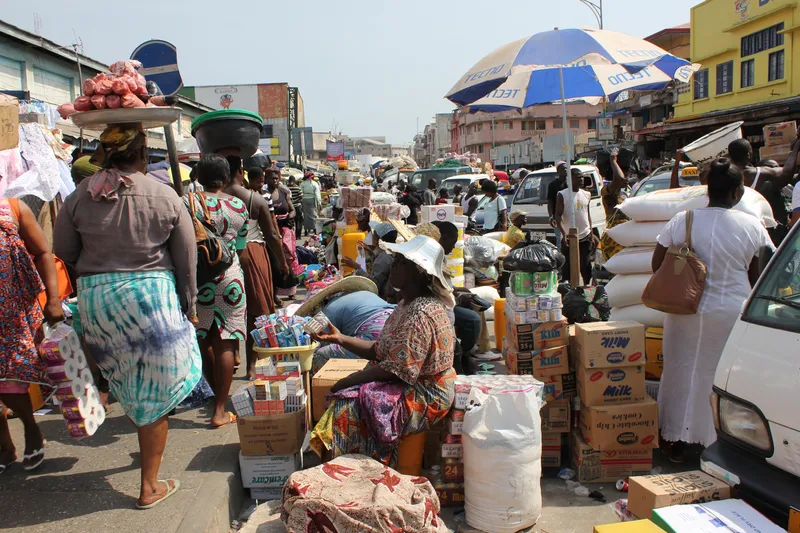
Behind Nairobi’s towers, digital platforms, and start-ups lies a much larger economy dominated by informality, small-scale commerce, and often precarious incomes.
It is precisely within this gap between macroeconomic growth and everyday economic experience that part of Kenya’s tension can be found.
Africa’s Digital Laboratory
Kenya nevertheless possesses a strategic asset that traditional economic statistics struggle to measure: an unusual capacity to adopt new technologies and practices rapidly.
The spectacular development of mobile money, symbolized by M-Pesa, profoundly transformed the functioning of the economy. Long before “fintech” became one of the favorite sectors of global investors, millions of Kenyans were already using their phones as instruments for payments, transfers, and eventually access to a broader range of financial services.
This revolution helped give rise to the expression “Silicon Savannah.”
The term can be misleading if it implies a direct comparison with Silicon Valley. It becomes more meaningful when used to describe an ecosystem capable of developing innovations adapted to the constraints of emerging economies: mobile payments, digital microfinance, agritech, logistics, distributed energy, digital public services, and commercial platforms.
Nairobi has consequently become one of Africa’s leading technology hubs, alongside Lagos, Cape Town, Johannesburg, Cairo, and a handful of other cities.
Yet once again, the challenge is scale.
Creating a dynamic entrepreneurial ecosystem is one thing. Converting that innovation into massive productivity gains, industrialization, and skilled employment for millions of people is another.
Kenya has already demonstrated that it can innovate.
It must now demonstrate that innovation can transform the structure of its economy.
Mombasa and the Battle of the Corridors
Kenya’s real power, however, does not reside in Nairobi alone.
It also lies in Mombasa.
The port has long been one of East Africa’s principal gateways. It serves Kenya itself, but also landlocked or partially corridor-dependent economies including Uganda, Rwanda, Burundi, South Sudan, and parts of the Democratic Republic of the Congo.
In this region, a road, railway, or port is never merely infrastructure.
It determines dependency.
Kenya has understood this by developing its logistical corridors and seeking to strengthen the role of Lamu, farther north. The LAPSSET project — the Lamu Port–South Sudan–Ethiopia Transport Corridor — carries an immense ambition: to construct a new axis connecting the Indian Ocean to the economies of the interior.
In its most ambitious conception, this is not simply about building roads, railways, pipelines, or port facilities.
It is about changing the economic geography of East Africa.
But this strategy faces direct competition.
To the north, Djibouti remains Ethiopia’s principal maritime outlet. Tanzania is developing its own ports and corridors. Landlocked states are themselves seeking diversified access routes to avoid excessive dependence on any single neighbor.
Kenya is therefore engaged in a largely silent competition for East Africa’s commercial flows.
Control over territory matters.
Control over the routes connecting territories can matter even more.
China and the Age of Infrastructure
This logistical transformation also brought Kenya closer to China.
As across much of Africa, Beijing has played an important role in financing and constructing Kenyan infrastructure over the past two decades. The Standard Gauge Railway connecting Mombasa and Nairobi became the most visible symbol of this period.
The project encapsulates the ambiguity of Kenya’s strategy.
The infrastructure is real. It improves the country’s logistical capabilities and embodies an ambition for modernization. But its financing also intensified debate over debt, the profitability of major infrastructure projects, and dependence on external creditors.
Kenya is therefore confronting a reality common to many emerging economies: the infrastructure required to generate tomorrow’s growth must be financed with today’s resources.
When those resources are insufficient, debt fills the gap.
And when debt becomes too heavy, it begins to constrain the very investment it was meant to enable.
The Fiscal Trap
This is probably Kenya’s principal macroeconomic vulnerability today.
Public debt remains high. The World Bank estimated it at around 68 percent of GDP at the end of 2025 and continues to classify Kenya as facing a high risk of debt distress. The IMF has also highlighted the high cost of domestic borrowing and foreign-exchange risks associated with external debt.
Exact estimates vary according to methodology and reporting periods, but the structural problem is difficult to dispute: a substantial share of public resources must be devoted to servicing debt.
The government therefore faces a difficult equation.
It must invest in infrastructure, education, healthcare, and public services. It must finance a state capable of responding to the expectations of a growing population. It must contain the deficit. It must reassure creditors. And it must increase fiscal revenue in an economy where a large share of activity remains informal.
Budgetary arithmetic naturally points toward higher taxation.
Politics does not necessarily follow.
2024: The Generational Break
It was within this context that the crisis of 2024 erupted.
The Finance Bill and new tax measures proposed by William Ruto’s government triggered a mobilization that rapidly expanded beyond fiscal policy.
A new generation entered the political arena with remarkable force.
Young, urban, connected, and largely organized through social media, it did not entirely conform to Kenya’s traditional structures of political mobilization. The demands were not limited to opposition parties. They increasingly targeted the cost of living, taxation, corruption, public spending, elite privilege, and the broader exercise of political power.
June 25, 2024 became a moment of rupture when protesters entered the parliamentary compound in Nairobi and the security response resulted in several deaths.
Two years later, the trauma had not disappeared. On June 25, 2026, demonstrations commemorating the victims of 2024 were again dispersed in Nairobi. The events demonstrated that the 2024 crisis had not simply been a temporary explosion of anger over taxation.
It revealed something deeper.
Part of Kenya’s youth is no longer simply demanding an alternation between political elites. It is questioning the mechanisms of representation and redistribution themselves.
For Kenya, this evolution could become either a threat or a source of strength.
A threat if it produces permanent confrontation between the state and a frustrated generation.
A strength if it accelerates institutional accountability, fiscal transparency, and political renewal.
A Real but Unfinished Democracy
This contestation belongs to a complex political history.
Since independence, Kenyan politics has long been structured around networks of power, shifting coalitions, economic interests, and communal affiliations. The 2007 presidential election demonstrated how dangerous these divisions could become: post-election violence killed more than a thousand people and displaced hundreds of thousands.
The 2010 Constitution represented a major response to that crisis.
It strengthened institutional checks and balances and, crucially, initiated significant devolution toward the country’s 47 counties. This architecture helped redistribute part of Kenya’s resources and political power beyond Nairobi.
Kenya today possesses institutions, a civil society, media organizations, and a political culture that distinguish it from many of the continent’s more authoritarian regimes.
But tensions surrounding the security forces, corruption, institutional independence, and political accountability demonstrate that democratic consolidation remains incomplete.
The real test of Kenya’s system therefore lies not simply in its ability to organize elections.
It lies in its ability to absorb dissent without transforming political disagreement into institutional crisis.
A Diplomatic Power Without a Doctrine of Alignment
Externally, Kenya has proved remarkably pragmatic.
Nairobi maintains close relations with the United States and Europe while having developed major economic ties with China. It engages with Gulf monarchies, participates actively in African institutions, and seeks capital from multiple sources.
This diversification is not a contradiction.
It is a strategy.
Kenya belongs to a growing category of states unwilling to systematically choose between Washington and Beijing. Infrastructure can be Chinese, security relations American, capital Emirati, export markets European, and the underlying interests Kenyan.
The relationship with Washington nevertheless remains particularly important.
In 2024, the United States designated Kenya a Major Non-NATO Ally, an exceptional recognition of Nairobi’s security role. The country cooperates closely with Washington on counterterrorism and the fight against Al-Shabaab, while participating in international security operations extending well beyond East Africa.
This diplomacy allows Kenya to convert its relative stability into influence.
In an unstable region, predictability itself becomes a strategic asset.
The Ethiopian Neighbor
No Kenyan regional strategy, however, can be understood without Ethiopia.
With a far larger population and considerable historical depth, Ethiopia theoretically possesses many of the attributes of East Africa’s natural great power.
Kenya, however, possesses an essential advantage: access to the sea and a far more internationally open economic architecture.
The two countries are therefore simultaneously partners and potential competitors.
Ethiopia needs diversified maritime access. Kenya would like a growing share of Ethiopian trade to pass through its own infrastructure. Addis Ababa is simultaneously seeking alternatives through Djibouti and potentially through different configurations across the Horn of Africa.
Corridors therefore become geopolitical instruments.
If Kenya succeeds in turning Lamu into a significant gateway for Ethiopia and South Sudan, its regional influence could move to an entirely different scale.
If it fails, Lamu risks remaining a largely underused infrastructure project facing stronger competing corridors.
Somalia and the Frontier of Instability
To the east, the problem is different.
Kenya’s long border with Somalia directly exposes it to the consequences of instability in the Horn of Africa. Al-Shabaab has carried out several deadly attacks on Kenyan territory, turning Somali security into a domestic issue as much as a foreign-policy concern.
Kenya therefore cannot simply observe regional crises.
It is compelled to participate in them.
This reality explains its diplomatic and military engagement, as well as the importance of its relationships with the United States and other security partners.
It also helps explain why Nairobi seeks to present itself as a platform for regional mediation.
Kenya wants to be involved enough to influence its environment, but stable enough not to be consumed by it.
That is a difficult balance.
An East Africa in Transformation
Kenya’s ambition now extends beyond the traditional boundaries of East Africa.
The expansion of the East African Community to include the Democratic Republic of the Congo and then Somalia has considerably enlarged the regional space. In theory, it creates an immense market stretching from the Indian Ocean deep into Central Africa.
For Kenyan companies, this integration represents an opportunity.
Banks, telecommunications operators, retailers, insurers, and service companies can use Nairobi as a base from which to expand into regional markets.
This is where Kenya may be able to construct a form of power different from that of traditional large states.
Not power based primarily on military dominance, but on networks.
Ports, banks, telecommunications, digital platforms, airlines, road corridors, regional headquarters, professional services, and international institutions can gradually transform Nairobi into the nerve center of an economic space far larger than Kenya itself.
The strategy resembles that of certain small and medium-sized states that have compensated for territorial limitations through centrality.
The Climate Challenge
Yet this ambition rests on vulnerable territory.
Kenya is highly exposed to droughts, floods, and climatic disruption. Agriculture remains heavily dependent on weather conditions, while pastoral communities in arid and semi-arid regions are particularly vulnerable to climate variability.
Climate change therefore acts as a risk multiplier.
A drought can reduce harvests, raise food prices, weaken rural incomes, increase import requirements, and fuel social dissatisfaction. Floods can destroy infrastructure and impose additional pressure on public finances.
Kenya nevertheless possesses an important advantage: its electricity system relies heavily on renewable energy, particularly geothermal power, hydropower, wind, and solar.
This characteristic could become a genuine competitive advantage as the global economy gradually faces stronger pressure to reduce its carbon intensity.
The geothermal resources of the Rift Valley are, in this respect, a strategic asset whose importance remains underestimated.
The Kenyan Contradiction
Kenya therefore possesses almost all the ingredients required for the emergence of a durable regional power.
An exceptional geographic position. Two developing logistical gateways around Mombasa and Lamu. An international capital. A diversified economy. A relatively dynamic private sector. A genuine entrepreneurial culture. A considerable lead in certain digital applications. Diversified diplomatic relationships. Growing regional influence.
But every advantage has its reverse side.
Infrastructure has increased the country’s capabilities, but also its debt. Growth has enriched Nairobi, but has not absorbed enough young people into formal employment. Digitalization has modernized the economy, but has not eliminated informality. The state wants to finance development, but citizens resist higher taxation. Democracy allows dissent to be expressed, but security responses repeatedly threaten to undermine its benefits.
Kenya is therefore not suffering from a lack of potential.
It is confronting the difficulty of converting potential into durable power.
Becoming Indispensable
The most promising trajectory for Nairobi probably does not involve attempting to become a conventional African power.
Kenya will not surpass Ethiopia demographically. It cannot directly compete with Nigeria’s resources or South Africa’s industrial base. Its military power will remain limited compared with the continent’s largest armed forces.
But it can become something else.
An indispensable state.
Indispensable to East Africa’s commercial flows. Indispensable to companies seeking a regional headquarters. Indispensable to international capital entering the region. Indispensable to diplomatic and humanitarian operations. Indispensable to communications, payments, and regional financial services.
In the contemporary international system, centrality can sometimes matter more than size.
Singapore, the United Arab Emirates, and Switzerland have demonstrated this through very different models: a state does not necessarily need to dominate its environment to acquire disproportionate influence. It can instead become the place through which others need to pass.
Kenya possesses some of the elements required for such a strategy.
But the comparison ends where Kenya’s social constraints begin.
With more than 50 million inhabitants, significant poverty, widespread informality, and a large young population, Kenya cannot simply become a prosperous platform surrounded by a frustrated society.
External power will eventually have to produce internal results.
Ambition Under Pressure
This is ultimately where Kenya’s future will be decided.
The country has successfully completed a first transformation: from a relatively stable East African state into a regional economic, diplomatic, and technological platform.
The second transformation will be considerably more difficult.
It requires turning centrality into prosperity broad enough to sustain the social contract.
If Nairobi can gradually reduce its debt vulnerability, improve the quality of public spending, deepen its financial markets, develop infrastructure without reproducing the excesses of the previous borrowing cycle, expand industrial capacity, and integrate a new generation into productive employment, Kenya could become one of Africa’s principal centers of power over the coming decades.
If it fails, the same forces that fueled its rise could become sources of instability: rapid urbanization, a connected youth population, rising social expectations, contested taxation, and debt limiting the government’s room for maneuver.
The protest movement that emerged in 2024 may therefore have revealed less a temporary crisis than a change of era.
The Kenya of the twenty-first century can no longer be governed exactly like the Kenya of the twentieth.
Its youth is larger, more urban, more connected to the world, and less willing to accept traditional forms of political mediation. Its economy is more sophisticated, but its citizens can also compare their living standards with those of other societies in real time. The state possesses new capabilities, but it is also subjected to unprecedented social scrutiny.
The paradox is powerful.
Kenya has perhaps never possessed so many assets with which to become a major regional power.
And rarely has its population questioned so intensely how that power is being built and distributed.
The country is therefore entering a decisive phase. The question is no longer whether Kenya can grow, attract capital, or build infrastructure. It has already demonstrated that it can.
The question is whether it can transform centrality into development, growth into social mobility, and ambition into a collective project.
Only then will Kenya achieve its deeper transformation: no longer merely being one of East Africa’s most important countries, but becoming one of the states around which the region itself is organized.
Main Sources
World Bank — Kenya Economic Update, macroeconomic data, public debt, employment, poverty, and economic outlook.
International Monetary Fund — World Economic Outlook, April 2026; country data and analysis relating to Kenya’s public debt.
Kenya National Bureau of Statistics — national economic and demographic data.
Central Bank of Kenya — monetary, financial, and external-sector data.
LAPSSET Corridor Development Authority — documentation on Lamu Port and the LAPSSET Corridor.
East African Community — institutional documentation on regional integration.
U.S. Department of State — U.S.–Kenya bilateral relations and security cooperation.
Reuters — coverage of the June 2024 protests and their June 2026 commemoration.
Atlas Limits Research Desk
Atlas Limits’ editorial and analytical desk.