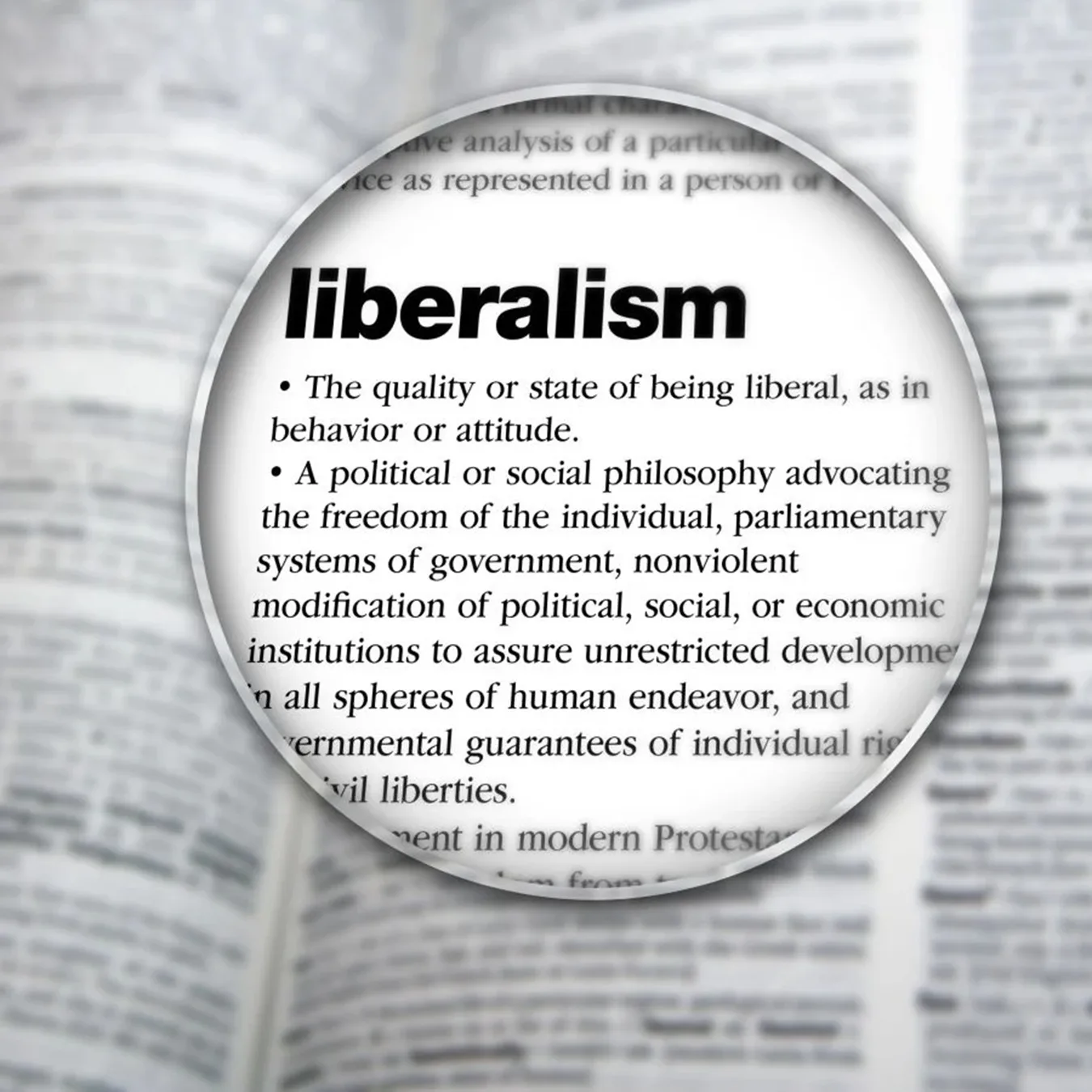
Liberalism is now everywhere and nowhere. It structures much of the contemporary political order, underpins the functioning of market economies, and permeates concepts that have become almost universal: individual freedom, property, equality before the law, freedom of expression, political consent, competition, and free enterprise. Yet the term itself has become increasingly difficult to define. Depending on the country and political tradition, it can refer to the defence of civil liberties, the market economy, limited government, a particular conception of democracy or, conversely, an economic order accused of fostering inequality and concentrating power.
This ambiguity stems from its history. Liberalism did not emerge as a fully developed economic system. It gradually took shape as a response to several forms of power considered arbitrary: monarchical absolutism, legal privilege, religious restrictions, guilds, monopolies, and political control over economic activity. Its original ambition was less to construct a new order than to define the limits within which power could legitimately be exercised over the individual.
Over the past three centuries, however, this political philosophy has become much more. It accompanied the development of representative democracies, the rise of industrial capitalism, the expansion of global trade and, eventually, globalisation. It was also transformed by economic crises, social conflicts, world wars, and the emergence of the welfare state.
At the beginning of the twenty-first century, another transformation appears to be underway. States that once organised the liberalisation of trade are now subsidising strategic industries. Governments are exercising greater control over foreign investment, sensitive technologies, and certain supply chains. Major powers are using sanctions, trade restrictions, and industrial policy as instruments of power. At the same time, liberal societies continue to uphold the political principles on which they were built.
Understanding liberalism therefore requires distinguishing between an idea, the institutions it produced, and the economic systems that developed in its name.
I. Before Liberalism: When Power Preceded the Individual
Liberalism developed in a Europe where political and social organisation largely rested on inherited hierarchies. An individual's position depended on status, religious affiliation, birth, and the privileges attached to different orders within society.
The gradual consolidation of the modern state simultaneously increased the ability of sovereigns to administer their territories, raise taxes, and organise their economies. In several European monarchies, mercantilist doctrines associated political power with the accumulation of wealth. Governments regulated trade, granted monopolies, protected certain industries, and sought to control commercial flows. It was against this intellectual and institutional environment that a new conception of political power began to emerge.
In the seventeenth century, John Locke formulated one of the most influential expressions of this break. Political power was no longer understood as a natural and unlimited authority standing above individuals. It derived from consent and existed to protect rights that preceded it. Life, liberty, and property thus became fundamental components of a legitimate political order.
The consequence was profound: the state theoretically ceased to be the source of all rights. It became the instrument responsible for guaranteeing their exercise.
This reversal became one of the foundations of political liberalism. The Enlightenment deepened this transformation. Criticism of arbitrary rule, freedom of conscience, religious tolerance, the separation of powers, and legal equality progressively challenged the political structures of the Ancien Régime.
The American and French Revolutions gave several of these principles an institutional form. Individual rights, political sovereignty, and equality before the law gradually became constituent elements of modern political legitimacy. Liberalism was therefore initially a theory about the limits of power.
II. From Political Liberalism to Economic Liberalism
The economic dimension developed in parallel. In The Wealth of Nations, published in 1776, Adam Smith criticised monopolies, commercial privileges, and certain forms of mercantilist intervention. His reasoning rested on a decisive idea: an economy can produce a complex order without a central authority directly organising each of its activities.
Individuals pursue their interests, prices transmit information, exchange enables specialisation, and competition theoretically limits the ability of any single actor to impose its conditions indefinitely.
This conception did not imply the disappearance of the state. The state retained essential functions: defence, justice, the enforcement of contracts, and the provision of certain public goods or infrastructure that private actors might not supply adequately.
This nuance would gradually disappear from parts of the public debate. Economic liberalism would often be reduced to an opposition between the market and the state. Historically, their relationship has been more complex.
A market does not function outside institutions. It requires property rights, enforceable contracts, money, courts, liability rules, and an authority capable of enforcing them.
The liberal market is therefore less the absence of the state than a particular way of organising its intervention. This distinction became fundamental with industrialisation.
III. Industrialisation and Liberalism's First Great Contradiction
During the nineteenth century, Western Europe and then North America underwent an unprecedented economic transformation. Machinery, railways, coal, steel, factories, and urbanisation profoundly altered productive structures.
The market economy demonstrated an extraordinary capacity to mobilise capital, spread innovation, and increase production. But it also generated new concentrations of wealth and power.
Legal freedom of property did not guarantee economic equality. Freedom of contract between an employer and an employee could conceal a deeply asymmetric balance of power when one owned capital and the other depended on wages for survival.
This contradiction fuelled labour movements, socialism, Marxism, and various forms of social reformism. It also triggered an internal transformation of liberalism.
Some liberal thinkers increasingly argued that freedom could not be defined solely as the absence of coercion by the state. An individual who was legally free but deprived of education, resources, or protection against certain risks might possess a freedom that was largely theoretical.
Social liberalism emerged partly from this question. The state was no longer responsible solely for preventing arbitrary power. It could also create the conditions necessary for certain freedoms to be exercised effectively.
This evolution paved the way for social intervention, public education, labour regulation and, progressively, systems of social protection. Liberalism thus began to generate several traditions that could sometimes contradict one another.
IV. The Twentieth Century: When the Market Encountered Its Limits
The First World War transformed European economies. States mobilised production, controlled certain resources, and intervened extensively in economic organisation. But it was above all the Great Depression that permanently undermined confidence in spontaneous market mechanisms.
Financial collapse, contracting credit, bankruptcies, and mass unemployment demonstrated that a market economy could experience systemic imbalances whose spontaneous correction imposed enormous social and political costs.
John Maynard Keynes subsequently developed a fundamental critique of the idea that economies would necessarily and rapidly return to equilibrium. When private demand collapses, the state can intervene to support economic activity.
After the Second World War, a form of compromise prevailed across much of the Western world. The economy remained based on private property, enterprise, and markets, but these were framed by much larger institutions: central banks, fiscal policies, social protection systems, public services, progressive taxation, and economic regulation.
The international order established at Bretton Woods simultaneously organised a framework for managed economic openness. International trade expanded, while states retained considerable room to conduct national economic policies.
Post-war capitalism was therefore not an abandonment of liberalism. It represented one of its transformations. The objective was no longer merely to protect the market from the state, but also to protect the economic system from its own instabilities.
V. The Turning Point of the 1970s and 1980s
This compromise entered a period of crisis during the 1970s. Oil shocks, inflation, slowing growth, and rising unemployment weakened established economic policies. The coexistence of high inflation and weak economic activity challenged some of the instruments used during the previous decades.
In this environment, ideas favouring deregulation, competition, and a reduction in certain forms of state intervention gained influence. Friedrich Hayek and Milton Friedman became two major intellectual references associated with this shift, although their work and their respective conceptions of liberalism differed significantly.
The governments of Margaret Thatcher in the United Kingdom and Ronald Reagan in the United States politically embodied this turning point. Privatisation, deregulation, reductions in certain taxes, financial liberalisation, and efforts to limit the state's direct economic role became important elements of public policy.
The transformation quickly extended beyond these two countries. From the 1980s onward, and particularly after the end of the Cold War, trade liberalisation, international capital flows, and economic integration accelerated considerably. Economic liberalism entered its most globalised phase.
VI. Globalisation: The High Point of a Model
The 1990s appeared to confirm the triumph of an order based on the market economy. The collapse of the Soviet Union removed the principal economic system capable of competing globally with capitalism. Numerous countries liberalised their economies, privatised state-owned enterprises, and integrated more deeply into international trade.
The establishment of the World Trade Organization in 1995 symbolised this dynamic. Companies progressively organised production on a global scale. A single value chain could combine American design, Japanese or South Korean components, African or Latin American raw materials, Chinese assembly, and European consumer markets.
This organisation reduced certain costs, increased specialisation, and integrated hundreds of millions of additional workers into the global economy. It also contributed to the spectacular industrialisation of several Asian economies, particularly China. Yet globalisation simultaneously generated new dependencies.
The continuous search for efficiency sometimes reduced domestic production capabilities. Some industrial regions experienced significant job losses. Capital became far more internationally mobile than labour. Multinational companies gained greater capacity to arbitrage between jurisdictions.
The market became global while social protection, taxation, and political legitimacy remained essentially national. This asymmetry gradually became one of the central vulnerabilities of the globalised liberal order.
VII. 2008: The Crisis of Legitimacy
The global financial crisis marked another turning point. Financial markets, which were supposed to improve the allocation of capital and the management of risk, became the centre of a systemic crisis. States were forced to intervene on a massive scale to stabilise the banking system and prevent the collapse of credit.
The political contradiction was immediate. For several decades, part of the economic discourse had emphasised market discipline and individual responsibility. Yet when the financial system threatened to collapse, public authorities became its ultimate insurer.
This intervention was largely justified by systemic risk. But it created an enduring perception: profits had been privatised while part of the risks could ultimately be transferred to society.
The political consequences extended far beyond finance. Rising inequality in several developed economies, the deindustrialisation of certain regions, and a sense of downward mobility among parts of the middle classes contributed to weakening the consensus surrounding globalisation.
The debate was no longer simply about economic efficiency. It became a debate about the distribution of gains, sovereignty, and the ability of citizens to influence decisions determining their economic future.
VIII. The Return of the Strategic State
The 2020s accelerated a transformation that was already underway. The Covid-19 pandemic exposed the vulnerability of supply chains that were highly optimised but sometimes insufficiently resilient. Essential goods became difficult to obtain. Governments discovered that industrial capabilities previously considered ordinary could become strategic.
Geopolitical tensions subsequently reinforced this shift. Semiconductors, batteries, artificial intelligence, digital infrastructure, critical minerals, energy, and military technologies became matters of national security.
The United States adopted large-scale industrial policies in semiconductors and energy technologies. The European Union developed its own industrial instruments and sought to reduce certain strategic dependencies. China had long pursued a policy combining markets, planning, public financing, and industrial objectives.
Concepts such as friend-shoring, de-risking, economic sovereignty, and strategic autonomy entered mainstream political vocabulary. The logic had changed. During the previous phase of globalisation, the dominant question was often: where can something be produced most efficiently?
The question increasingly became: on whom can we afford to depend? This apparently simple shift is profoundly transforming the global economy.
IX. The Contemporary Paradox: Protecting the Market Through Greater Intervention
The return of the state does not necessarily mean the disappearance of liberalism. Western economies remain overwhelmingly based on private property, financial markets, enterprise, and competition. Yet governments are intervening more extensively to determine which sectors they consider strategic.
They subsidise factories, restrict certain technology exports, screen foreign investment, secure access to raw materials, and use public procurement to support domestic industries.
A paradox therefore emerges: states intervene in the economy in order to preserve their ability to continue functioning as autonomous market economies. This situation highlights an often-forgotten reality. Liberalism has never existed independently of public power.
Property requires a legal system. Competition requires rules. Money requires an institutional architecture. Banks depend on a lender of last resort. Companies rely on infrastructure financed or organised collectively. International trade rests on treaties and on a certain geopolitical equilibrium.
The fundamental question is therefore not whether society must choose between the state and the market. It is where the boundary between them should lie.
X. Another Contradiction: The Concentration of Private Power
Liberalism historically developed in opposition to excessive concentrations of political power. Contemporary economies, however, raise a different question: what happens when power becomes concentrated in private institutions?
Some technology companies now operate platforms used by billions of people. They control digital infrastructure, operating systems, advertising networks, marketplaces, data, and sometimes technologies essential to other businesses.
This concentration is not identical to the traditional power of the state. A company generally possesses neither territorial sovereignty nor a legal monopoly over coercion.
It can nevertheless exercise considerable influence over access to information, economic conditions, and the organisation of certain markets.
The issue therefore becomes fundamentally liberal. If liberalism seeks to protect individuals against arbitrary concentrations of power, should that vigilance apply only to public power? Competition policy, digital regulation, and debates over personal data show that liberal democracies are still searching for an answer.
XI. China, the United States and the Transformation of the Liberal Order
The rivalry between the United States and China probably represents the most consequential geopolitical test for the economic order constructed since the end of the twentieth century.
For several decades, an implicit assumption accompanied global economic integration: commercial openness would gradually encourage political and institutional convergence.
China's trajectory has largely invalidated that assumption. China has used international markets, foreign investment, and global value chains while maintaining a powerful state, an authoritarian political system, and significant capacity for industrial direction.
Its rise demonstrates that market economics and political liberalism are not necessarily inseparable. This reality is forcing liberal democracies to reconsider their own model.
They want to preserve the advantages of international trade while reducing dependencies that could be used against them. They want to maintain competition while supporting strategic national industries. They want to defend an open economic order while imposing greater controls on certain technologies.
The result is not complete deglobalisation. It is, rather, a globalisation increasingly reorganised by geopolitics.
XII. Can Political Liberalism Be Separated from Economic Liberalism?
This question runs throughout the history of liberalism. The two dimensions share certain principles: individual autonomy, property, limits on power, and plurality of choice. But they are not identical.
A liberal democracy can maintain high taxation, extensive social protection, and numerous public services while preserving individual freedoms and a market economy.
Conversely, an authoritarian regime can permit entrepreneurship, private investment, and certain market mechanisms without accepting political pluralism.
Contemporary history therefore demonstrates that multiple combinations of markets, states, and political freedoms are possible.
This is perhaps one reason why the word “liberalism” generates so many misunderstandings. In some societies, it primarily evokes civil liberties. In others, it means economic deregulation. Elsewhere, it refers more broadly to the Western political order. These different meanings often make debates more confused than they need to be.
XIII. An Idea Confronted With Its Own Successes
Liberalism possesses a singular characteristic: several of the problems it now faces arise partly from transformations that it itself made possible. Economic freedom encourages capital accumulation, but that accumulation can generate concentrations capable of reducing competition.
Free trade improves aggregate efficiency, but it can create strategic dependencies. Financial freedom facilitates investment, but it can also increase the speed at which crises spread. Globalisation expands markets, but it can reduce the ability of states to control certain economic activities.
Freedom of expression benefits from digital technologies, while those same technologies have produced platforms capable of exerting enormous influence over the circulation of information.
The problem facing contemporary liberalism is therefore not necessarily the failure of its principles. It may also lie in their consequences when they are extended far enough to alter the conditions that originally allowed them to develop.
XIV. The End of Liberalism?
History suggests caution. Liberalism has already been declared doomed many times. It survived industrialisation, the rise of socialism, the Great Depression, fascism, two world wars, the expansion of the welfare state, the oil crises, the Cold War, and the global financial crisis. At each stage, it changed.
Nineteenth-century liberalism was not the liberalism of the post-war era. The liberalism of the 1990s was not that of the 1930s. And the liberalism that emerges from the strategic rivalries of the twenty-first century will probably differ from that of triumphant globalisation.
The signs of this transformation are already visible. Economic security has returned to the centre of policymaking. Industrial policy has regained legitimacy. Supply chains are being assessed for resilience as well as cost. States are reinvesting in sectors considered strategic. The boundaries between economic policy, national security, and geopolitics are becoming increasingly difficult to distinguish.
At the same time, the fundamental political principles of liberalism remain central to contemporary democracies: individual rights, pluralism, property, freedom of expression, the rule of law, and limitations on power.
What appears to be entering a period of crisis may therefore not be liberalism itself. It may instead be one particular historical configuration of liberalism: the belief that global economic integration could advance almost independently of power politics.
Conclusion — A Doctrine That Became an Architecture
Liberalism emerged from a relatively simple political question: how far can power legitimately constrain the individual? Three centuries later, that question remains, but it has expanded considerably. Which power should be constrained: that of the state, capital, monopolies, or digital platforms? Which freedom should be protected: property, expression, enterprise, economic security, or an individual's effective capacity to choose the course of their life? How far can a society collectively organise its economy without diminishing the autonomy it is attempting to guarantee?
Liberalism has never provided a definitive answer to these questions. Its history is instead one of constantly shifting the boundary between freedom and power. That is precisely what explains its longevity. From a philosophy challenging absolutism, it became a legal architecture. From that architecture emerged a particular conception of the economy. It accompanied industrialisation, then combined with the social state before supporting an unprecedented phase of globalisation.
Today, the movement appears to be reversing. Geopolitics is returning to economics. Sovereignty is returning to trade. Security is returning to investment decisions. The state is returning to industry.
The twenty-first century may therefore not mark the disappearance of liberalism. It may mark the end of one of its illusions: that markets can function indefinitely as though they existed outside relations of power.
Liberalism began by seeking to determine the limits of power. Its future may depend on its ability to answer a more difficult question: how can freedom be preserved when power no longer has a single form?
Main Sources
- John Locke, Two Treatises of Government, 1689.
- Adam Smith, An Inquiry into the Nature and Causes of the Wealth of Nations, 1776.
- John Stuart Mill, On Liberty, 1859.
- John Maynard Keynes, The General Theory of Employment, Interest and Money, 1936.
- Friedrich A. Hayek, The Road to Serfdom, 1944.
- Milton Friedman, Capitalism and Freedom, 1962.
- World Trade Organization, archives and data on the multilateral trading system.
- International Monetary Fund, research on globalisation, capital flows, and geoeconomic fragmentation.
- World Bank, historical data on trade, development, and global economic integration.
- OECD, research on competition, productivity, global value chains, and industrial policy.
Atlas Limits Research Desk
Atlas Limits’ editorial and analytical desk.