For decades, globalization sustained the belief that scarcity could gradually be pushed back. Raw materials would be extracted where they were available, goods manufactured where production was cheapest, and finished products transported to markets capable of absorbing them. Inventories could be reduced, supply chains extended across continents, and mutual dependence treated as a guarantee of stability. Any major disruption appeared too costly to be deliberately provoked.
That architecture has not disappeared. It remains indispensable to the functioning of the global economy. But the political trust on which it rested has been profoundly eroded.
Pandemics, wars, sanctions, trade restrictions, maritime tensions and the return of industrial policy have exposed a reality long concealed by the appearance of abundance: a highly efficient global economy can also be extremely vulnerable. A handful of ports, straits, refineries, factories, component manufacturers or payment systems can bring entire production chains to a halt. A resource may exist in sufficient quantities underground and still become inaccessible because it is processed in only a few countries, must pass through a threatened corridor or is reserved by political decision for selected partners.
Shortage is therefore no longer merely a lack of supply. It is becoming a relationship of power.
We are not necessarily entering a world in which everything is running out. We are entering one in which access to what exists is becoming more expensive, conditional and political. The decisive question is no longer simply how much oil, copper, grain, medicine or how many semiconductors can be produced. It is who controls their extraction, processing, transportation, financing and distribution.
From physical shortage to political scarcity
Not all forms of scarcity are alike. Some are physical: available water declines, a harvest is destroyed, a deposit is depleted or a disaster causes a lasting interruption in production. Others are productive: the resource exists, but the capacity required to extract or process it is insufficient. Others are logistical: goods are available but can no longer reach their markets within the usual timeframe or at the usual cost.
These conventional forms are now accompanied by more explicitly political shortages. A government can prohibit the export of a technology, restrict the sale of a mineral, sanction a producer, block access to a financial system or subsidize its own companies heavily enough to displace foreign competitors. The resource does not disappear. Its market fragments.
There is also scarcity created by price. A product remains available, sometimes without any dramatic decline in global volumes, but becomes inaccessible to some countries, companies or households. The shortage is no longer absolute. It is distributed according to purchasing power.
This distinction is essential because it prevents the concept of “organized shortages” from becoming a theory of generalized intent. Not every shortage is planned. It does not need to be. Scarcity can emerge from an accumulation of individually rational decisions: every state secures its supplies, every company protects its margins, every investor preserves the value of its assets, and every producer prioritizes the most solvent customers. Yet their combined decisions can produce a system in which the security of the most powerful depends on transferring vulnerability to everyone else.
Organized shortages do not necessarily require a single organizer. They can emerge from an economic order in which each powerful actor secures its own access to resources without assuming the collective consequences of that protection.
The return of economic security
World trade is no longer governed solely by the search for the lowest price. Governments now want to know whether a supplier will remain accessible during a crisis, whether a technology can be used without foreign authorization and whether a trading partner might eventually become a strategic adversary.
The United States has placed advanced semiconductors and some of the equipment required to manufacture them at the center of its rivalry with China. Beijing, for its part, holds a dominant position across several processing chains for minerals essential to digital, military and energy industries. The European Union is attempting to reduce its dependencies without withdrawing from global markets. Across the world, subsidies, export controls, local-content requirements and investment-screening mechanisms are redrawing the geography of production.
Interdependence is not disappearing. It is becoming selective.
A factory must no longer merely be profitable. It must be located in a country considered reliable, supplied with relatively secure energy and connected to politically compatible providers. The lowest cost is no longer the only criterion. Redundancy, once criticized as a form of inefficiency, has become insurance. Inventories are strategic again. Supplier diversification is acquiring the status of national security policy.
This transformation does not mark the end of globalization. It reorganizes it around blocs, preferred corridors and relationships of trust. Companies continue to operate globally, but must now account for the possibility of sanctions, war, maritime closure and regulatory change. Trade remains global; access to it is becoming political.
The power of chokepoints
A resource is not strategic merely because it is rare. It becomes strategic when an actor controls a point of passage that cannot easily be replaced.
A mineral may be extracted in several countries but processed almost entirely in one. A semiconductor may be designed in the United States, rely on American software and European machinery, be manufactured in Asia and incorporate materials processed in China. A fertilizer may require phosphate from North Africa, gas or ammonia from another region, and port infrastructure exposed to maritime tensions. No single actor necessarily controls the entire system, but some control the nodes without which it cannot function.
Power therefore belongs less to whoever owns the entire chain than to whoever controls its irreplaceable link.
The energy transition is reinforcing this reality. It is intended to reduce dependence on fossil fuels, but it does not eliminate the geopolitics of resources. It shifts that geopolitics toward copper, lithium, nickel, graphite, rare earths, batteries, electricity grids and conversion technologies. These materials are not always exceptionally scarce in geological terms. Their vulnerability arises more often from the time required to develop new mines, the concentration of refining capacity, environmental constraints and the rapid increase in demand.
The world is not simply moving from oil to clean energy. It is gradually leaving one visible form of energy dependence and entering a system of mineral, industrial and technological dependencies that are more dispersed, yet sometimes more concentrated.
When national protection creates global shortages
A trade restriction is not always conceived as a weapon. It may be a response to a domestic emergency. Confronted with rising food prices, a government restricts exports to protect its population. Facing conflict, a state reserves its industrial capacity for national needs. Fearing disruption, companies accumulate inventories.
Each decision may appear legitimate from the perspective of the actor making it. Combined, however, they aggravate the shortage for everyone else.
When a grain-exporting country closes its market, it reduces global supply and encourages other governments to build reserves. These precautionary purchases accelerate price increases, prompting additional producers to restrict their own exports. Defensive behavior becomes contagious. Fear of shortage eventually produces the shortage itself.
Sanctions operate differently, but their effects can be comparable. They do not generally make the resource disappear. They determine who may purchase it, how it can be paid for, which ships may carry it, which insurers will cover the transaction and which technologies can be used to maintain production facilities. What was once an integrated market splits into parallel circuits, each involving different discounts, premiums and intermediaries.
Scarcity then becomes localized. Some regions continue to receive the resource while others must pay more or go without it. Abundance and shortage can coexist within the same global system.
Markets do not always eliminate shortage
In its simplest representation, price communicates information about scarcity. When supply contracts, prices rise, new investment becomes profitable and production eventually increases. This mechanism remains real, but it takes time. A mine, port, power plant, electricity grid or semiconductor factory cannot be built in a matter of weeks.
During that interval, price does more than stimulate supply. It selects buyers.
Wealthy countries can outbid others, guarantee long-term contracts, finance new infrastructure and subsidize their consumers. Large companies can diversify suppliers, reserve transportation capacity or temporarily absorb higher costs. Poor countries, small businesses and low-income households have far fewer protections.
The market does not immediately resolve the shortage. It distributes it.
The product continues to exist, but it flows first toward those able to pay more. Demand among everyone else does not disappear because their needs have diminished. It is destroyed by insufficient income. Behind the restored equilibrium of markets, there may be exclusion: less heating, poorer nutrition, delayed healthcare, interrupted production or abandoned investment.
Within economies, purchasing power therefore plays a role comparable to that of geopolitical power in international relations. It determines who will be protected when supply contracts.
From global resources to national wealth
Inequalities between states and those within societies are generally studied separately. Yet they follow a similar architecture.
At the international level, a resource may be extracted in one country, processed in a second, financed in a third and consumed in the most solvent economies. Value does not necessarily remain where the raw material is located. It migrates toward the actors controlling technology, refining, logistics, standards, financing, intellectual property and access to the final customer.
Some countries can therefore possess vast natural resources without capturing a comparable share of the wealth they generate. They export a minimally processed commodity and subsequently import the industrial product derived from it at a much higher price. Their geological wealth supports value chains whose decision-making centers, technologies and profits are located elsewhere.
The same displacement occurs within individual economies. Wealth is created by a broad collection of workers, entrepreneurs, consumers, public services and collective infrastructure. Its final distribution nevertheless depends on capital ownership, bargaining power, access to credit and the position occupied within value chains.
A country that exports a raw material without controlling its processing resembles, within the global economy, a worker who contributes to the creation of value without controlling its distribution. Both are indispensable to production, but occupy a subordinate position when the proceeds are divided.
Conversely, a corporation at the top of an international value chain does not necessarily manufacture the entire product. It may control only the brand, patent, platform, data or relationship with the consumer. Yet that position allows it to capture a disproportionate share of the value generated throughout the system.
The concentration of resources among states and the concentration of wealth within economies are not identical phenomena. They are nevertheless governed by a similar principle: control over the passages between production and access.
Protected abundance
Scarcity can even become economically functional. Restricted supply supports prices, protects margins, increases asset values and strengthens the bargaining power of those who control it.
At the international level, this mechanism appears through quotas, export limitations, cartels, patents, protected industrial capacities and standards that indirectly close markets. Within national economies, it can be found in land scarcity, housing shortages, banking concentration, professional barriers and the dominance of platforms that have become impossible to bypass.
This does not mean that every shortage of housing, credit or public services is deliberately manufactured. But a shortage may persist because it benefits actors powerful enough to slow its resolution. Insufficient housing supply penalizes new entrants while supporting the value of existing property. Scarce credit excludes fragile companies while protecting established firms. A closed technology limits its diffusion while preserving the income of its owner.
The shortage experienced by some can therefore become the rent collected by others.
This is where scarcity connects directly with the distribution of wealth. An economy may continue to grow without access to housing, education, healthcare or capital improving at the same rate. Aggregate abundance then conceals individual shortages. National indicators describe a wealthier society while part of its population lives under mounting constraint.
A society of scarcity can therefore emerge within an economy of abundance.
Morocco and the double scarcity
Morocco embodies many of these contradictions. It is simultaneously exposed to external dependencies, endowed with strategic resources and confronted with the domestic distribution of the benefits created by its economic transformation.
The Kingdom remains dependent on external suppliers for a significant share of its energy, grain, technology and industrial equipment. An increase in hydrocarbon prices, a poor agricultural season, a disruption to shipping or a trade restriction can rapidly affect the external accounts, public finances and household purchasing power.
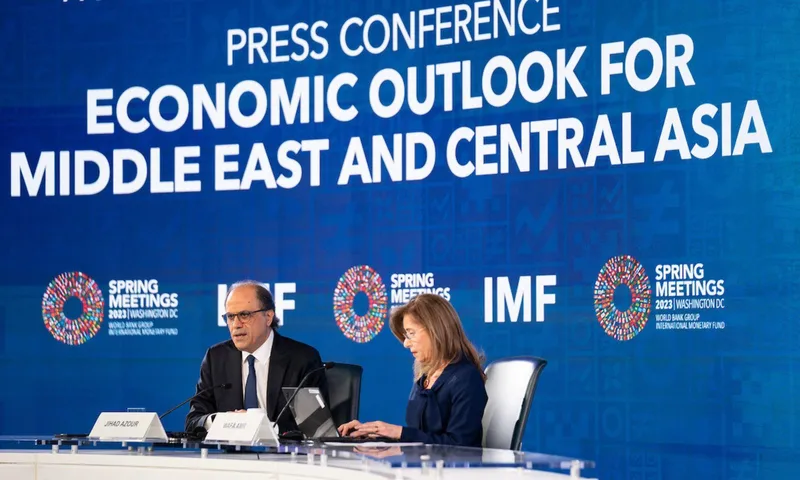
Successive droughts have made this vulnerability more visible. In 2025, the International Monetary Fund noted that Morocco had experienced five droughts in six years, with serious consequences for agriculture. This exposure extends well beyond agricultural output. It affects rural employment, household income, food prices, imports and the balance between territories.
The most structural constraint, however, is water. The World Bank ranks Morocco among the world’s most water-stressed countries and estimated its renewable water availability at approximately 620 cubic meters per person per year in its climate assessment. Water is no longer a sectoral issue. It now connects agriculture, industry, urbanization, tourism, energy and social stability.
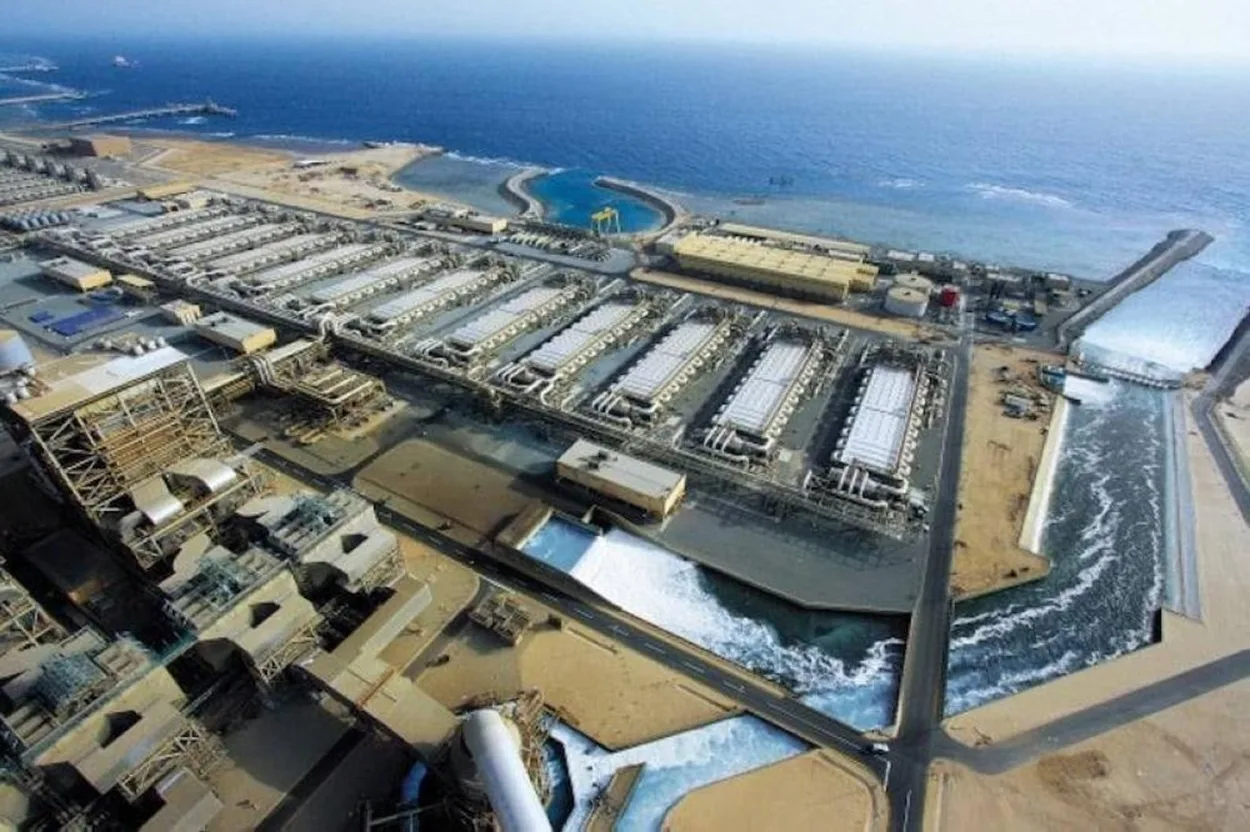
Water scarcity begins as a physical constraint, but its management becomes political. Which crops should continue to receive support? How should drinking water, irrigation, industry and tourism be prioritized? Who should finance desalination? What price can different users bear? Additional water-production capacity does not eliminate these trade-offs. It shifts them toward financing, energy and distribution.
Desalination itself reveals this interdependence. It reduces reliance on rainfall but increases energy demand and requires major infrastructure. Powered by expensive imported energy, it could simply replace one vulnerability with another. Combined with renewables, wastewater reuse and more coherent management of consumption, it could instead strengthen national security over the long term.
From phosphate to industrial sovereignty
Morocco possesses a major global lever with which to confront these vulnerabilities: phosphate. Its importance extends far beyond mining revenue. Phosphate sits upstream from fertilizers and therefore from part of the world’s food security. When grain becomes strategic, fertilizers become strategic as well.
This position should not lead to confusion between owning a resource and controlling its entire value chain. Fertilizer production also requires water, energy, chemical facilities, port logistics and, for certain products, ammonia. A national resource can therefore remain surrounded by external dependencies.
OCP’s strategy involving desalination, non-conventional water, renewable energy and green ammonia must be understood within this context. According to the group, its industrial operations have relied entirely on non-conventional water since early 2025. The issue is not merely environmental. It is about securing the inputs required to process phosphate while reducing competition between industrial activity and conventional water resources.
Morocco’s real advantage, however, will not lie solely in exporting fertilizers. It will depend on the country’s ability to extend its capabilities into chemistry, engineering, agricultural research, farming services and technologies related to water and energy. Economic sovereignty does not simply mean exporting more. It means retaining a growing share of the intelligence, processing and value associated with the resource.
The platform and its limits
Morocco also possesses a maritime, logistical and industrial position that is becoming more valuable as the global economy fragments. Tanger Med, the automotive and aerospace ecosystems, trade agreements, proximity to Europe and connections with Africa can make the Kingdom an attractive production platform for companies seeking to diversify their operations.
But a platform does not automatically become an industrial power.
If it imports most of its technology, equipment, energy and components, it redirects production flows without controlling their origins. If domestic firms remain confined to the least profitable segments, much of the value returns to the foreign owners of technologies, brands and commercial networks.
The real measure of success is therefore not export volume alone. It lies in the density of Moroccan suppliers, the development of skills, the quality of jobs, the creation of intellectual property, access to finance and the emergence of national companies capable of controlling their own markets.
Morocco can benefit from the reorganization of global value chains. But to transform this opportunity into sovereignty, it must avoid becoming merely a competitive location for production that is designed, financed and technologically controlled elsewhere.
Producing wealth is not enough
This question leads to the second dimension of the problem: domestic distribution.
Morocco can expand its ports, motorways, energy capacity, export industries and major corporations without the benefits of these transformations automatically spreading throughout society. National growth and improved living conditions are connected, but they are not synonymous.
Wealth can increase while access to productive employment, housing, finance, healthcare and high-quality education remains profoundly unequal. Modern infrastructure can connect Morocco to global markets while some territories remain insufficiently connected to national circuits of value creation. Industrial success can coexist with high unemployment and low participation in the labor market.
The country then risks reproducing within its borders the mechanism it is attempting to overcome in the global order: participating in the creation of wealth to which access remains concentrated.
This issue cannot be reduced to fiscal redistribution after production has occurred. It begins much earlier, with the way wealth is created. An economy already distributes its outcomes through corporate ownership, wages, access to land, credit, education, territorial mobility and the ability of individuals to participate in its most productive sectors.
Redistribution can partially correct imbalances. It cannot sustainably compensate for an economy that concentrates access to productive capacity at the outset.
For Morocco, the challenge is therefore to connect industrial strategy to a policy of diffusion: relevant education and training, the integration of small and medium-sized enterprises, access to finance, the upgrading of domestic suppliers, territorial mobility and better public services. It is not enough for the country to move up global value chains. A growing share of its population must be able to move with it.
Neither enduring external scarcity nor producing internal shortage
The twenty-first century may not be dominated by those who possess the greatest quantity of resources, but by those capable of organizing access to them, controlling their transformation and bearing the cost of securing them.
Within this emerging hierarchy, Morocco occupies a distinctive position. It is vulnerable because of its water constraints, energy dependence and exposure to certain food imports. It is strategically important because of its phosphate, infrastructure, maritime geography and proximity to Europe and Africa. Its advantages are real, but each remains surrounded by dependencies that must gradually be reduced.
Morocco’s challenge is not simply to secure resources or attract more investment. It must connect water, energy, agriculture, industry, logistics and education within a coherent strategy. It must then convert the value it produces into national capabilities, and those capabilities into broadly shared progress.
Sovereignty cannot be measured solely by what a country owns. It must also be measured by its ability to process its resources without remaining entirely dependent on external actors, and then to distribute the benefits of that transformation without consigning part of its population to scarcity.
Morocco must therefore meet a double imperative: it must resist the scarcity organized by the world while avoiding the reproduction, within its own economy, of the mechanisms of concentration it seeks to overcome.
A sovereign economy is not merely one that can produce. It is one that can protect access, distribute value and prevent the abundance enjoyed by some from permanently depending on the deprivation of others.
Principal sources
World Bank, Morocco Country Climate and Development Report, 2022–2023.
World Bank, Water Scarcity and Droughts — Morocco CCDR Background Note, 2023.
International Monetary Fund, Morocco: 2025 Article IV Consultation and Third Review Under the Resilience and Sustainability Facility, 2025.
International Energy Agency, Global Critical Minerals Outlook 2025 and World Energy Outlook 2025.
World Trade Organization, research on export restrictions, trade resilience and global value chains.
European Commission, documentation on critical raw materials and the Critical Raw Materials Act.
OCP Group, institutional publications on non-conventional water, desalination, renewable energy and green ammonia projects.
Atlas Limits Research Desk
Atlas Limits’ editorial and analytical desk.