The prospect of acquiring the Israeli-American David’s Sling system reveals a profound shift in Morocco’s military strategy. Amid regional rivalry, technological diversification, and growing industrial ambitions, Rabat is seeking to transform a succession of arms purchases into an integrated defense architecture capable of protecting the country’s most critical assets. The implications of this transformation extend well beyond the Kingdom’s borders.
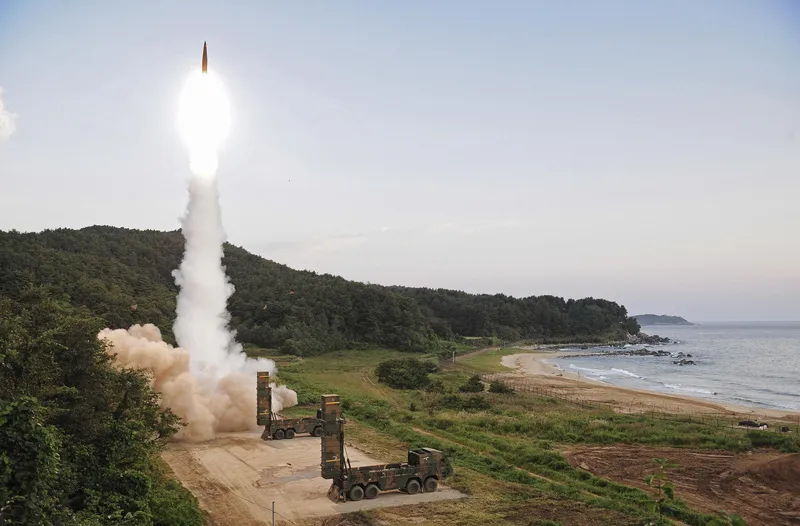
A ballistic missile may leave a defense system only a few minutes to detect its trajectory, identify its probable target, and decide whether to intercept it. At such speeds, military power no longer depends solely on the number of combat aircraft available or the range of offensive weapons. It also rests on an invisible network of radars, communications systems, computers, and interceptors whose coordination must function before the threat even becomes visible from the ground.
It is within this dimension of modern warfare that Morocco is pursuing its military modernization.
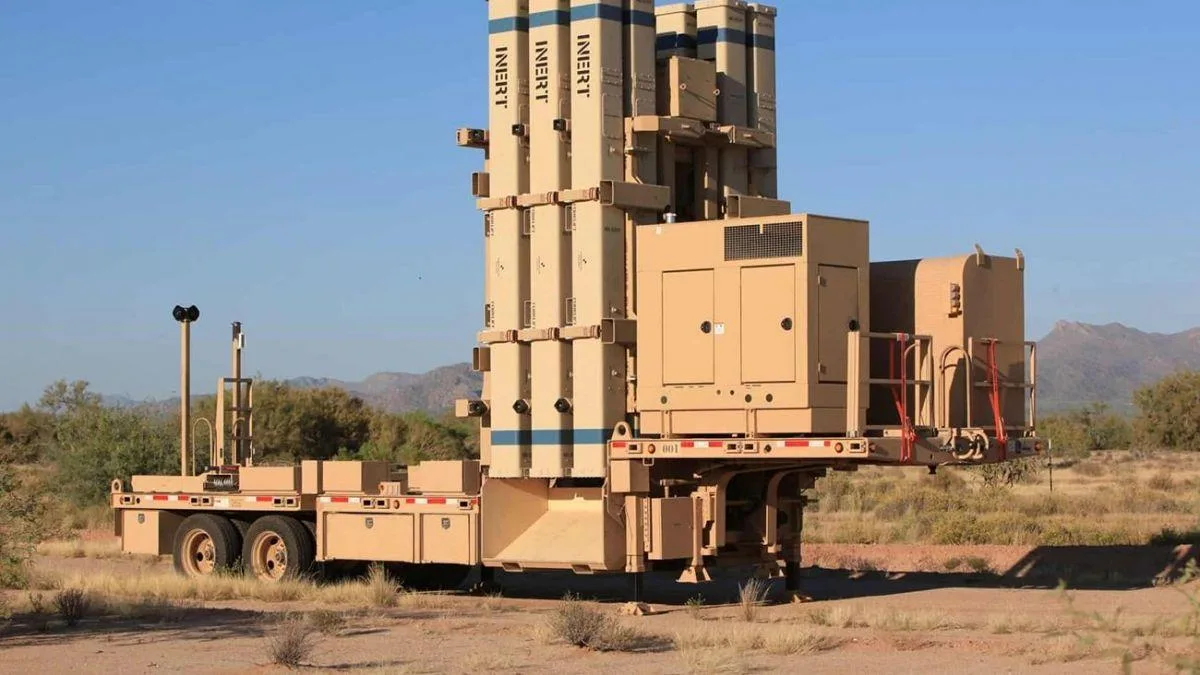
According to information initially reported by the German defense publication Europäische Sicherheit & Technik and subsequently covered by several Moroccan and Spanish media outlets in October 2026, Rabat is reportedly engaged in advanced discussions with Israel over the acquisition of David’s Sling, a system designed to intercept tactical ballistic missiles, cruise missiles, and other advanced aerial threats.
On October 21, the specialized publication Atalayar reported an acceleration of the discussions and the possibility of integrating the system into Morocco’s existing defense architecture. However, the available reports do not establish that a definitive contract has been signed. No purchase price, number of batteries, or delivery schedule has been officially confirmed.
This distinction is essential. The reports do not yet demonstrate the existence of a new operational Moroccan capability. They nevertheless point toward a strategic direction consistent with several years of acquisitions, technological partnerships, and investments in air defense.
The central issue is therefore not simply the purchase of another weapons system. It is how Morocco intends to organize the protection of its territory in a security environment where missiles, drones, and precision strikes are progressively redefining regional military balances.
The Quiet Transformation of Moroccan Air Defense
For decades, the modernization of Morocco’s armed forces focused primarily on acquiring conventional military platforms: combat aircraft, armored vehicles, artillery, and surveillance equipment. These assets remain indispensable, but their effectiveness increasingly depends on their ability to survive an initial attack.
Recent conflicts have demonstrated the vulnerability of air bases, energy facilities, logistics depots, and command infrastructure to precision weapons. A modern air force can lose much of its operational effectiveness if its runways, radars, or coordination centers are disabled. Similarly, a port or energy installation can become a strategic target even when it is far from an active front line.
Air defense has therefore become a fundamental condition of operational continuity.
Morocco has gradually diversified its capabilities in this field. Reported acquisitions of Israeli Barak MX and Spyder systems form part of this development. These platforms provide complementary capabilities against different categories of aerial threats, although their precise configurations, the number of batteries involved, and their operational availability are not fully documented in public sources.
David’s Sling would introduce an additional capability, particularly relevant against tactical missiles and certain longer-range threats.
Developed by Rafael Advanced Defense Systems in cooperation with the American company Raytheon, part of RTX, David’s Sling entered operational service in Israel in 2017. The system uses the Stunner interceptor, designed to destroy incoming threats through direct impact, and relies on an architecture combining radar detection, fire control, and guidance systems.
Specialized publications refer to engagement ranges extending to approximately 300 kilometers under certain conditions. This figure should not, however, be interpreted as a uniform protective radius around a battery. Interception capabilities depend on the type of incoming weapon, its altitude, speed, trajectory, and the available detection infrastructure.
The system’s strategic value lies in its potential role within a multilayered defense architecture.
An effective air defense network does not rely on a single weapon. It combines different interception layers connected through a common command-and-control structure.
This raises a decisive question for Morocco: how can systems acquired from different suppliers operate together?
Diversifying procurement reduces dependence on any single partner, but it also complicates technical integration, maintenance, and secure information sharing. American, Israeli, European, and Chinese systems do not necessarily use compatible communication protocols or command architectures.
The effectiveness of a missile defense shield therefore depends less on the number of systems purchased than on their ability to detect, identify, and engage threats in a coordinated manner.
Much of the strategic value of Morocco’s investments will ultimately depend on this integration.
Algeria and the Changing Economics of Military Power
Morocco’s defense modernization cannot be separated from its long-standing regional rivalry with Algeria.
Relations between the two countries have been shaped by the closure of their land border since 1994, profound disagreements over Western Sahara, and Algeria’s decision to sever diplomatic relations in August 2021.
This confrontation extends beyond diplomacy. It directly influences military procurement, defense budgets, and security doctrines.
The latest figures published by the Stockholm International Peace Research Institute in April 2026 illustrate the scale of this military effort.
In 2025, Algeria’s military expenditure reached approximately $25.4 billion, representing a real increase of 11% compared with the previous year. Morocco’s spending amounted to approximately $6.3 billion, an increase of 6.6% in real terms.
Algeria consequently remained Africa’s largest military spender, followed by Morocco. Together, the two countries accounted for more than 90% of North African military expenditure, estimated at approximately $35 billion.
The budgetary gap remains substantial: Algeria devoted roughly four times as much funding to defense as Morocco.
It would nevertheless be misleading to conclude that this translates into a proportional difference in operational effectiveness.
Military expenditure includes different categories of spending across countries, including personnel costs, maintenance, infrastructure, and equipment procurement. Budget comparisons provide only an incomplete picture of equipment readiness, personnel training, command effectiveness, and operational doctrine.
Algeria possesses a substantial military establishment historically structured around Russian suppliers, including significant air power and ground-based air defense capabilities. Morocco has pursued a more diversified procurement strategy, combining conventional modernization with surveillance and integrated defense technologies.
Within this context, Morocco’s reported interest in David’s Sling can be interpreted as an attempt to reduce specific vulnerabilities rather than replicate Algeria’s military capabilities on an equivalent scale.
A stronger interception capability could improve the protection of Moroccan military and economic infrastructure, complicate the planning of hostile air operations, and preserve essential assets during a crisis.
It would not provide absolute protection. Missile defense systems can be bypassed, overwhelmed by saturation attacks, or deprived of their detection capabilities. Nevertheless, they can alter an adversary’s calculations by increasing uncertainty about the likely outcome of an attack.
This logic corresponds to what strategic theory describes as deterrence by denial: making an attack less likely to achieve its objectives.
It differs from deterrence by punishment, which relies on the ability to inflict unacceptable damage in retaliation.
For Morocco, advanced defensive capabilities could therefore provide a response to a regional military environment in which quantitative superiority cannot easily be matched through equivalent budget increases.
Yet this approach also carries risks. Strengthening one country’s defenses may encourage its neighbor to invest in weapons designed to overcome them, contributing to a technological and financial competition whose dynamics neither side can fully control.
Israel and the United States: A Complex Strategic Dependency
Military cooperation between Morocco and Israel has accelerated since the restoration of official relations in December 2020 under the Abraham Accords framework.
This rapprochement has facilitated technological exchanges, equipment acquisitions, and industrial cooperation across several defense sectors.
Barak MX and Spyder represent only part of this relationship. Artillery and rocket systems, including Elbit Systems’ ATMOS and PULS platforms, have also featured in procurement reports.
David’s Sling, however, has an additional characteristic: its American dimension.
The program combines Rafael’s expertise with Raytheon’s technology and benefits from substantial technological and institutional cooperation with the United States.
Any potential export to Morocco would therefore be subject to the relevant authorizations governing the American technologies involved. It would be premature, however, to claim that Washington has already approved the precise terms of a Moroccan acquisition.
This dimension forms part of a much older military relationship between Rabat and the United States.
In October 2020, the two countries signed a ten-year military cooperation roadmap covering 2020–2030, intended to strengthen interoperability, training, and operational capabilities.
Morocco is also a regular participant and host of the African Lion military exercises, which support cooperation between American forces and several African armed forces.
A potential acquisition of David’s Sling would consequently place Rabat at the intersection of two major partnerships: Israeli technological cooperation and the American strategic relationship.
This configuration provides access to advanced equipment, but it also creates constraints.
Modern missile defense systems require software updates, specialized components, interceptor stocks, and technical assistance over several decades. Their operation depends on supply chains extending beyond national borders.
Military sovereignty therefore cannot be measured solely by ownership of equipment. It also depends on the ability to maintain, modernize, and operate that equipment when diplomatic or industrial conditions become less favorable.
Morocco is seeking to address some of these vulnerabilities through the development of a domestic defense industrial base.
The Defense Industry as a Second Strategic Pillar
Morocco’s military transformation increasingly extends beyond the acquisition of foreign equipment.
It now encompasses production, maintenance, industrial partnerships, and the gradual establishment of defense manufacturing capabilities on Moroccan territory.
In September 2026, India’s Tata Advanced Systems inaugurated a Moroccan industrial facility intended to manufacture WhAP 8×8 armored vehicles.
The project envisages a progressive increase in local industrial integration, initially targeting approximately one-third of components and subassemblies sourced domestically, with the possibility of reaching 50% in subsequent years.
These industrial objectives will ultimately need to be assessed against actual production volumes and the capabilities developed locally.
In the drone sector, BlueBird Aero Systems, a subsidiary of Israel Aerospace Industries, announced an industrial presence in Benslimane in November 2025 associated with the SpyX system.
In June 2026, an agreement involving Harmattan AI also opened prospects for cooperation in autonomous systems and artificial intelligence applied to defense, including research and training activities.
These initiatives suggest ambitions extending beyond the local assembly of imported equipment.
Defense manufacturing can contribute to the development of expertise in electronics, precision engineering, embedded systems, software, and industrial maintenance. It can also encourage the emergence of domestic subcontractors and specialized supply chains.
However, establishing a factory does not automatically guarantee access to the most sensitive technologies.
Fire-control software, advanced sensors, guidance components, and certain communication architectures often remain under the control of the original manufacturers.
The decisive question is therefore the depth of industrial integration.
Manufacturing a platform under license, assembling imported components, and independently designing a complex defense system represent three very different levels of technological sovereignty.
In the case of David’s Sling, no confirmed information establishes that a potential Moroccan acquisition would include technology transfers or local interceptor production.
Nevertheless, the strategic value of any agreement could partly depend on the training, maintenance, systems integration, and industrial participation opportunities offered to Morocco.
This dimension is particularly significant for a country simultaneously seeking to develop its automotive, aerospace, electronics, and defense industries.
The boundary between civilian and military industry is becoming increasingly porous, especially in sensors, artificial intelligence, advanced materials, and autonomous systems.
The Western Mediterranean and a Changing Security Balance
The prospect of a more advanced Moroccan missile defense architecture naturally attracts attention in Spain.
Geographical proximity, the presence of Ceuta and Melilla on the North African coast, and the strategic importance of the Strait of Gibraltar give relations between the two countries a distinctive security dimension.
Some Spanish commentary has linked Morocco’s military modernization to the status of the two Spanish cities. Such interpretations, however, require a clear distinction between technical capabilities and political intentions.
A missile defense system is designed to intercept aerial threats. Its potential deployment near a particular geographical area does not, by itself, demonstrate an intention to exert pressure on or confront a neighboring state.
Relations between Rabat and Madrid are also characterized by substantial economic and security interests.
Trade, migration management, counterterrorism cooperation, efforts against criminal networks, and energy infrastructure create extensive interdependence between the two countries.
Past diplomatic crises have demonstrated the potential fragility of this cooperation. They do not, however, establish that Morocco’s air defense modernization is intended as an instrument of coercion against Spain.
The status of Ceuta and Melilla within NATO’s collective defense framework also requires careful legal interpretation.
Article 5 of the North Atlantic Treaty establishes the principle of collective assistance, while Article 6 defines its geographical scope. The particular situation of the two cities has generated debate over the interpretation of these provisions.
Their position cannot simply be reduced to the assertion that they are necessarily excluded from all forms of allied protection.
Beyond this issue, Morocco’s military modernization is taking place in a Mediterranean security environment where strategic interests extend far beyond land borders.
The Strait of Gibraltar is one of the principal maritime corridors connecting the Atlantic Ocean and the Mediterranean Sea. Ports, energy facilities, submarine cables, and logistics infrastructure contribute to its strategic importance.
Protecting these assets is a national interest for Morocco, but also an element of stability for its commercial and security partners.
A stronger air defense architecture could therefore improve the resilience of critical infrastructure without necessarily changing the political nature of Morocco’s relations with European countries.
The Price of a Protected Sky
Missile defense ambitions also raise a fundamental economic question.
Advanced air defense systems rank among the most expensive military capabilities to acquire and operate.
Their cost extends far beyond launchers and radars. It includes interceptors, communication networks, command centers, training, testing, maintenance, and the continuous replenishment of ammunition stocks.
The German defense publication cited in Moroccan media has referred to an estimated production cost of approximately $1 million for a Stunner interceptor.
This estimate should not be treated as a confirmed contractual price or as the complete cost of an interception.
It nevertheless illustrates one of the central challenges of contemporary air defense: protecting an asset may require weapons that are considerably more expensive than some of the threats they are designed to destroy.
A relatively inexpensive drone can force defenders to employ a sophisticated interceptor. Conversely, using an inadequate defensive system against a fast or complex missile may result in the destruction of a strategically important facility.
The challenge is therefore to match each response to the nature of the threat without unnecessarily exhausting the most valuable interceptor stocks.
Economic attrition has become an integral component of missile defense.
A system may demonstrate excellent technical performance while proving difficult to sustain against repeated or saturation attacks.
For Morocco, whose military expenditure reached approximately $6.3 billion in 2025 according to SIPRI, the balance between technological sophistication, equipment quantities, and long-term financial sustainability will be decisive.
The construction of a missile defense shield cannot be assessed independently of other national priorities.
Water security, energy, transport, healthcare, education, and industrial development also require substantial investment.
The economic rationale for defense expenditure ultimately depends on its ability to reduce strategic risks in proportion to the resources committed.
A system capable of protecting an air base, command center, or critical energy facility may generate considerable strategic value even when its initial cost appears high.
But that value depends on operational scenarios, threat probabilities, and actual capabilities that cannot be fully evaluated using public information alone.
Caution is therefore necessary when assessing claims that a single acquisition would immediately transform the regional military balance.
Power Is Also Measured by What a State Can Protect
The potential acquisition of David’s Sling reveals a broader transformation in Morocco’s approach to national security.
Rabat is no longer focused exclusively on strengthening offensive capabilities or renewing conventional military equipment. It is gradually pursuing a security architecture in which detection, interception, infrastructure protection, and operational continuity play an increasingly important role.
This evolution reflects several realities: Algeria’s substantial military capabilities, the regional proliferation of drones and missiles, the vulnerability of strategic infrastructure, and the importance of protecting economic investments.
It is accompanied by deeper partnerships with Israel and the United States, alongside efforts to develop domestic industrial capabilities.
These developments do not guarantee the emergence of a fully integrated missile defense shield.
Technical complexity, foreign technological dependencies, operating costs, and the physical limitations of interception remain substantial obstacles.
They nevertheless demonstrate that territorial protection is becoming an increasingly central component of Moroccan military power.
The objective is not to make the Kingdom’s airspace impenetrable, something no missile defense architecture can realistically guarantee. It is to reduce vulnerabilities, preserve essential assets, and make the success of a potential attack less predictable.
In a region where military budgets continue to rise, this strategy could alter the calculations of regional actors without resolving the underlying political tensions.
Morocco is thus entering a phase in which the accumulation of weapons is no longer sufficient to define military modernization.
The decisive question is whether these capabilities can be integrated into a coherent, financially sustainable, and sufficiently autonomous system capable of functioning over the long term.
For the power of a state is no longer measured solely by how far it can strike. It is also measured by what it can still protect when the threat reaches its own territory.
Main Sources
- Stockholm International Peace Research Institute (SIPRI), Trends in World Military Expenditure, 2025, April 2026. https://www.sipri.org/publications/2026/sipri-fact-sheets/trends-world-military-expenditure-2025
- SIPRI, Military Expenditure Database, 2026 edition. https://www.sipri.org/databases/milex
- Médias24, “Défense : le Maroc en négociation pour l’acquisition du système David’s Sling, selon ES&T,” October 10, 2026. https://medias24.com/2026/10/10/defense-le-maroc-en-negociation-pour-lacquisition-du-systeme-davids-sling-selon-est-1776791/
- Hespress, “Défense aérienne : le Maroc négocierait l’achat de David’s Sling,” October 22, 2026. https://fr.hespress.com/493484-defense-aerienne-le-maroc-negocierait-lachat-de-davids-sling.html
- Atalayar, reporting on Morocco–Israel discussions concerning David’s Sling, October 21, 2026.
- Rafael Advanced Defense Systems and RTX/Raytheon, technical and industrial documentation on David’s Sling.
- United States Department of Defense, U.S.–Morocco military cooperation and the 2020–2030 defense roadmap.
- NATO, The North Atlantic Treaty, Articles 5 and 6.
Atlas Limits Research Desk
Atlas Limits’ editorial and analytical desk.