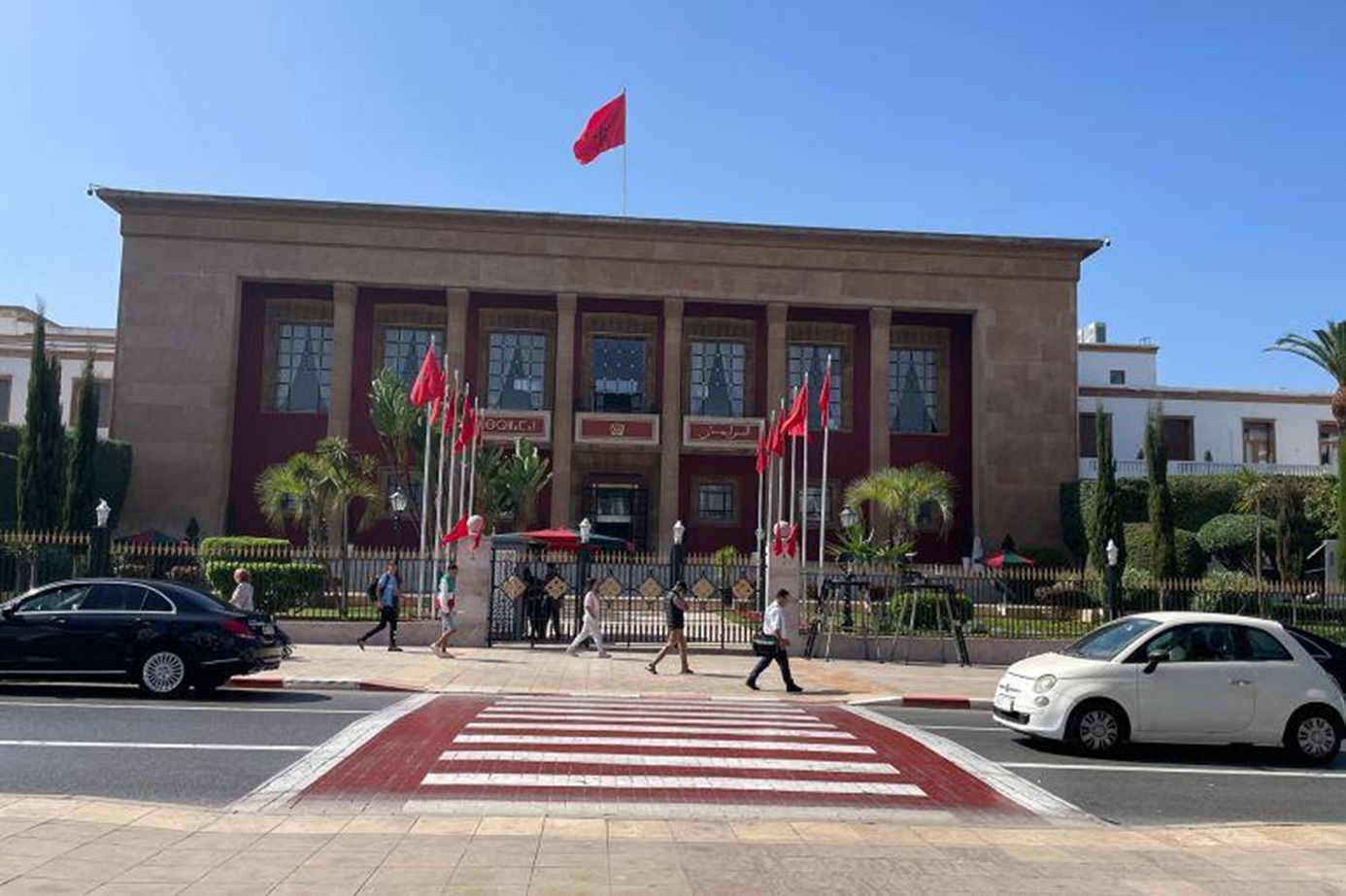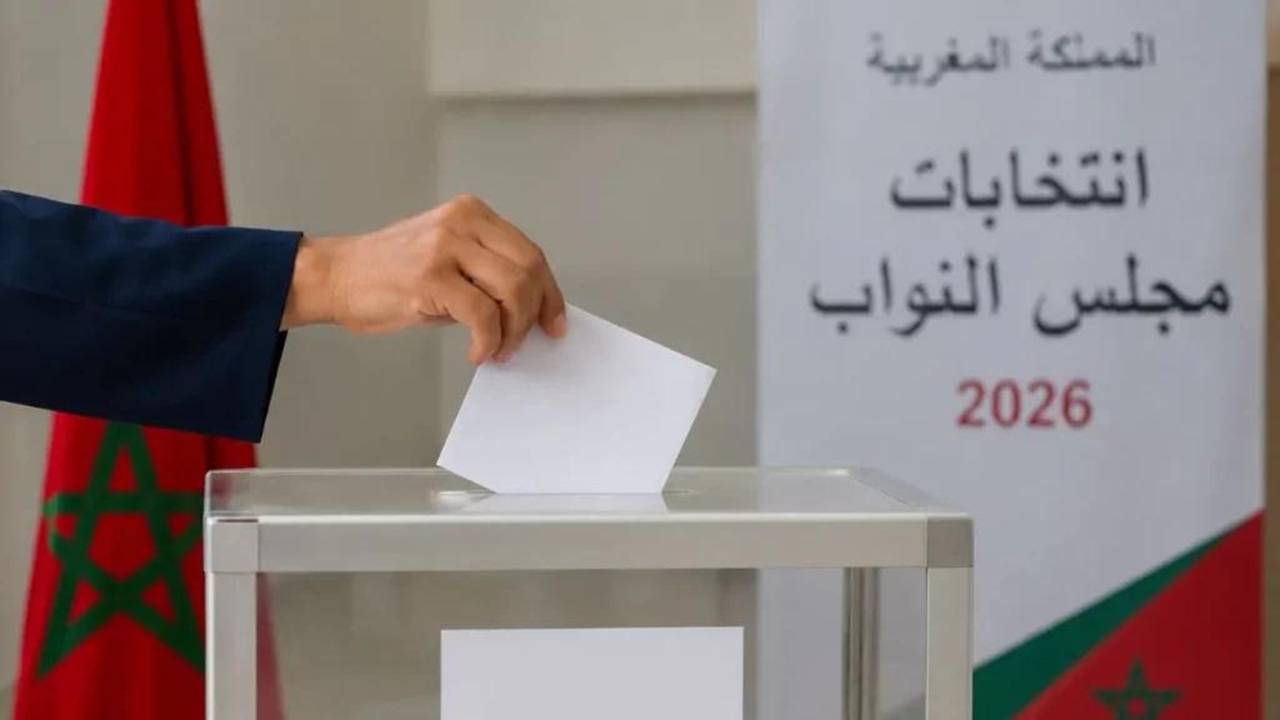
With Morocco’s legislative elections only days away on September 23, the country is entering an unusual political moment. The campaign is underway, 395 seats are up for renewal and 27 parties are contesting the vote. Yet an increasing part of the debate is no longer simply about who will come first. It concerns a deeper question: how much political power can Moroccan elections actually redistribute?
The question is not new. But this year it has acquired particular significance. The coalition that has governed since 2021 enters the election after months of social tensions, an unusual wave of generational mobilisation and, more recently, an increasingly public confrontation between some of its main actors. In this context, the election is no longer merely a mechanism for renewing parliament. It is becoming a test of the Moroccan party system’s ability to provide political representation in a country where a significant part of state action operates on an institutional timeline far longer than that of individual governments.
A Governing Majority Running Against Itself
The paradox of the campaign is visible even before voting begins. The National Rally of Independents, the Authenticity and Modernity Party and Istiqlal have governed together during the outgoing legislature. They must now persuade voters to choose between them.
This ordinary contradiction of coalition politics took a much more spectacular form at the end of August. The RNI accused the PAM of attracting some of its elected officials and candidates. Then a recording attributed to Rachid Talbi Alami, president of the House of Representatives and a senior RNI figure, circulated publicly. Fouzi Lekjaa, Minister Delegate in charge of the Budget and now involved with the PAM, was directly targeted in the recording amid manoeuvring over the balance of power surrounding the next government. The authenticity of the recording was notably verified by Médias24.
The dispute quickly moved beyond the question of candidate defections. It exposed publicly what is usually contained within party negotiations: competition for the positions that will follow the election. The three parties remain partners in government while competing for the seats that will determine their respective weight in the next executive.
This battle matters politically, but it also reveals a weakness. While social expectations remain heavily focused on employment, healthcare, education, purchasing power and the quality of public services, part of the campaign has been absorbed by political defections, personal rivalries and the future distribution of power.
The issue, therefore, is not simply that the governing majority is divided. It is the distance between political competition as organised by the parties and the concerns around which part of Moroccan society has begun to reorganise itself.
Gen Z 212 Shifted the Centre of Gravity
The mobilisations of 2025 were, in this respect, a warning that is difficult to reduce to an ordinary protest cycle.
Gen Z 212 developed largely outside traditional structures of representation. Without formal leadership or party or trade-union affiliation, the movement organised primarily through digital platforms. Its demands focused notably on healthcare, education and social justice. Participants explicitly sought to maintain their distance from political parties.
That characteristic is probably more important than the immediate scale of the demonstrations.
In many political systems, discontent is eventually absorbed by the opposition: a party transforms social anger into a programme, then candidates and potentially a governing majority. Part of Morocco’s recent protest movement followed a different trajectory. It expressed itself outside the party system without necessarily seeking to replace it.
This is where one of the central questions of the 2026 election emerges.
The challenge for Moroccan parties is not merely to persuade voters to choose between them. It is also to persuade part of the population that making such a choice remains a sufficiently powerful instrument for changing their circumstances.
What the Vote Actually Decides
It would nevertheless be incorrect to conclude that Moroccan elections are inconsequential.
The 2011 Constitution establishes an essential rule: the king appoints the head of government from the political party that comes first in elections to the House of Representatives, on the basis of the election results. Members of the government are subsequently appointed by the king on the proposal of the head of government.
Coming first is therefore not symbolic.
The result will determine which party receives the initiative to form the government. It will alter the balance of power between the RNI, PAM, Istiqlal and the opposition. It will also determine the composition of the House of Representatives, the ability to construct a majority and, through coalition negotiations, the distribution of a substantial part of governmental power.
Public policy is not indifferent to these balances either. Taxation, social programmes, economic regulation, budgetary arbitration, legislation and administrative implementation all pass, in part, through the government and parliament.
To say that elections do not determine the entirety of Moroccan power is therefore not to say that they determine nothing.
It is precisely this distinction that helps explain the system.
Two Timelines of Power
Morocco operates through two overlapping political timelines.
The first is electoral. It produces majorities, governments, ministers and coalitions. It exposes political leaders to the record of their term in office and allows them to be replaced.
The second is institutional and strategic. It operates over a much longer horizon.
The monarchy retains considerable constitutional prerogatives. The king chairs the Council of Ministers, is Supreme Commander of the Royal Armed Forces and exercises specific responsibilities in several fundamental areas of the state. Morocco’s constitutional model is therefore neither that of a European parliamentary monarchy in which the sovereign performs an essentially symbolic role, nor that of a system in which elections have no meaningful governmental consequences.
It rests on a hybrid architecture in which electoral and monarchical legitimacy coexist.
This architecture helps explain why several major strategic directions can survive changes of government with remarkable continuity. Diplomacy surrounding the Sahara, strategic relations with the United States and Europe, major infrastructure programmes, Morocco’s African policy and certain defence priorities belong to a timeline that extends far beyond a parliamentary term.
Governments change. The state continues its trajectory.
That continuity is, in fact, one of the system’s strengths when policies require fifteen or twenty years of sustained investment. But it simultaneously creates a political difficulty: when the boundary between strategic decision-making and governmental responsibility becomes difficult to read, voters may struggle to determine exactly what they are rewarding or sanctioning at the ballot box.
The Deeper Question Is Accountability
This is where the current campaign becomes more interesting than the individual confrontations dominating it.
In a conventional parliamentary system, the mechanism is relatively clear: a government implements policy, voters assess its results and then either return it to office or replace it.
In Morocco, the chain of accountability is more complex.
A policy may originate with the government, a long-term royal strategy, the administration, a public institution or several of these actors simultaneously. Successes are often collectively claimed. Failures can become considerably more difficult to attribute.
This ambiguity helps explain an apparently contradictory phenomenon: a strong state capacity to deliver certain strategic projects can coexist with distrust toward the political institutions responsible for representing the population.
Rail, port, energy or sporting infrastructure can advance rapidly while expectations surrounding hospitals, schools, employment or local public services remain strong enough to generate social mobilisation.
This is not necessarily an economic contradiction. It reflects different timelines, instruments and structures of political accountability.
The Election Will Not Settle Everything
September 23 will be neither a referendum on the monarchy nor a mere institutional formality.
Voters will determine a real parliamentary balance of power. That result will decide the party from which the next head of government must be appointed and will influence the composition of the executive.
But the election will not redistribute every centre of decision-making in the Kingdom. Parts of foreign policy, security and strategic direction will continue to operate within an institutional architecture whose horizon extends beyond a single legislature.
The central question of 2026 may therefore not be whether the election will transform Morocco.
It is whether it can reduce the distance that has developed between part of society and those who claim to represent it.
The confrontation between the RNI and PAM may determine who tomorrow controls more seats, ministries or negotiating leverage. By itself, it does not answer that question.
After Gen Z 212, however, the issue has become increasingly difficult to avoid: a political system can preserve institutional stability while the capacity of its intermediaries to transform social expectations into political trust declines.
These are two different things.
And Morocco could emerge from the September 23 election with a new government without having resolved the second.
Main sources: Morocco’s official Maroc.ma portal on the September 23, 2026 legislative elections and electoral calendar; the 2011 Constitution of the Kingdom of Morocco, particularly Article 47; Médias24 and Le Desk on RNI–PAM tensions and the recording attributed to Rachid Talbi Alami; Al Jazeera on tensions within the outgoing governing coalition and Gen Z 212; University of Navarra research on Morocco’s 2025 social mobilisations.
Atlas Limits Research Desk
Atlas Limits’ editorial and analytical desk.