For a long time, Europe looked at itself from the West. Its economic centre lay somewhere between the Rhine Valley, the Benelux countries and northern Italy; its political centre oscillated between Paris, Bonn and later Berlin and Brussels; its security, meanwhile, rested largely on a power located across the Atlantic. To the east stretched a periphery that had been Soviet, then post-communist, then European, and whose trajectory appeared destined to be one of gradual convergence.
Poland increasingly belongs to a different geography.
It has obviously replaced neither Germany as Europe’s largest economy, nor France as a nuclear-armed military and diplomatic power, nor Brussels as the place where continental compromises are assembled. Yet something has shifted. The war in Ukraine, European rearmament, NATO enlargement, uncertainty over the long-term American commitment and three decades of economic convergence have progressively increased the value of precisely what Poland possesses: size, location, economic depth and an acute perception of the Russian threat.
The implications extend beyond Poland itself. Warsaw offers a way of observing a broader transformation: Eastern Europe is no longer merely a space that the European Union must integrate and secure. It is beginning to influence how the continent defines its interests.
From the Periphery to Convergence
When Poland joined the European Union in 2004, the gap with Western Europe remained considerable. The country had a relatively inexpensive labour force, a large domestic market and an industrial base inherited from successive economic transformations, but living standards remained far below those of neighbouring Germany.
European integration gradually changed the equation. Structural funds financed roads, infrastructure, cities and networks. German value chains expanded eastward. Foreign investment encountered a large population, a diversified industrial base and a productive system that did not depend on a single sector. Poland became simultaneously a workshop, a market and a logistics platform for the European economy.
The process is often described simply as convergence. It has become more than that.
The European Commission estimates that Polish real GDP grew by 3.6% in 2025 and expects another 3.5% expansion in 2026, supported in particular by investment financed through European funds. Unemployment remains around 3%, exceptionally low by EU standards. Poland therefore continues to display an economic dynamism that contrasts with the much slower growth of several major Western European economies.
Repeated divergence eventually produces political consequences. A larger economy can finance more infrastructure, diplomacy and defence. It also makes it increasingly difficult to preserve a European hierarchy conceived when the gap between West and East was far wider.
Europe’s economic geography is not suddenly moving to Warsaw. It is stretching eastward.
The Frontier Has Become Central Again
Then came the war.
Russia’s full-scale invasion of Ukraine in February 2022 did more than overturn European security policy. It changed the strategic value of territory. In a Europe organised around trade, mobility and economic integration, being located on the eastern frontier could appear to be a disadvantage. In a Europe increasingly concerned with deterrence, military corridors, critical infrastructure and strategic depth, that same frontier becomes central.
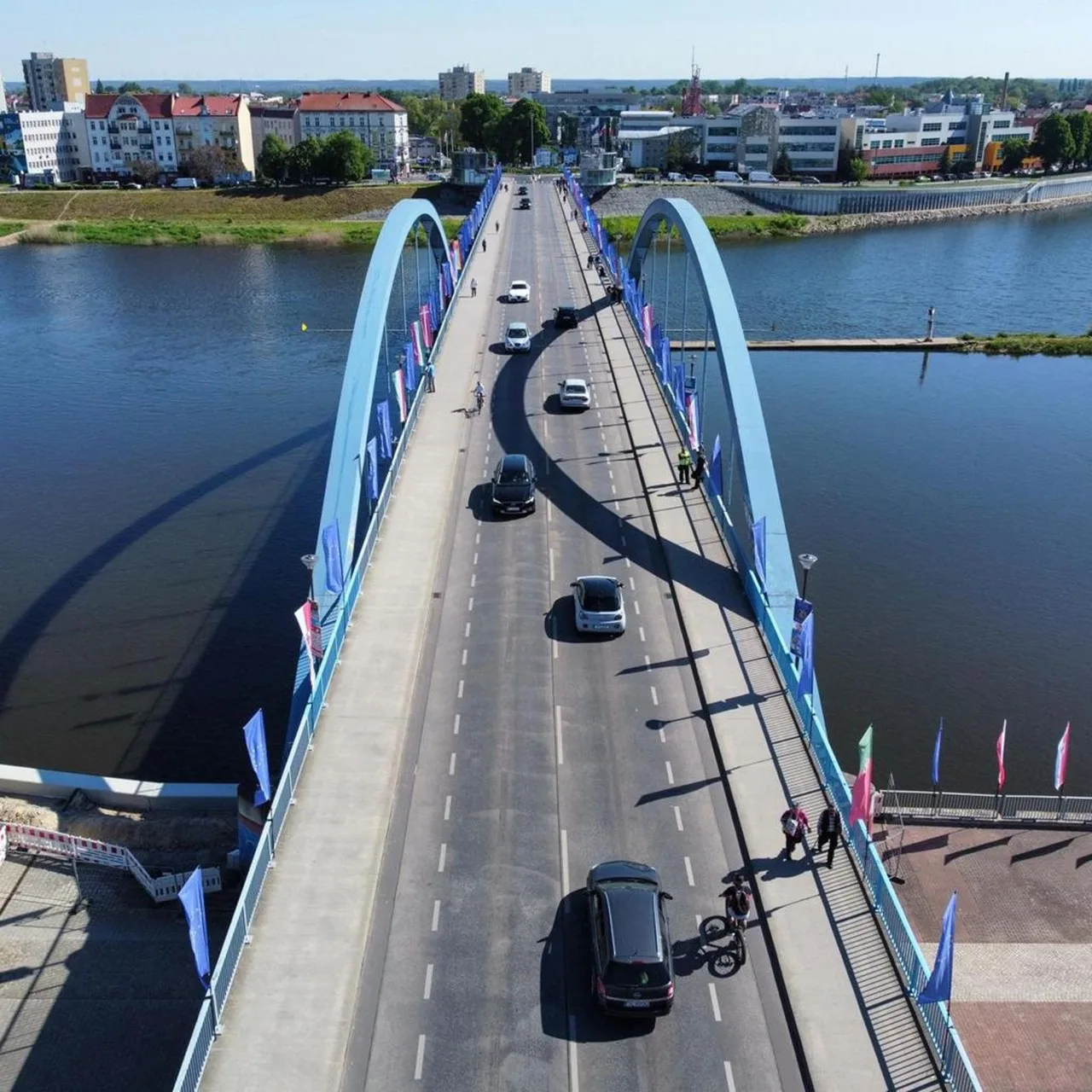
Poland borders Ukraine, Belarus and Russia’s Kaliningrad exclave. It sits across the routes connecting Western Europe with the Baltic states and Ukraine. The Suwałki corridor, the narrow land connection between Poland and Lithuania, has become one of the most sensitive areas in NATO military planning.
What was once a margin is now a potential front line.
Warsaw had also developed a considerably more suspicious reading of Russia than the one prevailing in parts of Western Europe before 2022. While Germany deepened its energy relationship with Moscow and several European capitals still regarded commercial interdependence as an instrument of stabilisation, Poland and the Baltic states repeatedly warned about the vulnerability created by that dependence.
The war did not retroactively prove every element of their analysis correct. It did, however, greatly increase their political weight. When a threat becomes central, those who had long placed it at the centre of their doctrine naturally cease to look peripheral.
The Military as an Instrument of Scale
The most spectacular transformation is military.
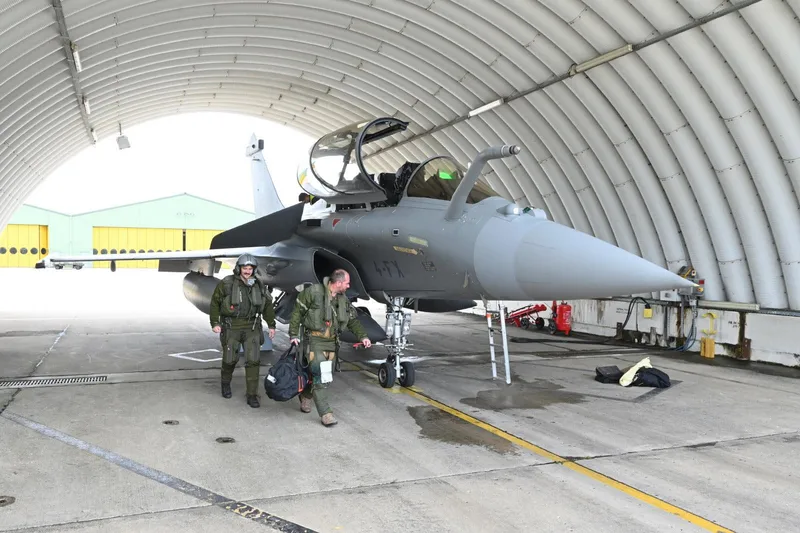
Poland has embarked on a rearmament programme of exceptional scale by European standards: tanks, artillery, air defence, combat aircraft, ammunition and larger armed forces. It is buying extensively from the United States, but also from South Korea, while seeking to expand its own industrial capabilities.
The result is an unusual configuration. Warsaw remains deeply committed to the transatlantic relationship, yet it does not interpret that commitment as a reason to delegate its defence to the United States. On the contrary, it is attempting to become powerful enough to make the alliance more credible.
By late 2025, NATO noted that Poland was already spending more than 4.5% of GDP on defence, with the effort expected to increase further in 2026. Europe as a whole is now moving in the same direction: since the 2025 Hague Summit, NATO Allies have committed to spending 5% of GDP on defence and security-related requirements by 2035, including at least 3.5% on core military needs.
Poland’s distinguishing feature is that it began moving before this trajectory became the collective norm.
That matters. For several decades, the European debate over military power rested on a familiar contradiction: governments wanted greater strategic autonomy while limiting the resources required to obtain it. Poland has adopted the opposite logic. It accepts the cost of power first and debates how to use it afterwards.
But that choice is not free.
The Price of Power
Tanks do not disappear from public accounts when they appear in official photographs.
The European Commission expects Poland’s general government deficit to reach 6.5% of GDP in 2026, after 7.3% in 2025. It also projects public debt rising from 59.7% of GDP in 2025 to 68.3% in 2027. Part of this deterioration comes precisely from military expenditure, alongside social spending and public investment.
Poland is therefore encountering early a problem that much of Europe may soon face: how can governments simultaneously finance the welfare state, the energy transition, infrastructure, an ageing population and a much more expensive defence posture?
Growth makes the equation manageable. It does not make it disappear.
There is also an industrial dependency. Rapid purchases of American and South Korean equipment allow Poland to build military capabilities far faster than the development of a wholly domestic defence industry would permit. But military sovereignty cannot be measured solely by the number of platforms owned. It also depends on maintenance, ammunition, logistics chains, technology transfers and the capacity to produce over time.
The real test of Polish rearmament will therefore not simply be the future size of its armed forces. It will be whether the country can turn a wave of procurement into a sustainable military system and, eventually, into industrial power.
Warsaw, Berlin and Europe’s New Geography
This rise inevitably changes Poland’s relationship with Germany.
The two countries remain deeply economically interdependent, and Germany is still one of Poland’s essential trading partners. Yet their relationship no longer corresponds exactly to the model that prevailed during the first decades after the fall of communism, when the German economy represented the obvious centre around which much of Central Europe was organised.
Poland now has greater resources with which to defend its own priorities. More importantly, the issues on which it possesses a particular strategic advantage — Russia, Ukraine, the eastern frontier, land warfare and the relationship with Washington — have become more important.
This does not mean that Europe’s centre is simply moving from Berlin to Warsaw. Such a reading would merely replace one simplification with another. Germany’s economy remains considerably larger, its industry remains essential, and its institutional influence within the European Union is on a different scale.
But a centre of gravity can shift without the old centre disappearing.
Europe is becoming more polycentric. Paris retains its military, nuclear and diplomatic power. Berlin retains its economic weight. Brussels organises the Union’s regulatory and financial capacity. London, outside the EU but within NATO, remains a major military actor. Warsaw now contributes something that was long missing from this architecture: a large eastern territorial power capable of connecting economic scale, military capacity and strategic depth.
Another Central Europe
Poland is not alone.
NATO enlargement to Finland and Sweden has strengthened the Baltic space. The Baltic states are devoting an increasing share of their resources to defence. Romania is becoming more important on the Black Sea flank. Ukraine, even outside the European Union and NATO, has accumulated military experience that will inevitably influence the continent’s future security architecture if it emerges from the war with its sovereignty intact.
A strategic line is therefore becoming visible from Finland to the Black Sea.
It is neither a homogeneous bloc nor a new Europe set against the West. Interests, political histories and visions of European integration differ considerably across these countries. But they share one geographical reality: for them, Russia is not an external problem observed from the comfort of a diplomatic conference. It is part of their immediate security environment.
Poland’s presidency of the Council of the European Union in the first half of 2025 gave this evolution a particularly clear institutional expression by organising its programme around seven dimensions of security: external, internal, information, economic, energy, food and health security.
The vocabulary itself is revealing. European integration was long narrated primarily through markets, regulation and prosperity. Poland is helping to reintroduce borders, resilience and power into that conversation.
Demography, the Silent Adversary
There is, however, one constraint that neither European funds nor military procurement can easily neutralise: demography.
Like much of Central and Eastern Europe, Poland combines low fertility, population ageing and the legacy of decades of emigration. Immigration, particularly from Ukraine, has partially altered this dynamic and supported the labour market, but it does not eliminate the structural problem.
Eurostat’s new EUROPOP2025 projections extend the horizon to 2100 and underline how population trends and changing age structures will weigh on public finances, labour markets and the growth potential of European economies.
For Poland, the contradiction is particularly significant. The country is seeking to increase its power precisely as its demographic base risks contracting.
A larger army requires soldiers. A more ambitious industrial system requires workers. A welfare state confronting population ageing requires taxpayers. And an economy seeking to continue converging towards Western European income levels must raise productivity rapidly enough to compensate for the relative scarcity of labour.
This may determine the second chapter of Poland’s transformation. The first convergence was driven largely by European integration, investment and a competitive labour force. The next will have to rely increasingly on capital, technology, automation and productivity.
The East Gains Weight
Poland is therefore not becoming a power simply because it is buying large numbers of tanks, any more than it would automatically become one because its GDP is growing faster than Germany’s.
Power emerges when several movements begin to converge.
Poland’s economy has grown larger. The eastern frontier has become more important. Defence has returned to the centre of European priorities. Russia has restored geography to strategic calculation. The United States is demanding greater effort from its European allies. And the European Union itself is increasingly trying to think about competitiveness, economic security, industry and defence simultaneously.
Almost every one of these developments increases Poland’s relative value.
There is no guarantee that this convergence will endure. Fiscal constraints could slow rearmament. Demography could reduce potential growth. Domestic politics could complicate Warsaw’s ability to build European coalitions. A durable stabilisation of relations with Russia would also eventually alter the exceptional strategic value acquired by NATO’s eastern flank.
But returning to the European map of the beginning of the century would now be difficult.
In 2004, Poland’s accession to the European Union could still be described as the enlargement of Western Europe towards the East. Two decades later, that description is becoming less accurate. What is happening is no longer merely the integration of the East into an order designed elsewhere. The East is beginning to participate in defining that order.
Europe’s centre has not moved.
It has widened.
Main Sources
European Commission — Economic Forecast for Poland, 21 May 2026.
NATO — Defence investment and NATO’s 5% commitment, updated 29 June 2026.
NATO — statements by the NATO Secretary General during his visit to Poland, December 2025.
Council of the European Union / Polish Presidency — Programme of the Polish Presidency of the Council of the European Union, 2025.
Eurostat — EUROPOP2025 Population Projections, June 2026.
Atlas Limits Research Desk
Atlas Limits’ editorial and analytical desk.