One hundred thousand dollars for a few hundred. The proposition almost sounds too simple. A trader with limited capital pays for an evaluation, follows a set of risk rules, reaches a performance target and, if successful, gains access to what is presented as a “funded” account. Profits can then be shared, sometimes with the trader retaining a very large portion.
This promise has helped create a peculiar industry at the intersection of professional trading, financial education and the digital economy. Proprietary trading firms, or prop firms, are not new. What is new is their transformation into a product accessible to a global population of retail traders.
Behind the intuitive idea — a company provides capital to people who know how to trade — lies a more complex mechanism. Because the principal asset of a modern prop firm may not necessarily be the capital it allocates to traders. It may be the system that allows the firm to identify them.
From the trading floor to the online challenge
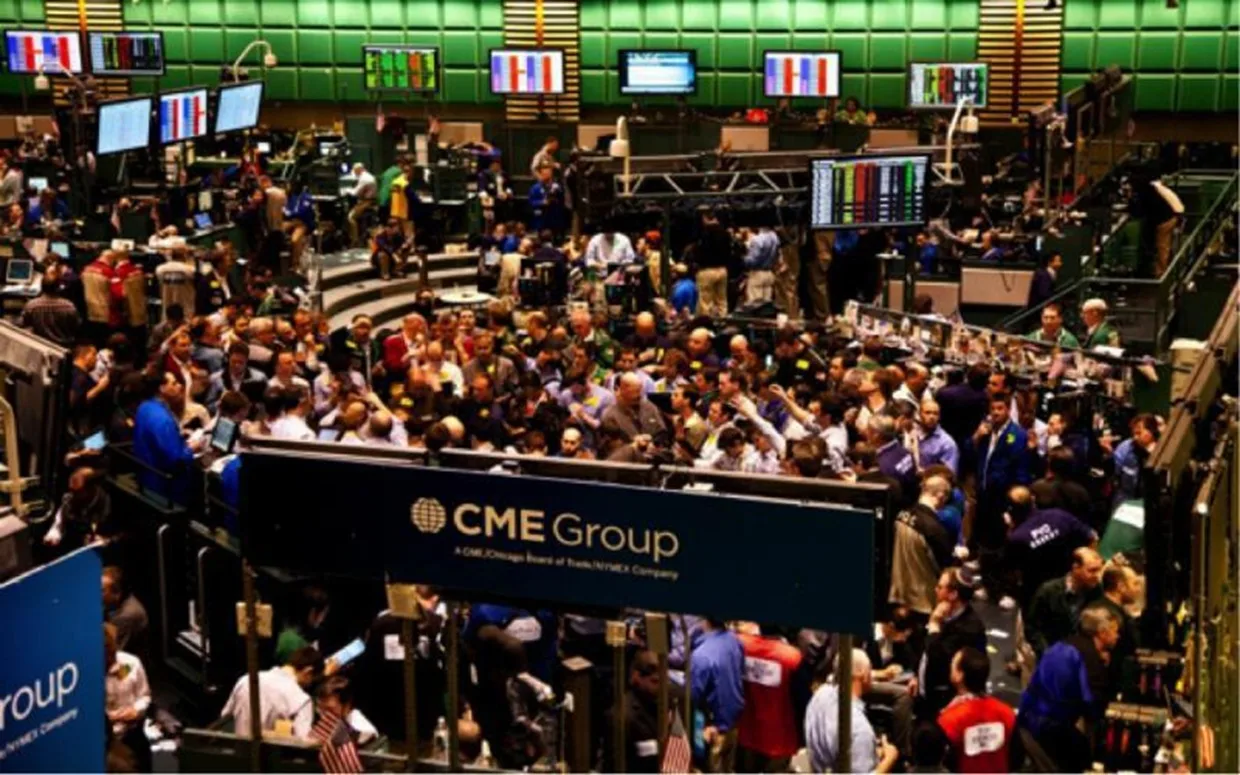
Traditional proprietary trading follows an old logic. A bank, specialized fund or trading company deploys its own capital in financial markets. It hires traders, assigns risk limits, builds technological infrastructure and retains part of the profits generated. The trader operates with the company’s money; the company therefore directly bears the losses.
The model developed for retail traders reverses part of that relationship.
The candidate generally begins by paying. They purchase a challenge or evaluation giving access to an account with a specified nominal size. They must then reach a profit target without breaching certain limits: maximum daily loss, overall drawdown, consistency rules or restrictions on particular trading practices.
That detail profoundly changes the economics of the activity.
In the traditional model, the company first commits its own capital to discover whether a trader is profitable. In the evaluation model, candidates pay to demonstrate that they deserve the possibility of reaching the next stage.
The cost of selection has changed sides.
The $100,000 that does not always exist
The ambiguity becomes more interesting after the challenge has been passed.
Industry terminology readily suggests that a “funded” trader now controls substantial capital. Yet the nominal amount does not necessarily correspond to money actually deposited in a market account under the trader’s control or directly exposed to their transactions.
FTMO, one of the best-known companies in the industry, states, for example, that its CFD business provides demo accounts using fictitious funds and that clients’ trading remains simulated. The company nevertheless explains that it may analyze data generated through those accounts and use some of that information when separately trading with its own capital. In its futures business, FTMO explicitly distinguishes three stages: Evaluation, Sim-Funded Account and Live Funded Account. The second can generate real monetary payouts despite trading remaining simulated; only a smaller population of successful traders may subsequently be invited to trade a live account backed by real capital.
The paradox can therefore be summarized in two expressions that initially seem difficult to reconcile: simulated profit, real payout.
This distinction helps explain why the amount displayed on a funded account does not necessarily measure the company’s actual economic exposure. A nominal $100,000 account with a maximum permitted drawdown of $5,000 is economically very different from freely entrusting a trader with $100,000.
What the firm is really allocating is primarily a risk envelope.
The spectacular number is the capital. The decisive number is the permitted loss.
A selection machine
Once this distinction is established, the modern prop firm begins to look different.
Consider not one trader, but tens of thousands of candidates. Each enters the system with a different strategy, psychology, risk tolerance and level of skill. Some fail quickly. Others reach the performance target. Among those who succeed, some cannot reproduce their results. A smaller fraction may eventually demonstrate sufficiently consistent performance to become interesting.
The firm does not necessarily need to predict in advance who belongs to that final group.
It can let the process discover them.
Drawdown limits eliminate the most destructive behaviors. Performance targets test the ability to generate returns. Consistency requirements can reduce the influence of an exceptional trade. Restrictions seek to prevent strategies that might work in simulation but prove difficult to reproduce in real markets.
The challenge is therefore not merely a commercial obstacle placed in front of access to capital. It is a filter.
And when that filter is applied to a sufficiently large population, it produces something valuable: information.
The data behind the trader
 This is where the model intersects with a much broader transformation of the digital economy.
A trader operating within a controlled environment does not merely produce profits and losses. They produce a behavioral sequence: instruments traded, times of intervention, position sizes, holding periods, reactions to volatility, trading frequency, correlations between positions, behavior after a loss and behavior after a gain.
Individually, these elements tell the story of one trader. Aggregated across a large population, they can become a detection system.
FTMO explicitly states that it monitors and analyzes trades performed by its traders in the demo environment and may decide to use this data when separately executing trades for its own real account.
The model then becomes more subtle than a simple relationship between a company with money and a trader with talent. The firm can separate the discovery of talent from exposure to risk.
First, it observes.
Then, potentially, it funds.
Within this architecture, simulated trading ceases to be merely an imitation of the market. It becomes a laboratory.
Who is funding whom?
The question then becomes almost unavoidable.
If thousands of candidates pay to participate in evaluations, while most trading can remain simulated and only some traders eventually reach real capital, can the industry still be described simply as a system in which companies fund traders?
The answer depends on the firm and its business model, but the economics of some prop firms suggest a more circular relationship.
Candidates purchase access to an evaluation infrastructure. Their fees contribute to the operator’s revenue. Trading rules constrain the economic exposure associated with performance. Successful traders can receive real payouts even when their transactions remain simulated. Meanwhile, the data generated by the system can help identify potentially valuable trading behavior.
The crowd therefore partly finances the mechanism designed to find the exceptions within the crowd.
This does not mean that successful traders are fictitious, nor that their payouts are unreal. It means that the popular image of a company simply handing a trader $100,000 after an examination is insufficient to explain the industry's actual economics.
The product being sold is not simply capital.
It is the possibility of access to capital.
The power of the rules
This distinction also explains the almost obsessive importance of rules in the prop firm universe.
A trader using personal capital can lose 6% today and decide to continue tomorrow. Under an evaluation program, the same loss may immediately terminate the account. A strategy may be permitted by one operator and prohibited by another. Restrictions can apply to drawdown, concentration, economic announcements, overnight positions or particular forms of arbitrage.
These rules are not peripheral to the model. They constitute its economic architecture.
The prop firm must solve a delicate equation: offer a reward attractive enough to bring traders into the system while preventing a strategy that is rational for the candidate from becoming irrational for the firm.
The candidate and the operator do not look at risk in exactly the same way.
A trader who has paid a few hundred dollars for an evaluation may have an incentive to maximize the probability of rapidly obtaining access to a much larger account. The operator, by contrast, is looking for repeatable behavior compatible with controlled exposure. The greater the gap between the price of entry and the potential reward, the stronger the incentive to take asymmetric risks.
The rules are precisely what attempt to close that gap.
An industry between several worlds
This architecture also creates a regulatory difficulty.
Traditional proprietary trading sits relatively clearly within the financial-markets universe. But when a customer purchases a simulation, does not deposit funds intended for investment and does not necessarily execute transactions on a real market, the categories become less obvious.
The issue becomes particularly sensitive when these models approach products that are already heavily regulated. The UK Financial Conduct Authority, for example, emphasizes that CFDs are high-risk products and imposes specific obligations on firms offering them to retail clients. It has also stated that certain forms of copy trading can amount to portfolio management when another trader's decisions lead automatically to transactions being executed.
In the United States, the distinction between simulation and live markets can also be seen in the structure of some operators. In a February 2026 submission to the Commodity Futures Trading Commission, Topstep described its group as encompassing a simulated trading and evaluation program for retail traders, a proprietary trading company, a trading platform and a CFTC-registered broker that is a member of the National Futures Association.
The industry is therefore not a homogeneous bloc. Similar vocabulary can conceal materially different economic and legal structures.
That is precisely why the word funded deserves to be examined rather than simply accepted.
Democratization and its mirror image
It would nevertheless be too simplistic to reduce prop firms to a marketing illusion.
They address a genuine problem.
Trading is an activity in which capital creates a peculiar barrier to entry. A trader capable of generating a 20% annual return on $2,000 remains almost as poor at the end of the year. Apply the same talent to several hundred thousand dollars and it becomes economically meaningful.
For a long time, moving from one situation to the other generally required an institutional career, a professional network or substantial personal wealth.
Digital prop firms have built another door.
A trader in Casablanca, Lagos, Jakarta or Buenos Aires can theoretically demonstrate their abilities without entering a London or New York trading floor. That geographical and social opening is real. It allows skills that might once have remained invisible to be tested at scale.
But the democratization of recruitment comes with the commercialization of selection.
That may be the industry's real innovation.
Capital is no longer the scarce product
Traditional finance was built around an obvious scarcity: money.
Those who possessed capital decided to whom they were willing to entrust it. The internet, trading platforms, cloud infrastructure and the global distribution of market data have gradually altered that equation.
Capital still matters, but another problem has emerged: finding, among an immense population of candidates, those who genuinely know how to use it.
The digital prop firm turns that problem into a market.
It can charge for entry into the process, automate part of the evaluation, observe behavior at scale, rapidly eliminate profiles incompatible with its constraints and retain an option on those who emerge.
Seen from this perspective, it looks less like a bank distributing capital and more like a platform organizing a market for speculative talent.
The trader thinks they have come looking for money.
The firm may have come looking for the trader.
And between the two, an industry has emerged whose most valuable resource may be neither the challenge it sells nor the $100,000 displayed on a screen, but its ability to determine, among thousands of people willing to take a risk, which of them are worth the day when that risk finally becomes its own.
Main sources
FTMO — Official terms and documentation concerning simulated accounts, FTMO Accounts and the potential use of trading data in the company's own trading activities.
FTMO Futures — Official documentation concerning the Evaluation, Sim-Funded Account and Live Funded Account stages, including payouts associated with simulated accounts.
Commodity Futures Trading Commission — US regulatory documentation and Topstep's February 6, 2026 submission describing the structure of its simulation, proprietary trading, platform and brokerage activities.
Financial Conduct Authority — Regulatory documentation concerning CFDs, risks to retail investors and copy trading.
Atlas Limits Research Desk
Atlas Limits’ editorial and analytical desk.