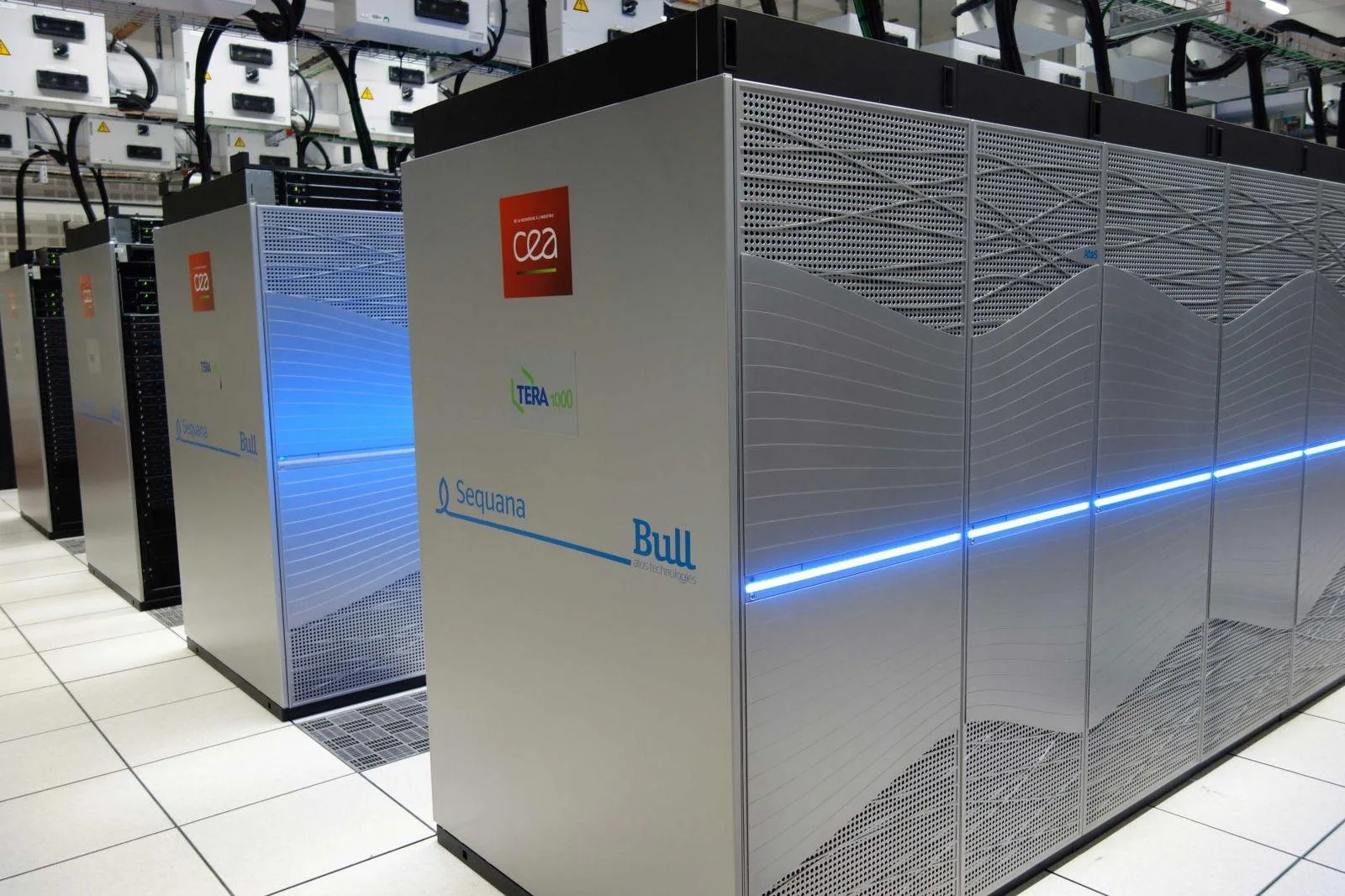
Europe has spent years seeking to reduce its dependence on foreign digital infrastructure. The preliminary agreement between Germany’s Schwarz Digits and France’s Bull marks another step in that ambition. By combining cloud capabilities, supercomputing expertise and artificial intelligence services operating under European jurisdiction, the two companies are outlining a shared industrial infrastructure. Yet behind this Franco-German cooperation lies a deeper question: can Europe truly control artificial intelligence without mastering all the technologies that make it possible?
An Alliance at the Heart of the New Computing Economy
Artificial intelligence has gradually shifted the centre of gravity of the digital industry. For decades, technological competition was primarily organised around software, platforms and the circulation of data. It now increasingly depends on extensive physical infrastructure, including data centres, specialised processors, high-bandwidth networks, cooling systems and energy resources capable of sustaining intensive computational workloads.
This transformation gives new strategic importance to the companies that design, build and operate these infrastructures.
Against this backdrop, Schwarz Digits, the digital division of Germany’s Schwarz Group, and Bull, a French company specialising in high-performance computing, have signed a preliminary agreement to develop computing and artificial intelligence services operating under European jurisdiction.
The partnership brings together two complementary areas of expertise. Schwarz Digits has experience operating digital infrastructure and cloud services, notably through its STACKIT platform. Bull contributes longstanding expertise in supercomputers, high-performance computing architectures and systems designed for scientific, industrial and institutional organisations.
The objective is to combine these capabilities to provide infrastructure capable of meeting the growing demand for artificial intelligence computing resources among European businesses and public administrations.
The agreement nevertheless remains preliminary. It should not be confused with the commissioning of new infrastructure or a definitive financial commitment. Its significance lies primarily in the industrial logic it reveals: the development of European computing capabilities is beginning to take shape through cooperation between companies possessing different but interdependent competencies.
Two Companies, Two Industrial Traditions
The rapprochement between Schwarz Digits and Bull illustrates a distinctive feature of Europe’s digital economy. Unlike the United States, where several major corporations have progressively integrated cloud infrastructure, software platforms and artificial intelligence services, Europe possesses substantial technological expertise that remains distributed across different industrial groups.
Schwarz Digits emerged from an unusual economic environment. Schwarz Group, widely known for its Lidl and Kaufland retail chains, developed its own digital capabilities to support the operational requirements of an extensive commercial and logistics network.
That experience gradually contributed to the emergence of a technology business serving external customers. Through STACKIT, Schwarz Digits aims to provide cloud services that place particular emphasis on data protection, infrastructure location and operational control.
This trajectory distinguishes the company from many digital businesses that originated directly in the software industry. Its development was initially driven by concrete industrial and commercial requirements before expanding into the broader digital infrastructure market.
Bull represents a different tradition.
The French company belongs to an industrial history closely associated with European computing, large-scale systems and scientific computation. Its expertise in high-performance computing rests on the design and integration of complex systems capable of mobilising thousands of processors for scientific, industrial and strategic applications.
High-performance computing and artificial intelligence are not identical markets. The former has historically focused on scientific simulations and computationally intensive numerical operations, while the latter increasingly relies on architectures optimised for model training and inference.
However, the two fields are converging as computing infrastructure becomes more powerful, specialised and expensive.
The combination of Schwarz Digits and Bull could therefore help bridge the gap between commercial cloud infrastructure operations and high-performance computing engineering.
This complementarity represents the partnership’s principal industrial advantage.
Digital Sovereignty Is Changing Its Meaning
Throughout much of the 2010s, Europe’s debate over digital sovereignty concentrated on personal data protection, platform taxation, competition policy and the regulation of major technology companies.
These issues remain important, but the rise of artificial intelligence has fundamentally altered the nature of the challenge.
The ability to develop advanced AI models increasingly depends on access to substantial physical resources. Companies require specialised processors, storage capacity, high-performance networks and sufficiently reliable electricity supplies to sustain continuous computational operations.
The central question is therefore no longer simply where data is stored, but who owns the infrastructure required to process it, who controls the underlying software and who determines how available computing capacity is allocated.
This development is transforming computing power into a strategic resource.
A European company may develop its own artificial intelligence model while remaining dependent on a foreign provider for training, hosting or deployment. A public administration may impose strict data protection requirements without exercising meaningful control over the technologies it uses.
Legal sovereignty and industrial sovereignty are therefore not interchangeable.
The Schwarz Digits–Bull agreement operates precisely at this intersection. It seeks to combine infrastructure managed within a European framework with industrial expertise located on the continent.
Such an approach could be particularly relevant to public administrations, research institutions, critical infrastructure operators and companies handling sensitive information.
It also responds to growing demand for legal predictability in an international environment where digital technologies are increasingly becoming instruments of economic and political power.
Yet locating infrastructure in Europe does not, by itself, guarantee independence.
The Paradox of Sovereign Infrastructure
The principal difficulty facing Europe’s strategy lies in the global structure of the technology industry.
Artificial intelligence infrastructure depends on deeply internationalised value chains. The graphics processors most widely used for advanced AI computation are largely associated with American companies, while their manufacturing depends heavily on industrial capabilities located in Asia.
Networking equipment, specialised memory, electronic components and the software required to operate these systems also come from suppliers distributed across several regions.
Europe maintains important industrial positions in certain parts of this value chain, particularly semiconductor manufacturing equipment, power electronics, industrial systems and several areas of scientific computing.
However, it does not control all the technologies required to build the most advanced infrastructure.
A cloud platform operated by a European company may therefore depend on foreign processors. A supercomputer designed and assembled in Europe may incorporate components manufactured elsewhere. Infrastructure operating under European jurisdiction may rely on software or technologies whose future development is determined by external suppliers.
This situation does not make sovereign infrastructure irrelevant. It simply requires a distinction between different levels of autonomy.
The first concerns the legal jurisdiction governing data and services. The second relates to operational control over infrastructure. The third depends on mastery of the software, components and industrial capabilities necessary for its operation.
A fourth, more demanding level concerns the ability to replace or upgrade these technologies without relying on decisions taken outside Europe.
The Schwarz Digits–Bull agreement could contribute to the first two levels and strengthen certain capabilities within the third. It cannot, on its own, eliminate Europe’s broader technological dependencies.
Technological sovereignty should therefore be understood less as a permanent condition than as a progressive capacity to reduce the most critical vulnerabilities.
Competing with American Giants: The Question of Scale
The Franco-German partnership enters a market dominated by companies possessing enormous financial and technological resources.
Amazon Web Services, Microsoft Azure and Google Cloud benefit from global infrastructure networks, extensive software ecosystems and international customer bases that allow them to distribute investment costs across very large volumes of activity.
Their advantage does not rest solely on available computing power. It also derives from the integration of data centres, software services, development tools, security systems and the applications businesses use every day.
This integration creates economies of scale and significant switching costs.
For customers, changing providers does not simply mean transferring data to another computing facility. It may require modifying applications, reorganising software architectures, retraining employees and rebuilding operational functions.
European providers must therefore meet two requirements simultaneously: offer credible sovereignty guarantees while delivering competitive performance, pricing and service quality.
A provider’s European identity may offer a significant advantage in sensitive markets. It does not guarantee adoption across the wider business community.
This distinction is essential.
Sovereign infrastructure that fails to attract sufficient customers risks remaining dependent on public financing or a limited institutional market. Conversely, infrastructure capable of serving industrial companies, scientific institutions and commercial organisations can develop a more sustainable economic foundation.
The challenge for Schwarz Digits and Bull will therefore be to transform their industrial complementarity into a commercially viable offering.
This requires not only computing capacity but also services adapted to customer needs, competitive pricing and operational continuity comparable to that provided by major international competitors.
Energy: The Overlooked Dimension of Sovereignty
The development of European artificial intelligence infrastructure raises another question, one that receives less attention in industrial announcements: energy.
Data centres designed for intensive computing consume substantial amounts of electricity. Their operation also requires cooling systems, reliable network connections and equipment capable of maintaining high availability.
As demand for computing power increases, infrastructure location decisions become increasingly dependent on local energy conditions.
Electricity prices, grid connection availability, network stability and environmental constraints are becoming essential determinants of competitiveness.
This development creates a new relationship between digital policy and energy policy.
Europe may possess companies capable of designing and operating advanced computing infrastructure, yet struggle to expand these capabilities if electricity supplies are insufficient or excessively expensive.
The energy question is particularly important in an industry where investments must be recovered over several years, while successive generations of processors and computing architectures evolve rapidly.
Intensive computing therefore requires a distinctive form of economic discipline: investing early enough to meet demand without committing excessive capital to equipment that may become technologically outdated.
This constraint increasingly resembles those found in major infrastructure industries.
As in energy, telecommunications and transport, competitiveness depends on the relationship between initial investment, operating costs, capacity utilisation and equipment lifespans.
European digital sovereignty cannot therefore be developed independently of the continent’s energy and industrial choices.
Franco-German Cooperation in a Fragmented European Landscape
The partnership’s Franco-German character also carries political and institutional significance.
France and Germany occupy central positions in the European economy, but their industrial traditions and approaches to technology policy are not identical.
France has substantial experience in major scientific programmes, public research infrastructure and strategic industrial sectors. Germany benefits from a particularly dense industrial network combining large corporations, family-owned groups and specialised companies.
Cooperation between Schwarz Digits and Bull could help mobilise these two environments around a shared requirement: developing European computing capabilities suited to the industrial transformations driven by artificial intelligence.
The agreement also comes as the European Union seeks to strengthen its digital infrastructure through several initiatives.
The EuroHPC programme supports the development of European high-performance computing capabilities. Initiatives involving AI Factories and future artificial intelligence computing infrastructure aim to facilitate access to the resources required by researchers, businesses and industrial organisations developing new models and applications.
These programmes reflect an evolution in European policy.
Regulation of the digital market is no longer its only instrument. Investment in physical infrastructure, research and computing capacity is becoming an increasingly important component of Europe’s technological strategy.
However, public programmes and private partnerships do not pursue precisely the same objectives.
Public initiatives can support research, broaden access to infrastructure and address market failures. Private partnerships must develop services capable of attracting customers and financing their long-term expansion.
Europe’s success will depend on how effectively these two approaches are connected.
A proliferation of poorly coordinated national projects could fragment investment and undermine economies of scale. Conversely, broader industrial cooperation could encourage the emergence of shared capabilities serving multiple European markets.
From this perspective, the Schwarz Digits–Bull partnership represents an experiment whose significance could extend beyond its two participants if it becomes part of a wider industrial ecosystem.
Computing Power as an Instrument of Strategic Influence
The strategic importance of artificial intelligence infrastructure now extends far beyond the technology sector.
Computing capabilities contribute to pharmaceutical research, the development of new materials, industrial simulation, climate modelling, energy engineering and numerous security applications.
They also support automation systems, computer-assisted design and technologies used throughout manufacturing supply chains.
Their availability therefore directly influences an economy’s capacity for innovation.
A country or region that remains structurally dependent on external infrastructure may retain significant scientific and industrial expertise while encountering limitations in its ability to exploit those capabilities.
Such dependence can take several forms: higher access costs, trade restrictions, contractual limitations, regulatory constraints or supply difficulties.
It may also become more consequential during periods of geopolitical tension.
American restrictions on exports of certain advanced technologies illustrate how semiconductors and computing equipment have become instruments of strategic policy.
In this environment, control over digital infrastructure is no longer merely a question of economic competitiveness. It also contributes to the ability of governments and businesses to preserve their freedom of action.
For Europe, however, the challenge is to avoid confusing strategic autonomy with technological isolation.
European industry remains deeply integrated into international trade. Its companies need access to leading technologies, cooperation with foreign partners and participation in global innovation networks.
The pursuit of absolute autonomy would be difficult to reconcile with this reality.
A more realistic objective is to develop domestic capabilities in critical segments, diversify suppliers and preserve the ability to operate essential infrastructure under adverse conditions.
Such an approach places greater emphasis on resilience and the management of dependencies than on technological self-sufficiency.
From Industrial Announcement to Operational Capability
The actual significance of the Schwarz Digits–Bull agreement will depend on what follows its signature.
A preliminary partnership can lead to substantial developments, but it does not yet constitute operational infrastructure.
Several indicators will help assess its progress: the definition of a joint commercial offering, investments actually committed, computing capacity deployed, governance arrangements, legal guarantees provided to customers and the first commercial contracts.
The technologies selected will also be decisive.
European infrastructure cannot be defined solely by the geographical location of its data centres. Its credibility will depend on operational control, transparency regarding technical dependencies and the ability to maintain services under exceptional circumstances.
Architectural choices will therefore matter considerably.
Interoperability with existing environments, application portability and reduced software dependencies could provide competitive advantages for customers seeking to avoid long-term dependence on a single supplier.
The partnership must also demonstrate its ability to evolve alongside technological change.
Artificial intelligence infrastructure is experiencing rapid innovation cycles. Requirements for computing power, memory and communication between processors are evolving as model architectures and training methods advance.
An offering that is competitive today can quickly lose relevance if equipment renewal and investment fail to keep pace.
The financial strength of operators, their ability to anticipate demand and the depth of their customer base will therefore be as important as their initial technical expertise.
Europe’s Industrial Equation
The agreement between Schwarz Digits and Bull reflects a significant evolution in Europe’s approach to artificial intelligence.
For years, digital sovereignty was primarily understood through the rules governing data, user protection and the regulation of major platforms.
These dimensions remain indispensable, but they are no longer sufficient.
Artificial intelligence depends on a physical economy whose industrial and financial requirements are becoming increasingly substantial. It requires tangible infrastructure, specialised equipment, energy, technical expertise and continuous investment.
Control over these resources increasingly determines whether economies can develop their own technologies and preserve their strategic freedom of action.
By bringing together German expertise in operating digital infrastructure and French capabilities in high-performance computing, Schwarz Digits and Bull are proposing an industrial response to this transformation.
The partnership does not eliminate Europe’s dependence on foreign semiconductors, software and international supply chains. Nor does it guarantee the immediate emergence of a competitor capable of matching the world’s largest cloud platforms.
It nevertheless demonstrates that part of Europe’s response may come from integrating industrial capabilities that already exist within the continent.
The decisive question will be whether this cooperation can achieve sufficient scale.
Europe possesses industrial companies, research institutions, scientific infrastructure and a market large enough to support substantial digital capabilities. Yet these resources remain distributed across organisations, countries and strategies that do not always converge.
The challenge is to transform this diversity into collective industrial strength.
The Schwarz Digits–Bull agreement could contribute to that process, provided it moves beyond an announced partnership to become infrastructure that is genuinely used, economically sustainable and technologically adaptable.
European sovereignty will not be secured simply by asserting the right to control data. It will depend on the ability to control the systems that process it.
And in the artificial intelligence economy, that distinction may become one of the defining strategic questions of the coming decade.
Main Sources
Schwarz Digits — Institutional Documentation Corporate information on Schwarz Group’s digital activities, STACKIT and strategic priorities relating to cloud infrastructure and digital sovereignty.
Bull — Institutional Documentation Industrial expertise in high-performance computing, supercomputers and complex computing infrastructure.
European Commission — EuroHPC Joint Undertaking European high-performance computing programmes, supercomputer development and AI Factories initiatives.
European Commission — European Artificial Intelligence Strategy Policy frameworks concerning computing infrastructure, access to technological resources and the development of European AI capabilities.
International Energy Agency — Energy and AI (2025) Analysis of data centre electricity requirements and the implications of artificial intelligence development for energy systems.
OECD — Research on AI Computing Infrastructure Analysis of computing resource requirements, access constraints and the economic implications of artificial intelligence development.
Editorial note: The Schwarz Digits–Bull agreement is described as preliminary. The industrial and commercial developments discussed are potential outcomes rather than confirmed achievements. The original announcement and its precise terms should be verified against primary documentation before final publication.
Atlas Limits Research Desk
Atlas Limits’ editorial and analytical desk.