The diplomatic rupture between Mogadishu and Abu Dhabi exposes a confrontation extending far beyond bilateral relations. Behind port concessions, military agreements and regional alliances lies a struggle over political authority and economic control in one of the world's most strategically important maritime regions.
On November 19, 2026, Somalia escalated its confrontation with the United Arab Emirates by ordering the departure of the Emirati ambassador and recalling its own representative from Abu Dhabi. The decision followed the federal government's January 12 announcement terminating agreements with the UAE covering ports, defence and security cooperation. Within a year, a partnership previously regarded as important to Somalia's security reconstruction had deteriorated into an open dispute over national sovereignty.
The rupture reflects a structural contradiction between Somalia's efforts to consolidate federal authority and the network of commercial and security relationships developed by Abu Dhabi across the Horn of Africa. Emirati engagement with regional administrations has supported infrastructure investment and security cooperation, while also establishing channels of influence that operate beyond the federal government's direct control.
The fundamental question is therefore not simply whether the UAE should maintain a presence in Somalia. It concerns who has the authority to manage strategic ports, negotiate military arrangements and represent Somali territory in relations with foreign powers.
Ports as instruments of power
Geography is central to the dispute. Somalia's coastline connects the Indian Ocean with the Gulf of Aden, near the maritime routes linking Asia, the Middle East and Europe through the Red Sea and the Bab el-Mandeb Strait. This location offers substantial commercial opportunities while exposing the country to the strategic rivalries surrounding international shipping and regional security.
Three ports lie at the centre of the confrontation: Berbera, Bosaso and Kismayo.
Berbera, located in Somaliland, has become a cornerstone of Emirati commercial engagement. Dubai-based DP World announced an investment programme worth approximately $442 million to develop the port and strengthen its logistical connections, including with landlocked Ethiopia.
For Somaliland, which declared independence in 1991 and has maintained its own institutions, the project represents more than an infrastructure investment. It provides revenue, supports economic development and strengthens international relationships. For Mogadishu, however, strategic agreements concluded without federal participation raise fundamental questions about territorial authority and foreign relations.
Bosaso, the principal maritime gateway of Puntland, presents a different institutional configuration. Puntland is part of Somalia's federal system, but its leadership has repeatedly clashed with Mogadishu over constitutional arrangements and political authority. Relations with the UAE provide economic and security opportunities that reinforce its capacity to act independently.
Further south, Kismayo serves as an important commercial centre for Jubaland, another regional administration engaged in disputes with the federal government. Its port is both an economic asset and an instrument of regional political influence.
The federal government's decision to terminate agreements involving these facilities revealed a central limitation of its authority: a legal decision issued in Mogadishu does not automatically change the balance of control on the ground. The regional administrations rejected the January measures and maintained their relationships with Abu Dhabi.
The confrontation consequently reflects competing interpretations of political authority. Mogadishu asserts federal responsibility for international commitments, while regional leaders defend varying degrees of autonomy over infrastructure management and economic partnerships.
The Emirati infrastructure strategy
The UAE's engagement in the Horn of Africa forms part of a broader transformation in its international influence. Rather than relying exclusively on traditional diplomacy, Abu Dhabi has developed relationships through logistics, investment, transport infrastructure and security cooperation.
Ports are particularly important within this strategy. Their value extends beyond commercial revenues. They connect maritime networks with inland markets, facilitate the movement of goods and establish long-term relationships with local authorities.
Emirati involvement in regional port infrastructure therefore strengthens Abu Dhabi's position in an area where the interests of Saudi Arabia, Türkiye, Egypt, Ethiopia and other external powers intersect.
Yet commercial investment should not automatically be interpreted as military expansion. Port concessions also respond to genuine economic requirements, including terminal modernisation, improved cargo handling and the development of regional trade corridors.
Their strategic significance arises from the interaction between these functions. Infrastructure that facilitates economic development can simultaneously create enduring political leverage.
For Mogadishu, the difficulty emerges when foreign investment strengthens regional decision-making structures operating outside federal supervision. Economic partnerships can then reinforce political autonomy and complicate attempts to establish a coherent national policy.
Somalia's unresolved federal question
The confrontation with Abu Dhabi is unfolding during a sensitive period in Somalia's institutional development.
Since the collapse of Siad Barre's government in 1991, the reconstruction of the Somali state has required negotiations among federal institutions, regional administrations, clan structures and security actors. Federalism was intended to accommodate competing centres of authority while restoring a functioning national government.
The distribution of powers, however, remains contested. Constitutional changes, electoral arrangements, public revenues and control over security forces continue to generate disputes between Mogadishu and regional leaders.
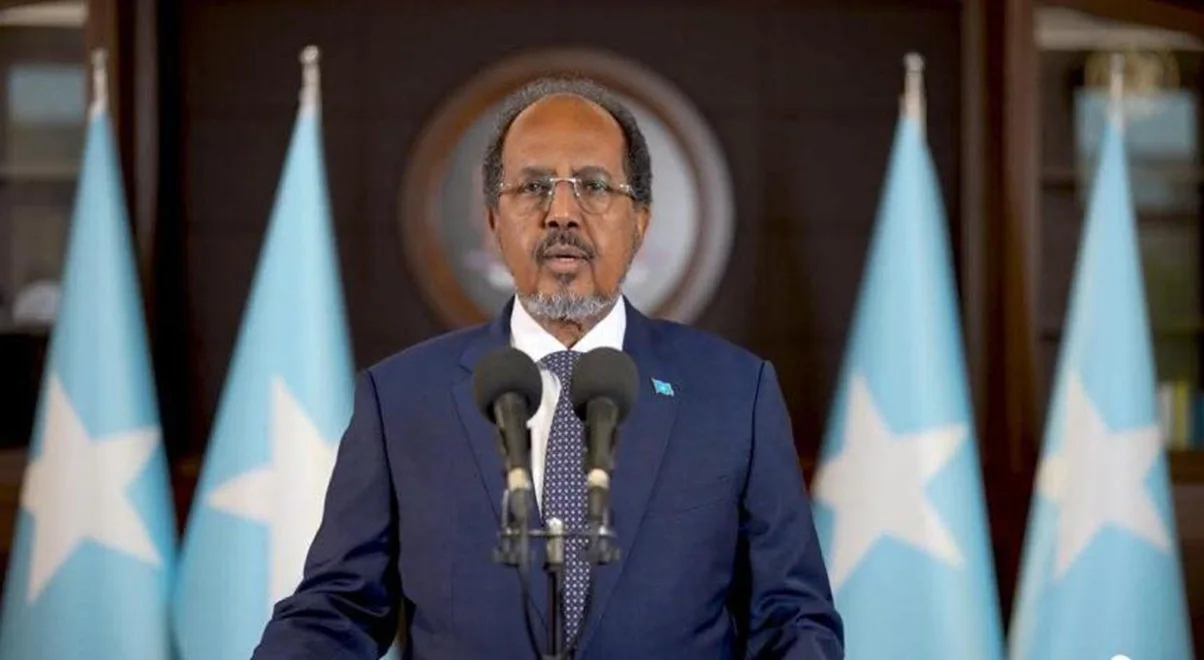
President Hassan Sheikh Mohamud has sought to strengthen federal institutions within this fragmented political environment. His regional opponents argue that certain reforms threaten their autonomy and alter established constitutional balances.
Relations with the UAE have become part of this domestic struggle. Somali authorities accuse Abu Dhabi of providing political and financial support to regional administrations opposing the federal government, as well as to armed actors operating outside federal command.
The UAE rejects the allegations and argues that Somalia's leadership is allowing internal political disputes to damage bilateral relations.
These competing positions require careful distinction. Emirati economic and security relationships with regional administrations are documented. Specific accusations concerning hostile financing, military interference or violations of sovereignty remain contested and cannot all be independently established from publicly available evidence.
Foreign involvement may intensify Somalia's internal divisions, but it does not by itself explain institutional disputes that long predate the present diplomatic rupture.
Somaliland and the regional dimension
Somaliland gives the confrontation a wider geopolitical significance.
Having maintained separate institutions since declaring independence in 1991, Somaliland occupies a strategic position along the Gulf of Aden. Its political future intersects with Ethiopia's ambitions for maritime access and the interests of powers operating around the Red Sea.
Israel's recognition of Somaliland in December 2025 intensified these tensions. Somali officials accused the UAE of facilitating the diplomatic development, although that allegation should not be treated as conclusively established.
For Mogadishu, external recognition of Somaliland challenges Somalia's territorial integrity. For Somaliland's authorities, recognition represents progress in a decades-long campaign for international legitimacy.
This fundamental disagreement transforms infrastructure investment and diplomatic engagement into elements of a wider contest over political status.
The crisis also intersects with instability in Yemen and Sudan. In January 2026, Somali authorities investigated reports concerning the unauthorised transit of a Yemeni separatist leader through Somali territory.
Allegations that regional infrastructure has been used in connection with neighbouring conflicts demonstrate the potential for security crises in Africa and the Middle East to become increasingly interconnected. Such claims nevertheless require independent verification before conclusions can be drawn about military transfers or covert operations.
Türkiye and competing regional partnerships
Mogadishu is not without alternative international partners.
Türkiye has established an important role in Somalia's institutional and security reconstruction through military training, defence cooperation, economic partnerships and diplomatic engagement. Ankara has also played a role in managing tensions between Somalia and Ethiopia.
This relationship provides the federal government with significant external support, but it also places Somalia within a regional environment where several foreign powers seek influence through different political and security partnerships.
Egypt and Qatar maintain relationships with Mogadishu, while regional administrations have developed their own international networks.
These relationships do not constitute fixed or homogeneous blocs. The interests of the countries involved differ across issues and may evolve over time. Their simultaneous engagement nevertheless contributes to the internationalisation of Somalia's domestic political disputes.
The Horn of Africa has consequently become an arena in which Middle Eastern rivalries intersect with questions of sovereignty, maritime commerce and regional security.
The uncertain consequences of diplomatic rupture
The order concerning the Emirati ambassador represents a major political escalation, but its operational consequences remain uncertain.
The UAE has stated that it had already closed its embassy in Mogadishu and withdrawn diplomatic personnel in January. This illustrates the possible difference between the symbolic significance of Somalia's decision and its immediate diplomatic effects.
Similarly, terminating port agreements does not automatically suspend commercial operations. The continuity of concessions depends on the authorities exercising effective control, the contractual arrangements governing the facilities and the federal government's ability to enforce its decisions.
Three developments will be particularly important: Mogadishu's capacity to implement its measures, the response of regional administrations and the positions adopted by foreign partners with commercial or security interests in the affected territories.
Further escalation could increase legal uncertainty around port concessions, complicate security coordination and deepen domestic political divisions. Negotiations, by contrast, could establish clearer arrangements for federal and regional authority over international partnerships.
Such a settlement would need to address sovereignty, revenue sharing, constitutional powers and security simultaneously. None of these issues can be resolved sustainably in isolation.
The Somalia–UAE confrontation ultimately illustrates a broader transformation in the exercise of power across the Horn of Africa. Territorial influence no longer depends exclusively on military presence or diplomatic recognition. It is also exercised through infrastructure, commercial contracts, financial relationships and partnerships with local authorities.
For Mogadishu, the challenge is to translate internationally recognised sovereignty into effective governing authority. For Abu Dhabi, the objective is to preserve economic and strategic positions developed along a critical maritime corridor. Between them, regional administrations pursue interests that do not necessarily coincide with those of either the federal government or their foreign partners.
The outcome will depend less on diplomatic declarations than on the future distribution of authority over ports, revenues and security agreements. That distribution will help determine the balance between the Somali state and the external powers operating along its coastline.
Atlas Limits Research Desk
Atlas Limits’ editorial and analytical desk.