For most of the space age, reaching orbit was the preserve of states. Soviet rockets launched from Baikonur, American missions from Cape Canaveral and Kennedy Space Center, while Europe built its strategic autonomy around Kourou. Access to space required vast public budgets, military and industrial infrastructure, decades of research, and organizational capabilities that only a handful of major powers could sustain.
SpaceX is changing that architecture.
Founded by Elon Musk in 2002, the company is no longer simply a rocket manufacturer that managed to reduce launch costs through reusability. It operates its own launch vehicles, manufactures its own engines, is developing the largest launch system ever built, deploys its own satellite constellation, sells services directly through that constellation, and is now constructing terrestrial infrastructure on a scale increasingly comparable to major national space programs.
The announcement on August 25, 2026, of an investment of up to $100 billion in a new Starbase in Louisiana gives physical form to that transformation. But only weeks earlier, another event had fundamentally altered the nature of SpaceX: its initial public offering.
The two developments ultimately tell the same story. SpaceX is entering a phase in which its expansion can no longer be measured simply by the number of rockets it launches, but by its ability to mobilize capital, territory, energy, industry, and orbital infrastructure simultaneously.
From Rockets to an Ecosystem
The first disruption created by SpaceX was economic.
When Falcon 9 made its maiden flight in 2010, the global launch industry still operated according to a relatively traditional model. Launch vehicles were largely expendable, programs depended heavily on government contracts, and high costs naturally constrained launch frequency.
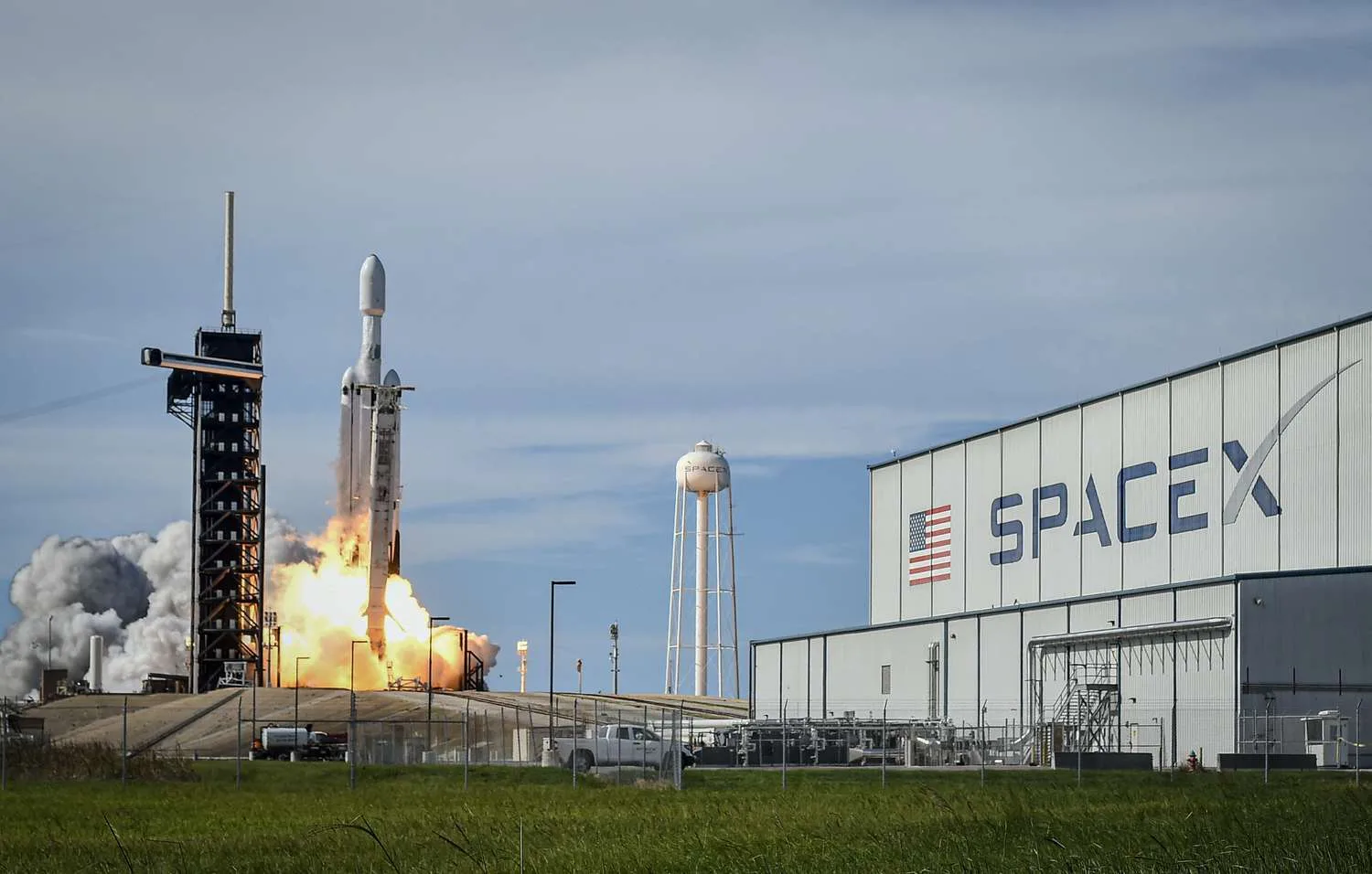
SpaceX gradually introduced a different industrial logic. Falcon 9 first stages began returning to Earth, landing, being inspected, and flying again. What initially appeared experimental became operational routine.
The significance went beyond the technological achievement. A rocket was gradually ceasing to be an object necessarily destroyed after a single mission and beginning, conceptually, to resemble an industrial vehicle operated repeatedly.
This capability allowed SpaceX to increase its launch cadence dramatically. More importantly, it enabled the company to become one of its own largest customers.
A substantial share of Falcon 9 missions now exists to deploy Starlink satellites.
This is where the business model truly changes.
SpaceX no longer merely sells access to space. It also owns part of what it carries there.
Starlink Changes the Equation
Starlink is probably the most important asset for understanding SpaceX's transformation.
A traditional launch company depends on orders from others. A satellite constellation, meanwhile, depends on launch providers to build and replenish itself. By controlling both, SpaceX internalizes a critical part of that relationship.
Falcon 9 launches Starlink satellites. Starlink then generates recurring revenue through subscriptions and connectivity services. Those revenues help sustain an increasingly extensive space infrastructure, while the expansion and renewal of the constellation creates demand for further launches.
An industrial feedback loop emerges.
Launch vehicles, satellites, and telecommunications are no longer three entirely separate industries, but different layers of the same system.
Starlink has also acquired a strategic dimension that its original commercial purpose did not fully anticipate. Satellite communications have become important for rural connectivity, remote infrastructure, maritime transport, aviation, emergency response, and military operations. The war in Ukraine demonstrated in particular how a commercial network could become critical infrastructure during a high-intensity conflict.
SpaceX consequently occupies an unusual position: commercial supplier, operator of a global communications infrastructure, and strategic partner of the United States government.
That position is likely to deepen further through Starshield, its architecture designed for American government and national-security requirements.
Starship and the Change of Scale
Falcon 9 transformed the economics of launch. Starship seeks to transform its scale.
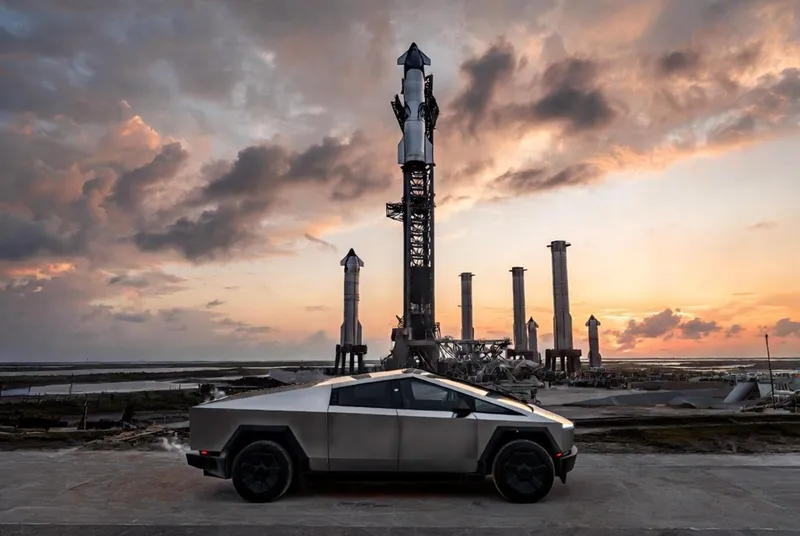
The system is based on a fully reusable architecture consisting of the Super Heavy booster and the Starship spacecraft. Its industrial ambition is considerably greater than that of previous launch vehicles: transporting much larger payloads while eventually enabling an unprecedented launch frequency.
Elon Musk's ambitions for Mars naturally attract much of the attention. Yet Starship's terrestrial consequences may be more immediate.
If SpaceX achieves the launch cadence and reusability it is pursuing, the company would possess an orbital transportation capability difficult to compare with existing infrastructure.
Such capacity could support lunar missions, American government programs, new generations of Starlink, large orbital infrastructure and potentially emerging concepts such as space-based data centers.
This creates an almost paradoxical problem: building rockets capable of flying very frequently is no longer enough.
The territory required to operate them must also be built.
The Geography of SpaceX
That is precisely what the multiplication of SpaceX facilities reveals.
Starbase in southern Texas is the historic center of the Starship program, combining manufacturing, testing, and launch operations. In Florida, SpaceX is simultaneously developing Starship infrastructure around Kennedy Space Center and Cape Canaveral. Vandenberg in California remains an important Falcon 9 launch site, particularly for access to polar orbits.
But these facilities increasingly encounter the physical constraints created by their own success: available land, safety requirements, environmental considerations, shared launch infrastructure, and operational cadence.
SpaceX's answer is becoming territorial.
On August 25, 2026, the company announced Starbase Louisiana.
The project covers approximately 125,000 acres in Vermilion Parish around Pecan Island. SpaceX plans to invest as much as $100 billion there. Louisiana Economic Development has described it as the future largest launch site in the world, ultimately capable of supporting thousands of launches annually. Construction is expected to begin in 2027, with an initial Starship launch targeted for 2029. The state estimates that the project could generate around 3,000 direct jobs over ten years, in addition to more than 8,000 indirect jobs.
But perhaps the most revealing number is not the projected launch frequency.
It is the nature of the infrastructure itself.
Starbase Louisiana is expected to incorporate propellant production, electricity generation, vehicle processing, deep-water maritime infrastructure and potentially an airport. SpaceX is therefore not simply constructing additional launch pads. It is planning a largely integrated industrial complex organized around Starship's requirements.
A kind of industrial spaceport.
One Hundred Billion Dollars for a New Industry
The announced investment deserves perspective of its own.
One hundred billion dollars is comparable to the capital committed to some of the largest industrial infrastructure projects of the modern era. More importantly, it reflects the economic assumption underlying SpaceX's strategy: space could become a volume industry.
The historical space industry was largely organized around scarcity. Launches were relatively infrequent, satellites expensive, and missions prepared over long periods.
SpaceX is betting on the opposite.
Reusable rockets. Mass-produced satellites. Frequent launches. Standardized infrastructure. Growing demand for orbital capacity.
If that assumption proves correct, Starship's real disruption will not lie solely in its dimensions or its ability to reach Mars. It will lie in the possibility of turning space launch into a repetitive industrial activity.
Louisiana then becomes much easier to understand.
A mass industry requires mass infrastructure.
The IPO Changes the Equation Again
Such expansion would already be remarkable for a privately held company. But SpaceX is no longer quite that.
On June 12, 2026, SpaceX began trading on the Nasdaq under the ticker SPCX following the largest initial public offering ever completed in the United States.
The offering was initially priced at $135 per share. SpaceX sold approximately 555.6 million shares in the initial offering, raising $75 billion and reaching a valuation of approximately $1.77 trillion. The subsequent full exercise of the underwriters' overallotment option brought the total number of shares issued to nearly 639 million and gross proceeds to approximately $85.7 billion.
Within days, SpaceX had raised an amount on public markets comparable to the annual budgets of many sovereign states.
The IPO is therefore more than a financial milestone. It changes the company's capacity to expand.
SpaceX now has direct access to public capital markets precisely as its investment requirements become enormous. Starship, Starlink, terrestrial infrastructure and future orbital projects require tens of billions of dollars. A public listing provides another mechanism through which that expansion can be financed.
But it also introduces a new discipline.
A company long protected by private ownership must now disclose more financial information and respond to public shareholders. Technological ambitions must increasingly coexist with conventional questions about revenue, margins, investment, cash consumption, and returns on capital.
The market's reaction to the first results published after the IPO has already demonstrated the transition. Investors are no longer interested only in successful launches. They are also interested in the cost of SpaceX's ambitions.
That is a fundamental change.
SpaceX must now convince engineers, customers, governments, and financial markets simultaneously.
Private Infrastructure, Public Functions
This growth raises a deeper question.
Space infrastructure is rarely exclusively commercial.
Satellites provide communications, Earth observation, navigation, network synchronization, territorial surveillance, and military capabilities. Launch vehicles determine who can place these capabilities in orbit. Spaceports, in turn, determine the physical capacity to conduct those launches.
SpaceX increasingly operates across almost this entire chain.
It owns the launch vehicles.
It owns a global satellite constellation.
It develops its own terminals.
It is building its launch infrastructure.
It works with NASA and the US Department of Defense.
And it now has access to public capital markets capable of supporting investments once associated primarily with states or the world's largest corporations.
This concentration does not mean that SpaceX is becoming a state. It does mean, however, that a private company increasingly controls infrastructure performing functions historically associated with public power.
The distinction matters.
The Dependence Behind the Efficiency
The SpaceX model offers obvious advantages.
Vertical integration reduces industrial friction. Reusability lowers costs. Mass production increases cadence. The combination of Starlink and launch vehicles creates internal demand capable of sustaining an exceptional launch rhythm.
But efficiency also produces concentration.
When many activities depend on the same provider, that provider's performance gradually becomes a systemic vulnerability.
The issue extends far beyond Starlink.
NASA relies on SpaceX for an important part of its human spaceflight capability. American institutions use its launch services. Military actors use its satellite infrastructure. Commercial companies depend on Falcon 9 to place satellites into orbit.
SpaceX's success therefore creates a paradox: the more efficient the company becomes, the more difficult it becomes for some of its customers to operate without it.
Washington must simultaneously support an American strategic champion and preserve sufficient alternatives to prevent industrial advantage from becoming strategic dependence.
Blue Origin, United Launch Alliance, Rocket Lab and other competitors therefore matter for reasons extending beyond market share. Their existence contributes to the resilience of the American space ecosystem.
Geography Reasserts Itself
There is, finally, one constraint that even space technology cannot eliminate: geography.
A rocket requires territory.
It produces noise, consumes enormous quantities of propellant, imposes safety perimeters, and interacts with surrounding ecosystems. High-frequency launches magnify those constraints.
Starbase Louisiana provides a particularly striking example.
The project is planned for a coastal region containing environmentally sensitive wetlands. Its scale is already generating questions about ecological impact, land use, and the transformation of local communities.
SpaceX says it intends to preserve much of the territory and participate in coastal restoration efforts. Those commitments will nevertheless have to be measured against the reality of an infrastructure designed, according to the ambitions being presented, to sustain an unprecedented launch frequency.
The conquest of space therefore remains profoundly terrestrial.
Reaching orbit requires ports, electricity, roads, factories, methane, oxygen, workers, and enormous amounts of land.
A New Kind of Power
It would be tempting to reduce SpaceX to Elon Musk. That would miss the essential point.
The company's real singularity increasingly lies in the architecture it is building.
Falcon gave it mastery of reusable launch. Starlink gave it orbital infrastructure and recurring revenue. Starship could give it transportation capacity without contemporary equivalent. Starbase Texas, Florida and eventually Louisiana provide the terrestrial infrastructure required for expansion. Government contracts embed it deeply within the American space and security apparatus. The 2026 IPO finally gives it access to another layer of capital capable of sustaining its ambitions.
Each of these elements could exist separately.
SpaceX combines them.
That may be the real disruption.
In the twentieth century, a space power possessed rockets, launch bases, satellites, communications networks, and budgets capable of financing them. It was called the United States or the Soviet Union.
In the twenty-first century, an American corporation is beginning to assemble several of those attributes within a single organization.
SpaceX is not replacing American space power. On the contrary, it is becoming one of its most important instruments.
But by building its own rockets, its own satellites, its own networks, its own spaceports, and now a financial capacity comparable to that of the world's largest corporations, SpaceX is creating a configuration for which there are few historical precedents.
For the first time, the question may no longer be only which states will have access to space.
It is also how far a private space power can go.
Main Sources
- SpaceX — Investor Relations, closing of the initial public offering, June 15, 2026.
- Reuters — SpaceX initial public offering, June 11, 2026.
- Reuters — Starbase Louisiana project, August 25, 2026.
- Louisiana Economic Development — official Starbase Louisiana announcement, August 25, 2026.
- NASA — Commercial Crew Program and Human Landing System.
- SpaceX — institutional information on Falcon, Starship, Starlink and launch infrastructure.
Atlas Limits Research Desk
Atlas Limits’ editorial and analytical desk.