On January 3, 2026, U.S. forces entered Venezuela, captured Nicolás Maduro and his wife Cilia Flores, and transferred the Venezuelan president to the United States to face criminal charges. Less than eight months later, Washington and Caracas are no longer negotiating the terms of confrontation, but those governing the very long-term development of a considerable share of Venezuela’s underground wealth.
Between those two moments, something deeper than a change of leadership occurred.
Venezuela has not become an ally of the United States. Chavismo has not disappeared. The antagonisms accumulated over a quarter of a century have not been erased. But the relationship between the two countries has changed in nature. Ideological confrontation, sanctions, asset seizures and ultimately the direct use of force are gradually giving way to a transactional relationship in which oil is becoming what it was before it became an instrument of rupture: the principal common language between Caracas and Washington.
The agreement announced in late August reveals the full scale of this transformation. Seventeen oil fields representing around 65 billion barrels of proven reserves are covered by 100-year concessions granted to North American Blue Energy Partners. The structure presented by Washington also provides for a 35% U.S. stake in the operator’s parent company, alongside guaranteed access to part of the production. Chevron, meanwhile, is preparing to expand its activities in the country.
Only months after the operation that overturned Venezuela’s political balance, the United States is therefore no longer merely sanctioning or purchasing Venezuelan oil. It is seeking to establish itself within the architecture of its future production.
This evolution raises a question that extends far beyond Venezuela: what remains of an ideological confrontation when the strategic interests of former adversaries begin to converge again?
From Chávez to Maduro: Oil as an Instrument of Sovereignty
To understand the significance of the current reversal, it is necessary to return to the beginning of the century.
When Hugo Chávez came to power in 1999, Venezuela already had one of the closest energy relationships in the Americas with the United States. Venezuelan oil had long crossed the Caribbean to supply refineries on the U.S. Gulf Coast. This proximity was not merely geographical. Part of the American refining system had been specifically designed to process the heavy crude characteristic of Venezuela.
Chavismo did not immediately break this interdependence. It did, however, profoundly alter its political meaning.
Oil became the material foundation of the Bolivarian Revolution. PDVSA, once endowed with considerable operational autonomy, was progressively brought under the direct control of the political project. Oil revenues financed social programs, supported domestic redistribution and enabled Caracas to develop a regional diplomacy explicitly intended to reduce U.S. influence.
Venezuela used its oil wealth to build alliances across Latin America and beyond. Cuba became an essential partner. Russia and China assumed growing roles in the country’s economy and defense relationships. Iran gradually emerged as another strategic partner.
Oil was no longer simply an economic resource.
It became an instrument of foreign policy.
But this strategy contained a fundamental contradiction: the more the state depended on PDVSA to finance its political model, the more it extracted resources that should have been used to maintain infrastructure, renew equipment, preserve technical expertise and invest in new production capacity.
The consequences emerged gradually, then dramatically.
Oil production collapsed over the following years. According to the U.S. Energy Information Administration, Venezuela was producing only 742,000 barrels of crude oil per day in 2023, roughly 70% below its 2013 level. At the same time, the country still possessed approximately 303 billion barrels of proven reserves — the largest in the world.
The Venezuelan paradox had become entrenched: an extraordinarily oil-rich country was increasingly unable to extract its own wealth.
The Age of Sanctions
Following Chávez’s death in 2013 and Nicolás Maduro’s accession to power, Venezuela’s economic and political crisis deepened.
Washington progressively hardened its policy. U.S. sanctions against Venezuelan officials had existed since the 2000s, but their scope changed fundamentally during the second half of the 2010s.
In January 2019, the United States sanctioned PDVSA. U.S. imports of Venezuelan crude rapidly came to a halt.
The logic was strategic: target the state’s principal source of foreign currency in order to reduce its ability to finance the political system.
But the sanctions did not produce the immediate collapse of the government.
Caracas reorganized its commercial networks. China remained a major actor. Russia preserved significant interests. Iran supplied products necessary to sustain parts of the oil sector and refining system. Intermediaries, circumvention mechanisms and alternative trading routes allowed Venezuela to continue exporting part of its production.
The economic pressure was considerable, but it failed to produce the political outcome Washington sought.
Another contradiction then emerged: sanctions weakened Venezuela, but they also reduced American companies’ access to one of the largest petroleum resource bases on the planet.
Washington gradually began correcting this situation.
In 2022, Chevron received authorization to resume certain operations and exports. From January 2023, Venezuelan crude began arriving once again at American refineries.
The energy relationship had therefore never entirely disappeared.
It survived the political confrontation.
And that continuity would become crucial after January 2026.
January 3, 2026
The rupture came abruptly.
After months of increasing U.S. military pressure in the Caribbean, Donald Trump authorized an operation against Nicolás Maduro. During the night of January 2–3, American forces struck several targets and conducted a special operation in the heart of Caracas.
The preparation was extensive. The United States had accumulated significant military capabilities in the region. American intelligence possessed detailed information on the president’s movements. Special forces had trained using a replica of his residence.
Maduro and Cilia Flores were captured.
Within hours, they were in American custody.
The operation represented a major rupture in the contemporary history of Latin America. It immediately raised questions of sovereignty, international law and the legality of U.S. intervention. Washington presented the operation as an action against a leader facing criminal prosecution in the United States. Critics described it as the forcible seizure of the head of a sovereign state.
But the most unexpected consequence emerged elsewhere.
The Chavista system did not collapse.
Maduro Is Gone, Chavismo Remains
This is probably the essential element for understanding what followed.
The capture of Nicolás Maduro could have initiated the dismantling of the regime. Instead, it produced a far more ambiguous transition.
Venezuela’s Supreme Court ordered Vice President Delcy Rodríguez to assume the interim presidency in order to ensure continuity of the state.
Rodríguez, however, was hardly an outsider to the Maduro system. She had been one of its central figures. Her brother Jorge Rodríguez presided over the National Assembly. Diosdado Cabello remained one of the dominant figures within the political and security apparatus. Vladimir Padrino López remained at the center of the military establishment.
Washington had removed Maduro without dismantling the political architecture surrounding him.
This continuity may appear paradoxical. Yet it reflects a logic of stability.
The sudden destruction of the state apparatus could have created a period of profound uncertainty: fragmentation of the armed forces, rivalry between competing factions, administrative breakdown, security risks and further disruption to oil production.
The emerging strategy was different: transform the behavior of the system rather than immediately eliminate the system itself.
And this is where oil became central.
From a Sanctions Regime to a Licensing Regime
Only weeks after Maduro’s capture, the U.S. administration began fundamentally reshaping Venezuela’s economic environment.
On January 29, the Office of Foreign Assets Control issued a new license authorizing certain activities involving Venezuelan-origin oil.
Others followed.
During February and March, the framework progressively expanded: purchases, exports and transportation of oil; the provision of goods and services required by the industry; contractual negotiations; oil and gas operations; and eventually new investment by certain companies.
The shift was fundamental.
The sanctions regime had been designed to prevent Venezuela from using its petroleum resources normally within the global economy. The new system gradually sought to enable its reintegration — but within an architecture over which Washington retained considerable influence.
As early as January, U.S. officials explained that they intended to oversee oil sales and associated revenues in order to stabilize the economy and manage the transition. In February, U.S. Energy Secretary Chris Wright said that more than $1 billion worth of Venezuelan oil had already been sold under the new framework and that several additional billions could follow.
Much of that crude was heading toward the United States.
The paradigm had almost completely reversed.
For years, Washington had sought to reduce Venezuelan oil revenues in order to weaken its government.
It was now seeking to increase those revenues in order to stabilize the country — while retaining influence over how they circulated.
Why Venezuela Still Matters
American interest cannot be explained by the size of Venezuela’s reserves alone.
The country’s approximately 303 billion barrels of proven reserves represent around 17% of the global total, according to figures cited by the EIA. But possessing oil underground is not the same as possessing immediately marketable petroleum.
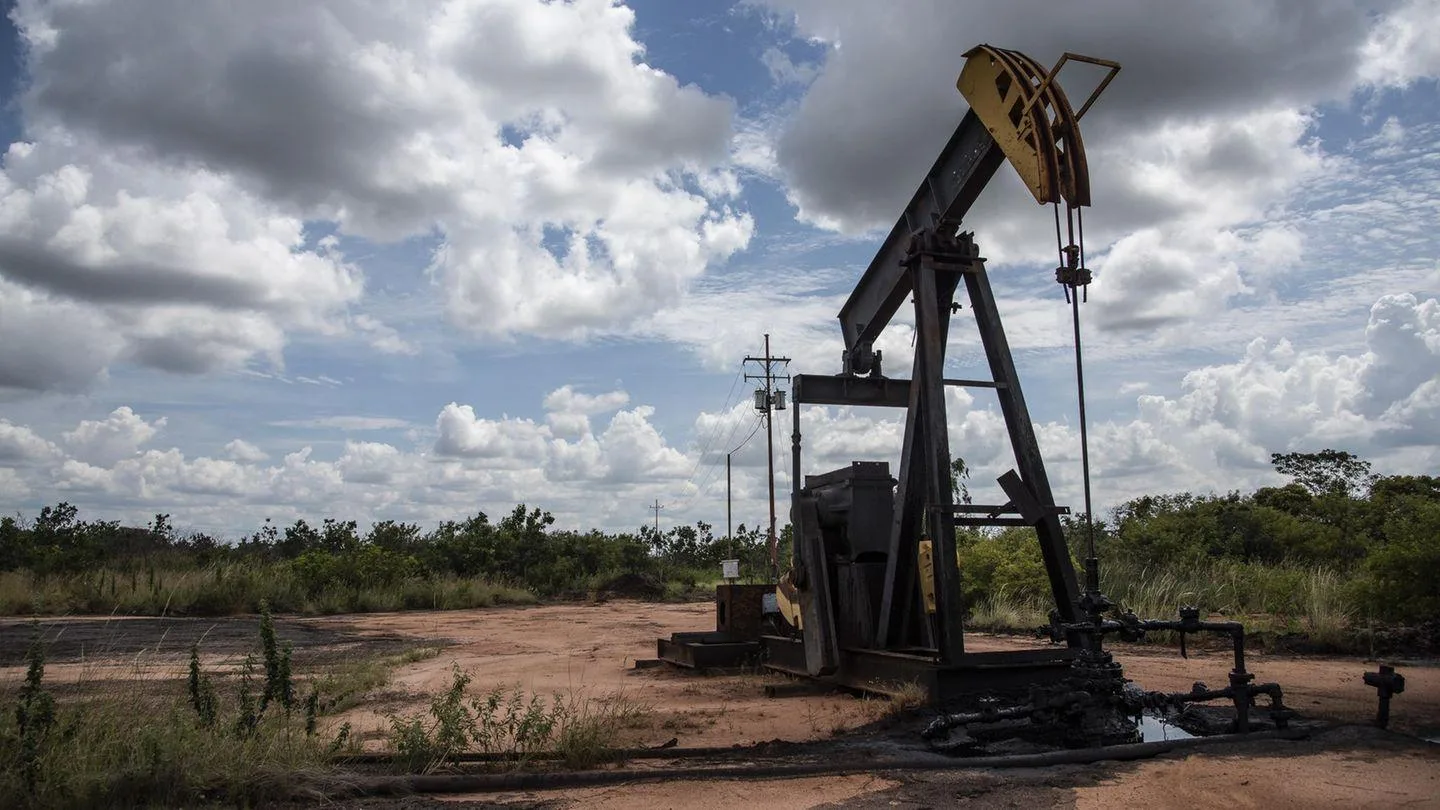
Much of Venezuela’s reserves lie in the Orinoco Belt and consist of extra-heavy crude.
The oil is viscous. It requires diluents for transportation. Its extraction and processing demand specialized infrastructure, capital, technical expertise and appropriate refining capacity.
This is precisely where American and Venezuelan interests converge.
Venezuela possesses the resource but lacks the capital, equipment and some of the expertise required to rapidly restore its industry.
The United States possesses capital, technology, oilfield-service companies and, crucially, a Gulf Coast refining system historically adapted to heavy crude.
What was once commercial interdependence is therefore becoming industrial complementarity again.
The Grand Agreement
The announcement of August 28, 2026, nevertheless takes this process to another level.
The arrangement covers 17 oil fields located primarily in the Orinoco Belt and around Lake Maracaibo. Together, they reportedly contain approximately 65 billion barrels of proven reserves.
That is more than the entirety of the proven oil reserves currently attributed to the United States.
Venezuelan authorities have granted North American Blue Energy Partners concessions reportedly lasting 100 years over these assets. The U.S. government is simultaneously expected to acquire a 35% interest in the operator’s parent company through the Pentagon’s Office of Strategic Capital.
The arrangement also provides the United States with privileged access to part of the production: approximately 20% of output could be purchased at the cost stipulated by the agreement, alongside additional rights over remaining volumes.
Caracas, meanwhile, presents the arrangement as a program capable of attracting approximately $100 billion in investment and eventually generating substantial fiscal revenues.
The production target discussed for the relevant assets reaches 1.5 million barrels per day.
But these figures must be treated as objectives, not accomplished results.
Between geological reserves and commercial production stand wells, pipelines, terminals, electricity infrastructure, diluents, refineries, technicians, contracts, financing and, above all, time.
Venezuela lacks part of almost every one of them.
Chevron and the Other Agreement
The spectacular government-level arrangement should not obscure what may prove more immediately consequential: the return of industrial operators.
Chevron never completely left Venezuela. That continuity now gives the company an exceptional advantage.
It is preparing to expand its operations. Its principal project, Petropiar, could notably expand into the adjacent Ayacucho 8 block. Other assets are under discussion.
Chevron is not alone.
Eni, ONGC, GeoPark and GE Vernova are among the companies involved in different Venezuelan energy projects. Venezuela has simultaneously modified its petroleum framework to provide foreign operators with greater flexibility to develop fields, market production and recover revenues.
The reconstruction of the industry therefore does not depend on a single agreement.
A new ecosystem is gradually being assembled.
That may ultimately constitute the most important structural change.
Venezuela is no longer merely looking for buyers for its oil.
It is looking for investors capable of producing it.
Why Washington Wants Venezuelan Oil
The simplest explanation would be that the United States wants Venezuelan reserves because they are enormous.
That explanation is insufficient.
The United States is itself one of the world’s largest oil producers. Its problem is therefore not simply a shortage of petroleum resources.
Venezuela offers something different: a different type of crude, located close to the American market and embedded within an energy geography that is acquiring renewed strategic importance.
The international environment of 2026 reinforces this dimension.
Disruptions in the Middle East and around the Strait of Hormuz have once again demonstrated the vulnerability of global petroleum supply chains. In such an environment, the strategic value of a barrel no longer depends solely on its production cost. It also depends on its location, the security of its transportation routes and the political stability of its supplier.
Venezuela lies only a few days by sea from U.S. Gulf Coast refineries.
From an energy-security perspective, that geography is difficult to replicate.
Canada, the United States, Mexico, Guyana, Brazil, Argentina and now potentially a reintegrated Venezuela together form an energy space of extraordinary depth across the Americas.
The issue therefore extends beyond Caracas.
It concerns the geographical reorganization of global energy supply.
China and Russia: The Other Dimension
There is also a geopolitical interpretation.
During the years of confrontation between Washington and Caracas, Venezuela turned toward powers willing to provide capital, weapons, markets or diplomatic support.
China became a major creditor and commercial partner. Russia developed important military, political and energy relationships. Iran contributed to maintaining parts of Venezuela’s petroleum and refining capabilities.
These relationships were not merely products of ideological affinity.
They were also consequences of Venezuela’s progressive exclusion from Western economic networks.
The American return changes this equation.
The new U.S. licenses notably contain specific restrictions affecting certain operations associated with Russia, Iran or entities controlled by Chinese actors.
Energy is therefore becoming an instrument of geopolitical reorientation.
Washington is not simply seeking Venezuelan oil.
It is seeking to reshape the ecosystem in which that oil is produced, financed and sold.
A Peace Without Reconciliation
It would nevertheless be premature to speak of complete normalization.
The political disputes remain considerable. The nature of Venezuela’s transition remains uncertain. Political negotiations are expected to resume in mid-September. The question of fully competitive elections remains unresolved.
The legality and legitimacy of the January 3 U.S. intervention will also continue to weigh on the relationship.
The petroleum agreement itself raises significant questions.
A 100-year concession involving tens of billions of barrels extends beyond the horizon of almost every government currently in office. Its durability will depend on Venezuelan law, the evolution of the country’s political system, investors’ ability to mobilize tens of billions of dollars and the willingness of future governments to respect commitments made today.
Nor are all major U.S. oil companies rushing back into Venezuela.
ExxonMobil and ConocoPhillips understand Venezuelan political risk particularly well: their assets were nationalized under Chávez.
Oil can reconcile interests.
It does not erase the memory of political risk.
Neither an American Victory Nor a Venezuelan Capitulation
The story could be told as an overwhelming victory for Washington.
After years of sanctions, the United States captured Nicolás Maduro, imposed a new balance of power and, only months later, secured privileged access to part of the world’s largest petroleum reserves.
There is some truth to that interpretation.
But it is incomplete.
The Chavista political system has not disappeared. Delcy Rodríguez still leads the state. Much of the administrative, military and political apparatus remains in place. And Venezuela retains legal sovereignty over its natural resources.
Caracas is also obtaining something considerable: the possibility of progressively emerging from economic isolation, attracting foreign capital again, rebuilding a severely degraded oil industry and recovering revenues capable of stabilizing an economy exhausted by years of crisis.
The relationship is profoundly asymmetric.
It is not, however, entirely one-sided.
The Return of Geography
The history between the United States and Venezuela therefore appears to be returning to its starting point — but in a different world.
Before Chávez, the two countries were connected by a geographical and industrial reality: Venezuela produced a type of oil the United States needed, while the United States possessed the market, refineries and capital Venezuela needed.
The Bolivarian Revolution attempted to transform that interdependence into an instrument of political autonomy.
American sanctions subsequently attempted to break it.
Neither strategy eliminated geography.
Venezuela remains on the southern shore of the Caribbean. Its immense reserves remain beneath the Orinoco Belt. American refineries remain on the other side of the Gulf of Mexico.
After twenty-five years of confrontation, that geography is beginning to impose its logic again.
But the 2026 agreement goes further than the restoration of an old commercial relationship. Washington is now seeking to embed its influence directly within the architecture of Venezuelan oil production. Caracas, for its part, is accepting an American economic presence that much of the Chavista narrative had been constructed precisely to resist.
That is what makes this moment historic.
On January 3, the two countries appeared to have reached the culmination of a quarter-century of confrontation.
Eight months later, they are organizing the development of tens of billions of barrels together.
This is not ideological reconciliation. It may not even be political reconciliation.
It is something older and probably more durable: the recognition that geography, energy and economic interests can survive governments, sanctions and antagonisms.
Between Washington and Caracas, peace has not yet been signed.
But the oil has already begun to flow again.
Main Sources
- U.S. Department of the Treasury, Office of Foreign Assets Control (OFAC), Venezuela-related general licenses and FAQs, January–August 2026.
- White House, Fact Sheet: President Donald J. Trump Announces Historic Oil Agreement to Secure American Energy Dominance and Drive Venezuela’s Economic Recovery, August 31, 2026.
- U.S. Energy Information Administration, Venezuela Country Analysis.
- Reuters, coverage of the January 3, 2026 U.S. operation, Venezuela’s political transition and Venezuela–U.S. energy agreements, January–September 2026.
- Reuters, analysis of the structure of the new U.S.–Venezuela oil agreement, August 31, 2026.
Atlas Limits Research Desk
Atlas Limits’ editorial and analytical desk.