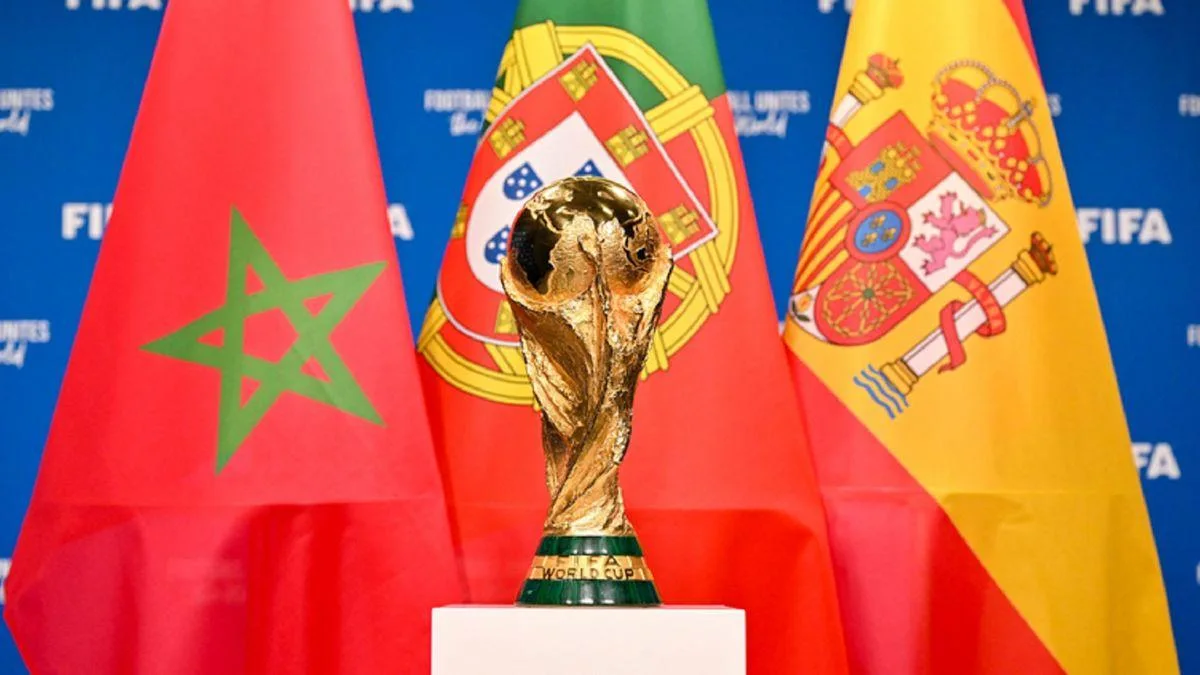
The 2030 FIFA World Cup was intended to celebrate a century of football history. It has become an expression of a much deeper transformation in the relationship between sport, political power, economics and diplomacy. By awarding the main tournament to Morocco, Spain and Portugal, while allocating three commemorative matches to Uruguay, Argentina and Paraguay, FIFA has created a competition whose geographical reach exceeds that of every previous edition. For the first time, a men's World Cup will extend across three continents, bringing together countries with markedly different ambitions, economic capabilities and political priorities.
This arrangement represents considerably more than an attempt to commemorate the centenary of the inaugural World Cup, held in Uruguay in 1930. It reflects the evolution of a model in which the allocation of major international sporting competitions no longer depends primarily on stadium quality or the capacity of prospective hosts to accommodate spectators. Commercial requirements, relations between football confederations, diplomatic interests and investment strategies have become increasingly influential. Governments are no longer seeking merely to host matches. They want to use football to accelerate economic transformation, strengthen international visibility, consolidate networks of influence and position their territories within global flows of tourism, services and investment.
The 2030 tournament concentrates these ambitions within an exceptionally complex structure. Morocco intends to make the competition an accelerator of modernization and an instrument of international projection. Spain seeks to capitalize on its established footballing influence, major metropolitan areas and tourism industry. Portugal aims to convert its sporting tradition and existing infrastructure into lasting economic benefits. The three South American countries participating in the centenary celebrations are defending their continent's historical place in the development of world football. Above these national interests, FIFA is pursuing its own strategy: expanding the competition's global reach, maintaining its commercial attractiveness and managing a process of growth that is progressively transforming football into an integrated worldwide industry.
Yet this convergence of ambitions exposes a fundamental contradiction. The anticipated benefits are generally presented at the national level, while expenditure, construction constraints and social consequences are concentrated in particular cities and territories. Investments must be committed years before the tournament, whereas direct event-related revenues are generated mainly over a few weeks. Governments can emphasize the infrastructure they have delivered, but its actual value will depend on how it is used after 2030. Businesses may benefit from construction contracts and increased tourism without those gains necessarily translating into sustained improvements in living standards.
The central question is therefore no longer whether the 2030 World Cup will be an exceptional sporting event. Its global significance is already established. What remains to be determined is how the organizers' interests will interact, what economic transformations the tournament can genuinely produce and under what conditions its legacy will extend beyond the ambitions that secured its allocation.
From Competing Bids to an International Coalition
The history of the 2030 bidding process reveals the gradual transformation of sporting diplomacy. For decades, World Cup hosting decisions were largely structured around competition between national or regional proposals. Each candidate sought to convince FIFA of its ability to stage the tournament by emphasizing stadium infrastructure, transport networks, public guarantees and the commercial opportunities available to the competition's partners.
Morocco participated in this process repeatedly without securing the tournament. Its bids for the 1994, 1998, 2006, 2010 and 2026 editions demonstrate a strategy pursued across several generations. The defeat of its 2026 bid against the joint proposal from the United States, Canada and Mexico highlighted the difficulties faced by an individual candidate competing against a grouping with an exceptionally large commercial market, extensive existing infrastructure and considerable accommodation capacity.
The prospect of hosting the centenary tournament gradually changed this balance. Spain and Portugal had developed a joint candidacy based on geographical proximity, footballing traditions and established facilities. Morocco's incorporation into the project in 2023 transformed the Iberian proposal into a bid connecting two continents. The kingdom's participation created an opportunity to organize the tournament across a relatively concentrated Euro-African geographical area, separated by the Strait of Gibraltar but already linked by substantial human, economic and commercial exchanges.
At the same time, South America was promoting a candidacy based on the historical significance of the centenary. Uruguay, which hosted and won the inaugural tournament in 1930, occupied a central position alongside Argentina, Paraguay and initially Chile. The South American proposal possessed undeniable historical legitimacy, but it also had to meet the increasingly demanding requirements of a competition expanded to 48 teams, involving extensive infrastructure and considerable logistical capabilities.
The compromise announced in October 2023 fundamentally reorganized the competition between these proposals. Morocco, Spain and Portugal became the sole candidates to host the main tournament, while Uruguay, Argentina and Paraguay were each allocated a commemorative match. Chile, despite having participated in the original South American initiative, was excluded from the final arrangement. On December 11, 2024, FIFA's Extraordinary Congress formally appointed the three principal hosts and confirmed the centenary matches.
This decision replaced an open contest between competing bids with an arrangement accommodating different regional interests. It recognized South America's historical contribution while concentrating most of the tournament within a Euro-African geographical space. It also demonstrated the ability of international sporting organizations to negotiate compromises between confederations rather than necessarily maintaining direct competition between rival projects until the final vote.
The institutional implications deserve closer examination. When a single candidacy emerges before the formal decision, technical evaluation remains important, but the public comparison of alternative proposals disappears. The assessment becomes more concerned with compliance with the organizer's requirements than with choosing between competing projects. This does not necessarily imply weaker technical standards. It does, however, change the nature of the selection process and increases the importance of transparency concerning financial guarantees, contractual commitments and obligations imposed on the host countries.
The 2030 World Cup therefore marks a significant development in contemporary sporting diplomacy: the ability to assemble an international coalition has itself become a strategic advantage.
Morocco: Turning a Sporting Ambition into a National Development Project
For Morocco, securing the 2030 World Cup represents the culmination of a strategy that began long before the joint bid was established. Football occupies a distinctive position in the kingdom's relationship with its regional and international environment. It functions simultaneously as an instrument of social cohesion, a source of sporting recognition and a means of reaching international audiences that may have limited familiarity with Morocco's economy or institutions.
Morocco's performance at the 2022 World Cup in Qatar, where its national team became the first African side to reach the semifinals of the men's tournament, considerably strengthened this visibility. That achievement does not, by itself, explain the allocation of the 2030 tournament, which resulted from an institutional negotiation and a complex hosting proposal. It nevertheless contributed to changing international perceptions of Moroccan football and reinforced the country's sporting momentum.
Morocco's ambitions extend well beyond the performance of its national teams. The tournament is intended to support a broader transformation of infrastructure, mobility networks, tourism capacity and urban facilities. This connection between a sporting event and economic modernization lies at the center of the national strategy.
The program encompasses Casablanca, Rabat, Tangier, Marrakech, Fez and Agadir, the six Moroccan cities proposed to host matches. Each has a distinct economic and territorial profile. Casablanca concentrates a substantial share of the country's financial and productive activity. Rabat serves as its administrative and institutional center. Tangier has developed into an industrial and logistics hub oriented toward Europe and international maritime trade. Marrakech enjoys established international tourism recognition. Fez possesses considerable cultural and urban heritage, while Agadir is an important tourism and economic center in southwestern Morocco.
Hosting the World Cup could reinforce these specializations, provided that investment extends beyond stadium precincts. Improvements to airport access, urban transportation, railway connections, signage, accommodation and digital services can produce benefits that substantially outlast the competition. A modernized transport network remains useful after supporters have departed. Better connections between cities can facilitate business travel, domestic tourism and regional market integration. Improvements in urban services can also benefit permanent residents.
However, this approach involves a fundamental difficulty: an investment is not economically justified simply because it is associated with the World Cup. Its value depends on the demand it will satisfy over several decades, its financing costs, operating expenditure and the alternative uses to which public resources could have been allocated.
The Grand Stade Hassan II, planned for Benslimane in the Casablanca region, embodies this tension between ambition and economic rationality. With an announced capacity of approximately 115,000 spectators, it is designed to become one of the world's largest football stadiums and a candidate to host the final. Its architecture and scale may provide considerable international visibility, but its long-term operating model will be decisive.
A stadium of this size cannot be assessed solely on the basis of a handful of exceptional matches. Its economic viability requires an examination of the number of events it can host annually, ticketing revenues, commercial activities, maintenance costs, transportation requirements and the expenditure necessary to accommodate other uses. International experience demonstrates that major stadiums can become productive assets when integrated into a viable economic ecosystem, but they can also impose substantial long-term financial burdens when utilization remains insufficient.
For Morocco, the project's success will therefore depend on integrating sporting investment into a broader territorial strategy. Railway development, improved connections between airports and urban centers, higher-quality tourism services and modernized local infrastructure may generate more durable economic benefits than the construction of new sporting venues alone.
The distribution of these benefits presents another challenge. Major metropolitan areas generally possess the administrative capabilities, investors and commercial networks required to capture a substantial share of the returns. Less directly involved territories may nevertheless contribute indirectly to national expenditure without benefiting proportionately from the resulting investment.
The 2030 World Cup will consequently test Morocco's ability to convert an exceptional concentration of resources into lasting improvements in productivity, connectivity and economic attractiveness.
Spain: Consolidating Footballing Influence and Metropolitan Power
Spain approaches the tournament from a different position. It already possesses a footballing ecosystem deeply integrated into the international economy, with globally recognized clubs, extensive infrastructure, a developed tourism industry and major cities capable of hosting large international events.
Its objective is therefore not primarily to establish itself as a new sporting destination, but to consolidate an existing position and modernize the assets underpinning that influence.
Spain previously hosted the World Cup in 1982. Since then, football's economic structure has undergone a profound transformation. Commercial revenues, broadcasting rights, digital activities and international partnerships have become increasingly important. Stadiums have progressively evolved into multifunctional facilities incorporating commercial areas, entertainment activities and services designed to operate independently of football fixtures.
Madrid's Santiago Bernabéu and Barcelona's Camp Nou illustrate this transformation through modernization programs extending well beyond World Cup requirements. For their operators, the 2030 tournament provides an opportunity to capitalize on investments already undertaken, strengthen international exposure and increase the commercial attractiveness of their facilities.
However, Spain's hosting ambitions also raise territorial questions. Madrid, Barcelona, Bilbao, Seville, San Sebastián, Zaragoza and Las Palmas are among the cities involved in FIFA's inspection process announced for late 2026. The final selection must consider stadium quality, accessibility, accommodation capacity, security arrangements and operational requirements.
Local interests are not perfectly aligned. Each city seeks matches capable of generating international visibility and additional economic activity. The most prestigious fixtures, particularly the semifinals and final, represent symbolic and commercial assets of considerable value.
This competition is taking place while several Spanish destinations already face pressures associated with tourism, housing and congestion in urban areas. A temporary increase in visitors can raise revenues for hotels and service providers while simultaneously intensifying pressure on transportation, short-term accommodation and public facilities.
Spain's challenge therefore lies less in creating entirely new hosting capacity than in optimizing existing infrastructure and managing the externalities of a global event. The economic value of investment will depend partly on its compatibility with the permanent needs of residents and businesses.
The partnership with Morocco also has a significant diplomatic dimension. The two countries maintain extensive economic relations characterized by substantial trade, investment and growing interdependence across several industrial value chains. Jointly organizing a World Cup can deepen operational cooperation by mobilizing public administrations, transport companies, tourism operators and security authorities.
It does not, however, eliminate differences in national priorities or competition between territories. The allocation of the most prestigious matches will demonstrate that cooperation between states can coexist with intense rivalry for the symbolic benefits of an international event.
Portugal: Maximizing Returns While Limiting New Investment
Portugal enters the 2030 tournament with a more concentrated hosting structure. Its principal proposed venues are located in Lisbon and Porto, around stadiums already experienced in staging major international fixtures.
This configuration can provide an economic advantage. When a country possesses facilities that already meet, or are relatively close to meeting, the required standards, investment can focus more heavily on operational improvements, transportation, visitor services and the quality of the overall experience. The risks associated with constructing entirely new large-scale infrastructure can therefore be reduced.
Portugal's strategy also builds on an established international tourism industry. Lisbon and Porto enjoy considerable visibility among European and long-haul visitors. The World Cup can reinforce this attractiveness, particularly in more distant markets, while diversifying the reasons international travelers choose to visit.
Yet Portugal faces a challenge common to several European tourism economies: the benefits of international visitor spending are not automatically distributed among businesses, workers and residents. Rising hotel revenues may coexist with additional pressure on housing, service prices and urban space.
The objective is therefore to transform exceptional visitor demand into durable value creation without excessively reinforcing existing imbalances in major cities.
Portugal's participation also carries diplomatic significance. Joint organization with Spain and Morocco places the country within a project connecting Europe and Africa while allowing it to draw on its historical relationships with different Portuguese-speaking regions. This dimension does not guarantee additional economic returns, but it broadens the context in which Portugal can promote its businesses, destinations and organizational capabilities.
Within a tournament whose three principal hosts differ in economic scale and priorities, Portugal's central challenge will be to ensure that its financial commitments remain proportionate to the benefits generated.
South America: Preserving Football's Origins in a Globalized Industry
The participation of Uruguay, Argentina and Paraguay gives the 2030 World Cup a distinctive historical dimension. The competition will symbolically return to the continent where its first edition was held, although South America will not host the main tournament.
This compromise reflects a tension between two considerations. The first concerns sporting memory: the centenary of 1930 carries particular significance for Uruguay, Argentina and South American football more broadly. The second concerns the contemporary economics of international sport: organizing an expanded World Cup requires financial guarantees, transport capabilities and infrastructure on a scale far greater than that of the earliest tournaments.
Uruguay occupies a unique position in this history. In 1930, it hosted and won the inaugural World Cup. The return of a commemorative fixture to Montevideo recognizes that foundational contribution. It also provides international exposure extending beyond the size of the country's domestic market.
Argentina possesses an exceptional footballing tradition and global reputation. Hosting a centenary match offers an opportunity to celebrate that heritage and attract international attention. The economic returns will nevertheless depend on the investment required and the ability to generate additional visitor spending beyond tourism that would have occurred independently of the competition.
Paraguay presents a different situation. Its role within South American football institutions and participation in the centenary arrangements provide significant visibility despite the limited number of matches. The expected benefits relate more to international recognition, event-related economic activity and infrastructure utilization than to a macroeconomic effect comparable to that of countries hosting dozens of fixtures.
Chile's exclusion illustrates how international compromises can also produce disappointed stakeholders. Initially involved in the South American bid, the country was not awarded a match under the final arrangement. The decision demonstrates the distinction between a region's historical legitimacy and the ability of individual countries to secure a place in the eventual allocation.
The centenary structure also introduces a significant logistical and environmental challenge. Teams involved in the South American fixtures will subsequently need to travel to the main tournament area in Europe and Africa. These transatlantic journeys add recovery, transportation and scheduling constraints to a competition already expanded in scale.
Historical recognition therefore comes with an organizational cost that must be assessed across the tournament as a whole.
FIFA: A Sporting Institution at the Center of a Global Economy
The 2030 World Cup cannot be understood without examining FIFA's own institutional and commercial interests. The organization occupies a distinctive position within the sports economy: it controls the rights associated with the competition, establishes the requirements imposed on hosts and coordinates an event whose audience extends far beyond the countries staging it.
Its financial model relies primarily on broadcasting rights, commercial partnerships, licensing and competition-related activities. The men's World Cup remains the principal engine of this economy.
The expansion to 48 teams, introduced for the 2026 edition, fundamentally changes the tournament's commercial and operational dimensions. A competition comprising 104 matches provides more broadcasting opportunities, additional advertising inventory and greater scope for commercial partnerships. It also increases requirements for stadiums, accommodation, transportation, security and coordination.
For FIFA, the globalization of the tournament therefore serves a growth strategy. More participating teams broaden sporting representation, while additional matches can enhance commercial opportunities. National federations may gain greater exposure, and broadcasters receive a larger volume of content.
Yet this expansion is not without limitations. The commercial value of an event does not necessarily increase in direct proportion to its number of fixtures. Spectator attention remains finite, sporting calendars are already congested and the physical demands placed on players can become more substantial.
The 2030 World Cup consequently raises questions about the balance between economic expansion and sporting quality. A longer and more complex competition may generate additional revenues while increasing costs for organizers, clubs, federations and athletes.
The allocation of those costs and revenues is central to the model. Host countries mobilize public and private resources to build or modernize the necessary infrastructure. FIFA retains control over several essential categories of commercial rights. Local authorities frequently assume part of the costs associated with urban development and public services, while the resulting economic benefits are distributed among very different stakeholders.
It would therefore be misleading to equate FIFA's commercial revenues with income directly received by host countries. Similarly, the economic activity generated by the tournament does not correspond entirely to net new national wealth. Some expenditure may replace other forms of consumption, while certain revenues are captured by companies operating outside the host territories.
An economic assessment must consequently distinguish between the growth of football as an industry, the revenues of its international governing body and the benefits actually retained by host economies.
The Final: Competition for the Tournament's Symbolic Center
Among the decisions still pending, the allocation of the final occupies a particularly important position. As of November 2026, FIFA has not definitively selected the stadium that will host the tournament's concluding match.
The Grand Stade Hassan II in the Casablanca region is among the projects associated with this ambition. In Spain, Madrid's Santiago Bernabéu and Barcelona's Camp Nou have also been identified within the bidding framework as venues capable of staging major fixtures.
This competition extends beyond stadium capacity. The final represents the moment of maximum international visibility. It concentrates the attention of broadcasters, commercial partners, official delegations and an exceptionally large global audience.
For Morocco, securing the final would carry historic significance: the decisive match of a men's World Cup would be held on African soil for the first time. For Spain, hosting it would reinforce the international position of an established footballing power and showcase facilities already integrated into global professional sport.
Both ambitions have an understandable strategic rationale. FIFA's eventual decision must nevertheless satisfy detailed operational requirements involving technical compliance, international accessibility, accommodation capacity, security, spectator mobility, media facilities and delivery guarantees.
A stadium's nominal capacity is only one element of that assessment. A very large venue may offer considerable commercial potential, but it also requires transportation infrastructure, security arrangements and operational capabilities sufficient to accommodate exceptional visitor flows.
The final's allocation will therefore carry substantial symbolic weight without determining the tournament's economic success by itself. A country may host the most prestigious match while assuming disproportionate costs. Conversely, a broader distribution of fixtures may generate significant territorial benefits when infrastructure is used efficiently.
The competition for the final primarily reveals the coexistence of two objectives: maximizing national visibility and optimizing the economic value of hosting.
Infrastructure: Between Acceleration and the Risk of Overinvestment
One of the principal economic arguments for hosting major sporting competitions concerns their ability to accelerate investments that might otherwise take much longer to complete. Deadlines imposed by international organizers can shorten decision-making processes, facilitate administrative coordination and concentrate financing on priority projects.
This acceleration can produce positive results when investments address previously identified needs. A railway connection that permanently improves mobility between two economic centers has value independently of the World Cup. Airport modernization can strengthen a region's international connectivity. Better urban transportation can improve productivity by reducing travel times.
Yet the same mechanism can encourage inadequately assessed decisions. Tight schedules may reduce opportunities to reconsider costs, modify projects or compare technical alternatives. Political commitments can create additional pressure to meet deadlines even when original budgets are exceeded.
The principal risk is therefore not necessarily public investment itself, but its allocation. Expenditure on sporting infrastructure and associated facilities must be compared with competing needs in transportation, education, healthcare, housing and urban services.
International experience also demonstrates that projections of economic benefits should be interpreted cautiously. Preliminary studies sometimes combine tourism expenditure, capital investment, indirect effects and forecasts of activity without sufficiently distinguishing net additional value from transfers of spending.
An international visitor may generate additional revenue for the local economy. A resident who replaces an ordinary leisure expense with the purchase of a match ticket does not necessarily produce the same effect. A construction company may experience a temporary increase in activity, but the benefits retained nationally depend partly on imported materials, local employment and the subsequent utilization of the infrastructure.
Future maintenance costs must also be considered. A facility may be delivered on schedule and function perfectly throughout the tournament while becoming a long-term financial burden if its operations remain unprofitable.
A rigorous assessment of the 2030 legacy will therefore need to distinguish between investments indispensable to the competition, projects addressing permanent economic needs and facilities whose utility depends primarily on the event itself.
That distinction will be essential to measuring the tournament's actual contribution to the transformation of host economies.
Tourism: Global Visibility Does Not Guarantee Economic Returns
Tourism is among the principal arguments advanced in favor of hosting major sporting events. The World Cup attracts international visitors, mobilizes global media and exposes host destinations to an exceptionally large audience.
For Morocco, this visibility can support an existing tourism development strategy by increasing awareness of several cities and diversifying source markets. For Spain and Portugal, it can reinforce established international positions and promote destinations that receive less attention.
However, tourism effects should not automatically be equated with a net and lasting increase in revenue.
Some visitors would have traveled to the host countries regardless of the competition. Regular tourists may also postpone their trips because of higher prices, transportation congestion or expectations of overcrowding. Additional revenues must therefore be assessed after accounting for substitution and displacement effects.
The structure of the tourism industry also matters. When hotels, booking platforms, airlines or service providers belong to international groups, part of the value generated may flow outside the host economy. Conversely, local small businesses can benefit directly from increased demand, provided they have access to commercial opportunities and sufficient operating capacity.
The longer-term tourism legacy will depend above all on converting temporary visibility into recurring demand. That requires consistent service quality, reliable connectivity, well-maintained infrastructure and an offering capable of attracting visitors after the competition.
The World Cup can create an exceptional opportunity for international exposure. It cannot replace a coherent tourism strategy or the investments required to implement one.
Businesses: Competition for Contracts and Industrial Capabilities
Organizing the 2030 World Cup will mobilize economic activities extending far beyond the sports sector. Construction, engineering, transportation, telecommunications, energy, security, hospitality and digital services companies can all participate in preparations.
This mobilization creates competition for public and private contracts, but also opportunities for industrial cooperation among the three principal host countries.
Moroccan companies may seek to strengthen their capabilities in complex construction projects, large-scale project management and associated services. Spanish and Portuguese groups possess international experience in several areas of engineering, infrastructure and tourism operations.
The industrial benefits will nevertheless depend on procurement arrangements, the participation of local businesses and the extent of skills transfer. A construction project may generate substantial activity for several years without necessarily creating a durable domestic industry.
The objective should therefore be to use World Cup-related procurement to improve productive capabilities, develop technical expertise and strengthen businesses capable of competing for other projects after 2030.
Digital infrastructure represents a particularly important area. Access management, ticketing, cybersecurity, payment systems, communications, operational data and spectator services require reliable, integrated technologies.
The tournament can provide an opportunity to deploy systems whose usefulness extends beyond the event. However, their implementation also raises questions about data protection, technological dependence and control over critical infrastructure.
The World Cup consequently presents genuine industrial opportunities, but their lasting value will depend less on the gross volume of contracts than on their contribution to skills development and future business competitiveness.
Citizens: The Real Assessment Beyond the Stadiums
The social dimension of the World Cup is often less visible in official presentations than infrastructure projects and visitor forecasts. It is nevertheless essential to evaluating the event.
Residents of host cities may benefit from modernized transportation, improved public spaces, new economic activity and employment opportunities. They may also experience prolonged disruption during construction, housing pressures and restrictions on mobility.
These effects vary considerably across social groups. Property owners in attractive areas may benefit from rising asset values. Tenants, by contrast, may face higher rents. Businesses with substantial financial and commercial capabilities are generally better positioned to compete for contracts than smaller enterprises.
Employment is another area where outcomes require careful examination. Construction projects and event-related services may create additional jobs, but some of these positions will be temporary. Their lasting contribution depends on worker training, contract quality and professional opportunities after 2030.
Working conditions also represent a governance challenge. In analyses published in 2024, Amnesty International identified several risks associated with preparations for the tournament, including migrant workers' rights, construction safety, housing, discrimination and fundamental freedoms. The organization argued that the strategies presented by the bidding countries required stronger safeguards.
These concerns do not establish that the anticipated violations will necessarily occur. They demonstrate that the scale of investment and pressure of deadlines require effective prevention, monitoring and accessible remedies.
Organizing authorities will therefore need to make available indicators capable of assessing working conditions, compensation procedures, potential displacement and housing impacts.
The social success of the World Cup cannot be measured solely by spectator numbers or visitor satisfaction. It will also depend on how residents experience preparations and what remains available to them after the tournament.
The Environment: The Contradictions of a Three-Continent Tournament
The geographical structure of the 2030 World Cup creates an evident environmental challenge. The commemorative fixtures in South America will be followed by the main competition in Africa and Europe. The resulting intercontinental travel will add to the movements of teams, delegations, media representatives and supporters.
The geographical proximity of Morocco, Spain and Portugal may facilitate some connections between the principal hosts. It does not eliminate the considerable distances separating the tournament's different regions.
The environmental footprint must be assessed across the event's entire life cycle. It includes emissions associated with construction and renovation, international transportation, urban mobility, stadium energy consumption, accommodation and related services.
Construction-related emissions are particularly important. A new facility requires materials, energy and resources before its first match takes place. Its environmental performance subsequently depends on its useful life and whether it avoids the need for additional construction elsewhere.
The climate question therefore cannot be reduced to the number of flights operated during the tournament. It also concerns planning decisions, the reuse of existing facilities and the consistency of investment with national energy-transition strategies.
Organizers can reduce certain emissions through better scheduling, improved public transportation, energy-efficient facilities and the avoidance of unnecessary travel. Yet the intercontinental structure of the 2030 tournament creates constraints that cannot be entirely eliminated through operational measures.
FIFA will consequently need to demonstrate how the environmental commitments associated with its competitions translate into measurable results rather than broad objectives lacking effective verification mechanisms.
Governance: Six Countries and Multiple Levels of Responsibility
The organization of the 2030 World Cup involves an exceptionally complex institutional architecture. FIFA establishes the overall requirements and retains responsibility for several central aspects of the tournament. National football federations participate in coordination. Governments provide guarantees and mobilize public administrations. Local authorities are involved in infrastructure, public services and operational delivery.
This multiplicity of stakeholders can facilitate cooperation, but it also creates risks of fragmented accountability.
When a project is delayed, identifying the responsible authority becomes essential. When costs increase, it must be clear who will bear the overrun. When infrastructure requires maintenance after 2030, its ownership and financing model must already have been established.
Cooperation among the three principal hosts also requires coordination of administrative procedures, security arrangements, international transportation and visitor reception.
Supporter mobility provides a concrete example. Travel between Morocco, Spain and Portugal involves different entry requirements and border procedures. Organizers will need to facilitate the movement of authorized spectators while respecting the applicable legal frameworks.
Security management represents another important dimension. Major sporting events require cooperation between national agencies, local authorities, private operators and international institutions. This coordination must reconcile risk prevention, efficient mobility and respect for fundamental rights.
The tournament will therefore also test transnational governance. Its success will depend on the ability of the different institutions to define clear responsibilities, share essential information and resolve difficulties without systematically transferring costs to public authorities.
Beyond 2030: The Difference Between Hosting and Transforming
The history of major sporting competitions demonstrates that their legacy cannot be assessed at the closing ceremony. The most important effects often emerge several years later, when infrastructure must operate without exceptional tournament revenues and businesses return to ordinary market conditions.
The 2030 World Cup will be no exception.
For Morocco, the assessment will depend on the utilization of facilities, measurable improvements in mobility, the ability to attract investment and the contribution of projects to the country's economic transformation. International visibility acquired during the competition will produce a lasting advantage only if supported by efficient infrastructure, competitive services and institutions capable of sustaining that momentum.
For Spain, the challenge will be to measure the additional value created by the tournament within an already highly internationalized economy. The most significant benefits may come from modernizing existing facilities, improving urban services and strengthening the attractiveness of particular destinations rather than generating a dramatic increase in national tourism activity.
For Portugal, success will depend on cost control, effective use of infrastructure and the ability to limit additional pressures in cities already exposed to intense tourism demand.
For Uruguay, Argentina and Paraguay, the legacy will take a different form. The commemorative matches will provide historical recognition and international exposure, but their economic impact must be evaluated against the limited number of fixtures hosted.
At the global level, the tournament will raise a broader question about the future of major sporting competitions. Can international football continue to expand without excessively increasing the financial, social and environmental costs borne by host territories? Does the multiplication of host countries distribute responsibilities more effectively, or does it make operations more complex and outcomes more difficult to evaluate?
These questions extend far beyond the 2030 edition. They concern the evolution of a sports industry whose revenues, audiences and territorial ambitions have reached an extraordinary scale.
The Centenary of a Sport That Has Become an Instrument of Power
In 1930, the inaugural World Cup brought together thirteen teams in Uruguay. A century later, the 2030 edition will involve 48 national teams in a tournament spanning six countries and three continents. This evolution reflects football's extraordinary expansion into one of the few cultural phenomena capable of mobilizing populations, businesses and governments simultaneously on a global scale.
Yet the increasing size of the tournament does not, by itself, constitute a measure of progress. The deeper transformation lies in the position football now occupies within national strategies and the international economy.
For governments, hosting the World Cup can accelerate investment, strengthen international reputation and mobilize economic actors. For businesses, the event represents an exceptional concentration of contracts and consumers. For FIFA, it remains a central instrument of commercial development and institutional influence. For citizens, it is both a major collective experience and a series of public decisions whose consequences may extend over several decades.
These interests do not automatically converge. The benefits of visibility can be immediate, while financial costs and maintenance obligations extend over the long term. Corporate gains may be substantial without being evenly distributed. Infrastructure can permanently improve everyday life or become a collection of facilities whose usefulness falls short of the resources committed.
The 2030 World Cup will therefore be judged across two different time horizons. The first, sporting, will unfold over several weeks and determine a world champion. The second, economic and institutional, will extend far beyond the tournament. It will establish whether the investments undertaken have improved territorial connectivity, strengthened productive capabilities, developed expertise and created infrastructure of lasting practical value.
Morocco, Spain and Portugal have secured the right to organize most of this historic edition. Uruguay, Argentina and Paraguay will participate in the celebration of its centenary. FIFA has assembled an event of unprecedented geographical scope.
What remains to be established is what this organization will produce beyond football. The success of a World Cup cannot be reduced to stadium quality, attendance figures or the global audience for the final. It must also be measured by the ability of host countries to transform a temporary event into useful infrastructure, durable capabilities and verifiable economic and social benefits.
The distinction between the power of the event and the permanence of its legacy will ultimately determine the true significance of 2030.
Principal Sources
[1] FIFA, FIFA World Cup 2030 — Bid Evaluation Report, November 2024. Assessment of infrastructure, guarantees, hosting capabilities and commitments made by the bidding countries. View link
[2] FIFA, FIFA World Cup 2030 — Bidding Process and Appointment, December 2024. History of the bidding process and formal appointment of the hosts. View link
[3] FIFA, FIFA World Cup 2030 Venue Selection Visits, October 27, 2026. Inspections and selection process for candidate cities and stadiums in Morocco, Spain and Portugal. View link
[4] Reuters, FIFA to Visit Potential 2030 World Cup Host Cities in November and December, October 27, 2026. Candidate host cities, match allocation and the unresolved question of the final. View link
[5] Amnesty International, Playing a Dangerous Game? Human Rights Risks Linked to the 2030 and 2034 FIFA World Cups, June 2024. Labor rights, housing, discrimination and environmental risks. View link
[6] Amnesty International, High Stakes Bids: Dangerously Flawed Human Rights Strategies for the 2030 and 2034 FIFA World Cups, November 2024. Assessment of human rights commitments and safeguards. View link
Editorial note — November 19, 2026: The definitive list of host stadiums, match allocations and venue for the final remain subject to FIFA's decisions. Forward-looking economic and institutional assessments in this article are analytical interpretations rather than official forecasts.
Atlas Limits Research Desk
Atlas Limits’ editorial and analytical desk.