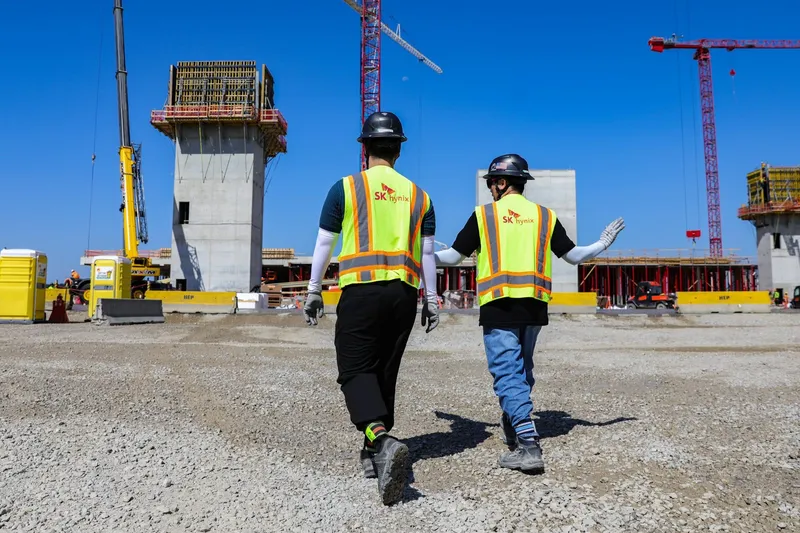
For a long time, the race for artificial intelligence could be told through a handful of words: models, parameters, data, chips. Then the buildings appeared behind the algorithms. Gigantic data centers, power plants, grids, transformers, cooling systems and tens of thousands of accelerators gradually revealed the true geography of AI.
A new layer is now emerging: debt.
The prospectus prepared by Anthropic ahead of its initial public offering provides a measure of the scale involved. The company expects at least $518 billion in cloud, compute and infrastructure commitments over the coming decade. A significant portion of those contracts cannot simply be canceled if growth slows. AI is therefore no longer merely an extraordinarily capital-intensive industry. It is becoming an industry committing to enormous future expenditures before it has demonstrated that it can generate comparable cash flows.
The next problem was inevitable: someone has to finance the machines.
The answer now emerging is considerably more interesting than simply turning to banks. Broadcom, one of the suppliers positioned to benefit directly from Anthropic’s expansion, has agreed to make up to $42 billion available to its own customer to finance its infrastructure requirements. The arrangement is intended in part to support a $125.2 billion five-year commitment for computing capacity using TPUs. The instruments involved may be convertible into Anthropic shares, while Broadcom may also bring in a financing partner.
In other words, the supplier is no longer merely selling the machine. It is helping make the purchase possible.
On October 2, that mechanism acquired another dimension. A banking syndicate working with Broadcom is preparing roughly $60 billion in financing for artificial-intelligence chips and infrastructure, including capacity intended for Anthropic. The contemplated structure would include $42 billion of senior secured debt and $18 billion of junior debt led by Blackstone, which would itself commit about $9 billion before syndicating the remainder. The financing has not yet been definitively announced, but its architecture already reveals the scale at which Wall Street is beginning to organize the financing of compute.
This shift is essential. Until now, the central financial question surrounding AI was the availability of capital: how much were Microsoft, Alphabet, Meta, Amazon or private investors prepared to spend to build the necessary infrastructure? It is gradually becoming a question of capital structure: what asset can secure the debt, for how long, and with what residual value?
This is where the race for compute encounters a difficulty that technological exuberance can easily obscure.
A Machine That Ages Too Fast
Traditional infrastructure generally has a relatively long economic life. A power plant, pipeline, port terminal or aircraft can be financed over many years because there is some visibility over its ability to continue generating revenue. Its value declines, but rarely at the pace at which artificial-intelligence accelerators evolve.
One generation of chips can become technologically obsolete while the obligations incurred to finance it are still outstanding.
The problem is not that a GPU or accelerator suddenly stops working. It may continue computing for years. The problem is economic. A new generation may provide more compute for the same amount of electricity, more memory, better interconnection or a lower cost per unit of computation. A machine that remains perfectly operational can therefore become substantially less competitive.
For an AI laboratory, that is an industrial risk. For a lender, it becomes a collateral problem.
Banks know how to finance buildings because they can estimate their future value. They know how to finance aircraft because a relatively liquid global secondary market exists. They know how to finance industrial machinery because its economic cycles are reasonably well understood. But financing tens of billions of dollars of accelerators whose economic value depends on a technological frontier moving every twelve or eighteen months requires a different architecture.
It is therefore no coincidence that AI financing is beginning to produce unusual structures: secured debt, junior debt, leasing, specialized vehicles, vendor financing, residual-value guarantees and convertible instruments.
The financial system must learn how to turn compute into a bankable asset.
When the Supplier Finances the Customer
The agreement between Broadcom and Anthropic is particularly revealing because it blurs the traditional boundaries between supplier, customer, creditor and investor.
Anthropic is expected to become Broadcom’s largest compute customer in 2027. Broadcom supplies part of the technology required to build the infrastructure Anthropic intends to use. It can now contribute to financing that infrastructure. And if some of the instruments are converted, it can also become a shareholder in the company purchasing that capacity. Anthropic’s own prospectus acknowledges that the interlocking nature of these relationships can create conflicts of interest.
The loop then becomes almost circular.
The supplier benefits from growing demand. The customer needs financing to sustain that demand. The supplier or its financial partners provide part of the capital allowing the customer to continue buying. The supplier’s revenues increase, strengthening its ability to finance or guarantee further investment.
This mechanism is not necessarily unhealthy. Vendor financing has existed for decades. Boeing and Airbus facilitate financing for the aircraft they sell. Industrial-equipment manufacturers work with leasing companies. Carmakers created their own finance businesses. When a market requires enormous upfront investment, bringing financing closer to production can accelerate its development.
But the scale and speed of AI make the phenomenon different.
The Bank for International Settlements is now examining what it describes as circular financing within the artificial-intelligence ecosystem: suppliers financing customers, customers investing in suppliers, and technology companies combining commercial and financial relationships. In a sample of 1,246 AI companies studied by the BIS, more than half of the financing came from other companies within the sector. Such interconnections can accelerate investment, but they also complicate a fundamental question: how much demand represents independent final demand, and how much exists because the ecosystem is financing its own expansion?
Economic history has encountered this question before.
The Telecommunications Precedent
In the late 1990s, telecommunications-equipment manufacturers did not always limit themselves to selling equipment to network operators. They sometimes helped finance them. Vendor credit allowed new networks to purchase more equipment, supporting manufacturers’ revenues and creating the appearance of extraordinarily robust industrial demand.
As long as capital continued to flow, the mechanism worked.
When revenue expectations deteriorated, part of the problem appeared simultaneously on both sides of the balance sheet: customers had invested too much, while some suppliers had financed the companies buying their equipment.
The comparison does not mean that AI will reproduce the telecommunications crisis. The technologies are different, today’s dominant companies possess vastly stronger balance sheets, and real demand for AI compute already exists on a considerable scale. But the precedent reveals a more general principle: a technology can be revolutionary and its financing fragile at the same time.
The railways of the nineteenth century had already demonstrated the same phenomenon. They genuinely transformed the economies through which they passed. That did not prevent waves of overinvestment, bankruptcies and financial crises. The social or technological value of an infrastructure never guarantees that every asset built to deploy it will generate an adequate return.
AI is entering precisely this territory.
$518 Billion Before We Know What 2030 Looks Like
The figure disclosed by Anthropic provides an unusual measure of the wager.
At least $518 billion in infrastructure commitments over a decade means that a significant share of the computing capacity of the 2030s must be decided while nobody knows exactly which models will dominate, which chip architectures will be used, what compute will cost, or even what proportion of today’s AI applications will ultimately become profitable. Roughly 80% of certain infrastructure commitments described in the prospectus would be difficult to terminate.
That is the paradox of this industry.
To remain in the race, companies must reserve today the capacity they believe they will need tomorrow. But the more capacity they reserve, the more financial obligations they create that assume tomorrow’s growth will actually materialize.
Compute is therefore becoming a kind of forward bet on future demand for intelligence.
Large technology groups can absorb part of that risk through profits generated by cloud computing, advertising, software or e-commerce. The situation is different for laboratories whose value depends much more directly on their ability to turn artificial intelligence into revenue.
Anthropic illustrates this asymmetry. Its prospectus depicts a company whose growth is spectacular but whose spending is even more so: nearly $4.6 billion in revenue in 2025 against more than $8 billion in operating losses, according to figures disclosed as part of its planned IPO. At the same time, the company is preparing hundreds of billions of dollars in future commitments.
Venture capital alone can no longer operate at this scale.
AI must therefore enter the debt markets.
Wall Street Discovers the GPU
That transition is already visible.
Hundreds of billions of dollars have been raised to finance data centers. Financing directly tied to servers and chips is now proliferating. The $60 billion structure associated with Broadcom represents another step: the objective is no longer merely to finance the walls, electricity and cooling systems surrounding compute, but to finance compute itself.
The distinction matters.
A data center can potentially accommodate several generations of machines. Its grid connection, land and part of its infrastructure retain value independently of the accelerators installed inside it. The chip itself is directly exposed to the pace of innovation.
That is why residual value is becoming one of the most important variables in the financialization of AI.
If a server purchased today for several million dollars is worth only a fraction of that amount when a borrower defaults three years later, the lender must incorporate that depreciation into the cost of credit. If nobody can reliably predict that value, someone has to absorb the risk: the bank, the credit fund, the supplier, the chipmaker or the customer.
The financial innovation accompanying AI consists precisely in moving that risk between them.
The senior and junior tranches contemplated around Broadcom illustrate the process. Senior debt seeks protection through collateral and repayment priority; junior debt accepts greater risk in exchange for higher returns. Private equity and private credit can absorb exposures that traditional banks may not wish to retain alone. Manufacturers can provide guarantees or financing. Capital markets can then redistribute those risks.
AI is therefore not merely creating new models.
It is gradually creating a new asset class.
The Risk May Not Be Where It Appears
It would be tempting to conclude that the arrival of debt is proof of an AI bubble. That would be too simple.
The infrastructure required for AI is real. The data centers exist. The chips are being manufactured. Electricity grids genuinely need reinforcement. The revenues of the leading semiconductor suppliers have already been profoundly transformed by this demand. And an economy seeking to build trillions of dollars of infrastructure cannot realistically finance all of it exclusively with equity.
Debt is therefore less an anomaly than a logical consequence of the sector’s industrialization.
The real risk lies elsewhere: in the speed at which financial commitments are increasing relative to the visibility of the revenues that will ultimately repay them.
When financing comes partly from companies that directly benefit from the purchases it enables, interpreting demand also becomes more difficult. A dollar of orders does not have exactly the same economic meaning when it comes from a customer using its own cash and when it comes from a customer whose supplier is helping finance the purchase.
That is precisely what the development of circular financing now requires investors, banks and regulators to examine.
And the phenomenon extends beyond the United States. An analysis published on October 2 by European Central Bank economists presents almost the reverse picture in the euro area: around 72% of surveyed companies planning AI investment expect to rely primarily on internal resources, compared with only 16% on bank credit, 6% on equity or venture capital and 1% on debt securities. Access to external financing remains particularly difficult when investment relies on intangible assets that are hard to pledge as collateral.
Two models are therefore beginning to emerge. In the United States, financial markets are attempting to transform AI infrastructure into a financeable asset on a gigantic scale. In Europe, much of the corporate sector continues to finance AI adoption from resources it already possesses.
The gap could eventually become as important as the technological gap itself.
After the Chips, the Balance Sheet
The first phase of the race for artificial intelligence was about building the best models.
The second was about chips. Nvidia, Broadcom, AMD and the hyperscalers’ proprietary accelerators became instruments of a competition in which access to compute was almost as important as access to algorithms.
The third was about electricity. Gigawatts entered the vocabulary of Silicon Valley, followed by turbines, nuclear reactors, high-voltage transmission lines and energy contracts stretching across decades.
The next phase is beginning now.
It is taking place on balance sheets.
To build the infrastructure the industry has promised, data centers, servers and—above all—accelerators exposed to extremely rapid technological obsolescence will have to be transformed into assets capable of supporting hundreds of billions of dollars of debt. Banks will have to assign them a value. Funds will have to accept their risk. Manufacturers may sometimes have to guarantee that value. And AI companies will have to generate enough revenue for the entire chain to be repaid.
The decisive question in the AI race is therefore no longer simply who will possess the best model, the best chip or the greatest number of gigawatts.
It is becoming more prosaic, and perhaps more important.
Who will agree to finance hundreds of billions of dollars of machines today when nobody yet knows what those machines will be worth when the debt comes due tomorrow?
Main Sources
Reuters — Broadcom to lend Anthropic up to $42 billion to lease its chips, filing says, October 1, 2026.
Reuters — Anthropic's $518 billion AI buildout hinges largely on deals that cannot be canceled, filing shows, September 29, 2026.
Reuters — Anthropic's IPO prospectus shows sweeping AI vision, surging costs, September 28, 2026.
Bloomberg — reporting on the $60 billion financing structure associated with Broadcom, including $42 billion of senior debt and $18 billion of junior debt led by Blackstone, October 2, 2026.
Bank for International Settlements — research on circular financial relationships within the artificial-intelligence ecosystem.
European Central Bank — analysis of corporate financing for artificial-intelligence investment in the euro area, October 2, 2026.
Atlas Limits Research Desk
Atlas Limits’ editorial and analytical desk.