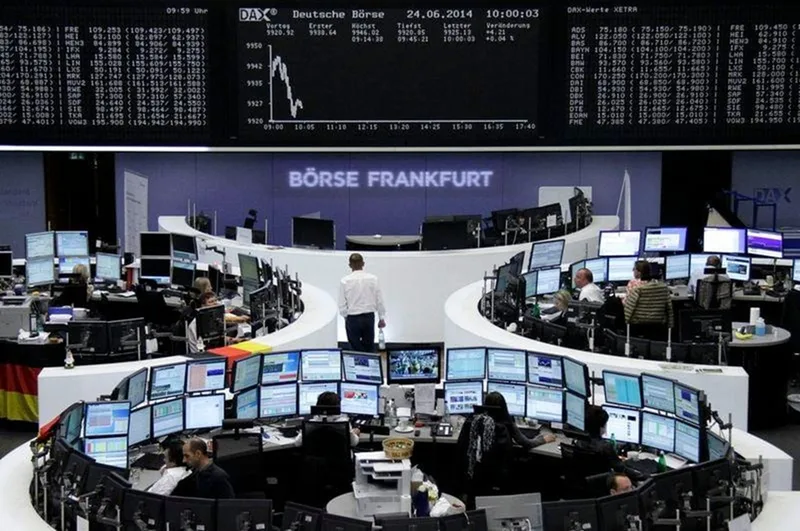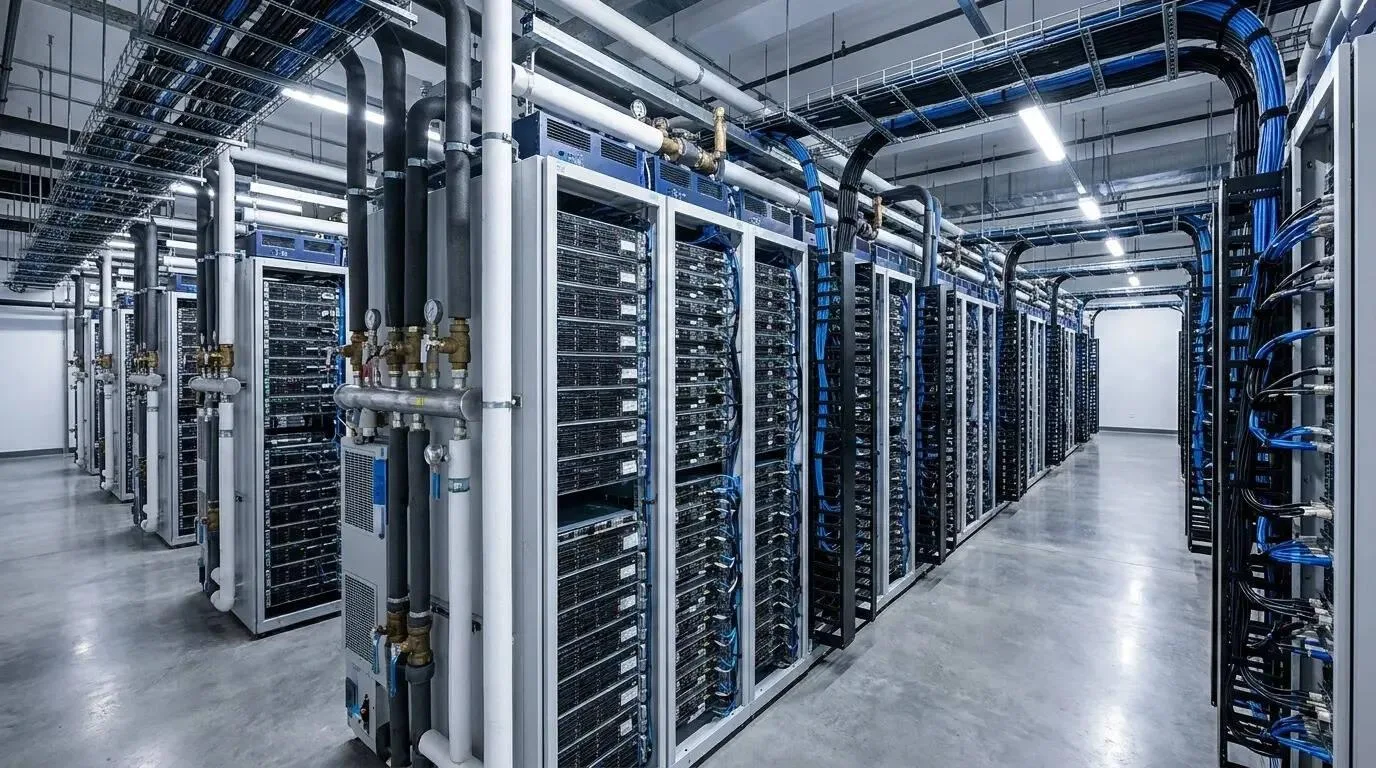
A fall in market capitalisation does not remove processors from a data centre or automatically cancel its orders. It can nevertheless change the terms on which businesses finance expansion and the returns investors demand. That is how a correction in AI-related shares can reach physical infrastructure even while demand for computing continues to grow.
MSCI estimates that equities in its global AI value chain lost more than $6 trillion between 30 September and 6 November 2026. The index spans several layers of the ecosystem, from equipment to applications. [1] This measure should not be confused with data-centre construction companies alone, or with an equivalent reduction in actual investment. Its coverage and measurement period are essential to interpreting the figure.
Markets value future income as well as installed assets. Falling prices can reflect weaker expected earnings, a higher cost of capital or a reduced willingness to pay a growth premium. The movement alone cannot distinguish these explanations. A large order backlog similarly provides visibility without guaranteeing margins, delivery dates or payment for every contract.
Computing infrastructure has a particular financing constraint: much of the spending precedes revenue. Land, electricity connections, equipment and operations must be funded before utilisation at the expected price is certain. A delayed opening can leave interest accumulating without sales. Lower computing prices can reduce returns even on a fully operational asset.
The IMF's October 2026 Global Financial Stability Report identifies vulnerabilities associated with AI profitability expectations, leverage and concentrated exposures. [2] This is a risk assessment, not evidence that every project is oversized. Some operators have committed customers and strong financing; others depend on future contracts or repeated refinancing.
Transmission to suppliers then depends on the order structure. Standard equipment may find another buyer when a project is postponed. A site-specific installation exposes its manufacturer more directly to cancellation and inventory costs. Deposits, termination provisions and customer creditworthiness become as important as the announced market size. Energy, cooling and construction businesses therefore do not all share the same exposure to the AI cycle.
Electricity creates another mismatch. Computing equipment can be ordered before a grid connection is secure. Industrial and network-development schedules do not necessarily align. Project value then depends on usable power rather than the number of processors reserved. Announced capacity becomes a commercial service only when it can be delivered and billed.
Economic assessment needs to connect utilisation, pricing and cash flow after investment. Rapid expansion can continue to consume capital, while a smaller business may generate more predictable returns. Equity-market movements do not settle AI's economic value. They force closer examination of who finances equipment, bears delays and earns enough to fund replacement. Infrastructure's durability will be determined by these contracts and balance sheets beyond daily share-price changes.
Sources
[1] MSCI, The AI Sell-off Puts Diversification to the Test, 10 November 2026; measurement through 6 November.
[2] IMF, Global Financial Stability Report, October 2026. Financial mechanisms beyond the explicitly attributed findings are Atlas Limits analysis.
Atlas Limits Research Desk
Atlas Limits’ editorial and analytical desk.