With an initial public offering worth $81.34 billion and a valuation approaching $2 trillion in its first trading session, Anthropic has reached a defining milestone in the financial history of artificial intelligence. Beyond the scale of the transaction lies a deeper transformation: developers of advanced AI models are becoming capital-intensive industrial enterprises whose growth increasingly depends on strategic infrastructure, vast financial resources, and an uncertain balance between innovation, profitability, and governance.
Anthropic's debut on the Nasdaq on November 19, 2026, marks a fundamental shift in the financing of artificial intelligence. Five years after its founding, the American company behind Claude has entered public markets through an offering of exceptional scale, at a time when investors are increasingly questioning technology valuations and the economic returns on the enormous investments being directed toward AI.
The offering price of $83 per share exceeded the initially proposed range of $70 to $78. The transaction involved 980 million shares, representing gross proceeds of $81.34 billion. In its first trading session, Anthropic's shares opened at $111.50, an increase of 34.3% over the offering price. That initial trading level placed the company's market valuation near $2 trillion, according to estimates reported by Reuters.
The transaction represents the largest initial public offering ever conducted by the gross value of shares offered. Its significance, however, extends beyond financial records. It makes Anthropic one of the first major independent developers of frontier artificial intelligence models to submit its valuation, strategy, and financial performance directly to the scrutiny of public investors.
Until now, the industry's development had relied primarily on private financing rounds, strategic partnerships, and capital commitments negotiated among a relatively limited group of investors and technology companies. Anthropic's public listing changes that structure. It establishes an observable market price for a company whose principal business consists of developing, commercializing, and operating advanced AI models.
This transition comes as the central question surrounding artificial intelligence begins to change. For several years, competition focused on model capabilities, adoption, and the ability to attract users and developers. Investors must now also determine which companies can translate that adoption into recurring revenues, sustainable margins, and returns sufficient to justify increasingly expensive infrastructure investments.
A Historic Offering in a More Demanding Market
Anthropic's successful listing is particularly significant because it comes during a period of heightened scrutiny of technology valuations. American equity markets have become increasingly sensitive to interest-rate expectations, capital expenditure commitments by major technology companies, and the time required to generate returns from artificial intelligence infrastructure.
These concerns did not prevent strong demand for Anthropic's shares. Between the launch of the roadshow on November 10 and the final pricing on November 18, the number of shares offered increased from 825 million to 980 million. The final price also exceeded the upper end of the indicative range.
Of the 980 million shares offered, approximately 956.35 million were newly issued by Anthropic, while 23.65 million were sold by existing shareholders. This distinction matters because the entire gross value of the offering does not accrue to the company. The newly issued shares represent approximately $79.38 billion before underwriting discounts and expenses.
Underwriters also received an option to purchase up to 147 million additional shares. Full exercise of that option would further increase the transaction's size without altering its central significance: Anthropic has mobilized, through a single capital markets operation, resources comparable to the annual investment budgets of some of the world's largest industrial corporations.
The IPO was accompanied by a separate $26 billion private placement involving several major technology companies. Together, the public offering and the private placement represent $107.34 billion in securities at the offering price, excluding any additional shares purchased through the underwriters' option.
Three figures must nevertheless be distinguished: the gross value of the securities offered, the capital actually received by Anthropic, and the market capitalization of the entire company. The first measures the scale of the transaction, the second determines the financial resources available to the business, and the third reflects the market's valuation of the enterprise as a whole.
The initial surge in Anthropic's share price demonstrates strong investor demand, but it does not constitute definitive validation of its valuation. Early trading in newly listed companies can be influenced by limited share availability, allocation mechanisms, and short-term expectations. A more meaningful assessment will emerge over subsequent quarters as investors evaluate regularly published financial results.
From Research Laboratory to Commercial Infrastructure
Anthropic's trajectory illustrates the extraordinary speed with which generative artificial intelligence has developed into a substantial commercial market.
Founded in 2021 by Dario Amodei and several former OpenAI researchers and executives, Anthropic initially distinguished itself through its emphasis on the safety of advanced AI systems and the development of the Claude family of models. Its strategy combined ambitious fundamental research with the objective of making these technologies reliable and useful in professional environments.
That approach has translated into exceptional revenue growth. According to the financial statements included in its prospectus, revenue increased from $41 million in 2023 to $386 million in 2024 and $4.585 billion in 2025. During the first nine months of 2026, revenue reached $33.242 billion.
This expansion cannot be explained solely by the popularity of conversational interfaces. Anthropic's principal source of revenue now comes from businesses consuming its models and services, either directly or through partner platforms.
During the first nine months of 2026, usage-based revenue amounted to $26.306 billion, compared with $6.936 billion from subscriptions. Consumption-based services therefore accounted for approximately four-fifths of total revenue.
This distribution reveals the underlying nature of Anthropic's business. The company is not merely selling access to Claude. It is providing artificial intelligence capabilities increasingly embedded in enterprise software, information systems, and operational processes.
Software development assistance, document analysis, administrative automation, complex information processing, and specialized business applications all represent potential sources of recurring demand.
Artificial intelligence is consequently beginning to function as a horizontal software infrastructure. Its economic value depends less on the number of individuals experimenting with an assistant than on the amount of work actually performed through models, the frequency of their use, and their integration into durable commercial activities.
This transformation nevertheless introduces a fundamental economic difficulty. Unlike many traditional software products, whose marginal distribution costs can become relatively low, advanced AI services require computational resources for every interaction. Higher demand therefore generates additional operating costs, even as technological progress can reduce the computing expense associated with each unit of useful work.
Revenue growth does not automatically translate into proportionate profit growth. For Anthropic, the decisive question concerns the relationship between customer pricing, inference costs, research expenditure, and the resources required to develop successive generations of increasingly capable models.
Profitability Behind the Revenue Acceleration
Anthropic's financial statements reveal a contrast that illustrates the difficulty of interpreting the economics of the sector.
During the first nine months of 2026, the company reported a net loss of approximately $104 billion while generating positive operating cash flow of $6.57 billion.
The difference between these indicators does not mean that Anthropic consumed $104 billion in operating cash. A substantial portion of the accounting loss resulted from the remeasurement of financial liabilities, including instruments whose recorded value changes alongside the company's valuation.
A sharp increase in Anthropic's valuation can therefore generate considerable accounting charges without producing equivalent immediate cash outflows. An assessment based solely on net income would provide an incomplete picture of the company's underlying economics.
Conversely, positive operating cash flow does not establish that the company has achieved sustainable profitability. Cash generated by operations must be considered alongside capital expenditure, future contractual commitments, research requirements, and the financing conditions associated with infrastructure expansion.
This distinction is essential when analyzing advanced artificial intelligence companies. A business can experience extraordinary commercial growth, improve its operating cash generation, and still depend heavily on external financing to sustain its development.
Anthropic stands precisely at this intersection. Its revenue trajectory demonstrates substantial and growing demand, but its expansion requires computing capacity on a scale far beyond the traditional requirements of a software publisher.
Investors will therefore need to monitor gross margins after computing costs, research expenditure, free cash flow generation, outstanding contractual commitments, and the company's ability to maintain competitive pricing as rival models become more capable and efficient.
The central question is no longer whether artificial intelligence can generate revenue at scale. Anthropic has already demonstrated that it can. The challenge is determining how much of that commercial value can ultimately be retained as earnings and cash after financing the technological infrastructure on which the business depends.
Artificial Intelligence Becomes a Capital-Intensive Industry
One of the most important implications of Anthropic's listing concerns the transformation of the industry's underlying structure.
Developers of advanced AI models have long been described as research laboratories associated with software platforms. That description is becoming increasingly inadequate.
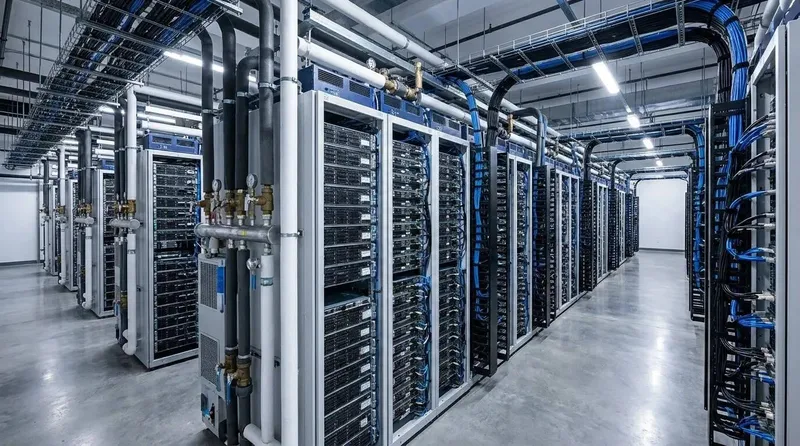
Their operations depend on a combination of scientific research, software engineering, specialized semiconductors, data centers, networking equipment, electricity supplies, and financing capacity.
Anthropic's prospectus and information reported by Reuters indicate computing and infrastructure commitments approaching $900 billion over several years. This figure does not represent expenditure already incurred or an equivalent amount of conventional financial debt. It nevertheless illustrates the scale of resources the company expects to mobilize to support its growth.
Such commitments fundamentally change the conditions of competition.
Model performance remains essential, but it is no longer the only determining factor. Access to computing accelerators, data center capacity, electricity costs, network quality, and contractual terms offered by infrastructure providers are becoming critical components of competitiveness.
This evolution brings artificial intelligence closer to industries historically characterized by heavy investment and strategic infrastructure, even though its technological cycles remain considerably faster.
It also creates a particular tension between the duration of financial commitments and the lifespan of technological advantages. Infrastructure agreements may extend over several years, while model architectures, training techniques, and semiconductor performance evolve rapidly.
Computing capacity acquired today may become less competitive before the contracts financing it have expired. Conversely, a company with secured access to substantial resources may enjoy a decisive advantage when demand expands faster than available supply.
Industrial risk therefore extends beyond the need to build sufficient infrastructure. It involves securing the right capacity, at the right cost, under conditions flexible enough to accommodate technological change.
When Suppliers Become Financiers
The $26 billion private placement is among the most revealing elements of Anthropic's offering.
Google and Nvidia each committed $10 billion. AMD contributed $2.5 billion, while Broadcom, Micron, and Microsoft each invested $1 billion. An entity associated with TSMC completed the placement with $500 million.
This configuration brings several companies occupying critical positions in the artificial intelligence value chain into Anthropic's capital structure.
Nvidia supplies accelerators and computing technologies. AMD develops competing solutions. Broadcom operates in semiconductors and connectivity infrastructure. Micron plays an important role in advanced memory, while TSMC occupies a central position in the global manufacturing of sophisticated semiconductors. Google and Microsoft, meanwhile, control extensive cloud platforms and software ecosystems.
The transaction highlights a growing convergence between financing and industrial supply.
Companies benefiting from rising computing demand are also helping finance one of the ecosystem's principal customers. Some of the capital invested in AI model developers can subsequently support purchases of cloud capacity, components, and infrastructure services.
This mechanism does not imply that the resulting revenues are artificial. End users may generate substantial independent and sustainable demand. It nevertheless introduces an analytical challenge: financial flows within the ecosystem can simultaneously reinforce investment, orders, and expectations of future growth.
Assessing the industry's financial resilience therefore requires distinguishing demand originating from businesses and consumers from expenditure circulating among suppliers, platforms, and model developers.
Durable economic value ultimately depends on whether end users obtain productivity gains, cost reductions, or additional revenues sufficient to justify their spending on artificial intelligence.
Supplier participation in developers' capital structures may also deepen commercial dependencies. Such relationships can facilitate access to infrastructure, but they may complicate technological and commercial decisions when investors are simultaneously partners, suppliers, or competitors.
Anthropic's listing does not create this industrial structure. It makes it more visible and gives it a new financial dimension.
Amazon, Google, and the Concentration of Infrastructure
Anthropic's relationships with major cloud platforms illustrate another defining characteristic of the industry: developers of advanced models may remain commercially independent while relying heavily on a limited number of infrastructure providers.
Amazon and Google occupy particularly important positions in Anthropic's financing and development history. Their relationships with the company extend beyond equity investments to include technological partnerships, infrastructure commitments, and distribution channels.
These partnerships provide Anthropic with access to resources that would be difficult to reproduce independently in a short period. They also enable the company to distribute its models to enterprise customers already operating within established cloud environments.
However, this structure raises questions concerning bargaining power, concentration, and dependence.
A company experiencing rapid revenue growth may find that a substantial portion of its costs is determined by suppliers that themselves exercise considerable influence over available computing capacity. Competition among cloud providers can reduce this dependence without necessarily eliminating it.
Supplier diversification therefore becomes a strategic priority. It can mitigate supply risks, strengthen negotiating positions, and preserve a degree of autonomy in technological architecture decisions.
These industrial dependencies also have geopolitical implications. Advanced computing technologies are concentrated among a relatively small number of companies and territories. Their availability depends on international supply chains, energy infrastructure, and regulatory decisions, particularly those taken by the United States.
Advanced artificial intelligence is consequently becoming a global industry in terms of its markets, but a highly concentrated one in terms of infrastructure and decision-making power.
Competition Between Models Is Changing
Anthropic's public listing comes at a time when the competitive hierarchy of artificial intelligence remains fluid.
OpenAI, Google, Meta, and several international developers continue investing in increasingly capable models. At the same time, the spread of open-weight models and improvements in computational efficiency may reduce the cost of accessing certain AI capabilities.
Competition is therefore no longer determined exclusively by the performance of the most advanced models. It increasingly concerns operating costs, reliability, the ability to complete complex tasks, and integration into professional systems.
Anthropic's enterprise positioning represents a potential advantage. Organizations may favor providers capable of delivering consistent performance, security controls, data governance, and reliable integration into their operations.
That differentiation must nevertheless withstand several pressures.
Large customers often have the ability to compare models, distribute workloads across providers, or change architectures when performance differences narrow. Cloud platforms can facilitate this process by offering multiple technologies within a single environment.
Progress in smaller or specialized models may also shift demand toward less expensive solutions. Tasks that currently require a frontier model could eventually be performed by significantly more efficient systems.
Technological improvement can therefore simultaneously accelerate AI adoption and exert downward pressure on prices.
Anthropic's durable value will depend on its ability to maintain an advantage in applications where quality, reliability, and task complexity justify premium pricing.
Its commercial strategy must also prevent the investments required to remain at the technological frontier from systematically absorbing the financial benefits generated by market expansion.
Governance Designed to Withstand Shareholder Pressure
Beyond its financial scale, Anthropic's IPO is distinguished by an unusual governance architecture.
The company operates as a Public Benefit Corporation under American law, a structure that requires consideration of a stated public benefit alongside the economic interests of shareholders.
This arrangement reflects Anthropic's founding identity, centered on research into advanced AI systems and the management of their associated risks.
The company also established a Long-Term Benefit Trust intended to help preserve its long-term objectives. Rights attached to certain classes of shares give the trust substantial authority over the composition of the board of directors.
At the same time, an entity associated with the seven cofounders holds 50.1% of general voting power through a special Class F share.
This arrangement explicitly separates economic ownership from decision-making authority. Public investors can acquire an economic interest in Anthropic without receiving proportionate influence over its governance.
Such a structure may protect management from certain short-term pressures and allow the company to pursue investments whose benefits may only become apparent over extended periods.
It also raises questions about managerial accountability and the ability of minority shareholders to influence strategic decisions.
These tensions are particularly significant in artificial intelligence. A company may decide to delay the deployment of a technology for safety reasons even as competitors accelerate commercialization.
It may also need to choose between research expenditure devoted to system reliability and investments capable of generating more immediate revenue.
Anthropic's governance framework is designed to shape these decisions, but its effectiveness cannot be inferred from its legal architecture alone. It will depend on the decisions actually taken when growth, profitability, and safety objectives come into conflict.
The IPO therefore transforms a question previously debated primarily within AI laboratories into an institutional issue subject to public-market scrutiny.
A New Benchmark for AI Valuations
The emergence of a publicly traded company specializing in frontier models creates a reference point that investors have previously lacked.
Private valuations of AI developers have largely depended on negotiations among investors, financing rounds conducted at irregular intervals, and growth assumptions that are difficult to compare.
Anthropic's listing introduces a continuously observable market price, even though that price may be affected by volatility, liquidity, and investor expectations.
This benchmark could influence financing conditions across the industry. Sustained appreciation in Anthropic's shares would reinforce confidence in the ability of model developers to generate substantial economic value. A significant correction, by contrast, could prompt private investors to reconsider their valuation assumptions.
Comparisons with OpenAI will attract particular attention, but they must account for differences in financial structure, governance, customer bases, revenues, and industrial commitments.
Market capitalization does not measure current performance alone. It incorporates expectations regarding future growth, margins, the cost of capital, and competitive positioning.
At a valuation approaching $2 trillion, Anthropic trades at an exceptionally high multiple of its historical revenue. Even after accounting for the extraordinary acceleration in 2026, such a valuation assumes that the company can sustain substantial growth while progressively improving its earnings capacity.
The analysis must therefore move beyond comparisons with traditional software-company multiples. Anthropic exhibits some characteristics of a software platform, but also those of an industrial enterprise engaged in a continuous race to expand technological infrastructure.
The difficulty lies in determining how much of its value derives from established revenue streams, how much depends on future market expansion, and how much reflects expectations of a durable technological advantage.
This distinction will become increasingly important as investors gain access to several quarters of financial results prepared on a comparable basis.
Implications for the Global Economy
Anthropic's offering comes at a time when investments associated with artificial intelligence are already influencing semiconductor markets, data center construction, energy demand, and national industrial strategies.
Expanding computing capacity generates additional demand for electrical equipment, cooling systems, transmission networks, industrial land, and telecommunications infrastructure.
It may also accelerate the geographical concentration of investment in territories offering abundant electricity, predictable regulation, and reliable access to technological supply chains.
For the United States, Anthropic's financing demonstrates the exceptional ability of American capital markets to mobilize resources around relatively young technology companies.
This financial advantage complements the country's position as the home of major cloud providers, semiconductor designers, and frontier-model developers.
For Europe and emerging economies, the implications are more complex. Domestic AI applications can be developed using imported technologies, but control over the most advanced models and their supporting infrastructure remains heavily dependent on concentrated pools of capital and a limited number of suppliers.
This does not mean that every country must reproduce the entire industrial value chain. Considerable opportunities for specialization remain in sector-specific applications, software integration, data services, professional solutions, and selected areas of energy infrastructure.
It does, however, underline the importance of distinguishing AI adoption from control over the capabilities that make it possible.
Economies able to deploy advanced models effectively may benefit from productivity gains without possessing their own frontier laboratories. They will nevertheless remain exposed to the commercial terms, technological decisions, and regulatory constraints of foreign suppliers.
Anthropic's IPO therefore reinforces a broader transformation: power in the digital economy increasingly depends on the combination of intellectual property, physical infrastructure, access to capital, and the ability to organize complete industrial ecosystems.
The Real Test Begins After the IPO
The reception Anthropic has received from investors represents a major financial success. It demonstrates that public markets remain willing to mobilize extraordinary amounts of capital for companies expected to play a central role in the technological transformation of the economy.
A successful IPO, however, guarantees neither the permanence of a competitive advantage nor the future profitability of a business model.
The next stages will be decisive. Anthropic must demonstrate that revenue growth can be accompanied by improving margins, that infrastructure commitments remain compatible with its financial capacity, and that research investments produce sufficiently durable commercial advantages.
It must also preserve its position against competitors that may possess greater financial resources, integrated distribution platforms, or different technological strategies.
Its distinctive governance framework will face a parallel test: maintaining a commitment to responsible AI development while meeting the transparency and performance expectations of public investors.
The November 19, 2026, IPO therefore marks less the culmination of Anthropic's development than the beginning of a new phase.
The company now possesses exceptional financial resources and a public-market valuation that places it among the world's most valuable corporations. In return, it must regularly demonstrate how those resources are being converted into industrial capabilities, revenues, and ultimately sustainable profits.
Through Anthropic, a substantial part of the economic model of advanced artificial intelligence is entering a period of public evaluation. The question is no longer simply how far AI systems can progress, but how their development will be financed, who will control the infrastructure they require, and what proportion of the value they create can be retained by the companies that design them.
Artificial intelligence has already demonstrated its ability to attract capital on a historic scale. Its next challenge is to demonstrate that it can generate durable returns on that capital.
Principal sources
[1] Anthropic, Anthropic Prices Initial Public Offering, November 18, 2026. View link
[2] U.S. Securities and Exchange Commission, Anthropic, PBC — Final Prospectus, November 18, 2026. Financial statements, risk factors, contractual commitments, capital structure, and governance. View link
[3] U.S. Securities and Exchange Commission, Anthropic, PBC — Issuer Free Writing Prospectus, November 18, 2026. Final offering terms and concurrent private placement. View link
[4] Anthropic, Anthropic Launches Roadshow for Proposed Initial Public Offering, November 10, 2026. View link
[5] Reuters, Anthropic Hits $2 Trillion in Nasdaq Debut, Tops SpaceX's June Listing, November 19, 2026. Initial trading and market reaction. View link
[6] Anthropic, Investor Relations, financial disclosures and regulatory communications. View link
Atlas Limits Research Desk
Atlas Limits’ editorial and analytical desk.