Long presented as the essential fuel for moving away from coal, liquefied natural gas is facing an increasingly uncertain future in Southeast Asia's electricity sector. Of 53 gigawatts of planned new gas-fired power capacity, fewer than 15 gigawatts are expected to enter service by 2030. Rising prices, geopolitical instability, industrial supply constraints and increasingly competitive renewables are forcing emerging economies to reconsider an energy transition built around imported fuel. The consequences could reshape electricity investment, global gas trade and the region's industrial development.
In the ports of Vietnam and the Philippines, liquefied natural gas terminals were supposed to herald a new phase in Asia's energy modernization. LNG carriers would unload their cargoes, regasification facilities would supply new power stations, and those plants would gradually replace part of the electricity generated from coal. The model appeared coherent: support industrialization, reduce emissions and guarantee electricity around the clock.
Several years later, a substantial part of that energy architecture remains on paper.
According to Wood Mackenzie estimates reported by Reuters on October 12, 2026, only 14.9 gigawatts of new gas-fired electricity capacity are expected to enter service by 2030 in Southeast Asia, out of a project pipeline totaling 53 gigawatts. The difference amounts to 38.1 gigawatts, or nearly 72% of the planned capacity.
These figures do not mean that every affected project will be abandoned. Some may be completed after 2030, while others could be scaled down or replaced by alternative solutions. Nevertheless, they reveal a widening gap between announced energy ambitions and the capacity likely to be delivered within the original timeframe.
Vietnam alone accounts for an estimated 25.7 gigawatts of projects unlikely to become operational by that deadline.
This development goes far beyond the difficulties encountered by individual investors. It challenges a central assumption underlying Asian energy policies: that natural gas would remain sufficiently available, competitive and predictable to serve as a bridge between the most carbon-intensive fossil fuels and a progressively decarbonized electricity system.
The question is no longer simply how many gas-fired power stations will be built. It is whether emerging economies can continue organizing their industrial development around a fuel whose international price and principal supply routes remain largely beyond their control.
A Region Where Electricity Demand Continues to Accelerate
Southeast Asia is not slowing its electricity consumption. It is accelerating it.
Vietnam's industrialization, Indonesia's manufacturing expansion, Malaysia's growing digital services sector, urbanization in the Philippines and increasing demand for air conditioning are fundamentally transforming regional electricity systems.
According to the International Energy Agency, electricity demand across ASEAN countries has increased by approximately 6% annually since 2015. It is expected to grow by another 5.4% per year between 2026 and 2030.
At that pace, consumption could rise by nearly 30% over five years.
Indonesia would account for approximately 40% of the expected increase in regional demand, followed by Vietnam with 26%.
Such growth requires enormous investment. Governments must simultaneously expand generating capacity, reinforce transmission networks, secure energy supplies and maintain electricity tariffs compatible with industrial competitiveness.
Yet coal continues to generate nearly half of the region's electricity.
This dependence represents one of Asia's central energy paradoxes. Several economies have become major manufacturing centers for electronic components, vehicles, batteries and equipment supporting the global energy transition, while retaining electricity systems heavily dependent on fossil fuels.
Natural gas was supposed to help resolve that contradiction.
A modern combined-cycle gas turbine generally emits less carbon dioxide per kilowatt-hour than a coal-fired power station. Depending on its technical configuration, it can also adjust output in response to changing demand and contribute to grid balancing.
In a region experiencing rapid electricity demand growth and still developing its renewable generation capacity, this flexibility offered considerable advantages.
But the technical equation has gradually become an economic and geopolitical problem.
LNG: An Electricity Infrastructure Dependent on Global Trade
Unlike a power station using domestically produced fuel, a facility operating on imported LNG depends on an international industrial and commercial supply chain.
Natural gas must be extracted, processed, liquefied at extremely low temperatures, transported by specialized vessels, unloaded at dedicated terminals, regasified and delivered to the power station.
Every stage requires investment, contracts, infrastructure and logistical coordination.
The economic viability of the entire system rests on several assumptions: sustained cargo availability, relatively stable prices, reliable supplier commitments and sufficient electricity demand to recover the investment.
Those assumptions have become increasingly uncertain.
The energy crisis triggered by Russia's invasion of Ukraine in 2022 had already demonstrated the sensitivity of global LNG markets to geopolitical disruptions. European buyers increased imports to replace part of the Russian pipeline gas they had previously consumed, intensifying competition with Asian customers.
Energy disruptions and tensions associated with the Middle East conflict in 2026 added another shock.
For emerging economies, these episodes exposed a fundamental vulnerability: a power station can be built within national borders without its fuel remaining economically accessible when the electricity system needs it.
The distinction is essential.
Energy security depends not only on installed generating capacity but also on the ability to produce electricity under financially sustainable conditions.
A gas-fired power station may remain technically available while becoming economically difficult to operate when fuel prices rise sharply.
Governments must then choose between increasing electricity tariffs, expanding subsidies, absorbing losses through state-owned utilities or reducing gas consumption.
In economies where electricity prices directly affect manufacturing costs, public finances and household purchasing power, none of these options is neutral.
Vietnam: The Symbol of an Increasingly Complex Transition
Vietnam illustrates this transformation particularly clearly.
Over the past two decades, the country has established itself as one of Asia's leading manufacturing centers. Foreign investment in electronics, industrial equipment, textiles and export-oriented production has accompanied a rapid increase in electricity requirements.
That expansion has historically relied on coal, hydropower and, more recently, renewable energy.
Liquefied natural gas was expected to provide another major component.
The objective was to diversify supplies, support industrial growth and gradually reduce dependence on coal.
But the development of LNG-fired power stations faces several simultaneous constraints.
Investors must finance generating facilities and import infrastructure while securing supply agreements long enough to make their projects bankable.
Electricity purchasers, meanwhile, seek to avoid commitments that would force them to absorb high prices when market conditions deteriorate.
This divergence creates a financing problem.
LNG producers generally want guarantees regarding purchased volumes. Power plant operators want to preserve operational flexibility. State-owned utilities and regulators seek to limit consumers' exposure to international price fluctuations.
These interests are not always compatible.
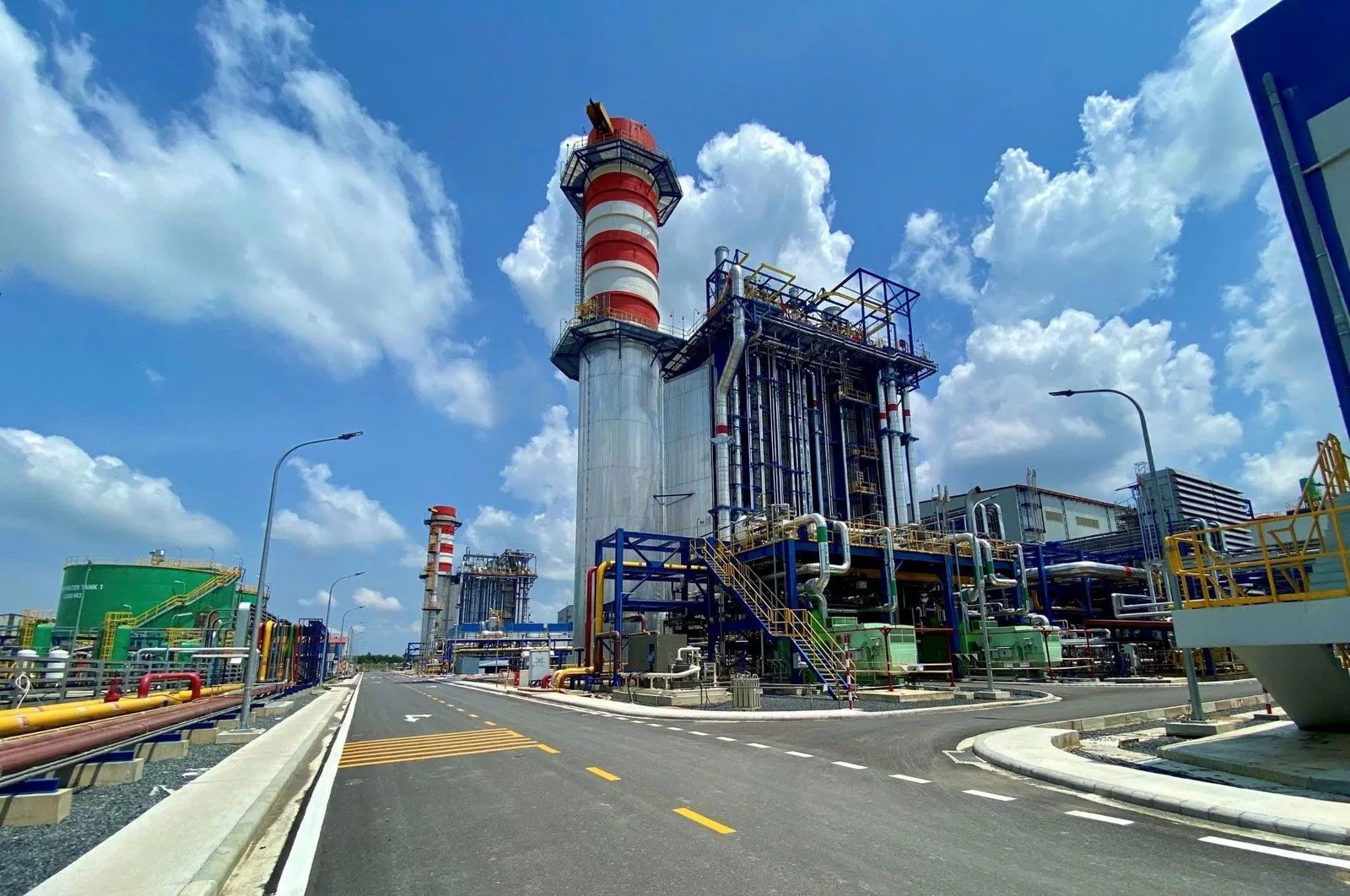
Vietnam nevertheless reached an important milestone with the Nhon Trach 3 and 4 power stations, which began receiving commercial LNG in January 2026. These facilities demonstrate that gas development has not stopped, but that deployment remains more difficult and selective than originally anticipated.
According to Wood Mackenzie, 25.7 gigawatts of Vietnamese gas-fired projects may not enter service by 2030.
The scale of this shortfall suggests that the difficulties extend beyond ordinary administrative delays.
Vietnam must now reconcile several priorities: guaranteeing electricity supplies to factories, avoiding excessive dependence on imported LNG, accelerating renewable deployment and maintaining the stability of a grid facing rapidly growing demand.
The temptation to prolong coal-fired generation remains real when alternative technologies cannot be deployed quickly enough.
A slowdown in gas development therefore does not automatically translate into lower emissions.
It can also delay the retirement of more carbon-intensive fuels.
In the Philippines, Renewables Are Changing Project Economics
The Philippines presents a different configuration, but the economic conclusions are converging.
The archipelago must supply a fragmented electricity system spread across numerous islands, with complex transmission infrastructure and historically high generation costs.
Natural gas has long played an important role in supplying certain areas, particularly through the domestic Malampaya gas field.
The gradual depletion of domestic resources has increased interest in LNG imports.
Several terminals and power stations were consequently proposed to replace declining domestic production and meet rising demand.
But market conditions have changed.
According to Global Energy Monitor data reported by Reuters in September 2026, approximately 11.2 gigawatts of gas-fired power projects were suspended or cancelled between the second half of 2025 and the first half of 2026.
Around 13.8 gigawatts nevertheless remained under development.
The situation illustrates an incomplete transition rather than a comprehensive abandonment of gas.
One of the most significant developments is the expansion of solar power, particularly on residential, commercial and industrial rooftops.
For consumers facing high electricity tariffs, generating part of their own electricity can become economically attractive without waiting for a large power station to be constructed.
This decentralized model changes the demand outlook for conventional electricity producers.
Every megawatt-hour of self-consumed solar electricity potentially reduces purchases from the grid during generating hours.
On a sufficiently large scale, this development can reduce the number of hours during which certain gas-fired power stations are required to operate.
A plant designed to generate electricity regularly becomes more difficult to finance if it is ultimately expected to operate intermittently.
The problem therefore extends beyond the competition between gas and solar generation costs. It concerns the transformation of the financial model underpinning thermal power stations.
A project can remain useful for grid security while becoming less profitable in a market where renewables supply a growing share of electricity.
This distinction between technical usefulness and financial viability is becoming central to investment decisions.
A Turbine Shortage Reveals Global Competition for Industrial Equipment
The weakening outlook for Asian gas projects is not solely the result of fuel prices.
It also reflects mounting pressure on industrial supply chains.
Gas turbines are among the most important components of modern thermal power stations. Their manufacture requires advanced metallurgical expertise, components capable of withstanding extreme temperatures and specialized industrial capacity concentrated among a limited number of suppliers.
Global demand is increasing.
Electricity producers must respond to rising consumption, while major digital infrastructure operators seek additional generating capacity to supply data centers.
The expansion of artificial intelligence is intensifying that pressure.
Data center operators, independent power producers and utilities increasingly compete for equipment whose manufacturing and delivery schedules can stretch over several years.
For projects in emerging economies, this creates another disadvantage.
An electricity investment no longer depends solely on securing financing or a fuel supply agreement. It also depends on obtaining access to scarce industrial equipment.
Projects supported by strong financial guarantees and favorable contractual arrangements may gain an advantage over those whose future revenues remain uncertain.
Global competition for turbines is therefore introducing a new hierarchy among electricity markets.
It also demonstrates that digital infrastructure expansion can indirectly influence the energy transition trajectories of emerging economies.
Electricity demand from data centers does not merely compete with other uses on the grid. It can also absorb industrial manufacturing capacity needed to construct new power stations.
Solar Power Changes the Economics Without Eliminating Grid Constraints
As gas projects encounter difficulties, renewable technologies benefit from a structural advantage: once installed, they do not require continuous purchases of imported fuel.
That difference becomes particularly important in an unstable geopolitical environment.
A solar power station remains exposed to financing costs, equipment availability, weather conditions and grid constraints. But its daily electricity production does not depend on international gas prices.
Industrial advances in photovoltaic manufacturing have substantially improved the technology's competitiveness.
Large-scale Chinese production, efficiency improvements and increasingly intense competition have contributed to declining equipment costs.
For several Asian economies, solar power therefore offers a way to reduce energy imports while meeting part of the increase in electricity consumption.
According to the IEA, installed solar capacity across ASEAN countries reached nearly 38 gigawatts in 2025, more than fifteen times its level a decade earlier.
Solar and wind generation are expected to continue expanding rapidly through 2030.
Their combined contribution to regional electricity generation is projected to increase from approximately 5% in 2025 to 11% in 2030.
This represents significant progress, but it must be interpreted carefully.
It does not mean that variable renewables will immediately replace all thermal generating capacity.
Solar installations produce mainly during daylight hours. Wind generation depends on weather conditions. Electricity demand, however, does not disappear at night or during periods of unfavorable weather.
Electricity systems must therefore maintain resources capable of compensating for variations in renewable output.
These may include hydropower, batteries, flexible thermal generation, regional interconnections and mechanisms that shift some consumption toward periods of abundant supply.
Battery storage can efficiently address certain short-duration requirements, but prolonged periods of weak renewable generation present different challenges.
The economic comparison between gas and solar therefore cannot be reduced to the cost of producing one megawatt-hour.
It must incorporate investment in transmission networks, storage capacity, backup generation, potential curtailment and the services required to maintain grid stability.
In some circumstances, solar combined with storage can become more competitive than a new gas-fired power station. In others, dispatchable generation remains essential.
The objective is to identify the least-cost and most resilient combination for the entire electricity system, rather than declaring one technology universally superior.
The Fundamental Change: Gas No Longer Has the Same Value
The slowdown in gas projects reveals a deeper transformation in how electricity systems assign value to different technologies.
For decades, new power stations were primarily assessed according to their ability to produce large quantities of electricity at competitive prices.
The expansion of renewables is gradually changing that logic.
When solar generation is abundant during certain hours, the economic value of a thermal power station increasingly lies not in continuous output but in its ability to operate when other sources are insufficient.
Gas therefore retains an important function, but its financial model changes.
A facility designed to operate for much of the year may eventually be required only during periods of peak demand or low renewable production.
Its fixed costs must then be recovered over a smaller volume of electricity sales.
Without appropriate remuneration mechanisms, profitability can deteriorate.
Electricity markets must consequently distinguish between payments for energy actually generated and payments for generating capacity kept available to guarantee security of supply.
This evolution requires regulatory reforms, capacity mechanisms or contracts capable of financing flexibility.
It also raises a question for governments: should they construct large gas-fired power stations designed to operate for several decades, or prioritize more modular investments in renewables, networks and balancing capacity?
The answer depends on national circumstances, but LNG price uncertainty makes irreversible investment decisions more difficult to justify.
An LNG terminal, pipeline and power station represent capital-intensive assets whose profitability generally assumes prolonged utilization.
If gas demand for electricity generation grows more slowly than anticipated, some of these facilities could become underused.
The risk of stranded assets is therefore entering Asian energy investment calculations.
An LNG Market That Is Still Growing
The reconsideration of new power stations should not be confused with a collapse in regional demand for liquefied natural gas.
Wood Mackenzie's projections instead indicate continued growth in Southeast Asian LNG consumption.
Demand is expected to increase from 27 million tonnes in 2025 to 39 million tonnes in 2028, representing growth of approximately 44% over three years.
Several factors explain this expansion.
Electricity requirements continue to rise. Some domestic gas resources are declining. Existing power stations require fuel, and several economies are seeking to diversify their energy supplies.
Gas also remains important for certain industrial activities.
National circumstances, however, differ considerably.
Malaysia and Indonesia possess substantial gas resources, but their domestic markets are evolving under the influence of industrial expansion and growing electricity demand.
Singapore remains heavily dependent on gas for power generation, while its financial and commercial capabilities allow it to diversify supply arrangements.
Thailand must manage changes in domestic production alongside its import commitments.
Vietnam is still developing its first major LNG infrastructure, while the Philippines is seeking to compensate for declining domestic resources.
These differences make it impossible to describe a uniform regional retreat from gas.
They also explain why consumption forecasts can remain positive even as numerous power station projects are delayed.
The market continues to expand, but the assumptions underpinning some investments are becoming less reliable.
This reassessment is beginning to appear in longer-term projections.
Rystad Energy has reduced its Asian LNG demand forecasts by 3% for 2040 and 7% for 2045, partly because of infrastructure development difficulties in several emerging economies and the accelerating deployment of renewables.
These adjustments do not represent an immediate collapse in consumption.
Nevertheless, they could have important consequences for investment decisions by gas producers and exporters.
LNG Producers Face Less Predictable Demand
LNG development requires exceptionally large investments.
Liquefaction plants, port infrastructure, specialized vessels and upstream extraction projects demand substantial financial commitments.
Their profitability often depends on contracts extending over many years.
For much of the past decade, producers viewed emerging Asian economies as one of the principal sources of future global demand growth.
China, India, Bangladesh, Pakistan, Vietnam and the Philippines were expected, to varying degrees, to contribute to expanding imports.
The reconsideration of electricity projects changes that outlook.
Producers can no longer assume that every announced gigawatt of generating capacity will automatically translate into sustained fuel demand.
The risk becomes particularly significant when investment takes place before power stations, import terminals and electricity purchase agreements have been definitively secured.
New export capacity may enter service just as some buyers postpone projects or reduce commitments.
Conversely, gas shortages or sharp price increases can make new power stations less attractive, slowing future demand growth.
The market is therefore confronting a complex relationship between prices and consumption.
High prices may temporarily improve exporters' revenues, but they can also accelerate investment by their customers in competing technologies.
This dynamic is especially important for countries whose strategies depend on sustained growth in LNG exports.
Qatar, the United States and Australia are among the major suppliers directly exposed to changes in Asian demand.
Their commercial positions, production costs and contractual structures differ, but all must incorporate the possibility of an energy transition less favorable to gas than previously anticipated.
Competition among suppliers could consequently intensify around markets capable of guaranteeing purchase volumes over several decades.
Existing Investment Plans Create Considerable Inertia
The slowdown in projects does not mean that gas infrastructure development has stopped.
Global Energy Monitor data published in September 2026 identified more than 100 gigawatts of gas-fired electricity capacity under development in Southeast Asia, alongside approximately 70 million tonnes per year of LNG import capacity.
Together, these projects represent potential investments of around $160 billion.
These figures are not directly comparable with the 53-gigawatt project pipeline analyzed by Wood Mackenzie, because the two organizations use different project classifications and coverage.
Nevertheless, they demonstrate the scale of capital still associated with regional gas expansion.
This creates a contradiction.
On one hand, governments are seeking to reduce their exposure to international fuel markets. On the other, infrastructure plans continue to incorporate massive investments in power stations, terminals and associated facilities.
The gap between announced strategies and projects actually implemented is therefore becoming an essential indicator.
A project may remain listed in a national energy plan for years without securing the contracts, financing or equipment necessary for construction.
It may also retain political or strategic value without generating sufficient financial returns to attract investors.
The accumulation of uncertain projects complicates assessments of future generating capacity.
It can lead authorities to overestimate the electricity resources that will be available in the medium term, forcing them to adopt emergency measures when expected installations are not completed.
For emerging economies, this uncertainty represents a major industrial risk.
A factory cannot organize its investment strategy solely around announced generating capacity.
It requires electricity that is actually available, reliable and competitively priced.
Coal Could Temporarily Benefit From Gas Difficulties
One of the least favorable consequences of this development concerns coal.
If new gas-fired power stations are delayed and renewables cannot yet meet all electricity requirements, governments may be forced to extend the operation of existing coal plants.
Vietnam, for example, has considered temporarily increasing coal-fired generation to address supply constraints.
This possibility demonstrates that energy transitions do not necessarily follow linear trajectories.
Replacing coal with gas, and subsequently replacing gas with renewables, once appeared to offer a relatively straightforward sequence.
In practice, decisions are influenced by prices, financial constraints, industrial capabilities and infrastructure availability.
When gas becomes too expensive, a government may accelerate solar deployment while simultaneously increasing output from existing coal-fired power stations.
These two developments are not contradictory in the short term.
They respond to different time horizons: renewables gradually reduce dependence on imported fuels, while existing thermal plants guarantee immediate continuity of supply.
Nevertheless, such an approach can prolong carbon dioxide emissions and increase the health costs associated with air pollution.
It highlights the importance of timing.
An energy transition depends not only on which technologies are selected, but also on whether they can be deployed quickly enough to replace existing facilities.
Electricity Networks Become the Decisive Investment
The expansion of renewables is shifting part of the investment requirement toward transmission, distribution and storage infrastructure.
Power stations cannot be assessed independently of the networks to which they are connected.
A region with substantial solar potential may struggle to utilize that electricity if transmission lines cannot deliver it to industrial centers.
Similarly, significant renewable capacity may remain partly unused when the system lacks sufficient flexibility.
Southeast Asia presents particularly complex geographical constraints.
Major consumption centers are not always located near energy resources. Indonesia and the Philippines consist of thousands of islands. National electricity networks remain unevenly developed, while cross-border electricity trade is limited relative to its potential.
Regional interconnection is therefore becoming an essential component of energy security.
The ASEAN Power Grid initiative is specifically intended to develop electricity exchanges between countries across the region.
Greater integration would allow governments to exploit complementarities between hydropower, solar, wind and thermal generation.
Hydroelectricity from Laos, for example, can contribute to electricity supplies in neighboring countries, while expanding solar and wind capacity could reshape regional power flows.
But such interconnections require political agreements, financial investment and regulatory coordination.
They cannot provide an immediate solution to existing difficulties.
The IEA has emphasized that investment in electricity networks has not kept pace with growing generation requirements.
This imbalance risks becoming one of the principal obstacles to faster renewable deployment.
Asia's energy transition may consequently be constrained less by the availability of solar panels than by the capacity to transport, store and distribute the electricity they generate.
A Transformation of Energy Sovereignty
Beyond industrial investment decisions, the reconsideration of LNG reveals an evolution in the concept of energy sovereignty.
For decades, security of supply depended largely on diversifying suppliers and trade routes.
Importing countries sought to avoid excessive dependence on individual producers by expanding their contractual arrangements and infrastructure.
That strategy remains important, but recent crises have demonstrated its limitations.
When international prices rise simultaneously or a major maritime route becomes difficult to access, diversification does not fully protect consumers.
Renewable energy introduces a different logic.
Generating electricity from resources available within national territory reduces direct exposure to fluctuations in imported fuel prices.
This autonomy remains relative.
Solar panels, batteries, transformers and certain electrical components depend on international industrial supply chains, often concentrated in East Asia.
Renewable projects also require capital, technology and sometimes imported materials.
But the nature of dependence changes.
A gas-fired power station must purchase fuel throughout its operating life. A solar installation concentrates much of its expenditure in initial investment and maintenance.
That distinction becomes decisive when governments evaluate risks over twenty or thirty years.
Energy choices therefore concern more than short-term electricity prices.
They affect trade balances, foreign-exchange reserves, fiscal stability and industrial competitiveness.
For an importing country, permanently reducing fuel purchases can provide a substantial macroeconomic advantage, even when initial investment costs are high.
Asia's Energy Transition Enters a More Selective Phase
The difficulties encountered by gas projects do not signal the disappearance of natural gas from Southeast Asia.
Rather, they indicate the end of a period when its expansion could be regarded as an almost automatic consequence of economic growth.
New power stations will increasingly have to demonstrate their necessity, competitiveness and compatibility with the evolution of electricity systems.
Projects supported by secure fuel supplies, clearly identified demand and robust contractual arrangements may continue to advance.
Others will be postponed, scaled down or abandoned.
Renewables will expand, but their development must be accompanied by investment in networks, storage and dispatchable generation.
Coal, meanwhile, could retain an important role for longer than anticipated if alternatives cannot be deployed quickly enough.
This reconfiguration will not produce a single regional energy model.
Singapore, Vietnam, Indonesia, Thailand and the Philippines possess very different resources, industrial structures and financial capabilities.
Their trajectories will depend as much on domestic constraints as on developments in global markets.
Nevertheless, a common trend is emerging: governments are placing greater emphasis on cost control, security of supply and infrastructure flexibility.
The energy transition is becoming less a predetermined succession of fuels than a continuous balancing exercise between security, competitiveness and decarbonization.
Gas Is Not Disappearing, but Its Promise Is Weakening
The signal emerging from Asian electricity projects extends far beyond the LNG market.
It exposes the limitations of an energy transition based on replacing one external dependence with another.
Natural gas could appear to be a rational intermediate solution when supplies seemed relatively predictable and renewables were more expensive.
Geopolitical crises, industrial supply constraints and advances in solar technology have changed that equation.
A gas-fired power station remains a potentially valuable asset. It is no longer necessarily the obvious investment it appeared to be only a few years ago.
The distinction is fundamental.
The 38.1 gigawatts of capacity that may fail to materialize by 2030 represent more than a delay in a construction program. They raise a question about how some of the world's most dynamic economies intend to generate electricity over the coming decades.
Projected growth in regional LNG consumption demonstrates that gas retains a substantial market. But the weakening outlook for new power stations indicates that its future position will be increasingly contested.
Southeast Asia could therefore become one of the first major economic regions where the energy transition no longer systematically requires a massive expansion of gas-fired generation before renewables take over.
This development guarantees neither rapid decarbonization nor an immediate reduction in fossil fuel imports.
It nevertheless changes the logic of investment.
For governments, the challenge is no longer simply to select the fuel that will replace coal. It is to build electricity systems capable of supporting industrialization without permanently exposing national economies to international energy crises.
Natural gas is not necessarily losing its place in Asia's electricity system. It is losing something more important for investors: the certainty that it represents an unavoidable stage of the energy transition.
Main Sources
Reuters — October 12, 2026. Emerging Asia's power-driven LNG demand at risk as renewables gain ground. Investigation into delays affecting LNG-fired electricity projects, turbine supply constraints and the expansion of renewable energy.
Wood Mackenzie — 2026. Asian LNG demand decline for second consecutive year. Asian and regional LNG demand forecasts, supply developments and structural market constraints.
International Energy Agency — Southeast Asia Energy Outlook 2026. Regional energy projections, electricity demand growth, investment requirements and supply diversification.
International Energy Agency — ASEAN Energy Security Review, 2026. Assessment of electricity systems, flexibility requirements, renewable integration and regional infrastructure.
Global Energy Monitor — September 2026. Data on gas-fired power projects and LNG import infrastructure in Southeast Asia, as reported by Reuters.
Rystad Energy — October 2026. Revisions to long-term Asian LNG demand forecasts, cited by Reuters.
Atlas Limits Research Desk
Atlas Limits’ editorial and analytical desk.