For decades, the power of a pharmaceutical company could be measured by the breadth of its portfolio. Dozens of medicines, several therapeutic areas, large research organizations and global commercial networks allowed major groups to spread their risks. One drug could disappoint without threatening the entire company.
That architecture has not disappeared. But another one has gradually emerged.
A growing share of the global pharmaceutical industry now depends on a relatively small number of medicines capable of generating several billion — and sometimes tens of billions — of dollars in annual sales. Oncology, immunology and, more recently, metabolic and obesity treatments have produced franchises of extraordinary scale.
The result is paradoxical. Some pharmaceutical groups have never possessed such financial power. Yet a single molecule, patent, clinical trial or competing therapy can also alter their prospects with remarkable speed.
Big Pharma is becoming more powerful precisely as some of its dependencies become more visible.
The Age of the Giant Drug
The phenomenon itself is not entirely new. The pharmaceutical industry has always pursued the blockbuster: a medicine prescribed on a sufficient scale to generate more than $1 billion in annual sales.
What has changed is the magnitude.
Keytruda, Merck & Co.’s cancer immunotherapy, belongs to a new generation of medicines whose annual sales are measured in tens of billions of dollars. Immunology has also created enormous franchises. Then GLP-1 receptor agonists and related molecules pushed diabetes — and particularly obesity — into an entirely different economic category.
With Ozempic and Wegovy, Novo Nordisk experienced spectacular expansion. Eli Lilly has countered with Mounjaro and Zepbound. Behind those brand names lies a much broader industrial competition: manufacturing capacity, clinical trials, additional indications, oral formulations, duration of action, tolerability, reimbursement and access to healthcare systems.
The potential market is immense because obesity affects hundreds of millions of people worldwide. This is no longer simply a question of selling a drug to a relatively small population suffering from a rare disease or a particular cancer. Over time, some metabolic therapies could address patient populations comparable in scale to those treated for hypertension or high cholesterol.
That prospect transforms pharmaceuticals into an industry of capacity.
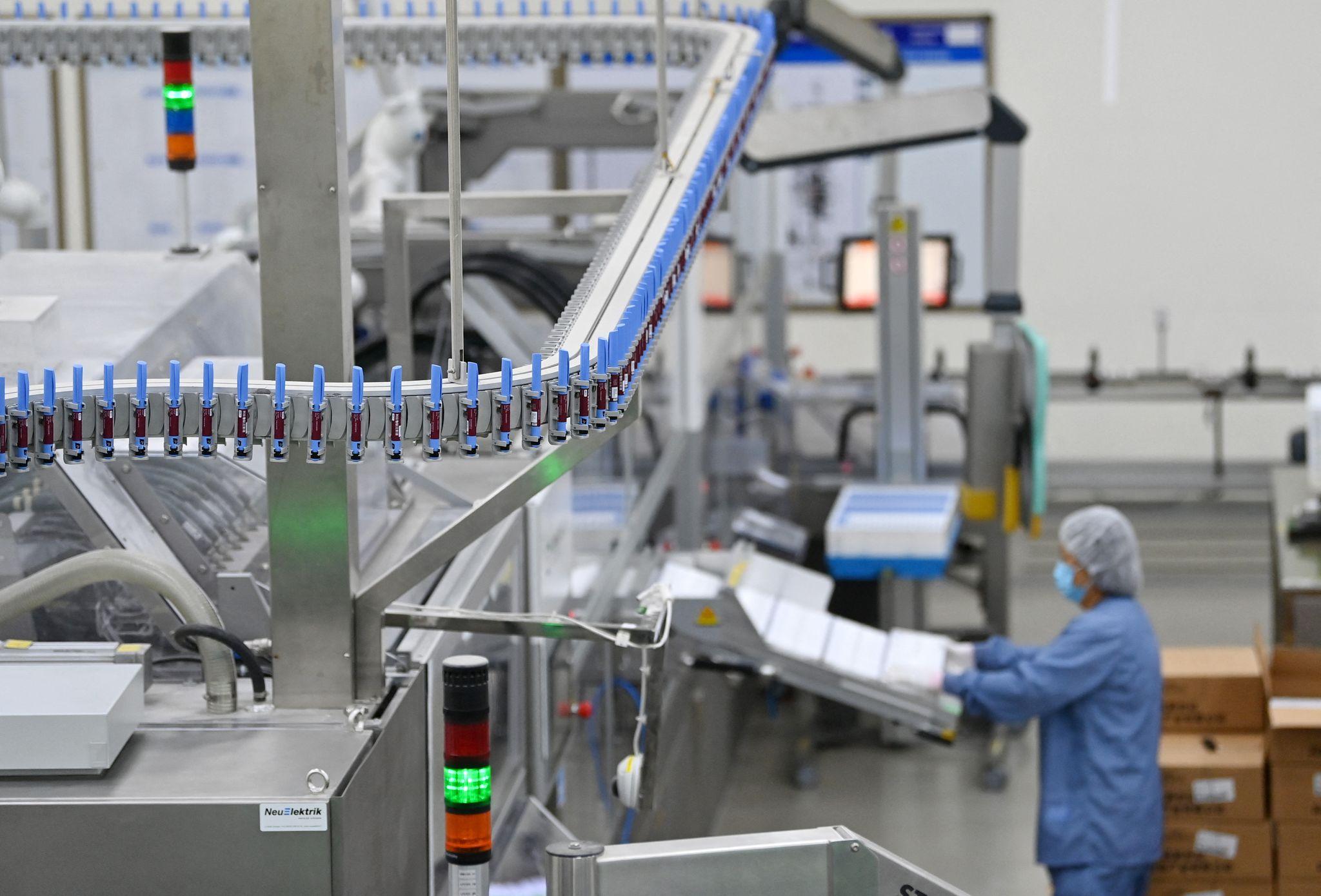
Inventing the molecule is no longer enough. Companies must manufacture millions of doses, secure ingredients, expand production lines, obtain regulatory approvals across multiple jurisdictions and persuade governments and insurers to finance widespread use.
The boundary between scientific innovation and industrial power is narrowing.
The Risk of Concentration
Exceptional success, however, creates exceptional dependence.
The more important a franchise becomes to a pharmaceutical company’s results, the more exposed that company becomes to its life cycle. A disappointing clinical study, a more effective competing molecule, a regulatory decision or the loss of exclusivity can affect billions of dollars in future revenue.
Novo Nordisk illustrates this tension particularly clearly. The company remains extraordinarily powerful in diabetes and obesity, but that specialization also represents considerable concentration. In 2026, the overwhelming majority of its business still comes from those therapeutic areas.
Competition with Eli Lilly is therefore about more than market share. It concerns the future structure of two of the world’s most important pharmaceutical companies.
The same phenomenon exists elsewhere.
Merck must prepare for the post-Keytruda era. Bristol Myers Squibb and Pfizer must manage the life cycle of Eliquis. Major immunology franchises must contend with biosimilars and newer generations of therapies.
The industry therefore faces a fundamental contradiction: the more successful a medicine becomes, the greater the strategic problem created by its eventual decline.
The Patent Cliff
This is where one of the defining issues of the second half of the decade emerges.
A significant wave of major medicines is approaching different stages of patent expiration, loss of commercial exclusivity or increased competition. The precise situation varies by country, formulation, secondary patents, litigation and — in the case of biological medicines — the timetable for biosimilar competition. There is therefore no single universal date on which a blockbuster suddenly enters the public domain.
But the broader direction is clear: an enormous amount of pharmaceutical revenue will have to be replaced over the coming years.
For conventional chemical drugs, generic competition can cause prices to collapse remarkably quickly. Biological medicines face a more complicated transition because their competitors are biosimilars, which are harder to develop and manufacture. The economic pressure nevertheless remains substantial.
For Big Pharma, the question becomes brutally simple: how do you replace billions of dollars in revenue before they disappear?
The traditional answer is internal research.
It is no longer sufficient.
Big Pharma Is Also Becoming a Machine for Buying Innovation
Drug development is an extraordinarily uncertain business. Years of research can produce a promising molecule that subsequently fails in clinical trials. Even when a product reaches advanced testing, its efficacy, safety profile or commercial value may prove insufficient.
Large pharmaceutical groups therefore have another option: allow smaller companies to absorb part of the initial risk.
Thousands of biotechnology companies are exploring antibodies, cell therapies, genetic treatments, RNA technologies, new cancer drugs and metabolic approaches. Once an asset becomes sufficiently attractive, a large pharmaceutical company can license it, purchase the rights to the medicine or acquire the entire company.
This division of labor is profoundly changing the industry.
Part of pharmaceutical innovation now emerges from a decentralized ecosystem of smaller scientific companies financed by venture capital and public markets. Big Pharma then provides what few of them possess: billions of dollars, international regulatory capabilities, large clinical trials, manufacturing infrastructure and a global commercial network.
The pharmaceutical giant is therefore becoming not merely an inventor, but a global integrator of medical technologies.
And in 2026, this transformation has acquired a geopolitical dimension.
China Enters the Global Laboratory
For decades, the relationship between China and the Western pharmaceutical industry was primarily viewed through two lenses: manufacturing and access to the Chinese market.
That model is becoming obsolete.
China is now also a major source of innovative molecules.
According to data compiled by J.P. Morgan and DealForma, assets originating from Chinese biotechnology companies accounted for half of licensing agreements signed by major global pharmaceutical companies in the first quarter of 2026 where upfront payments exceeded $50 million. They accounted for an even larger share of the upfront capital committed within that category.
Those numbers require caution: a handful of exceptionally large transactions can significantly distort proportions over a short period. But the trend extends far beyond a single quarter.
During the first half of 2026, the announced potential value of international licensing agreements involving innovative Chinese medicines reached approximately $110 billion, according to Chinese regulatory data reported by Reuters.
AstraZeneca, Bristol Myers Squibb, Pfizer, GSK and other pharmaceutical groups are increasingly looking to Chinese companies for assets in oncology, immunology, metabolic diseases and other therapeutic fields.
The headline figures can be enormous, although their theoretical value must be distinguished from the money actually paid. A deal announced at $10 billion or $15 billion generally includes a much smaller upfront payment, followed by milestones conditional on clinical, regulatory and commercial success.
That financial distinction does not alter the strategic transformation.
The center of gravity of pharmaceutical innovation is becoming more multipolar.
The Old Chinese Dependency Is Changing Its Nature
The West was already familiar with pharmaceutical dependence on Asia.
A significant share of the world’s active pharmaceutical ingredients, chemical intermediates and generic medicines is manufactured in China and India. The Covid-19 pandemic provided a brutal reminder that healthcare security also depends on international supply chains.
But buying components and buying innovation are not the same thing.
The first dependency concerns manufacturing capacity.
The second reaches directly into intellectual property and the renewal of pharmaceutical pipelines.
If American and European pharmaceutical groups increasingly rely on Chinese molecules to replace blockbusters approaching the end of their commercial lives, the Sino-Western pharmaceutical relationship moves into a different category.
Washington has understood the implications. Relationships between American pharmaceutical groups and Chinese biotechnology companies are receiving growing political and regulatory scrutiny. Yet economic interests are difficult to separate from strategic considerations: major pharmaceutical companies need new medicines, and Chinese companies are now producing enough promising assets to become significant partners in several therapeutic categories.
Pharmaceuticals are therefore joining semiconductors, energy and critical minerals in a contradiction characteristic of the contemporary global economy: governments are attempting to reduce strategic dependencies at precisely the moment when value chains are becoming more deeply interconnected.
AI Promises Another Disruption — But Still Has to Prove It
Another potential technological revolution is unfolding alongside this geographic reconfiguration.
Artificial intelligence can analyze protein structures, identify therapeutic targets, help design molecules, select patients who may respond to a treatment and accelerate several stages of clinical trial preparation.
Major pharmaceutical groups are consequently expanding their investments and partnerships.
Novo Nordisk, Eli Lilly, Merck, Roche and others are progressively integrating artificial intelligence into research activities. In September 2026, Novo Nordisk also announced a partnership with Anthropic aimed at deploying Claude Science across parts of its research and development processes.
But computational capability must be distinguished from therapeutic proof.
In 2026, AI can already accelerate specific research tasks. It has not demonstrated that it can eliminate the fundamental constraints of pharmaceutical development: complex human biology, toxicity, clinical trials, regulatory validation and industrial production.
It may reduce the cost of some failures.
It does not yet eliminate failure.
The Real Power Remains Scale
This may be Big Pharma’s most important competitive advantage.
A biotech company can discover an excellent molecule.
A university can identify a biological target.
An artificial intelligence company can accelerate discovery.
A Chinese laboratory can develop a remarkable therapeutic candidate.
But transforming that discovery into a global medicine requires a much larger infrastructure.
Companies must finance several phases of clinical trials, sometimes recruit thousands of patients, negotiate with the US Food and Drug Administration, the European Medicines Agency and dozens of other regulators, build or reserve manufacturing capacity, organize pharmacovigilance, negotiate with insurers, hospitals and governments, and ultimately distribute the medicine worldwide.
That infrastructure is the true economic fortress of the pharmaceutical giants.
Their advantage is therefore not necessarily that they discover every medicine themselves.
It is that they can transform a promising molecule discovered almost anywhere in the world into a global industrial product.
But Governments Are Returning to the Equation
That power is encountering another force: healthcare systems.
Modern medicines can be extraordinarily effective, but their cumulative cost becomes difficult to sustain when the populations eligible for treatment number in the millions.
The problem is particularly visible in obesity.
An expensive therapy administered to a few tens of thousands of patients represents a manageable expenditure for a wealthy healthcare system. The same therapy potentially prescribed to several million people changes the budgetary equation entirely.
The issue then ceases to be purely medical.
It becomes macroeconomic.
Who should receive treatment? For how long? At what price? Who pays? Do future benefits — fewer cases of diabetes, cardiovascular disease and other complications — justify present expenditure?
Governments, insurers and public healthcare systems therefore retain considerable power: market authorization does not automatically mean access to reimbursement.
The future of Big Pharma will consequently be determined as much inside finance ministries and reimbursement agencies as inside research laboratories.
A More Powerful Industry, but a Less Autonomous One
The transformation underway is producing a remarkable architecture.
Major pharmaceutical groups possess enormous financial resources, advanced technologies and global market access. A handful of molecules can generate financial flows once considered unimaginable. Obesity treatments could create one of the largest pharmaceutical markets in history. Oncology continues to generate major innovations. Gene and cell therapies, new antibodies and other therapeutic platforms are opening additional frontiers.
But that power rests on an increasingly complex network of dependencies.
Dependence on a handful of blockbusters.
Dependence on the patents protecting them.
Dependence on biotechnology companies capable of renewing pipelines.
Dependence on global manufacturing chains.
Growing dependence on innovation emerging from China.
And, finally, dependence on governments and insurers that determine which medicines can actually reach millions of patients.
This is why the term “Big Pharma” increasingly provides an incomplete description of the industry taking shape.
Economic concentration remains real, but innovation itself is becoming more distributed. Large companies do not necessarily control every place where tomorrow’s medicines are invented. What they increasingly control is the infrastructure required to identify, finance, industrialize and commercialize the most promising innovations.
Pharmaceutical power is therefore changing its nature.
For decades, the dominant laboratory was the one that owned the best molecules.
Tomorrow, it may be the one that knows how to find them before everyone else — wherever they were invented.
Main Sources
J.P. Morgan / DealForma — Biopharma Licensing and Venture Report, Q1 2026
Reuters — data on international licensing agreements involving innovative Chinese medicines, July 2026
IQVIA — Biopharma M&A: Mid-year 2026 update
Novo Nordisk — financial results and investor presentation, Q2 2026
US Food and Drug Administration — regulatory data and Purple Book information on biological products and biosimilars
Public financial reports and corporate disclosures from Merck & Co., Eli Lilly, Novo Nordisk, Pfizer, Bristol Myers Squibb, AstraZeneca, GSK and other major pharmaceutical groups
Atlas Limits Research Desk
Atlas Limits’ editorial and analytical desk.