Luiz Inácio Lula da Silva has secured a fourth presidential term after defeating Flávio Bolsonaro in one of Brazil's most consequential elections. His victory preserves the country's commitment to diplomatic autonomy, diversified international partnerships and an influential role within BRICS. Yet the narrow result, the opposition's challenge and Brazil's persistent economic constraints reveal the scale of the difficulties ahead. Beyond the electoral outcome, the central question is whether Latin America's largest economy can transform its resources, industrial potential and international influence into lasting strategic power.
A Historic Comeback in a Deeply Divided Country
Brazil's presidential election has delivered a remarkable political reversal.
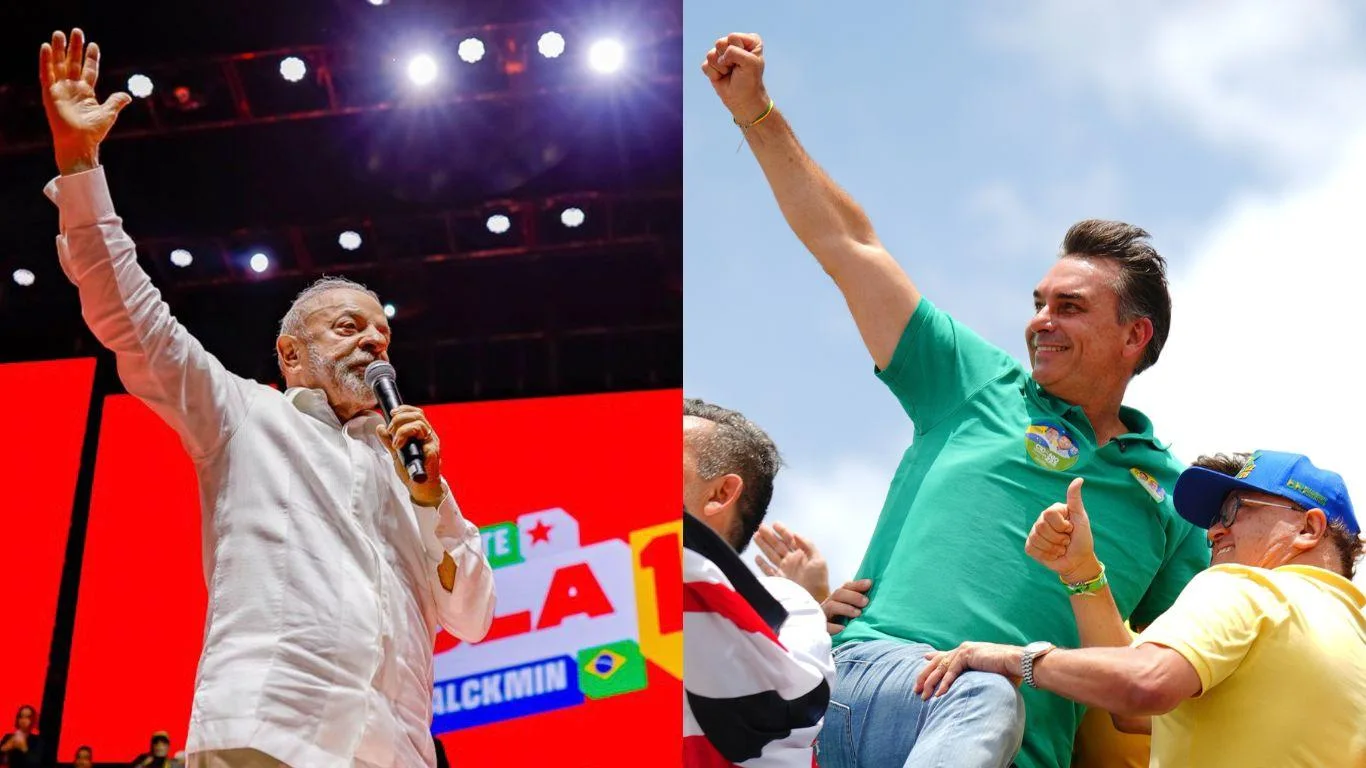
On October 25, 2026, President Luiz Inácio Lula da Silva defeated Senator Flávio Bolsonaro, son of former President Jair Bolsonaro, securing a fourth, nonconsecutive term in office.
According to results announced by Brazil's Superior Electoral Court (TSE), Lula received 51.79% of valid votes, representing 64,256,232 ballots, against 48.21%, or 59,826,041 votes, for his conservative challenger.
The margin of victory amounted to approximately 4.43 million votes.
More than 128 million Brazilians participated in the runoff, with abstention estimated at 19.2%.
The outcome was particularly significant because Lula had finished behind Bolsonaro in the first round on October 4.
Flávio Bolsonaro had obtained 47.03% of the vote, compared with 45.16% for Lula.
The president subsequently overcame that deficit, mobilizing additional support in the second round and reversing the electoral balance.
The result represents an extraordinary political achievement for the veteran Brazilian leader.
But it also reveals the limits of his mandate.
Nearly half of valid votes went to a political movement advocating a substantially different direction for Brazil.
The election therefore produced a clear winner without resolving the country's deeper political divisions.
Flávio Bolsonaro refused to concede immediately and called for the election to be annulled following controversy over a judicial decision extending voting hours.
Electoral authorities maintained that the extension did not alter the outcome.
The dispute introduces an additional institutional dimension to an already polarized political environment.
For Lula, the challenge now extends beyond electoral victory.
He must govern a country where political legitimacy, economic expectations and competing visions of national sovereignty remain deeply contested.
Brazil's Election Is a Global Strategic Event
Brazil's political direction matters because the country occupies a central position in several international economic systems.
It is Latin America's largest economy, one of the world's major agricultural exporters and an important supplier of energy and industrial raw materials.
Its territory contains extensive mineral resources, substantial renewable energy potential and most of the Amazon rainforest.
Brazil is also a founding member of BRICS and a central participant in Mercosur.
Its international relationships connect major economic centers across North America, Europe, Asia and the Global South.
These characteristics give Brasília significant influence over international trade, commodity markets, climate negotiations and emerging geopolitical arrangements.
The reelection of Lula therefore carries implications extending far beyond domestic politics.
It affects Washington's strategy toward Latin America, Beijing's commercial interests, the future of South American integration and the diplomatic ambitions of emerging economies.
However, Brazil's international importance does not automatically translate into unrestricted geopolitical power.
Its capacity to influence global developments depends on economic competitiveness, political stability and the strength of its domestic institutions.
The next presidential term will test whether Lula can reconcile these requirements.
Washington Faces a More Independent Brasília
Lula's victory represents a challenge to the consolidation of a politically aligned conservative bloc across parts of Latin America.
The Trump administration has sought to reinforce American influence in the Western Hemisphere, emphasizing security cooperation, trade relationships and geopolitical competition with China.
A Flávio Bolsonaro presidency could have facilitated closer ideological relations with Washington.
The Bolsonaro political movement has maintained strong connections with American conservative circles and shares several of their positions on social policy, sovereignty and international institutions.
Lula represents a different diplomatic tradition.
His approach emphasizes strategic autonomy, multilateral engagement and the diversification of international partnerships.
Brazil under Lula has generally resisted the idea that emerging economies must align exclusively with one geopolitical bloc.
This does not mean that relations with the United States will necessarily deteriorate.
The American market remains important for Brazilian industrial exports, investment and technological cooperation.
Both governments have practical incentives to preserve commercial relations.
Nevertheless, disagreements may emerge over tariffs, regional diplomacy, environmental standards and relations with China.
Lula's electoral victory speech emphasized Brazilian sovereignty and rejected the notion that the country should function as another power's subordinate sphere of influence.
That message carries particular significance in the present international environment.
Washington faces a Brazilian administration whose foreign policy is unlikely to be determined primarily by ideological compatibility with the White House.
The resulting relationship will require negotiation across competing national interests.
For the United States, the central question is how to maintain a productive partnership with a major regional power determined to preserve its diplomatic independence.
For Brazil, the challenge is to defend that independence without jeopardizing access to investment, technology and international markets.
China Remains Central to Brazil's Economic Future
Lula's reelection also reinforces expectations of continuity in Brazil's relationship with China.
Beijing is Brazil's largest trading partner and an essential destination for its agricultural and mineral exports.
Brazilian shipments of soybeans, iron ore, petroleum and other commodities form an important component of China's international supply networks.
Chinese manufacturers, meanwhile, supply Brazil with machinery, electronics, industrial equipment and increasingly sophisticated technologies.
The relationship has expanded beyond traditional commodity trade.
Chinese companies have developed interests in Brazilian electricity infrastructure, renewable energy, transportation, electric vehicles and manufacturing.
This creates opportunities for industrial modernization.
But it also raises questions about the distribution of economic value.
Brazil's export strength remains heavily concentrated in primary products, while significant portions of its imports consist of manufactured goods.
Such a structure can generate substantial commercial revenues without necessarily delivering equivalent progress in domestic technological capabilities.
The strategic objective for Lula's next administration should therefore extend beyond maintaining strong trade volumes.
It should involve improving Brazil's position within international production networks.
That means encouraging domestic processing, attracting productive investment, strengthening research capabilities and developing more competitive industrial sectors.
China could become an important partner in that transformation.
However, the terms of investment and industrial cooperation will determine how much value Brazil ultimately captures.
The same question applies to American and European investment.
Brazil's long-term autonomy depends less on the nationality of its trading partners than on its capacity to develop competitive domestic production.
BRICS: Continuity Without Automatic Alignment
Lula's victory also preserves Brazil's role as an important advocate of greater representation for emerging economies within international institutions.
BRICS provides a platform through which Brazil can pursue diplomatic coordination, development financing and economic diversification.
The grouping has expanded considerably since its original formation.
Its members possess different political systems, economic structures and strategic priorities.
Consequently, BRICS should not be understood as a unified geopolitical alliance comparable to a formal military bloc.
Its significance lies primarily in its potential to expand the negotiating influence of participating economies.
Brazil's approach under Lula has emphasized reform of international financial governance, greater participation by developing countries and alternatives to excessive dependence on individual economic centers.
Discussions about using national currencies in certain cross-border transactions reflect this broader agenda.
However, expanding local-currency settlement arrangements does not amount to establishing a common BRICS currency.
The economic and institutional barriers to monetary integration remain considerable.
For Brazil, participation in BRICS is best understood as one element of a diversified foreign policy.
It complements relationships with Western economies rather than necessarily replacing them.
Lula's reelection is likely to preserve this framework.
Yet Brazil will still need to manage differences among BRICS members and avoid allowing the organization's internal geopolitical tensions to constrain its own national interests.
Strategic autonomy requires maintaining options, not merely exchanging one dependency for another.
Mercosur and the Future of South American Integration
Brazil's election also has consequences for regional economic cooperation.
As Mercosur's largest economy, Brazil plays a central role in shaping the bloc's commercial and industrial development.
Its relationships with Argentina, Paraguay and Uruguay influence trade negotiations, investment decisions and regional production networks.
Lula's government has generally favored regional dialogue and the strengthening of South American cooperation.
However, political support for integration does not eliminate the structural obstacles facing Mercosur.
The region continues to struggle with insufficient infrastructure, regulatory fragmentation, fiscal constraints and differences in economic policy.
The changing political orientations of neighboring governments add further complexity.
Brazil's opportunity lies in moving beyond integration defined primarily through diplomatic declarations.
Regional cooperation could generate greater economic benefits through investments in transportation corridors, energy interconnections, industrial supply chains and digital infrastructure.
The country's industrial base could support production networks involving several South American economies.
Such integration would help diversify regional exports and reduce dependence on primary commodities.
But successful cooperation requires credible projects and shared economic incentives.
Lula's next term will test whether Brazil can transform its regional influence into concrete development outcomes.
The Amazon: Environmental Leadership and Economic Contradictions
The preservation of the Amazon rainforest remains central to Brazil's international position.
The region plays a critical role in biodiversity, climate regulation and regional water systems.
It also contains substantial economic resources and supports communities with diverse interests and development needs.
Under Lula, Brazil has sought to strengthen its environmental credibility and reinforce policies against deforestation.
His reelection suggests continuity in that general orientation.
However, environmental policy remains closely connected to difficult economic choices.
Agricultural expansion, mining, transportation infrastructure and petroleum development generate employment, export revenues and investment.
They can also create environmental pressures and conflicts over land use.
The government must reconcile these competing objectives.
International trade regulations make this challenge increasingly important.
Traceability requirements, sustainability standards and rules concerning deforestation can affect access to major export markets.
Environmental governance is therefore becoming an element of commercial competitiveness.
For Brazil, the strategic objective should be to combine conservation with productive development.
That requires investment in sustainable agriculture, technological innovation, forest monitoring and economic opportunities for local populations.
The Amazon cannot be treated exclusively as either an environmental reserve or an economic frontier.
Its future depends on institutions capable of managing both responsibilities.
Economic Policy: The Hardest Test of Lula's New Mandate
Despite Brazil's international importance, the most immediate challenges facing Lula remain domestic.
The country must address persistent weaknesses in productivity, infrastructure, education and industrial competitiveness.
Fiscal pressures constrain the government's capacity to finance public investment and social programs.
Household purchasing power, public security and economic opportunity remain central political concerns.
Lula's victory does not remove these constraints.
Indeed, the narrow electoral margin may increase pressure on the administration to deliver visible improvements.
His economic approach has traditionally emphasized social inclusion, public investment and a significant role for the state in supporting development.
Such policies can contribute to demand, infrastructure expansion and poverty reduction.
However, their effectiveness depends on fiscal sustainability and the quality of public expenditure.
Brazil must maintain investor confidence while financing long-term development.
It must also create conditions for private capital to support industrial modernization.
The central challenge is to avoid a false choice between social development and economic competitiveness.
Sustainable improvements in living standards require productivity growth, investment and employment opportunities.
Likewise, industrial development depends on education, infrastructure and institutional stability.
Lula's next term will be judged partly on whether these objectives can be combined within a credible macroeconomic framework.
Financial Markets: Continuity Does Not Eliminate Risk
The electoral outcome provides a clearer political direction, but it does not eliminate uncertainty for investors.
Brazilian financial markets will continue to assess fiscal policy, monetary conditions, public debt dynamics and the government's relationship with Congress.
The Brazilian real, sovereign bonds and domestic equities may respond to expectations surrounding the next administration's economic decisions.
However, political outcomes do not mechanically determine asset prices.
Market reactions depend on prior expectations, global financial conditions and the credibility of government policy.
The governance of major state-controlled companies will remain particularly important.
Petrobras occupies a central position because of its significance for Brazil's energy sector and public finances.
Investment priorities, capital allocation, dividends and pricing policies can influence both corporate valuations and broader economic expectations.
Infrastructure concessions, energy regulation and industrial incentives will also shape investment decisions.
For multinational companies, regulatory predictability will remain a major consideration.
The next government must demonstrate that political continuity can coexist with stable rules and credible long-term commitments.
A Victory That Does Not End Political Polarization
Lula's reelection has exposed the continued strength of the Bolsonaro movement.
Flávio Bolsonaro received nearly 60 million votes, demonstrating that conservative opposition remains a major force in Brazilian politics.
The result cannot be interpreted as a comprehensive ideological realignment.
Rather, it reveals a country divided between competing economic, social and institutional priorities.
The opposition's challenge to the result adds another dimension to the political environment.
The existence of a legal dispute should be distinguished from evidence that the certified electoral outcome was incorrect.
Electoral authorities have announced the result, while the opposition retains the ability to pursue lawful challenges through established institutions.
The broader test concerns respect for democratic procedures and the capacity of political actors to operate within the constitutional framework.
Lula will also face parliamentary constraints.
Brazil's fragmented party system requires complex coalition-building, and conservative political forces retain substantial influence.
A presidential victory does not automatically translate into legislative control.
The administration will therefore need to negotiate reforms and public spending priorities with a politically diverse Congress.
This may moderate certain policy initiatives.
It could also delay decisions if political confrontation intensifies.
The quality of institutional cooperation will be essential to Brazil's economic performance.
Latin America and the Limits of Ideological Alignment
Lula's victory carries symbolic significance for a region experiencing repeated political alternations.
Across Latin America, governments face persistent public frustration over insecurity, inequality, weak productivity and insufficient economic opportunity.
Electoral shifts between left-wing and right-wing movements reflect dissatisfaction with existing conditions as much as coherent regional ideological trends.
Brazil's result complicates the idea of an inevitable continental movement toward one political orientation.
The region remains politically diverse.
Its governments maintain different relationships with Washington, Beijing and international institutions.
Brazil's influence will therefore depend less on ideological leadership than on its capacity to support mutually beneficial cooperation.
The most promising areas include energy, infrastructure, industrial development, agricultural technology and trade facilitation.
Latin America possesses major reserves of strategic minerals, significant renewable energy potential and extensive agricultural capabilities.
Yet these resources will not automatically produce higher living standards.
Their economic value depends on investment, institutional quality and the development of domestic production capabilities.
Brazil can play a leading role in this process.
But effective leadership requires delivering economic results rather than relying exclusively on diplomatic prominence.
Three Priorities for Lula's Fourth Term
The election result brings greater clarity to Brazil's political direction.
The next administration's success will depend on three strategic priorities.
1. Reconcile Social Development With Fiscal Credibility
Lula must respond to demands for better living standards while preserving confidence in public finances.
The administration will need to prioritize spending, encourage productive investment and improve the effectiveness of economic policy.
Social inclusion and fiscal sustainability should be treated as complementary requirements rather than mutually exclusive objectives.
2. Transform International Partnerships Into Industrial Capacity
Brazil's relationships with China, the United States, Europe and other major markets provide opportunities for investment and technological cooperation.
The challenge is to translate these relationships into higher domestic value creation.
Industrial modernization, infrastructure development and workforce skills will be essential.
Without progress in these areas, Brazil risks remaining disproportionately dependent on commodity exports.
3. Preserve Institutional Stability and Strategic Autonomy
The new mandate begins in a polarized political environment.
Maintaining confidence in democratic institutions and negotiating workable legislative compromises will be crucial.
Internationally, Brazil must preserve productive relationships with competing global powers without allowing diplomatic independence to become economic isolation.
Strategic autonomy will be meaningful only if supported by institutional credibility and domestic economic strength.
The Deeper Question: Can Brazil Convert Economic Scale Into Strategic Power?
The presidential election illustrates a broader challenge confronting major emerging economies.
Brazil possesses the population, territory, resources and diplomatic influence required to play a substantial international role.
Yet these advantages do not guarantee sustained economic development.
Natural resources can generate wealth without producing technological leadership.
Large domestic markets can attract investment without necessarily creating internationally competitive industries.
Diplomatic autonomy can expand negotiating options without resolving structural economic weaknesses.
Brazil's long-term success will depend on its ability to overcome these limitations.
This requires improving productivity, investing in education, developing infrastructure and strengthening institutional predictability.
It also requires a coherent approach to international economic relationships.
The country is not necessarily forced to choose exclusively between Washington and Beijing.
Its size and diversified commercial interests provide room for maneuver.
However, that freedom depends on maintaining competitive industries and credible economic institutions.
The ultimate objective should be to ensure that Brazil participates in global value chains not merely as a supplier of resources or a consumer market, but increasingly as a producer of technology, industrial goods and high-value services.
This is the foundation of lasting economic sovereignty.
Conclusion — Lula Wins the Election, but Brazil's Strategic Test Is Just Beginning
Luiz Inácio Lula da Silva's reelection represents a significant political achievement and a consequential development for Latin America.
By defeating Flávio Bolsonaro after trailing in the first round, Lula has secured another mandate and preserved a diplomatic orientation emphasizing multilateral engagement, diversified partnerships and strategic autonomy.
His victory also demonstrates that Brazil remains politically divided.
The opposition retains substantial electoral support, while institutional tensions and economic constraints will shape the next administration's ability to govern.
Internationally, the result signals continuity in Brazil's engagement with China, BRICS and regional integration initiatives.
It also creates a more complex environment for Washington's efforts to consolidate political influence across Latin America.
But the most consequential question extends beyond diplomatic alignment.
Can Brazil transform its natural resources, industrial potential and international partnerships into a more productive, technologically capable and economically resilient society?
Lula's fourth term will provide another opportunity to address that challenge.
The answer will influence not only Brazil's domestic development but also the future position of Latin America within the global economy.
Brazil has demonstrated its capacity to preserve political choice in a polarized international environment. Its next challenge is to convert that freedom of choice into lasting strategic power.
Principal Sources
- Tribunal Superior Eleitoral (TSE), October 26, 2026 — Official announcement of Lula's reelection and final second-round vote totals.
- Associated Press, October 26, 2026 — Lula is declared winner of Brazil's election as Bolsonaro rejects results.
- CNN Brasil, October 25, 2026 — Coverage of Lula's electoral comeback and record vote total.
- Reuters — Coverage of Brazil's 2026 presidential election and geopolitical implications.
- International Monetary Fund — Brazil's macroeconomic outlook and fiscal developments.
- World Bank — Brazil's development indicators and structural economic challenges.
- UN Comtrade — International merchandise trade data.
Editorial status: Updated October 26, 2026. The electoral figures reflect the result announced by Brazil's Superior Electoral Court. The opposition's challenge is reported separately from the official electoral outcome.
Atlas Limits — Independent Global Analysis
Atlas Limits Research Desk
Atlas Limits’ editorial and analytical desk.