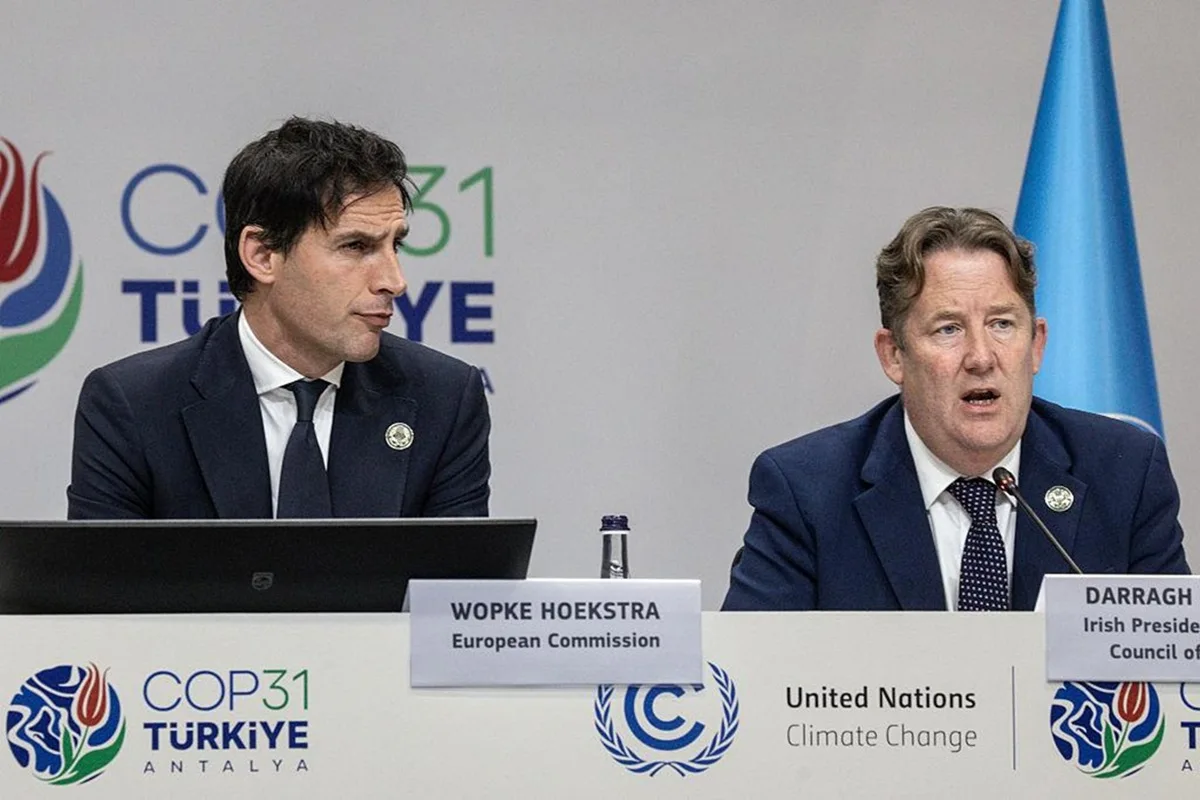
On 22 November 2026, inside the conference centre in Antalya, on Turkey's Mediterranean coast, the final attempts to reach a compromise encountered opposition that had become irreconcilable. After two weeks of discussions, two additional days of negotiations and successive revisions to the proposed text, the presidency of the 31st United Nations Climate Change Conference was unable to secure consensus. The Antalya Pact, intended to establish a common political direction for the coming years, would not be adopted.
The failure was particularly significant because it came three years after COP28 in Dubai, where governments had collectively acknowledged, for the first time, the need to transition away from fossil fuels in energy systems. In Antalya, they could not even agree on how to reaffirm that direction. Differences that had long been contained within carefully negotiated diplomatic language developed into open divisions.
The conference was not entirely without results. Certain sectoral decisions, particularly those concerning a just transition, were adopted. Initiatives related to electrification and resilience also advanced. Yet the absence of an overarching political agreement deprived the summit of the collective signal it was expected to send to governments, businesses and investors.
What happened in Turkey therefore extends beyond the boundaries of environmental diplomacy. COP31 exposed the limitations of a global governance system in which countries share a scientific diagnosis but not the same economic interests, financial capacities or strategic horizons.
A negotiation deadlocked over the foundations of the transition
The breakdown crystallized around an apparently straightforward question: should fossil fuels be explicitly mentioned in the final decision?
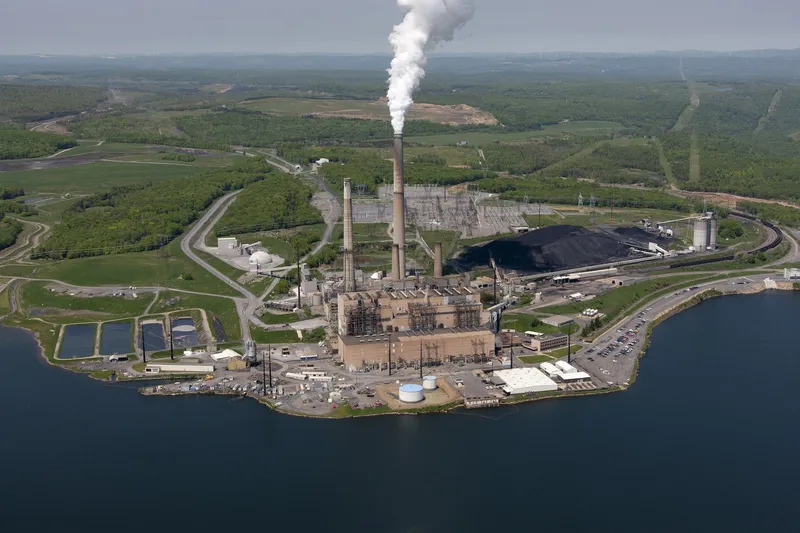
For the European Union, the United Kingdom and several countries particularly exposed to the consequences of global warming, the absence of any reference to coal, oil and natural gas represented an unacceptable political retreat. These governments argued that a climate agreement intended to organize emissions reductions could not avoid addressing the principal sources of carbon dioxide associated with human activity.
Saudi Arabia and other hydrocarbon-producing countries, by contrast, opposed language that could be interpreted as imposing additional constraints on their energy industries. Russia was also among the countries resisting an explicit reference to fossil fuels.
This disagreement was not merely a dispute over environmental objectives. It reflected fundamentally different economic models.
For countries dependent on imported hydrocarbons, accelerating electrification and expanding renewable energy can reduce emissions while limiting exposure to foreign energy supplies. For major exporters, the same transformation threatens, over time, a portion of government revenues, industrial investment and fiscal stability.
In some producing economies, hydrocarbons are not simply one industry among many. They finance infrastructure, social programmes, foreign exchange reserves and, in certain cases, an essential part of macroeconomic stability. Accepting an internationally defined trajectory for reducing their consumption therefore means acknowledging the need for a structural transformation of the national development model.
Hydrocarbon producers do not, however, form a homogeneous group. Some are investing heavily in renewables, hydrogen, petrochemicals and carbon capture technologies. Yet diversification strategies do not necessarily imply a willingness to accelerate the disappearance of oil and gas revenues.
In Antalya, this contradiction became impossible to conceal. The proposed final text contained no new explicit commitment to transition away from fossil fuels. Indirect references to earlier decisions were insufficient to persuade delegations demanding a stronger direction.
Rejecting the compromise ultimately confronted the conference with a choice: adopt a text considered inadequate by part of the membership, or conclude without an overarching political agreement. The second outcome prevailed.
From Paris to Antalya: the gradual exhaustion of consensus
Understanding the significance of this failure requires returning to the architecture established by the 2015 Paris Agreement.
COP21 had brought almost every country together around a common objective: holding the increase in global average temperature to well below 2°C above pre-industrial levels and pursuing efforts to limit it to 1.5°C.
That compromise, however, rested on a fundamental characteristic. National emissions-reduction commitments were determined by governments themselves, according to their capacities, priorities and political constraints. The Paris Agreement therefore created a universal framework for cooperation without imposing a centrally determined, legally binding distribution of every country's decarbonization effort.
This flexibility made the agreement possible. It also constitutes one of its principal weaknesses.
National commitments can be strengthened, revised or inadequately implemented. Their combined effect does not automatically guarantee that global climate objectives will be achieved. The system consequently depends on political momentum: each conference must sustain confidence, progressively increase ambition and persuade governments that other participants will also assume their share of the effort.
COP28 in Dubai represented an important symbolic advance by explicitly introducing the transition away from fossil fuels into a consensus decision. Yet that language established neither a uniform global timetable for phasing out oil and gas nor an internationally binding mechanism capable of ensuring implementation.
Three years later, Antalya demonstrated how difficult it remains to transform a general direction into an operational pathway.
The deadlock recalls Copenhagen in 2009, when negotiations failed to produce the comprehensive, legally binding agreement originally anticipated. The comparison nevertheless reveals a major difference. In 2009, the architecture that would eventually lead to the Paris Agreement had yet to be constructed. In 2026, the international framework already exists, but its capacity to generate new political compromises is being called into question.
This is not, therefore, the legal collapse of the global climate regime. Earlier commitments remain in force. It is a crisis in the system's collective capacity to advance.
Climate finance: the second fracture in the international system
Fossil fuels dominated the negotiations, but they do not fully explain the impasse.
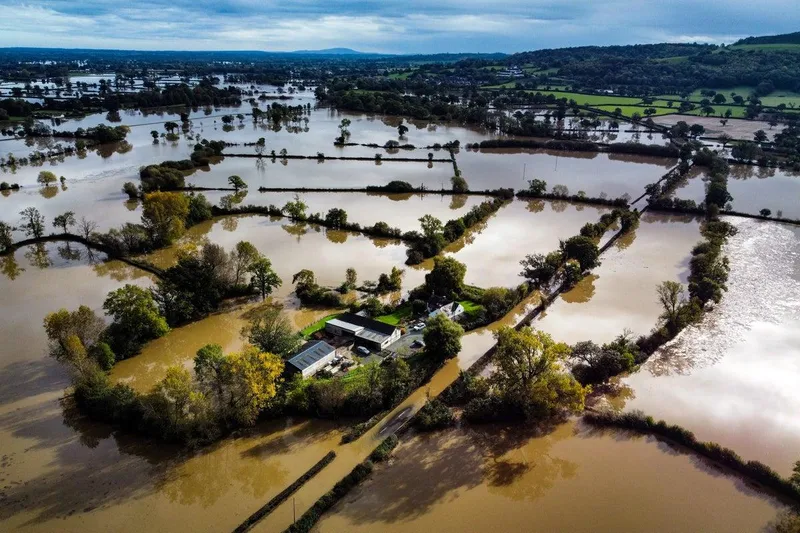
For much of the developing world, the climate transition remains inseparable from the availability of international finance. Reducing emissions, adapting infrastructure to changing climatic conditions and protecting populations against extreme weather require enormous investment.
Yet financing capacities are distributed very unevenly.
Advanced economies generally benefit from deeper capital markets, more stable currencies and relatively low borrowing costs. Many African, Asian and Latin American countries, by contrast, must finance their transition amid high public debt, exchange-rate risks, fiscal constraints and sometimes prohibitive interest rates.
A solar power plant, an electricity network or flood-protection infrastructure may therefore offer clear economic and environmental benefits while remaining difficult to finance.
This difference in the cost of capital is one of the structural obstacles to the global transition.
The Antalya negotiations also stalled over the financing of climate adaptation. The proposed objective of $120 billion annually did not result in a sufficiently clear and widely accepted commitment. Disagreements concerned the calculation framework, the mechanisms for mobilizing resources and the credibility of the funding being promised.
The issue is particularly sensitive because countries that contributed relatively little to the historical accumulation of greenhouse gases are frequently among those most exposed to the consequences of global warming.
Small island developing states, some of whose territories are directly threatened by rising sea levels, expressed profound frustration. For them, the energy transition is not merely a matter of industrial competitiveness or the future composition of the energy system. It concerns population security, territorial integrity and, in some cases, the very continuity of national existence.
Climate finance thus emerges as a question of how risks and resources are distributed internationally. Vulnerable countries demand that commitments be converted into predictable financial resources. Contributing countries seek to control public expenditure and mobilize more private capital. Between the two, trust erodes when announced objectives are not accompanied by sufficiently precise implementation mechanisms.
Africa at the centre of an economic contradiction
For Africa, the failure in Antalya comes at a time when energy and climate-related needs are increasing simultaneously.
The continent accounts for approximately one-fifth of the world's population but a relatively small share of cumulative historical carbon dioxide emissions. Nevertheless, it faces droughts, floods, pressure on water resources and growing risks to agricultural systems.
At the same time, several hundred million Africans still lack access to electricity. The need for power grids, electricity generation, urban infrastructure and industrial capacity is enormous.
Africa's energy transition therefore cannot be understood simply as replacing fossil fuels with renewable energy sources. It must also enable a substantial expansion in energy supply, a prerequisite for industrial development, employment and improved living standards.
This dual requirement complicates policy choices.
Some countries possess substantial oil and gas resources that they intend to develop to finance economic growth. Others are investing in solar, wind, hydropower or regional electricity interconnections. Several are attempting to combine these approaches to meet rapidly growing energy demand.
The continent therefore has no single energy position, even though African countries broadly share an interest in more accessible climate finance.
In Antalya, the African Group acknowledged the shortcomings of the proposed agreement, particularly regarding finance, loss and damage, and the just transition, without seeking to prevent consensus. This approach highlighted a difference from certain European and island-state delegations that rejected the text.
For many African governments, an imperfect agreement may provide a more useful negotiating foundation than the complete absence of a compromise. Yet this reasoning carries its own risks: accepting weak commitments may perpetuate the gap between international promises and actual financial needs.
Africa's challenge is not simply to obtain additional pledges. It is to transform international financing mechanisms so that they reduce project costs, improve access to guarantees and direct more resources towards adaptation.
Without such changes, the global energy transition could reinforce development disparities rather than reduce them.
Carbon capture: an industrial contest behind the climate debate
Another point of tension concerned carbon capture, utilization and storage technologies.
These processes make it possible to capture part of the carbon dioxide emitted by certain industrial or energy installations and subsequently store it or use it in other applications. They can contribute to decarbonizing activities that are difficult to electrify, particularly certain cement and chemical production processes.
Their role in climate strategies nevertheless remains controversial.
Countries supporting their development emphasize their potential to reduce emissions without immediately dismantling existing infrastructure. Critics fear that excessive reliance on these technologies could be used to justify extending the exploitation of fossil fuels.
The disagreement is as much economic as scientific.
Carbon capture facilities require substantial investment, transportation and storage infrastructure, and suitable geological and regulatory conditions. Their effectiveness depends on the processes employed and the capture rates actually achieved. They therefore do not constitute a universal solution capable of neutralizing all emissions from the energy system.
For oil and gas companies, however, these technologies can help preserve the value of existing industrial assets. For importing countries seeking to reduce their dependence on hydrocarbons, they do not necessarily replace the strategic benefits of accelerated electrification.
The Antalya controversy consequently illustrated competition between different visions of the transition: rapid transformation of energy systems, gradual adaptation of existing infrastructure, or a combination of both depending on the sector.
Behind the diplomatic language lie investment decisions with consequences extending over several decades.
An energy transition advancing despite diplomatic paralysis
The failure of COP31 does not mean that the global energy transition has stopped.
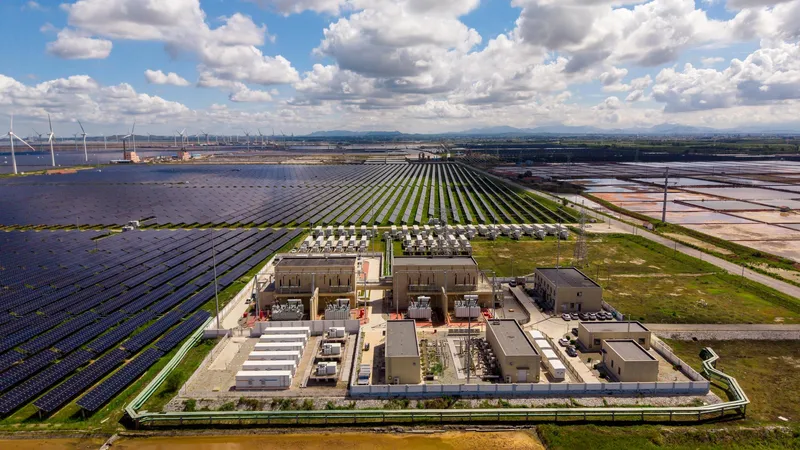
Over the past fifteen years, falling solar photovoltaic costs, battery development, the expansion of electric vehicles and growing investment in electricity networks have profoundly altered the energy outlook.
The progress of these technologies does not depend exclusively on climate conferences. It also reflects industrial policies, productivity improvements, corporate strategies, energy-security concerns and competition between major powers.
China occupies a central position in several value chains, particularly solar equipment, batteries and electric vehicles. The United States has developed its own instruments for industrial support and supply-chain security, although federal climate policy has undergone substantial changes between administrations. The European Union is attempting to reconcile emissions reductions, energy sovereignty and the preservation of its industrial base.
These strategies can accelerate certain investments without necessarily strengthening international cooperation.
A new contradiction consequently emerges: decarbonization can advance through economic competition, while that same competition undermines the conditions for collective agreement.
Trade tensions involving electric vehicles, solar equipment, critical minerals and industrial technologies demonstrate that the instruments of the energy transition are also becoming objects of geopolitical rivalry.
The expansion of digital infrastructure adds another complication. Data centres, artificial intelligence, transport electrification and industrial transformation are increasing electricity demand and reinforcing the strategic importance of generation capacity and power networks.
Governments must therefore simultaneously decarbonize their economies, guarantee secure energy supplies and maintain energy costs compatible with industrial competitiveness.
The transition is no longer merely an environmental policy. It is becoming a central component of the reorganization of the global industrial economy.
This also explains why its evolution may increasingly be determined by investment decisions, trade policies and national strategies, independently of the pace of climate negotiations.
Multilateralism confronted with its own limitations
The system of international climate conferences rests on a distinctive ambition: bringing almost every country in the world together around common decisions despite profoundly divergent interests.
This universality is its principal political strength. It allows smaller economies, vulnerable countries and less powerful states to participate in defining international priorities.
But it also imposes a major constraint: central decisions are generally adopted by consensus.
A limited number of delegations can therefore prevent the adoption of a text even when a large majority wishes to advance. Conversely, an agreement obtained through excessive concessions may become so weak that it loses much of its political significance.
Antalya exposed this tension with particular clarity.
For supporters of a more ambitious agreement, rejecting a weakened text was necessary to preserve the credibility of previous commitments. For other delegations, the absence of a common decision risks further eroding trust and delaying urgently needed financing.
Both positions reflect a genuine dilemma. A poor compromise can weaken international standards, but repeated failures to reach compromises can eventually weaken the institution responsible for maintaining them.
Simon Stiell, Executive Secretary of the United Nations Framework Convention on Climate Change, acknowledged the need to draw lessons from the failure and consider ways to modernize the process.
The difficulty, however, extends beyond negotiating procedures.
Even institutional reform would not eliminate the differences between energy-exporting and importing economies, wealthy and indebted countries, or states historically responsible for a large share of emissions and those now experiencing rapidly growing energy demand.
Climate governance confronts a classic problem of international relations: the benefits of reducing emissions are largely collective and long-term, while the political, industrial and fiscal costs of many measures are immediate and unevenly distributed.
In the absence of a global authority capable of imposing and financing a common trajectory, governments remain dependent on continuous negotiation.
Addis Ababa inherits the Antalya deadlock
The next conference, COP32, is scheduled to take place in Addis Ababa, Ethiopia, in 2027. It will inherit an agenda made more difficult by the unresolved disagreements left behind in Turkey.
Negotiations will need to return to the transition away from fossil fuels, the credibility of adaptation finance and the conditions under which national commitments can be implemented.
The choice of an African capital gives the next conference particular significance. It will place a continent where development needs, climate vulnerabilities and financing constraints intersect with exceptional intensity at the centre of international discussions.
But relocating the conference will not, by itself, change the balance of power.
Producing countries will continue to defend their energy interests. Advanced economies will have to balance climate ambitions against fiscal constraints and industrial competitiveness. Vulnerable countries will demand measurable results rather than further general declarations.
The risk is a growing fragmentation of international climate action.
Voluntary coalitions could accelerate projects involving electricity, transport, critical minerals or methane reduction. Regional agreements could progress more rapidly than universal negotiations. Major corporations and financial institutions could strengthen their own investment criteria.
Such initiatives would provide additional avenues for action, but they would not necessarily replace a global framework capable of addressing climate justice, financing for the most vulnerable countries and the coordination of emissions-reduction efforts.
The failure in Antalya therefore does not mark the end of the energy transition. It marks a rupture in governments' ability to provide it with a collective political direction.
Since Paris, climate diplomacy had rested on the assumption that an initial consensus, however imperfect, could gradually be strengthened. Antalya reveals that such progress is far from automatic and that commitments already secured can themselves become sources of confrontation.
The question is no longer simply whether governments recognize the need to limit global warming. They have already done so. It is whether they can still jointly organize a transformation that so profoundly redistributes revenues, investment, industrial advantages and geopolitical power.
In Addis Ababa in 2027, it will not be enough to resume the discussions interrupted in Turkey. Governments will have to establish whether the multilateral climate system still possesses the political and financial capacity to transform a common objective into decisions they are collectively prepared to implement.
Atlas Limits Research Desk
Atlas Limits’ editorial and analytical desk.