The return of a particularly intense El Niño episode is a reminder that climate disruptions are no longer merely environmental risks. They are becoming economic variables capable of altering food prices, insurance costs, trade flows, public expenditure and growth prospects.
In September 2026, the World Meteorological Organization confirmed the development of an El Niño episode expected to intensify. Its forecasts indicated a probability approaching 100% that the phenomenon would persist through February 2027. In October, the US National Oceanic and Atmospheric Administration estimated the probability of strong to very strong conditions between January and March 2027 at more than 83%.
These projections cannot precisely predict which disasters will occur in individual countries. They nevertheless signal a significant change in the climatic conditions to which economies must adapt.
The issue is not simply meteorological. It concerns societies' ability to absorb simultaneous shocks in sectors already weakened by geopolitical tensions, fiscal constraints and market volatility.
An Oceanic Phenomenon With Global Consequences
El Niño corresponds to the warm phase of the climate phenomenon known as the El Niño–Southern Oscillation, or ENSO.
It is characterized by unusually warm surface waters in the central and eastern equatorial Pacific, accompanied by changes in atmospheric circulation.
These changes can shift rainfall patterns, alter the frequency of certain drought conditions and influence temperatures across different parts of the world.
The effects are neither uniform nor automatic.
Some regions face statistically higher risks of heavy rainfall, while others may become more exposed to drought. The consequences vary according to season, intensity and interactions with other climatic factors.
This geographical uncertainty does not diminish the phenomenon's economic importance. It requires governments and businesses to think in terms of probabilities, vulnerabilities and scenarios.
A climate hazard does not become a disaster simply because a meteorological phenomenon is intense. It becomes a disaster when exposed populations, infrastructure or economic activities lack the means to withstand it.
Agriculture on the Front Line
Agricultural production is one of the main channels through which El Niño affects the global economy.
Crop yields depend on rainfall, temperature, soil moisture and irrigation water availability. Sustained changes in these conditions can reduce harvests, disrupt agricultural calendars or increase irrigation requirements.
The effects vary by crop and region.
Rice, wheat, corn, sugar, coffee and palm oil markets can be sensitive to climatic anomalies in major producing regions, although these commodities do not necessarily react in the same direction.
The geographical concentration of certain crops amplifies the risks.
When a substantial share of global exports comes from a small number of countries, a poor harvest can trigger an increase in international prices disproportionate to the actual decline in global production.
Trade restrictions can intensify this dynamic.
Facing threats to domestic supply, some governments may restrict exports to protect national consumers. These decisions reduce volumes available on international markets and transfer part of the shock to importing countries.
A climate phenomenon then becomes a trade-policy problem.
The Return of Inflationary Risk
Central banks traditionally monitor food prices because they directly affect household purchasing power.
In economies where food accounts for a substantial share of expenditure, rising prices can rapidly alter inflation expectations and intensify social tensions.
Agricultural shocks can also spread to industrial production costs, transportation and distribution.
An increase in agricultural commodity prices does not, however, automatically produce sustained general inflation. Its effects depend on the scale of the shock, available inventories, trade policies, exchange rates and corporate responses.
The problem becomes more complex when climate disruptions occur in an environment already characterized by high energy prices.
Agricultural producers may then face declining yields alongside rising costs for fuel, fertilizer and irrigation.
Governments must balance support for producers, consumer protection and fiscal sustainability.
Monetary policy confronts a familiar difficulty: price increases caused by supply contraction cannot be directly corrected through higher interest rates.
Energy and Infrastructure Under Pressure
El Niño's economic consequences extend far beyond agriculture.
Droughts can reduce hydroelectric generation in regions dependent on reservoirs and rainfall. Lower production may force operators to rely more heavily on thermal power plants or increase electricity imports.
Heatwaves can simultaneously increase demand for air conditioning.
This combination can place pressure on both electricity supply and demand.
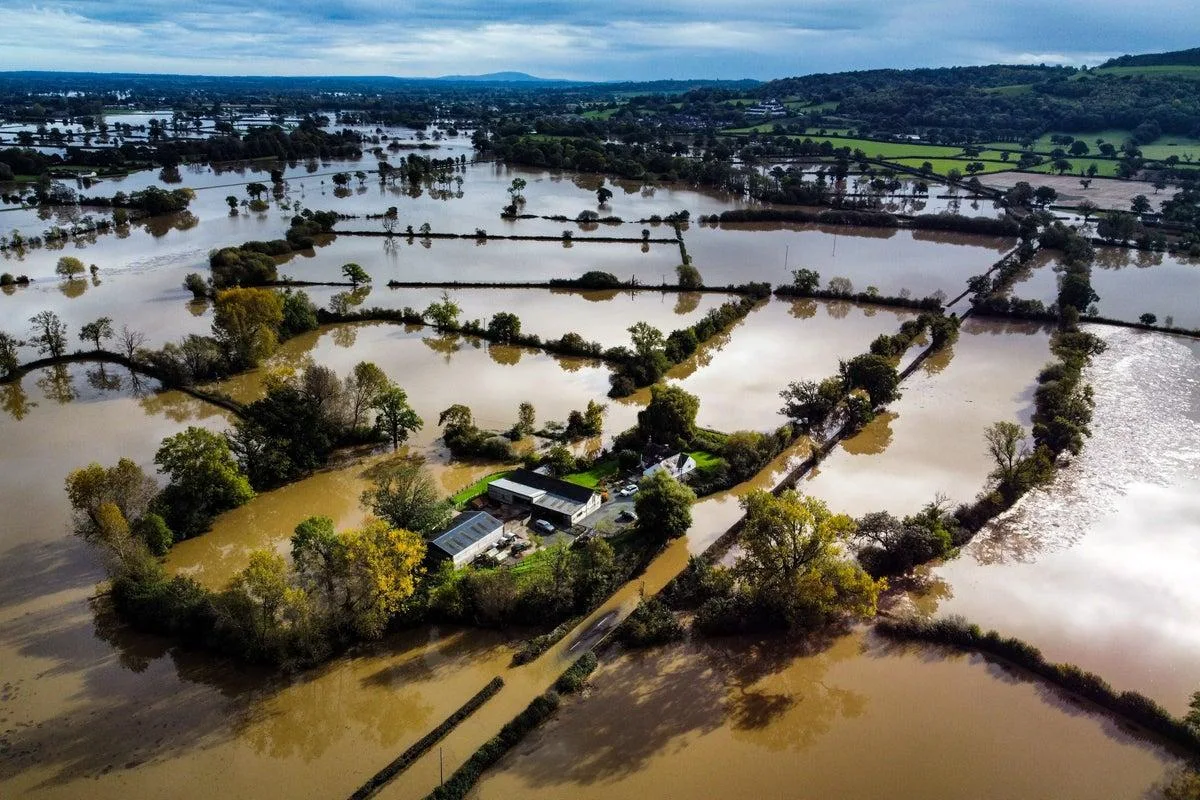
Transportation is also exposed. Low water levels can restrict navigation on certain inland waterways, while flooding can damage roads, railways, ports and electricity networks.
Modern supply chains are particularly sensitive to such interruptions.
A company may retain fully operational production facilities while being unable to ship goods because an essential infrastructure link has become temporarily unusable.
Economic losses therefore extend beyond the value of damaged assets. They include delays, business interruptions and additional costs borne by companies sometimes located far from the affected area.
Insurance and the Accumulation of Risk
The intensification of climate-related hazards presents a growing challenge for the insurance industry.
Insurers assess risks by combining historical observations, physical models and assumptions about the future exposure of assets and populations.
As climatic conditions change, past observations become less representative of certain future risks.
This does not mean that every El Niño episode will automatically cause insurance premiums to rise across the board. The effects depend on actual claims, contractual arrangements, reinsurance markets and local conditions.
But repeated extreme events can lead insurers to revise their models, deductibles or coverage limits.
The consequences extend beyond the financial sector.
A company unable to insure certain facilities may struggle to obtain financing. A community exposed to substantial risks may need to allocate more resources to prevention and reconstruction.
Changes in climatic conditions can therefore alter the economic value of assets.
Vulnerable Countries and the Cost of Adaptation
Economies with limited fiscal resources are often least capable of absorbing repeated climate shocks.
A poor agricultural season can reduce rural incomes, increase food imports and weaken the trade balance.
Governments may have to finance emergency assistance, subsidies, replacement infrastructure and reconstruction programs simultaneously.
These expenditures can arise precisely when tax revenues are declining because of slower economic activity.
Highly indebted countries have particularly limited room for maneuver.
Climate adaptation consequently becomes a public-finance problem.
Investment in early-warning systems, water infrastructure, resilient electricity networks and insurance mechanisms can reduce future losses. But these measures require capital before a disaster occurs.
This is one of the paradoxes of climate economics: preventive expenditure is often politically harder to mobilize than emergency spending, even when prevention can avoid substantial damage.
Africa and Differentiated Risks
Africa cannot be treated as a single climatic region.
El Niño's effects vary across Southern Africa, East Africa, the Sahel and North Africa. They also depend on agricultural seasons, hydrological systems and regional climate conditions.
In some areas, rainfall anomalies can increase drought risks. Elsewhere, they may favor episodes of intense precipitation.
Economic consequences depend primarily on the vulnerability of populations and infrastructure.
Economies where rain-fed agriculture accounts for a substantial share of employment are particularly sensitive to rainfall variability. Countries dependent on food imports may suffer price shocks originating in distant producing regions, even when their own harvests are satisfactory.
Morocco, like other Mediterranean economies, must also monitor interactions between climate variability, water resources and international agricultural markets. It would nevertheless be scientifically incorrect to attribute a Moroccan drought or rainfall event automatically to El Niño without specific regional analysis.
This distinction is essential to avoid turning a broad climatic correlation into an oversimplified local explanation.
A New Variable in Economic Strategy
Multinational companies already incorporate numerous risks into investment decisions: energy costs, political stability, market access and labor availability.
Climate risks increasingly require comparable precision.
The location of a factory, warehouse, port or agricultural operation depends more and more on water availability, network resilience and transportation continuity.
Investors may also need to consider the indirect exposure of their suppliers.
A company whose facilities are located in a relatively low-risk region may remain vulnerable if an essential component comes from an area exposed to severe climate hazards.
Geographical diversification of supply chains consequently becomes an adaptation instrument.
But diversification carries costs. It can reduce certain economies of scale, require additional inventories or multiply industrial investments.
The global economy must therefore balance immediate efficiency against long-term resilience.
The Cost of Being Unprepared
The 2026–2027 El Niño episode does not make it possible to predict a precise amount of global economic damage in advance.
Losses will depend on the phenomenon's actual intensity, geographical distribution, resulting weather events and measures taken to limit their consequences.
Climate forecasts nevertheless constitute economically useful information.
They can allow farmers to adjust certain decisions, grid operators to anticipate pressure, governments to prepare reserves and insurers to reassess exposure.
The challenge is therefore not merely predicting the climate, but converting those predictions into decisions.
An oceanic phenomenon thousands of kilometers away can affect the price of a food commodity, the output of a power plant or the solvency of a local government.
This interdependence is a reminder that the global economy remains deeply connected to the natural systems on which it depends.
El Niño is not an economic crisis in itself. It can become a revealing test of vulnerabilities accumulated in agricultural, energy, financial and institutional systems.
The final cost will depend as much on the preparedness of the economies facing it as on the intensity of the phenomenon itself.
Main Sources
- World Meteorological Organization, El Niño/La Niña Update, September 3, 2026.
- NOAA Climate Prediction Center, ENSO Diagnostic Discussion, October 8, 2026.
- United Nations, Focus: El Niño, October–November 2026.
- World Meteorological Organization, seasonal forecasting and early-warning system research.
Atlas Limits Research Desk
Atlas Limits’ editorial and analytical desk.