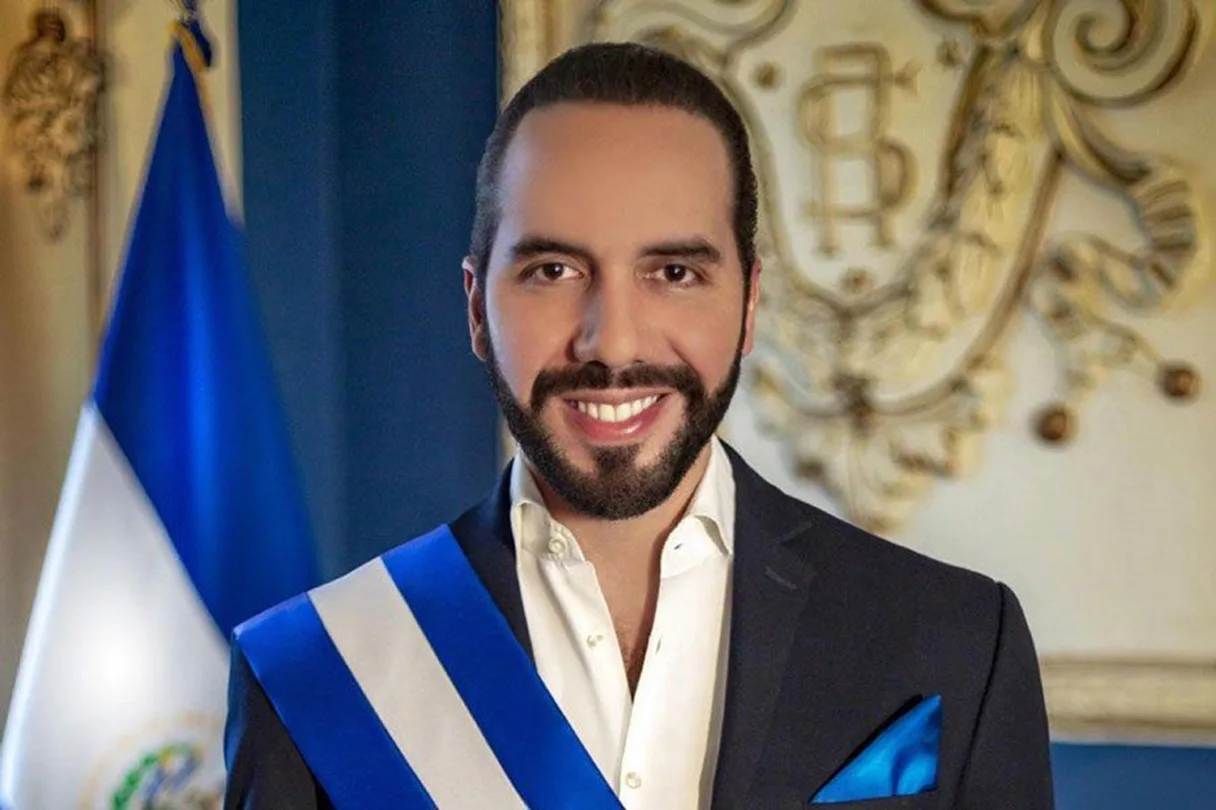
On November 19, 2026, Nayib Bukele formally registered his candidacy for a third presidential term. In a country where his popularity remains exceptionally strong and his political party dominates the institutions, the announcement might appear to be little more than an electoral formality. Yet it represents a decisive stage in El Salvador's political transformation. Seven years after taking office on a promise to free the country from the control of criminal organizations, the president is preparing to seek another popular mandate under constitutional rules substantially rewritten by his own parliamentary majority. The election scheduled for February 28, 2027, will therefore concern more than the continuation of a security strategy. It will test the political foundations of a state that has recovered much of its territorial authority while progressively weakening the mechanisms designed to constrain executive power.
El Salvador has become one of Latin America's most consequential political experiments. Its transformation combines two developments that international debate frequently treats as competing narratives: a dramatic reduction in criminal violence and an equally significant concentration of political authority. Understanding the durability of this model requires examining the conditions from which it emerged. El Salvador was not simply a country experiencing exceptionally high crime rates. In numerous communities, the state had lost the ability to exercise some of its most fundamental functions, allowing criminal organizations to establish parallel systems of control over residents, movement and economic activity.
A state challenged within its own territory
El Salvador's contemporary political history remains inseparable from the civil war that devastated the country between 1980 and 1992. The peace agreements ended the armed conflict and established the foundations for institutional reconstruction, but they did not eliminate the social divisions, economic inequalities and administrative weaknesses that constrained state authority. Over subsequent decades, the deportation of gang members from the United States, transnational criminal networks and institutional fragility contributed to the expansion of organizations such as Mara Salvatrucha, commonly known as MS-13, and Barrio 18.
These organizations developed territorial systems that extended far beyond conventional criminal activity. They imposed extortion payments on businesses, restricted movement between neighborhoods, forcibly recruited adolescents and determined the conditions under which entire families could remain in their communities. For companies, violence became a recurring operating cost. For households, ordinary decisions about employment, education and mobility were shaped by the risk of intimidation or retaliation. The Salvadoran state retained its formal institutions and international sovereignty, but its effective authority remained incomplete.
In 2015, the country's homicide rate approached 105 deaths per 100,000 inhabitants, placing it among the world's most violent societies. The figure reflected not merely a high incidence of individual crimes but a sustained challenge to the state's monopoly on legitimate force. Successive governments had alternated between aggressive law-enforcement campaigns, prevention initiatives and controversial attempts to negotiate with gangs, without establishing lasting security.
These repeated failures profoundly reshaped political expectations. Physical protection became an overriding public demand, frequently taking precedence over the institutional concerns that ordinarily structure democratic competition.
Against this background, Nayib Bukele, a former mayor of San Salvador, won the presidency in 2019 by breaking the longstanding dominance of the ARENA and FMLN parties. His political appeal rested on a promise to confront a governing establishment associated with corruption, administrative failure and an inability to restore public order. His direct communication style, extensive use of social media and image as an outsider to traditional party structures helped him establish a personal relationship with a substantial part of the electorate.
The political transformation had begun before the extraordinary security measures introduced in 2022. The decisive question was whether the new administration could produce results where its predecessors had failed.
The security offensive and the reconstruction of state authority
The turning point came in March 2022. Following a particularly deadly outbreak of gang violence, the government introduced a state of exception that suspended certain procedural guarantees and expanded the authorities' powers of arrest and detention. Initially presented as an extraordinary response to an immediate security crisis, the measure gradually became the enduring framework of domestic security policy.
Arrests increased sharply, police and military operations expanded, and criminal organizations lost much of their ability to exercise visible territorial control. The government simultaneously developed an exceptional prison infrastructure, symbolized by the Terrorism Confinement Center, or CECOT, a vast detention facility that became one of the most recognizable representations of Bukele's security strategy.
The security results have been substantial. According to official statistics, homicides have fallen to historically low levels. A Congressional Research Service report published in October 2026 recorded an approximately 97% reduction in homicides in 2025 compared with 2019, based on Salvadoran police data. The government's own figures recorded 82 intentional homicides in 2025, equivalent to 1.3 per 100,000 inhabitants, compared with 114 in 2024. In November 2026, the security minister reported 61 intentional homicides since the beginning of the year.
These developments cannot reasonably be dismissed as a communications exercise. The retreat of visible gang violence, reported reductions in extortion and the reopening of areas previously regarded as dangerous represent meaningful changes for a society that experienced decades of insecurity.
Nevertheless, the scale of the improvement must be distinguished from the precision of its measurement. Human rights organizations and independent researchers have raised concerns about restricted access to crime statistics and changes in the classification of deaths. The direction of the decline is widely recognized, but its exact magnitude, underlying causes and long-term sustainability require independent scrutiny. Homicide rates had also begun falling before the introduction of emergency powers, making it analytically unsound to attribute the entire improvement to mass detention.
The immediate effectiveness of the strategy reflects a transformation in the balance of coercive power. Gangs had flourished where the state's enforcement capacity was fragmented, insufficient or contested. Bukele's administration responded by concentrating police, military, judicial and prison resources to dismantle their operational structures. This approach produced tangible changes in daily life, but it also shifted the institutional center of gravity toward the executive.
That shift contains the central ambiguity of the Salvadoran model. Recovering state authority can expand practical freedom by ending criminal domination. Yet the same process can undermine individual guarantees when extraordinary powers become routine and the institutions responsible for overseeing their use lose independence. 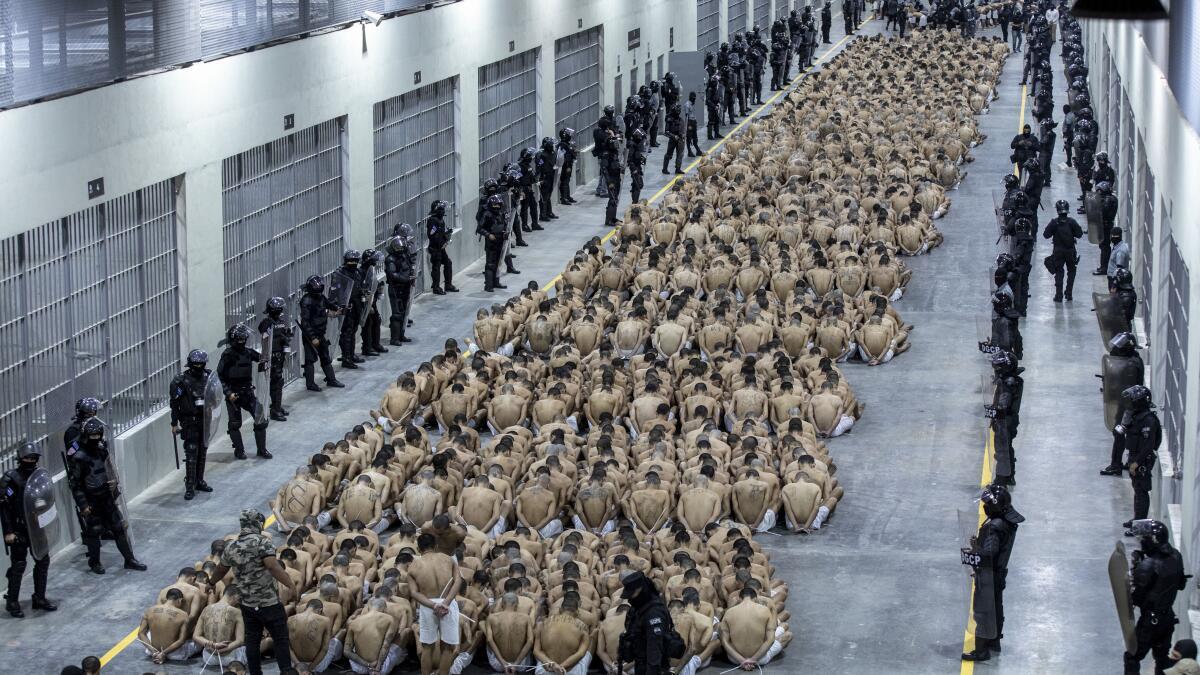
The institutional cost of effectiveness
By mid-2026, more than 92,000 people had been detained under the state of exception, according to figures cited by the Congressional Research Service. In a country with a population of approximately six million, the scale of this campaign represents a profound transformation in the relationship between citizens and the security apparatus.
Human rights organizations have documented arbitrary detention, violations of due process, mistreatment and deaths in custody. Human Rights Watch has highlighted the detention of minors, prolonged pretrial imprisonment and inadequate accountability mechanisms for security personnel. By September 2026, a Salvadoran legal assistance organization estimated that at least 570 people had died in detention since the introduction of emergency measures. These figures, compiled by independent organizations, are not definitive judicial findings, but they demonstrate the seriousness of concerns surrounding the prison system.
The government rejects accusations that its strategy is fundamentally authoritarian. It argues that protecting victims of gang violence and restoring public security are essential democratic responsibilities. This position enjoys genuine popular support. For many Salvadorans, the state of exception is not primarily associated with the suspension of liberties but with the recovery of the ability to live without criminal intimidation.
The tension between these experiences cannot be resolved simply by assessing the government's stated intentions. It raises a precise institutional question: how can the state ensure that extraordinary powers directed against criminal organizations remain legally accountable when they are exercised over individuals who may be innocent?
The legitimacy of a security objective does not eliminate the obligation to establish individual responsibility, guarantee legal representation and subject coercive decisions to independent review.
The implications extend beyond criminal justice. They now reach the constitutional structure of the Salvadoran state.
From electoral dominance to constitutional concentration
Bukele's election initially disrupted the country's traditional party system. Nuevas Ideas' legislative victory in 2021 subsequently gave the president the parliamentary capacity to transform the institutions. The new majority removed judges from the Constitutional Chamber of the Supreme Court and replaced the attorney general, decisions that generated substantial concerns about judicial independence.
In 2021, a judicial ruling opened the way for another presidential candidacy despite constitutional restrictions previously understood to prohibit immediate reelection. Bukele subsequently secured a second term in 2024. In July 2025, the Legislative Assembly approved a further constitutional reform eliminating presidential term limits, extending presidential terms to six years, removing the runoff system and reorganizing the electoral calendar.
These changes fundamentally alter the meaning of the February 2027 election. Bukele's candidacy, formally submitted on November 19, 2026, is not merely an attempt to extend his personal tenure. It represents the first presidential election under a system in which political continuity is no longer constrained by constitutional term limits.
The president's supporters argue that voters should remain free to reelect a leader whose performance they approve. This position reflects a majoritarian conception of democracy in which political legitimacy derives primarily from the electorate's decision. Critics contend that elections alone cannot guarantee meaningful alternation when the executive exercises predominant influence over judicial institutions, electoral rules and the environment in which opposition forces operate.
The distinction matters. Democracy depends not only on the opportunity to vote but also on effective political competition, enforceable rights and institutions capable of limiting the authority of elected governments. A parliamentary majority may possess the legal means to amend constitutional provisions without those amendments necessarily strengthening political pluralism.
With the election approaching, Bukele remains the overwhelming favorite. Opinion polling reported in November 2026 places him substantially ahead of his opponents. Yet the central question may no longer be whether he can win another election. It is whether El Salvador's political system continues to provide the conditions under which a credible alternative could eventually emerge.
Security gains and the economic opportunity
The decline in violence also represents an economic event. In a country where extortion, restricted mobility and insecurity imposed substantial costs on businesses and households, restoring freedom of movement and reducing criminal risk can influence consumption, investment and corporate location decisions.
El Salvador has consequently experienced an improvement in its operating environment. Previously inaccessible neighborhoods have reopened, commercial activities face fewer security constraints, and tourism has gained more favorable conditions for expansion. Security functions as a form of intangible infrastructure: it cannot replace roads, electricity or human capital, but it determines whether those resources can be used productively.
These improvements do not, however, amount to a comprehensive development strategy. The Salvadoran economy continues to face important structural constraints, including a limited domestic market, dependence on the United States, substantial reliance on remittances, public-finance vulnerabilities and insufficient productivity growth.
Figures released by the International Monetary Fund in October 2026 indicate that real GDP growth accelerated from 2.6% in 2024 to 3.9% in 2025, with projected expansion of 4.5% in 2026 and 4% in 2027. The IMF associates the stronger outlook with improved security, investor confidence, private consumption, remittances and capital inflows.
These figures suggest that stabilization is producing measurable economic benefits. They do not yet establish the existence of a durable structural transformation. An economy may experience a significant recovery following a prolonged period of insecurity without automatically achieving industrial diversification, sustained productivity improvements or reduced external dependence.
The strategic challenge is therefore to convert a security advantage into productive capacity. The government has an opportunity to attract investment, expand infrastructure, improve skills and encourage business formalization. Yet institutional quality, regulatory predictability and judicial independence remain essential for long-term investment decisions. A state capable of guaranteeing physical security does not necessarily guarantee the legal certainty required by investors.
Bitcoin and the limits of financial experimentation
Bukele's economic strategy has also been defined by the adoption of Bitcoin as legal tender in 2021, an unprecedented national experiment. Presented as a means of modernizing payments, reducing certain transaction costs and positioning El Salvador within the digital economy, the initiative significantly increased the president's international visibility.
It also exposed the limits of monetary innovation in an economy whose underlying constraints remain fiscal, productive and financial. El Salvador has used the US dollar since 2001, providing a degree of monetary stability while eliminating independent exchange-rate policy. Bitcoin did not remove that dependence. Instead, it introduced additional questions concerning asset volatility, transparency of public commitments and financial risk.
The agreement reached with the International Monetary Fund in February 2025 marked an important adjustment. The $1.4 billion, 40-month financing arrangement introduced measures designed to strengthen public finances, governance and financial stability, alongside restrictions on public-sector exposure to cryptoassets.
On October 1, 2026, the IMF completed the second and third reviews of the program, authorizing an additional disbursement of approximately $138 million. The institution confirmed that majority ownership and control of the government-backed Chivo digital wallet had been transferred to a private operator, while calling for the remaining public-sector exposure to be unwound and transparency over cryptoasset holdings to improve.
The contrast is significant. Politically, Bukele has cultivated an image of radical departure from established conventions. Financially, his government remains subject to conventional requirements of fiscal sustainability, institutional credibility and multilateral financing.
Bitcoin may serve as an instrument of experimentation, financial diversification or international positioning, but it cannot substitute for a sustainable tax base or a competitive productive economy.
This adjustment does not necessarily represent the abandonment of the government's technological ambitions. Rather, it demonstrates that financial innovation remains subordinate to macroeconomic constraints. For an economy of El Salvador's size, access to international financing and creditor confidence remain essential.
El Salvador's changing position in the Americas
Bukele's political experiment now extends beyond national borders. In several Latin American countries facing organized crime, his security strategy has become a reference point for governments seeking to restore public authority. Its international appeal rests on a proposition that is immediately understandable: where criminal organizations exercise territorial control, the state must rapidly establish a decisive advantage in coercive capacity.
This proposition responds to a genuine governance crisis in parts of the region. When institutions fail to protect communities, radical security measures can acquire considerable social legitimacy. El Salvador has consequently become an important reference in debates over democracy, public order and government effectiveness.
The model's transferability, however, remains uncertain. Criminal structures, territorial dimensions, judicial systems and administrative capabilities vary considerably between countries. A strategy implemented in a small Central American state cannot automatically be replicated in much larger economies where criminal organizations possess more complex financial networks, logistical capabilities and territorial operations.
El Salvador's international position has also strengthened through its relationship with the United States. Washington has long been central to the country's economic and political outlook because of trade, migration, remittances and security cooperation. Under the Trump administration, that relationship acquired particular visibility when Venezuelan nationals were transferred to Salvadoran detention facilities in 2025, generating serious legal and humanitarian controversy.
In 2026, Salvadoran participation in international security operations in Haiti illustrated a further ambition: transforming domestic experience in confronting gangs into regional influence. El Salvador is seeking to move beyond its traditional position as a country struggling with internal insecurity and establish itself as a provider of security expertise and operational assistance.
This development has strategic implications. Security capabilities can become an instrument of foreign policy, allowing a small state to exercise influence disproportionate to its economic weight. Yet the credibility of that influence ultimately depends on the results achieved and the compatibility of its methods with international human rights obligations.
The risks of stability built around one leader
The most consequential question for El Salvador's future is not simply whether Bukele wins another presidential term. It is whether the country can institutionalize the gains achieved under his administration.
A durable transformation requires security improvements to survive a change of president, a shift in parliamentary control and a reorientation of government priorities. It depends on professional security forces, an independent judiciary, competent public administration, effective prevention policies and a sustainable prison system. In other words, security must become a characteristic of institutions rather than a personal attribute of the head of state.
The current model contains a structural tension. The more security improvements reinforce the president's popularity, the easier it becomes to concentrate political power. The greater that concentration, the more oversight institutions risk losing their ability to identify abuses, correct errors and guarantee administrative continuity beyond a single individual.
This mechanism can generate exceptionally strong apparent stability while increasing the system's dependence on the continued authority of its leader.
Latin American political history demonstrates that concentrated power does not necessarily produce immediate instability. It can coexist with extended periods of economic expansion, political continuity or popular approval. The difficulty emerges when personalized decision-making weakens succession mechanisms, information flows and the institutional capacity for self-correction.
In El Salvador, the issue is especially consequential because the security gains represent a major social achievement. Large parts of the population have experienced substantial improvements in their daily lives. Preserving those gains should not require the indefinite extension of emergency powers or the permanent presence of one political leader.
The challenge is to move from security achieved through extraordinary authority to security guaranteed by ordinary institutions. That transition requires more than low homicide rates. It involves restoring procedural safeguards, strengthening crime prevention and demonstrating that the state can maintain public order without prolonged suspension of fundamental protections.
An election that will define more than presidential continuity
On February 28, 2027, Salvadoran voters will participate in an election under conditions fundamentally different from those that brought Bukele to power in 2019. The country is no longer defined primarily by its inability to contain gang violence. It is increasingly confronted with the political, institutional and economic consequences of the measures that helped reduce that violence.
Bukele's third-term candidacy comes at a moment when his government possesses a powerful security record, dominant political support and growing international recognition. It also comes within a system where institutional checks have weakened, emergency powers remain in force and economic prospects continue to depend on structural reform.
El Salvador cannot adequately be understood either as an unqualified success or as a straightforward democratic failure. It represents an experiment in which effective public action has profoundly altered political preferences and institutional balances. The security improvements are real; so are the risks associated with concentrated power. Neither reality cancels the other.
The next phase will determine whether stabilization can become the foundation of a stronger state capable of guaranteeing order, rights and prosperity simultaneously, or whether it will remain associated with a political system whose continuity depends on the repeated reelection of its leader.
El Salvador's long-term future will ultimately be decided by its ability to transform a security victory into durable institutions.
Atlas Limits Research Desk
Atlas Limits’ editorial and analytical desk.