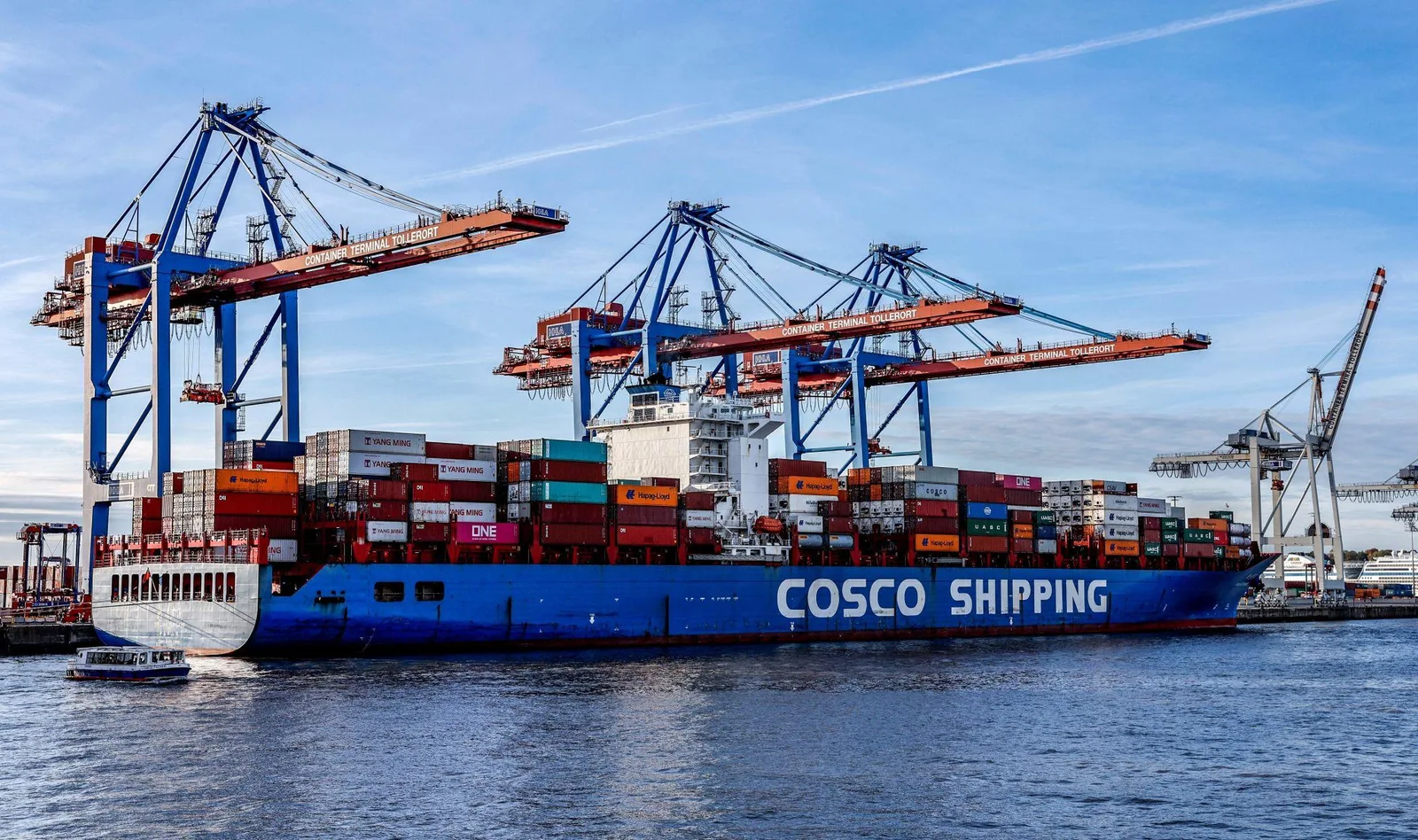
In Hamburg, containers continue to move between port terminals, warehouses and railway networks supplying German industry. Ships arrive, goods change hands, and companies organize deliveries according to a principle long considered universal: economic efficiency. Yet on October 7, 2026, the German government decided that an apparently ordinary commercial transaction could no longer be assessed solely through market criteria. Berlin blocked Chinese state-owned shipping group COSCO from acquiring an 80% stake in Konrad Zippel, a company specializing in container transportation between ports and their hinterlands.
Germany's competition authority had approved the transaction. The government blocked it on national security grounds, arguing that it could increase external dependencies and weaken supply chains. This difference in assessment captures a profound transformation. An acquisition can now be acceptable under competition law while becoming unacceptable from the standpoint of sovereignty.
The case extends far beyond the port of Hamburg. It comes as the European Union attempts to rebalance its commercial relationship with Beijing, German manufacturers face increasingly direct Chinese competition, and Brussels strengthens its mechanisms for screening foreign investment. After several decades during which economic integration was expected to encourage political stability, Europe is discovering that interdependence can also become an instrument of pressure.
Trade is no longer merely about the movement of goods. It is becoming a question of control.
Hamburg and the New Economic Frontier
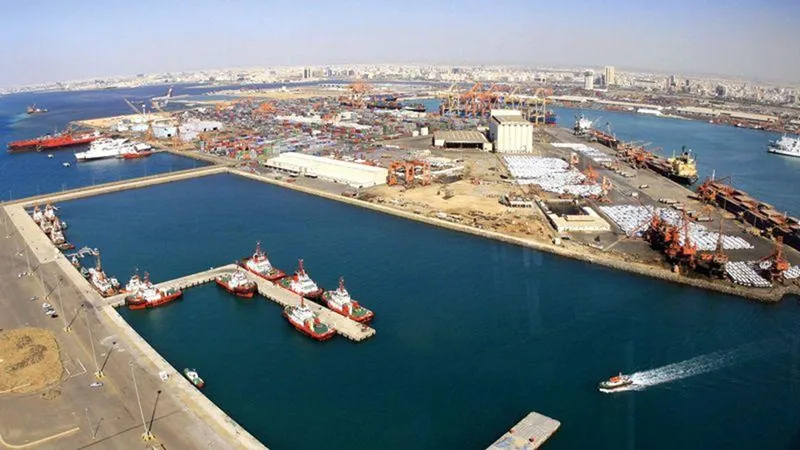
Hamburg gives the German decision particular significance. As the country's largest seaport, the city is one of the main gateways connecting European industry to global trade. The containers passing through its facilities supply factories, distribution networks and logistics platforms across an economy built around exports.
COSCO is not an ordinary investor. The Chinese group occupies a major position in international maritime transportation and operates across several segments of the logistics chain. By acquiring control of Zippel, it would have strengthened its integration between ocean shipping and inland distribution.
That continuity is precisely what concerns German authorities. The economic power of a logistics operator depends not only on the number of ships it owns or the terminals in which it invests. It also lies in its ability to organize flows, access commercial information, coordinate transportation and determine operational priorities when capacity becomes constrained.
Infrastructure can remain physically located in Germany while depending on decisions made elsewhere.
The distinction matters. Berlin has not publicly demonstrated that COSCO intended to use Zippel for hostile purposes. Its decision rests on an assessment of the risks associated with foreign control of activities considered sensitive. The objective is less to punish established misconduct than to prevent a potential vulnerability.
Germany had already confronted this dilemma over COSCO's investment in a Hamburg port terminal. In 2023, Berlin ultimately authorized a minority stake of 24.9%, after limiting the Chinese investor's original ambitions. Three years later, the refusal to approve the Zippel acquisition illustrates how the question of control has moved to the center of economic policy.
The issue is no longer simply who provides the capital. It is who exercises decision-making authority over the infrastructure on which the national economy depends.
A Commercial Relationship Becoming Increasingly Asymmetric
This political shift reflects a growing economic imbalance.
According to Eurostat, the European Union imported €559.4 billion worth of Chinese goods in 2025 while exporting €199.6 billion to China. The resulting bilateral trade deficit reached €359.8 billion, equivalent to approximately €986 million per day.
Behind these figures lies an even more significant development. Between 2015 and 2025, European exports to China increased by 37.1%, while imports from China rose by 89%. In 2025 alone, European exports declined by 6.5%, while imports from China increased by 6.4%.
Commercial integration is therefore continuing, but its industrial benefits are becoming increasingly uneven.
In the second quarter of 2026, the EU's merchandise trade deficit with China reached €103 billion, its highest quarterly level since the third quarter of 2022. The imbalance can no longer be regarded as a temporary fluctuation.
The composition of trade helps explain European concerns. In 2025, electrical and electronic equipment accounted for €164.9 billion in European imports from China, followed by machinery and mechanical appliances at €106.5 billion. Vehicles represented another €29.9 billion.
On the export side, Europe retains important positions in machinery, electrical equipment, precision instruments and pharmaceuticals. Yet several sectors historically dominated by European manufacturers now face Chinese competitors capable of producing at scale, controlling their supply chains and advancing rapidly into technologically sophisticated markets.
China is no longer merely supplying inexpensive products to European consumers. It is increasingly competing with Europe in the industries that traditionally supported its trade surpluses and technological leadership.
For Germany, whose prosperity depends heavily on machinery, automobiles, chemicals and capital goods, this transformation is particularly consequential. For decades, Chinese growth provided a major outlet for German exporters. Today, Chinese companies are developing their own capabilities in those same industries while maintaining dominant positions in several intermediate production chains.
Interdependence remains, but its nature is changing. China continues to represent an essential market for numerous European companies, while simultaneously becoming a more powerful industrial competitor and a supplier that is difficult to replace.
The Shifting Geography of Industrial Power
China's industrial advance cannot be explained by labor costs alone. It reflects the accumulation of manufacturing capacity, infrastructure, technical expertise, financing and economies of scale.
In batteries, photovoltaic panels, electric vehicles, electronic equipment and certain processed raw materials, Chinese companies benefit from deeply integrated supply chains. This organization reduces production delays, facilitates investment and allows manufacturers to adapt rapidly to changing demand.
Public policy has played a major role in this transformation. Preferential financing, infrastructure development, public procurement, industrial strategies and support for critical technologies have accompanied the emergence of companies capable of competing with Western manufacturers.
European authorities argue that some of these policies distort competition, particularly when public support sustains production capacity beyond domestic demand. Beijing disputes this interpretation, attributing the competitiveness of its companies primarily to industrial efficiency, innovation and accumulated investment.
These competing explanations reflect a deeper difference between economic models.
The European Union has traditionally emphasized competition, state-aid discipline and market openness. China has more closely combined competition among companies with strategic government direction and the development of national industrial capabilities.
The European difficulty emerges when these models meet within an open market. European manufacturers must finance their energy transition, modernize production facilities and absorb substantial regulatory costs while competing with companies operating under sometimes very different financing and production conditions.
Europe can respond through countervailing duties, anti-subsidy investigations or targeted restrictions. But these instruments cannot replace industrial investment, competitive energy, workforce development or infrastructure.
Protecting a market is not enough to rebuild the productive capabilities that sustain it.
Brussels Develops an Economic Security Doctrine
The European response now extends beyond traditional trade-defense instruments.
Since the EU's first foreign direct investment screening framework became operational in October 2020, Brussels has sought to identify acquisitions that could affect security or public order. Regulation (EU) 2026/1386, adopted in June 2026 and entering into force in July, strengthens that approach. Its full application is scheduled to begin on January 17, 2028.
The legislation establishes screening mechanisms across all member states and broadens the range of sensitive activities. Critical technologies, dual-use goods, strategic raw materials, transportation, energy and certain financial infrastructures fall within its scope.
The framework also addresses indirect investments, including transactions involving companies established within the Union but ultimately controlled by entities outside it.
This development marks a transformation in the state's role within the European economy. For several decades, regulation primarily sought to guarantee competition, protect consumers and facilitate the free movement of capital. It must now also consider supply-chain resilience, infrastructure continuity and the geopolitical consequences of asset ownership.
National decisions remain essential, but European coordination is becoming increasingly necessary. An acquisition authorized in one member state may affect supply chains in several others. The single market thus creates an internal interdependence that requires governments to examine certain external dependencies collectively.
The EU also possesses an instrument designed to respond to economic coercion, alongside export controls covering sensitive goods. These mechanisms complement trade investigations, anti-dumping duties, countervailing measures and supply-chain diversification policies.
Individually, they address different problems. Together, they outline an emerging doctrine: preserve economic openness while reducing the possibility that an external partner can transform a dominant commercial position into political leverage.
Implementation remains difficult. Member states do not share identical industrial structures, commercial relationships with China or economic interests. A restriction considered necessary to protect a technology in one country may be perceived elsewhere as a threat to exports or investment.
European economic sovereignty therefore requires a degree of political coordination that commercial integration does not automatically produce.
Beijing Confronts Europe's Rebalancing Efforts
The confrontation concerns more than market access. It also involves the conditions under which the two economies organize their growth.
China recorded a global merchandise trade surplus of approximately $1.2 trillion in 2025. The figure demonstrates the strength of its export-oriented manufacturing system, but it also intensifies tensions with its principal trading partners.
European authorities increasingly question the combination of extensive industrial capacity, domestic demand insufficient to absorb all production, and a growth model that continues to rely heavily on exports.
The debate now extends to currency policy. Some European officials argue that the yuan's exchange rate contributes to the commercial imbalance. On October 8, the People's Bank of China rejected the suggestion that it was pursuing competitive depreciation, maintaining that exchange-rate movements reflect multiple economic and financial factors.
The disagreement reveals competing interpretations. For Beijing, Chinese industrial competitiveness primarily reflects the performance of its companies. For some European policymakers, it also reflects macroeconomic imbalances and competitive conditions requiring correction.
The problem is particularly difficult to resolve.
Europe can impose trade measures on specific products when the relevant legal conditions are established. It has far fewer instruments capable of directly changing China's underlying growth model.
Beijing, meanwhile, cannot disregard the importance of the European market. The EU represents a substantial destination for Chinese manufacturers, particularly in electrical equipment, machinery and manufactured goods.
Both economies therefore possess instruments of pressure, but also powerful reasons to avoid a comprehensive rupture.
Dependency Cannot Be Eliminated by Decree
The European strategy is frequently described as de-risking, a concept theoretically distinct from complete economic decoupling.
That distinction is fundamental.
Replacing a dominant supplier requires identifying alternative production capacity, financing new facilities, securing raw materials, training workers and sometimes reconstructing several stages of an industrial supply chain. The process can take years and involve substantial costs.
In some industries, diversification does not necessarily mean bringing production back to Europe. It may instead involve shifting purchases toward India, Vietnam, Southeast Asia, Mexico or other partners. Yet these economies frequently rely on Chinese components, machinery and raw materials themselves.
A supply chain can change its apparent geography without fundamentally changing its industrial dependencies.
Distinguishing between the location of final assembly, the origin of components, corporate ownership and technological control therefore becomes essential. Governments must look beyond customs statistics to understand the actual structure of economic interdependence.
Financing represents another constraint. Developing alternative capabilities in batteries, semiconductors, processed raw materials and logistics infrastructure requires considerable capital. These investments must remain compatible with fiscal constraints, profitability requirements and European climate objectives.
Sovereignty carries an immediate economic cost, while its benefits frequently appear as risks that have been avoided. This asymmetry complicates public decision-making: an additional factory, an alternative supplier or a strategic reserve may appear expensive until a disruption occurs.
The objective, however, cannot be to eliminate every dependency. Such an ambition would be incompatible with the complexity of the global economy. It must instead be to identify dependencies whose interruption would cause disproportionate damage and develop credible alternatives.
Europe Between Two Economic Powers
The transformation of relations with Beijing cannot be separated from the evolution of American economic policy.
Washington increasingly uses tariffs, technological restrictions, investment controls and industrial policy as explicit instruments of national power. Competition with China occupies a central position in this strategy, particularly in semiconductors, artificial intelligence, critical minerals and defense technologies.
For Europe, the situation creates a dual constraint.
On one side, dependence on certain Chinese products appears increasingly risky. On the other, systematic alignment with American restrictions could weaken Europe's own commercial and technological autonomy.
The Union must therefore protect its industries without becoming trapped in a confrontation whose priorities are defined entirely in Washington or Beijing.
This position is particularly difficult because European interests remain heterogeneous. German automakers, French manufacturers, Italian machinery producers, Dutch port operators and European technology companies do not face identical risks.
Some are primarily concerned about competition from Chinese imports. Others depend on sales in China, Chinese suppliers or international capital. A uniform policy may consequently protect one industry while increasing costs for another.
European coherence will depend on the ability to distinguish genuinely strategic vulnerabilities from ordinary commercial tensions.
Without that distinction, economic security risks becoming a general justification for restrictions whose industrial benefits remain uncertain.
The Real Objective: Preserving the Freedom to Choose
Germany's decision concerning Zippel does not mean that Europe is abandoning globalization. Rather, it demonstrates that governments are seeking to regain control over certain mechanisms that had largely been left to corporate decision-making.
Commercial flows will continue to pass through European ports. Chinese manufacturers will remain present in the single market. European industrial companies will continue purchasing components in Asia and seeking customers in China.
But the criteria used to evaluate these relationships are changing.
An acquisition will no longer be assessed exclusively according to its price and competitive effects. A supplier will no longer be selected solely on cost. Infrastructure will no longer be regarded simply as an economic asset. Its role in maintaining national economic activity, its exposure to geopolitical tensions and the conditions under which it is controlled will increasingly influence decisions.
This evolution carries risks of its own. Excessive restrictions can increase investment costs, weaken competition, slow innovation and provoke retaliation. Conversely, openness without adequate safeguards can allow dependencies to develop that become difficult to reverse when political circumstances change.
Europe cannot resolve this contradiction through regulation alone. It must also invest, manufacture, innovate and preserve the economic conditions that allow its companies to remain competitive.
Global trade is entering a phase in which efficiency and security can no longer be treated separately. The question is not whether states should intervene in economic exchanges, but how they can do so without destroying the benefits of interdependence.
In Hamburg, Germany has just demonstrated that a port is not merely a place through which goods pass. It is also a strategic gateway on which part of a country's freedom of action depends.
For decades, globalization was presented as the ability to trade with the entire world. Economic sovereignty may now be measured against a more demanding standard: continuing to trade with the world without surrendering the freedom to choose.
Main Sources
- Reuters, October 7, 2026 — Germany blocks sale of logistics company to China's Cosco.
- Financial Times, October 7, 2026 — Germany blocks Chinese acquisition in its largest seaport.
- Eurostat, April 10, 2026 — Trade in goods with China in 2025.
- Eurostat, August 2026 — EU trade with China: latest developments.
- European Commission, June 26, 2026 — EU strengthens its foreign investment screening framework.
- Regulation (EU) 2026/1386 of the European Parliament and of the Council on the screening of foreign investments in the Union.
- Council of the European Union, June 8, 2026 — Foreign investment screening: Council signs off on updated framework.
- Reuters, October 8, 2026 — China defends yuan policy as Europe steps up pressure over trade surplus.
Atlas Limits Research Desk
Atlas Limits’ editorial and analytical desk.