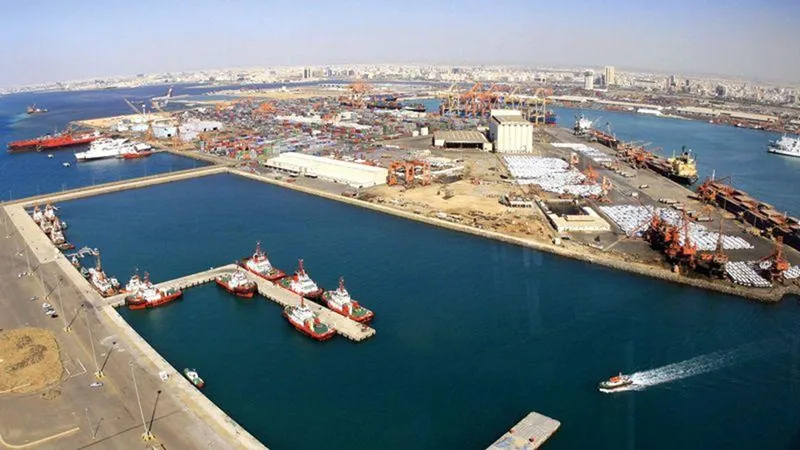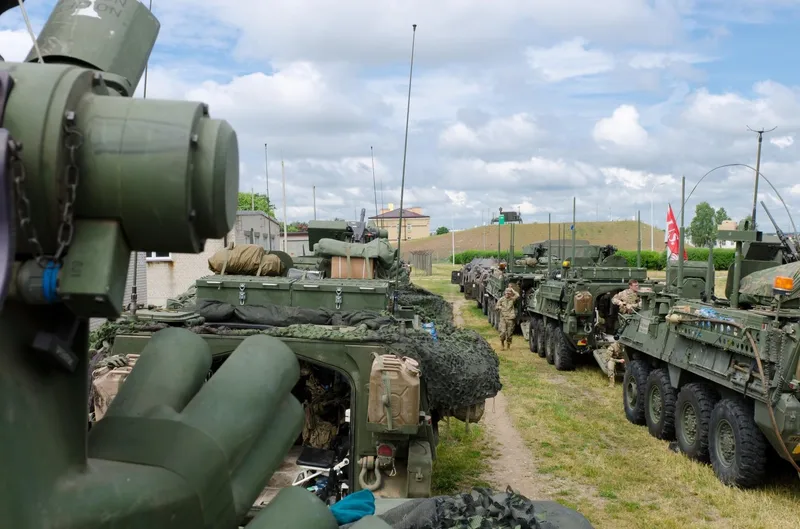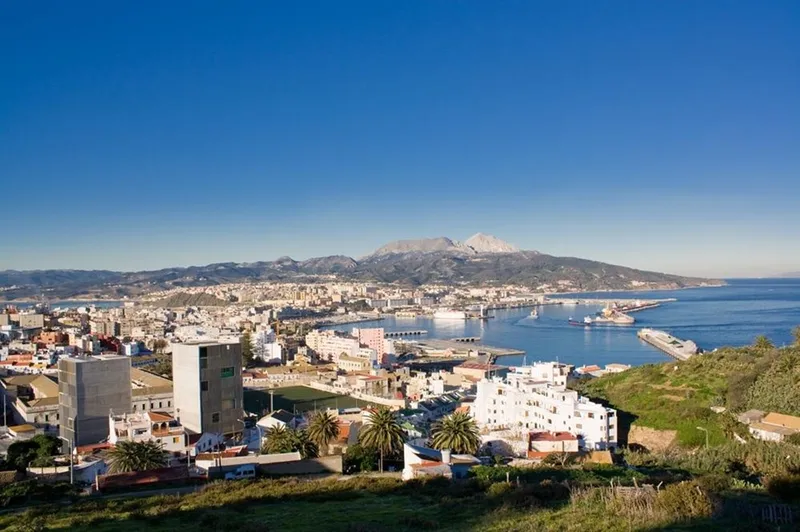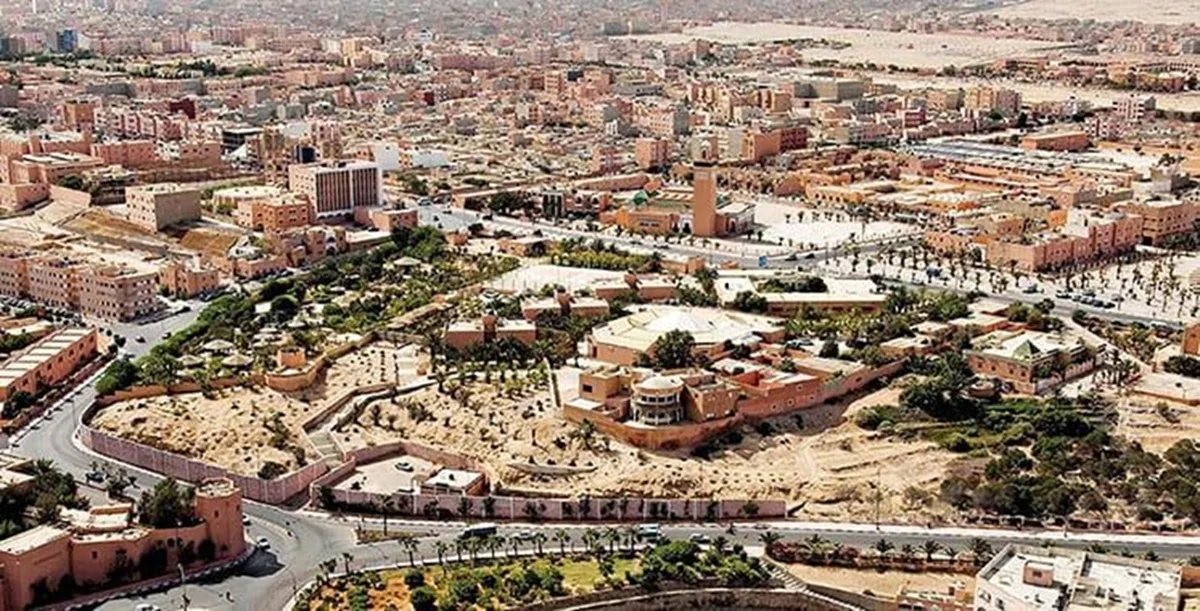
In Laayoune, the conflict does not look like a territory suspended for half a century. The city is expanding, roads run south toward Dakhla and Mauritania, ports are being developed, public investment has transformed infrastructure, and Moroccan institutions operate much as they do elsewhere in the Kingdom. Several hundred kilometers to the east, beyond the sand berm cutting across the desert, another reality persists: that of the Polisario Front, the Tindouf camps in Algeria, a low-intensity military confrontation, and an international process that has never formally closed the question opened by Spain’s withdrawal.
Between these two realities lies one of the most unusual geopolitical situations in the contemporary world. Morocco administers the vast majority of Western Sahara and considers the territory an integral part of the Kingdom. The Polisario Front claims independence. Algeria supports the Polisario and hosts the refugee camps around Tindouf. The United Nations continues to list Western Sahara as a Non-Self-Governing Territory. A mission established in 1991 to prepare a referendum that never took place still operates on both sides of a separation line stretching across thousands of kilometers of desert.
For decades, these elements formed an almost immovable equilibrium. That equilibrium is now changing.
The change is not yet a settlement. No final agreement has been concluded. The Polisario Front has not abandoned independence. Algeria has not accepted Morocco’s interpretation of the conflict. The United Nations has not, through a general decision, recognized Moroccan sovereignty over the territory and continues to treat Western Sahara as a Non-Self-Governing Territory whose decolonization remains incomplete. Yet the diplomatic center of gravity has shifted. The question that once dominated the process — how to organize self-determination between integration and independence? — now coexists with another that has become increasingly central at the Security Council: what might genuine autonomy for the Sahara under Moroccan sovereignty actually look like?
This shift is the product of half a century during which geography, military power, economic integration and diplomacy gradually produced something the political process failed to achieve: a widening asymmetry between solutions that remain theoretically conceivable and those around which major powers are still prepared to negotiate. 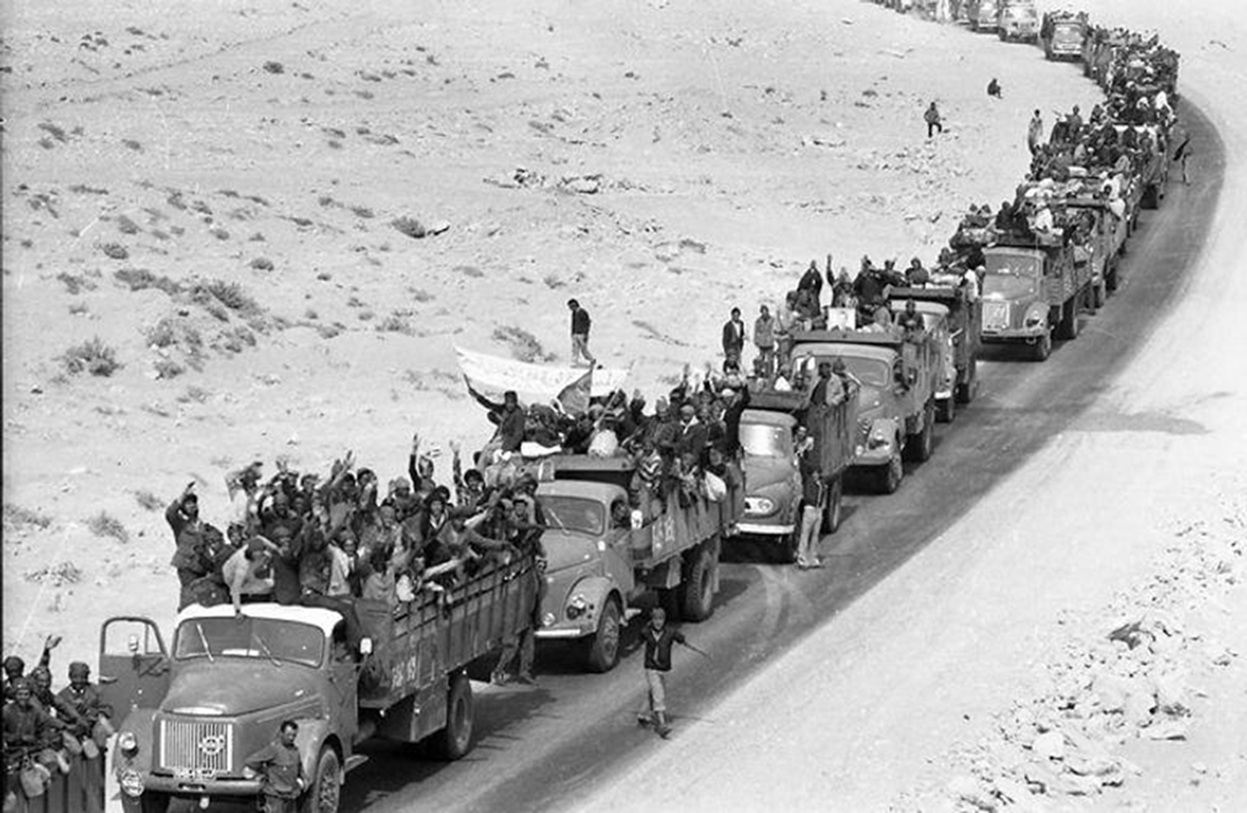
A Conflict Born of an Unfinished Decolonization
To understand the dispute, one has to go back before 1975.
Spain began establishing colonial control over the Sahara in the late nineteenth century. As the global wave of decolonization reached Africa, the territory was placed on the United Nations list of Non-Self-Governing Territories in 1963. It remains there today. The UN gives the territory an area of approximately 266,000 square kilometers.
Independent Morocco claimed the territory on the basis of historical relationships between Saharan tribes and the Sultan. Mauritania also advanced historical links with the populations of the Saharan region. Faced with competing claims and Spain’s plans for a referendum, the UN General Assembly requested an advisory opinion from the International Court of Justice in 1974.
The Court’s answer, delivered on 16 October 1975, became one of the most frequently cited — and frequently selectively cited — documents in the conflict.
The ICJ first concluded that Western Sahara had not been terra nullius when Spain colonized it. It then recognized the existence of legal ties of allegiance between the Sultan of Morocco and some of the tribes of the territory. It also identified legal ties with the Mauritanian entity. But the Court found that the evidence did not establish territorial sovereignty between Western Sahara and either Morocco or Mauritania of a kind that would displace the principle of self-determination.
That distinction remains at the heart of the dispute more than fifty years later: Rabat emphasizes the historical depth of allegiance to the Sultan and the principle of territorial integrity; its opponents emphasize the Court’s conclusion that those relationships did not establish sufficient precolonial territorial sovereignty to override self-determination.
Weeks after the advisory opinion, Hassan II launched the Green March. Hundreds of thousands of Moroccans moved toward the territory. Spain, as Francisco Franco lay dying and the regime entered a delicate political transition, chose to withdraw.
The armed conflict that followed pitted Morocco and Mauritania against the Polisario Front. Mauritania withdrew from the war in 1979. Morocco subsequently extended its control over much of the territory. During the 1980s, it progressively constructed an enormous defensive system of sand walls, military positions and minefields: the berm, commonly known as the sand wall.
That infrastructure changed the war.
To its west lie the principal cities, the Atlantic coastline, the main economic centers and most of the territory’s population. To its east lies a vast desert area controlled by the Polisario. This military geography, established four decades ago, continues to structure the Sahara today.
The Referendum That Never Happened
In 1991, Morocco and the Polisario Front accepted a ceasefire under United Nations auspices. The Security Council established MINURSO, the United Nations Mission for the Referendum in Western Sahara.
Its name still carries the imprint of the original project.
The settlement plan envisaged a transitional period followed by a referendum offering a choice between independence and integration with Morocco. But determining who would be entitled to vote gradually became almost as difficult as determining the question itself. Identification of the electorate became entangled in migration, tribal affiliation, Spain’s 1974 census and conflicting interpretations of eligibility.
The referendum never took place.
MINURSO remained.
Thirty-five years after its creation, its operational function bears little resemblance to what its name suggests. The UN now describes the mission as monitoring and investigating developments on the ground, reporting on the situation and engaging with the parties to reduce tensions. Even after the collapse of the ceasefire in 2020, its presence continued to provide a mechanism for limiting escalation.
That transformation is fundamental. A mission conceived as an instrument of transition toward a popular consultation gradually became an instrument for stabilizing an unresolved conflict.
And while the political process froze, the ground did not.
The Territorial Reality
Morocco today controls most of Western Sahara, including Laayoune, Smara, Boujdour and Dakhla, as well as the Atlantic coastline and the principal communication corridors. France estimates that the area administered by Rabat represents roughly 80 percent of the territory, compared with around 20 percent east of the berm under Polisario control.
But territory alone is no longer the most important measure.
Over several decades, Rabat has progressively incorporated the areas it administers into Morocco’s institutional, economic and infrastructural systems. Morocco’s regional structure includes Laayoune-Sakia El Hamra and Dakhla-Oued Ed-Dahab. Elections are held there. Moroccan administrations operate there. Roads, ports, energy infrastructure and urban development increasingly connect the territory with the rest of the Kingdom.
In 2015, Mohammed VI launched the New Development Model for the Southern Provinces, with an announced investment envelope approaching $8 billion. Roads, desalination, renewable energy, urban infrastructure and port projects have since formed part of a strategy whose implications extend far beyond regional development.
Its most emblematic project is Dakhla Atlantic Port. Its importance does not stop at Dakhla: the port is intended to insert southern Morocco into Atlantic trade with West Africa. In this geography, the Sahara is no longer conceived as Morocco’s terminal periphery but as its extension toward the Sahel and Atlantic Africa.
That represents a considerable strategic transformation.
For decades, the Sahara was primarily a territory to be retained. Rabat is increasingly attempting to turn it into a space of circulation: roads toward Mauritania, logistics, fisheries, renewable energy, agriculture, tourism, prospective hydrogen projects and connections with West African economies.
This policy creates a form of depth that diplomatic maps struggle to represent. A border can remain contested in international institutions while becoming progressively more difficult to detach from the economy surrounding it.
That is precisely what Morocco is attempting to produce.
2020: War Returns, but Not the War of 1975
The 1991 ceasefire collapsed in November 2020 following a crisis around Guerguerat, near the Mauritanian border. The Polisario subsequently declared that it no longer considered itself bound by the ceasefire.
Hostilities have continued since then.
But this is not a return to the conventional warfare of the 1970s and 1980s.
The UN Secretary-General’s September 2025 report recorded reported firing against Moroccan army positions near the berm as well as alleged Moroccan drone strikes east of it. MINURSO stated that it had been unable independently to confirm more than half of the firing incidents reported to it. Where the mission was able to inspect sites west of the berm, it observed evidence of mortar or artillery ammunition in numerous cases; most verified impacts, however, had fallen in remote areas without significant damage.
The military conflict is therefore real, but low-intensity.
That creates an important paradox. The collapse of the ceasefire could have reopened the territorial balance. So far, it has not materially changed control of the ground. The berm, Moroccan military capabilities, aerial surveillance and logistical depth have maintained the asymmetry.
The war consequently continues with enough intensity to prevent anyone from speaking of peace, but not enough to alter the territorial balance.
That is one reason the center of gravity of the conflict has moved toward diplomacy.
The American Turning Point
10 December 2020 was probably the most important diplomatic rupture in the dispute in decades.
The United States recognized Moroccan sovereignty over Western Sahara in the context of the normalization of relations between Morocco and Israel.
The decision changed the nature of the international support available to Rabat. Until then, several states had described Morocco’s autonomy proposal as serious or credible without going so far as to recognize sovereignty. Washington crossed that threshold.
The subsequent US administration did not reverse the decision. Donald Trump, after returning to the White House, reaffirmed it explicitly in 2026. In a message to Mohammed VI on the occasion of Throne Day, the US president again stated that the United States recognized Moroccan sovereignty and supported the autonomy proposal as the basis for a solution.
That continuity matters more than the original announcement.
Recognition that might initially have appeared to be the product of a particular diplomatic transaction in 2020 became a US policy surviving changes in political circumstances.
Washington, however, is no longer alone in shifting the framework.
Paris, Madrid, London: Europe Begins to Move
Spain opened an important breach in 2022 when it described Morocco’s autonomy initiative as the most serious, realistic and credible basis for resolving the dispute.
France went considerably further in 2024.
Emmanuel Macron stated that, for France, “the present and future” of Western Sahara lie within the framework of Moroccan sovereignty, and that autonomy under that sovereignty constituted the basis for a settlement supported by Paris. The French Foreign Ministry reaffirmed this position in July 2026.
The United Kingdom changed its position in June 2025. London now considers autonomy within the Moroccan state to be the “most credible, viable and pragmatic” basis for a durable solution, while maintaining that the outcome must be mutually acceptable, consistent with the UN Charter and compatible with the principle of self-determination. The British government also indicated that UK Export Finance could consider supporting projects in the Sahara subject to its due-diligence procedures.
The distinctions remain significant. The United States explicitly recognizes Moroccan sovereignty. France states that the territory’s present and future lie within that sovereignty. The United Kingdom supports autonomy within the Moroccan state as the preferred basis for settlement but officially continues to regard the territory’s status as undetermined.
These positions are therefore not legally identical.
Politically, however, they produce a common trend: three Western permanent members of the Security Council have shifted their positions in a direction favorable to Rabat’s proposed solution.
It is this accumulation, rather than any single recognition, that has begun to alter the system.
2797: When the Security Council Changes the Starting Point
The decisive institutional turning point came on 31 October 2025.
On that day, the Security Council adopted Resolution 2797 by 11 votes in favor, none against and three abstentions — China, Russia and Pakistan. Algeria did not participate in the vote.
The text is remarkable both for what it does and for what it does not do.
It does not recognize Moroccan sovereignty over Western Sahara. It does not remove the principle of self-determination. It does not impose an agreement on the Polisario. It does not remove the territory from the UN process.
But it explicitly calls for negotiations to proceed on the basis of Morocco’s autonomy proposal. It also states that genuine autonomy could represent the most feasible outcome, while continuing to call for a final, mutually acceptable political solution providing for the self-determination of the people of Western Sahara.
The difference from previous language is substantial.
For years, the Council described Moroccan efforts as serious and credible while leaving the architecture of the solution largely open. With Resolution 2797, Morocco’s plan is no longer merely one proposal among the elements on the table: it explicitly becomes the basis from which negotiations are to proceed.
That does not mean the outcome is predetermined. The resolution welcomes constructive proposals from the parties and retains the principle of self-determination. The United Kingdom emphasized after the vote that the resolution represented the beginning of a process, not its conclusion.
But a negotiation is never neutral once its starting point has been defined.
And its starting point has changed.
Autonomy: Far More Than a Word
The initiative presented by Morocco in 2007 rests on a concept that is simple in principle but complex in application: Moroccan sovereignty would remain, while substantial political authority would be transferred to institutions within the region.
Under this architecture, the Sahara would not become independent. It would, however, have a parliament, an executive and regional powers of its own. The state would retain the core attributes of sovereignty: defense, foreign relations, currency and sovereign functions.
This is probably where the next difficulty in the dispute lies.
As long as autonomy remained a broad diplomatic proposal, a degree of ambiguity could be advantageous. Once it becomes the explicit basis of negotiations supported by the Security Council, the details become decisive.
How extensive would the regional parliament’s powers be? How would taxation be divided? What police powers would exist? How would regional justice interact with Morocco’s judicial system? What role would the King retain? What constitutional guarantees would prevent autonomy from later being reduced? How would people living in the Tindouf camps be represented? Under what conditions could they return? What role could Polisario officials play? Would there be an amnesty? What international guarantees would exist? Who would participate in any eventual consultation on the final status?
These are no longer peripheral questions.
They could become the core of the next negotiating cycle.
And here Morocco may encounter a new paradox: the more successful its autonomy plan becomes diplomatically, the more precisely Rabat may have to define it politically.
The Polisario Has Not Disappeared
The diplomatic momentum favoring Morocco does not mean that the Polisario Front has ceased to matter as an actor in the settlement.
It continues to control the territory east of the berm. It remains Morocco’s interlocutor in the UN process. It retains Algeria’s political and material support. It leads the Sahrawi Arab Democratic Republic, a member of the African Union. And it continues to reject a solution that excludes the possibility of independence.
This divergence is not rhetorical. It concerns the meaning of self-determination itself.
For Rabat, self-determination can be exercised through negotiated acceptance of autonomy under Moroccan sovereignty. For the Polisario, it requires that the Sahrawi people be able freely to choose their status, including independence.
That is why Resolution 2797, despite its shift toward the Moroccan proposal, did not resolve the conflict.
It changed the geometry of the negotiation.
Algeria challenged that evolution. In an official communication to the Security Council following adoption of the resolution, it stressed, among other points, that the final text made autonomy a basis for discussion rather than a predetermined outcome and that the objective remained a mutually acceptable solution providing for self-determination.
Russia also explained its abstention by describing the text as unbalanced. China abstained as well. The Council has therefore not reached the kind of consensus that characterizes some UN peace operations.
The shift is real, but it is not universal.
Algeria, the Actor That Cannot Be Bypassed
No durable settlement of the Sahara can be understood purely as a negotiation between Rabat and the Polisario.
Algeria is indispensable.
It has hosted the Tindouf camps since the 1970s and remains the Polisario’s principal external supporter. Yet it rejects Morocco’s presentation of the dispute as essentially a Moroccan-Algerian confrontation, maintaining that it supports a decolonization process between Morocco and the Polisario.
In contemporary UN diplomacy, however, Algeria participates in consultations alongside Morocco, the Polisario and Mauritania. Resolution 2797 explicitly supports Staffan de Mistura’s continuing consultations with all four.
That institutional detail carries considerable meaning.
The Sahara is simultaneously a territorial dispute and the central lock on the Maghreb system. The land border between Morocco and Algeria has been closed since 1994. Diplomatic relations have been severed since 2021. Regional cooperation remains paralyzed even though the two countries together possess the demographic, economic, energy and military weight capable of structuring much of the Maghreb.
The cost of the conflict therefore extends far beyond the territory’s 266,000 square kilometers.
It has prevented the emergence of a genuine Maghreb strategic space.
For Rabat as for Algiers, the Sahara now touches questions of national doctrine, regional prestige and the balance of power. That is precisely what makes compromise so difficult: any territorial solution must avoid being interpreted as a strategic defeat by either of the Maghreb’s two principal states.
Law Has Not Disappeared
Morocco’s diplomatic advances face another limitation: international institutions are not all moving along the same trajectory.
For the United Nations, Western Sahara remains on the list of Non-Self-Governing Territories. The UN records that Spain declared in February 1976 that it had terminated its presence and relinquished its administrative responsibilities; no administering power is currently identified by the UN for the territory.
The European Union also has its own legal corpus.
On 4 October 2024, the Court of Justice of the European Union delivered several judgments concerning EU-Morocco trade and fisheries agreements as applied to Western Sahara. Within the framework of EU law, the Court held that Western Sahara constitutes a territory distinct from Morocco and that agreements could not be applied there without satisfying requirements concerning the consent of the people of the territory. It also held that products originating in Western Sahara must be identified as such for purposes of origin.
The result is a situation that can appear contradictory but is not necessarily so.
Diplomacy can evolve toward a political solution based on autonomy under Moroccan sovereignty while the applicable legal framework continues, until such a settlement is concluded, to treat the territory as distinct.
That is precisely the difference between a settlement process and a completed settlement.
The Actual Balance of Power
Strip away the slogans of both sides and four realities emerge.
The first is territorial: Morocco holds a decisive advantage on the ground. It administers most of the territory, the major cities, the ports, the principal infrastructure and the Atlantic coastline. The resumption of hostilities since 2020 has not overturned this situation.
The second is diplomatic: Morocco’s autonomy plan has acquired an international centrality it did not possess fifteen years ago. Washington recognizes Moroccan sovereignty; Paris places the territory’s present and future within that sovereignty; London now supports autonomy within the Moroccan state as its preferred basis; Madrid has backed the Moroccan plan since 2022; and the Security Council itself made the proposal the basis for negotiations in Resolution 2797.
The third is legal: the file is not closed. The UN status remains, self-determination remains explicitly present in the Security Council resolution, European jurisprudence continues to distinguish the territory from Morocco, and no final agreement has been concluded with the Polisario.
The fourth is regional: no stable solution can simply ignore Algeria.
These four realities explain why two statements often presented as contradictory — “Morocco has practically won” and “nothing is legally settled” — can simultaneously contain elements of truth while describing different layers of the same conflict.
Morocco has considerably improved its balance of power.
It has not yet converted that balance of power into a definitive settlement. 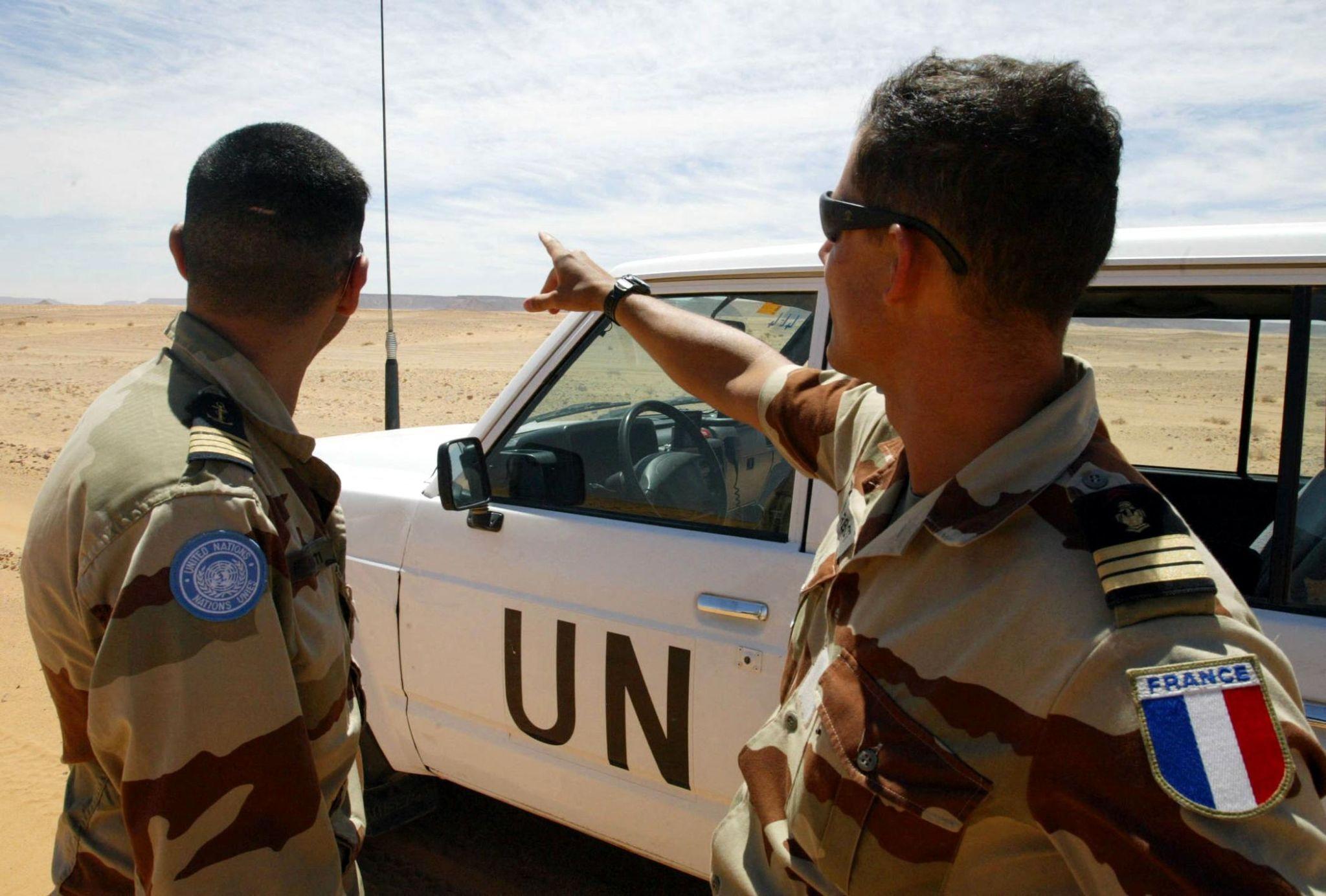
MINURSO Confronts Its Own Contradiction
This is where perhaps the most interesting development of 2026 appears.
Resolution 2797 did more than extend MINURSO until 31 October 2026. It requested that the Secretary-General conduct, within six months, a strategic review of the mission’s future mandate, taking into account developments in the negotiations.
That request poses an almost existential question.
What should a “United Nations Mission for the Referendum in Western Sahara” become when the Security Council is increasingly organizing negotiations around a model of autonomy?
During consultations in April 2026, options were reportedly discussed for potentially realigning the mission in the event of a political agreement: ceasefire monitoring, refugee returns, disarmament, demobilization and reintegration, or support for the mechanism through which self-determination would be exercised. These elements emerged from reporting on closed consultations and do not yet constitute a new mandate adopted by the Council.
But their very existence demonstrates the nature of the change.
For three decades, the United Nations managed the absence of a settlement.
It is beginning to consider what institutions might be required if a settlement became possible.
October 2026
The timetable has now narrowed.
On 1 October, António Guterres formally transmitted his new annual report to the Security Council under reference S/2026/781. As of 3 October, the report’s existence and date are recorded in the Council’s official system, but its full text is not yet publicly accessible through the documentary system available for consultation. It would therefore be premature to treat claims attributed to the report by indirect sources as established facts.
The Council is due to examine the issue during October and must act before MINURSO’s mandate expires on 31 October. Staffan de Mistura and MINURSO chief Alexander Ivanko are expected to brief Council members.
Far more than the duration of the renewal will matter.
The real indicator will be the language.
Will the Council preserve exactly the framework established by Resolution 2797? Will it further strengthen the reference to autonomy? Will it request a more binding negotiating timetable? Will it begin transforming MINURSO’s mandate? Or will disagreements between the United States, France and the United Kingdom on one side and Russia and China on the other produce a cautious institutional extension of the status quo?
Those nuances will reveal whether Resolution 2797 represented a temporary inflection or the beginning of a new UN doctrine.
The Problem of Time
For a long period, time appeared to work against Morocco.
Every year without a settlement prolonged the territory’s presence on the list of Non-Self-Governing Territories. Every renewal of MINURSO recalled the existence of an unfinished process. Every generation born in the Tindouf camps extended the conflict in human terms.
That calculation has become more complicated.
Because time also produces infrastructure, institutions, economic interests, generations socialized within different political systems, roads, ports, alliances and diplomatic recognition.
Fifty years after the Green March, the Sahara of 2026 is no longer the Sahara of 1975.
For Morocco, the challenge is probably no longer simply to retain the territory it administers. It is to convert territorial dominance and diplomatic momentum into a settlement sufficiently legitimate to survive changes in the international environment.
For the Polisario, the problem is the reverse. The longer the situation persists, the harder it becomes to transform continuing recognition of the principle of self-determination into a concrete change in the territorial balance. Its principal leverage is therefore increasingly legal, diplomatic and political rather than military.
For Algeria, the equation is becoming more difficult as well. Support for the Polisario remains an important component of its regional policy, but the diplomatic framework surrounding the conflict is progressively moving toward a formula designed by Rabat.
And for the United Nations, a contradiction is emerging that cannot necessarily be postponed indefinitely: maintaining, in legal terms, a decolonization process while conducting, in political terms, negotiations whose starting point is increasingly an autonomy arrangement proposed by the state administering most of the territory.
That contradiction is what makes October 2026 important without necessarily making it the final deadline.
The Sahara is not settled. No document adopted in New York yet permits that conclusion. Independence has not been formally removed from every legal horizon, Moroccan sovereignty has not been universally recognized, and the parties remain divided over the fundamental question of final status.
But something has changed.
For nearly half a century, international diplomacy was primarily searching for a procedure capable of deciding the Sahara’s political future. It is now increasingly discussing how the Sahara might actually be governed under Moroccan sovereignty.
The difference lies in a few words.
In a conflict this old, a few words can represent a tectonic shift.
Morocco has spent fifty years attempting to transform control of the territory into political recognition. It has not yet completed that transformation. But for the first time, diplomatic time appears to be beginning to converge with the reality on the ground.
Main Sources
- United Nations Security Council, Resolution 2797 (2025), 31 October 2025.
- United Nations Secretary-General, Situation concerning Western Sahara, S/2025/612, 30 September 2025.
- United Nations Security Council, official registry for report S/2026/781, 1 October 2026.
- International Court of Justice, Western Sahara, Advisory Opinion of 16 October 1975.
- United Nations, MINURSO, official factsheet and mission documentation.
- United Nations Special Committee on Decolonization, 2026 documentation on Western Sahara.
- France, Presidency of the Republic and Ministry for Europe and Foreign Affairs, statements concerning Western Sahara.
- United Kingdom, FCDO, UK–Morocco strategic partnership statement and statements to the Security Council.
- Court of Justice of the European Union, judgments of 4 October 2024 concerning Western Sahara.
Atlas Limits Research Desk
Atlas Limits’ editorial and analytical desk.