On one side, there are €325 million. On the other, an ambition approaching €190 billion. Between the two lies perhaps the most important element: an architecture Europe has never truly built before.
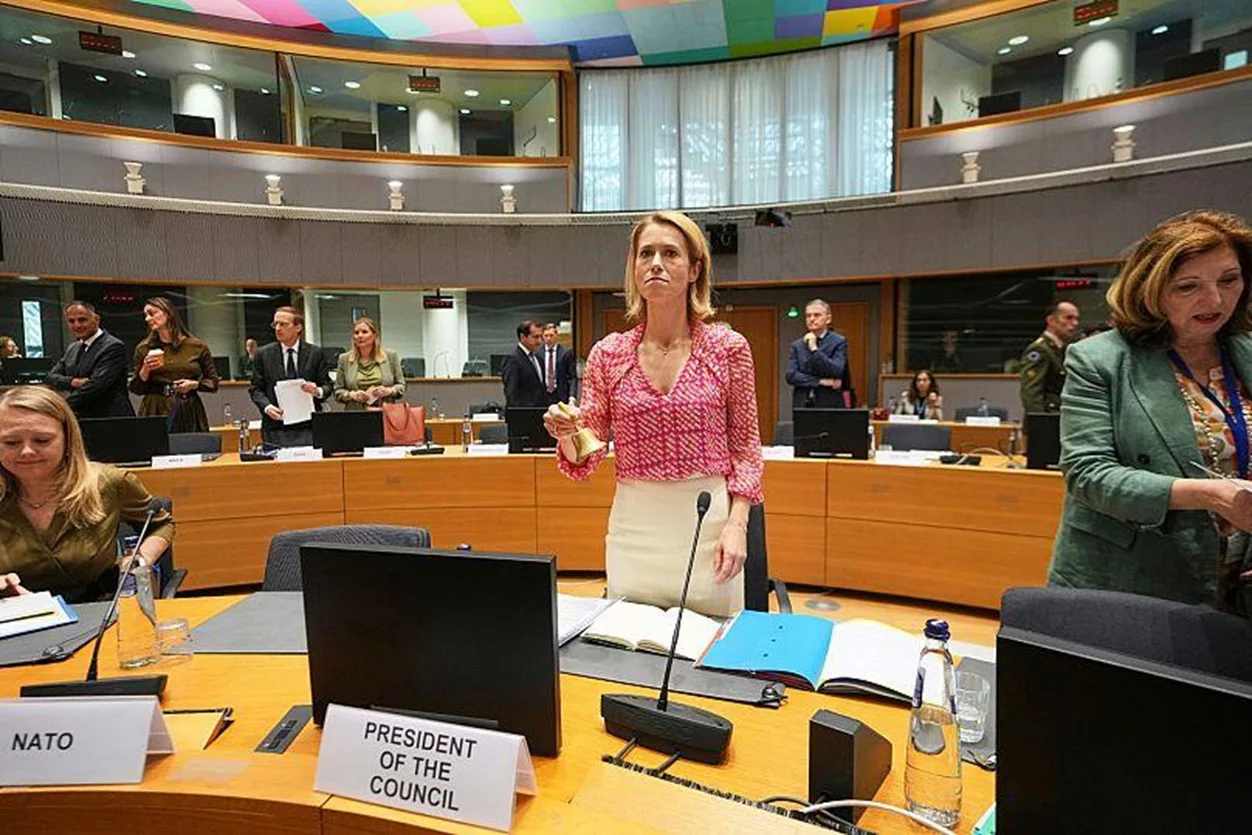
On 28 September 2026, the Council of the European Union approved the first five European Defence Projects of Common Interest, or EDPCIs, created under the European Defence Industry Programme. The decision may appear technical. Yet it moves European defence policy across an institutional threshold: five projects previously proposed by the Commission are now formally recognised by the Union and eligible for European funding.
They cover almost the entire spectrum of military vulnerabilities that have moved to the forefront since the beginning of the decade.
DECODER is intended to organise the development and deployment of drones and counter-drone systems. IMSD targets integrated maritime and underwater defence, including the surveillance and protection of critical seabed infrastructure. SPACE brings together several critical space capabilities: missile-launch detection, satellite communications, intelligence and surveillance, military navigation and the rapid replacement of satellites. EU-FIAMD is designed to build a federated air and missile defence architecture combining early warning with coordinated command systems. Eastern Flank Watch, finally, is intended to strengthen the multidomain defence of Europe’s eastern frontier.
Taken separately, none of these requirements is new. Bringing them together within a single European mechanism is.
From cooperation to architecture
For decades, European defence has developed through accumulation. National armed forces, national budgets, national industries and a multitude of collaborative programmes have been layered onto NATO’s collective defence architecture. The result has produced significant military capabilities, but also persistent fragmentation across equipment, production chains and procurement doctrines.
The new projects attempt to intervene earlier in that process.
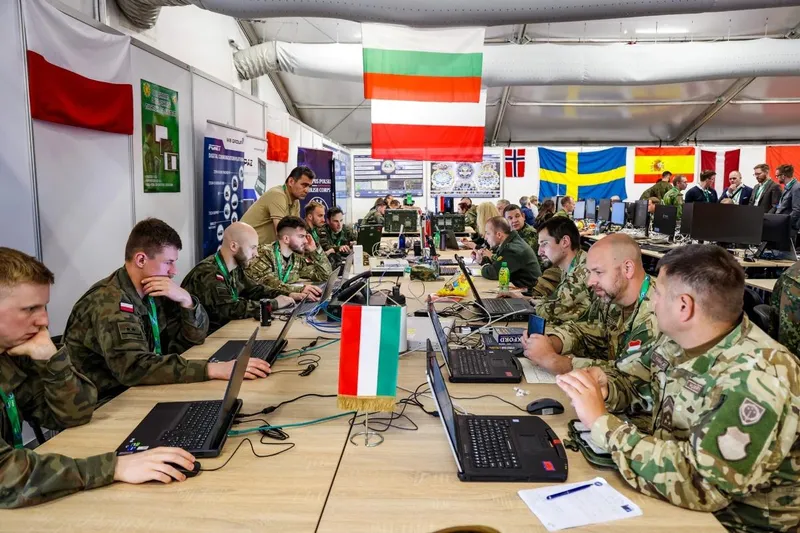
The objective is no longer simply to fund joint research or help several governments purchase equipment whose specifications have already been defined. It is to align military requirements, industrial development, technical standards, production capacity and, eventually, procurement around systems designed from the outset to operate across several countries.
It is a subtle shift in the centre of gravity.
The European Union is not becoming a European ministry of defence. Armed forces remain national, procurement decisions remain largely in the hands of governments, and EDPCIs are legally collaborative industrial projects intended to contribute to the development of Member States’ military capabilities.
But Brussels is beginning to create mechanisms through which convergence can take place before orders are placed.
€325 million against €190 billion
The disparity between the numbers illustrates both the scale of the ambition and its principal weakness.
The European Defence Industry Programme has an EU-level budget of €1.5 billion. Of this, €325 million has been allocated to the establishment and initial deployment of the five projects. When the Commission proposed them on 3 July, however, it referred to a combined financial ambition of around €190 billion by 2036.
The two figures therefore describe very different things.
The European Union has not authorised €190 billion in spending. Nor has it established that this amount will ultimately be spent. The figure represents the estimated financial scale of the five architectures if participating governments progressively turn military requirements into programmes and programmes into procurement orders.
Most of the money will have to come from elsewhere: national defence budgets, joint procurement and potentially future European instruments, including the European Competitiveness Fund. The Council explicitly indicates that current funding is intended to launch the projects and prepare the possibility of additional European support.
The €325 million therefore does not finance the European defence architecture envisioned for 2036. It finances the mechanism intended to make that architecture possible.
And that is precisely why its importance cannot be measured by its size alone.
Industrial policy in uniform
Behind the military capabilities lies another transformation: that of European industry.
EDIP is not simply designed to increase defence spending. The programme introduces criteria intended to keep a substantial share of industrial value within the European economic and security space.
For the relevant actions, the cost of components originating outside the Union and associated countries cannot exceed 35% of the estimated component cost. Beneficiaries must also retain the ability to determine the definition, adaptation and evolution of a system’s design without restrictions imposed by non-associated third countries or their companies.
The issue, in other words, is no longer simply what Europeans will buy. It is where systems will be designed, where their components will be produced and who will retain the ability to modify them.
If the five projects eventually reach their intended scale, their consequences will therefore extend far beyond defence ministries. They could influence industrial investment, factory locations, supply chains, technological choices and the distribution of contracts between Europe’s major defence groups and their suppliers.
Defence policy is becoming production policy as well.
Ukraine enters the machinery
Ukraine’s participation adds another dimension to the mechanism.
Since 2022, Kyiv’s military integration into the European security space has largely been organised around assistance: weapons deliveries, financing, training, maintenance and the replenishment of stocks. The EDPCIs open a different stage.
Ukraine can now participate in industrial projects intended to structure some of Europe’s future military capabilities. It is therefore no longer positioned solely at the receiving end of a supply chain. It can enter the design and production chain itself.
That evolution is particularly significant in areas where Ukrainian operational experience has accelerated changes in European warfare: drones, counter-drone systems, air defence, electronic warfare and the rapid adaptation of military systems.
Norway also participates in the framework, illustrating another feature of the architecture taking shape: the industrial base sought by the Union does not correspond exactly to the EU’s political borders. It is being constructed around a broader European security space while remaining connected to NATO.
The difficult part comes next
Creating five common architectures is relatively straightforward on paper. Turning them into operational systems will be considerably harder.
Prime contractors will have to be selected. Contracts will have to be distributed. Technologies will have to be chosen. Intellectual property will have to be organised. Governments will have to determine which national capabilities should be adapted, combined or abandoned. Above all, they will have to turn common intentions into firm procurement orders.
That is where the real test begins.
The history of European armaments cooperation contains numerous programmes in which national requirements, industrial interests and budgetary compromises progressively complicated the original ambition. Creating a European framework does not eliminate those forces. It attempts to organise them before they produce another generation of competing systems.
The central question, therefore, is no longer whether Europe can imagine a common defence architecture for its airspace, seas, space assets and eastern frontier.
It just has.
The question is whether twenty or thirty national budgets can agree, for a decade, to finance the same architecture.
28 September did not create a European army. Nor did it commit €190 billion.
It created something less spectacular, but potentially more consequential: a place where Europeans will have to decide, before building their next weapons, whether they still intend to build them separately.
Main sources
Council of the European Union — “European defence industry: Council identifies the first five projects of common interest”, 28 September 2026.
European Commission, DG Defence Industry and Space — “Commission proposes five joint defence projects to strengthen Europe’s industrial capabilities”, 3 July 2026.
Regulation (EU) 2025/2643 of the European Parliament and of the Council establishing the European Defence Industry Programme (EDIP), EUR-Lex.
Council of the European Union — institutional documentation on the European Defence Industry Programme.
Atlas Limits Research Desk
Atlas Limits’ editorial and analytical desk.