After three consecutive Saturdays of demonstrations, participation is declining, but social tensions persist. Between purchasing power, youth demands, public order and fiscal constraints, France is entering a new phase of social confrontation whose outcome remains uncertain.
Three Saturdays, One Persistent Divide
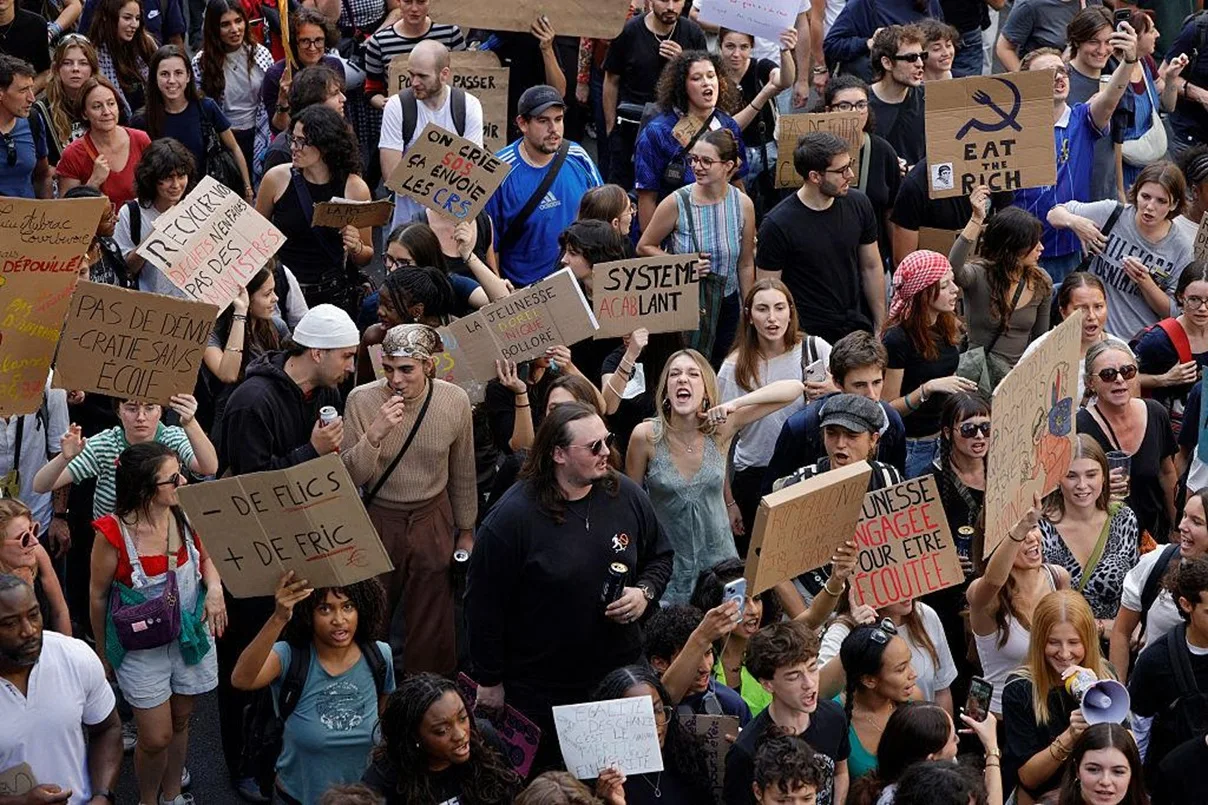
On Saturday, October 31, hundreds of thousands of people once again took to the streets across France. In Paris, Lyon, Marseille, Bordeaux, Rennes and numerous other cities, demonstrators continued a movement that began in mid-October over the rising cost of living, deteriorating public services and the conditions facing young people in education.
Participation declined for the second consecutive weekend. According to the Ministry of the Interior, 320,000 people participated in 291 demonstrations and protest actions nationwide, including 70,000 in Paris. The inter-union coalition of youth organizations reported a substantially higher estimate, approaching 500,000 participants nationally and 200,000 in the capital.
Such discrepancies between official and organizers' estimates are common during major French demonstrations. They do not alter the central observation: the movement remains significant, but its numerical momentum is weakening.
On October 17, authorities counted 550,000 demonstrators across 441 protest actions. A week later, on October 24, they recorded 410,000 participants in 289 gatherings. The third Saturday therefore marked a 22% decline compared with the previous week and a decrease of nearly 42% since the beginning of this protest cycle.
Yet the decline in participation has not been accompanied by a geographical retreat. The number of protest actions remained close to the October 24 level, suggesting a movement that is less concentrated but still widely distributed across the country.
This is one of the defining characteristics of the current situation: the protest movement is losing numerical strength without disappearing from public life. It is entering a phase in which its ability to endure, broaden its social base and influence the balance of power may matter more than attendance figures alone.
From Purchasing Power to a Broader Social Protest
The demands expressed during the demonstrations now extend beyond any single social group or public policy.
Purchasing power remains a central point of convergence. Housing costs, energy prices, transportation expenses and everyday necessities are contributing to concerns about living standards, particularly among households whose incomes leave little room to absorb essential expenditures.
But the mobilization also has a generational dimension. High school and university organizations have denounced educational conditions, insufficient institutional resources and uncertainty surrounding young people's future prospects. Their demands extend beyond immediate economic pressures, raising broader questions about the capacity of public institutions to provide adequate education and meaningful opportunities for professional integration.
These concerns are accompanied by those of employees and trade unions regarding wages, employment, public services and the country's industrial future.
The resulting movement is not, however, entirely unified. Youth organizations, labor unions, local collectives and other protest groups do not necessarily share the same priorities or methods of action.
This diversity represents both a strength and a limitation. It allows different grievances to converge in the streets, but makes it more difficult to formulate a common agenda capable of producing concrete negotiations.
The challenge is therefore no longer simply to sustain mobilization. It is to transform an accumulation of demands into collective bargaining power. 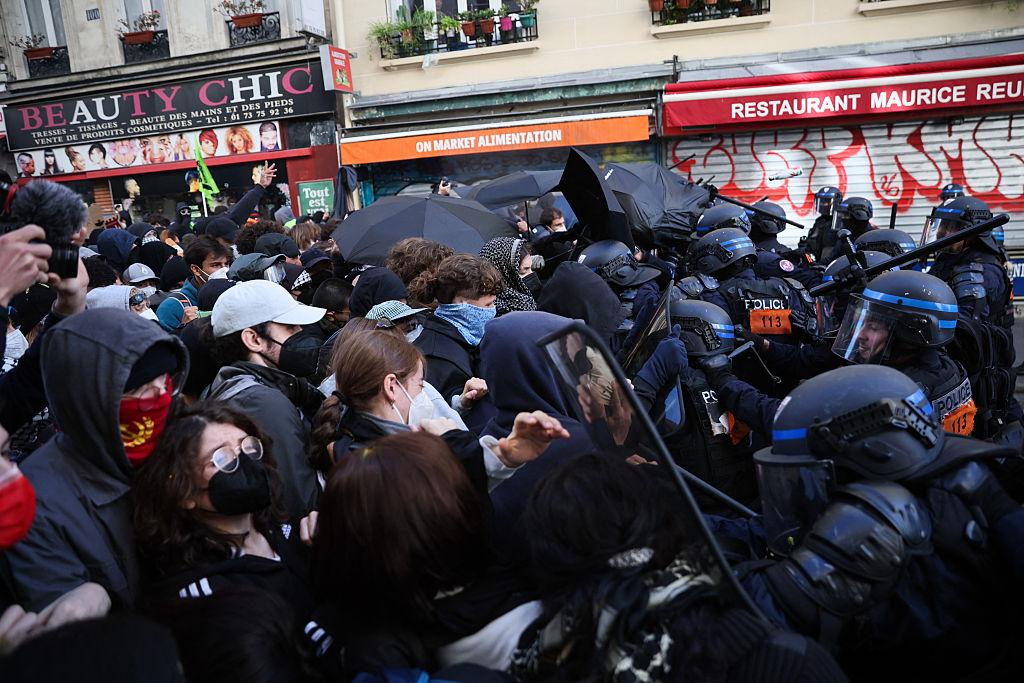
Public Order Becomes a Central Issue
The third Saturday also confirmed the growing importance of security considerations.
Authorities adjusted their approach to managing demonstrations following violence during previous weekends. Several protest routes were redirected away from city centers and sensitive commercial districts. Security forces conducted approximately 40,000 checks nationwide, particularly at railway stations and along major transportation routes.
Most demonstrations proceeded to their conclusion. Nevertheless, tensions emerged during dispersals, particularly in Paris, Grenoble and Marseille.
In the capital, Molotov cocktails were thrown toward gendarmes. The Paris prosecutor's office opened an investigation into attempted homicide against law enforcement officers. In Marseille, tear gas and crowd-control grenades were deployed following an initially peaceful demonstration. In Lyon, traffic restrictions and security checks complicated access to parts of the city center.
The national figures released on Sunday distinguish between two separate periods. By 9 p.m. on Saturday, authorities had recorded 565 arrests and 116 injured police officers or gendarmes. After that time, during events associated with Halloween night, an additional 214 arrests and 43 injuries among security personnel were reported.
The combined total of 779 arrests and 159 injured law enforcement officers should therefore not be attributed exclusively to the social demonstrations.
Authorities also reported damage to 36 businesses, including three that were looted, compared with 69 damaged businesses and 24 looted establishments the previous weekend. Emergency services responded to 515 fires throughout the day and night.
These figures indicate a substantial reduction in commercial damage and protest-related arrests compared with previous demonstrations, without suggesting that violence has disappeared.
Distinguishing between peaceful demonstrators, individuals involved in confrontations and nighttime incidents unrelated to social demands remains essential to understanding the situation.
The government maintains that its security arrangements are intended to protect the right to demonstrate while preventing violence and property damage. Protest organizations, meanwhile, have criticized certain policing methods and restrictions that they argue may limit collective expression.
Beyond the immediate incidents, the underlying question concerns the balance between freedom of assembly, public safety and the protection of urban spaces.
Social Demands Confront Fiscal Constraints
The persistence of demonstrations comes at a time when the economic and social measures demanded by protesters face the constraints of public finances.
Improving purchasing power can involve several mechanisms: wage increases, social transfers, taxation, targeted assistance or reductions in essential household expenses. Yet these instruments differ considerably in their fiscal costs and their effects on businesses, households and inflation.
Demands concerning education, healthcare and public services raise an additional difficulty. They frequently involve structural needs — staffing, equipment, institutional operations and investment — that cannot be sustainably addressed through temporary measures.
Public authorities therefore face a complex trade-off: responding to immediate social demands while preserving fiscal sustainability and the capacity to finance long-term policies.
This does not mean that concessions are necessarily impossible. It means that any decisions must be financed, prioritized or offset elsewhere.
For trade unions, the distribution of economic adjustment becomes a central issue. For the government, the challenge is to identify responses credible enough to reduce tensions without creating additional financial imbalances.
The tension between social needs and fiscal constraints is among the most enduring dimensions of the current protest cycle. It extends beyond the immediate demonstration calendar and raises broader questions about the financing of France's social model.
Young People at the Center of the Movement's Continuity
The prominent role played by high school and university students is a particularly distinctive feature of the current mobilization.
Youth organizations have announced further actions beginning in the week of November 2. Calls for school and university blockades have been issued for Monday and Tuesday, with another mobilization planned for Thursday.
These initiatives follow several measures presented by the authorities in response to youth concerns. However, the organizations involved maintain that the proposed responses do not adequately address their demands.
The ability of students to sustain mobilization during the working week will be an important indicator of the movement's trajectory.
Saturday demonstrations allow participants from different professional and personal backgrounds to gather. School blockades and strikes introduce another form of collective action, more directly connected to the daily functioning of institutions.
Their impact will nevertheless depend on actual participation among students, teachers, university personnel and representative organizations. National calls for action do not automatically translate into uniform mobilization across educational institutions.
Young people can help maintain the visibility of the protest movement. They cannot, however, determine its ability to influence national economic and social decisions on their own.
That capacity will depend largely on coordination with organized labor.
November 5: A Potential Shift in Scale
The next major milestone is scheduled for Thursday, November 5, with a nationwide day of strikes and demonstrations.
The distinction from the previous three Saturdays is significant.
Weekend demonstrations have primarily measured participation in public protest. A nationwide strike can introduce disruptions to economic activity, transportation, educational institutions and certain public services, depending on the extent of employee participation.
It can also provide a clearer indication of whether trade unions are capable of bringing together demands that extend beyond youth-led movements.
The November 5 call brings together several major labor organizations around wages, employment, public services and industry.
The central question will therefore not simply concern the number of demonstrators in the streets. It will involve participation in work stoppages, their distribution across sectors and regions, and the possibility of negotiations.
A substantial mobilization could strengthen unions' bargaining position. More limited participation would highlight the difficulties of coordination among the movement's different components.
In either case, the day should provide a more precise indication of the depth of social discontent and the organizational capacity behind it.
The Government Faces Three Different Timelines
French authorities must now manage three timelines that do not necessarily coincide.
The first concerns public order. Every demonstration requires security personnel, decisions by local administrative authorities and coordination with municipal governments. Repeated gatherings place sustained demands on human and material resources.
The second concerns social negotiations. Demands involving wages, education, working conditions and public services require identifiable negotiating partners, specific commitments and, in some cases, discussions with employers or the relevant public administrations.
The third concerns economic and budgetary decisions. Structural responses require more time, particularly when they involve recurring expenditures or changes to financing arrangements.
The mismatch between these three timelines can contribute to prolonged tensions.
A government measure announced quickly may not produce immediate material effects. Conversely, social mobilization may continue even after negotiations begin if the organizations involved consider the commitments insufficient.
The government may seek to distinguish demands that can be addressed in the short term from transformations requiring a longer horizon. Trade unions, meanwhile, may attempt to maintain pressure to ensure that negotiations produce more than symbolic concessions.
This interaction will largely determine the evolution of social tensions over the coming weeks.
A Movement in Decline, but Not Yet Concluded
The October 31 assessment presents a mixed picture.
Demonstrations remain substantial, involving hundreds of thousands of participants, but attendance is declining. Violent incidents and commercial damage have decreased compared with previous weekends, while authorities continue to maintain extensive security arrangements. Youth organizations are pursuing further action, and trade unions are preparing a nationwide mobilization that could alter the movement's character.
None of these developments, taken individually, is sufficient to conclude that the movement is definitively losing momentum or that the country is heading toward an uncontrollable political crisis.
Declining participation may reflect reduced engagement, protest fatigue or a shift toward other forms of collective action. The available evidence does not yet allow these explanations to be distinguished with confidence.
Similarly, the persistence of demonstrations does not guarantee the emergence of a sufficiently coherent balance of power to secure substantial policy changes.
France is therefore entering a transitional phase between a highly visible protest movement driven by large gatherings and a form of mobilization whose effectiveness will increasingly depend on organization and coordination.
The economic question remains central to this evolution. Demands concerning purchasing power and public services will not automatically disappear as demonstration numbers decline. Their translation into policy will depend on negotiations, fiscal decisions and the ability of social actors to establish common priorities.
November 5 should offer a clearer indication of the extent of that convergence.
France's protest movement is no longer confronting only the question of numbers. It is entering a test of endurance, cohesion and political translation. What will determine the next phase is not simply the repetition of demonstrations, but their capacity to generate meaningful social dialogue and lasting responses.
Atlas Limits Research Desk
Atlas Limits’ editorial and analytical desk.