In Seoul, a television series can inspire people thousands of miles away to learn Korean. In Fez, a medina preserves, through its streets, crafts and institutions of learning, a history that changes of regime have not erased. At an American university, students from several continents learn a way of producing knowledge as much as they earn a degree. In Mecca, the pilgrimage places individual journeys within a shared spiritual geography. 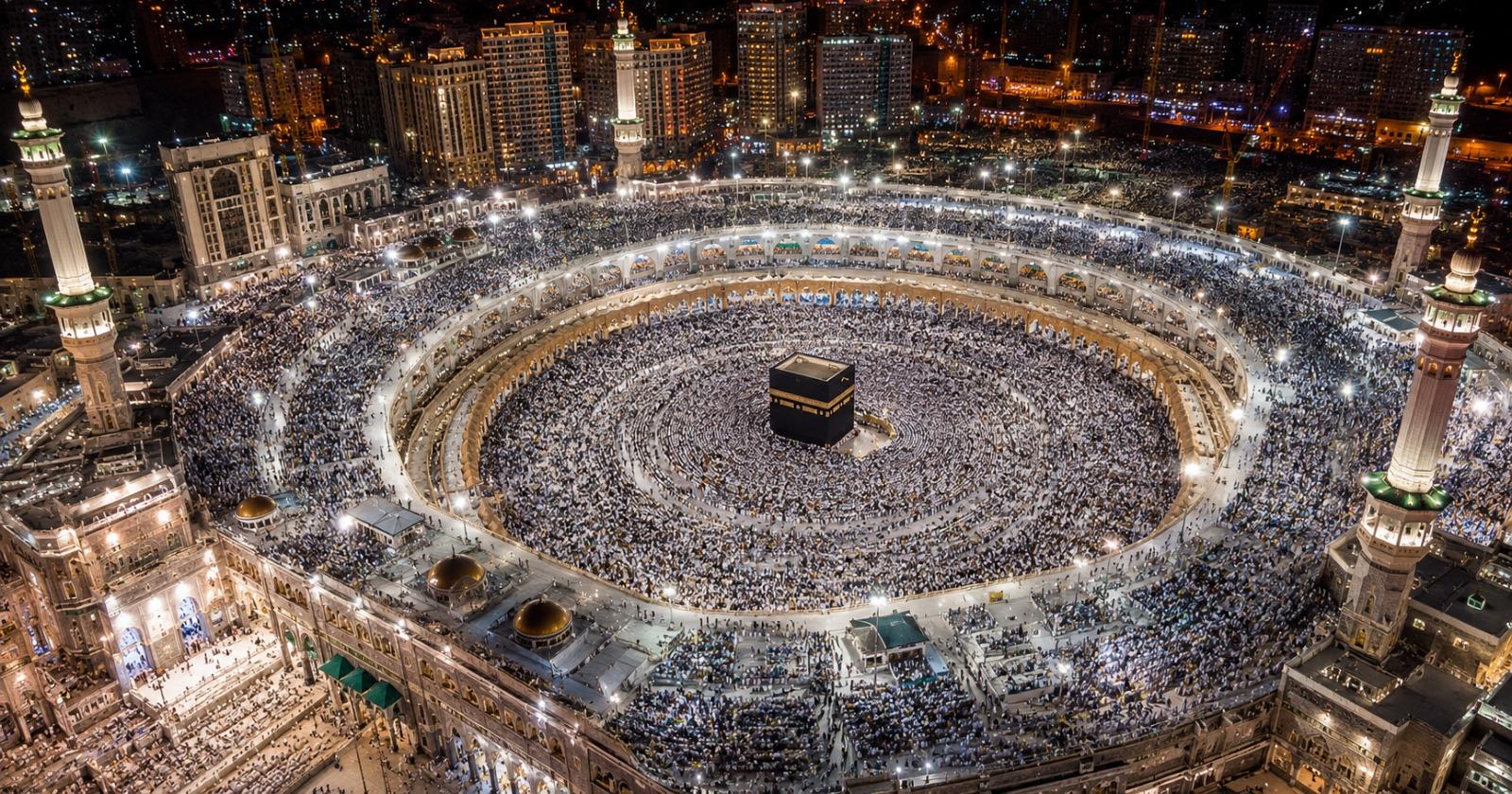 These experiences involve different forms of influence and unfold on different timescales. Yet each demonstrates that a society can matter to other societies without directly imposing a decision on them. It shapes practices, makes certain references familiar and influences aspirations. Sometimes, its influence outlives the state that once sustained it.
Military power can compel. Economic power can create dependence. Civilizational power operates at a different depth: it helps determine what people pass on, admire, consider legitimate or imagine for their future.
But historical depth guarantees no influence. Societies with extraordinary inheritances can struggle to transmit them, while countries with more recent national institutions can profoundly shape global behaviour. Between possessing a heritage and exercising power lies a demanding chain of activity: preserving, teaching, creating, organizing, distributing and renewing.
Civilizational power emerges when an inheritance becomes a living capacity.
An Inheritance Is Not Yet a Form of Power
The concept requires an initial distinction. A civilization is neither a homogeneous population nor an unchanging collective personality. Over long periods, it brings together languages, beliefs, knowledge, institutions, works of art and practices that circulate, evolve and become subjects of dispute. Its boundaries shift. Its members do not necessarily share a state, a political system or an identical understanding of their history.
Europe developed through Greco-Roman, Jewish, Christian, Muslim, humanist and scientific inheritances, but also through internal wars and exchanges with other regions. Muslim worlds encompass Arab, Persian, Turkish, African and Asian societies whose trajectories cannot be conflated. India contains religious and linguistic diversity that cannot be reduced to a single narrative. Africa is no more a single civilization than Asia.
Discussing civilizational power therefore does not mean ranking peoples by their worth. It means examining the capacity of societies and human networks to sustain their cultural and intellectual references over time, renew them and extend their relevance beyond their places of origin.
This capacity differs from soft power, although the two overlap. Soft power describes, among other things, the ability to influence the preferences of others through culture, values or institutional credibility. Civilizational power includes this outward influence, but also an internal dimension: the ability to transmit an inheritance, incorporate new contributions and maintain an intelligible continuity between generations.
A language can survive the disappearance of an empire. A legal tradition can structure institutions long after the end of the domination that spread it. A religion can extend its influence without a single political authority. Conversely, a state can possess a formidable military while inspiring little enthusiasm for its social order.
The power of a state and that of a civilizational inheritance can reinforce one another. They can also diverge.
The Foundations: Transmission, Institutions and Renewal
The first infrastructure of civilization is transmission. Families, schools, languages, places of worship, libraries, universities, workshops and media connect inherited memory with lived experience. Without them, heritage becomes a collection of traces whose meaning gradually fades.
Language plays a decisive role. It makes it possible to recount the past, but also to formulate new problems. Its vitality depends on more than the number of people who speak it. It rests on its presence in research, law, business, creative work and digital tools. A language can be widely spoken yet remain marginal in the settings where knowledge and decisions are produced.
Population nevertheless provides a particular depth. In the United Nations’ estimates for 2024, India had approximately 1.45 billion inhabitants and China 1.42 billion. Each therefore possesses an enormous potential base for transmission, production and consumption. Yet demographic scale does not automatically become influence: education, health, employment and institutional quality determine what a society can achieve with that scale.
Institutions form the second foundation. They give continuity a concrete form. A university that preserves its archives, a court whose decisions command recognition, an administration capable of pursuing a project over several decades, or a system that finances research converts declared values into practices that can be sustained.
Civilizational power therefore has a material base. Libraries need budgets; creative works need publishers and distributors; researchers need laboratories; monuments need maintenance; languages need educational and digital resources. Treating culture and economics as separate spheres obscures this interdependence. In its 2022 global report, UNESCO estimated that cultural and creative sectors accounted for 3.1% of global GDP and 6.2% of employment. These figures do not measure a civilization, but they underline that contemporary cultural creation also rests on productive activity.
A third foundation is the capacity to adapt. A tradition that can no longer be questioned risks losing its relevance. Major historical exchanges have depended on translation, borrowing and transformation: Greek knowledge was taken up and developed in Arabic-speaking societies before contributing, through several channels, to European intellectual life; Buddhism, which originated in India, was reinterpreted across numerous Asian societies.
Continuity does not mean immobility. It requires a society to recognize something of itself in what it is becoming.
Finally, a civilization gains credibility through the experience offered by the societies that invoke it. The quality of education, trust in institutions, the position of women, the freedom to create and the treatment of minorities influence its appeal abroad. A narrative can attract attention; living conditions help determine whether that attraction endures.
Different Expressions of Power
Europe and the United States illustrate two connected but distinct configurations. Europe retains influence through its languages, universities, legal traditions, heritage and approaches to social protection. Some of this global reach resulted from colonialism and domination: its spread cannot be described simply as a voluntary encounter between cultures.
The European Union adds a particular capacity to these inheritances: the ability to turn certain collective preferences into rules governing a large market. When businesses adapt their products or practices to gain access, a conception of consumer protection, competition or privacy acquires effects beyond Europe’s borders. That influence nevertheless depends on market size, enforcement capacity and the economic appeal supporting those rules.
The United States has developed a particularly powerful relationship between universities, research, capital, cultural industries and technology. Film, music and digital platforms circulate narratives, but also ways of working, imagining success and conducting public debate. The country’s ability to attract talent from abroad contributes directly to this production.
Such influence does not require widespread support for American policy. People can criticize Washington while using American digital tools, studying at American universities or adopting the categories of American public debate. This separation between political opinion and everyday practice is precisely what gives certain forms of influence their depth.
China presents a different relationship between heritage, the state and modernization. Its political leadership draws on Chinese history to place its actions within a narrative of continuity and national restoration. Yet contemporary China also emerged from revolutionary ruptures, institutional borrowing and extensive integration into global trade. Its trajectory cannot be explained by an unchanging cultural essence.
China’s industrial power now gives this international presence a material form: equipment, infrastructure and technology establish lasting relationships with other societies. But selling a product, financing a project or inspiring admiration for an achievement does not necessarily generate support for the political model associated with it.
India, meanwhile, combines historical depth, religious diversity, film industries, diaspora networks and technological expertise. Yoga, cuisines, creative works and spiritual practices often travel far beyond the objectives of its diplomacy. Much of this influence rests on a diversity that any attempt to impose a single representation places under strain. Invoking a shared inheritance can strengthen collective belonging; reducing that inheritance to one component can diminish its richness.
Japan and South Korea demonstrate that global influence does not require a population on a continental scale. Design, manga, video games, television series and music combine local references with formats accessible elsewhere. Their circulation depends on creative work, but also on businesses, financing, technical expertise and distribution systems.
South Korean content exports reached $12.4 billion in 2021, according to official figures cited by UNCTAD. Behind a song or television series stands a productive organization capable of taking a creation abroad, making its cultural references accessible and extending its reach into other activities. 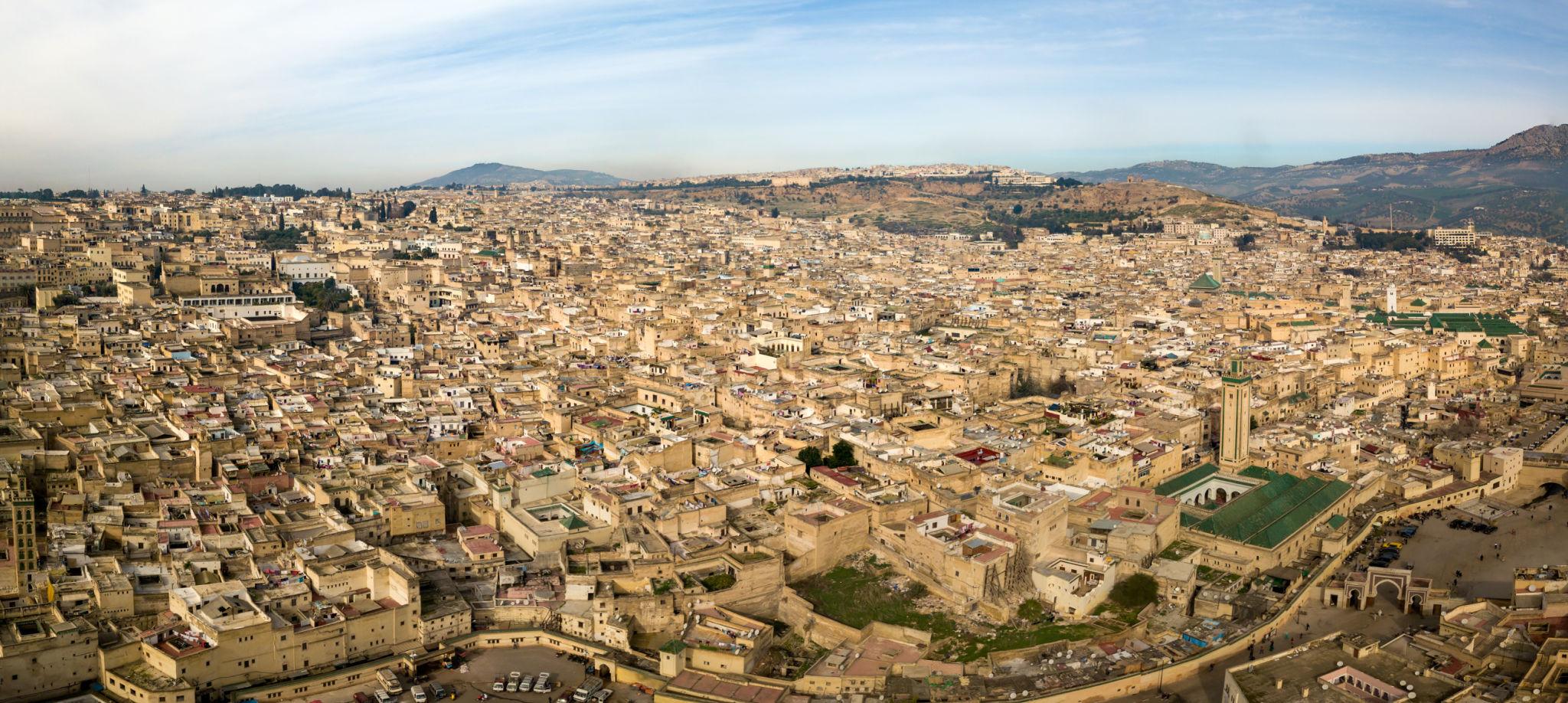
A Geography Beyond the Great Powers
These national configurations cannot describe the world in full. Some of the most enduring forms of influence cross several states and have no uncontested centre.
Muslim worlds provide a major example. Texts, religious practices, pilgrimage, scholarly traditions, architecture and trade have created relationships extending far beyond political borders. This shared depth does not erase theological differences or national rivalries. No state can claim to represent societies as different as those of the Maghreb, the Middle East, the Sahel and Southeast Asia.
The distinction between the Arab world and Muslim worlds is essential. Arabic carries both a transnational religious function and literary, media and intellectual traditions that cannot be reduced to religion. Persian and Turkish inheritances have their own continuities. Indonesia, meanwhile, demonstrates how deeply the history of Islam is also rooted in Asian, maritime and commercial settings.
Morocco offers a way to understand this plurality within a single country. Its Amazigh, Arab, Islamic, African, Andalusian, Jewish and Mediterranean components are more than a collection of references. Their interaction can enrich creative work, education, cultural diplomacy and the ways people inhabit their surroundings. Their influence nevertheless depends on the place they actually occupy in contemporary life, beyond their presentation as heritage.
Russia also draws on a substantial literary, scientific, religious and imperial inheritance. Yet the circulation of literature or language cannot be equated with support for Moscow’s policies. More broadly, when a state describes neighbouring populations as members of a shared civilizational space, that assertion establishes no right over their sovereignty. A shared history does not remove the freedom to choose a distinct political path.
African societies require another adjustment to the map of power. Their intellectual traditions, languages, creative works and historical experiences cannot be reduced to a uniform whole. From music to cinema, fashion to literature, their influence can travel widely even when producers have limited resources.
In its mapping published in 2021, UNESCO estimated that Africa’s film and audiovisual industries employed approximately five million people. The social importance of this production coexisted with substantial shortcomings in financing, training and distribution. The challenge is therefore not merely to create works that interest the world, but to build the structures that allow their creators and economies to benefit from them.
Latin America and the Caribbean likewise demonstrate how dispersed influence can be. Their literatures, music, religious practices and popular cultures carry histories that bring together Indigenous worlds, European colonization, slavery and African diasporas. Their reach does not correspond to a common political authority. Yet it transforms sensibilities and practices far beyond the region.
Southeast Asia, Oceanian societies and Indigenous peoples also remind us that a civilizational presence need not take the form of a universal ambition. Knowledge of navigation, land, living environments or community organization can acquire new relevance in response to contemporary problems. Its recognition nevertheless requires those who hold that knowledge to retain a say in how it is transmitted and used.
Power Also Belongs to Those Who Organize Circulation
Diasporas connect these different geographies. They transmit languages, support families, create businesses and circulate creative works and expertise. They also transform the inheritances they carry. They are neither intact reproductions of their societies of origin nor automatic instruments of their governments.
Cities play a comparable role. A university, financial, religious or artistic metropolis can become a centre of influence whose networks extend beyond those of its state. The places where people meet, study and produce together often contribute more to international influence than official declarations of national greatness.
But cultural circulation now has its own concentrations of power. Producing a film does not mean controlling its distribution. Speaking a language does not guarantee its presence in digital interfaces. Possessing archives is not enough to make them accessible.
According to UNCTAD’s Creative Economy Outlook 2024, global exports of creative services reached $1.4 trillion in 2022, compared with $713 billion for creative goods. These categories include digital activities and are not confined to the arts. Their scale nevertheless underlines how much contemporary influence depends on services, rights and distribution infrastructure.
Platforms help determine what becomes visible, recommended and profitable. Search engines organize access to knowledge. Artificial intelligence systems add another layer of mediation: their training material, language capabilities and response criteria influence the representations they produce.
A society can therefore become more visible while remaining dependent on the means through which it is discovered. It can export images of itself without controlling the associated revenues, data or rights.
The civilizational question then becomes a matter of concrete choices: financing translation, training teachers, preserving archives, supporting research, paying creators and developing digital resources in local languages. The prestige of an inheritance removes none of these investment requirements.
Enduring Without Becoming Fixed
The main weakness of civilizational reasoning appears when it turns complex histories into closed blocs. It then makes conflicts easier to narrate than to understand. Territorial rivalries, economic interests and regime strategies are presented as expressions of eternal antagonisms.
This interpretation erases internal disagreements, multiple identities and possibilities for cooperation. It also allows a government to present itself as the exclusive guardian of an identity, then treat criticism as a threat to the community itself.
Yet a civilization never speaks with a single voice. Its vitality also appears in its debates, reforms and dissenting works. In its 2001 Declaration on Cultural Diversity, UNESCO explicitly linked the recognition of identities to pluralism and respect for human rights. Protecting an inheritance cannot justify suspending the rights of the individuals who keep it alive.
Civilizational power is therefore measured neither by the number of monuments nor by the proclaimed antiquity of a history. It is visible in the ability to educate new generations, produce knowledge, welcome outside contributions and offer ways of living that retain their meaning.
It also requires a distinction between influence and domination. A freely adopted practice, a work reinterpreted elsewhere or an institution that others choose to emulate can demonstrate a more enduring reach than loyalty secured through coercion. Nor is that influence necessarily a zero-sum game: learning a language or discovering a tradition does not require abandoning one’s own.
For societies with long historical inheritances, as for those shaped by migration and cultural mixing, the challenge is ultimately similar. The past must be given the means to exist in the present without being granted the power to close off the future.
Civilizational power begins when an inheritance remains capable of producing something new. It endures when others can draw on it freely—and find within it the means to build a future of their own. 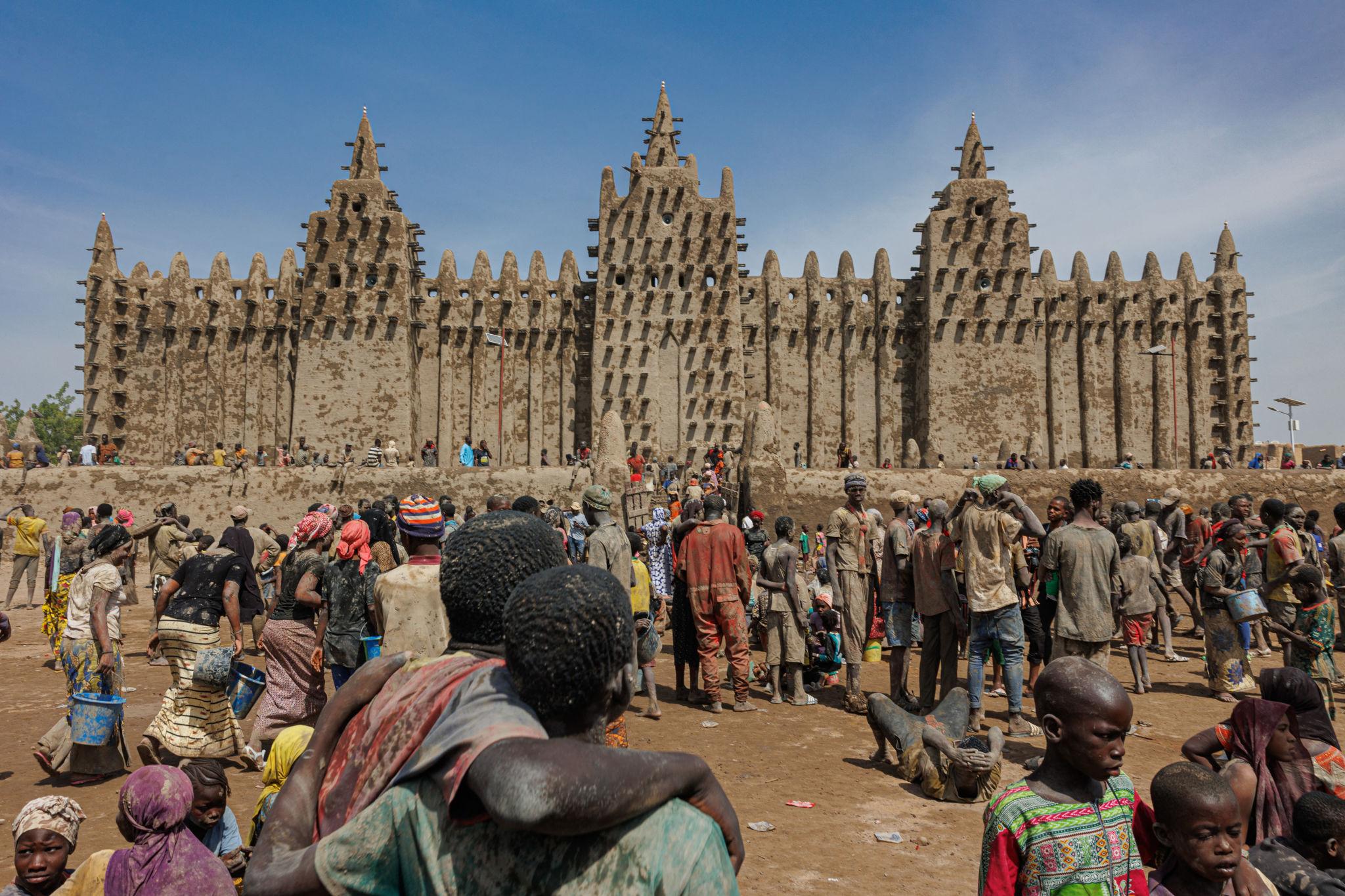
Atlas Limits Research Desk
Atlas Limits’ editorial and analytical desk.