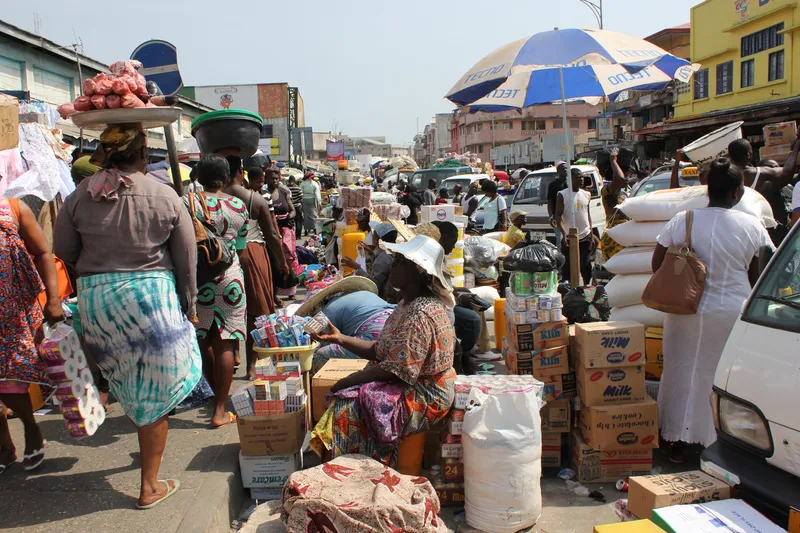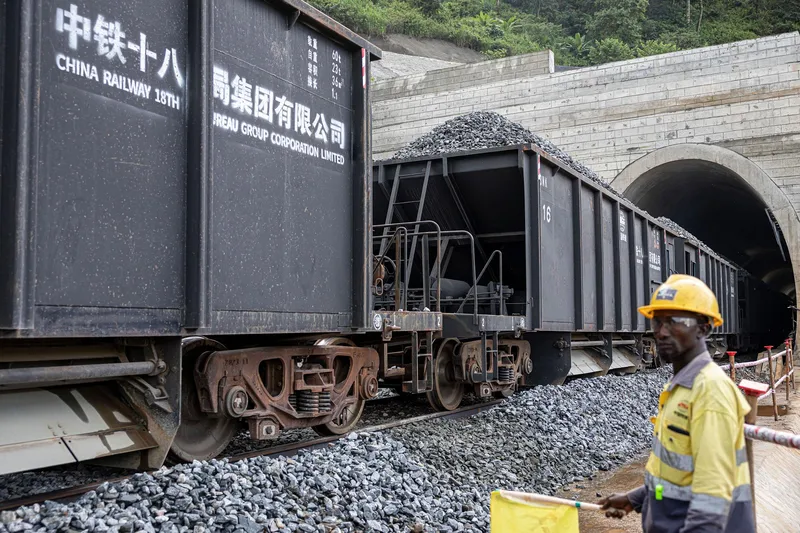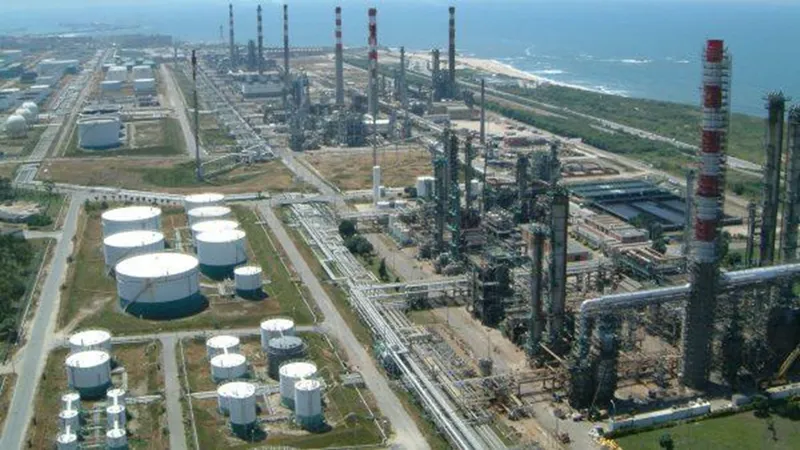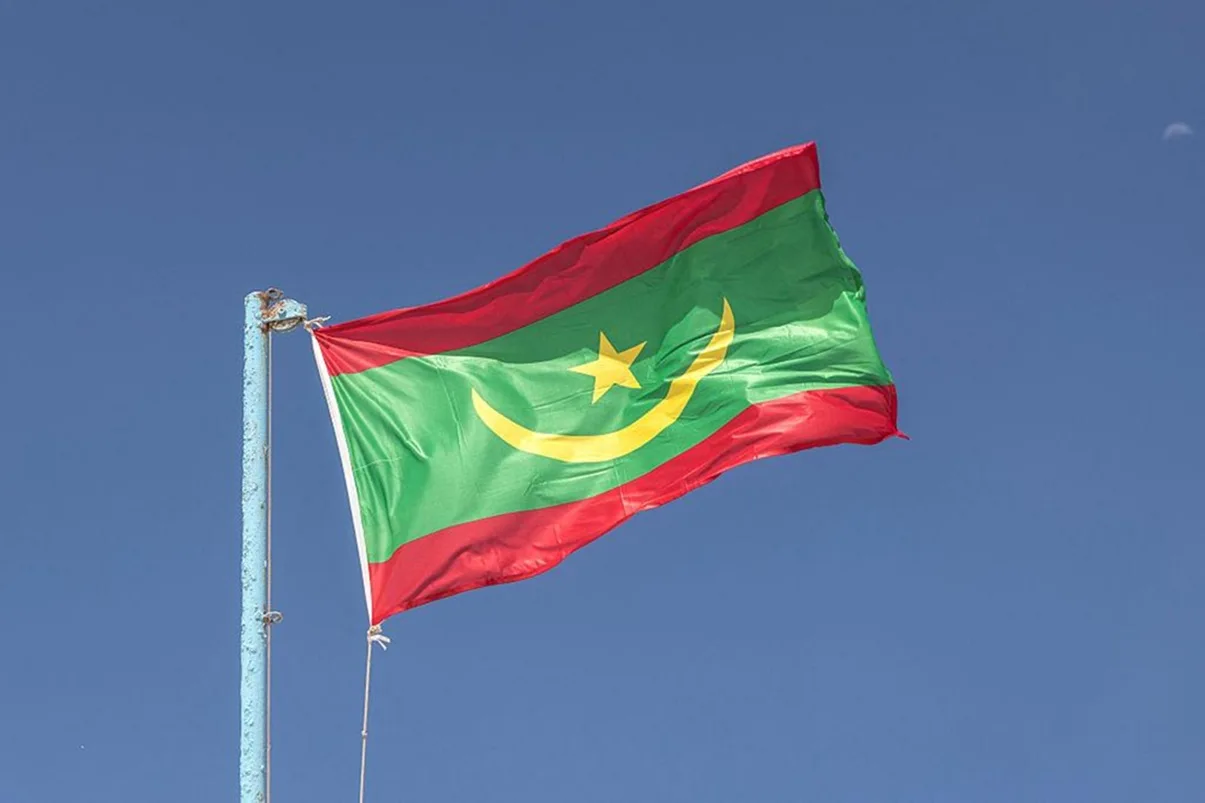
Long regarded as a transitional territory between the Maghreb and sub-Saharan Africa, Mauritania now occupies a distinctive position in the continent’s geopolitical and economic transformation. Its mineral resources, emerging natural gas industry, renewable energy potential, and Atlantic coastline offer new opportunities for development. Yet behind these advantages lies a fundamental question: can a country historically dependent on raw material extraction transform its geography and natural wealth into instruments of industrialization, economic development, and lasting strategic influence?
Mauritania belongs to a category of states whose strategic importance cannot be measured solely by the size of their economies or populations.
Covering more than one million square kilometers, with an estimated population of 5.5 million in 2026 and approximately 750 kilometers of Atlantic coastline, the country occupies a geographical crossroads between several regional systems whose political and economic trajectories are increasingly diverging.
To the north lies the Maghreb, shaped by enduring diplomatic rivalries. To the east stretches the Sahel, where armed insurgencies, military realignments, and the weakening of regional cooperation frameworks have transformed the political landscape. To the south, Senegal provides a connection to the economies of West Africa. To the west, the Atlantic Ocean has become a major arena for international trade, energy competition, and strategic projection.
For much of its modern history, this geography imposed considerable constraints on Mauritania.
Today, it may become one of its most valuable strategic assets.
The country possesses substantial iron ore deposits, gold resources, productive fishing grounds, and newly developed offshore natural gas reserves. Its solar and wind potential has also attracted international investors interested in producing low-emission hydrogen and its derivatives.
Yet the accumulation of natural wealth does not automatically generate industrial diversification or improvements in living standards.
Africa's economic history offers numerous examples of resource-rich economies that have generated substantial export revenues without developing the industrial capacity, employment opportunities, and institutions necessary for sustained economic transformation.
Mauritania stands precisely at this intersection.
It is entering a new phase of economic development at a time when regional balances of power, global energy markets, and international supply-chain strategies are undergoing profound changes.
A Territory Shaped by Trade Routes and Political Borders
Mauritania's strategic position is rooted in a history extending far beyond the establishment of the modern state.
For centuries, the territories corresponding to present-day Mauritania formed a zone of circulation between Saharan societies, the commercial centers of the Maghreb, and the kingdoms of West Africa.
Trans-Saharan trade routes carried salt, gold, agricultural products, textiles, and numerous other commodities.
They also facilitated the movement of religious scholarship, intellectual traditions, and cultural influences.
Historic settlements such as Chinguetti, Ouadane, Tichitt, and Oualata still bear witness to this period.
Their importance extended well beyond their populations. They participated in commercial and cultural networks linking the Mediterranean world to territories south of the Sahara.
The formation of modern Mauritania under French colonial rule gradually transformed this interconnected geographical space into a defined administrative territory.
Independence, proclaimed on November 28, 1960, opened a particularly complex period of state-building.
The new republic had to administer an immense, sparsely populated territory marked by significant geographical and social disparities while asserting its sovereignty within a region affected by territorial disputes.
The Western Sahara question played a decisive role during the country's early decades.
Following Spain's withdrawal, Mauritania became involved in the conflict in 1975 before abandoning its territorial claims in 1979.
This episode profoundly affected the country's political and military institutions.
The following decades were characterized by changes of government, the armed forces' considerable influence over political life, and successive attempts to establish institutional stability.
The 2019 presidential election represented a significant milestone, with power transferred between two elected presidents, Mohamed Ould Abdel Aziz and Mohamed Ould Cheikh El Ghazouani, within a political system where the military retained substantial historical influence.
Reelected in June 2024, President Ghazouani continued to emphasize institutional continuity, infrastructure development, security, and economic modernization.
This continuity has not eliminated the country's structural challenges, including social inequalities, the legacies of slavery and discrimination, access to public services, and political representation.
Nevertheless, it has provided a relatively predictable institutional framework in a region where several neighboring countries have experienced major political disruptions.
The Paradox of a Resource-Rich Economy
Mauritania's economic structure has historically depended on a limited number of activities: mining, fishing, livestock production, trade, and services.
This concentration explains much of its vulnerability.
When international iron ore or gold prices increase, export revenues rise and fiscal resources may expand.
Conversely, a downturn in global commodity markets can rapidly affect the national economy.
According to data published by the Mauritanian Investment Promotion Agency, three categories accounted for approximately 93% of merchandise exports in 2024: gold represented 38.2%, iron ore 30.3%, and fisheries products 24.4%.
These figures illustrate the degree of concentration within the country's export economy.
They also reveal a fundamental imbalance.
Mauritania possesses several sources of foreign exchange earnings but has not yet developed a sufficiently diversified manufacturing base.
Economic growth reflects this dependence.
According to estimates published by the International Monetary Fund in June 2026, real GDP growth slowed from 6.3% in 2024 to 4% in 2025.
The African Development Bank also estimated growth at 4% in 2025 and projected an expansion of 4.4% in 2026 and 4.7% in 2027.
These figures describe an economy capable of maintaining significant growth, although its performance remains sensitive to fluctuations in extractive production and international market conditions.
The beginning of liquefied natural gas exports represents an important development.
It does not, however, eliminate the constraints affecting other sectors.
Agriculture remains exposed to drought and the scarcity of cultivable land.
Industrial activities face high energy costs, infrastructure limitations, and a relatively small domestic market.
Insufficient diversification therefore remains one of the principal obstacles to economic transformation.
The challenge is not simply to produce more wealth.
It is to determine how much of that wealth can be converted into permanent productive capacity.
Iron Ore: The Historical Foundation of Economic Power
Iron ore extraction has been one of Mauritania's principal economic activities for several decades.
Major deposits in the northern region, particularly around Zouérate, have supported the development of an industrial and logistical system connecting mining operations to the Atlantic port of Nouadhibou.
The Société Nationale Industrielle et Minière, or SNIM, occupies a central position within this system.
The company operates several mining sites, maintains processing infrastructure, and relies on a railway extending hundreds of kilometers to transport ore to the coast.
This infrastructure represents considerably more than a transportation network.
It constitutes one of the country's principal industrial corridors, connecting an isolated Saharan mining region to international markets.
According to the United States Geological Survey, Mauritania produced approximately 14.3 million tonnes of iron ore in 2024.
The country ranked among Africa's major producers and was the world's sixteenth-largest producer of contained iron, accounting for approximately 1% of global production.
SNIM is also a major industrial employer, supporting several thousand direct jobs and contributing significantly to government revenues and national exports.
Expanding mining capacity remains a strategic objective.
The development of the F'Derick project, together with investments in crushing, handling, and railway loading facilities, is intended to increase production capacity.
Yet the fundamental issue extends beyond increasing export volumes.
Mauritania primarily sells a raw material whose subsequent industrial transformation largely takes place abroad.
The iron value chain, however, does not end with extraction.
It includes beneficiation, concentrate and pellet production, direct reduction, steelmaking, and the manufacturing of metallurgical products used in construction, infrastructure, and industry.
Developing some of these activities domestically would require several conditions: competitive energy supplies, sufficient industrial water resources, suitable infrastructure, substantial capital investment, and reliable access to markets.
This is where Mauritania's emerging energy sector becomes particularly significant.
The combination of iron ore, natural gas, and potentially low-carbon hydrogen could eventually support a more integrated metallurgical industry.
Such a transformation would nevertheless require considerable investment and cannot be regarded as inevitable.
Mauritania's central industrial challenge is therefore to move from exporting mineral resources toward capturing a greater share of the value created after extraction.
Natural Gas Opens a New Economic Chapter
Mauritania's entry into the liquefied natural gas industry represents one of the most important economic transformations in its recent history.
The Greater Tortue Ahmeyim project, developed along the maritime border between Mauritania and Senegal, exploits offshore gas resources located in deep waters.
The project involves BP, Kosmos Energy, and the national energy companies of both countries.
Its industrial architecture is complex.
Gas is extracted through subsea facilities, processed aboard a floating production unit, and subsequently transported to a liquefaction facility for export.
The first phase has a nominal capacity of approximately 2.7 million tonnes of liquefied natural gas annually.
Initial gas production began on December 31, 2024.
The first LNG production followed in February 2025, with the first commercial cargo exported in April of that year.
This sequence marked a structural turning point.
Mauritania was no longer merely a country possessing potentially exploitable hydrocarbon reserves.
It had become an LNG-producing and exporting state.
During the first quarter of 2026, according to Kosmos Energy, the project's production corresponded to an annualized rate of approximately 2.85 million tonnes of LNG, exceeding the floating facility's nominal capacity under the operating conditions observed during that period.
This annualized rate should not, however, be confused with a confirmed full-year production volume.
For both partner countries, the challenge is now to convert production into sustainable revenues and broader economic benefits.
Natural gas can contribute to government income, foreign exchange reserves, and regional energy supplies.
It may also support industrial development if part of the production is effectively directed toward domestic markets.
But this prospect depends on additional transportation infrastructure, power plants, supply agreements, and investment decisions.
Greater Tortue Ahmeyim illustrates an essential distinction: becoming an energy exporter does not automatically mean having abundant and competitively priced energy available for domestic industries.
The project's economic impact will depend on contractual arrangements, production costs, taxation, investment commitments, and the government's ability to direct revenues toward productive activities.
Its cross-border dimension is equally important.
By sharing strategic energy infrastructure, Mauritania and Senegal are developing an economic interdependence extending beyond traditional trade relations.
This cooperation could contribute to a more integrated regional energy system.
It also requires lasting coordination over production, commercialization, taxation, and the distribution of economic benefits.
Green Hydrogen: An Industrial Ambition Still to Be Realized
Mauritania possesses several characteristics favorable to the development of large-scale renewable energy projects.
Its desert territory offers substantial solar potential.
Certain coastal areas also benefit from wind conditions suitable for electricity generation.
The combination of these resources has attracted international developers interested in producing green hydrogen and derivatives such as ammonia.
The industrial process involves using renewable electricity to produce hydrogen through water electrolysis.
Hydrogen can subsequently be used directly in certain industrial activities or converted into products that are easier to transport.
For Mauritania, the potential applications are numerous.
Production could supply international markets seeking to reduce emissions from industrial activities.
Over the longer term, hydrogen could also contribute to decarbonizing domestic mining and metallurgical operations.
This second possibility is particularly significant.
A country possessing both iron ore and the potential to produce low-carbon hydrogen could seek to establish a direct-reduced iron industry serving international industrial markets.
Yet the distance between project announcements and actual implementation remains considerable.
Proposed facilities require investments potentially reaching several billion dollars, and considerably more for the most ambitious developments.
They involve constructing massive renewable electricity capacity, desalination plants, transportation networks, port facilities, and industrial infrastructure.
Water availability is especially important in a country where freshwater resources are limited.
Hydrogen production intended for export cannot be planned independently of drinking water requirements, agricultural needs, and ecosystem protection.
These physical constraints are accompanied by commercial uncertainty.
The international low-carbon hydrogen market remains under development.
Production costs, certification mechanisms, purchase prices, and long-term commitments from industrial consumers will determine whether individual projects become commercially viable.
Mauritania therefore possesses genuine potential, but investment announcements should not be confused with financed or operational production capacity.
The country must also determine how much of this emerging industry can contribute to its own energy and industrial requirements.
Otherwise, it risks reproducing a familiar economic model in a new form: producing energy for foreign markets without sufficiently transforming the domestic economy.
The Atlantic: A New Dimension of Strategic Influence
Mauritania's Atlantic coastline constitutes another decisive element of its geopolitical position.
The ocean provides direct access to commercial routes connecting Europe, West Africa, and the Americas.
Nouadhibou and Nouakchott perform different but complementary functions within this system.
Nouadhibou has historically been associated with mineral exports and fishing activities.
Nouakchott, the political capital and principal urban center, concentrates a substantial share of administrative, commercial, and logistical functions.
The development of these facilities could strengthen Mauritania's ability to serve as a regional transportation and trade platform.
This possibility has become particularly important amid the transformation of the Sahel.
Mali, a landlocked country, depends on corridors crossing neighboring territories to reach international markets.
Mauritania represents one option for diversifying these connections.
Road networks, border crossings, customs infrastructure, and port capacity consequently become instruments of economic and geopolitical influence.
Geographical proximity alone, however, does not create an efficient commercial corridor.
Logistical competitiveness depends on road quality, transit times, transportation security, administrative efficiency, and overall operating costs.
Mauritania could benefit from changes in regional trade patterns if it succeeds in improving these conditions.
The Atlantic also occupies an increasingly important position in the strategies of neighboring states.
Morocco has pursued policies aimed at strengthening economic connections between its Atlantic coastline and the countries of the Sahel.
Its initiative to facilitate Atlantic access for Sahelian states forms part of this broader approach.
For Mauritania, these projects represent both opportunities for cooperation and potential changes in the competitive environment.
The development of new ports and transportation corridors elsewhere in the region could alter existing trade routes.
Nouakchott must therefore balance several objectives: strengthening its own infrastructure, preserving strategic autonomy, and participating in regional networks capable of expanding its economic opportunities.
Mauritania is not simply a country located on the Atlantic coast.
It stands near the center of a geographical space whose economic and political organization may change profoundly over the coming decades.
Between Morocco and Algeria: The Diplomacy of Balance
Mauritania's position is particularly sensitive within the relationship between Morocco and Algeria.
The two countries maintain a longstanding rivalry, with the Western Sahara dispute remaining one of its principal sources of tension.
Mauritania shares borders and economic interests with this regional environment.
It must therefore maintain functional relations with partners whose diplomatic positions differ significantly.
Its official neutrality regarding Western Sahara reflects this search for balance.
It allows Nouakchott to maintain relations with Rabat and Algiers without making the dispute the organizing principle of its foreign policy.
This approach responds to concrete economic imperatives.
Trade with Morocco, particularly through road corridors connecting North Africa to West Africa, plays an important role in regional supply chains.
Algeria has simultaneously sought to strengthen its commercial and logistical connections with Mauritania, notably through border infrastructure and road development projects.
For Nouakchott, the objective is to benefit from these relationships without entering an exclusive alignment.
This strategy does not guarantee the absence of tensions.
Regional rivalries can affect commercial flows, investment decisions, and diplomatic relations.
They nevertheless create a space in which Mauritania can seek to strengthen its role as an economic partner and diplomatic interlocutor.
Mauritanian diplomacy therefore reflects a fundamental constraint: preserving room for maneuver in an environment where several regional powers are seeking to expand their influence.
The Sahel: Security Risks and Diplomatic Opportunities
To the east and southeast, Mauritania faces the consequences of the Sahel's prolonged security crisis.
Mali has experienced a profound deterioration in security conditions over several years.
Confrontations involving government forces and armed groups, population displacement, and disruptions to commercial activity directly affect border regions.
Mauritania has so far avoided experiencing an insurgency comparable in scale to those affecting several neighboring countries.
This situation reflects multiple factors, including security policies, border surveillance, intelligence capabilities, relations with local communities, and developments within armed organizations operating across the region.
It does not mean the country is immune to security risks.
The length of its land borders, cross-border movements, and neighboring humanitarian crises create permanent challenges.
The arrival of Malian refugees places additional pressure on infrastructure, natural resources, and public services in certain areas.
Disruptions along commercial routes connecting Mauritania and Mali also have economic consequences.
In June 2026, the IMF noted that difficulties along the Malian border had contributed to inflationary pressures by affecting several trade corridors.
Security and economic performance are therefore closely interconnected.
A disrupted border is not merely a military concern.
It can increase transportation costs, interrupt supplies, and reduce commercial activity.
In this environment, Mauritania has a particular interest in maintaining diplomatic relationships across its regional neighborhood.
Its position may enable it to contribute to certain forms of dialogue and cooperation.
However, this role will depend on decisions taken by other states, the evolution of regional conflicts, and Mauritania's own ability to preserve domestic stability.
The country cannot isolate itself from the transformation of the Sahel.
Instead, it must incorporate regional developments into its long-term economic strategy.
Fisheries: A Strategic Resource Under Pressure
Mauritania's economy does not depend exclusively on underground resources.
Its Atlantic waters are among the region's most productive fishing grounds, partly because of ocean upwelling processes that bring nutrient-rich deep waters toward the surface.
Fisheries represent a substantial share of national exports.
In 2024, fisheries products accounted for approximately 24.4% of merchandise exports, according to the Mauritanian Investment Promotion Agency.
This contribution demonstrates the sector's economic importance.
It does not, however, fully reveal how much value is retained domestically.
Some activities continue to rely on catching and exporting products that undergo subsequent processing abroad.
The challenge is therefore similar to that facing the iron ore industry.
The objective should not simply be to increase extraction volumes, but to develop preservation, processing, packaging, refrigerated transportation, and marketing capabilities.
These activities could support industrial employment and strengthen domestic expertise.
They nevertheless require suitable energy, port, and sanitary infrastructure.
Environmental sustainability represents another fundamental constraint.
Marine resources are not unlimited.
Pressure from industrial fishing fleets, artisanal activities, changing ocean conditions, and climate change requires rigorous stock management.
Mauritania must consequently reconcile three objectives: generating export revenues, developing a domestic fisheries industry, and preserving the reproductive capacity of marine resources.
Over the long term, the sector's economic value will depend as much on the quality of resource management as on the volume of catches.
Water, Agriculture, and Food Security
Mauritania's immense territory conceals a major geographical constraint: the scarcity of cultivable land.
According to World Bank data, arable land represents approximately 0.4% of the country's total surface area.
Much of Mauritania lies within the Sahara, where rainfall is limited and climatic conditions are difficult.
The most favorable agricultural areas are concentrated particularly along the Senegal River valley, where irrigation supports crop production.
This geographical concentration makes agriculture highly dependent on water availability and hydraulic infrastructure.
Climate change is increasing uncertainty.
Droughts, floods, and variations in rainfall affect agricultural and pastoral activities.
Livestock production remains economically and socially important, particularly in rural areas.
Pressure on grazing land and water resources can intensify competition among agricultural, pastoral, and urban uses.
Improving food security therefore requires a strategy extending beyond the expansion of cultivated land.
It involves investments in irrigation, water management, storage facilities, distribution networks, and agricultural productivity.
It also requires better coordination between domestic production and food imports.
This issue becomes particularly sensitive when international energy and food prices rise.
An economy exporting minerals and natural gas may generate substantial revenues while remaining vulnerable to increases in the prices of essential imported goods.
Economic sovereignty consequently depends on more than export resources.
It also requires the ability to guarantee reliable supplies for the population.
A Young Population Facing the Limits of the Extractive Model
Mauritania is undergoing rapid demographic and urban transformation.
With approximately 5.5 million inhabitants in 2026, its population remains relatively small compared with the size of its territory.
Yet this low national population density conceals increasing concentration in urban centers.
According to World Bank estimates, approximately 61% of the population now lives in urban areas.
Nouakchott accounts for a significant share of this transformation.
The capital has become the country's principal administrative, commercial, educational, and economic center.
Urban expansion creates substantial demand for housing, transportation, sanitation, drinking water, and electricity.
It also changes the structure of the labor market.
Despite its importance for exports and public revenues, the extractive economy cannot independently absorb the growing number of people entering the workforce.
Mining and natural gas industries are highly capital-intensive.
They mobilize substantial investment but generate relatively few direct jobs compared with the revenues they can produce.
This imbalance represents one of the principal paradoxes of resource-rich economies.
GDP growth can accelerate without producing a proportional increase in formal employment.
For Mauritania, diversification must therefore address a social imperative as well as an economic one.
Potential employment-generating sectors include food processing, services, construction, logistics, selected manufacturing activities, and industries linked to fisheries.
Their development, however, depends on the availability of a qualified workforce.
Education, technical training, and vocational institutions consequently become essential components of industrial policy.
Social divisions inherited from Mauritania's history add another dimension to this transformation.
Discrimination, the legacies of slavery, territorial inequalities, and unequal access to economic opportunities remain important challenges for national cohesion.
A development strategy based on natural resources will produce lasting benefits only if economic gains are distributed sufficiently broadly throughout society.
Public Finances and the Challenge of New Gas Revenues
The arrival of additional hydrocarbon revenues raises a central question of economic governance.
How can potentially volatile income be used to finance investments and public services whose benefits must extend over decades?
International experience demonstrates that extractive economies face several recurring risks.
The first is fiscal.
When revenues increase rapidly, governments may be encouraged to expand permanent expenditure.
If international prices subsequently decline or production falls, public finances can face severe adjustment pressures.
The second risk concerns exchange-rate dynamics and competitiveness.
A substantial increase in external revenues can contribute to real currency appreciation, making certain domestic productive activities less competitive.
This phenomenon is commonly associated with Dutch disease.
The third risk is institutional.
The concentration of income within a limited number of sectors can reinforce rent-seeking behavior and reduce incentives to develop a diversified tax base.
Mauritania must therefore establish a framework for managing extractive revenues that remains compatible with its development objectives.
Economic programs supported by the IMF emphasize fiscal discipline, domestic revenue mobilization, and the management of debt-related risks.
Projections published in June 2026 anticipated economic growth of approximately 4.7% in both 2026 and 2027, with possible acceleration over the medium term if mining production expands.
These prospects nevertheless remain dependent on international markets and the implementation of investment projects.
The essential question is not simply how much revenue the country will receive.
It is how that revenue will be allocated.
Financing energy infrastructure, improving transportation networks, strengthening technical education, and expanding access to water can generate long-lasting economic benefits.
Conversely, directing most additional income toward recurrent expenditure that cannot easily be reduced could increase fiscal vulnerability.
The quality of public expenditure therefore becomes as important as the level of revenue.
Mauritania in the Strategies of International Powers
Mauritania's economic transformation is attracting attention from several international partners.
European and American companies participate in extractive, energy, and industrial activities.
China occupies an important position in raw-material trade, reflecting its substantial demand for mineral resources.
Gulf countries also maintain interests in investment, infrastructure, and commercial activities.
The European Union's relationship with Mauritania extends beyond trade.
Cooperation includes fisheries, security, migration, infrastructure, and economic development.
This diversity of partners provides Nouakchott with opportunities to broaden its diplomatic and financial relationships.
It also introduces strategic trade-offs.
International investors generally seek predictable contractual conditions, reliable infrastructure, and sufficient visibility regarding market opportunities.
The Mauritanian state must simultaneously protect its fiscal, environmental, and industrial interests.
Project negotiations therefore become an essential instrument of economic policy.
The strategic value of a mineral deposit or energy project does not depend exclusively on its size.
It also depends on how risks, revenues, investment obligations, and opportunities for domestic development are distributed.
In the hydrogen sector, for example, Mauritania may encounter proposals primarily oriented toward export markets.
In mining, negotiations may concern the establishment of processing facilities.
In natural gas, they may involve domestic energy supply arrangements.
These decisions will determine how much economic value is ultimately retained within the country.
Nouakchott's challenge is therefore to convert international investor interest into lasting national capabilities rather than limiting its strategy to attracting capital.
Resource Power Is Not Yet Industrial Power
Taken together, these developments might suggest that Mauritania now possesses all the ingredients necessary for sustained economic acceleration.
The country has minerals, natural gas, considerable renewable energy potential, marine resources, and direct Atlantic access.
Its geographical position also enables relationships with several regional economic systems.
Yet these advantages are fundamentally different in nature.
Natural resources are endowments.
Infrastructure represents capacity.
Industrialization requires a productive organization capable of combining capital, labor, technology, energy, and commercial markets.
The transition from one to the other is not automatic.
A mine can operate for decades without generating a domestic metallurgical industry.
An LNG terminal can export substantial volumes without fundamentally transforming domestic electricity supply.
A hydrogen project can mobilize billions of dollars while creating relatively few direct jobs.
A port can experience growing traffic without becoming a genuine regional logistics hub.
Economic transformation therefore depends on the ability to establish complementarities between sectors.
For Mauritania, several connections appear particularly important.
The first concerns mining and energy.
Reliable and competitively priced electricity could support the development of processing activities.
The second connects ports, inland corridors, and regional trade.
Efficient logistics infrastructure could enable the country to capture more value from commercial flows between the Sahel and the Atlantic.
The third links fisheries resources to food-processing industries.
Developing domestic processing capacity could strengthen employment and increase higher-value exports.
The fourth concerns extractive revenues and human capital.
Without sustained investment in education, healthcare, and professional training, emerging industrial activities may remain heavily dependent on imported expertise.
The fifth concerns institutional capacity.
Coordinating industrial, energy, fiscal, and environmental policies will be essential to avoid the proliferation of isolated projects.
Mauritania therefore possesses a collection of economic opportunities whose overall coherence still needs to be established.
The Central Challenge: Turning Resource Rents into Development
Modern economic history provides numerous examples of countries that have benefited from major natural-resource discoveries.
Some have used these revenues to develop infrastructure, improve workforce qualifications, and diversify their economies.
Others have remained dependent on a narrow range of export commodities.
The difference rarely lies in the quantity of available resources alone.
It results from institutional choices, investment strategies, political conditions, and administrative capabilities accumulated over decades.
For Mauritania, the coming years could prove particularly important.
Natural gas adds a new revenue source to an economy already structured around iron ore, gold, and fisheries.
Renewable energy projects create additional industrial possibilities.
Geopolitical transformations in the Sahel increase the strategic importance of Atlantic trade corridors.
Yet these developments are taking place in a country facing persistent constraints: limited diversification, pressure on water resources, climate vulnerability, substantial social needs, and dependence on international commodity markets.
In its September 2026 report on Mauritania, the African Development Bank emphasized that growth prospects remained favorable but exposed to geopolitical tensions, commodity-price fluctuations, climate change, and deteriorating security conditions in the Sahel.
This combination captures the Mauritanian paradox.
The country benefits from a potentially more favorable economic environment because of its resources, even as its regional and international surroundings become more uncertain.
Its future trajectory will therefore depend on its ability to transform a succession of sector-specific opportunities into a coherent development strategy.
The priority is not necessarily to multiply the most spectacular investment projects.
It is to create conditions under which each investment strengthens domestic productive capacity.
A power plant can support industrial development.
A road can connect agricultural regions to markets.
A port can sustain a processing industry.
Technical training can enable a domestic company to participate in a major energy project.
It is this accumulation of capabilities that distinguishes extractive growth from sustainable economic development.
Conclusion — Geography Provides Position; Development Builds Power
Mauritania occupies a distinctive position in Africa's emerging economic geography.
Its territory connects the Sahara to the Atlantic, the Maghreb to the Sahel, and West Africa to international maritime routes.
Its mineral resources have secured its participation in global commodity markets for decades.
The beginning of natural gas production has added a new energy dimension.
Its renewable energy potential could eventually support industrial activities different from those that have historically structured the national economy.
Yet none of these characteristics guarantees the emergence of economic power.
Political stability must be accompanied by stronger institutions and improved social conditions.
Extractive revenues must finance productive capabilities.
Infrastructure must serve the domestic economy as well as export flows.
International investment must contribute to skills development and local value creation.
Industrial ambitions must also remain compatible with environmental constraints and the population's fundamental needs.
Mauritania is therefore not simply entering another cycle of natural-resource exploitation.
It faces a much deeper strategic decision: continue accumulating revenues from raw materials or use those revenues to progressively transform the structure of its economy.
Across a continent where natural resources are playing an increasingly important role in international strategies, this distinction is becoming fundamental.
Mauritania now possesses several of the resources that could support its development. The decisive question is whether it can build the institutions, infrastructure, and industries capable of transforming that wealth into lasting economic power.
Main Sources
International Monetary Fund (IMF) — Islamic Republic of Mauritania: Requests for an Extended Arrangement Under the Extended Fund Facility and Arrangement Under the Extended Credit Facility, June 29, 2026. Macroeconomic projections, public finances, extractive industries, and economic risks.
World Bank — Mauritania Country Overview. Economic and demographic data, growth estimates, poverty, urbanization, climate vulnerability, and human development.
African Development Bank (AfDB) — Country Focus Report 2026: Mauritania — Mobilizing Mauritania’s Development Financing at Scale in a Fragmented World, September 9, 2026. Economic outlook, development financing, and structural risks.
United States Geological Survey (USGS) — Mauritania: Mineral Industry. Iron ore, gold, and copper production, mining capacity, and extractive-sector structure.
Société Nationale Industrielle et Minière (SNIM) — Institutional publications and economic data on iron ore production, infrastructure, and the company's contribution to the national economy.
Kosmos Energy — Greater Tortue Ahmeyim Project and first-quarter 2026 financial and operational results. Production milestones, liquefaction capacity, and operational performance.
Mauritanian Investment Promotion Agency (APIM) — Mauritania Investment Overview. Export structure, economic resources, and investment conditions.
Atlas Limits Research Desk
Atlas Limits’ editorial and analytical desk.