It took nearly $20 billion, more than a decade of construction and an industrial ambition rarely seen on the continent to build the Dangote refinery. It will now take only a few weeks to find out whether African capital markets are ready to accompany the next stage of its story.
At 8 a.m. in Lagos on September 14, 2026, Dangote Petroleum Refinery & Petrochemicals opened its public offering on the Nigerian Exchange. The transaction involves 4.1 billion shares priced at 525 naira each. At that price, the company is seeking to raise approximately 2.15 trillion naira, or close to $1.6 billion. An overallotment option could increase the total proceeds to around $2.1 billion.
If completed on that scale, it would become the largest initial public offering ever conducted in Africa.
The record naturally attracts attention. But it is probably not the most important aspect of the transaction. Dangote is offering only around 3.3% of the refinery’s equity, implying a valuation of close to $47 billion. Control of the company is therefore not fundamentally changing. What is changing is its access to capital.
For the first time, one of the largest industrial assets ever built in Africa is opening part of its ownership to public investors, turning a portion of its future development into a full-scale test of the depth of the continent’s financial markets.
Subscriptions will remain open until October 13. The minimum investment has been set at ten shares, and the offer has been designed to remain accessible to retail investors, including through digital platforms. Trading is expected to begin toward the end of November.
Only a few months ago, the situation was very different. In June, Nigeria’s Securities and Exchange Commission ordered a halt to pre-marketing campaigns linked to a potential Dangote offering, noting that no application for an IPO had yet been filed or approved. The step taken in September is therefore substantive: a plan to open the company’s capital has become an actual financial transaction.
That transition comes as the refinery itself is rapidly moving toward another scale.
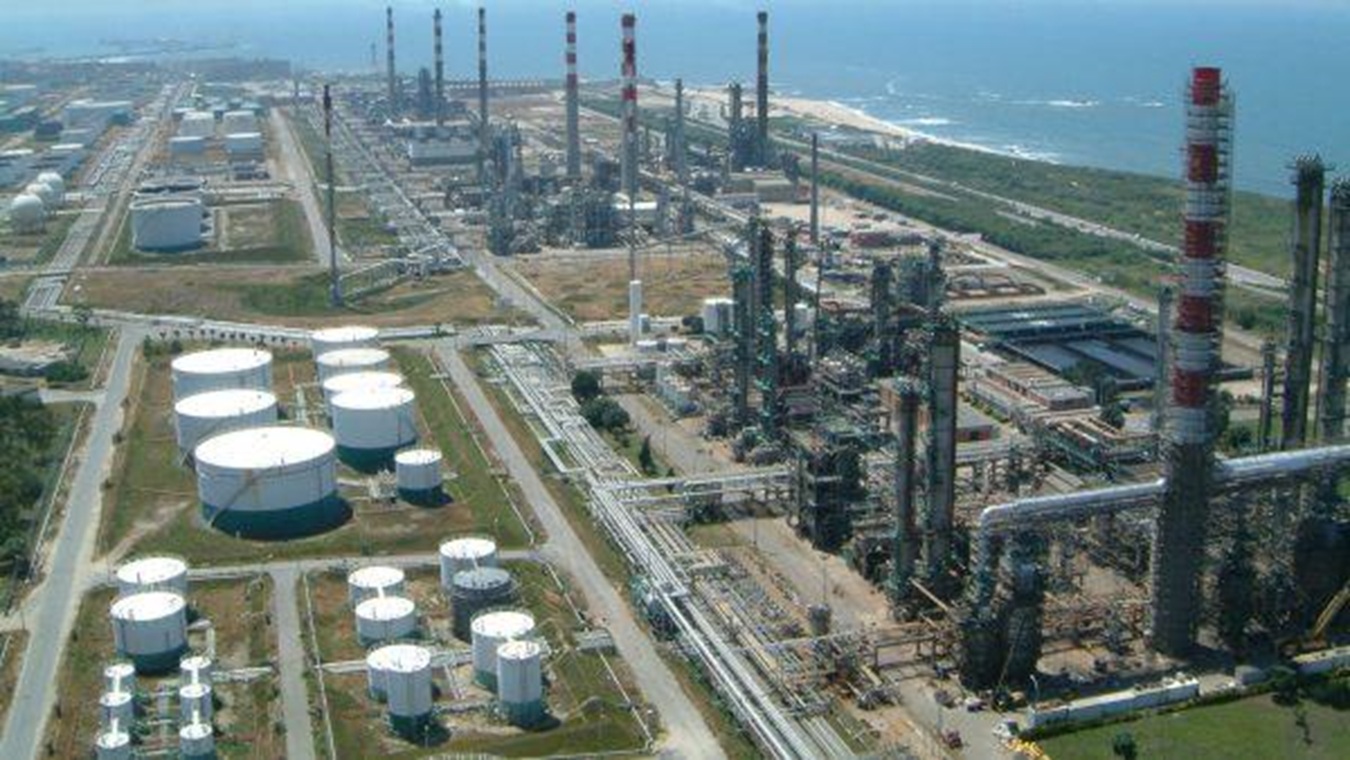
Built near Lagos at a cost of roughly $20 billion, the facility is now processing around 700,000 barrels per day. Its commissioning has already begun to alter a longstanding anomaly of the Nigerian economy: that of a major crude oil producer forced to import a significant share of the fuels consumed within its own borders.
Dangote now intends to go much further.
The group is planning an expansion program estimated at $14.3 billion, including a doubling of refining capacity to 1.4 million barrels per day by 2029. At that scale, the complex would rank among the world’s largest refining facilities. The ambition is no longer simply to supply the Nigerian market. It is increasingly to make Lagos one of the major hubs for refined petroleum products on Africa’s Atlantic coast.
The continent’s energy geography explains the significance of that ambition. Much of sub-Saharan Africa continues to export crude oil while importing gasoline, diesel, jet fuel and other refined products. That structure transfers part of the industrial value chain outside the continent and leaves importing economies exposed to logistics costs, international price fluctuations and supply disruptions.
A refinery processing 1.4 million barrels per day would not eliminate those constraints on its own. It could, however, shift their center of gravity. Nigeria could simultaneously become a major crude producer, a large-scale refiner and a regional exporter of fuels, with consequences for shipping routes, storage infrastructure, competition among refineries and the energy policies of neighboring countries.
International tensions are already providing a glimpse of this emerging position. Recent disruptions in global refined-product markets have strengthened demand for output from the Nigerian complex, including aviation fuel destined for African and European markets. At the same time, the refinery is increasing its purchases of Nigerian crude: at least 16 million barrels have been secured for October delivery, according to trading sources cited by Reuters.
Its industrial progress is also beginning to appear in the financial statements. After reporting a $476 million loss for the whole of 2025, Dangote Petroleum Refinery recorded net income of $1.82 billion in the first half of 2026 on revenue exceeding $13 billion.
The reversal is striking. It should nevertheless be interpreted cautiously. Refining is a highly cyclical business whose margins depend as much on operational efficiency as on the spread between crude oil prices and refined-product prices. Current geopolitical disruptions and pressure on global refining capacity have created an unusually favorable environment. Extrapolating several months of performance across decades of operation would therefore be premature.
This is precisely where the IPO becomes particularly significant.
Dangote is not simply selling shares. It is attempting to build a financial architecture capable of supporting an expansion phase whose requirements extend far beyond the proceeds of this offering.
The $1.6 billion being sought — or roughly $2.1 billion if the overallotment option is exercised — represents only a fraction of the $14.3 billion required for the announced expansion program. A $2.5 billion private fundraising had already been completed in July with institutional investors, including Africa Finance Corporation. Additional sources of financing will be necessary.
A public listing, however, provides something that a one-off capital raise cannot: recurring access to the market.
A listed company can return to shareholders, conduct further equity offerings, issue different financial instruments and use its market price as a permanent reference for valuation. By opening only 3.3% of its capital today, Dangote therefore retains considerable room for future transactions.
The small free float takes on another meaning in that context. It allows the group to test three things simultaneously: the valuation investors are prepared to accept, the actual depth of demand and the ability of the Nigerian Exchange to absorb an asset of exceptional size without forcing its owner to surrender control.
That test extends beyond Dangote.
African capital markets have long faced a paradox. The continent has immense financing requirements across energy, transport, telecommunications, industry and infrastructure, yet a substantial share of these investments remains dependent on bank debt, international financial institutions, public financing or foreign capital.
Savings nevertheless exist. African pension funds, insurers, institutional investors, households and a financially significant diaspora represent a considerable pool of capital. The problem is often less the absolute absence of money than the ability of financial markets to transform those savings into financing for very large productive assets.
The Dangote IPO is precisely an experiment of this kind.
A heavily subscribed offering would give the Nigerian Exchange an energy asset of unprecedented scale and demonstrate that strategic African infrastructure can mobilize a combination of institutional and retail capital through a domestic market. It could also establish a precedent for other major African groups: opening part of their equity without necessarily surrendering control, while using the stock market as an instrument for financing growth.
But the announced record should not be confused with the demonstration itself.
The offering has only just begun. The subscription rate, the distribution between institutional and retail investors, the possible use of the overallotment option and, eventually, the performance of the shares after listing will reveal the market’s actual appetite. The valuation of close to $47 billion will also have to be assessed against the company’s consolidated debt, cash requirements, the future normalization of refining margins and the final cost of the expansion.
Dangote must also secure something that financial markets cannot produce: oil.
A refinery processing 700,000 barrels per day already requires enormous volumes of crude. At 1.4 million barrels, that constraint would move into an entirely different dimension. Nigeria possesses substantial reserves, but its production has long been affected by underinvestment, theft, infrastructure problems and instability across some producing areas. Dangote has periodically diversified its crude supplies toward other producers, but a facility of this scale cannot rely indefinitely on improvised logistics.
The industrial project, the energy project and the financial project have therefore become inseparable.
That may ultimately be what distinguishes this IPO from previous African records. Behind the 4.1 billion shares being offered lies more than a company seeking new shareholders. There is an attempt to move several boundaries at once: the scale of African refining capacity, the financing of privately owned infrastructure and the size of the assets that the continent’s capital markets can accommodate.
Dangote retains almost complete control of the refinery. For now, the market is being offered only a small fraction of it.
But that small fraction is enough to pose a much larger question.
September 14, 2026 is not yet the day African markets proved they could finance an industrial platform valued at nearly $47 billion. It is the day Dangote began asking them to prove it.
Main Sources
Reuters — “Nigerian billionaire Dangote launches oil refinery IPO, Africa's biggest share sale”, September 14, 2026.
Reuters — “Facts about Nigeria's Dangote oil refinery Initial Public Offering”, September 14, 2026.
Reuters — “How does Aliko Dangote's oil refinery fit into his conglomerate?”, September 14, 2026.
Reuters — reporting on the refinery’s expansion, financial performance and crude oil supplies, September 2026.
Securities and Exchange Commission, Nigeria — regulatory documentation and communications concerning the Dangote Petroleum Refinery & Petrochemicals offering.
Nigerian Exchange Group — market and listing information.
Atlas Limits Research Desk
Atlas Limits’ editorial and analytical desk.