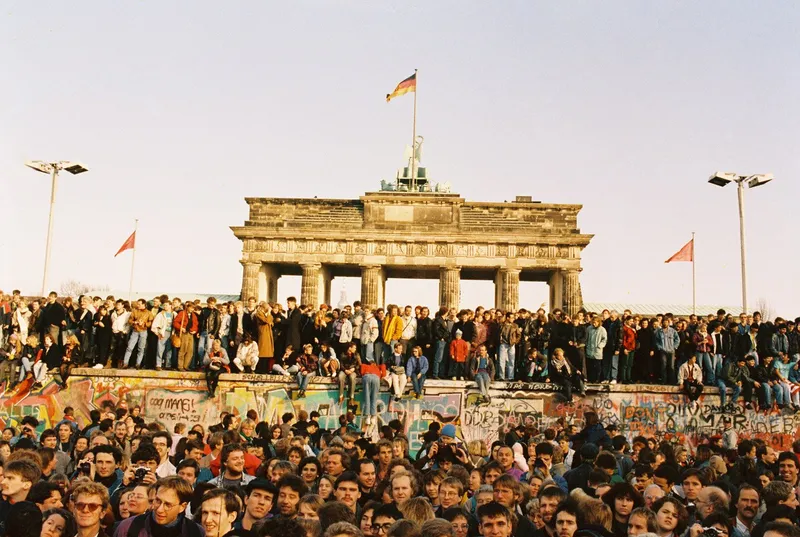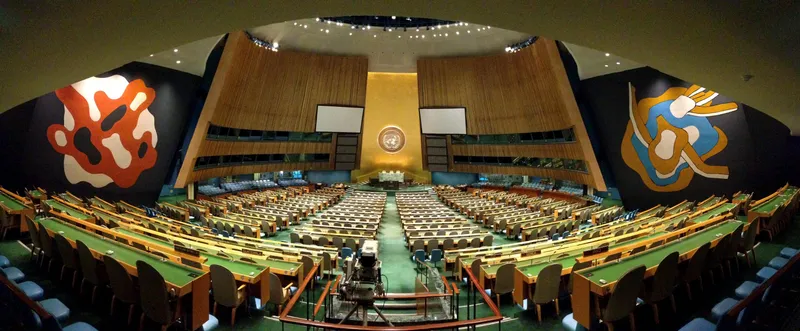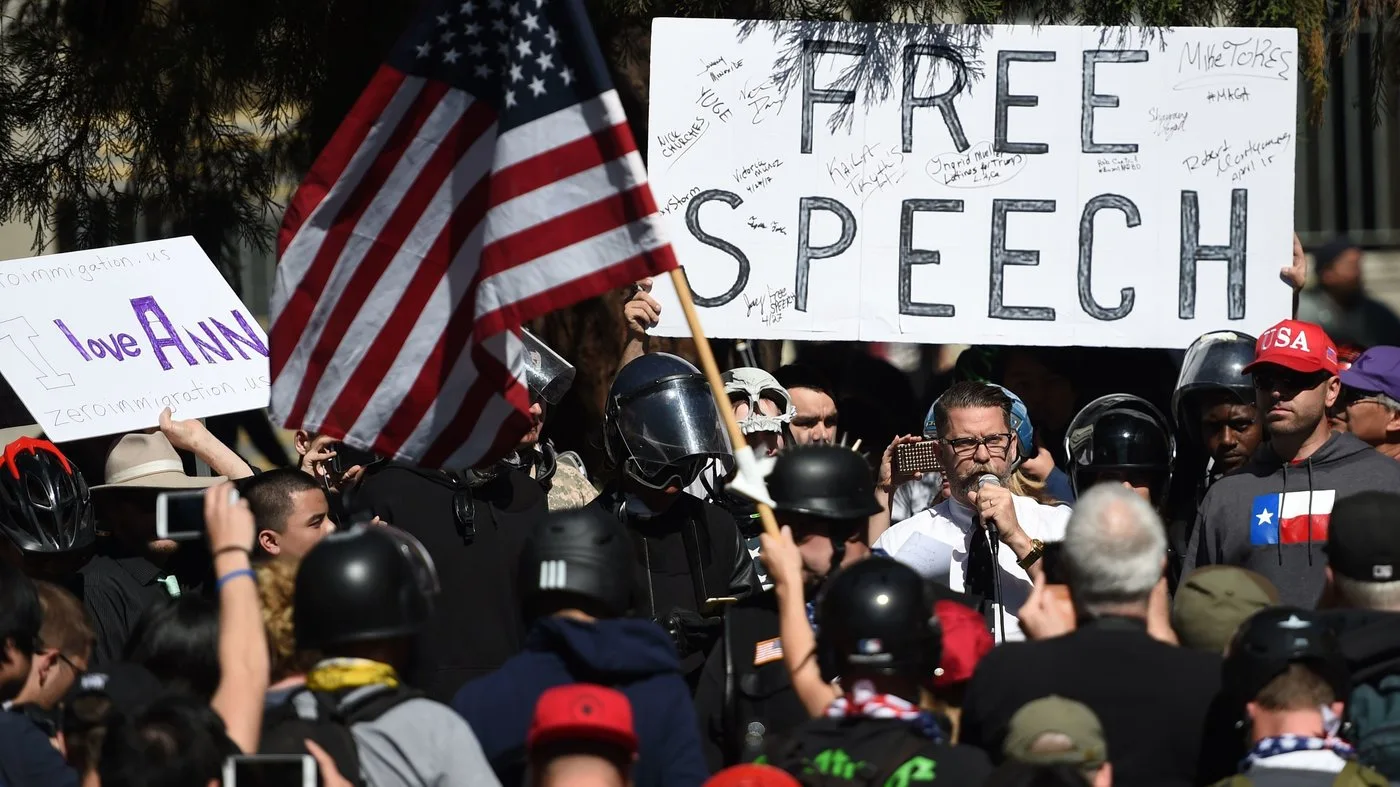
The same message can be legal in Washington, punishable in Paris, removed from a platform in Brussels and impossible to publish in Beijing. The content has not changed. The boundary has.
This is perhaps one of the most revealing contradictions surrounding freedom of expression. The principle has become almost universal in the language of international law, yet its application has not. Behind an apparently common formula lie profoundly different conceptions of the individual, the state, religion, reputation, security and, increasingly, the digital sphere.
The Universal Declaration of Human Rights, followed by the International Covenant on Civil and Political Rights, established a common foundation: everyone should be able to seek, receive and impart information and ideas. But international law itself does not treat freedom of expression as absolute. Article 19 of the Covenant permits certain restrictions when they are provided by law and necessary, notably for the protection of the rights of others, national security or public order. The UN Human Rights Committee nevertheless requires states invoking these exceptions to demonstrate the necessity and proportionality of the restriction, as well as a direct connection between the expression concerned and the threat being invoked.
The global disagreement therefore begins not so much over whether a boundary should exist, but over where it should be drawn.
In the United States, the boundary is pushed away from the state
The American model remains one of the most protective of speech against government interference. The First Amendment prevents Congress from abridging freedom of speech or of the press, and more than two centuries of jurisprudence have built an unusually extensive system of protection around that principle.
This logic is particularly clear in the doctrine derived from Brandenburg v. Ohio. Abstract advocacy of violence or lawbreaking is not, by itself, sufficient to justify prohibition: the speech must, among other conditions, be directed toward producing imminent lawless action and be likely to produce such action. Protection can therefore extend to profoundly offensive or radical speech that other legal systems more readily allow governments to restrict.
This does not mean that everything can be said in the United States without legal consequences. Threats, defamation, certain forms of incitement, fraud and other categories defined by law and jurisprudence can fall outside constitutional protection or incur liability. But the broader architecture begins from a particular distrust of the state's ability to determine which ideas may circulate.
Canada already illustrates a different North American approach. The Canadian Charter broadly protects expression, including offensive, unpopular or disturbing content, but its constitutional framework also permits reasonable limitations that can be demonstrably justified. The Canadian system therefore more explicitly seeks to reconcile freedom of expression with other protected rights and collective objectives.
The boundary moves within a few kilometres of the United States.
Europe protects speech but institutionalises more of the balancing
The European model begins from the same principle but structures the balance differently. Article 10 of the European Convention on Human Rights protects freedom of expression, including the freedom to receive and impart information, while European jurisprudence affords particularly significant protection to political speech and debate on matters of public interest.
That protection, however, coexists with an explicit framework for restrictions. When examining an interference with freedom of expression, the European Court of Human Rights considers its legal basis, the legitimacy of the objective pursued and whether the interference was necessary in a democratic society. The proportionality of the measure and the existence of a pressing social need therefore become decisive.
From this architecture emerge national laws that can penalise, depending on the country and circumstances, incitement to hatred, certain forms of Holocaust or genocide denial, glorification of terrorism or defamation.
The difference with the United States is therefore less about whether freedom exists than about the method used to resolve its conflicts with other rights. Where the American tradition places an unusually high barrier before state intervention, European systems more readily institutionalise the balancing process.
That distinction becomes especially important when speech leaves the street or the newspaper and enters digital infrastructure.
Elsewhere, security and collective order can occupy more space
Beyond these two architectures, the categories become less straightforward.
Speaking of an “Asian model”, an “African model” or a “Middle Eastern model” would be misleading. Differences between countries within the same region can be enormous. Pluralist systems coexist with states where political criticism, religious questions, national security or digital content are subject to considerably broader restrictions.
China provides a particularly clear example of an architecture in which the circulation of information is explicitly connected to state sovereignty and security. Chinese cybersecurity legislation formally protects the right to use the Internet in accordance with the law while prohibiting a broad range of content associated with national security, subversion of state power, separatism, terrorism, extremism, ethnic hatred or information considered capable of disrupting economic or social order. The revised Cybersecurity Law continues to situate cybersecurity within the broader framework of national security and digital sovereignty.
The contrast is not merely legal. It reveals a different conception of risk.
A liberal democracy may consider that society must tolerate a substantial amount of dangerous or offensive speech to avoid granting the state excessive power over ideas. Another political system may consider political stability, social cohesion or state security sufficient grounds for intervention at a much earlier stage.
The same trade-off exists in different forms across numerous countries, particularly where religion, the monarchy, the military, territorial integrity or particular institutions receive specific legal protection.
Geography alone, however, cannot explain these differences.
Africa demonstrates the limits of regional categories
Africa itself possesses an ambitious normative framework. The Declaration of Principles on Freedom of Expression and Access to Information in Africa, adopted by the African Commission on Human and Peoples’ Rights in 2019, affirms freedom of expression and dedicates an entire section to digital rights. It notably calls on states not to disrupt access to the Internet or block and filter content except under conditions compatible with international human rights law.
Yet the African Commission itself continues to raise concerns about Internet shutdowns, particularly during elections and demonstrations. In 2024, it again stressed the importance of Internet access to the exercise of freedom of expression and called on states not to interrupt access for entire populations or categories of users.
The distance between rights proclaimed and rights actually exercised becomes crucial here.
That distance exists everywhere, although to varying degrees. A constitution may protect speech while economic concentration in the media reduces pluralism. Legislation may guarantee press freedom while journalists face judicial, administrative or economic pressure. Conversely, some societies may preserve substantial spaces for discussion despite formally restrictive legal frameworks.
Measuring freedom of expression therefore requires examining the law, the institutions responsible for enforcing it and the material conditions under which people can actually speak.
Then the Internet moved the boundary
For a long time, the question could be framed relatively simply: how far can the state go in preventing an individual from speaking?
That formulation is no longer sufficient.
A considerable share of global public debate now circulates through privately controlled infrastructure. A publication can remain entirely legal within a country yet become practically invisible because a recommendation system stops distributing it. It can be removed because it violates a platform's rules without violating any national law. Conversely, it can be automatically amplified because it maximises engagement.
The power to determine what circulates therefore no longer belongs exclusively to governments.
The European Union has begun incorporating this transformation into law. The Digital Services Act notably requires very large online platforms and search engines to assess certain systemic risks, including potential effects on fundamental rights such as freedom of expression and information, media freedom and pluralism, and non-discrimination. The regulation explicitly recognises that the design of algorithmic systems itself can affect these rights.
The problem then changes in nature.
It is no longer simply a question of whether a government can censor an opinion. It is also necessary to determine how a private company can moderate it, how an algorithm can rank it, and how a society can counter information manipulation without constructing an infrastructure of control in the process.
Artificial intelligence adds another layer. It makes it possible to produce text, images, voices and synthetic video on a scale that was previously impossible. UNESCO has warned that these technologies can simultaneously expand opportunities for expression and disrupt the integrity of the information environment.
The machinery governing speech is therefore becoming as important as the laws governing speech itself.
The next boundary may be invisible
Freedom of expression was long represented by a simple image: an individual facing a state that could either allow that person to speak or silence them.
That image already belongs partly to the past.
The state remains a central actor. But between the person who speaks and the person who listens now stand platforms, search engines, advertising systems, recommendation algorithms, moderation technologies and, increasingly, artificial intelligence agents capable of selecting, summarising and interpreting a growing share of available information.
The question of the twenty-first century may therefore be different from the one that dominated the twentieth.
It will no longer be only what a society allows people to say, but who controls the infrastructure that determines what can be heard.
And that boundary is still written into almost no constitution.
Main sources
- UN Human Rights Committee — General Comment No. 34 on Article 19 of the ICCPR — international framework governing freedom of expression and the necessity and proportionality tests for restrictions.
- U.S. Constitution — First Amendment — constitutional basis of the American model.
- Congress.gov — Brandenburg and incitement doctrine — U.S. constitutional standard concerning incitement to imminent lawless action.
- Department of Justice Canada — Freedom of expression under Section 2(b) — Canadian constitutional framework.
- Council of Europe — Freedom of expression and Article 10 ECHR — European legal framework.
- European Court of Human Rights — Guide on Article 10 — jurisprudence concerning restrictions and proportionality.
- African Commission on Human and Peoples’ Rights — Declaration of Principles on Freedom of Expression and Access to Information in Africa — African framework covering expression, access to information and digital rights.
- African Commission — Resolution on Internet shutdowns and elections — institutional position on Internet restrictions.
- China — revised Cybersecurity Law — official Chinese legal framework connecting cybersecurity, online content and national security.
- European Union — Digital Services Act — platform governance, systemic risks, algorithms and fundamental rights.
- UNESCO — World Trends in Freedom of Expression and Media Development — global framework for media freedom and freedom of expression.
- UNESCO — Journalism: Bridging the Promise and Threat of Technology — technology, AI and the changing information environment.
Atlas Limits Research Desk
Atlas Limits’ editorial and analytical desk.