In France, fuel prices are once again approaching exceptionally high levels even though crude oil remains below its peaks for the year. Behind this divergence lies a reality less visible than the price of a barrel: between the oil producer and the motorist, value is distributed across refining, transportation, distribution and taxation. The current crisis is not affecting each link in the chain equally — and therefore does not benefit the same actors.
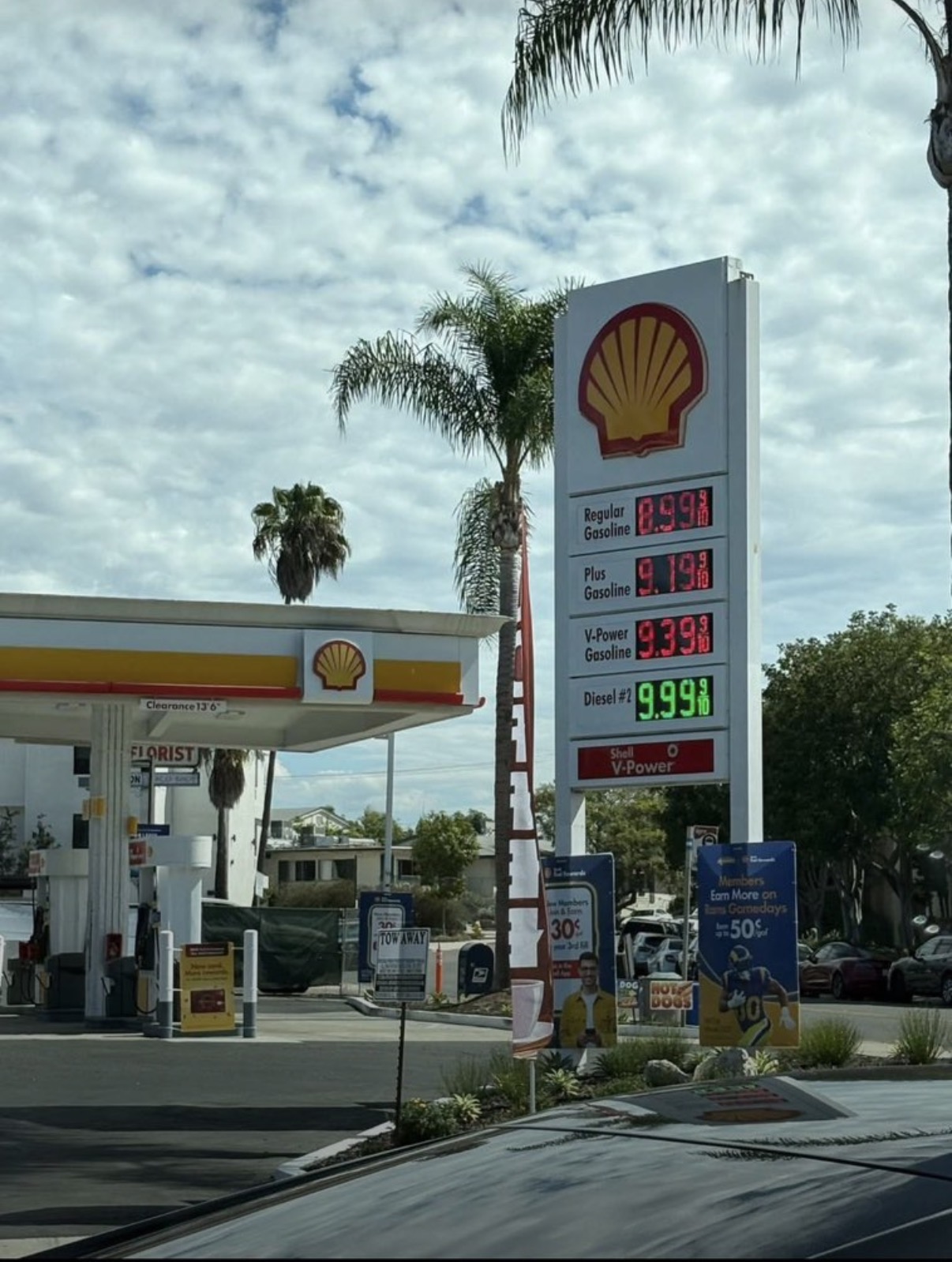
The price board at a filling station provides a number. It says remarkably little about how that number is formed.
In early September 2026, diesel was approaching €2.30 per litre on average in France, while SP95-E10 petrol exceeded €2.10. Brent crude had indeed returned above $100 a barrel on September 9, but remained significantly below the levels above $120 observed in the spring.
It is precisely this divergence that makes the current increase significant.
If crude oil has not returned to its peak while some fuel prices are approaching or exceeding theirs, part of the explanation must be found elsewhere in the chain.
THE BARREL IS ONLY THE BEGINNING
The price paid by motorists consists of several economic layers.
Crude oil must be purchased, transported, processed in a refinery, and the resulting products must then be transported, stored and distributed. On top of this comes particularly significant taxation in France: according to the French Ministry of Economy, taxes account for approximately 60% of the retail price of petrol and diesel.
This taxation includes the excise duty on energy products — the successor to the TICPE — as well as 20% VAT. The latter is applied to the pre-tax price plus excise duties.
This produces a mechanism that is often misunderstood. When the pre-tax price of fuel rises, the amount of VAT collected on each litre also increases. Excise duty, by contrast, is primarily linked to volumes rather than to the price of oil.
The state can therefore collect more VAT when prices rise, without this necessarily meaning that its total fuel-related revenues increase sustainably. If motorists reduce their consumption sufficiently, revenue linked to volumes can instead decline.
The phenomenon was already visible in 2026. France's Finance Ministry estimated that in March fuel-related tax revenues had increased by approximately €270 million compared with March 2025, including €120 million in additional VAT. But consumption fell by 22% during the final ten days of the month, progressively reversing the fiscal effect.
The state therefore benefits partially and temporarily from higher prices. It is not necessarily their principal beneficiary.
To find that beneficiary, it is necessary to move slightly further up the chain.
REFINING HAS BECOME THE BOTTLENECK
A barrel of crude oil is not a litre of diesel.
That industrial reality has become one of the keys to understanding the energy market in 2026.
Available refining capacity has been constrained by disruptions caused by the conflict in the Middle East, while international flows of petroleum products have been reorganised. Russian energy infrastructure has also been affected by Ukrainian strikes, adding further pressure to the availability of some refined products.
At the same time, difficulties affecting navigation and transportation around the Middle East's major energy routes have increased the value of products that are immediately available in consuming markets.
The result is visible in refining margins.
In early September, European diesel was trading at a premium of nearly $79 per barrel over Brent, a record level. For European Eurobob E5 petrol, the premium exceeded $62, close to the record reached in 2022.
These figures are not the net profits of refiners. A market refining margin must still absorb energy costs, differences in crude quality, maintenance, industrial yields and logistics.
But they clearly indicate where part of the scarcity now lies.
The global market is not simply short of oil. In some places and for certain products, it is short of the capacity required to rapidly transform that oil into usable fuels.
When an infrastructure becomes the bottleneck of a system, its economic value rises.
That is exactly what is happening to refining.
REFINERS ARE NOT RETAILERS
The distinction matters because the filling station is the most visible part of the chain and therefore the first to attract suspicion when prices increase.
Yet a higher pump price and a higher retailer margin are not the same thing.
In the spring, following the initial surge triggered by the energy shock, the French government specifically asked fuel distributors to return their gross margins to pre-crisis levels. The Ministry of Economy said in May that these margins had returned to normal after rising sharply during the initial shock.
A filling station can therefore sell fuel at a substantially higher price without earning proportionately more on each litre.
Its purchasing cost has simply increased.
This is one reason why the question “who benefits from higher fuel prices?” has a more complicated answer than the final retail price might suggest.
Some oil producers naturally benefit from a more expensive barrel. Refineries with available capacity can benefit from exceptionally favourable margins. Traders and operators capable of arbitraging between markets can also profit from geographical price differences.
But the final retailer is not necessarily the actor capturing most of this additional value.
The state itself occupies an ambiguous position: VAT rises mechanically with the price, but declining consumption and support measures can absorb part of those additional revenues.
A CAPACITY CRISIS MORE THAN A RESOURCE CRISIS
The situation in 2026 therefore reveals something deeper than the increase in fuel prices alone.
For decades, energy risk was primarily understood in terms of resources: how much oil remains available, which countries produce it, and at what price can they sell it?
The question is becoming broader.
It is also necessary to know where refineries are located, which grades of crude they can process, which fuels they produce, which maritime routes can transport them and which infrastructure can replace facilities or routes that become unavailable.
Europe is particularly exposed to this evolution.
The gradual closure of refining capacity across the continent and its dependence on imports of certain refined products have created a vulnerability distinct from conventional dependence on crude oil. A market can have sufficient crude available globally while simultaneously suffering from a local shortage of diesel.
In such circumstances, increasing oil production does not immediately solve the problem.
The industrial facilities required to transform that additional production must also be available.
This is why two prices can now tell two different stories: the Brent price describes the global balance of crude oil; the price displayed at a filling station incorporates the condition of the entire industrial chain between the barrel and the fuel tank.
PRICE AS A MAP OF SCARCITY
The current increase ultimately makes it possible to answer more precisely who benefits.
Producers benefit from more expensive crude. Operational refineries can benefit from elevated margins when their capacity becomes scarce. Some transport and trading companies can exploit increasingly fragmented markets. The state collects more VAT on each more expensive litre, but must contend with lower consumption and finance support mechanisms. Retailers, meanwhile, can substantially increase their selling prices without their margins following the same trajectory.
There is therefore no single beneficiary.
There is a value chain whose balance of power changes according to the nature of the shortage.
And that is probably the most important lesson from the current crisis.
When oil itself is scarce, economic power belongs to whoever controls the barrel. When oil is available but transforming or transporting it becomes difficult, that power shifts towards whoever controls the refinery, the terminal, the vessel or the route that remains available.
The price at the pump is then no longer merely a thermometer for crude oil.
It becomes a map of the infrastructure that has become scarce.
Main sources
French Ministry of Economy, Finance and Industrial and Energy Sovereignty — data and documentation on the composition and taxation of fuel prices; May 6, 2026 statement on distribution margins; data on the impact of the energy crisis on public finances.
TF1 Info — “Pourquoi les prix des carburants atteignent-ils des sommets alors que le cours du baril n’est pas à son plus haut ?”, September 10, 2026; reporting on the evolution of retail fuel prices in France.
Euronews Business — data on European refined-product prices and refining margins, September 2026.
Atlas Limits Research Desk
Atlas Limits’ editorial and analytical desk.