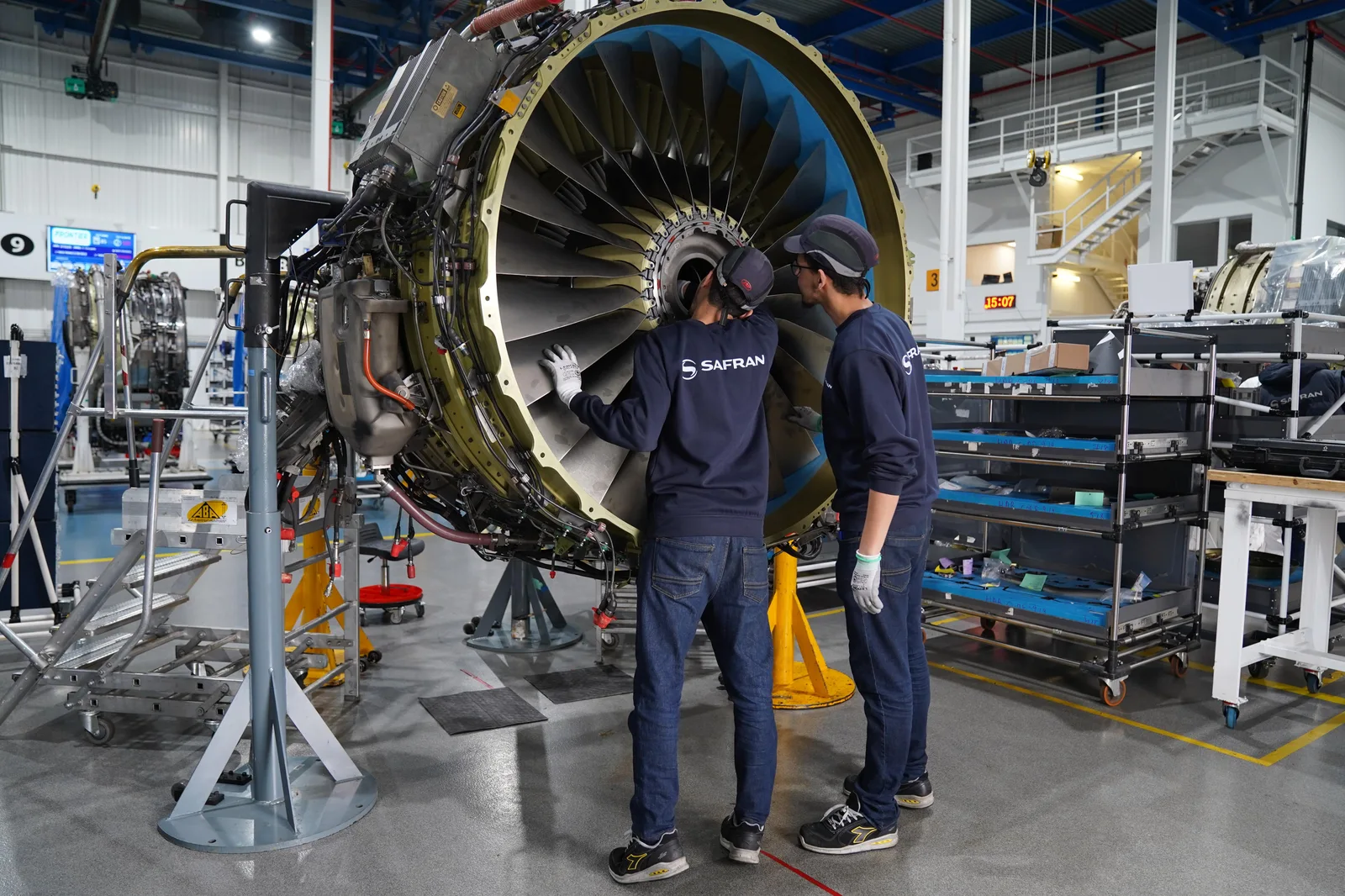
A car leaves a Moroccan factory, reaches a port terminal and boards a ship bound for Europe. At customs, its value enters the export statistics. For the manufacturer, it becomes part of the group’s revenue. For the country that built it, the calculation is only beginning. There is still the question of how many components were imported, how much income its production generated locally, which businesses learned to work differently, and where the teams designing the next model are based.
In 2024, Morocco’s automotive exports reached 157.6 billion dirhams, according to the annual report of the Office des Changes. That figure reflects a genuine industrial transformation. It does not, however, measure either the income retained by the Moroccan economy or the control it has acquired over the production chain. Customs statistics record what crosses a border. On their own, they cannot tell us what a country is becoming.
This distinction runs through much of industrial globalisation. From Mexico to Vietnam, from Poland to China, foreign investment has helped establish productive capacity, open markets and transform occupations. Yet a factory can simultaneously represent a success for its investor, an improvement for its employees, an initial burden on public finances and an opportunity that domestic suppliers have yet to fully capture. These outcomes are not contradictory. They belong to different accounts.
The assessment of an industrial policy lies in how those accounts connect. Producing more, retaining more income and acquiring greater capabilities are three distinct ambitions. Their convergence cannot be declared at an opening ceremony.
The “nations’ income statement” is used here as an analytical framework, rather than an official statistical aggregate. Its purpose is to track what investment brings, what it draws upon and what it leaves behind. Above all, it requires resisting a familiar temptation: adding together every piece of good news.
Exports, investment, wages and tax receipts cannot simply be stacked together to produce a national return. Foreign direct investment consists of financial flows that may finance an acquisition or an expansion, or reflect reinvested earnings. Exports are gross sales. Value added measures the wealth produced after intermediate consumption has been deducted; it already includes compensation for labour and income generated by production. Adding these figures together would count some of the same wealth several times.
The first step, therefore, is to move from export value to domestic value added. The OECD’s work on trade in value added distinguishes the domestic and foreign contributions embodied in exports, including those of indirect suppliers and services. An exported car carries industrial labour with it, but also logistics, electricity, engineering and services performed in different locations.
A hypothetical example illustrates the issue. An industry that exports 100 units of value, including 60 of foreign value added, generates 40 of domestic value added. If its exports rise to 150 while their foreign content reaches 65%, its domestic contribution increases to 52.5. The domestic share has fallen, yet the wealth produced locally has grown. Conversely, a high domestic share in a very small activity does not necessarily represent a greater achievement. Proportions, absolute amounts and changes over time must be examined together.
A second calculation then begins. Not all wealth produced within a country accrues to its residents. The profits of a foreign subsidiary contribute to the host country’s gross domestic product, but the income attributable to its non-resident shareholders does not thereby become national income. Even when reinvested, those earnings remain associated with foreign ownership rights. Reinvestment strengthens local capacity; it does not automatically change who owns it.
That does not make a dividend an illegitimate loss. Capital has a cost, and investors bear risks. The economic question concerns how the returns are shared and how that distribution evolves. A country can reward foreign capital adequately while increasing wages, skills, public revenue and the income of its own businesses. It can also expand production considerably without greatly extending the functions it controls.
Morocco offers an increasingly substantial record through which to examine this difference. In its 2024 investment policy review, the OECD identifies positive contributions from foreign investment to employment, innovation and industrial integration. It also notes that first- and second-tier automotive suppliers are predominantly multinational firms, while local SMEs often operate at the third and fourth tiers. The supply chain exists within the country; the distribution of positions within it remains an issue.
Local content therefore deserves a more precise reading than a single percentage can provide. A foreign-owned supplier based in Morocco may employ Moroccan engineers, purchase local services and introduce demanding production methods. Its contribution is real. A Moroccan-owned company, meanwhile, may supply a product whose value is largely imported. The factory’s address, the shareholder’s nationality and the origin of value added answer three different questions.
Measuring industrial upgrading requires looking inside workshops and up organisational hierarchies. Who designs the part? Who selects the materials? Who finances the tooling? Who can modify the process? Who owns the customer relationship? A company that executes a specification flawlessly has acquired a valuable capability. One that helps write it holds additional influence. One that can sell its solution to several customers begins to reduce its dependence.
Aerospace makes this reasoning particularly useful. The sophistication of the final product does not, by itself, reveal the functions performed at each location. Assessing an operation requires examining its design responsibilities, skills, processes, certifications and its teams’ ability to solve new problems. An unassuming component may embody knowledge that is difficult to replace; an impressive assembly may depend heavily on decisions made elsewhere.
Batteries and electric mobility open a new chapter for Morocco. The agreement signed with Gotion in June 2024 envisaged an initial investment phase of 12.8 billion dirhams and planned annual capacity of 20 GWh. Those figures described a project, not production already achieved. Distinguishing them from capital actually deployed, production lines commissioned and their utilisation is essential to any subsequent assessment.
The strategic value of these investments will then depend on their depth. Manufacturing cells, developing certain materials, mastering processes, designing management systems and organising recycling represent different positions in the industry. Morocco may gain greater diversity in its activities and partners. Turning that diversification into learning will require close attention to the functions that actually take root around the equipment.
Mexico shows why neither the duration nor the scale of integration automatically resolves this issue. In a study published in 2024, the OECD observes that exports as a share of Mexican GDP have tripled since 1988. Yet it describes participation in global value chains as relying heavily on foreign inputs, while the incorporation of Mexican value added into its trading partners’ exports remains relatively limited.
The lesson extends beyond Mexico. Proximity to an enormous market can sustain industrialisation without automatically drawing the entire domestic economy into its development. A successful export platform and a fragmented domestic economy can coexist. The decisive advance comes when suppliers acquire the means to finance their growth, meet standards and win other customers. Without those connections, orders circulate through a country faster than capabilities spread within it.
Vietnam reveals another form of this tension. In its 2024 report, Viet Nam 2045, the World Bank states that foreign firms account for 73% of exports. It also reports a decline in the proportion of domestic businesses connected to global value chains, from 35% in 2009 to 18% in 2023. That indicator uses a broad definition of international connections, including trade, foreign equity or the use of licensed technology; it does not directly measure local sourcing.
These findings caution against equating export expansion with the economy-wide spread of modernisation. They do not erase the gains already made. In the same study, the World Bank estimates that roughly half of GDP and one in every two jobs depend, directly or indirectly, on exports. The challenge is how to reach the next stage: how can international integration that has become essential be converted into capabilities distributed more widely throughout the economy?
Poland provides a European comparison. The OECD reports that foreign firms accounted for 56% of total exports and 65% of manufacturing exports in 2020. It also observes the expansion of knowledge-intensive services, particularly IT and professional services, while stressing the need to strengthen innovation and relationships between multinationals and SMEs. Even in an economy firmly embedded in European supply chains, its position continues to be negotiated.
This trajectory shows that upgrading can take several paths. It may involve designing a component, but also software, engineering services, testing or production management. A policy excessively captivated by industrial buildings risks undervaluing these activities. Sometimes they are what allows a company to retain a customer when manufacturing moves elsewhere. 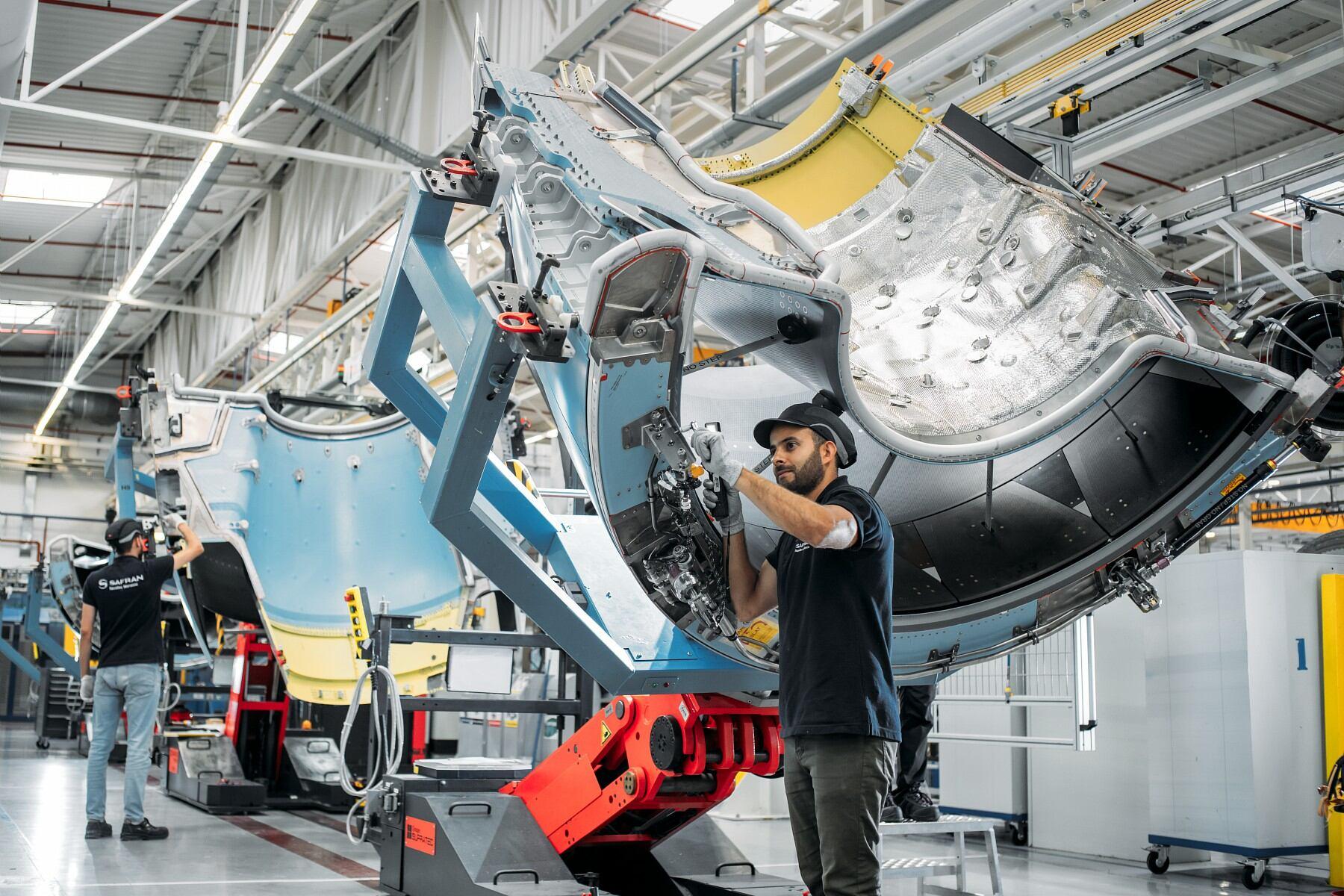 China brings a different scale to the discussion. Its research and development expenditure reached 2.69% of GDP in 2024, according to final figures from the National Bureau of Statistics, with enterprises accounting for 77.7% of that spending. In the same year, China produced 80% of the world’s battery cells, according to the International Energy Agency. These two indicators do not, on their own, establish complete technological mastery. They nevertheless reveal the scale of the research and production capabilities now assembled.
The lesson must remain carefully defined. China’s trajectory is not an experiment that allows its entire transformation to be attributed to FDI. Market size, domestic investment, infrastructure, education, research and public policy also belong in the explanation. A smaller country cannot reproduce that bargaining power at will. It can, however, adopt an ambition: to use international integration to develop businesses capable of expanding their own products, technologies and markets.
These five trajectories do not form the evenly spaced steps of a staircase. They illuminate different combinations of production, ownership, skills and dependence. A single ranking would be misleading if it compared different industries, different years and industrial ecosystems of very different ages. A sound assessment requires tracking comparable activities over time, then examining what they change in the surrounding economy.
Employment occupies a central place in this assessment. Counting jobs, however, is not enough. An industrial job can provide stability, social protection, training and wage progression that transform a family’s prospects. It can also involve demanding production schedules, insecure subcontracting or limited opportunities for advancement. Evaluation must therefore follow real earnings, safety, contract duration, women’s access to positions of responsibility and career mobility. It must also distinguish additional jobs from those merely transferred between companies.
Sometimes the clearest sign of learning appears when an employee leaves the factory. A technician joining an SME, an engineer founding a business or a quality manager helping several suppliers obtain certification carries knowledge beyond the investor’s boundaries. But they need access to finance, customers and institutions capable of supporting their initiative. Technology transfer is not a substance that spontaneously spreads around machinery.
Taxation presents a similar difficulty: visible activity does not guarantee a proportionate taxable base. A subsidiary may pay brand royalties, interest, IT charges or management fees to other group companies. These payments may correspond to genuine services. They may also shift part of the taxable profit when their amounts, justification or allocation do not reflect the functions performed.
The OECD’s transfer pricing guidelines rest on the arm’s length principle: transactions between related companies should be assessed against the conditions that would prevail between independent businesses. For intragroup services, the analysis considers whether a service was actually provided, the benefit to its recipient and the appropriate remuneration. A low local profit margin is therefore insufficient to establish abuse; it warrants examining the functions, assets and risks actually borne.
The host country thus has a regulatory task that continues long after the investment agreement is signed. It must be able to document transactions, scrutinise charges, identify comparables and resolve disputes without arbitrariness. An inadequately equipped administration risks allowing taxable income to escape; an unpredictable one may discourage the activities it seeks to develop. Institutional competence is an integral part of industrial policy.
Even properly collected taxes do not close the public account. They must be considered alongside subsidies, tax incentives, land committed and necessary infrastructure over a coherent period. A port serving hundreds of companies cannot be charged entirely to one factory. A theoretical tax exemption does not represent wholly forgone revenue if the activity would never have located there without it. Conversely, supporting a project that would have proceeded without assistance creates a public cost that is difficult to justify.
Evaluation must therefore ask a counterfactual question: what would plausibly have happened without the support provided? This requires explicit assumptions and acknowledged uncertainty. It is less convenient than an announced investment figure, but much more useful when deciding on the next project. The fiscal assessment must also be accompanied by a broader social account covering water consumption, pollution, emissions, pressure on land and infrastructure capacity. Tax receipts do not make environmental costs borne elsewhere disappear.
The state can improve the terms of the relationship by defining from the outset what it wants to obtain and how it will verify delivery. Commitments to training, research or job creation can be linked to deadlines, indicators and, where the legal framework permits, repayment of aid if obligations are not met. The task is to establish enforceable commitments to observable outcomes while maintaining stable rules.
That action remains subject to legal constraints. World Trade Organization disciplines restrict, in particular, local-content requirements that favour domestic products over imports, including when they are conditions for obtaining certain advantages. Trade and investment agreements impose additional constraints. Industrial ambition must therefore be translated into legally sound instruments: training, shared infrastructure, support for innovation, certification and improvements in supplier capabilities.
For Morocco, this would mean extending investment attraction into a policy of industrial advancement. An SME does not become a strategic supplier simply because a national target calls for it. It must finance equipment before receiving its first order, withstand payment delays, pass audits and recruit scarce skills. Helping businesses cross those qualification thresholds may yield more lasting benefits than another concession granted solely to the lead manufacturer.
Public monitoring could make that progress visible, industry by industry: domestic value added, wages and skills, research functions, purchases from resident businesses, the role of domestically owned companies, and public revenues and support. Every result should retain its year, scope and definition. Confidential or unavailable figures should remain identified as such. At this stage, the sources used here do not permit a consistent calculation of net fiscal returns across all five countries; a numerical league table would claim a precision the evidence does not support.
Such discipline would also change the meaning of success. Rising wages could be recognised as an intended outcome, provided productive capabilities can sustain them. Reduced dependence on a single customer would count alongside a new contract. A domestic company capable of commercialising its own technology would become as significant an indicator as a factory expansion.
The real test comes when the initial conditions change. Support declines, costs rise, a product becomes obsolete or another location offers better terms. Does the country retain the skills, suppliers and infrastructure that make a new activity possible? Can domestic businesses find other markets? Can employees use what they have learned elsewhere?
A successful FDI policy progressively improves the terms on which a country participates in the global economy. It enables the country to pay its workers more, defend its tax base and broaden the choices available to its businesses. Foreign investment then becomes an instrument of development whose effects extend beyond the agreement that brought it in.
A factory measures what a country produces today. The capabilities it leaves behind determine what that country can decide tomorrow.
Principal sources
Office des Changes, Annual Report on Morocco’s Foreign Trade 2024, with sectoral results reproduced by the official Maroc.ma portal; OECD, Economic Surveys: Morocco 2024 and Investment Policy Reviews: Morocco 2024; OECD, A Review of Mexico’s Participation in Global Value Chains, 2024; World Bank, Viet Nam 2045: Trading Up in a Changing World, 2024; OECD, Strengthening FDI and SME Linkages in Poland, 2025; National Bureau of Statistics of China, Communiqué on National Expenditures on Science and Technology in 2024, final figures published in October 2025; International Energy Agency, Global EV Outlook 2025; OECD, Trade in Value Added research and Transfer Pricing Guidelines for Multinational Enterprises and Tax Administrations, 2022 edition; WTO, Agreement on Trade-Related Investment Measures; Reuters, reporting on the Gotion–Morocco investment agreement, 6 June 2024.
Atlas Limits Research Desk
Atlas Limits’ editorial and analytical desk.