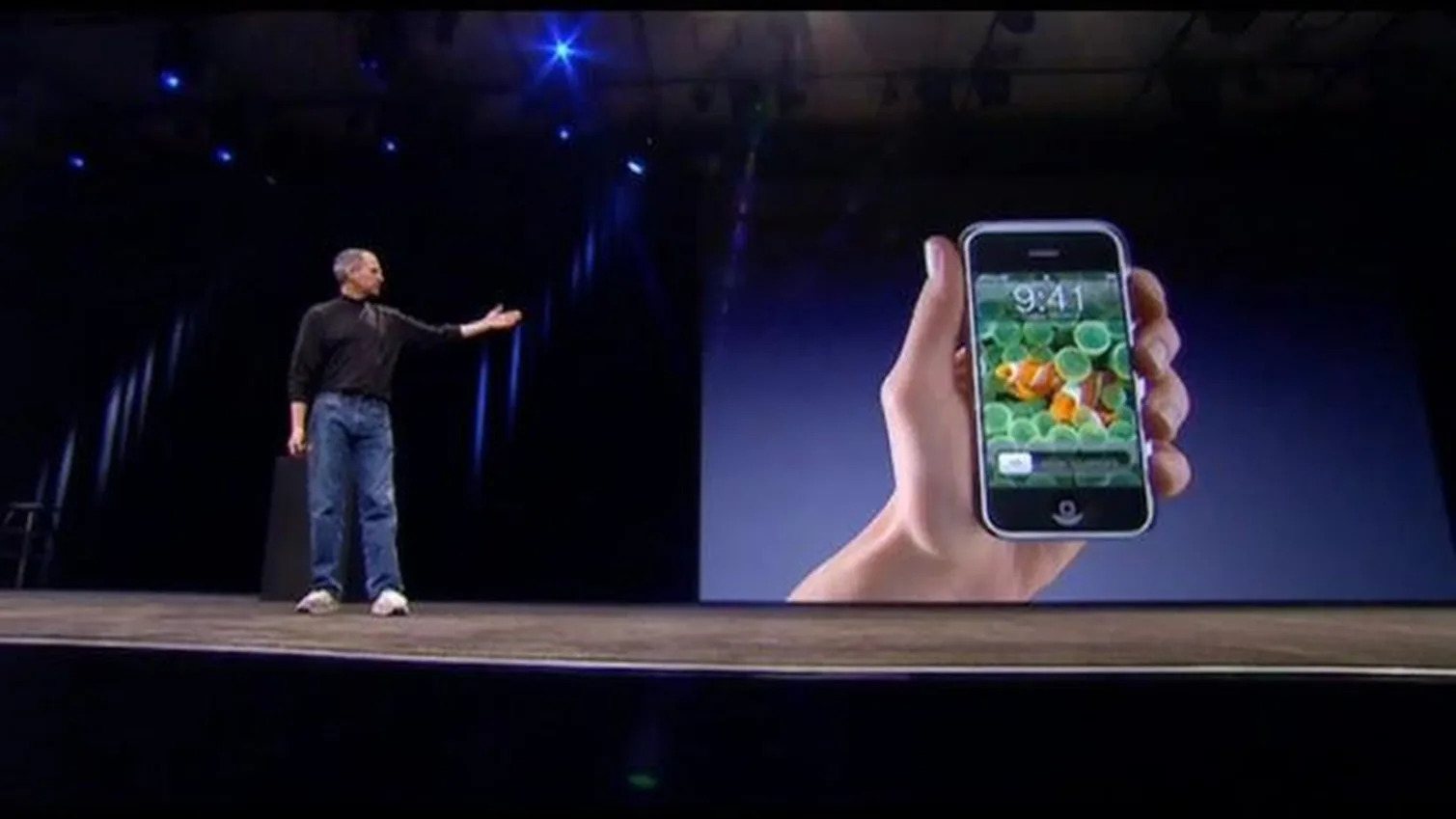
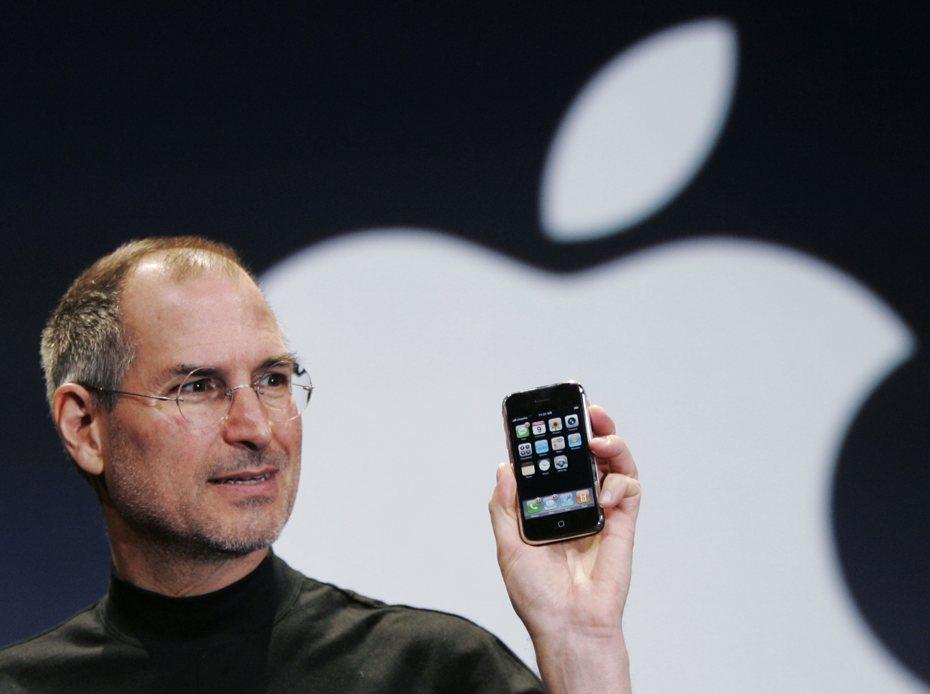
On January 9, 2007, Steve Jobs walked onto the Macworld stage in San Francisco with a peculiar way of introducing what was about to come. Apple, he explained, was unveiling three products: a widescreen iPod with touch controls, a mobile phone, and an Internet communications device. Then he repeated himself. An iPod. A phone. The Internet. These were not three separate devices. They were one.
The iPhone had arrived.
Nearly twenty years later, Apple has reached the iPhone 18 generation. Between those two devices lies a remarkable technological story, but also something much larger. Photography, music, commerce, transportation, media, social relationships, work and even the way people navigate physical space have changed around the smartphone. The phone has become a wallet, camera, banking terminal, boarding pass, map, game console, television, library, office, authentication key and, increasingly, an interface with artificial intelligence.
The history of the iPhone is therefore less the story of a product than one of gradual absorption. Year after year, more objects and functions have disappeared into the same rectangle of glass.
The phone that had almost no buttons
Seen from 2026, the original iPhone looks both strangely familiar and extraordinarily old. Its screen measured 3.5 inches. Its camera offered two megapixels. It ran on the EDGE network, without 3G or integrated GPS. There was no App Store. The entry model offered 4 GB of storage and cost $499 in the United States with a carrier contract.
But reading its specifications is to miss the point.
In 2007, the mobile-phone market was still dominated by devices whose interfaces revolved around physical keyboards, navigation keys and menus designed by manufacturers and carriers. Apple removed almost everything. What remained was a screen, a few buttons and the human finger.
The real product, in that sense, was not the phone. It was the interface.
Pinching a photograph to enlarge it, scrolling through a page with a finger, touching an application directly or moving an image now seem so natural that it is difficult to recover how unusual they once felt. The screen was no longer merely a place where the device displayed information. It was becoming the device itself.
That idea made something decisive possible: the same piece of glass could successively become a keyboard, a map, a camera, a music player or a browser. Hardware no longer entirely determined the function of the object. Software could continuously reinvent it.
2008: the real second launch
 The first iPhone transformed the interface. The second act transformed the economy.
In July 2008, Apple launched the iPhone 3G and opened the App Store to third-party applications. A few hundred apps were available at launch. Ten million were downloaded during the first weekend.
The shift was considerable.
Apple had turned the phone into a platform.
A developer no longer needed to manufacture a device to enter the pockets of millions of people. Software was enough. Games, banks, media, messaging services, social networks, professional tools, transportation services, commerce and healthcare could all inhabit the same object.
An entirely new economy began to form around that possibility.
It would produce businesses that probably could not have existed in the same form without the smartphone. A private car could become a taxi because a phone could simultaneously know the position of the driver and the passenger. An apartment could become tourist accommodation because a platform could connect owner, traveller, payment, location and reputation almost instantly. A bank could progressively move its branch into an application. A restaurant could outsource part of its dining room to a delivery network.
The iPhone did not create this economy alone. Android rapidly extended the smartphone model on an even broader global scale, while many of the technologies required for it already existed. But Apple had demonstrated the form their convergence could take.
The phone was no longer simply one industry among others. It was becoming the place where other industries would have to learn to exist.
The device that devoured the others
That convergence soon produced quiet casualties.
In the early 2000s, travelling could mean carrying a phone, a compact camera, an MP3 player, perhaps a GPS unit and a laptop. A few years later, much of that hardware began to disappear.
The camera is probably the clearest example.
For a long time, a phone took pictures because it happened to contain a small sensor. Then the logic reversed: photography became one of the central functions around which the phone itself was designed. Multiple lenses appeared. Processors began combining exposures, correcting light, reconstructing detail and isolating subjects. The final image increasingly became the product of both optics and computation.
The smartphone did not eliminate professional photography. It did something more profound: it made photography permanent.
Billions of people now carry a camera capable of connecting to the Internet seconds after an image is captured. That transformation altered private memory, but also journalism, politics and public life. A demonstration, a disaster, an act of police violence, a speech or simply an ordinary scene can be recorded and distributed almost immediately.
The phone became both sensor and medium.
And what happened to photography happened elsewhere. Standalone GPS devices retreated before mapping applications. The MP3 player dissolved into streaming. Tickets became QR codes. Bank cards began moving into digital wallets. Boarding passes, hotel keys and identity documents gradually followed the same path.
As the iPhone gained functions, our pockets lost objects.
From product to symbol
The iPhone 4, launched in 2010, marked another transition. The smartphone was gradually ceasing to be merely a technological device and becoming an instantly recognisable cultural object.
Its design, Retina display, front-facing camera and rapidly improving photographic capabilities accompanied the explosion of social networks. The phone became the place from which people looked at the world, but also the place from which they presented themselves to it.
Then came the iPhone 6 in 2014. Apple, having long resisted larger screens, finally accepted an obvious conclusion imposed by both usage and competition: the smartphone was no longer primarily a telephone. For hundreds of millions of people, it had become the main screen.
In 2017, the iPhone X removed the Home button that had served as a reference point since the original model. Once again, gesture replaced mechanism. Face ID simultaneously placed biometric recognition at the centre of everyday interaction.
These developments can appear incremental when observed year by year. Across twenty years, their direction becomes clearer: the device has continuously attempted to remove the intermediary between the user and the service.
Touch. Look. Speak.
Everything else is supposed to disappear.
A supply chain as long as the world
There is, however, a paradox behind this simplicity.
Few objects feel as self-contained while depending upon an infrastructure of comparable global complexity.
The iPhone is designed in California, but its production mobilises a constellation of suppliers, technologies, mines, semiconductor plants, display manufacturers, electronics producers, logistics companies and assemblers distributed across several continents. Advanced silicon leads back to East Asia. Critical materials reach deep into global mining and chemical supply chains. Assembly, historically concentrated in China, has gradually diversified, particularly towards India.
Within a few hundred grams of hardware, some of the most sensitive dependencies in the global economy intersect.
That reality helps explain why the iPhone has also become a geopolitical object. Trade tensions between Washington and Beijing, the concentration of advanced semiconductor manufacturing around Taiwan, American and Chinese industrial policies and the search for additional manufacturing capacity in India are not distant questions. They run directly through the device's value chain.
One of the most American products in terms of identity is also one of the most globalised in terms of production.
Apple changed with its creation
The iPhone also transformed the company that created it.
Apple was still closely associated with the Macintosh and the iPod when the first model appeared. The company that emerged from the iPhone era operates on an entirely different scale. Around the phone, Apple progressively built an ecosystem of hardware, software and services. Apple Watch, AirPods, iCloud, Apple Music, Apple TV+, Apple Pay and numerous other activities find their principal anchor in the enormous installed base of the iPhone.
The business model deepened.
Selling the device remained essential, but every device also became an entrance into subscriptions, services, accessories and a relationship capable of lasting for years. The choice of a phone could influence the choice of a watch, headphones, computer, cloud storage and sometimes the services used by an entire family.
The object became an ecosystem, and the ecosystem created its own gravity.
This is perhaps one of Apple's greatest industrial achievements: building enough continuity around a regularly renewed product that changing devices remains easy while changing universes gradually becomes more costly.
The price of the pocket
That centrality has another side.
The smartphone has simplified countless actions, but it has also concentrated an unprecedented amount of personal life inside a device that belongs to its user while remaining permanently connected to infrastructures the user does not control.
Location, photographs, communications, consumption habits, social relationships, authentication, payments and professional activity can now pass through the same terminal.
Privacy therefore becomes inseparable from the smartphone. So does time.
The same device designed to eliminate friction has created a new one: it has become difficult to put down. The phone no longer waits to be used. Notifications, messaging services, social platforms and recommended content continuously solicit its owner.
The object that promised to put the Internet in our pocket eventually put our pocket inside the Internet.
This development extends far beyond Apple. It belongs to the digital economy as a whole. But the iPhone is perhaps its most accomplished symbol: an extraordinary instrument of individual capability that has simultaneously become a formidable mechanism for capturing attention.
18
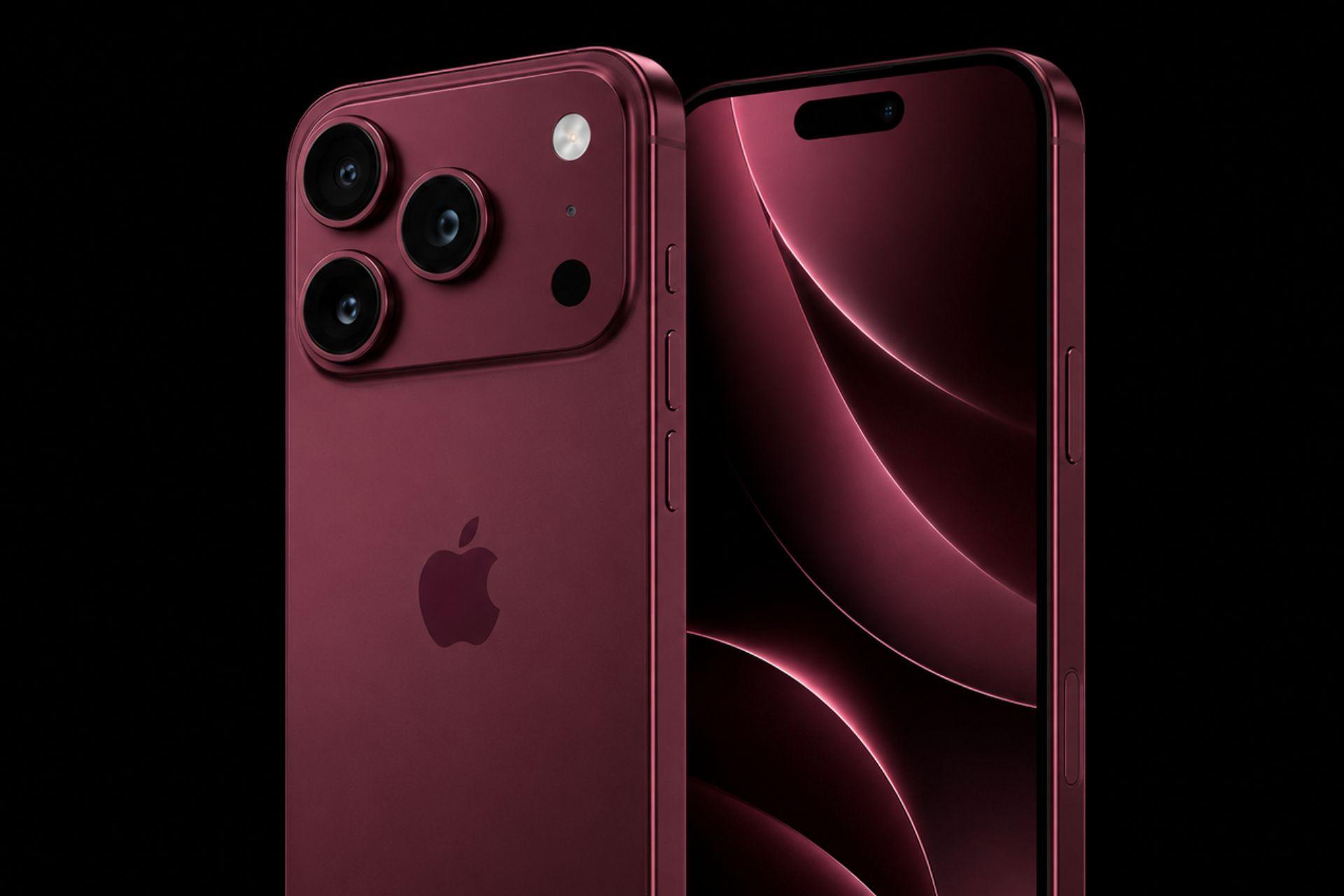 In September 2026, the iPhone 18 generation arrives in a world profoundly different from the one that received its ancestor.
Hardware continues to advance. Processors are vastly more powerful, cameras have become sophisticated systems, displays occupy almost the entire front of the device, and mobile networks carry volumes of data that a user in 2007 would have struggled to imagine.
But the interesting question is no longer whether the next iPhone will be faster.
It is what remains for it to absorb.
Artificial intelligence is likely to define the next contest. Until now, users have largely had to learn the language of the smartphone: open an application, find a function, fill in a field, navigate through a menu. AI theoretically promises to reverse that relationship. The user expresses an intention, and the machine identifies the applications, information and actions required to fulfil it.
If that evolution succeeds, it could prove as important to the interface as multitouch was in 2007.
The phone would become less a collection of applications than an intermediary capable of understanding what its owner is trying to accomplish.
And here, curiously, the history of the iPhone returns to its starting point.
In 2007, Apple removed the keyboard to bring the finger closer to the software. Twenty years later, the challenge may be to remove part of the visible software to bring intention closer to result.
What remains of the phone
It is difficult to know how the iPhone 18 will look twenty years from now. Perhaps it will appear as one of the last representatives of a form that had reached maturity before glasses, ambient interfaces or artificial intelligence shifted the centre of personal computing once again. Perhaps the rectangle of glass will endure far longer than expected.
But the original iPhone already allows us to measure what has happened.
In 2007, Apple presented three devices combined into one.
The mistake, perhaps, was simply counting too early.
Because since then, the fourth device entered the iPhone, then the fifth, the tenth and the hundredth. The camera, the city map, the wallet, the newspaper, the television, the console, the ticket, the office and part of our memory followed.
The phone is still there.
It is simply the pocket that has become much larger.
Main sources
Apple — Introduction of the iPhone, January 9, 2007; commercial launch of the original iPhone, June 2007.
Apple — Launch of the iPhone 3G and the App Store, July 2008; historical data on the development of the application ecosystem.
Apple — Archives and announcements covering major iPhone generations and the evolution of Apple's hardware and software ecosystem.
Apple — September 2026 announcements concerning the iPhone 18 generation.
Interpretations concerning the smartphone's economic, industrial, cultural and geopolitical impact represent Atlas Limits analysis based on these technological developments and the transformations observed across the industries concerned.
Atlas Limits Research Desk
Atlas Limits’ editorial and analytical desk.