For several months, the question dominating the Middle East was one of escalation. How far would the United States and Israel go against Iran? How far could Tehran retaliate? Could the conflict draw the Gulf monarchies, Lebanon, Iraq or Yemen into a regional war that no one could contain?
By the end of August 2026, the question had changed. Large-scale military operations have become less frequent, but peace has not returned. Nearly six months after the American and Israeli strikes of 28 February, Washington and Tehran are no longer confronting each other with the same intensity, yet they have failed to reach a durable settlement. The negotiating period opened by the June interim agreement expired without producing a definitive peace.
The Middle East has therefore entered a particularly dangerous intermediate state: stable enough to reduce, for now, the prospect of a general regional conflagration, but far too unstable to allow a return to the previous order.
The war is no longer merely military. It has become economic, maritime and diplomatic.
After the Strikes, the Contest Continues
The campaign against Iran has profoundly altered the regional balance of power without resolving the Iranian question.
The military objective was, among other things, to reduce Tehran’s nuclear, ballistic and military capabilities and weaken a regional apparatus already under pressure from transformations in Lebanon and Syria. But destroying infrastructure and degrading Iranian military capabilities does not amount to removing Iran as a regional power.
That is precisely the problem Washington and Israel now face.
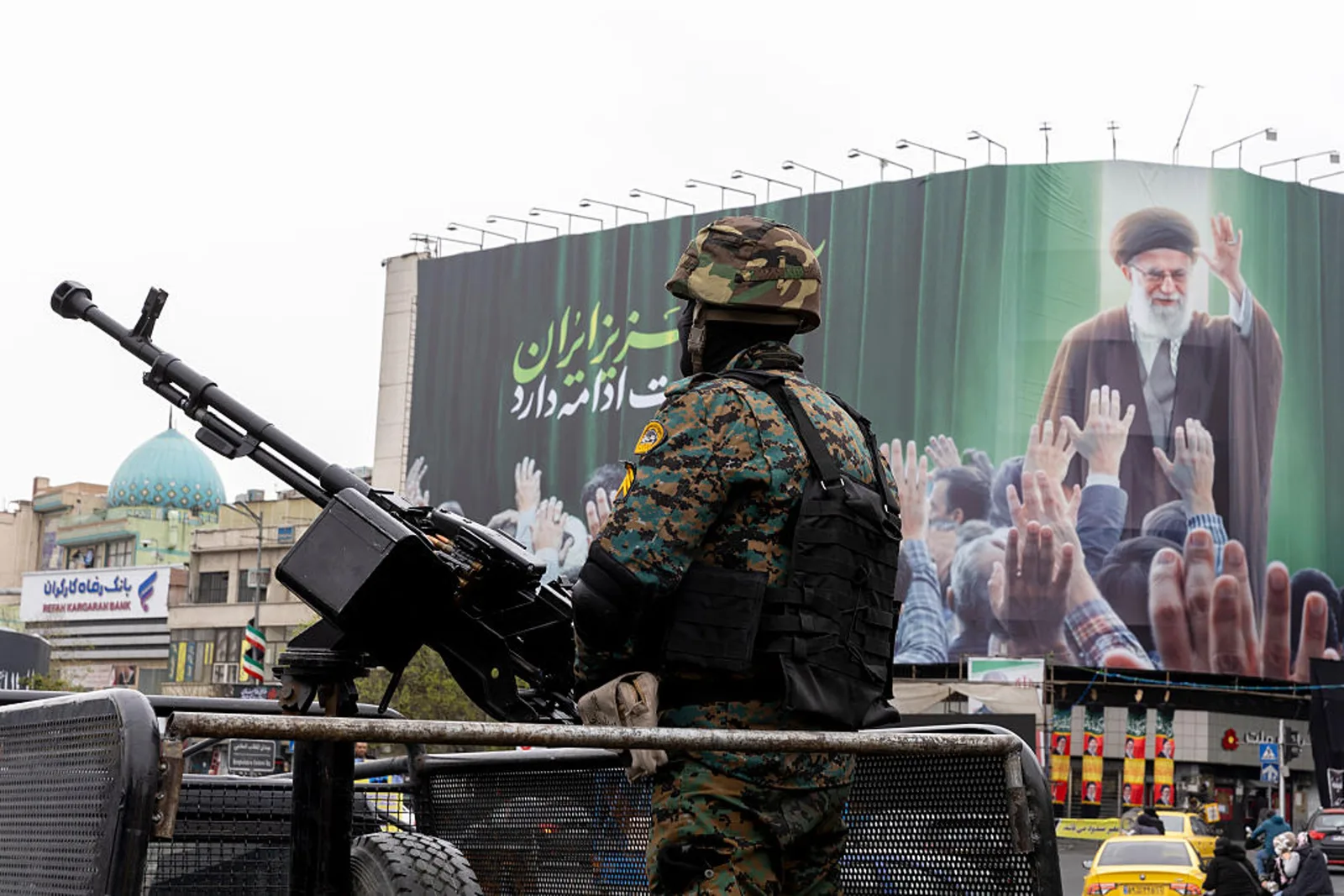
A state can lose installations, capabilities and part of its network of influence without losing the instruments that allow it to impose considerable costs on its adversaries. Iran retains armed forces, missiles, regional networks and, above all, an exceptional geographical position at the entrance to the Persian Gulf.
Washington therefore appears to be gradually shifting the centre of gravity of its strategy.
On 24 August, the US Treasury announced a new sanctions campaign targeting nearly sixty individuals, entities and vessels linked to Iran. The measures cover oil, maritime, technological, nuclear, ballistic and financial networks. The United States is also threatening foreign actors that continue certain economic relations with Tehran with restrictions on their access to the American financial system.
The logic is clear: to obtain through economic isolation what military power has not been able to secure permanently.
Yet this strategy contains its own contradiction. The greater the economic pressure, the stronger Tehran’s incentive to use the principal instrument it still possesses to internationalise the cost of its isolation.
That instrument is the Strait of Hormuz.
Hormuz, the Real Centre of the War
Geography gives Iran something its economy and conventional military power cannot guarantee: leverage over the global economy.
Before the conflict, roughly one fifth of the world’s traded oil passed through the Strait of Hormuz. Since the beginning of the war, traffic through the waterway has been severely disrupted. Iran regards control over passage as an instrument of negotiation, while Washington insists on maintaining freedom of navigation.
On 25 August, another oil tanker was disabled after being struck by a projectile off Oman. The crew survived and responsibility for the attack was not immediately established, but the incident was enough to demonstrate once again the vulnerability of this maritime route.
The issue extends far beyond Iran’s ability to close the strait completely.
A hermetic blockade is not even necessary to produce global economic consequences. It is enough for shipping companies to consider the area dangerous, for insurance premiums to rise, for some vessels to be rerouted and for markets to incorporate a lasting geopolitical premium into energy prices.
Brent crude was still trading above $90 a barrel in late August. More importantly, inventories accumulated to absorb the initial shock are gradually being depleted.
Hormuz has therefore become more than a strategic strait. It is the mechanism through which a conflict between Iran, Israel and the United States can be transmitted to the rest of the global economy.
Europe feels it through energy prices. Asia through its dependence on Gulf supplies. Importing countries through their trade balances. Governments through inflation. Central banks through the additional difficulty of stabilising prices.
A regional war can therefore generate global consequences without becoming a world war.
The Economy as a New Battlefield
The latest American offensive is designed precisely to reverse this logic.
If Iran uses its geography to impose costs on global trade, Washington uses its financial position to impose costs on Iran’s trading partners.
The two powers possess very different forms of control over flows.
Tehran has the geography of Hormuz. Washington has access to the dollar and much of the international financial system.
The confrontation therefore becomes less spectacular but potentially more durable. It moves from military bases to banks, shipping companies, insurers, commercial intermediaries and the networks that allow Iran to export oil or acquire technology.
Iran’s economy is already under severe pressure. The currency has weakened, inflation is weighing on households and strains have emerged in fuel supplies. Yet there is no indication, at this stage, that this deterioration is sufficient to force Tehran into political capitulation.
That is one of the central uncertainties of the American strategy.
Sanctions can reduce a state’s resources. They do not guarantee that it will change its behaviour in the desired direction. They may even strengthen factions that consider any concession likely to be interpreted as weakness.
Iran and the United States are therefore entering a contest of endurance.
Diplomacy Returns Through the Margins
Yet behind the threats, intermediaries are at work.
Pakistan now plays an important role in attempts at rapprochement. A high-level Pakistani delegation travelled to Tehran, and Islamabad reported progress in discussions aimed at reducing tensions.
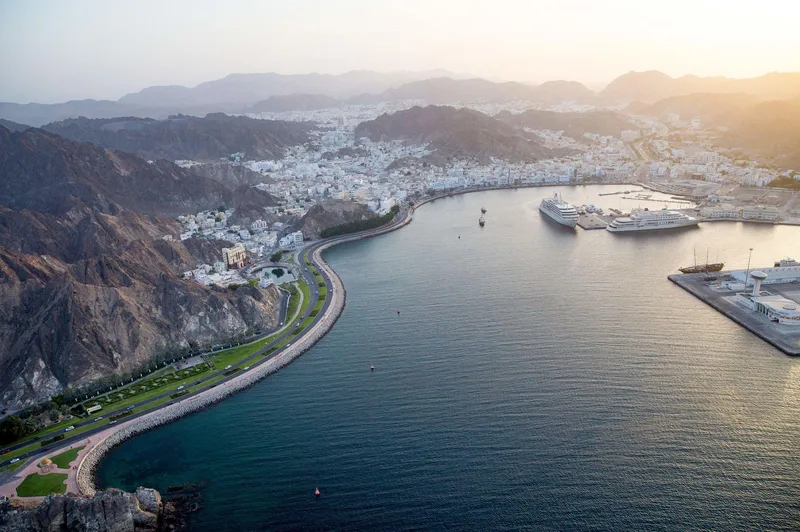
Oman also retains its historic role as an intermediary. Tehran and Muscat have been working on arrangements concerning navigation through the Strait of Hormuz.
The multiplication of mediation efforts reveals something fundamental: none of the major actors appears to have a genuine interest in immediately returning to total war.
Iran needs economic pressure to ease.
The United States has an interest in restoring maritime traffic without committing itself to another costly military campaign.
The Gulf monarchies want to prevent their infrastructure, energy exports and economic diversification strategies from becoming permanent collateral damage in the confrontation.
And Israel, despite the considerable degradation of its adversaries’ capabilities, must now manage the consequences of a transformed region rather than simply continue destroying those capabilities.
Diplomacy has therefore not returned because the underlying antagonisms have disappeared. It is returning because the cost of sustaining them has become considerable for almost everyone.
Israel Dominates, but Does Not Control the Aftermath
Israel emerges from this sequence in a stronger regional military position.
The strategic environment that once enabled Iran to project power all the way to the Mediterranean has been profoundly altered. Hezbollah has been weakened. Syria no longer provides Tehran with the same strategic depth. The logistical chains connecting Iran to its regional partners have become more vulnerable.
But military superiority does not automatically produce political order.
Hezbollah remains embedded in Lebanon. Iran-aligned groups retain a presence in Iraq. The Houthis remain capable of exerting pressure from Yemen. And Iran itself remains a country of nearly 90 million people situated at the centre of one of the world’s most important energy regions.
There is therefore no realistic scenario in which Iran simply disappears from the regional equation.
The real question is what form Iranian power will take after the war.
Iran’s Old Network Is Transforming
For two decades, one of Tehran’s principal strategic achievements was the construction of a continuum of influence stretching from Iran through Iraq and Syria to Lebanon.
This architecture allowed Iran to project power far beyond its borders while making any direct confrontation with Tehran considerably more complicated.
It is now deeply damaged.
But it would be premature to conclude that it has disappeared.
Asymmetric networks have precisely the advantage of being able to reconfigure themselves. When certain territories become less accessible, others gain importance. Iraq and Yemen are therefore becoming particularly sensitive spaces within the emerging regional architecture.
The Middle East that emerges from the war may consequently be less structured around a continuous territorial “axis” and more around a dispersed collection of strategic footholds.
Iran would then be less capable of constructing continuous strategic depth, but still capable of disrupting the regional order.
Gaza Reveals the Limits of Power
While the balance of power surrounding Iran is changing, the Israeli-Palestinian conflict remains without a political solution.
The Gaza ceasefire remains fragile. Strikes continue intermittently, while negotiations over the subsequent stages of a settlement remain difficult. American discussions with Israel and Hamas have yet to resolve fundamental disagreements over issues including disarmament, Israeli withdrawal and the territory’s future political administration.
The West Bank also remains under intense pressure.
The persistence of the Palestinian question is essential to understanding the limits of the current strategic transformation.
Israel can reduce the military capabilities of its adversaries. It can alter the balance of power with Iran. It can weaken Hezbollah or prevent certain military infrastructures from being rebuilt.
But none of these operations answers the Palestinian political question.
A paradox could therefore emerge: an Israel militarily more powerful than before the war, but still operating within a political environment incapable of producing lasting stability.
The Gulf Wants to Escape the Logic of War
For the Gulf monarchies, the Iranian war confirms a shift that had already been underway for several years.
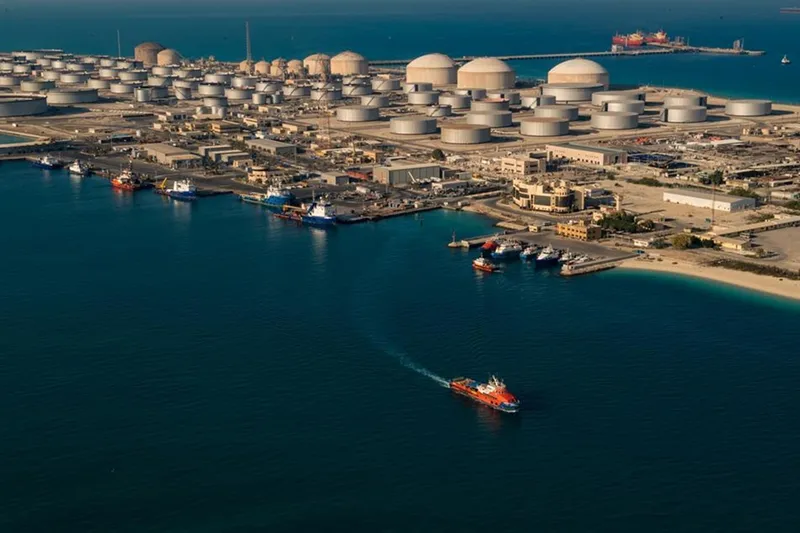
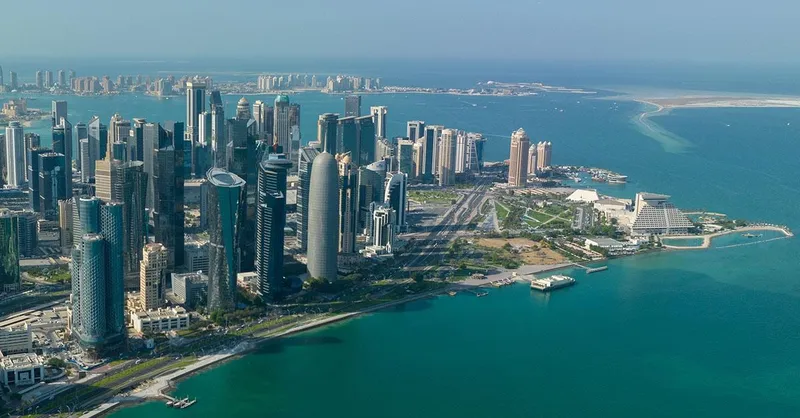
Saudi Arabia, the United Arab Emirates, Qatar and Oman no longer want their security to depend exclusively on confrontation between Washington, Tehran and Israel. Their economies now have too much to lose.
Ports, airlines, financial centres, tourism, digital infrastructure, foreign investment and large industrial projects all require a degree of regional predictability.
Permanent war is incompatible with that transformation.
The Gulf is therefore simultaneously an area protected by American power, exposed to Iranian capabilities and increasingly interested in constructing autonomous mechanisms of de-escalation.
This is one of the region’s most important developments: Gulf states no longer simply want to choose a side. They want to reduce the cost of having to choose at all.
An Armed Peace
One discreet indicator illustrates the evolution of the immediate risk.
The United States has begun returning personnel to several diplomatic missions in the Middle East, including in Israel, Lebanon, Saudi Arabia and Iraq, following evacuations and staffing reductions triggered by the war.
This does not mean Washington considers the crisis over. It suggests instead that an immediate military expansion across the entire region is now regarded as less likely than it was several months ago.
The Middle East may therefore be entering a new phase.
It is neither a return to the status quo nor the establishment of a new equilibrium.
It is an armed peace in which every actor is attempting to convert the results of war into political advantage.
Washington is trying to transform its military and financial superiority into Iranian concessions.
Tehran is trying to transform its capacity for maritime disruption into economic survival and recognition of its regional role.
Israel is seeking to prevent the reconstruction of the threat that existed before 2026.
The Gulf monarchies are trying to preserve their security without becoming the permanent battlefield of competing powers.
And mediators are attempting to construct a compromise before an incident, a missile, a damaged vessel or a miscalculation sends the entire system back towards escalation.
The war demonstrated that Iran could be considerably weakened. It also demonstrated how difficult it is to neutralise a country whose power rests not only on its armed forces, but also on its geography, its networks and its ability to make others bear part of the cost of its confrontation.
The real challenge of the post-war period therefore begins now.
The question is no longer simply who won the battles, but what kind of order can emerge from a Middle East in which Iran is weaker, Israel more powerful, the United States still indispensable and the Gulf states increasingly unwilling to absorb the consequences of the rivalries surrounding them.
And until a political answer is found to that equation, the war will remain suspended rather than ended.
Main Sources
Reuters — coverage of the Iran–US conflict, US sanctions, the Strait of Hormuz, energy markets and the return of US diplomatic personnel, August 2026.
Associated Press — developments in the Strait of Hormuz, regional mediation efforts, Iran’s economic situation and developments in Gaza, August 2026.
Atlas Limits Research Desk
Atlas Limits’ editorial and analytical desk.