Priority: Exceptional | Initial Public Offering, Capital Mobilization and Digital Strategy — Reported subscription figures, pending final regulatory verification
An IPO That Extends Far Beyond India's Stock Market
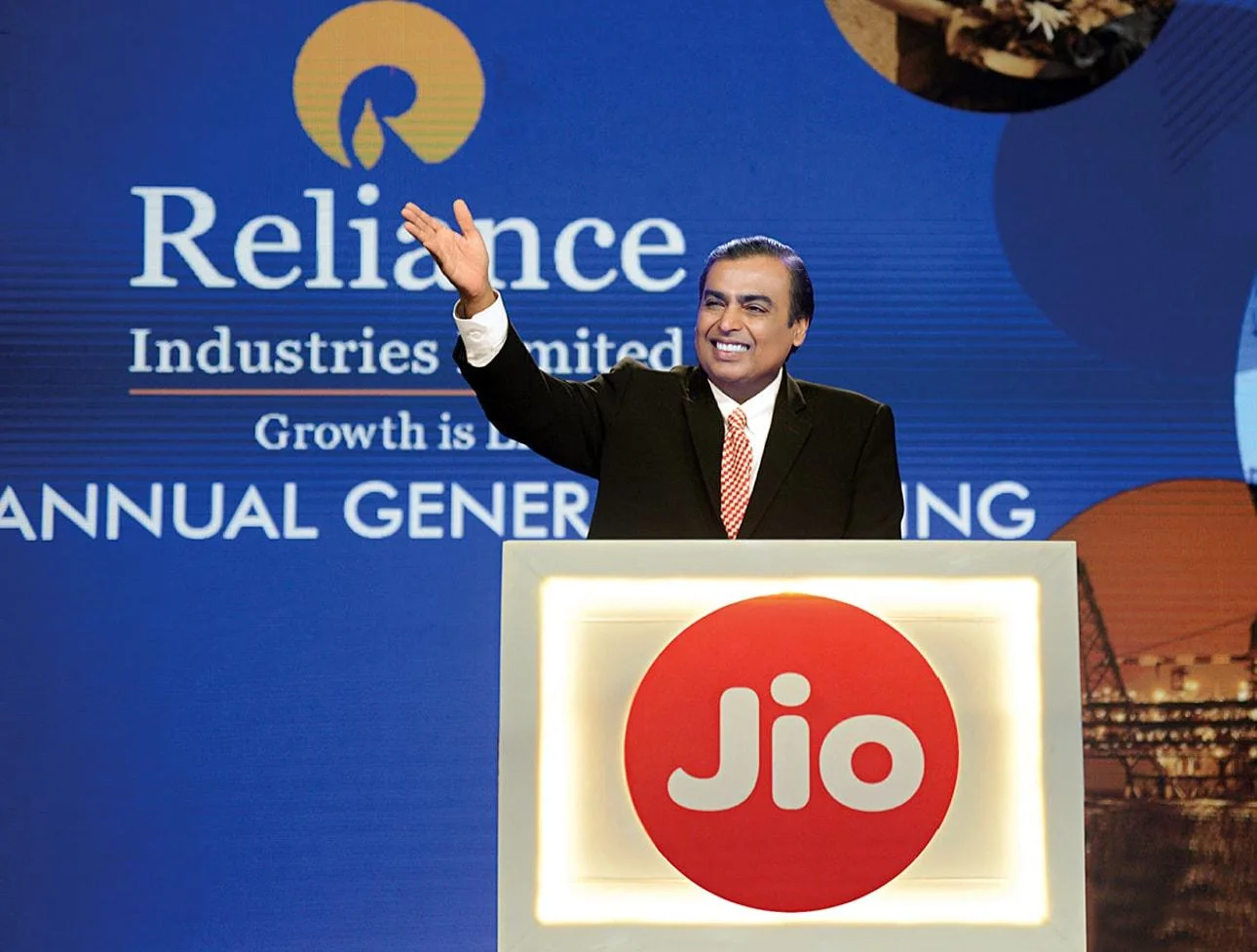
The initial public offering of Jio Platforms, the digital subsidiary of Indian conglomerate Reliance Industries, could represent one of the most significant capital market transactions in Asia this year.
According to information attributed to Reuters on October 23, 2026, the offering reportedly attracted more than $77 billion in investor orders for an IPO valued at approximately $3.2 billion.
If confirmed on a comparable basis, these figures would indicate demand equivalent to roughly 24 times the size of the offering.
Yet behind the extraordinary scale of this financial mobilization lies a much deeper transformation.
India is seeking to convert the size of its domestic market, the expansion of digital consumption and the financial strength of its major industrial groups into lasting technological capabilities.
Jio Platforms stands at the center of this evolution.
Over the past decade, the ecosystem developed around Reliance Jio has fundamentally transformed access to telecommunications and digital services across the country.
Its development now reflects a broader ambition: building an integrated infrastructure combining connectivity, digital platforms, enterprise services and advanced technological capabilities.
The significance of the IPO therefore extends beyond the valuation of a single company.
It raises a larger question about India's ability to finance its own industrial and digital champions while attracting international capital in an increasingly competitive global technological environment.
1. A Financial Mobilization Reflecting India's Growing Appeal
The first major implication of the reported transaction concerns the extraordinary scale of investor demand.
In an initial public offering, investors submit orders indicating the number of shares they wish to acquire.
When demand exceeds the number of shares available, the offering is considered oversubscribed.
Oversubscription can indicate strong investor interest, but it must not be confused with the amount of capital actually raised.
In Jio's case, the reported $77 billion would represent the aggregate value of subscription orders.
It would not correspond to the proceeds received by the company or its total market capitalization.
The offering size, reportedly approximately $3.2 billion, represents a separate financial measure.
Jio Platforms' implied equity valuation would depend on the final offering price and the total number of outstanding shares.
This distinction is essential.
A company can attract tens of billions of dollars in subscription orders while raising only a fraction of that amount.
Demand can also be influenced by allocation mechanisms.
Some institutional investors submit orders larger than their intended final holdings because they anticipate receiving only a portion of the shares requested.
Oversubscription is therefore not, by itself, a reliable measure of a company's intrinsic value.
Nevertheless, when accurately established, the scale of subscription demand demonstrates an issuer's capacity to mobilize capital.
For India, a transaction of this magnitude would also represent an important test of market depth.
It would provide evidence of the ability of domestic and international investors to absorb a substantial equity offering, alongside the effectiveness of the country's underwriting, settlement and listing infrastructure.
2. Jio and the Transformation of India's Telecommunications Economy
Jio's current strategic position originates in a fundamental transformation of India's telecommunications market.
When Reliance Jio commercially launched its mobile services in September 2016, it adopted an exceptionally aggressive market-entry strategy.
The company deployed a nationwide fourth-generation network and introduced pricing structures that disrupted the competitive landscape.
Mobile data gradually became more affordable for a vast population.
This shift accelerated digital consumption and encouraged the adoption of new services.
Its consequences extended far beyond telecommunications.
Expanding connectivity supported the development of e-commerce, digital financial applications, online education, audiovisual platforms and business services.
It also helped bring new users into India's digital economy.
For Reliance Industries, the strategy required substantial industrial investment.
Unlike technology platforms whose expansion relies primarily on software and outsourced infrastructure, Jio had to finance and operate extensive physical networks.
Telecommunications towers, transmission equipment, radio spectrum, information systems and maintenance infrastructure became essential components of its business model.
This capital intensity creates significant constraints.
However, it can also establish substantial barriers to entry for potential competitors.
Control over a nationwide telecommunications infrastructure also provides opportunities to develop complementary services through direct relationships with customers.
Jio has therefore built a strategic asset extending beyond the conventional sale of mobile subscriptions.
The central challenge is now determining how this infrastructure can generate greater economic value per user.
3. Reliance Industries: Reinventing an Industrial Empire
Jio's proposed public listing forms part of a broader strategic transformation within Reliance Industries.
The conglomerate historically developed around refining, petrochemicals and other capital-intensive industrial activities.
These businesses enabled Reliance to accumulate considerable financial resources.
However, they remain exposed to commodity cycles, fluctuations in industrial margins and structural changes in global energy markets.
Diversification into telecommunications, retail and digital services represents a strategic rebalancing.
It allows the group to develop businesses more closely connected to domestic consumption and technological adoption.
Jio occupies a central position in this transformation.
The platform enables Reliance to participate directly in the expansion of India's digital economy.
It also provides the conglomerate with an asset whose growth prospects and valuation characteristics differ substantially from those of traditional refining operations.
This distinction can be particularly important in capital markets.
Conglomerates sometimes trade at a discount when investors struggle to assess the value of their individual businesses.
Listing a subsidiary can improve valuation transparency.
It establishes an observable market price for part of the group's industrial portfolio.
However, an IPO does not automatically create additional economic value.
It changes the ownership structure and may improve access to capital, but long-term value creation continues to depend on the underlying performance of the business.
In Jio's case, investors will therefore need to examine the transaction's implications for the group's financial structure, minority shareholder rights and future capital allocation decisions.
4. The Critical Question: What Will the IPO Actually Finance?
The strategic significance of an IPO depends heavily on how the proceeds are distributed and ultimately deployed.
Two mechanisms must be distinguished.
A primary share issuance provides new capital directly to the company.
A secondary share sale primarily allows existing shareholders to monetize part of their holdings.
An IPO may also combine both structures.
In the first case, proceeds can finance investment, strengthen liquidity or reduce debt.
In the second, the transaction primarily changes the ownership structure.
For Jio, the definitive composition of the offering is therefore critical.
If a substantial portion of the proceeds flows directly to the company, it could support the development of new infrastructure.
Mobile networks require continuous investment to accommodate increasing data consumption and maintain service quality.
The expansion of fifth-generation telecommunications capabilities also represents a significant industrial challenge.
Additional investment requirements may arise from data centers, cloud platforms and artificial intelligence technologies.
However, the economic rationale for these investments must be evaluated against their expected returns.
Accumulating technological capacity does not guarantee commercial utilization.
An underutilized data center can become a significant financial burden.
Similarly, network investment must be accompanied by sufficient revenue growth to preserve returns on invested capital.
One of Jio's most important challenges will therefore be maintaining a sustainable balance between technological expansion and financial discipline.
5. Is India Becoming a New Center of Gravity for Global Capital?
The potential investor interest surrounding Jio reflects a broader shift in India's position within international financial strategies.
The country benefits from an enormous domestic market, an expanding consumer base and an increasingly developed entrepreneurial ecosystem.
The growth of domestic financial savings is also strengthening the economy's capacity to finance its own companies.
Mutual funds, institutional investors and households are contributing to the progressive deepening of India's capital markets.
This development carries strategic significance.
An economy capable of mobilizing a substantial share of its domestic savings becomes less exclusively dependent on international financial flows.
It may also be better positioned to absorb fluctuations in foreign investor appetite.
Nevertheless, India's growing attractiveness should not be mistaken for immunity from global financial risks.
Indian markets remain sensitive to international interest rates, currency movements and portfolio reallocations.
Elevated valuations in certain sectors can also limit future investment returns.
Strong demand for an IPO does not necessarily demonstrate that the broader market is undervalued or that prices will continue rising.
It may instead reflect optimistic growth expectations already incorporated into asset prices.
For international investors, India therefore represents a combination of structural opportunities and financial constraints.
The central challenge is distinguishing long-term economic potential from short-term valuation conditions.
6. Artificial Intelligence: The Next Industrial Frontier
Jio's future may depend partly on its ability to participate in the global transformation of digital infrastructure.
Artificial intelligence is increasing demand for computing power, data storage, connectivity and advanced information processing.
This evolution creates new opportunities for companies already operating extensive telecommunications networks and technological infrastructure.
For Jio, connectivity could become the foundation of a broader digital ecosystem.
Cloud services provide infrastructure for hosting applications.
Data centers supply the physical capacity required to operate them.
Artificial intelligence tools can then be delivered to businesses, public institutions and consumers.
Such integration could enable Jio to develop additional revenue streams.
However, it also introduces considerable risks.
AI infrastructure requires substantial capital investment and faces rapid technological obsolescence.
Advanced computing equipment depends on internationally distributed supply chains.
Energy requirements may also become a limiting factor.
Furthermore, the profitability of AI services varies considerably across applications.
India presents an additional challenge: the gap between the enormous potential user base and the amount individual customers can afford to spend on advanced digital services.
A strategy based exclusively on replicating American technology business models could therefore encounter significant limitations.
Jio will need to develop solutions adapted to India's economic and social realities.
This includes addressing linguistic diversity, the needs of small businesses and household purchasing-power constraints.
The ability to deliver technological services at scale and at relatively low cost could become a major competitive advantage.
7. Digital Sovereignty: Infrastructure as an Instrument of Power
Jio's development also raises a fundamental geopolitical question.
Digital infrastructure has become an essential component of economic sovereignty.
It enables information flows, supports commercial transactions and underpins an increasing number of public and private services.
In this environment, control over digital networks has become strategically important.
For India, the development of major domestic telecommunications operators can strengthen its ability to organize and manage its own digital environment.
However, sovereignty extends beyond infrastructure ownership.
It also depends on equipment, software, electronic components and the technologies required to operate digital systems.
A domestic company may control its telecommunications networks while remaining heavily dependent on foreign suppliers for critical technologies.
This dependency is particularly visible in semiconductors and specialized computing infrastructure.
Digital autonomy must therefore be understood as a combination of industrial, financial and technological capabilities.
Jio's position can contribute to this objective without independently guaranteeing complete technological sovereignty.
India must continue balancing two strategic priorities.
The first is encouraging the emergence of national champions with sufficient scale to undertake major investments.
The second is preserving effective competition and preventing excessive concentration of essential infrastructure.
This tension now affects virtually every major digital economy.
8. Economic Concentration: The Potential Cost of Integration
Reliance's strategy increasingly combines multiple economic activities.
The group operates across energy, retail, telecommunications and digital services.
Such diversification can generate substantial synergies.
Infrastructure can be shared, commercial networks can facilitate the distribution of new services, and the group's financial resources can support long-term investment.
However, integration can also reinforce barriers to entry.
When a company simultaneously controls essential infrastructure and services distributed through that infrastructure, competition concerns may arise.
Third-party access to networks, pricing arrangements and relationships between subsidiaries become important regulatory questions.
Competition authorities must determine whether efficiency gains genuinely benefit consumers and businesses.
They must also assess the potential exclusion of competitors.
For investors, economic concentration presents a dual reality.
It can strengthen margins and commercial stability.
But it may also increase regulatory exposure and generate additional obligations.
Jio's development should therefore be evaluated not only through its financial performance but also through the evolution of India's competition framework.
9. High Valuations Require Strong Financial Performance
One of the principal risks associated with major IPOs is the potential gap between investor expectations and future operating performance.
A company may possess excellent industrial prospects while delivering disappointing investment returns if its shares are purchased at an excessive valuation.
Growth alone cannot justify any price.
For Jio, several indicators will be particularly important.
Average revenue per user will help measure the company's ability to monetize its customer base.
Operating margins will provide evidence of business efficiency.
Capital expenditure will reveal the scale of continuing financing requirements.
Free cash flow will indicate the company's actual capacity to finance growth after investment.
Finally, the profitability of new digital activities will demonstrate whether diversification is generating genuine economic value.
The analysis must also consider financial relationships between Jio and other Reliance Industries entities.
Intragroup agreements, contractual commitments and dividend decisions may materially influence minority shareholder returns.
Strong subscription demand at the time of an IPO does not guarantee sustained share-price appreciation.
Future performance will depend on earnings growth and the company's ability to meet expectations embedded in its initial valuation.
10. Three Possible Scenarios for Jio's Future
Base Case: Consolidating Domestic Leadership
Jio continues expanding its infrastructure while gradually improving the profitability of existing services.
Growth is driven primarily by higher revenue per user, the development of complementary digital services and improved utilization of existing investments.
New technology businesses expand, but their financial contribution remains gradual.
Under this scenario, value creation depends largely on investment discipline and cash-flow generation.
Upside Case: The Emergence of an Integrated Technology Platform
Jio successfully develops significant businesses in cloud computing, enterprise services and artificial intelligence.
The company converts its customer base and infrastructure into sustainable commercial advantages.
Diversification improves margins and progressively reduces dependence on traditional telecommunications revenue.
Jio could then emerge as one of the leading integrated digital platforms across emerging markets.
Downside Case: Expensive Growth and Insufficient Returns
Investment requirements increase faster than revenue.
Competition limits opportunities to raise prices.
New technology businesses require more capital than anticipated and take longer to generate meaningful earnings.
Under these conditions, investors may revise their expectations.
The company's market valuation could become vulnerable to a correction, even if its commercial position remains strong.
These scenarios illustrate an essential principle: market size does not guarantee adequate returns on invested capital.
11. A Development Model Distinct From Silicon Valley
Jio's history presents a particularly important characteristic.
Unlike many American technology companies, its development did not primarily follow the model of a startup initially financed through venture capital.
Instead, it emerged from the strategic transformation of an established industrial conglomerate with substantial financial resources.
This origin enabled the financing of large-scale physical infrastructure.
It also supported an exceptionally ambitious market-entry strategy.
The model illustrates an alternative path toward technological development.
Digital power can emerge from the combination of industrial capital, domestic market scale and national infrastructure.
This observation has significant implications for emerging economies.
It suggests that building major technology companies does not necessarily require reproducing the American venture-capital ecosystem.
Technological leadership may also emerge through the strategic transformation of established industrial groups.
However, this development path has an important limitation.
Few companies possess financial and industrial capabilities comparable to those of Reliance.
Jio's potential success would therefore not represent a model that could be replicated automatically across emerging markets.
12. The Real Challenge: Turning Digital Scale Into Productivity
For India, Jio's success should not be assessed solely through its market capitalization.
A company can achieve an extraordinary valuation without generating proportionate benefits for the wider national economy.
The more important question concerns the diffusion of productivity gains.
Digital infrastructure can reduce transaction costs, improve market access and increase business efficiency.
It can also expand access to essential services.
However, these benefits depend on availability, affordability and effective utilization.
India continues to face substantial regional and socioeconomic disparities.
Digital transformation will deliver its full economic potential only if infrastructure enables a growing share of households and businesses to participate in the modern economy.
The question therefore extends beyond the performance of a single corporation.
It concerns the relationship between capital concentration, technological innovation and economic development.
Jio could become a major instrument of modernization.
But the success of this transformation will also depend on public policy, competition, education and the ability of Indian businesses to use emerging technological infrastructure productively.
Conclusion — India Seeks to Transform Domestic Scale Into Global Financial Power
Jio Platforms' reported initial public offering could mark another important stage in the evolution of Indian capitalism.
The reported $77 billion in subscription orders naturally attracts attention.
But the transaction's real significance extends beyond the potential financial record.
If verified, the figures would illustrate the ability of a major Indian company to mobilize extraordinary amounts of capital around a long-term industrial and digital strategy.
For Reliance Industries, the operation forms part of the transformation of a conglomerate historically centered on energy and petrochemicals into a diversified group combining infrastructure, consumption and technology.
For Jio, it could open a new phase of development characterized by greater financial transparency and heightened profitability expectations.
For investors, it represents a balance between growth potential and valuation discipline.
For India, the implications are more fundamental.
The country is seeking to demonstrate that it can not only become one of the world's largest digital markets but also finance, control and develop the infrastructure underpinning its economy.
This ambition continues to face industrial, technological and financial constraints.
Nevertheless, it forms part of a broader redistribution of global economic capabilities.
The ultimate test for Jio will not be the amount of investor orders attracted during its IPO. It will be the company's ability to transform hundreds of millions of digital connections into innovation, productivity and sustainable economic value.
Because economic power in the twenty-first century will depend not simply on the number of connected users, but on the ability of nations to control the infrastructure, technologies and capital shaping their digital economies.
Primary Sources and Editorial Verification
Reuters — October 23, 2026: Reported information concerning Jio Platforms' IPO and investor subscription demand.
Reliance Industries: Annual reports, financial disclosures and information concerning the group's corporate structure and digital businesses.
Securities and Exchange Board of India (SEBI): Regulatory documentation governing public equity offerings and investor disclosures.
National Stock Exchange of India (NSE): Market data and official information concerning securities issuance and listing procedures.
Jio Platforms: Corporate information regarding telecommunications operations, digital infrastructure and technology strategy.
Editorial methodology: The economic scenarios and strategic assessments presented in this article constitute Atlas Limits analysis rather than established future outcomes. Reported IPO figures, including the offering size, subscription demand and transaction status, require reconciliation with definitive regulatory filings and official exchange data before publication.
Atlas Limits Research Desk
Atlas Limits’ editorial and analytical desk.