The proliferation of armed conflicts represents one of the most profound transformations of the contemporary international system. From Eastern Europe to the Middle East, from the Sahel to the Horn of Africa, from the Great Lakes region to South Asia, confrontations are becoming prolonged, overlapping, and increasingly involve a wide range of state and non-state actors. Yet this geography of violence does not simply reflect an accumulation of independent crises. It reveals a broader transformation of power relations, collective security mechanisms, and the economic, technological, and political conditions under which wars are now fought.
According to data published by the Uppsala Conflict Data Program, 61 state-based armed conflicts were recorded in 2024 across 36 countries. This was the highest number registered since the beginning of the statistical series in 1946. Eleven of these conflicts reached the intensity threshold defining a war, meaning at least 1,000 battle-related deaths during the year. This distinction is essential: not all armed conflicts have the same intensity, involve the same actors, or produce the same international consequences.
Forced displacement is among the most visible manifestations of this deterioration in security. According to the United Nations High Commissioner for Refugees, the number of forcibly displaced people worldwide reached approximately 123.2 million at the end of 2024. This total includes different categories of people, particularly refugees, asylum seekers, and internally displaced persons. It does not result exclusively from interstate wars, but also from internal violence, persecution, and other forms of insecurity.
These figures demonstrate a considerable increase in recorded conflict over recent decades. They do not, however, establish that the world has become more violent than during every preceding historical period. The world wars, colonial conflicts, and major ideological confrontations of the twentieth century produced mortality levels that contemporary comparisons must consider carefully.
The distinctive feature of the present period lies less in the existence of war, a constant phenomenon in political history, than in the way conflicts unfold within a deeply interconnected international system.
A territorial confrontation can now disrupt global energy markets. A civil war can become a theater of rivalry between foreign powers. An attack against maritime infrastructure can alter trade routes across several continents. A military operation conducted with relatively limited resources can generate disproportionate economic consequences.
The traditional distinction between local conflicts and global rivalries is consequently becoming increasingly difficult to maintain.
This transformation is particularly evident in Ukraine.
Russia's invasion on February 24, 2022, marked the return of high-intensity interstate warfare to the European continent. It extended a conflict that began in 2014 with Russia's illegal annexation of Crimea and the outbreak of hostilities in the Donbas.
Beyond its territorial and human consequences, the war has profoundly altered Europe's strategic balance.
It prompted NATO member states to increase military expenditure, accelerated the accession of Finland and Sweden to the Atlantic Alliance, and triggered a major restructuring of European energy supplies. The European Union substantially reduced its dependence on Russian pipeline gas, while liquefied natural gas imports and investment in energy infrastructure acquired greater importance.
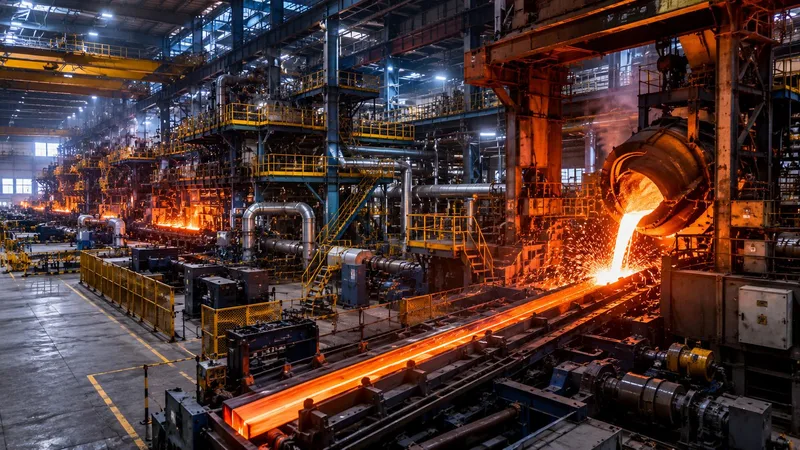
Above all, however, the war revealed a reality that several decades of reduced military-industrial capacity had partially obscured: military power still depends on the ability to produce, maintain, and replace the equipment required for prolonged conflict.
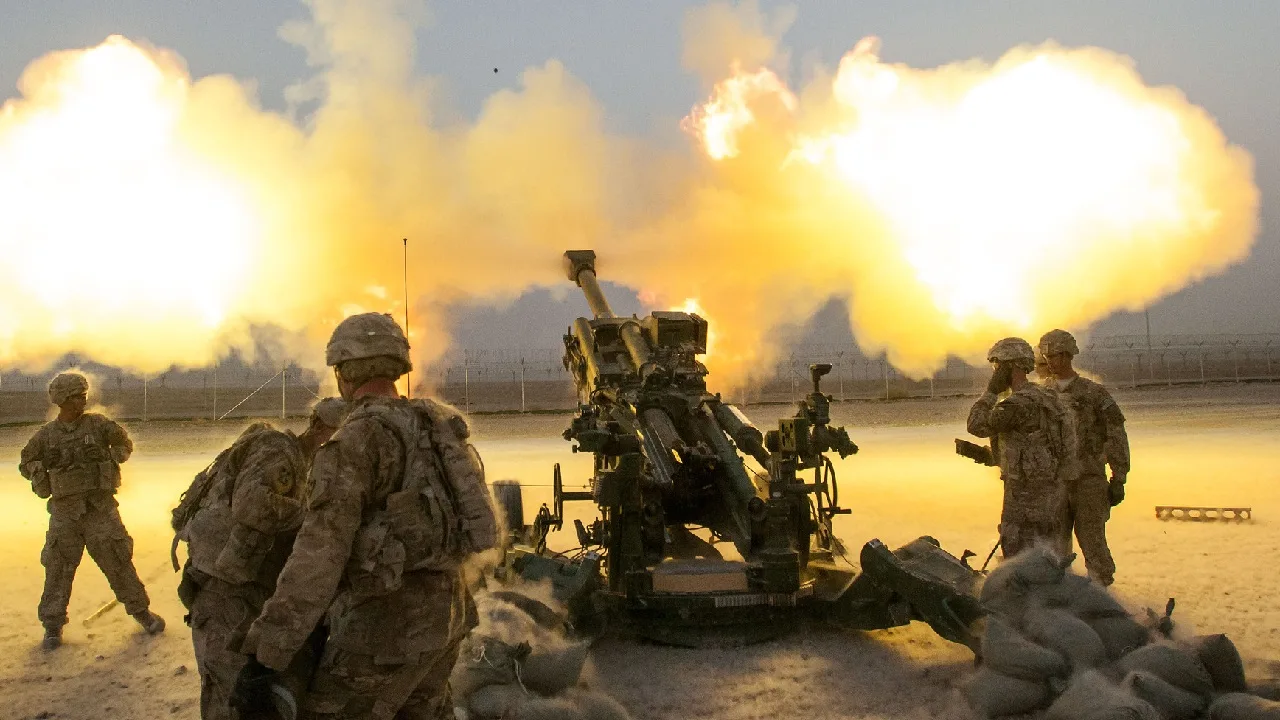
Ammunition stocks, artillery production capacity, electronic component supply chains, air-defense systems, and energy infrastructure have once again become decisive variables.
Modern warfare therefore does not depend exclusively on the technological sophistication of weapons. It also depends on industrial depth, resource availability, and an economy's capacity to sustain a military effort over time.
This dimension explains why the Ukrainian conflict extends far beyond Eastern Europe's borders.
Economic sanctions, technological restrictions, arms transfers, raw-material supplies, and external military partnerships have progressively integrated the war into a broader economic and strategic confrontation.
The rapprochement between Russia and North Korea, particularly through their strategic partnership treaty of June 2024, illustrates this geographical expansion of military interdependencies. The requirements of a European theater can now mobilize industrial and military capabilities located in East Asia.
The war in Ukraine thus demonstrates the growing interconnectedness of regional security systems.
This interdependence is also evident in the Middle East, although through a different configuration.
The Israeli–Palestinian conflict remains structured around questions of territory, sovereignty, security, population displacement, and self-determination. Its religious and identity dimensions are significant, particularly concerning the status of Jerusalem, but they are insufficient to explain either its origins or its persistence.
The attack carried out by Hamas against Israel on October 7, 2023, and the subsequent war in the Gaza Strip caused a major humanitarian catastrophe and profoundly destabilized regional balances.
The consequences of the conflict extend beyond Israeli and Palestinian territories. Confrontations involving Hezbollah in Lebanon, Israeli military operations across several regional theaters, tensions with Iran, and attacks against commercial shipping in the Red Sea have progressively placed the war within a much broader strategic environment.
This expansion does not mean that all these actors pursue identical objectives or participate in a single, perfectly coordinated confrontation. Rather, it demonstrates how distinct rivalries can reinforce one another and increase the risks of escalation.
The Red Sea provides a particularly revealing example of this transformation.
Attacks by the Houthis against commercial vessels disrupted navigation along one of the principal routes connecting Asia and Europe. Shipping companies were forced to alter certain itineraries, notably by rerouting vessels around Africa via the Cape of Good Hope.
These diversions increase distances traveled, delivery times, fuel consumption, and, depending on market conditions, transportation and insurance costs.
An armed organization possessing military resources vastly inferior to those of major naval powers can therefore disrupt an essential artery of global trade.
This asymmetry is one of the defining characteristics of contemporary conflict.
The capacity to inflict disruption no longer depends exclusively on the size of armed forces. It may result from control over a strategic passage, the use of relatively inexpensive drones, missiles, mines, or digital disruption capabilities.
The Yemeni conflict also illustrates the limitations of interpreting wars exclusively through religious or geopolitical categories.
Since the Houthis seized Sanaa in 2014 and a Saudi-led coalition intervened militarily in 2015, the country has experienced profound fragmentation of political authority.
Internal rivalries, territorial divisions, regional interests, and foreign interventions have combined to prolong the crisis.
An estimate by the United Nations Development Programme placed the number of deaths directly and indirectly associated with the conflict at approximately 377,000 by the end of 2021. This historical figure does not represent an updated death toll. It nevertheless highlights the importance of indirect consequences: deterioration of healthcare services, food insecurity, infrastructure collapse, and difficulties accessing essential goods.
Mortality caused by war is not limited to battlefield casualties.
In states whose institutions have been weakened, the destruction of supply networks, public services, and productive capacity can generate lasting human consequences, sometimes extending well beyond periods of intense fighting.
Sudan represents one of the most dramatic illustrations of this phenomenon.
Since April 2023, war has pitted the Sudanese Armed Forces against the Rapid Support Forces, two military organizations emerging from the country's security architecture and engaged in a struggle for control of the state.
This confrontation cannot be reduced to a personal rivalry between military leaders.
It is rooted in a long history of centralized power, territorial marginalization, communal violence, and competition over economic resources.
Gold occupies a particularly important position in this political economy of war. Its extraction, commercialization, and associated financial networks can provide resources to armed actors and their support networks.
Trade routes, infrastructure, and agricultural resources also become objectives of territorial control.
War thus transforms the financing mechanisms of military organizations into strategic objectives.
Sudan demonstrates how an internal conflict can progressively destroy the institutional capabilities necessary for its resolution. When administrations cease functioning, populations are displaced, and local economies reorganize around violence, an agreement between military leaders does not automatically guarantee the reconstruction of the state.
Peace then requires more than a ceasefire. It demands the rebuilding of institutions, restoration of essential services, reorganization of security forces, and resolution of local conflicts that often predate the war itself.
Similar difficulties can be observed in Africa's Great Lakes region.
Eastern Democratic Republic of the Congo has experienced successive conflicts for several decades, involving armed groups, national authorities, local communities, and regional actors.
The resurgence of the M23 movement has once again placed relations between Kinshasa and Kigali at the center of regional security tensions. Allegations of foreign intervention, population displacement, and fighting around urban centers and strategic transport corridors demonstrate that the crisis extends far beyond a local insurgency.
The region's mineral wealth adds an important economic dimension.
The Democratic Republic of the Congo occupies a major position in global cobalt and copper supply chains, while certain areas in the country's east contain deposits of tin, tantalum, tungsten, and gold.
It would nevertheless be reductive to explain the Congolese wars exclusively through mineral resources.
The legacies of regional conflicts, citizenship disputes, land disagreements, communal rivalries, institutional failures, and foreign interventions also play decisive roles.
Natural resources can finance armed groups, strengthen incentives for territorial control, and sustain war economies. They are not necessarily the original cause of every confrontation.
This distinction between causes, financing mechanisms, and factors prolonging conflict is essential to understanding contemporary warfare.
A war may begin for political or security reasons and subsequently continue because certain actors derive income from its persistence.
Violence then becomes not only an instrument for seizing power but also an economic activity integrated into regional and international commercial networks.
The Sahel presents another configuration.
Since the 2010s, Mali, Burkina Faso, and Niger have experienced an intensification of violence involving jihadist groups, government forces, local militias, and various foreign military partners.
These conflicts arise from several interconnected dynamics: weak state presence in certain regions, land and communal tensions, cross-border movements of armed groups, economic difficulties, and challenges to the legitimacy of political institutions.
Military coups in several Sahelian countries have profoundly altered regional security alliances.
The withdrawal or reduction of certain Western military deployments, closer relations with Russia, and the creation of new cooperation structures among military-led governments have transformed the diplomatic environment.
But changing external partners does not automatically resolve the internal causes of violence.
A state's ability to maintain lasting control over its territory depends on its security forces, but also on its administration, infrastructure, judicial mechanisms, and capacity to provide economic opportunities to its population.
An exclusively military response may contain certain threats without rebuilding the institutions required for lasting stabilization.
This institutional question is also evident in Ethiopia.
The Tigray War, between 2020 and 2022, illustrated the potentially devastating consequences of tensions between federal authorities, regional governments, and military forces.
The Pretoria agreement signed in November 2022 ended the principal phase of hostilities between the federal government and Tigrayan forces. But it did not eliminate all the country's territorial, political, and security tensions.
Violence in other regions, particularly Amhara and Oromia, demonstrates the persistence of internal divisions.
Relations with Eritrea and questions of maritime access add a regional dimension to these tensions.
Ethiopia thus shows that a conflict can formally end without the political conditions that contributed to its outbreak being fully resolved.
Signing a peace agreement and building lasting peace are two distinct processes.
Myanmar provides another illustration of this difficulty.
Since the military coup of February 2021, the country has entered a new phase of civil war opposing the armed forces to pro-democracy resistance organizations and various ethnic armed groups.
These groups do not form a homogeneous coalition. Their objectives, territorial bases, and relationships with central authorities differ considerably.
Myanmar's ethnic conflicts predate the coup and are rooted in the history of state formation, autonomy claims, and the difficulties of constructing a federal political order.
The current crisis therefore combines a confrontation over the legitimacy of central authority with older territorial conflicts.
It also demonstrates that an army possessing superior equipment can encounter considerable difficulties when required to control multiple territories simultaneously, protect its logistical lines, and confront organizations with strong local roots.
Conventional military superiority does not guarantee political control over territory.
This observation points toward a broader transformation of warfare.
Contemporary conflicts increasingly involve regular armed forces, paramilitary organizations, insurgent groups, private military companies, criminal networks, and foreign actors.
The boundaries between interstate war, civil war, insurgency, and organized crime can sometimes become difficult to distinguish.
This complexity does not mean that all forms of violence are equivalent.
Armed conflicts are defined through specific legal and statistical criteria. Criminal violence, even when it reaches considerable intensity, does not necessarily fall into the same categories.
Nevertheless, certain criminal economies can help finance armed groups, corrupt institutions, and weaken states' territorial control.
Latin America particularly illustrates this intersection between organized violence, transnational crime, and institutional fragility.
In several countries, criminal organizations possess financial resources, weapons capabilities, and logistical networks that allow them to challenge public authority locally.
Such situations should not automatically be classified as civil wars. They nevertheless demonstrate that the state's monopoly on violence can be weakened by actors whose power rests on illicit markets rather than conventional political projects.
The transformation of global conflict, however, concerns not only wars already underway.
It is also evident in regions where major confrontation remains possible without having yet erupted.
The Taiwan Strait constitutes one of the principal areas of strategic risk.
China considers Taiwan part of its territory and maintains reunification as an objective, without renouncing the use of force. Taiwan possesses its own democratic institutions, armed forces, and an economy deeply integrated into international trade.
The Taiwan question extends far beyond territorial and political considerations.
The island occupies a central position in the global production of advanced semiconductors, particularly through the industrial capabilities of TSMC. A major disruption of this production would affect numerous industries, from electronic equipment to digital infrastructure and defense systems.
The strait is also an essential commercial navigation route in East Asia.
A military confrontation could therefore simultaneously trigger a regional security crisis, industrial disruption, and major disturbances to international trade.
The presence of the United States and Japan's security interests further increase the potential for internationalization of any crisis.
It is nevertheless necessary to distinguish this situation from wars already underway.
The rivalry over Taiwan represents a risk of major conflict, not an ongoing armed war comparable to those in Ukraine or Sudan.
This distinction is indispensable to avoid confusing the intensity of geopolitical tensions with the reality of military confrontation.
The Korean Peninsula presents another configuration of risk.
North Korea possesses a nuclear and ballistic missile arsenal that allows it to impose strategic constraints on adversaries with far greater economic and technological resources.
South Korea, for its part, benefits from substantial conventional military capabilities and its alliance with the United States.
The geographical proximity of military forces, the absence of a definitive peace treaty following the Korean War, and the risks of strategic miscalculation make this environment particularly sensitive.
The development of military capabilities intended to strengthen one actor's security can provoke opposing reactions that worsen collective insecurity.
This mechanism, known as the security dilemma, is one of the fundamental drivers of contemporary strategic rivalries.
It is also present in South Asia.
Since the partition of British India in 1947, India and Pakistan have disputed Kashmir, a divided territory claimed in different proportions by both states.
Both countries' possession of nuclear weapons gives this rivalry a major strategic dimension.
Successive crises demonstrate that nuclear deterrence can reduce certain possibilities of escalation while allowing limited conventional confrontations, border incidents, and coercive operations to persist.
Nuclear stability does not necessarily eliminate conflict.
It can change its forms and thresholds.
These different theaters reveal a common characteristic: contemporary warfare takes place in an environment where military, economic, technological, and informational instruments are increasingly interconnected.
Drones provide a major illustration.
Their use allows surveillance, reconnaissance, and strike capabilities to be multiplied at costs sometimes lower than those of the conventional systems they seek to neutralize.
This development changes the relationship between the cost of attack and the cost of defense.
A relatively inexpensive system can force an adversary to deploy far more costly interception equipment. Repeated attacks can consequently generate significant economic pressure even when their individual military effectiveness remains limited.
Drones do not, however, replace artillery, ground forces, or traditional air capabilities. They operate within combat systems where electronic warfare, communications, sensors, and industrial capacity become decisive.
Artificial intelligence is progressively accelerating this transformation.
Automated image analysis, object identification, intelligence-data processing, and decision support can accelerate certain military functions.
These technologies nevertheless raise questions of reliability, accountability, and human control.
Accelerating decision-making processes does not guarantee a proportional improvement in decision quality. In a confrontation environment, an identification error or incorrect automated interpretation can contribute to escalation.
Technology expands certain capabilities for action, but it does not eliminate political uncertainty.
Civilian infrastructure is simultaneously becoming a central element of confrontation.
Electricity networks, port facilities, submarine cables, satellites, data centers, refineries, and communications systems play essential roles in modern economies.
Their disruption can simultaneously affect military capabilities, public services, and economic activity.
This development increases the vulnerability of highly interconnected societies.
It also explains why national security policies increasingly emphasize industrial resilience, energy diversification, and the protection of critical infrastructure.
The boundary between economic security and military security is becoming less distinct.
Financial sanctions, export restrictions, technology controls, and industrial policies can now accompany military operations or seek to prevent certain strategic dependencies.
This mobilization of economic instruments does not mean that every commercial rivalry constitutes a war.
Rather, it demonstrates that states possess an expanding range of pressure mechanisms situated between traditional diplomacy and armed confrontation.
The economy thus becomes an arena of strategic competition, while war generates increasingly extensive economic consequences.
This interdependence also changes the conditions under which conflicts can be resolved.
A war may continue because the parties receive external support, control natural resources, obtain commercial revenues, or maintain financial networks capable of sustaining their military efforts.
Sanctions can increase the costs of confrontation without necessarily changing political leaders' objectives.
Foreign interventions can prevent one actor's collapse while complicating the search for compromise.
War economies can create material interests favoring the continuation of hostilities.
The end of a conflict therefore does not depend exclusively on military exhaustion.
It requires the actors involved to consider a political settlement preferable to continued confrontation.
This condition becomes particularly difficult to achieve when the parties' objectives are incompatible, international commitments lack credibility, or the institutions capable of guaranteeing an agreement have been weakened.
The United Nations collective security system continues to confront this difficulty.
The Security Council possesses significant authority concerning the maintenance of international peace and security. But its functioning depends on the positions of its permanent members, whose interests may be directly involved in particular crises.
The use of the veto can prevent coercive decisions from being adopted or limit the scope of multilateral initiatives.
This paralysis is not new. It characterized several periods of the Cold War.
The contemporary situation nevertheless presents a particular difficulty: rivalries among major powers are unfolding within a much more integrated economic system, while regional conflicts involve actors and technologies capable of producing rapid transnational consequences.
Regional organizations, diplomatic mediation, and bilateral agreements continue to play essential roles. Their effectiveness, however, depends on local power relations, the willingness of the parties, and the credibility of proposed guarantees.
It would therefore be excessive to conclude that international law or regulatory mechanisms have disappeared.
Their continued existence remains fundamental.
The difficulty lies in the gap that can emerge between collectively established rules and states' political capacity to enforce them.
The contemporary geography of conflict consequently reveals several areas of vulnerability.
Eastern Europe concentrates a major interstate confrontation whose consequences extend to the continent's military, energy, and industrial balances.
The Middle East combines territorial conflicts, regional rivalries, foreign interventions, and risks of disruption to energy and commercial infrastructure.
Africa, from the Sahel to the Horn of Africa and the Great Lakes region, faces several crises in which institutional weakness, territorial conflicts, war economies, and regional rivalries reinforce one another.
East Asia and South Asia, meanwhile, concentrate several risks of confrontation between states possessing considerable military capabilities, sometimes nuclear, in regions essential to the global economy.
These areas do not constitute homogeneous entities.
Their conflicts have distinct origins, actors, and trajectories. Geographical grouping helps identify concentrations of risk, but should not lead to the assumption that a single global confrontation exists.
The fragmentation of the international system does not necessarily mean its division into two coherent blocs.
Alliances vary, economic interests overlap, and many states simultaneously maintain relations with competing powers.
This complexity profoundly distinguishes the current period from certain historical configurations characterized by clearer bipolar divisions.
Contemporary conflicts consequently result from combinations of factors that cannot be reduced to a single explanation.
Power rivalries influence regional balances. Identity divisions can be mobilized in political struggles. Natural resources sometimes finance armed organizations. Institutional weaknesses complicate dispute resolution. Technologies alter disruptive capabilities. Economic interdependencies extend the consequences of confrontation.
But none of these dimensions is sufficient, in isolation, to explain every war.
The central question is therefore not whether conflicts are geopolitical, religious, ethnic, or economic.
It is to understand how these factors interact within particular historical contexts and why certain disagreements escalate into violence while others remain contained through institutions, diplomacy, or deterrence.
This distinction also helps avoid a deterministic conclusion.
The proliferation of conflicts does not mean that the entire international system is inevitably moving toward generalized war.
Economic interdependencies, deterrence capabilities, diplomatic mechanisms, and the considerable costs of direct confrontation between major powers continue to exercise restraining effects.
But these factors do not automatically guarantee peace.
They can shift rivalries toward indirect theaters, encourage certain asymmetric strategies, or prolong conflicts whose expansion major powers seek to limit without succeeding in securing a settlement.
War can consequently remain geographically contained while becoming systemic in its consequences.
This is probably one of the most important characteristics of contemporary conflict.
A local war can mobilize international industrial supply chains. A regional crisis can alter global energy prices. A civil war can trigger mass displacement and destabilize several neighboring countries. A limited military confrontation can cause commercial disruption far beyond the territories directly involved.
The geographical expansion of consequences does not necessarily correspond to an equivalent expansion of fighting.
This separation between military geography and economic reach represents a fundamental transformation in power relations.
It also requires reconsidering the conditions of international security.
Stability no longer depends exclusively on states' ability to defend their borders. It also rests on the robustness of their infrastructure, the continuity of their supplies, the resilience of their institutions, the credibility of their alliances, and their capacity to limit the effects of external crises.
Military power remains essential, but it operates within a broader set of economic, industrial, technological, and political capabilities.
States capable of mobilizing these different resources possess greater adaptive capacity. Those whose institutions are fragile or whose economies depend on a small number of critical supplies may suffer disproportionate consequences even when they do not directly participate in hostilities.
The history of international relations demonstrates that periods of transformation in power balances are frequently accompanied by tensions. It does not, however, allow their outcomes to be predicted mechanically.
The current fragmentation may lead to a lasting multiplication of regional confrontations. It may also encourage the emergence of new security arrangements, cooperation mechanisms, and negotiated balances.
The outcome will depend particularly on major powers' ability to contain their rivalries, fragile states' capacity to rebuild their institutions, and international actors' ability to make political compromise more advantageous than continued warfare.
The contemporary world is therefore not simply experiencing a return of armed conflict.
It is undergoing a transformation in the conditions under which violence is organized, financed, conducted, and internationalized.
The proliferation of wars reveals less the disappearance of international order than the limitations of the mechanisms designed to contain rivalries within a deeply interconnected system. Conflicts often remain local in their origins and territories, but their consequences become global. It is within this gap between the geography of fighting and the reach of its effects that one of the principal vulnerabilities of the contemporary international system emerges.
Atlas Limits Research Desk
Atlas Limits’ editorial and analytical desk.