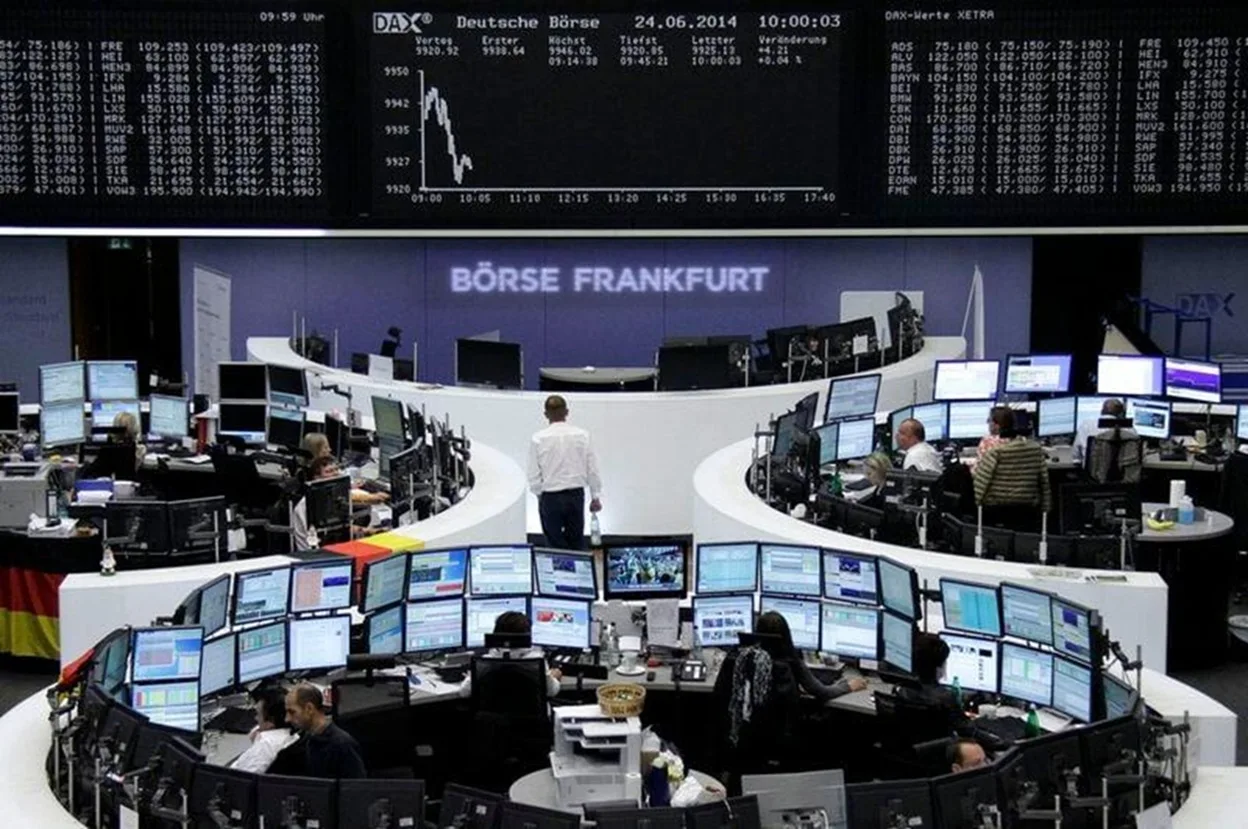
European equities are attracting renewed international interest in a development that extends beyond the recent correction in major American technology stocks. Strong inflows into European equity funds point to a reassessment of sector exposure, corporate earnings prospects and concentration risks across global investment portfolios.
According to LSEG Lipper data published on November 13, 2026, European equity funds attracted $35.13 billion in net inflows during the week ending November 11, their largest weekly inflow since June 2021.
Global equity funds received $50.99 billion over the same period, the highest total in seven weeks. American and Asian funds also recorded positive inflows, although substantially smaller than those directed towards Europe.
These figures do not indicate a wholesale withdrawal from US equities. Rather, they suggest a shift in the marginal allocation of international capital, with European markets receiving a larger share of new investment.
The movement follows several years of exceptional dominance by American technology companies.
Artificial intelligence, expanding digital-platform earnings and the concentration of market performance among a limited number of corporations have significantly increased the weight of US equities in international portfolios.
That concentration has generated substantial returns, but it has also created vulnerabilities.
As valuations increased, investors became more sensitive to questions surrounding infrastructure expenditure, financing requirements and the ability of technology companies to sustain their growth.
Recent turbulence in the sector has accelerated the search for alternative sources of returns.
Europe offers a different equity-market structure.
Banks, industrial companies, energy producers, healthcare groups and consumer businesses represent a larger share of its principal stock indices. Information technology, by contrast, accounts for a much smaller proportion of European market capitalisation than in the United States.
According to figures cited by Reuters, technology represents approximately 8.8% of the MSCI Europe Investable Market Index, compared with more than 35% of its American equivalent.
For years, Europe's limited exposure to the largest digital platforms was considered a structural disadvantage. During a reassessment of AI-related valuations, that difference can temporarily become a source of diversification.
European corporate performance has also provided independent support.
Earnings reported across several sectors, particularly banking and energy, have strengthened profit expectations. Lower oil prices have improved the outlook for parts of the European economy, although their effects differ considerably across industries.
The STOXX Europe 600 reached a record high on November 12 before encountering more hesitant trading the following day. Its monthly performance contrasted with weakness in the Nasdaq-100, which remains heavily exposed to major American technology companies.
This divergence illustrates a change in how investors perceive risk.
For much of the previous decade, Europe's lack of technology giants comparable to those dominating Wall Street was interpreted as a weakness. In an environment of declining confidence in some AI-related valuations, lower exposure to these companies may reduce the sensitivity of European indices to concentrated technology corrections.
It would nevertheless be premature to interpret the current rotation as a permanent reversal of global financial leadership.
The United States retains major advantages in innovation financing, market depth, liquidity and the concentration of leading technology companies.
Europe continues to face structural constraints, including fragmented capital markets, energy costs, relatively weak technology investment and fiscal uncertainty in several major economies.
The current reallocation does not necessarily mean these disadvantages have disappeared.
It may instead indicate that investors increasingly consider certain American market risks significant enough to justify greater geographical and sectoral diversification.
Nevertheless, sustained capital inflows could have economic consequences extending beyond secondary-market performance.
If maintained, stronger demand for European assets could improve corporate financing conditions, support equity issuance and increase the attractiveness of public listings.
Translating financial-market interest into productive investment would still require Europe to deepen its capital markets, support growing companies and finance its industrial priorities.
The rotation also remains vulnerable to cyclical developments.
Higher energy prices, weaker European growth or a broad correction on Wall Street could rapidly undermine the relative advantage of European equities.
Global financial markets remain deeply interconnected. Lower technology concentration does not provide complete protection against a general contraction in liquidity or a sharp increase in risk premiums.
Renewed interest in Europe therefore reveals less an immediate transfer of financial leadership than a change in investors' selection criteria.
Technological growth remains important, but it may no longer be sufficient to justify elevated valuations without convincing evidence of future returns.
Realised earnings, balance-sheet strength, sector diversification and disciplined capital expenditure are regaining prominence in investment decisions.
For Europe, this shift offers an opportunity to narrow the gap between its economic importance and its financial attractiveness.
The central question is whether the current inflows represent a cyclical rotation triggered by turbulence in American technology stocks or the beginning of a more durable rebalancing of international portfolios.
The answer will depend less on short-term market performance than on European companies' ability to convert renewed investor attention into earnings growth, productive investment and long-term value creation.
Principal sources: Reuters, November 13, 2026, reporting LSEG Lipper international fund-flow data; Reuters, November 13, 2026, comparative analysis of European and American equity markets; LSEG FTSE Russell, Performance Insights Europe, November 2026.
Atlas Limits Research Desk
Atlas Limits’ editorial and analytical desk.