For more than four years, Western companies that remained in Russia operated under an uncomfortable but relatively clear equation. Leaving meant accepting steep discounts, exit taxes, lengthy administrative negotiations and, in many cases, the loss of a substantial share of asset value. Staying at least appeared to preserve some degree of control, particularly in sectors considered essential to the population.
That distinction has now weakened sharply.
Presidential decrees made public on September 18 place the Russian operations of Nestlé and Auchan under temporary administration. Control of their subsidiaries has been transferred to L.E.V. Management, a Moscow-based company registered in 2024 whose public profile remains extremely limited.
The foreign groups formally retain their ownership rights, but they have lost, at least temporarily, operational control over their Russian businesses.
The development goes far beyond two corporate cases.
It means that, in Russia in 2026, remaining in the country no longer necessarily provides protection against operational expropriation.
Two companies that never fully left
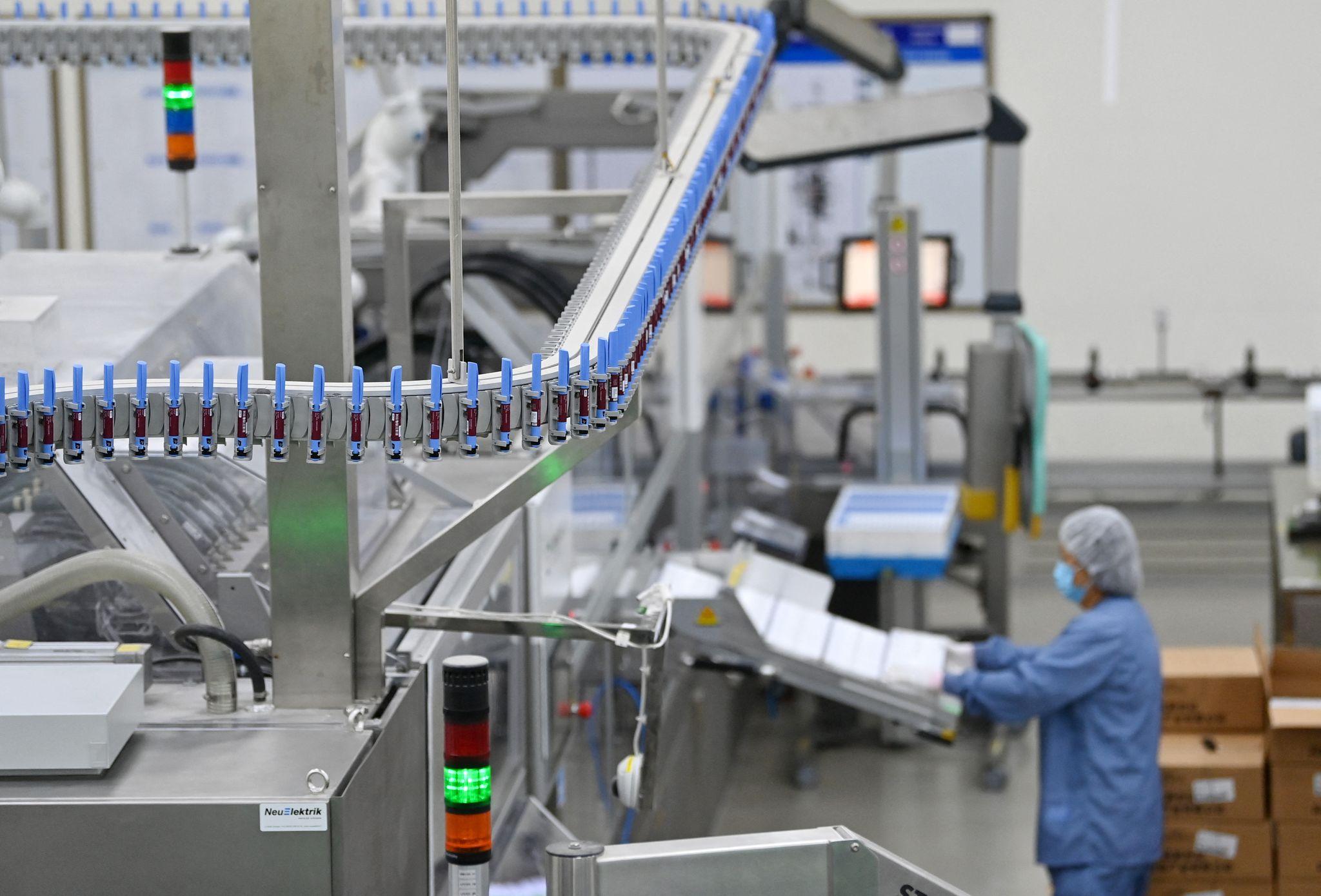
Nestlé has operated in Russia since the 1990s. The Swiss group owns six factories producing products including coffee, infant nutrition and pet food, and employs roughly 7,000 people in the country.
After Russia’s full-scale invasion of Ukraine in 2022, Nestlé reduced its exposure. It suspended several brands, halted new investments and advertising, and restricted certain imports and exports. It nevertheless continued producing food categories it considered essential.
Russia now accounts for only a small share of Nestlé’s global sales, significantly below its pre-war weight.
Auchan followed a different strategy.
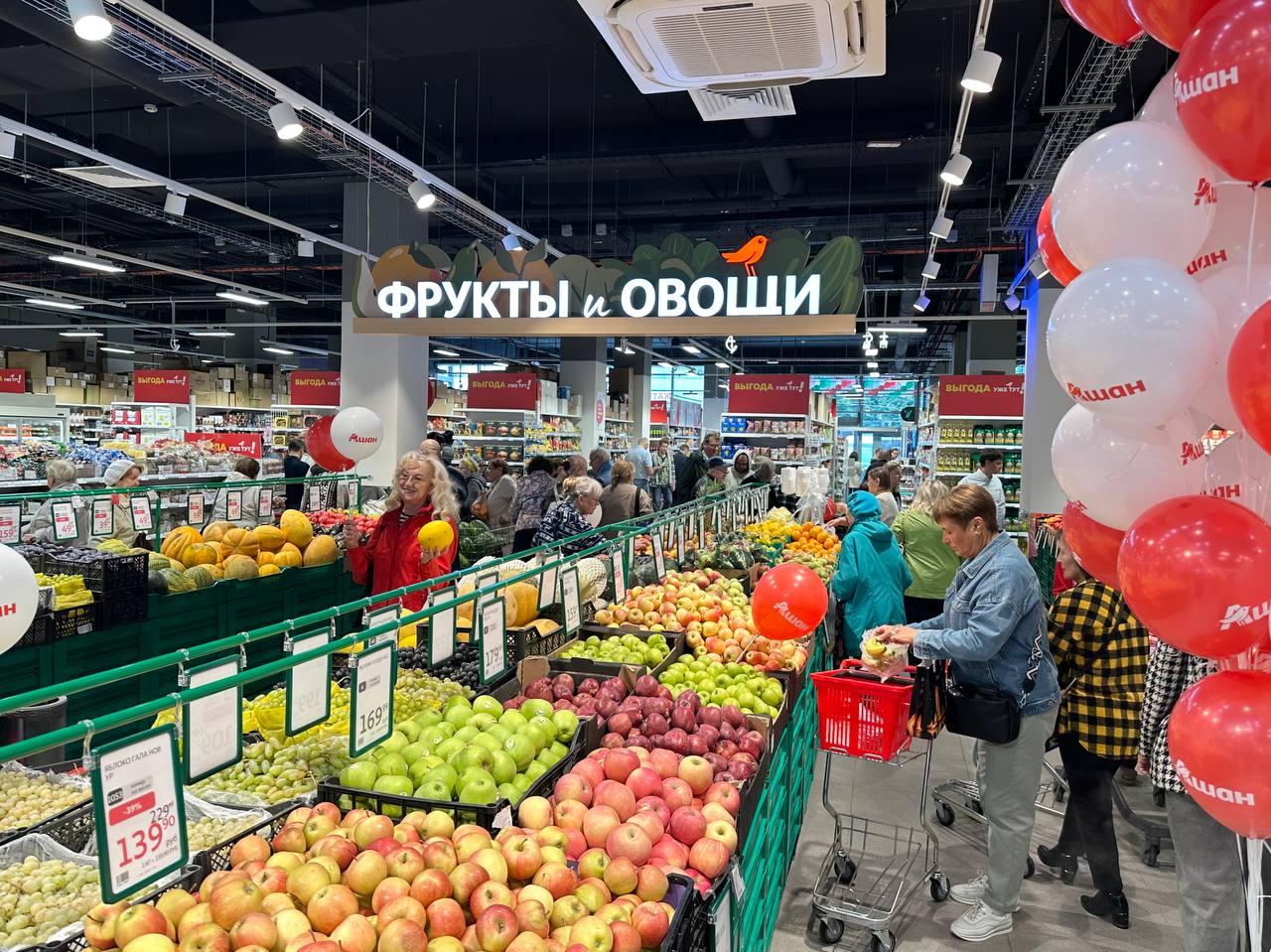
The French retailer, present in Russia since 2002, remained one of the country’s largest foreign supermarket operators. It runs roughly 230 stores as well as online operations and employs tens of thousands of people.
In both cases, the local footprint remained substantial.
That did not prevent Moscow from intervening directly in their governance.
Nationality becomes a corporate risk again
The Kremlin explicitly linked the decision to the companies’ countries of origin.
Presidential spokesman Dmitry Peskov said the fact that Nestlé and Auchan came from states classified by Moscow as “unfriendly” was among the factors behind the move. Russia uses that category for countries associated with sanctions and, in many European cases, support for Ukraine.
The critical point lies there.
The conduct of the individual company becomes secondary to the geopolitical identity of its home state.
A multinational can reduce investment, continue supplying essential goods, preserve thousands of Russian jobs and avoid a high-profile withdrawal, yet still remain exposed to the broader confrontation between Moscow and the government of its country of origin.
Economic presence no longer functions as an intermediate zone between engagement and withdrawal.
It becomes a geopolitical asset in itself.
Temporary administration as an instrument
The mechanism is not new.
In 2023, Vladimir Putin created a framework allowing Russian authorities to place assets owned by investors from so-called unfriendly states under temporary administration.
Danone and Carlsberg were among the most prominent precedents.
The Carlsberg case demonstrates why the word “temporary” must be treated cautiously. The Danish brewer’s Russian assets were placed under temporary control in July 2023. They were eventually sold in 2024 to local investors at a valuation far below the net asset value Carlsberg had previously reported.
Temporary administration therefore does not automatically mean confiscation.
But it can fundamentally alter the balance of power ahead of a sale.
A private company that no longer controls management, cash flows, accounts or operations negotiates any future exit from a very different position.
Legal ownership may remain intact.
Economic power may already have shifted.
A new phase for Western companies that stayed
Since 2022, Western companies have already absorbed enormous losses linked to their withdrawal from Russia.
Moscow progressively introduced mandatory discounts, budget contributions and administrative approvals for asset sales. Exiting Russia became increasingly expensive and politically controlled.
Companies that stayed could still argue that they had avoided the most destructive scenario: selling rapidly, at a deep discount, industrial and commercial networks built over decades.
Nestlé and Auchan now expose the limits of that strategy.
The risk is no longer simply the price at which a company may eventually leave.
It is whether that company will still be able to decide if it leaves, when it leaves and what it controls by the time such a decision is made.
For the remaining Western multinationals, the nature of Russian risk is therefore changing.
Assets that are difficult to replicate
The choice of Nestlé and Auchan is also important because of the kind of assets involved.
These are not oil fields, banks or businesses directly connected to sanctions-sensitive industries.
Nestlé brings factories, logistics systems, production know-how, global brands and decades of industrial infrastructure.
Auchan represents a large retail network, distribution platforms, supplier relationships, stores, data systems and direct access to millions of consumers.
These assets are worth more than the accounting value shown on a balance sheet.
They are ready-made economic capabilities.
By taking operational control of existing assets rather than reproducing them from scratch, the Russian state can accelerate the absorption of productive and commercial infrastructure into an economy increasingly detached from its former Western investors.
The punitive dimension can therefore coexist with an industrial one.
Economic retaliation moves to a new scale
Since the freezing of a large share of the Russian central bank’s foreign reserves in 2022, Moscow has repeatedly warned that Western assets inside Russia could be used in response to measures targeting Russian property abroad.
The issue has become more sensitive as European governments debate how to use immobilized Russian assets to support Ukraine.
In that context, subsidiaries owned by foreign groups gradually cease to be simple private investments.
They become potential instruments in a system of coercive reciprocity between states.
Every measure taken against Russian assets in Europe can increase pressure on European assets still operating in Russia.
And each Russian takeover can, in turn, strengthen calls in Europe for tougher measures against Russian property.
This feedback loop is steadily transforming foreign ownership into a tool of statecraft.
The precedent matters more than Nestlé and Auchan
In the short term, the financial consequences are likely to remain manageable for groups of this size.
Russia now represents only a limited share of Nestlé’s global business. Auchan has greater local exposure, but its Russian operations remain distinct from the rest of the group.
The larger issue lies elsewhere.
If temporary administration can now be applied to major Western groups that remained operational, preserved jobs, maintained production and continued supplying everyday consumer goods, the universe of potentially exposed companies becomes much broader.
The question facing international groups is no longer simply whether to remain in Russia.
It is what “remaining” still means, legally and economically, when a presidential decree can separate ownership from effective control.
Nestlé has said it is examining the measures available to protect its rights and preserve business continuity. The Swiss government has expressed concern and said it is supporting the company. Auchan has not yet issued a detailed public response.
It remains too early to describe the move as a definitive confiscation.
Foreign shareholders have not formally lost their equity stakes, and temporary administration could, in theory, be lifted.
But the experience of recent years shows that a wide gap can now open between legal ownership and economic control.
That gap is becoming one of the main arenas of the broader economic confrontation between Russia and Europe.
For years, Western companies in Russia faced a binary choice: leave or stay.
Moscow has now demonstrated that there is a third possibility: remain the legal owner while ceasing to control what you own.
Main sources: Reuters, September 18, 2026 — presidential decrees, scope of the measures, Kremlin statements and reactions from Nestlé and the Swiss government; Reuters, September 18, 2026 — Russian operations of Nestlé and Auchan and background on L.E.V. Management; Reuters, December 3, 2024 — Carlsberg’s exit and the precedent of temporary administration; Reuters, March 28, 2024 — accumulated losses borne by foreign companies exiting Russia.
Atlas Limits Research Desk
Atlas Limits’ editorial and analytical desk.