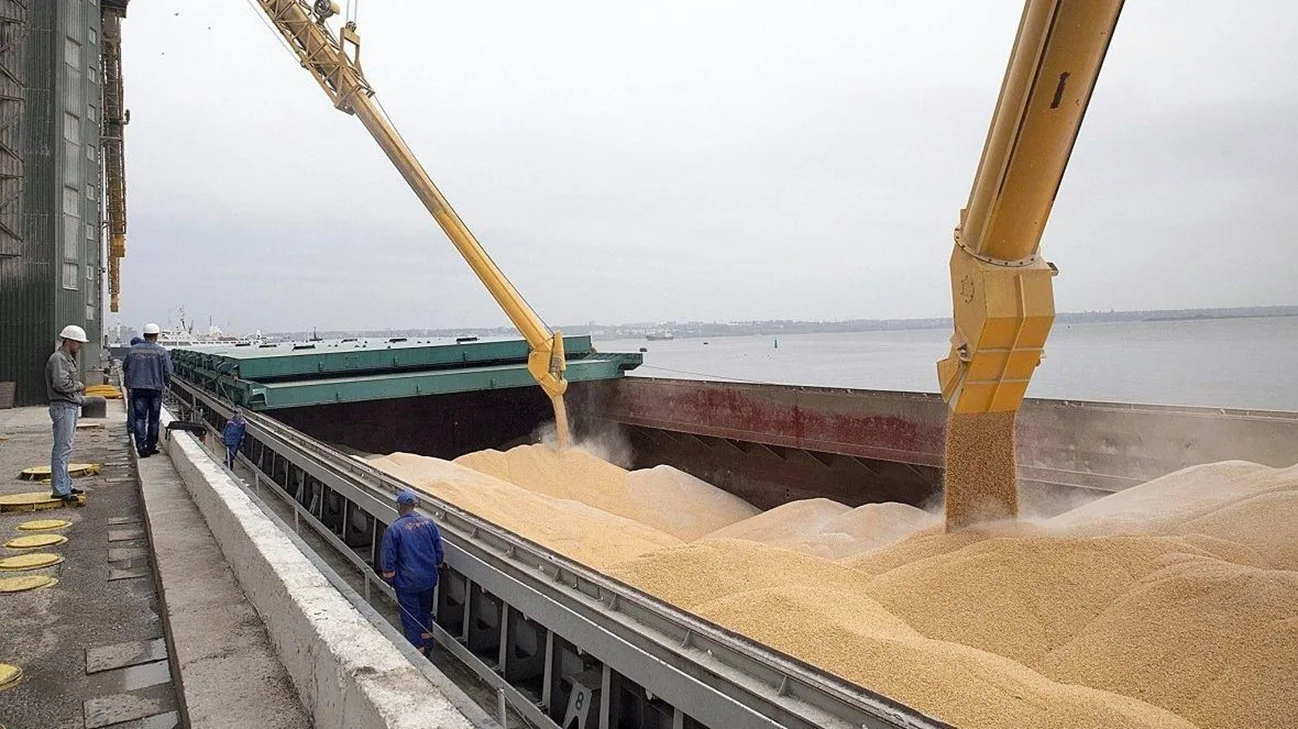
Wheat held on a farm is not yet a delivery for an importer. Finance, rail capacity, ports, ships and insurance stand between the two. Black Sea disruption makes that distinction especially important for Russia: grain can remain inside the country while buyers seek a cargo available on schedule.
Reuters reported on 11 November 2026 that Russian farmers were making greater use of large storage bags for grain they could not export. It cited consultancy IKAR's estimate that up to 20 million tonnes of excess unexported grain required storage. [1] This is a commercial estimate, not an exhaustive inventory or a measurement of wheat alone.
Definitions matter in comparing that figure with other assessments. USDA's November Wheat Outlook projects Russian wheat ending stocks of 20.1 million tonnes for the 2026–2027 marketing year, an increase of one million tonnes from its previous forecast. [2] A wheat marketing-year balance differs from IKAR's estimate of grain awaiting export. Similar totals cannot be treated as independent confirmation of the same stock.
The disruption can first create a price divergence. Local accumulation can depress farmers' returns while transport and risk raise the cost delivered to importers. These movements are compatible: the gap reflects constraints between the markets. A lower farmgate price therefore does not guarantee cheaper food in the purchasing country.
Storage buys time but uses finance. Until a crop is sold and paid for, a farm must meet expenses and prepare the next season. Bags can reduce the immediate need to build a silo without resolving access to buyers. They also require monitoring, protection and quality management. Extended storage costs can absorb the benefit of a higher eventual selling price.
Alternative routes need the same scrutiny. Another port offers useful substitution only if rail, handling and shipping can support the flow. Longer distances and competition with other commodities can raise costs or move the bottleneck. A terminal's nominal capacity does not establish throughput for the whole chain.
Importers must compare quality and schedules as well as prices when diversifying. Another origin can have grain available without providing the same milling characteristics or delivery time. Safety stocks protect against delays but tie up capital and need replenishment. Countries subsidising bread may absorb part of a shock in public budgets rather than pass it immediately to consumers.
Global consequences ultimately depend on substitution between origins and other available harvests. Russian grain that is difficult to ship does not automatically imply a worldwide shortage. It can nevertheless create regional or temporary pressure hidden by annual totals. Actual loadings, delivery times, delivered prices and stock quality will be the useful indicators. Russia's agricultural capacity will retain influence insofar as logistics convert harvests into reliable supplies.
Sources
[1] Reuters, Russia turns to giant plastic bags to store unexported grain as Black Sea trade stalls, 11 November 2026.
[2] USDA ERS, Wheat Outlook: November 2026. Forecasts and estimates are distinguished from mechanisms analysed by Atlas Limits.
Atlas Limits Research Desk
Atlas Limits’ editorial and analytical desk.