In the pharmaceutical industry, the commercial success of a medicine already contains the seeds of its own vulnerability. The greater its sales, the more its manufacturer becomes dependent on an asset whose legal protection is limited in time. Sanofi has just committed $41 billion to managing that paradox.
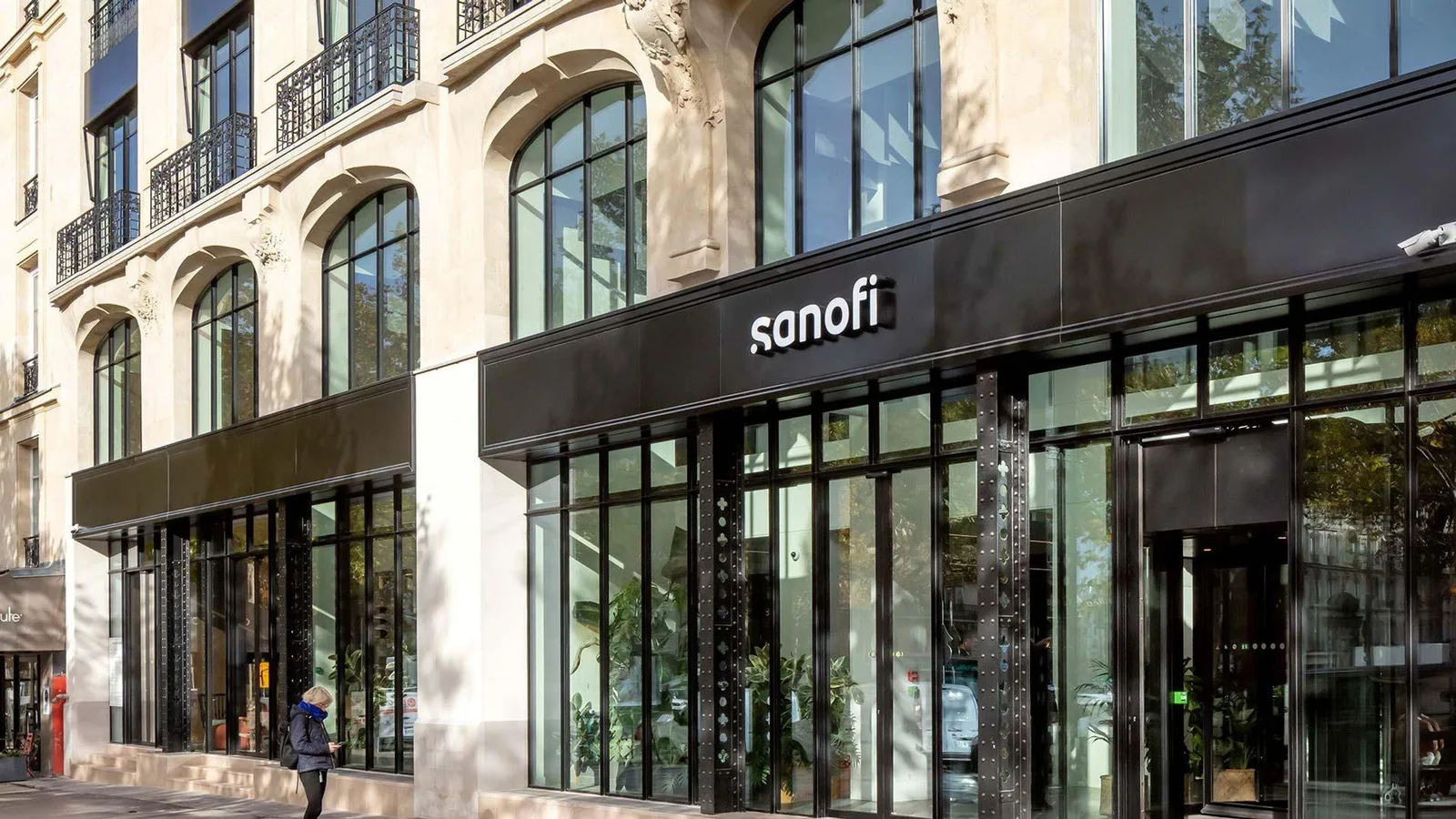
On November 24, 2026, the French pharmaceutical group announced an agreement to acquire US biopharmaceutical company Insmed, valuing its equity at €37.6 billion. The all-cash offer of $175 per share represents a 46% premium to Insmed’s closing price on November 18, before media reports of a potential transaction emerged. Sanofi’s largest acquisition since its combination with Aventis in 2004 is expected to close in the first half of 2027, subject to the necessary approvals.
Behind the financial scale of the transaction lies a more fundamental question: how does a pharmaceutical company organize the economic succession of a medicine that has progressively shaped its growth, profitability and market valuation?
Developed in partnership with US biotechnology company Regeneron, Dupixent, or dupilumab, has become Sanofi’s principal commercial growth engine. Its applications in atopic dermatitis, asthma and several other inflammatory conditions have established the group as a leading player in certain areas of immunology. In 2025, the medicine accounted for approximately 36% of Sanofi’s revenue. That achievement represents both a competitive advantage and a concentration risk.
As its principal patent protections begin approaching expiration from 2031, the question is no longer simply how much further Dupixent can grow, but whether Sanofi can renew its revenue streams quickly enough. Potential biosimilar competition, pricing pressures and emerging alternative therapies could gradually reshape the economics of the franchise. That transition, however, will be neither uniform nor immediate: intellectual property protections, commercial conditions and regulatory timelines vary across markets.
The acquisition of Insmed addresses this vulnerability by prioritizing innovation whose commercial value has already been partially demonstrated.
The US company’s portfolio includes Brinsupri, or brensocatib, an oral medicine for certain patients with non-cystic fibrosis bronchiectasis. Its mechanism of action involves inhibiting dipeptidyl peptidase 1, an enzyme implicated in inflammatory processes associated with the chronic respiratory condition. Insmed also markets Arikayce, an inhaled liposomal formulation of amikacin used to treat certain difficult-to-treat pulmonary infections.
These two assets are complemented by TPIP, an investigational inhaled therapy currently undergoing a phase III clinical development program. Its potential applications in pulmonary hypertension and other respiratory diseases could provide an additional source of growth beyond 2030, subject to favorable clinical outcomes and regulatory approvals.
Sanofi is therefore not acquiring a direct therapeutic successor to Dupixent. It is seeking to assemble a portfolio of complementary franchises capable of progressively reducing its economic dependence on its flagship medicine.
The price nevertheless reflects a profound transformation in pharmaceutical capital allocation. By acquiring a company with marketed products, Sanofi reduces some of the uncertainty associated with fundamental research and clinical development. In return, it accepts a valuation that incorporates several years of anticipated growth.
The distinction is essential. In an internal research program, a pharmaceutical company commits resources progressively and retains the option to discontinue projects when results prove inadequate. In an acquisition of this magnitude, much of the capital is committed when the transaction closes. Scientific risk is reduced for already approved products, but it is transformed into financial, commercial and operational risk.
The 46% premium offered to Insmed shareholders compensates them, among other things, for transferring control of the company’s assets, intellectual property and development prospects. It also incorporates part of the value Sanofi expects to generate through its international distribution network, regulatory capabilities and integration of selected industrial and commercial functions.
Sanofi projects more than $500 million in annual cost synergies and expects the acquisition to become accretive to business earnings per share by the end of 2028. The transaction will be financed through available cash and debt, supported by committed financing. The group intends to preserve its progressive dividend policy and maintain a strong credit rating.
These objectives, however, should not be confused with proof of economic profitability. An acquisition can increase earnings per share while generating a return on invested capital below its cost of capital. Value creation will ultimately depend on actual sales growth, operating margins, financing costs and the realization of projected synergies.
The transaction also exposes Sanofi to the accounting consequences associated with major pharmaceutical acquisitions. During purchase price allocation, a substantial portion of the consideration could be assigned to identifiable intangible assets, including rights associated with marketed medicines and research programs. The residual amount will constitute goodwill. Subsequent revisions to commercial or clinical expectations could trigger impairment charges, illustrating how heavily the initial valuation depends on future revenues that remain uncertain.
Beyond Sanofi, the transaction illustrates a restructuring of the global biomedical innovation value chain. Specialized biotechnology companies assume part of the initial scientific risk, frequently supported by venture capital and public equity markets. Large pharmaceutical groups subsequently acquire the most promising assets, deploying their financial, industrial and commercial resources to accelerate international development.
Pfizer’s $43 billion acquisition of Seagen in 2023, Bristol Myers Squibb’s $14 billion acquisition of Karuna Therapeutics in 2024 and Sanofi’s acquisition of Blueprint Medicines in 2025 reflect the same underlying logic. Biomedical intellectual property has become a strategic asset whose ownership increasingly determines the competitive position of pharmaceutical groups.
This structure also reinforces transatlantic interdependence. By acquiring Insmed, Sanofi strengthens its access to the American biotechnology ecosystem, its scientific capabilities and its pharmaceutical market. The transfer of ownership to a European company does not, however, automatically entail the relocation of research or manufacturing activities.
For Sanofi chief executive Belén Garijo, the challenge consequently extends beyond integrating another company. It involves transforming the financial strength accumulated during Dupixent’s growth cycle into a sustainable capacity for therapeutic renewal, without compromising the investment required to sustain internal research.
The pharmaceutical industry has a peculiar characteristic: its most profitable assets are also those whose limited periods of protection dictate its strategic timetable.
With Insmed, Sanofi is buying new medicines, growth opportunities and a potential reduction in its commercial dependence. But what the group is ultimately seeking to acquire for $41 billion is time.
Time for tomorrow’s revenues to succeed those of today, and for its own research to once again determine its future.
Atlas Limits Research Desk
Atlas Limits’ editorial and analytical desk.