From Ukraine to the Middle East, from Sudan to Africa’s Great Lakes region, armed conflicts are becoming more prolonged, more complex and increasingly consequential far beyond the territories in which they originated. Without amounting to a unified world war, they are shaping an international order in which military confrontation, economic coercion and industrial competition have become enduring features of relations between states.
There was a time when the end of a war offered the prospect of a new equilibrium. Borders were redrawn, alliances reshaped and economies rebuilt. Diplomacy sought to translate the balance of power established by military force into a political settlement. That sequence, never quite as orderly in reality as it appears in history books, seems increasingly inadequate to describe the contemporary world.
Today’s wars overlap rather than succeed one another. Some become entrenched, others change in character, while new confrontations emerge before earlier ones have been resolved. Ceasefires suspend hostilities without necessarily addressing their underlying causes. Negotiations sometimes become an extension of warfare rather than a means of bringing it to an end.
The world is not engaged in a third world war. It is nevertheless settling into a distinctive condition: one of permanent conflict, geographically dispersed yet economically, technologically and strategically interconnected.
An offensive in Eastern Europe can alter energy balances in Asia. A confrontation in the Middle East can increase the cost of financing international trade. An African civil war can disrupt supplies of minerals essential to advanced industries. Conflicts remain distinct in their origins and objectives, but their consequences increasingly travel through the same global infrastructure.
War is once again becoming an ordinary variable in the organisation of the world.
Ukraine and the Rediscovery of Industrial Power
The Russo-Ukrainian war has brutally reminded Europe that technological sophistication is no substitute for industrial depth. Even the most advanced armed forces remain dependent on stockpiles, manufacturing capacity, energy infrastructure and the continuity of their supply chains.
The confrontation between Moscow and Kyiv is therefore not confined to contested territory. It also pits two models of economic mobilisation against one another, alongside competing financing arrangements and international support networks whose endurance has become a strategic consideration in its own right.
Russia seeks to convert its natural resources, territorial depth and industrial capacity into military endurance. Ukraine relies on technological adaptability, national mobilisation and the financial and material support of its Western partners. Behind developments on the battlefield lies a slower, less visible but decisive contest: the ability of each side to replenish the resources required to sustain the war.
The proliferation of long-range operations, attacks against energy infrastructure and the extension of tensions into maritime spaces also illustrate the widening strategic perimeter of the conflict. Sanctions targeting Russian exports, technological restrictions and measures directed against commercial networks associated with Moscow extend the confrontation far beyond Ukrainian territory.
For Europe, the consequences are structural. The replenishment of military stockpiles, rising defence expenditure and the reorganisation of manufacturing capacity are challenging decades of industrial policy built around cost reduction and the externalisation of risk.
European security, long conceived primarily as an institutional and diplomatic architecture, is once again becoming a question of material capacity. Even a settlement in Ukraine would probably be insufficient to reverse this transformation.
The Middle East at the Crossroads of Confrontation
In the Middle East, warfare has neither a single centre nor clearly defined boundaries. Interstate antagonisms overlap with sectarian rivalries, institutional fractures, territorial claims and the competing ambitions of external powers.
The confrontation between Israel and Iran constitutes one of the principal axes of this architecture. It encompasses conventional military capabilities, ballistic missile programmes, intelligence networks and regional alliances, alongside the instruments of financial and commercial coercion deployed by the United States.
In Gaza, military considerations remain inseparable from the question of Palestine’s political future. The destruction of infrastructure, population displacement and the enormous requirements of reconstruction make lasting stabilisation difficult to envisage without a political settlement. A cessation of hostilities, whenever achieved, represents only the first stage of a process whose foundations remain deeply contested.
In Lebanon, the relationship between state sovereignty, armed organisations and external influence continues to shape prospects for stability. In Syria, the reconstruction of durable institutional authority remains constrained by competing domestic and regional interests.
Further south, Yemen demonstrates how geography can confer disproportionate global significance upon a local conflict. Its proximity to the Bab el-Mandeb Strait places Yemeni hostilities alongside one of the principal arteries of international commerce.
From the Strait of Hormuz to the Suez Canal, through the Red Sea and the Eastern Mediterranean, the Middle East encompasses infrastructure upon which a substantial share of global merchandise and energy flows depends.
The economic significance of these tensions extends well beyond the volumes of trade actually disrupted. The anticipation of disruption alone can alter shipping routes, insurance premiums, transportation costs and expectations across energy markets.
The region is therefore more than a historic centre of instability. It remains one of the principal transmission points between geopolitical risk and the global economy.
Africa and the Fragmentation of Sovereignty
African conflicts occupy a paradoxical position in the international hierarchy of strategic concerns. Their human cost and duration are considerable, yet the attention they receive often reflects their consequences for the interests of external powers.
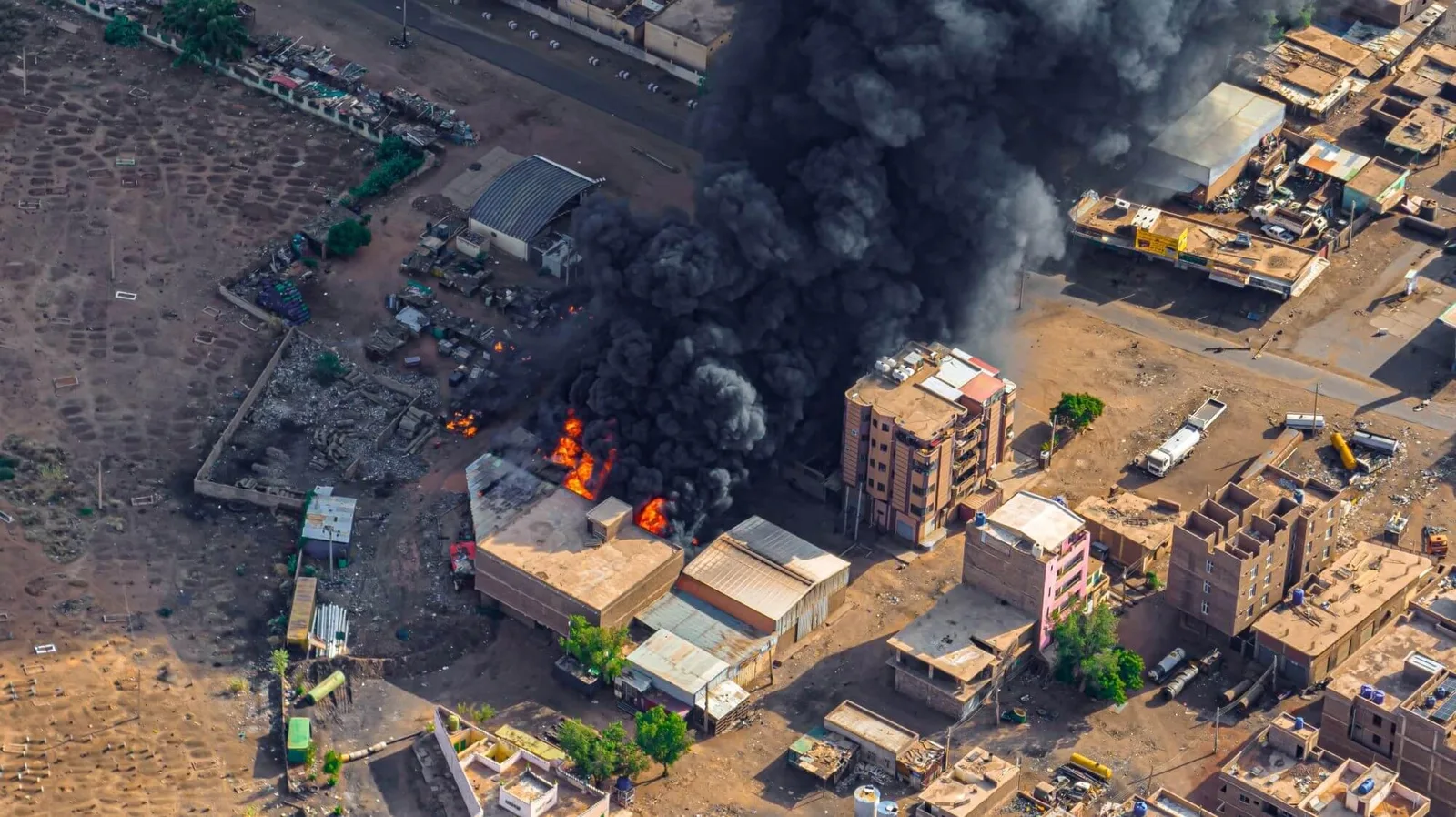
In Sudan, the confrontation between the regular armed forces and the Rapid Support Forces has evolved beyond a rivalry between competing centres of military authority. It concerns the very definition of the Sudanese state, control over its economic resources and the territories from which national authority might eventually be reconstructed.
The army’s recapture of Khartoum in 2025 was insufficient to bring the war to an end. Continued fighting elsewhere in the country illustrates the difficulty of translating territorial victory into the effective restoration of sovereignty.
In the eastern Democratic Republic of the Congo, fighting involving the M23 and other armed organisations prolongs a regional crisis whose origins stretch back several decades. Rivalries between neighbouring states, security concerns, population displacement and networks of natural resource exploitation intersect within a particularly complex political economy.
The presence of minerals essential to the electronics, energy and automotive industries gives this instability an international dimension. Reducing the Congolese conflict to a competition for resources, however, would overlook the historical and political antagonisms that also sustain it.
Across the Sahel, the expansion of armed insurgencies has accompanied a reconfiguration of international alliances and a reassessment of security arrangements inherited from previous decades. The ability of insurgent groups to exert pressure on commercial networks, energy supplies and communications reflects an evolution in their strategies. Their challenge extends beyond military opposition to governments and increasingly targets the economic conditions under which public authority can be exercised.
In Somalia, the persistence of the Al-Shabaab insurgency similarly illustrates the limitations of military responses unaccompanied by institutional and economic consolidation.
These conflicts share a fundamental characteristic: the widening separation between internationally recognised sovereignty and effective territorial control. Competing authorities administer populations, extract resources and organise commercial networks beyond the reach of official institutions.
War consequently becomes a political and economic system capable of reproducing itself independently of the objectives that originally brought it into being.
Asia and the Limits of Deterrence
Asia encompasses some of the world’s most dangerous military rivalries while remaining its principal centre of industrial production. The coexistence of economic interdependence and strategic confrontation represents one of the defining paradoxes of the contemporary international order.
In Myanmar, the civil war that followed the 2021 military coup illustrates the progressive disintegration of central authority in the face of numerous ethnic armed organisations and resistance movements. Territorial fragmentation complicates prospects for a settlement, while the economic and security interests of neighbouring powers contribute to the internationalisation of the conflict.
Between India and Pakistan, territorial disputes and political tensions remain compounded by the possession of nuclear weapons. On the Korean Peninsula, the development of North Korea’s military capabilities sustains a confrontation whose implications extend well beyond regional boundaries.
Yet it is in the Western Pacific that one of the greatest systemic risks to the global economy is concentrated.
Around Taiwan and the South China Sea, the rivalry between Washington and Beijing simultaneously encompasses freedom of navigation, control over advanced technologies, security of supply and the regional military balance.
The geographical concentration of advanced semiconductor manufacturing gives Taiwan a significance that considerably exceeds its demographic or territorial weight. A major confrontation in the Taiwan Strait could affect virtually every industry dependent on these components, from telecommunications and automotive manufacturing to artificial intelligence and defence systems.
Economic interdependence, long regarded as a force for peace, has itself become an instrument of deterrence and a source of vulnerability.
It raises the cost of confrontation without necessarily eliminating its possibility.
Latin America and the Erosion of the Monopoly on Force
Relatively removed from major interstate wars, Latin America is experiencing a different transformation of organised violence.
In Haiti, the weakening of public institutions and the expansion of criminal organisations have given the security crisis an international dimension. In Mexico, the financial and logistical strength of criminal networks enables them to challenge state authority locally. In Colombia, the persistence of armed groups exposes the difficulties of consolidating peace processes.
Not all these situations constitute armed conflicts under international humanitarian law. They nevertheless reveal a troubling evolution in the relationship between violence, economic power and sovereignty.
When non-state organisations command substantial financial resources, control territory and impose their own rules upon populations, the traditional distinction between domestic security and national defence becomes increasingly difficult to maintain.
Contemporary conflict cannot therefore be measured exclusively by the number of declared wars. It must also be understood through the diminishing ability of certain institutions to exercise public authority exclusively within their own territories.
The Return of the War Economy
Behind the diversity of these confrontations lies a common transformation: the return of industrial power to the centre of national security strategies.
Figures from the Stockholm International Peace Research Institute illustrate the scale of this shift. In 2024, global military expenditure reached $2.718 trillion, representing a real annual increase of 9.4%. At the time, this was the steepest increase recorded since the end of the Cold War, already signalling a profound reorientation of public spending priorities.
High-intensity warfare has reintroduced constraints that several decades of technological superiority had relegated to the background. The ability to manufacture at scale, maintain equipment, replenish stockpiles and secure raw materials has once again become as important as the sophistication of military systems.
Defence industries no longer operate as ecosystems relatively isolated from the wider economy. They depend on semiconductor suppliers, strategic metals producers, telecommunications companies, computing capacity and energy infrastructure frequently developed for civilian purposes.
Artificial intelligence, autonomous systems and space technologies are accelerating this convergence. Their integration into military capabilities is transforming the conditions of industrial competition and further blurring the distinction between commercial innovation and strategic sovereignty.
States are no longer seeking merely to acquire advanced equipment. They are seeking control over the value chains that make its production possible.
This transformation could have lasting consequences for the global allocation of capital. Investment in manufacturing capacity, energy infrastructure and critical technologies increasingly responds to security imperatives that do not always coincide with conventional measures of profitability.
The pursuit of minimum cost is gradually giving way to the imperative of assured availability.
Finance as an Instrument of Confrontation
Contemporary warfare is no longer confined to military instruments. Confrontation also unfolds through payment systems, capital markets, commercial infrastructure and insurance networks.
Sovereign asset freezes, secondary sanctions, banking restrictions and technology export controls have become instruments of coercion capable of impairing an adversary’s economic capacity without direct military engagement.
Control over international financial infrastructure gives the states that dominate its principal mechanisms considerable influence. At the same time, it encourages countries exposed to these instruments to diversify their reserves, commercial partners and settlement networks.
Multinational corporations are also being compelled to reconsider their decisions. The location of a factory, the selection of a supplier, access to a particular technology or the purchase of maritime insurance can no longer be determined exclusively by commercial considerations.
Geopolitics is finding its way onto corporate balance sheets.
This development does not necessarily herald the end of globalisation. Rather, it points towards its reconfiguration around more segmented commercial networks, redundant supply chains and economic relationships increasingly conditioned by security imperatives.
The cost of this transformation will be borne by businesses, public finances and, ultimately, consumers.
The Wars That Outlive the Fighting
Strategic analysis naturally emphasises balances of power, military capabilities and the economic consequences of confrontation. In doing so, it risks overlooking the most enduring dimension of warfare: the destruction of the conditions that allow societies to sustain and renew themselves.
Destroyed healthcare infrastructure, closed schools, forced displacement and the disappearance of economic activity undermine prospects for reconstruction long after hostilities have ceased.
A generation deprived of education does not automatically recover its lost years when the guns fall silent. An economy whose productive infrastructure has been destroyed does not immediately regain its capacity to create employment. Displaced populations cannot always return to territories rendered uninhabitable or stripped of economic opportunity.
Landmines and explosive remnants of war also extend the physical consequences of conflict, sometimes for decades. They obstruct the restoration of agricultural land, the reconstruction of infrastructure and the return of civilian populations.
The destruction of human capital thus constitutes one of the deepest and least immediately measurable costs of global conflict.
Military budgets can be replenished. Equipment can be replaced. Infrastructure can be rebuilt. Interrupted human lives are not afforded the same mechanisms of repair.
Diplomacy and the Exhaustion of Peace Mechanisms
The persistence of conflict does not result from the disappearance of diplomacy. Mediation initiatives, bilateral negotiations, humanitarian agreements and international conferences continue to proliferate.
The problem lies instead in their ability to produce lasting settlements.
Disagreements among the permanent members of the United Nations Security Council constrain collective action in conflicts directly or indirectly involving major powers. Regional and bilateral formats sometimes provide ways around these institutional obstacles, but they frequently remain dependent on the particular interests of their mediators.
In many conflicts, the protagonists do not share the same definition of peace. For some, it requires recognition of territorial claims. For others, it demands security guarantees, the restoration of sovereignty or a transformation of the existing political order.
When these objectives appear incompatible, negotiations tend to favour temporary arrangements. Reducing the intensity of hostilities becomes a diplomatic achievement in its own right, independently of whether the underlying antagonisms have been resolved.
Such arrangements remain indispensable when they protect civilian populations. Their proliferation, however, should not be mistaken for the construction of a more stable international order.
The danger lies in the emergence of a diplomacy devoted to managing conflicts that gradually abandons the ambition of resolving them.
A World Organising Itself Around War
The evolution of the world’s major conflicts reveals less the formation of a single global confrontation than the emergence of an international system in which several enduring confrontations interact without necessarily converging.
European warfare is accelerating rearmament. Middle Eastern tensions are reshaping energy and commercial balances. African conflicts are devastating entire societies while affecting certain strategic supply chains. Asian rivalries are directing technological investment and industrial policies across the world’s major economies.
States adjust their budgets, corporations reorganise their value chains, markets incorporate new risk premiums and populations learn to live with forms of uncertainty once regarded as exceptional.
This adaptation may be the most troubling transformation of the contemporary international order. As economic and political institutions learn to operate within a conflict-ridden environment, the restoration of peace risks losing some of its urgency.
War is no longer necessarily regarded as a temporary interruption of normality. It is becoming a permanent constraint around which public policy, industrial strategy and international relations are organised.
The twenty-first century may therefore be defined not by a world war comparable to those of the previous century, but by a succession of unfinished wars, contained confrontations and provisional peace settlements.
The world has no shortage of means to sustain its wars. What it increasingly seems to lack is the ability to bring them to an end.
Atlas Limits Research Desk
Atlas Limits’ editorial and analytical desk.