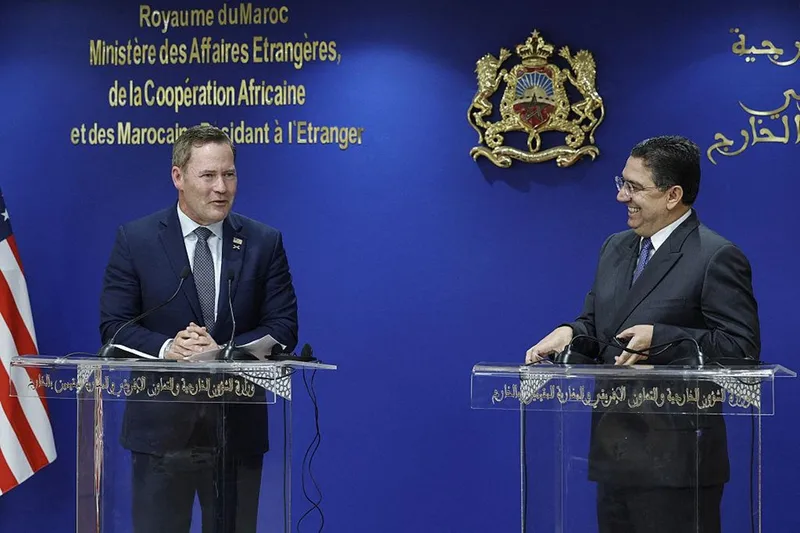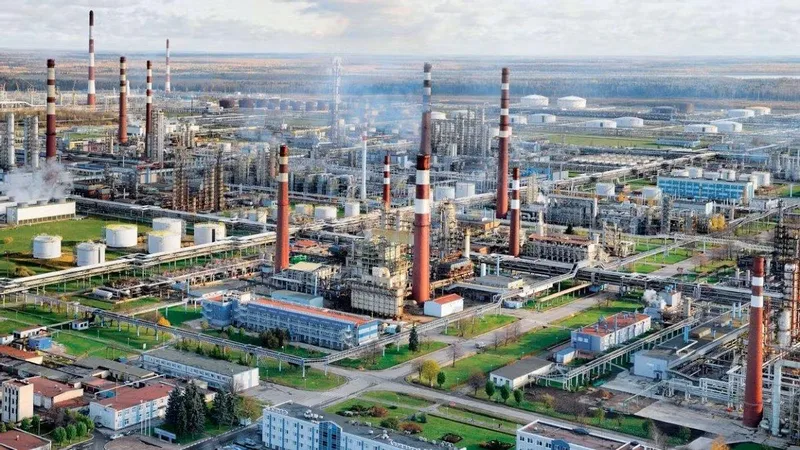
The meeting scheduled between Donald Trump, Xi Jinping and Vladimir Putin on November 19, 2026, in Shenzhen comes at a moment when military, economic and technological rivalries are reshaping international relations. Beyond discussions on nuclear weapons, Iran and Ukraine, the summit raises a fundamental question: can the United States, China and Russia establish the conditions for strategic coexistence without turning the rest of the world into an object of their negotiations?
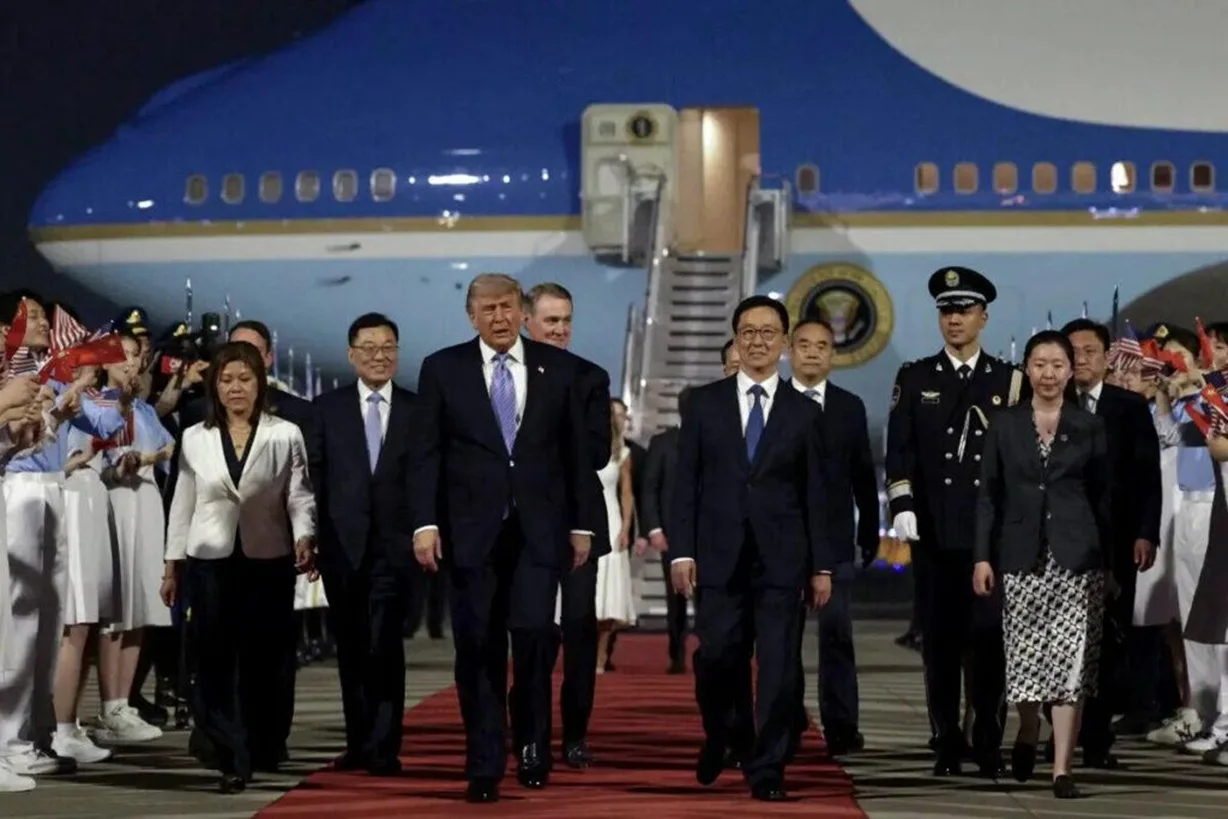
Donald Trump's arrival in Shenzhen on November 18, 2026, adds a new dimension to an already exceptional diplomatic sequence. Welcomed by Xi Jinping in this southern Chinese metropolis, the American president is expected to meet his Chinese counterpart and Vladimir Putin the following day for a trilateral summit held alongside the Asia-Pacific Economic Cooperation meetings. The Russian president, who arrived a day earlier, has already held talks with Xi Jinping against a backdrop of mounting international crises and growing uncertainty surrounding the established mechanisms of great-power diplomacy.
The meeting takes place at a time when relations among Washington, Beijing and Moscow account for a considerable share of the tensions shaping the international system. The war in Ukraine continues to define the confrontation between Russia and Western powers, while the conflict in Iran has disrupted regional balances and global energy markets. At the same time, competition between the United States and China extends from trade to semiconductors, from artificial intelligence to industrial infrastructure, and from supply chains to security in the Asia-Pacific. These rivalries are compounded by the weakening of nuclear arms-control agreements that, for decades, helped stabilize strategic relations.
In this environment, the simultaneous presence of the three leaders represents more than a diplomatic event. It reflects the need for powers with conflicting interests to maintain direct communication in order to prevent their rivalries from developing into confrontations that become increasingly difficult to control. It also reveals a deeper transformation of the international order. The United States retains a central position in military, financial and technological affairs, but it must now accommodate a China whose industrial and commercial strength has become structural, alongside a Russia that remains a major military and nuclear actor despite its economic constraints.
Shenzhen gives the meeting particular significance. The city embodies China's economic ascent, from the early reforms of opening to the creation of an industrial and technological ecosystem of global importance. It symbolizes a historical transformation through which China converted its integration into international commerce into productive capacity, technological expertise and strategic influence. By receiving Trump and Putin in one of its principal economic centers, Beijing places the diplomatic discussion within an environment that demonstrates its changed international position. China is no longer merely a participant in economic rules established by Western powers; it has become one of the actors capable of challenging their operation and proposing their evolution.
This transformation does not mean that the three leaders share a common vision of international order. Their interests remain profoundly different, and the Shenzhen meeting appears less an expression of political convergence than a recognition of strategic interdependence from which none can entirely escape. 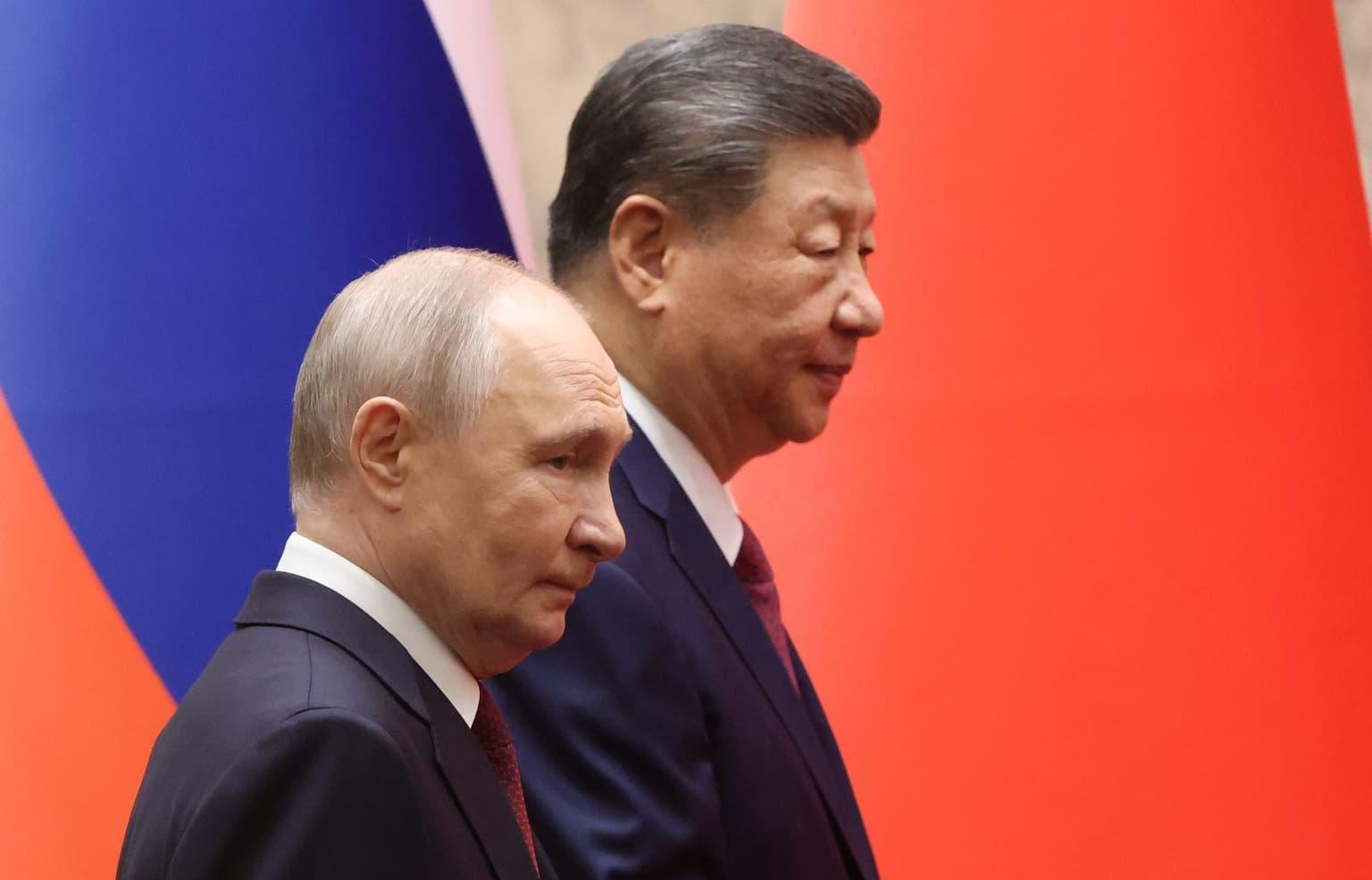
A global rivalry that can no longer be compartmentalized
Relations among the United States, China and Russia were long analyzed through relatively distinct dimensions. Sino-American competition primarily concerned trade, regional influence and, increasingly, technology, while relations between Washington and Moscow remained dominated by military, nuclear and European security questions. This distinction has gradually disappeared as economic instruments have become tools of geopolitical pressure and civilian technologies have acquired strategic importance comparable to certain military capabilities.
Financial sanctions imposed on Russia, American restrictions on exports of advanced semiconductors to China, investment controls and tensions surrounding energy infrastructure illustrate this transformation. States no longer seek merely to increase their own power; they also attempt to constrain competitors by controlling access to markets, capital, technologies and essential resources. The interdependencies that accompanied globalization have consequently become sources of vulnerability and instruments of coercion.
For Washington, this situation creates a particularly complex challenge. The United States retains considerable advantages through the international role of the dollar, the depth of its financial markets, its alliance network and its leading position in several critical technologies. Yet the growing use of these advantages as instruments of pressure encourages other powers to develop alternatives, even when those alternatives remain less efficient than existing structures. Russia has accelerated the reorientation of part of its trade toward Asia, while China continues to develop domestic capabilities intended to reduce dependence on foreign suppliers in strategically important sectors.
This dynamic does not necessarily produce a complete separation of economies. China remains deeply integrated into global production networks, and American companies continue to maintain substantial economic interests in international markets. It does, however, produce a more selective globalization in which national security considerations increasingly influence industrial, financial and commercial decisions.
The Shenzhen meeting comes precisely as this transformation requires new forms of dialogue. The three powers possess substantial means to disrupt their competitors' interests, but they remain exposed to the economic and security consequences of their own decisions. The need to manage these interdependencies helps explain why confrontation and negotiation can now advance simultaneously.
Nuclear weapons and the erosion of strategic stability
Nuclear arms control is expected to occupy an important place in the discussions. The issue has acquired renewed urgency following the expiration of the New START treaty in February 2026, which removed the last major bilateral agreement limiting deployed strategic nuclear weapons in the United States and Russia. This development marked the culmination of a gradual weakening of the arms-control architecture established during the Cold War and extended after the dissolution of the Soviet Union.
For decades, nuclear agreements enabled the two principal atomic powers to limit certain weapons systems, establish verification mechanisms and maintain information exchanges intended to reduce the risk of miscalculation. Their significance extended beyond reductions in warheads or delivery systems. They also made military capabilities and intentions more predictable in a domain where misunderstanding can have catastrophic consequences.
The disappearance of these instruments comes in a strategic environment more complex than the bipolar confrontation of the past. China is expanding its nuclear capabilities, missile technologies continue to evolve, and surveillance, communications and command systems increasingly depend on digital infrastructure that may itself be vulnerable to disruption. Strategic competition can therefore no longer be reduced to a comparison of American and Russian arsenals. It increasingly involves a third major actor whose capabilities and priorities differ from those of the two powers historically engaged in disarmament negotiations.
Washington wants to open a discussion that would include China in a broader arms-control framework. Yet this ambition encounters a structural difficulty. American and Russian nuclear arsenals remain considerably larger than China's, and Beijing has traditionally maintained that the two principal nuclear powers should undertake substantial reductions before expecting China to accept comparable restrictions. Russia, meanwhile, seeks to preserve its strategic position and account for Western military capabilities in any future negotiations.
It would therefore be excessive to expect an immediate disarmament agreement from Shenzhen. The meeting's significance may instead lie in recognizing a shared need for dialogue and establishing mechanisms capable of limiting escalation risks. In an international system where instruments of confidence have weakened, the resumption of structured communication would already represent an important development, provided it leads to commitments sufficiently precise to move beyond political declarations.
Iran and the limits of great-power negotiation
The war in Iran represents another central issue in this diplomatic sequence. Its consequences extend far beyond Middle Eastern security, directly affecting energy markets, maritime trade and the economic outlook of numerous countries. Disruptions to production infrastructure and commercial routes in the Gulf have demonstrated the global economy's dependence on a region that concentrates substantial energy resources and several essential maritime passages.
For the United States, the conflict involves military credibility, regional alliances and the ability to influence political balances in the Middle East. China approaches the situation from different interests. Its economy remains sensitive to energy prices and the continuity of international supplies, while its commercial relationships with Gulf countries give it a direct interest in regional stability. Russia maintains strategic relations with Tehran while pursuing its own energy and diplomatic interests.
These positions are not identical, but they may create space for negotiations aimed at reducing hostilities and securing international trade. The difficulty is that the three powers possess different instruments of influence and pursue different objectives. A settlement favorable to Washington may not satisfy Moscow or Beijing, while an arrangement designed primarily around great-power interests could neglect the security and sovereignty concerns of states directly involved in the conflict.
Iran therefore illustrates both the possibilities and the limitations of trilateral diplomacy. The United States, China and Russia possess sufficient influence to modify certain parameters of the crisis, but their discussions cannot replace a political settlement involving the relevant parties. Durable de-escalation would depend not only on great-power commitments but also on their ability to support a process accepted by regional actors and backed by credible guarantees.
Ukraine and the principle of sovereignty
The war in Ukraine raises an even more fundamental difficulty. Although American statements concerning its inclusion on the agenda have evolved, the conflict remains inseparable from relations between Washington and Moscow. Since Russia's invasion in February 2022, it has profoundly transformed European security, intensified tensions between Russia and Western countries, and triggered a reorganization of defense policies, energy supplies and economic relations across the continent.
For Vladimir Putin, the Shenzhen meeting offers an opportunity to reaffirm Russia's place among the powers whose decisions shape international security. Dialogue with the American and Chinese presidents allows the Kremlin to emphasize its strategic status despite sanctions and the diplomatic consequences of the war. For Washington, Ukraine forms part of a broader consideration of how relations with Moscow might be stabilized and how security responsibilities should be distributed between the United States and its European partners.
Any discussion of Ukraine's future, however, encounters an essential limitation: Ukrainian sovereignty cannot be reduced to a variable in American-Russian relations. Territorial questions, security guarantees and the conditions for durable peace directly concern a state whose authorities must be able to participate effectively in decisions determining its future. European countries are also directly involved, since changes to regional security arrangements would have lasting consequences for their strategic environment.
This dimension explains concerns surrounding diplomacy conducted primarily among major powers. Direct dialogue can facilitate de-escalation and open negotiating channels, but it can also undermine the legitimacy of a settlement if the states most directly affected are excluded. Stability achieved through an agreement depends not only on the ability of powerful countries to conclude it, but also on acceptance by those who must live with its consequences.
Shenzhen consequently raises a question extending beyond Ukraine. To what extent can great powers negotiate international security without returning to a hierarchical conception of relations among states, in which the interests of the most powerful prevail over the rights and choices of others?
Sino-Russian convergence and its contradictions
The bilateral meeting between Xi Jinping and Vladimir Putin, held before the American president's arrival, highlighted the convergence of their criticism of Western economic policies. The Chinese president defended open trade and international cooperation, while his Russian counterpart condemned sanctions and restrictions imposed by Western powers.
This diplomatic proximity reflects a shared interest in limiting the United States' ability to determine access to markets, technologies and financial networks. It should not, however, obscure the profound differences between their economies and international positions.
China possesses enormous manufacturing capabilities, extensive commercial networks and a growing capacity to develop its own technologies. It has benefited substantially from integration into globalization and retains a major interest in stable international trade. Russia possesses important energy resources and considerable military capabilities, but its economy is less diversified and its access to Western markets has contracted sharply since the invasion of Ukraine.
This asymmetry shapes the bilateral relationship. Moscow is more dependent on Asian markets and its relationship with Beijing, while China can develop cooperation with Russia without abandoning its economic interests in Europe and the United States. The two countries can therefore coordinate certain diplomatic positions without sharing an identical strategy across every international issue.
Their rapprochement nevertheless represents a structural development. It complicates American strategic calculations by bringing together two powers whose ambitions Washington seeks to constrain, while providing Beijing and Moscow with additional opportunities for political and economic coordination. Yet this convergence does not amount to a perfectly homogeneous bloc. Differences in economic strength, commercial dependence and exposure to international risks will continue to influence their choices.
Technology as an instrument of sovereignty
Technological competition between the United States and China represents one of the most enduring dimensions of the changing international order. American restrictions on certain advanced semiconductors, export controls and policies designed to secure supply chains demonstrate that critical technologies are now treated as instruments of power comparable to industrial or military capabilities.
Semiconductors, artificial intelligence, computing infrastructure and telecommunications equipment occupy a central position in this transformation. They determine the ability of companies to develop new products, but also the capacity of states to modernize defense systems, communications networks and strategic infrastructure. Control over these technologies therefore directly influences economic competitiveness and national security.
For Washington, technological restrictions are intended in part to preserve advantages in fields considered essential to its strategic superiority. For Beijing, they reinforce the need to accelerate domestic capabilities and reduce dependencies that could be used as instruments of pressure.
This competition is gradually transforming the organization of global industry. Companies must incorporate geopolitical risks into investment decisions, while governments seek to relocate selected production activities, diversify suppliers and secure sensitive components. Value chains that were long organized primarily around cost reduction and logistical efficiency are increasingly shaped by requirements for resilience and sovereignty.
The summit's location in Shenzhen underscores this dimension. The city is one of China's principal centers of electronics, telecommunications and industrial innovation. It demonstrates that competition between Washington and Beijing is not confined to diplomatic negotiations or military balances, but also concerns the ability of their economies to produce the technologies that will determine strategic advantages over the coming decades.
The specter of spheres of influence
The Shenzhen meeting has prompted comparisons with the February 1945 Yalta Conference, during which American, British and Soviet leaders discussed Europe's political organization at the end of the Second World War. The reference reflects a persistent concern that a small number of powerful countries could determine major international arrangements without fully involving the states affected.
The comparison nevertheless has important limitations. The world of 2026 differs profoundly from that of 1945, both politically and economically. Commercial interdependencies are much deeper, international institutions are more numerous, and regional powers possess capabilities that make an international settlement determined entirely by three capitals unrealistic. Moreover, no established evidence indicates that Washington, Beijing and Moscow have agreed to divide the world or are preparing an arrangement of that nature.
The reference to Yalta nonetheless retains analytical significance because it points to an enduring tension between stability negotiated by great powers and the principle of sovereign equality among states. Arrangements concluded between dominant actors may reduce certain rivalries, but they can also create new instability when they disregard the interests or aspirations of countries that must bear their consequences.
This question directly concerns Europe, Ukraine and Middle Eastern states, as well as Asian countries seeking to preserve autonomy amid Sino-American competition. It also affects emerging powers seeking diversified economic relationships without being compelled to align exclusively with one center of power.
The challenge of any future international equilibrium therefore extends beyond organizing coexistence among Washington, Beijing and Moscow. It also involves preserving political space in which other states can continue to defend their interests and exercise sovereignty.
Stabilization rather than an established new order
On the eve of the summit, it would be premature to regard Shenzhen as the beginning of a new international architecture. Differences among the three powers remain substantial, and the announced issues do not lend themselves to rapid settlement. Nuclear disarmament requires prolonged technical negotiations and verification mechanisms. The war in Iran involves regional actors whose interests cannot be disregarded. The conflict in Ukraine directly concerns the sovereignty of a state and European security. Commercial and technological tensions, meanwhile, reflect industrial and strategic transformations extending far beyond the decisions of a single summit.
The meeting could nevertheless produce meaningful results if it restores communication channels, establishes principles for crisis management or initiates more structured negotiations. In an environment where mechanisms of cooperation have weakened, the ability of leaders to recognize certain shared interests in stability is already significant.
Such progress must, however, be evaluated carefully. A declaration supporting peace does not constitute a ceasefire agreement, just as a commitment to discuss nuclear weapons does not represent a disarmament treaty. Similarly, an expressed desire to reduce economic tensions does not guarantee the removal of sanctions, tariffs or technological restrictions.
The credibility of any outcome will depend on its translation into specific commitments, institutional mechanisms and implemented decisions. The distinction between declaratory diplomacy and genuine changes in international relations will ultimately determine Shenzhen's significance.
Power is no longer sufficient to organize the world
The meeting between Donald Trump, Xi Jinping and Vladimir Putin takes place in an international system where the capabilities of major powers have expanded without producing a durable equilibrium. The United States retains exceptional advantages, but its predominance faces growing resistance. China possesses enormous industrial and commercial depth, but its rise generates strategic concerns and restrictive policies. Russia remains a major military and nuclear power, yet economic constraints limit its ability to translate that influence into broader international dominance.
None of these powers can independently impose a stable order accepted by all major actors. Each nevertheless possesses considerable capacity to disrupt existing arrangements. This imbalance between the ability to destabilize and the difficulty of constructing a sustainable order is one of the defining characteristics of contemporary international politics.
Dialogue in Shenzhen may help reduce certain risks, but it will not automatically resolve the contradictions of a global economy in which countries remain interconnected while governments seek greater strategic autonomy. Nor can decisions made by three capitals replace the collective mechanisms required for international security and cooperation.
The fundamental issue therefore extends beyond the immediate diplomatic success of the meeting. It concerns the ability of great powers to recognize that their own security also depends on the stability of the system whose rules they seek to influence.
Shenzhen could mark an important step toward that recognition if discussions produce durable commitments and more effective management of strategic rivalries. The decisive test, however, will come after the summit, when declarations must be measured against decisions, behavior and results.
The future of international order will not depend solely on whether Washington, Beijing and Moscow can speak to one another. It will depend on whether they are willing to use their power to establish conditions for coexistence rather than negotiate among themselves the limits of other nations' sovereignty.
Principal sources
[1] Ministry of Foreign Affairs of China, Xi Jinping to Attend the 33rd APEC Economic Leaders' Meeting and Related Events, November 13, 2026. View link
[2] Reuters, Xi, Putin blast Western protectionism, sanctions before meeting Trump at APEC, November 18, 2026. View link
[3] Reuters, Russia's Putin says he expects big potential benefit from meeting with Trump and Xi, November 18, 2026. View link
[4] Radio Free Europe/Radio Liberty, Trump To Discuss Iran, Nuclear Arms With Putin, Xi At Landmark Summit, November 14, 2026. View link
[5] Associated Press, Trump seeks to show strength in China, but a series of technological snafus raises concerns at home, November 18, 2026. View link
[6] South China Morning Post, Chinese President Xi Jinping greets Trump as he arrives in Shenzhen for Apec, 3-way talks, November 18, 2026. View link
[7] APEC Secretariat, Why APEC Economic Leaders' Week 2026 Matters for the Asia-Pacific Economy, November 14, 2026. View link
[8] Euronews, China's Xi Jinping and Putin hold talks in Shenzhen on eve of three-way summit with Trump, November 18, 2026. View link
Atlas Limits Research Desk
Atlas Limits’ editorial and analytical desk.