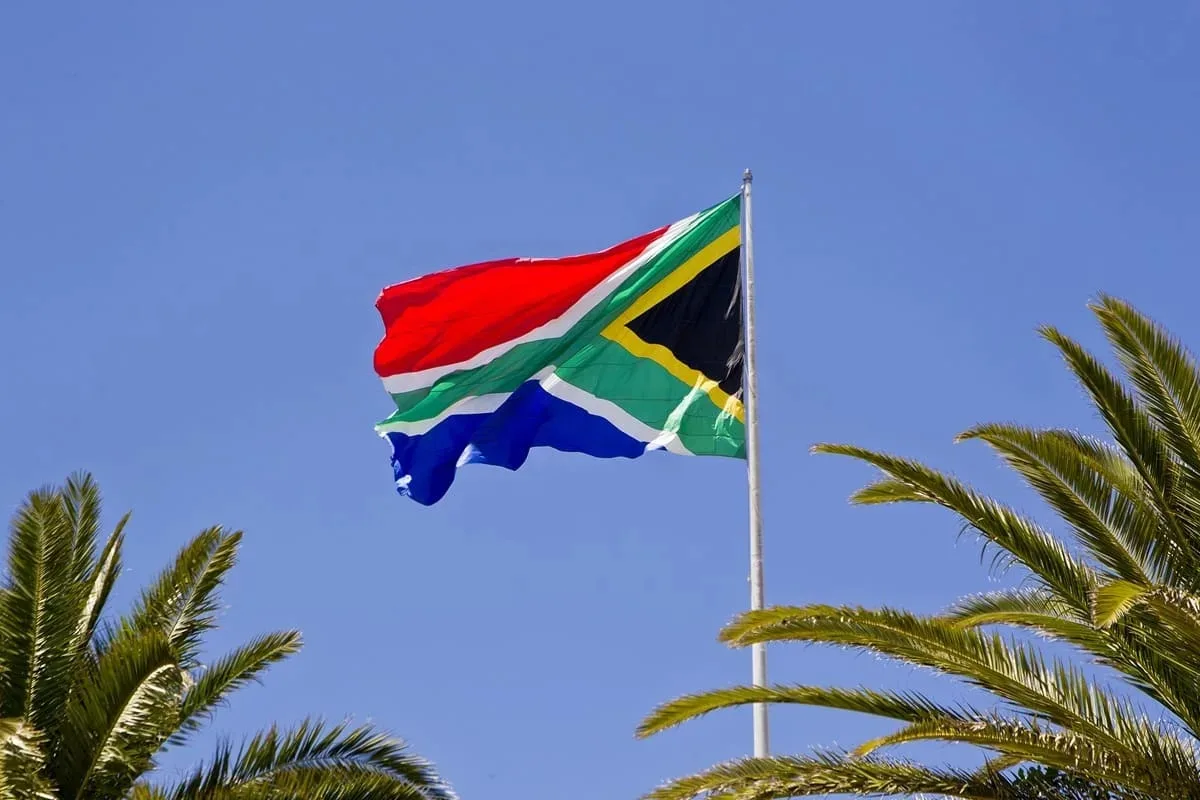
In 1994, South Africa appeared to accomplish the improbable. After decades of apartheid, political violence, international sanctions and confrontations that many feared would culminate in civil war, the country held its first democratic elections under universal suffrage. Nelson Mandela became president. The former pariah state rapidly rejoined the international community and began building a constitutional democracy on the ruins of a system founded on racial segregation.
The world spoke of a miracle. The term conveyed relief as much as admiration. A transition that many had expected to be bloody had been negotiated. The economic system had not been destroyed. Institutions had survived their transformation. A Constitution that would become one of the most ambitious of its era was to provide the framework for the new political order. South Africa seemed capable of combining assets that few African countries possessed simultaneously: an industrialised economy, immense mineral resources, developed infrastructure, a sophisticated financial system, democratic institutions and exceptional international legitimacy.
More than thirty years later, none of these achievements has entirely disappeared. But none is sufficient to describe contemporary South Africa either.
The country remains one of the continent’s most diversified economies and one of its leading financial, industrial and logistical centres. It remains a competitive democracy, with an independent judiciary, an active civil society and pluralistic media. Its companies, banks, mines, universities and infrastructure still provide it with an economic depth that remains unusual in Africa.
At the same time, unemployment exceeds 30%, inequality remains among the highest in the world, growth has been exceptionally weak for more than a decade, and parts of the country’s public infrastructure have deteriorated severely. Real income per capita remains below its 2007 level.
South Africa is therefore neither the absolute failure it is sometimes portrayed as, nor the success that was promised in the aftermath of apartheid.
It is something more complex: a democracy that succeeded in its political transition without managing to achieve an economic transformation of comparable magnitude. The question is no longer whether the miracle of 1994 happened. It is what remains of it.
I. 1994: Avoiding Collapse
To understand the scale of South Africa’s transition, it is necessary to return to what the country was before 1994. Apartheid was not merely a system of social discrimination. It was a comprehensive political, territorial and economic order designed to preserve white minority rule and control the Black majority.
Access to land, housing, education, skilled employment, infrastructure and property had been structured along racial lines. Black communities were subjected to forced removals, spatial segregation and systematic political restrictions. Some of the economic consequences of this system remain visible today in the geography of cities, the distribution of wealth, access to skills and the structure of the labour market.
By the 1980s, the system had become increasingly difficult to sustain. Domestic mobilisation intensified. Sanctions and international isolation exerted growing pressure. Political confrontations claimed thousands of lives.
When Frederik de Klerk announced the legalisation of the African National Congress and Nelson Mandela’s release in 1990, nothing guaranteed a peaceful transition.
The following four years were marked by negotiations, but also by considerable political violence.
It was against this background that the elections of 27 April 1994 acquired their historic significance. For the first time, South Africans of all backgrounds participated in a democratic national election. Nelson Mandela was inaugurated as president on 10 May.
The first achievement of the new South Africa may therefore have been the most fundamental: it did not collapse.
The state continued to function. The economy was not dismantled. Former adversaries entered the new institutions. A new constitutional architecture was progressively established. The South African miracle was first and foremost political. And that miracle endures.
II. Democracy as a Lasting Achievement
One of the most common mistakes is to judge the three decades that followed solely through their economic performance. Institutionally, the transformation was immense.
Post-apartheid South Africa built a constitutional state founded on legal equality, the separation of powers and the protection of fundamental rights. The Constitutional Court became a central institution in the political system. The judiciary repeatedly constrained executive power. The media and civil society played major roles in exposing scandals and challenging governments.
Corruption and administrative failures did not destroy this architecture. The 2024 election provided an especially important demonstration of its resilience.
For the first time since the advent of democracy, the ANC failed to secure a parliamentary majority. With no party capable of governing alone, a multiparty coalition — officially designated the Government of National Unity — was established around the ANC, bringing together political forces from very different traditions. The change was historic.
For three decades, South Africa’s political history had been almost inseparable from that of the ANC. Mandela’s party possessed a legitimacy derived from the struggle against apartheid that no other political organisation could match.
In 2024, that historical legitimacy was no longer enough. Voters punished the governing party without challenging the democratic framework itself. A partial transfer of political power took place through elections, negotiations and institutions.
The “miracle” may therefore have lost some of its aura, but the political system it created has survived the erosion of its founding party. That is far from insignificant.
III. Real Social Transformation, but an Unfinished One
To say that South Africa has failed to fulfil all the promises of 1994 does not mean that nothing changed. Access to essential services expanded considerably after the end of apartheid.
According to data from the 2022 census highlighted in the government’s assessment of thirty years of democracy, more than 82% of households had piped water inside their dwelling or yard, more than 83% had access to improved sanitation facilities, and almost 95% used electricity as their main source of lighting. In 1996, the latter proportion had stood at only 58.1%.
Millions of subsidised homes were built. Social assistance programmes expanded massively. Access to education, healthcare and public infrastructure was extended to a population that had previously been systematically excluded.
A Black middle class developed. Universities, government departments, professional occupations and corporate management became incomparably more representative of society than they had been under apartheid.
These transformations are real. But they coexist with the persistence of an extraordinarily unequal social structure. The World Bank continues to describe South Africa as a dual economy characterised by extreme inequality. The territorial legacy of apartheid remains visible: place of residence, school quality, access to transport, inherited wealth and proximity to employment centres continue to determine a substantial part of individual trajectories.
Apartheid has disappeared as a legal system. It has not disappeared as an economic geography.
IV. The Central Problem: Employment
No statistic captures South Africa’s predicament better than unemployment. In the first quarter of 2026, the official unemployment rate stood at 32.7%. More than eight million people were classified as unemployed, while another 3.9 million were discouraged work-seekers.
Behind these figures lies the central contradiction of the South African economy. The country possesses a modern economy, high-performing companies, developed banks, recognised universities and infrastructure that many emerging economies once envied. Yet this economy does not create enough jobs to integrate a considerable share of its population.
Young people are particularly exposed. In 2026, the IMF continued to estimate youth unemployment at around 60%. This gradually transforms an economic problem into a social and political one.
A democratic system can redistribute income. It can expand social benefits, build housing, subsidise public services and broaden access to education.
But no redistribution policy can permanently substitute for the integration of millions of people into the productive economy.
South Africa’s challenge is therefore no longer simply to redistribute existing wealth. It is to create new productive capacity.
V. An Economy That Stopped Moving Fast Enough
The difficulty is compounded by weak growth. According to the World Bank, the South African economy expanded by an average of only around 0.7% annually over the past decade. Growth in 2025 was only about 1%, while income per capita remained below its 2007 level.
For a country whose population and social needs continue to grow, such near-stagnation has profound consequences. It reduces job creation, constrains tax revenues, complicates infrastructure financing and makes ambitious redistribution policies more difficult to sustain.
The paradox is that South Africa does not lack economic assets. Johannesburg remains one of Africa’s leading financial centres. The country has a developed banking sector, significant agribusiness capabilities, manufacturing capacity, an automotive industry integrated into international supply chains, major telecommunications companies, a substantial tourism sector and, above all, an exceptional mining base.
Yet possessing assets is not enough. They must also be connected by infrastructure capable of supporting them. It is precisely here that part of the South African machine began to seize up.
VI. The Foundations of a Mineral Power
South Africa’s economic history is inseparable from mining. Gold and diamonds contributed to the formation of the country’s industrial economy. Today, South Africa still possesses considerable resources of platinum-group metals, manganese, chromium, gold, coal and other strategically important minerals.
This endowment is acquiring renewed significance as the global energy transition accelerates. Platinum-group metals are used in numerous industrial applications and energy technologies. Manganese is essential to many metallurgical processes and certain battery chemistries. Chromium remains indispensable to stainless-steel production.
South Africa could therefore benefit from a world seeking to secure and diversify access to raw materials. But it faces the same problem as many resource-rich states: extraction alone is not enough. The competitiveness of a mine depends on electricity, railways, ports, security, water and administrative capacity.
When these systems deteriorate, the wealth beneath the ground loses part of its economic value. The mining question therefore becomes a question about the state itself.
VII. Eskom: From Symbol of Breakdown to First Sign of Recovery
For years, Eskom almost single-handedly embodied South Africa’s crisis. The state-owned electricity utility, once a symbol of the country’s industrial capabilities, confronted ageing power stations, maintenance failures, poor governance and an extremely difficult financial position.
Rolling electricity cuts — load shedding — eventually became part of daily life and economic activity. Factories, businesses and households invested in generators, batteries and solar installations. Companies had to incorporate energy uncertainty into their investment decisions.
The electricity crisis therefore became the symbol of a broader phenomenon: the erosion of infrastructure that had once been regarded as a competitive advantage. But something changed.
In May 2026, Eskom passed the milestone of an entire year without load shedding. By July, the period had exceeded 400 days, alongside a significant improvement in the availability of its generation fleet. This reversal is essential to understanding contemporary South Africa.
It does not mean that the electricity system has been permanently repaired. Distribution networks remain fragile in some areas, transmission investment requirements are considerable, and the transformation of the electricity system creates new challenges.
But it demonstrates that an apparently structural decline can be reversed. Electricity is therefore becoming a laboratory for South Africa’s reconstruction.
If a similar reform dynamic can be applied to railways, ports and water infrastructure, the country could gradually remove some of the principal physical constraints on its growth.
VIII. Transnet: When Logistics Becomes Economic Policy
The second major constraint concerns transport. South Africa possesses ports strategically positioned along the routes connecting the Atlantic and Indian Oceans, as well as a railway network historically designed to move large quantities of minerals from the interior to export terminals.
But Transnet’s difficulties progressively reduced the performance of this system. For a mining and export economy, a failing railway is not simply a transport problem. It represents lost potential output.
Mineral resources that cannot efficiently reach a port cannot become exports. A container immobilised in a terminal increases costs throughout the productive chain. Congested ports reduce the competitiveness of industries that may have no intrinsic productivity problem.
Reforms have begun to open railways and port terminals more extensively to private participation. According to the World Bank, rail freight and port volumes increased by more than 50% between 2023 and 2025, while the country has moved towards port concessions and greater access to the rail network for private operators.
The recovery remains incomplete. But, as with electricity, the trajectory is no longer simply one of continuous deterioration.
IX. The State Against Its Own Deterioration
The difficulties at Eskom and Transnet cannot be separated from the governance crisis that marked the Jacob Zuma years. The concept of state capture became central to describing a system in which private interests had acquired deep influence over certain public decisions, appointments and state-owned enterprises.
The consequences were institutional as much as economic. Corruption does not merely remove money from public finances. When it affects institutions responsible for electricity, transport, policing, local government or public procurement over an extended period, it gradually destroys the state’s capacity to implement its own decisions.
This is probably one of the deepest wounds left by that period. South Africa still possesses competent public administrations, independent judges, engineers, researchers and companies capable of operating at international standards.
But these capabilities coexist with dysfunctional municipalities, poorly maintained infrastructure and extremely uneven public-service quality across the country.
South Africa therefore does not suffer from a complete absence of state capacity. It suffers from profoundly uneven state capacity.
X. A Society That Wealth Has Failed to Unite
Institutional inequality overlaps with social inequality. South Africa remains one of the most unequal societies in the world. The disparities cannot simply be reduced to a division between rich and poor: they intersect with racial history, geography, wealth, educational attainment and access to the labour market.
Sandton and parts of Johannesburg or Cape Town belong fully to the globalised economy. Only a few kilometres away, other areas experience mass unemployment, informal housing and inadequate public services.
This physical proximity between radically different standards of living is one of the country’s most striking characteristics. Democracy removed apartheid’s legal boundaries. Markets, inherited wealth and urban space preserved some of their traces.
The questions of land ownership and redistribution consequently remain politically explosive. They bring two imperatives into tension: correcting a history of massive dispossession while preserving the productive capabilities required for future development.
Any simplistic solution risks failing on one of these objectives. This is one reason why South Africa’s transformation is necessarily slow, contested and imperfect.
XI. After ANC Dominance
The 2024 election opened a second political era. The ANC has not disappeared. It remains at the centre of the political system. But it can no longer govern as though it alone embodied the country’s political trajectory.
The Government of National Unity established after the election brings together parties whose economic, social and institutional philosophies can differ profoundly.
This situation carries an obvious risk: instability, permanent compromise and difficulty implementing politically costly reforms.
It also creates an opportunity. The end of absolute ANC dominance may strengthen political accountability. It forces parties to negotiate, makes government performance more consequential and gradually reduces the importance of historical legitimacy alone.
South Africa is therefore entering a more ordinary form of democracy. Compared with the Mandela era, this may appear to represent a loss. It may instead be one of the signs that the system created in 1994 is maturing. A democracy becomes truly durable when it no longer needs its founders in order to function.
XII. A Foreign Policy That Refuses to Choose a Camp
Internationally, South Africa continues to understand its foreign policy through the history of liberation and its belonging to the Global South.
It maintains close relations with Western powers while participating in BRICS and developing ties with China, India, Russia and other emerging powers.
From Washington or Brussels, this diplomacy can appear contradictory. From Pretoria, it is considerably less so.
The ANC retains a political memory of the support it received during the struggle against apartheid. At the same time, South Africa advocates a multipolar conception of international relations and seeks to preserve strategic autonomy rather than align systematically with any single bloc.
Its ambitions sometimes exceed its material capabilities. But they give South Africa an international visibility greater than its current economic weight might suggest.
The country remains a member of the G20, a central participant in BRICS and an important interlocutor in many international debates concerning the African continent. Its diplomacy retains an ability to take initiatives that few African states possess.
This is another element of the legacy of 1994: the international legitimacy generated by the democratic transition continues to produce diplomatic capital.
XIII. Is South Africa Still an African Power?
The answer depends on how power is defined. If power is measured solely through economic growth, South Africa has unquestionably lost ground relative to other economies on the continent and, more broadly, to the major emerging economies.
If it is assessed through the full range of capabilities available to a state, the picture is different. Few African countries simultaneously possess a diversified industrial base, a developed financial sector, major multinational corporations, strategic mineral resources, important universities, heavy infrastructure, a global diplomatic presence and a maritime position between two oceans.
South Africa still possesses exceptional institutional and economic density. Its problem is not the absence of assets. It is their underutilisation. This is why its future probably does not depend on inventing an entirely new model. Many of the instruments it requires already exist. They need to be made to work together again.
XIV. What Remains of the Miracle
Thirty-two years after 1994, the record resists simple verdicts. The miracle did not produce the equal and prosperous society that many had hoped for.
Millions of South Africans remain excluded from the labour market. Wealth remains extraordinarily concentrated. Growth has been too weak. Parts of the public sector have deteriorated. Corruption diverted resources and destroyed trust. The geography of South African cities continues to carry the imprint of apartheid. But the miracle has not disappeared either.
It survives in a Constitution that outlasted its leaders. In a judiciary capable of constraining political power. In elections capable of punishing the party that liberated the country. In a civil society that continues to challenge the state. In infrastructure that can recover when it is properly reformed. In a private economy that retains considerable capabilities. And in a society that, despite its fractures, has not abandoned the political framework constructed in 1994.
The recent recovery of the electricity system is therefore more significant than a simple technical improvement. It demonstrates that decline is not necessarily irreversible. Reforms in electricity, railways, ports and water infrastructure suggest that another trajectory remains possible.
None of this guarantees success. Unemployment remains immense. Growth remains insufficient. Public finances constrain the government’s room for manoeuvre. Rebuilding skills and institutions will take years.
But South Africa still possesses many of the things that countries seeking development must first spend decades building: institutions, capital, infrastructure, companies, resources, skills and deep integration into the international economy.
Its challenge is no longer the challenge of 1994. It is no longer to avoid civil war, abolish apartheid or rejoin the world. It is to transform a political democracy into a society capable of offering meaningful economic participation to the majority of its population.
South Africa’s first miracle was to construct a common political order without destroying the country it inherited. The second, if it is to happen, will be far less spectacular. It will be to repair.
Main Sources
Statistics South Africa (Stats SA) — demographic, social and labour-market data.
South African Reserve Bank (SARB) — macroeconomic, financial and monetary data.
National Treasury of South Africa — public finances, economic reforms and infrastructure.
Electoral Commission of South Africa (IEC) — general elections and the evolution of the political system.
South African Government / Presidency — thirty years of democracy, the Government of National Unity and public policy.
Eskom — electricity generation, plant availability and the evolution of load shedding.
World Bank — growth, poverty, inequality, infrastructure and structural reforms.
International Monetary Fund (IMF) — macroeconomic outlook, public finances, employment and structural reforms.
Department of Mineral and Petroleum Resources / Council for Geoscience — mineral resources and the extractive industries.
Department of International Relations and Cooperation (DIRCO) — foreign policy and South Africa’s international positioning.
Atlas Limits Research Desk
Atlas Limits’ editorial and analytical desk.