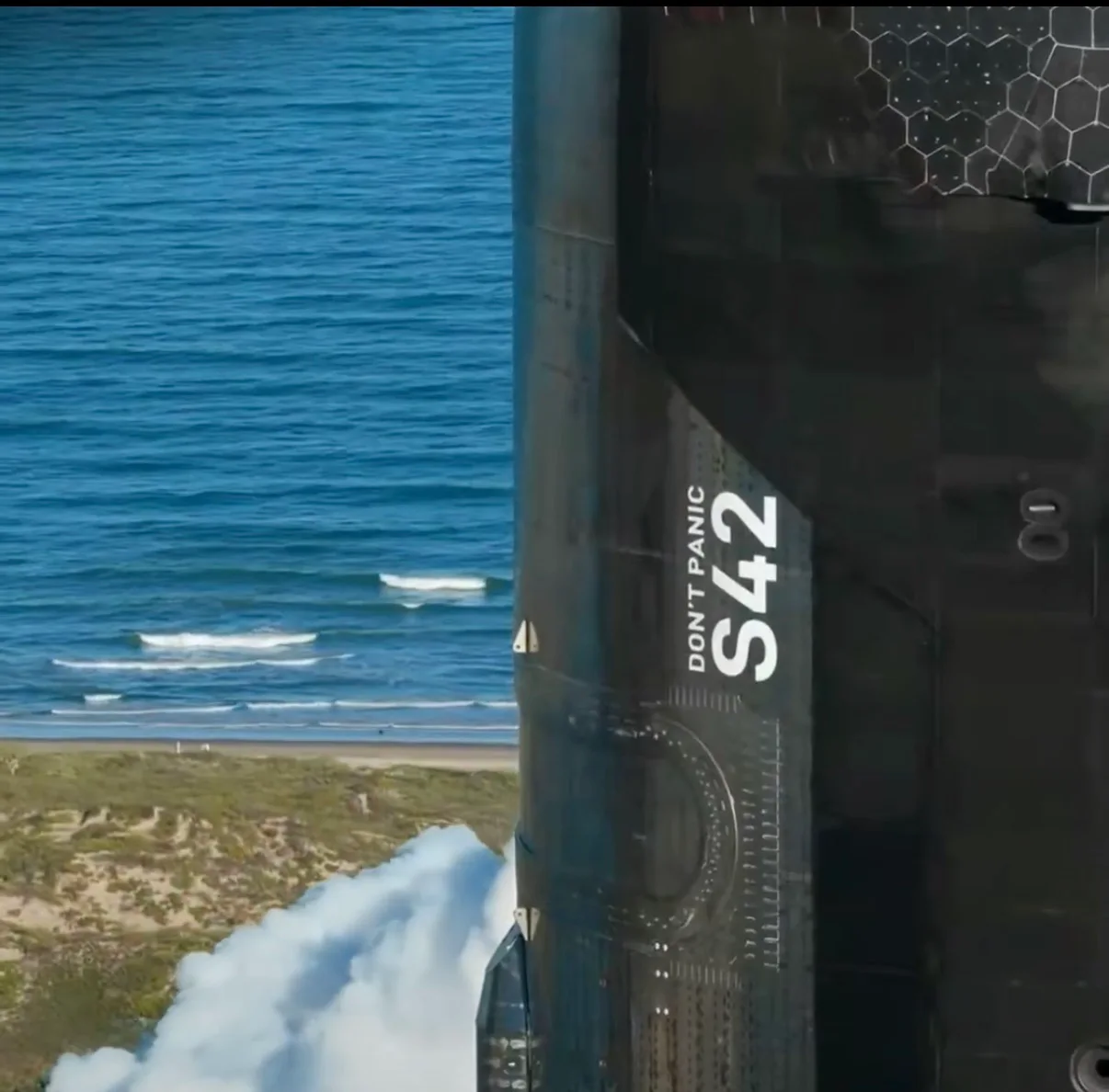
On 14 November 2026, the arms of the Starbase launch tower caught a Starship upper stage returning from orbit for the first time. The fifteenth flight had begun the previous day and deployed 26 Starlink satellites. Its Super Heavy booster was not recovered. [1][2] The mixed outcome represents an important technical advance without yet demonstrating a fully reusable system in routine operation.
Recovering the upper stage is especially demanding because it follows an orbital trajectory and atmospheric re-entry. The return also makes the vehicle available for detailed inspection. Engineers still need to establish which parts can be retained, what must be replaced and how long preparing another flight takes. That industrial information, less visible than the catch, will help determine the real cost of recovery.
An expendable stage's manufacturing cost must be paid for by the mission that uses it. Reuse can spread that cost across flights, but adds recovery, inspection, maintenance and downtime. The number of rotations actually achieved becomes decisive. A returning vehicle that remains unavailable for a long period offers a different economic proposition from one that can fly again quickly with limited intervention.
Cadence also depends on the wider system. Towers, launch mounts, propellant supply, safety procedures and approvals must support repeated missions. A reusable fleet is insufficient if ground infrastructure remains the main bottleneck. Losing the booster also shows why reliability has to improve across both stages rather than only the component that has just passed a milestone.
An internal customer changes the economics
Starlink provides SpaceX with demand inside the same corporate group. Integration allows satellite design to be aligned with the launcher's capabilities and supplies missions during development. It does not remove the need to measure full costs. An internal mission consumes resources even without an external sale; its value depends on the economics of the constellation it supports.
More transport capacity could change customers' choices, enabling heavier satellites, less mass-constrained equipment or more frequent replacement. These effects remain conditional on prices, reliability and schedules becoming predictable enough for buyers' programmes. Companies do not immediately redesign space infrastructure around an experimental performance.
Predictability also gives the programme strategic significance. For a government, a launch available on time can matter as much as its nominal price. Competing manufacturers need sufficient production and customers to finance their own development. A durable reduction in SpaceX's costs could intensify those pressures, but the 14 November recovery does not establish their scale.
Lunar operations impose separate requirements. NASA now describes a readiness-based selection between SpaceX and Blue Origin for landing missions in 2028. For Starship, its architecture includes tankers, an orbital depot and propellant transfer. [3] Returning successfully to a terrestrial tower does not validate these operations or the safety of a crewed mission. The schedule remains a programme objective conditional on system readiness.
The next results need to be assessed through reflight, maintenance requirements and availability across the infrastructure. Flight 15 has enabled a new phase of that learning. If recovered vehicles can subsequently perform reliable rotations at controlled cost, an experimental capability can become a transport service. Starship's industrial impact will depend on that repetition rather than a single successful manoeuvre.
Sources
[1] Associated Press, orbital return and recovery on 14 November 2026.
[2] Aerospace America, SpaceX achieves first Starship tower catch, 14 November 2026.
[3] NASA, NASA, Partners Accelerate Lander Development for 2028 Moon Missions, October 2026. Economic implications are Atlas Limits analysis.
Atlas Limits Research Desk
Atlas Limits’ editorial and analytical desk.